Zachary Hebert
Behavior
• California sea lions are extremely gregarious and form large
  aggregations when on land. Individuals lie close to each other, or
  even on top of each other
• When in the water, California sea lions often form small groups.
• On land, sea lions aggregate in protected areas near shore.
• In the water, they may form a raft: a small mass of sea lions on the
  surface in very close proximity.
• California sea lions often rest and sleep on land and in the water.
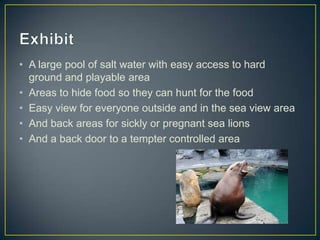
• A large pool of salt water with easy access to hard
  ground and playable area
• Areas to hide food so they can hunt for the food
• Easy view for everyone outside and in the sea view area
• And back areas for sickly or pregnant sea lions
• And a back door to a tempter controlled area
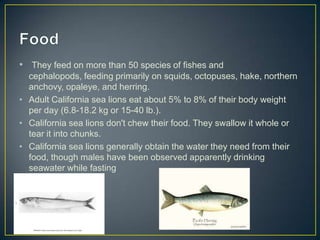
• They feed on more than 50 species of fishes and
  cephalopods, feeding primarily on squids, octopuses, hake, northern
  anchovy, opaleye, and herring.
• Adult California sea lions eat about 5% to 8% of their body weight
  per day (6.8-18.2 kg or 15-40 lb.).
• California sea lions don't chew their food. They swallow it whole or
  tear it into chunks.
• California sea lions generally obtain the water they need from their
  food, though males have been observed apparently drinking
  seawater while fasting
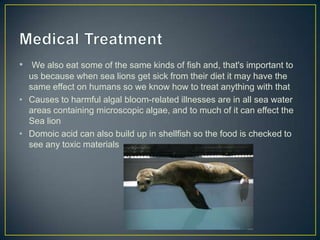
• We also eat some of the same kinds of fish and, that's important to
  us because when sea lions get sick from their diet it may have the
  same effect on humans so we know how to treat anything with that
• Causes to harmful algal bloom-related illnesses are in all sea water
  areas containing microscopic algae, and to much of it can effect the
  Sea lion
• Domoic acid can also build up in shellfish so the food is checked to
  see any toxic materials
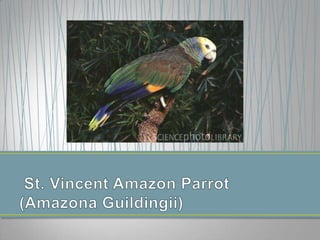
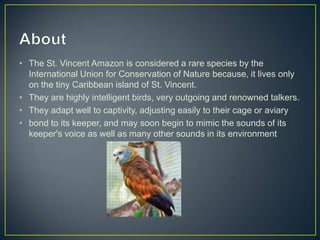
• The St. Vincent Amazon is considered a rare species by the
  International Union for Conservation of Nature because, it lives only
  on the tiny Caribbean island of St. Vincent.
• They are highly intelligent birds, very outgoing and renowned talkers.
• They adapt well to captivity, adjusting easily to their cage or aviary
• bond to its keeper, and may soon begin to mimic the sounds of its
  keeper's voice as well as many other sounds in its environment
• A seed only diet offers much more variety but requires additional
  vitamin and calcium supplements.
• A formulated diet provides a good nutritional base so does not
  require the addition of vitamins, however it does not contain the
  phytonutrients (antioxidant pigments) that are found in vegetables,
  fruits, grains, and seeds
• Supplements should include sprouted seeds, all types of fruits such
  as apples, pears, plums, cherries, grapes, oranges, bananas,
  mangos, papayas, and even berries such as strawberries and
  blueberries. Vegetables are also good supplements such as carrots,
  cucumbers, zucchini, many garden vegetables, and even dandelions
  and chickweed.
• fresh drinking water every day
• Wide fenced in area with the front that is viewable by all
  people and children
• Back area is full wall for rain with a back door for sickly
  and pregnant birds
• Another door to a inside tempter control area for bad
  weather
• The cage care includes daily cleaning of the water and food dishes.
  Weekly you should wash all the perches and dirty toys, and the floor
  should be washed about every other week. A total hosing down and
  disinfecting of an aviary should be done yearly, replacing anything
  that needs to be freshened, such as old dishes, toys and perches
• Do the same for the indoor keeping area
• Put food on the front fence so they fly up to the visitors
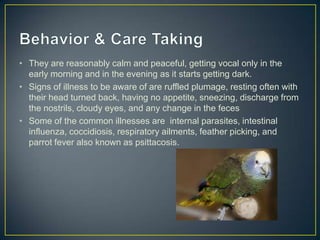
• They are reasonably calm and peaceful, getting vocal only in the
  early morning and in the evening as it starts getting dark.
• Signs of illness to be aware of are ruffled plumage, resting often with
  their head turned back, having no appetite, sneezing, discharge from
  the nostrils, cloudy eyes, and any change in the feces
• Some of the common illnesses are internal parasites, intestinal
  influenza, coccidiosis, respiratory ailments, feather picking, and
  parrot fever also known as psittacosis.

Care taking

  • 1.
  • 2.
    Behavior • California sealions are extremely gregarious and form large aggregations when on land. Individuals lie close to each other, or even on top of each other • When in the water, California sea lions often form small groups. • On land, sea lions aggregate in protected areas near shore. • In the water, they may form a raft: a small mass of sea lions on the surface in very close proximity. • California sea lions often rest and sleep on land and in the water.
  • 3.
    • A largepool of salt water with easy access to hard ground and playable area • Areas to hide food so they can hunt for the food • Easy view for everyone outside and in the sea view area • And back areas for sickly or pregnant sea lions • And a back door to a tempter controlled area
  • 4.
    • They feedon more than 50 species of fishes and cephalopods, feeding primarily on squids, octopuses, hake, northern anchovy, opaleye, and herring. • Adult California sea lions eat about 5% to 8% of their body weight per day (6.8-18.2 kg or 15-40 lb.). • California sea lions don't chew their food. They swallow it whole or tear it into chunks. • California sea lions generally obtain the water they need from their food, though males have been observed apparently drinking seawater while fasting
  • 5.
    • We alsoeat some of the same kinds of fish and, that's important to us because when sea lions get sick from their diet it may have the same effect on humans so we know how to treat anything with that • Causes to harmful algal bloom-related illnesses are in all sea water areas containing microscopic algae, and to much of it can effect the Sea lion • Domoic acid can also build up in shellfish so the food is checked to see any toxic materials
  • 7.
    • The St.Vincent Amazon is considered a rare species by the International Union for Conservation of Nature because, it lives only on the tiny Caribbean island of St. Vincent. • They are highly intelligent birds, very outgoing and renowned talkers. • They adapt well to captivity, adjusting easily to their cage or aviary • bond to its keeper, and may soon begin to mimic the sounds of its keeper's voice as well as many other sounds in its environment
  • 8.
    • A seedonly diet offers much more variety but requires additional vitamin and calcium supplements. • A formulated diet provides a good nutritional base so does not require the addition of vitamins, however it does not contain the phytonutrients (antioxidant pigments) that are found in vegetables, fruits, grains, and seeds • Supplements should include sprouted seeds, all types of fruits such as apples, pears, plums, cherries, grapes, oranges, bananas, mangos, papayas, and even berries such as strawberries and blueberries. Vegetables are also good supplements such as carrots, cucumbers, zucchini, many garden vegetables, and even dandelions and chickweed. • fresh drinking water every day
  • 9.
    • Wide fencedin area with the front that is viewable by all people and children • Back area is full wall for rain with a back door for sickly and pregnant birds • Another door to a inside tempter control area for bad weather
  • 10.
    • The cagecare includes daily cleaning of the water and food dishes. Weekly you should wash all the perches and dirty toys, and the floor should be washed about every other week. A total hosing down and disinfecting of an aviary should be done yearly, replacing anything that needs to be freshened, such as old dishes, toys and perches • Do the same for the indoor keeping area • Put food on the front fence so they fly up to the visitors
  • 11.
    • They arereasonably calm and peaceful, getting vocal only in the early morning and in the evening as it starts getting dark. • Signs of illness to be aware of are ruffled plumage, resting often with their head turned back, having no appetite, sneezing, discharge from the nostrils, cloudy eyes, and any change in the feces • Some of the common illnesses are internal parasites, intestinal influenza, coccidiosis, respiratory ailments, feather picking, and parrot fever also known as psittacosis.