Aortic
regurgitation
By
Ramasubramanian karthika
3rd year, 3rd group
Aortic regurgitation
• The aortic valve allows blood to flow from the left
ventricle of the heart into the aorta and then to the
rest of the body.
• However, in aortic regurgitation, the valve doesn't
close tightly, causing some of the blood to flow
back into the left ventricle during ventricular
diastole
Symptoms of aortic
regurgitation
• Asymptomatic: In the early stages, patients may
not notice any symptoms.
• Exertional Dyspnea
• Fatigue
• Palpitations
• Chest Pain
• Heart Failure Symptoms: symptoms such as
orthopnea, paroxysmal nocturnal dyspnea, and
peripheral edema may develop.
Physical examination
• Auscultation: Heart murmurs, including diastolic
murmurs (e.g., decrescendo murmur at the left
sternal border)
• Blood Pressure: Wide pulse pressure, with a systolic
blood pressure higher than usual and diastolic
pressure lower than usual.
Heart borders
• Left Ventricular Border: The left ventricular border
may appear enlarged due to left ventricular
hypertrophy and dilation resulting from chronic
volume overload.
• Aortic Outflow Tract: Enlargement of the aortic
outflow tract may be visible on lateral chest X-rays.
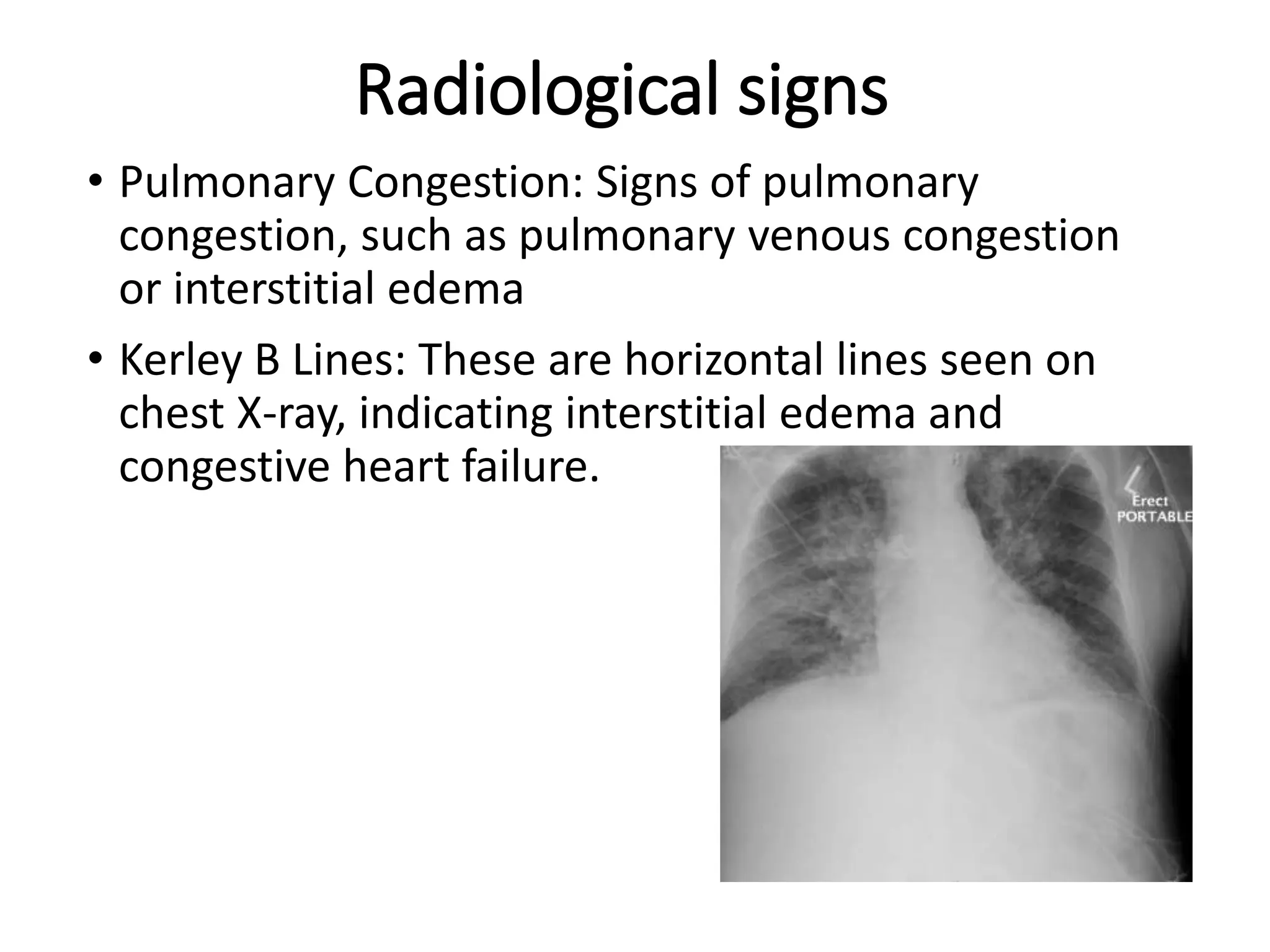
Radiological signs
• Pulmonary Congestion: Signs of pulmonary
congestion, such as pulmonary venous congestion
or interstitial edema
• Kerley B Lines: These are horizontal lines seen on
chest X-ray, indicating interstitial edema and
congestive heart failure.
Clinical Diagnosis
• Echocardiography: The primary imaging modality for
diagnosing aortic regurgitation, assessing the severity,
and identifying structural abnormalities.
• Electrocardiogram (ECG): May show left ventricular
hypertrophy, left atrial enlargement, or arrhythmias.
• Chest X-ray: May reveal cardiac enlargement and signs
of heart failure.
• Cardiac Catheterization: Invasive procedure to directly
measure pressures and assess coronary artery disease
Thank you

Cardiovascular disease Aortic regurgit.pptx

  • 1.
  • 2.
    Aortic regurgitation • Theaortic valve allows blood to flow from the left ventricle of the heart into the aorta and then to the rest of the body. • However, in aortic regurgitation, the valve doesn't close tightly, causing some of the blood to flow back into the left ventricle during ventricular diastole
  • 3.
    Symptoms of aortic regurgitation •Asymptomatic: In the early stages, patients may not notice any symptoms. • Exertional Dyspnea • Fatigue • Palpitations • Chest Pain • Heart Failure Symptoms: symptoms such as orthopnea, paroxysmal nocturnal dyspnea, and peripheral edema may develop.
  • 4.
    Physical examination • Auscultation:Heart murmurs, including diastolic murmurs (e.g., decrescendo murmur at the left sternal border) • Blood Pressure: Wide pulse pressure, with a systolic blood pressure higher than usual and diastolic pressure lower than usual.
  • 5.
    Heart borders • LeftVentricular Border: The left ventricular border may appear enlarged due to left ventricular hypertrophy and dilation resulting from chronic volume overload. • Aortic Outflow Tract: Enlargement of the aortic outflow tract may be visible on lateral chest X-rays.
  • 6.
    Radiological signs • PulmonaryCongestion: Signs of pulmonary congestion, such as pulmonary venous congestion or interstitial edema • Kerley B Lines: These are horizontal lines seen on chest X-ray, indicating interstitial edema and congestive heart failure.
  • 7.
    Clinical Diagnosis • Echocardiography:The primary imaging modality for diagnosing aortic regurgitation, assessing the severity, and identifying structural abnormalities. • Electrocardiogram (ECG): May show left ventricular hypertrophy, left atrial enlargement, or arrhythmias. • Chest X-ray: May reveal cardiac enlargement and signs of heart failure. • Cardiac Catheterization: Invasive procedure to directly measure pressures and assess coronary artery disease
  • 8.