Cancer Biology
Presenter: Egizeru Enedalew, R1
Moderator: Dr Tebarek, General surgeon
outline
• Introduction
• Epidemiology
• Carcinogenesis and hallmarks of cancer
• Clinical picture
• Screening and prevention
Introduction
• Egyptian Edwin Smith Papyrus, 3000–1500 BC.
• The oldest specimens of human cancers (1900–
1600 BC).
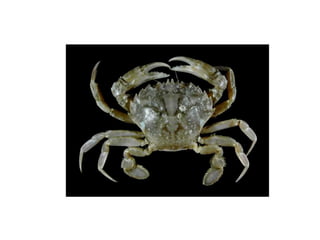
• Hippocrates (460–370 BC) coined the term carcinos
• Celsus (28-50 BC), later translated it into cancer
• Galen (AD 129–199) use the tem oncos
• Cancer in the Sixteenth to Eighteenth Centuries
 scientific method and
 Autopsies introduced to the field
Contd..
• Harvey (1628) the first autopsy
• In 1761, Giovanni Morgagni of Padua laid the basis
for scientific oncology
• John Hunter (1728-1793) surgical treatment
• Cancer in the Nineteenth Century
Rudolf Virchow, cellular pathology
• Tissue culture was developed in the early years of
the 20th century
Neoplasia
Nomenclature
• Neoplasia
• Tumor, benign or malignant
• Cancer
• Stroma
• parenchyma
Contd..
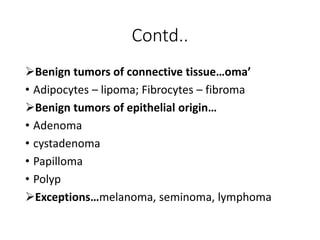
Benign tumors of connective tissue…oma’
• Adipocytes – lipoma; Fibrocytes – fibroma
Benign tumors of epithelial origin…
• Adenoma
• cystadenoma
• Papilloma
• Polyp
Exceptions…melanoma, seminoma, lymphoma
Contd..
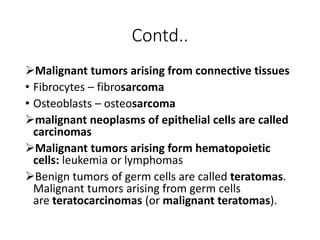
Malignant tumors arising from connective tissues
• Fibrocytes – fibrosarcoma
• Osteoblasts – osteosarcoma
malignant neoplasms of epithelial cells are called
carcinomas
Malignant tumors arising form hematopoietic
cells: leukemia or lymphomas
Benign tumors of germ cells are called teratomas.
Malignant tumors arising from germ cells
are teratocarcinomas (or malignant teratomas).
Epidemiology
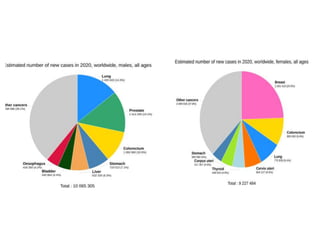
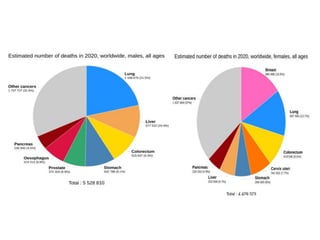
• 2nd leading cause of death
• ~10 million death in 2020
• Beast ca is the commonest cancer
diagnosed(2.26m)
• Lung ca is leading cause of death(1.8m)
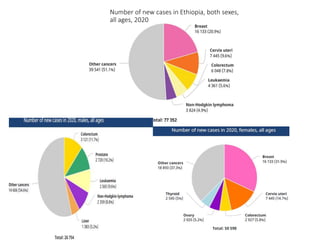
Number of new cases in Ethiopia, both sexes,
all ages, 2020
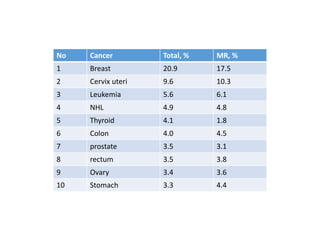
No Cancer Total, % MR, %
1 Breast 20.9 17.5
2 Cervix uteri 9.6 10.3
3 Leukemia 5.6 6.1
4 NHL 4.9 4.8
5 Thyroid 4.1 1.8
6 Colon 4.0 4.5
7 prostate 3.5 3.1
8 rectum 3.5 3.8
9 Ovary 3.4 3.6
10 Stomach 3.3 4.4
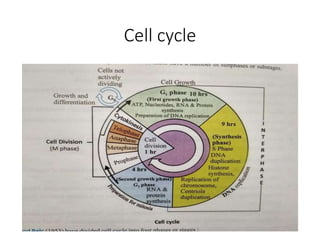
Cell cycle
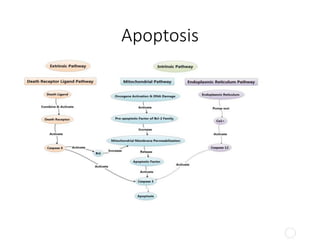
Apoptosis
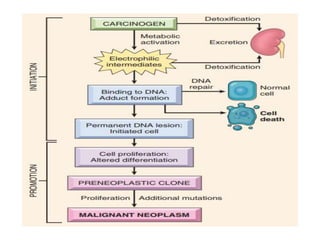
Carcinogenesis
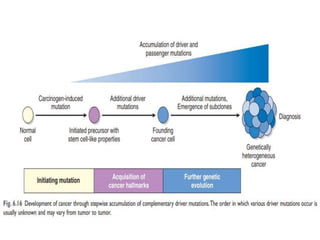
• Multistep process
• Initiation, promotion and progression
• Tumor cells undergo genetic changes
• Stroma undergo phenotypic changes
• Darwinian selection
• Leads to growth advantage and tumor progression
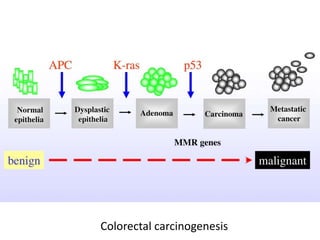
Colorectal carcinogenesis
Cancer genes
• Oncogenes
• Tumor suppressor genes
• Genes that regulate apoptosis
• Genes that regulate interaction between cancer
cells and host cells
Genetic lesions in cancer
• Point mutation
• Gene rearrangement
• Deletion
• Amplification
• Aneuploidy
Epigenetics and cancer
• Reversible changes in DNA and histone
• Hypo methylation and posttranslational
modifications
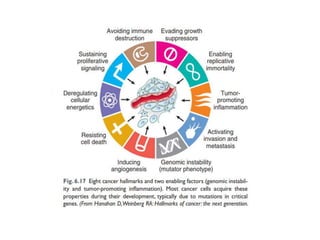
Enabling factors
• A. Genomic Instability
• B. Tumor-Promoting Inflammation
A. Genetic instability
•
B. Tumor promoting inflammation
• Release of factors that promote proliferation
• Removal of growth suppressors
• Enhanced resistance to cell death
• Angiogenesis
• Invasion and metastasis
• Evasion of immune destruction
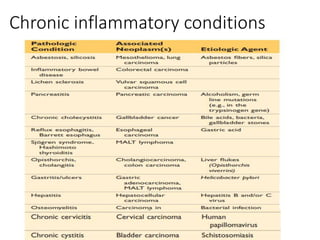
Chronic inflammatory conditions
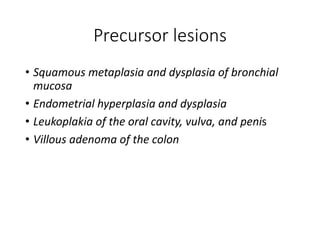
Precursor lesions
• Squamous metaplasia and dysplasia of bronchial
mucosa
• Endometrial hyperplasia and dysplasia
• Leukoplakia of the oral cavity, vulva, and penis
• Villous adenoma of the colon
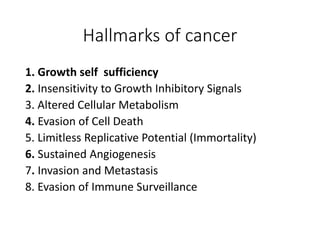
Hallmarks of cancer
1. Growth self sufficiency
2. Insensitivity to Growth Inhibitory Signals
3. Altered Cellular Metabolism
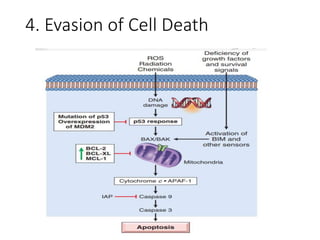
4. Evasion of Cell Death
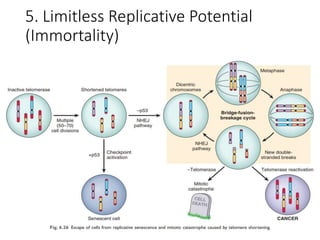
5. Limitless Replicative Potential (Immortality)
6. Sustained Angiogenesis
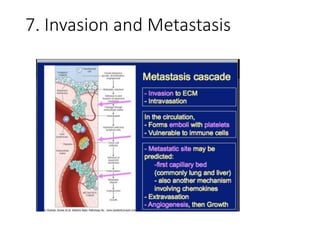
7. Invasion and Metastasis
8. Evasion of Immune Surveillance
1. Growth self sufficiency
In normal cells, cell growth and proliferation are
under strict control.
In cancer cells, cells become unresponsive to normal
growth controls, which leads to uncontrolled cell
division.
Contd..
Cancer cells acquire growth self-sufficiency via
alteration of:
 Growth factors
 Growth factor receptors
 Downstream signal transmitting proteins
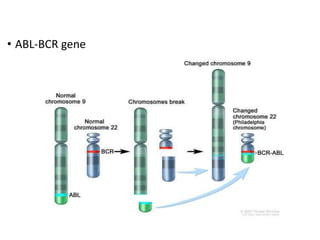
• RAS and ABL
 Nuclear transcription factors: MYC, JUN, FOS etc.
Cyclins and cyclin dependent kinases
Contd..
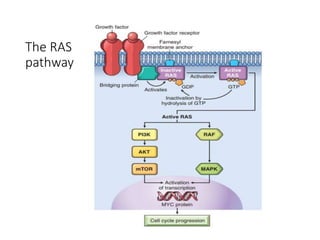
• RAS is the most commonly mutated oncogene in
human tumors.
• ~30% of all human tumors contain mutated RAS
genes
• RAS is a member of a family of G proteins that bind
GTP and GDP.
• Normally found In quiescent state binding GDP
• When activated it binds GTP…has gtpase activity
The RAS
pathway
• ABL-BCR gene
2. Insensitivity to Growth
Inhibitory Signals
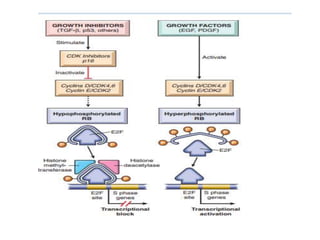
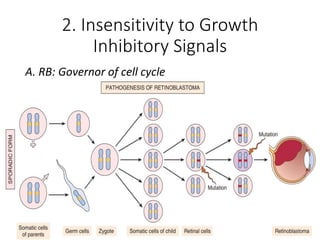
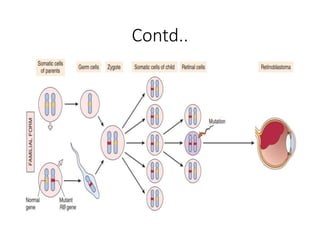
A. RB: Governor of cell cycle
• rnor of the Cell
Contd..
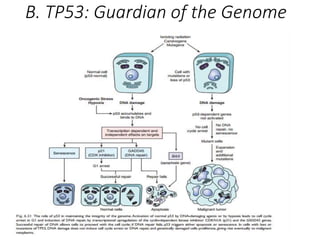
B. TP53: Guardian of the Genome
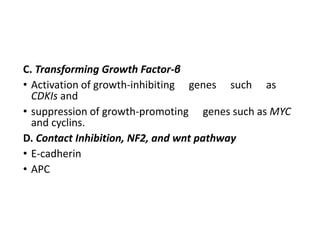
C. Transforming Growth Factor-β
• Activation of growth-inhibiting genes such as
CDKIs and
• suppression of growth-promoting genes such as MYC
and cyclins.
D. Contact Inhibition, NF2, and wnt pathway
• E-cadherin
• APC
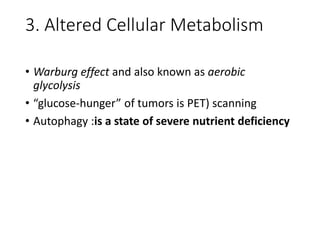
3. Altered Cellular Metabolism
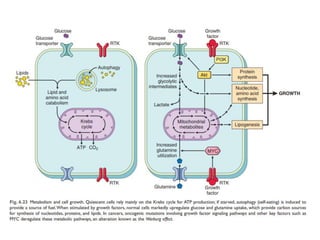
• Warburg effect and also known as aerobic
glycolysis
• “glucose-hunger” of tumors is PET) scanning
• Autophagy :is a state of severe nutrient deficiency
4. Evasion of Cell Death
5. Limitless Replicative Potential
(Immortality)
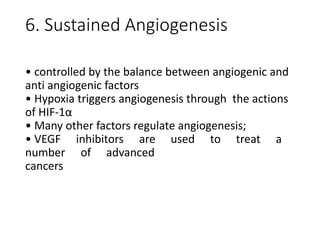
6. Sustained Angiogenesis
• controlled by the balance between angiogenic and
anti angiogenic factors
• Hypoxia triggers angiogenesis through the actions
of HIF-1α
• Many other factors regulate angiogenesis;
• VEGF inhibitors are used to treat a
number of advanced
cancers
7. Invasion and Metastasis
8. Evasion of Immune Surveillance
• Tumor cells can be recognized by the immune
system as non self and destroyed.
• Antitumor activity is mediated by predominantly
cell-mediated mechanisms.
• different antigens
• Immunosuppressed patients have an
increased risk
• In immunocompetent patients, tumors may
avoid the immune system
Carcinogenic agents
• Three classes of carcinogenic agents
1. Chemicals
2. Radiant energy, and
3. Microbial products
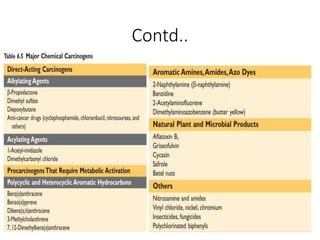
1. Chemical carcinogens
• Direct-Acting Agents
• Indirect-Acting Agents
Contd..
Mechanisms of Action
• Most are mutagenic, targets are RAS and TP53
Radiation Carcinogenesis
• UV rays of sunlight
• Radiographs
• Nuclear fission
• Radionuclides
Viral and Microbial Oncogenesis
• Oncogenic RNA Viruses
• Oncogenic DNA Viruses
• Helicobacter pylori
Clinical aspects of Neoplasia
• Effects of Tumor on Host
• Cancer Cachexia
• Paraneoplastic Syndromes
• Grading and staging of cancer
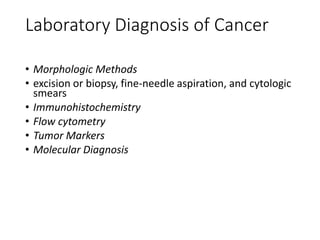
Laboratory Diagnosis of Cancer
• Morphologic Methods
• excision or biopsy, fine-needle aspiration, and cytologic
smears
• Immunohistochemistry
• Flow cytometry
• Tumor Markers
• Molecular Diagnosis
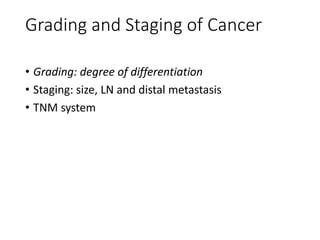
Grading and Staging of Cancer
• Grading: degree of differentiation
• Staging: size, LN and distal metastasis
• TNM system
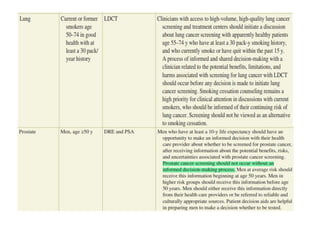
Screening and prevention
Principles of management
• Surgical TX
• Adjuvant
References
• Robbins basic pathology, 10th edn
• Schwartz's principles of sugery, 11th edn
• WHO global Cancer observatory, 2020
thank you

Cancer Biology.pptx

  • 1.
    Cancer Biology Presenter: EgizeruEnedalew, R1 Moderator: Dr Tebarek, General surgeon
  • 2.
    outline • Introduction • Epidemiology •Carcinogenesis and hallmarks of cancer • Clinical picture • Screening and prevention
  • 3.
    Introduction • Egyptian EdwinSmith Papyrus, 3000–1500 BC. • The oldest specimens of human cancers (1900– 1600 BC). • Hippocrates (460–370 BC) coined the term carcinos • Celsus (28-50 BC), later translated it into cancer • Galen (AD 129–199) use the tem oncos • Cancer in the Sixteenth to Eighteenth Centuries  scientific method and  Autopsies introduced to the field
  • 5.
    Contd.. • Harvey (1628)the first autopsy • In 1761, Giovanni Morgagni of Padua laid the basis for scientific oncology • John Hunter (1728-1793) surgical treatment • Cancer in the Nineteenth Century Rudolf Virchow, cellular pathology • Tissue culture was developed in the early years of the 20th century
  • 6.
  • 7.
    Nomenclature • Neoplasia • Tumor,benign or malignant • Cancer • Stroma • parenchyma
  • 8.
    Contd.. Benign tumors ofconnective tissue…oma’ • Adipocytes – lipoma; Fibrocytes – fibroma Benign tumors of epithelial origin… • Adenoma • cystadenoma • Papilloma • Polyp Exceptions…melanoma, seminoma, lymphoma
  • 9.
    Contd.. Malignant tumors arisingfrom connective tissues • Fibrocytes – fibrosarcoma • Osteoblasts – osteosarcoma malignant neoplasms of epithelial cells are called carcinomas Malignant tumors arising form hematopoietic cells: leukemia or lymphomas Benign tumors of germ cells are called teratomas. Malignant tumors arising from germ cells are teratocarcinomas (or malignant teratomas).
  • 10.
    Epidemiology • 2nd leadingcause of death • ~10 million death in 2020 • Beast ca is the commonest cancer diagnosed(2.26m) • Lung ca is leading cause of death(1.8m)
  • 14.
    Number of newcases in Ethiopia, both sexes, all ages, 2020
  • 15.
    No Cancer Total,% MR, % 1 Breast 20.9 17.5 2 Cervix uteri 9.6 10.3 3 Leukemia 5.6 6.1 4 NHL 4.9 4.8 5 Thyroid 4.1 1.8 6 Colon 4.0 4.5 7 prostate 3.5 3.1 8 rectum 3.5 3.8 9 Ovary 3.4 3.6 10 Stomach 3.3 4.4
  • 16.
  • 18.
  • 19.
    Carcinogenesis • Multistep process •Initiation, promotion and progression • Tumor cells undergo genetic changes • Stroma undergo phenotypic changes • Darwinian selection • Leads to growth advantage and tumor progression
  • 21.
  • 22.
    Cancer genes • Oncogenes •Tumor suppressor genes • Genes that regulate apoptosis • Genes that regulate interaction between cancer cells and host cells
  • 23.
    Genetic lesions incancer • Point mutation • Gene rearrangement • Deletion • Amplification • Aneuploidy
  • 24.
    Epigenetics and cancer •Reversible changes in DNA and histone • Hypo methylation and posttranslational modifications
  • 25.
    Enabling factors • A.Genomic Instability • B. Tumor-Promoting Inflammation
  • 26.
  • 27.
    B. Tumor promotinginflammation • Release of factors that promote proliferation • Removal of growth suppressors • Enhanced resistance to cell death • Angiogenesis • Invasion and metastasis • Evasion of immune destruction
  • 28.
  • 29.
    Precursor lesions • Squamousmetaplasia and dysplasia of bronchial mucosa • Endometrial hyperplasia and dysplasia • Leukoplakia of the oral cavity, vulva, and penis • Villous adenoma of the colon
  • 30.
    Hallmarks of cancer 1.Growth self sufficiency 2. Insensitivity to Growth Inhibitory Signals 3. Altered Cellular Metabolism 4. Evasion of Cell Death 5. Limitless Replicative Potential (Immortality) 6. Sustained Angiogenesis 7. Invasion and Metastasis 8. Evasion of Immune Surveillance
  • 32.
    1. Growth selfsufficiency In normal cells, cell growth and proliferation are under strict control. In cancer cells, cells become unresponsive to normal growth controls, which leads to uncontrolled cell division.
  • 33.
    Contd.. Cancer cells acquiregrowth self-sufficiency via alteration of:  Growth factors  Growth factor receptors  Downstream signal transmitting proteins • RAS and ABL  Nuclear transcription factors: MYC, JUN, FOS etc. Cyclins and cyclin dependent kinases
  • 34.
    Contd.. • RAS isthe most commonly mutated oncogene in human tumors. • ~30% of all human tumors contain mutated RAS genes • RAS is a member of a family of G proteins that bind GTP and GDP. • Normally found In quiescent state binding GDP • When activated it binds GTP…has gtpase activity
  • 35.
  • 36.
  • 37.
    2. Insensitivity toGrowth Inhibitory Signals A. RB: Governor of cell cycle • rnor of the Cell
  • 38.
  • 40.
    B. TP53: Guardianof the Genome
  • 41.
    C. Transforming GrowthFactor-β • Activation of growth-inhibiting genes such as CDKIs and • suppression of growth-promoting genes such as MYC and cyclins. D. Contact Inhibition, NF2, and wnt pathway • E-cadherin • APC
  • 42.
    3. Altered CellularMetabolism • Warburg effect and also known as aerobic glycolysis • “glucose-hunger” of tumors is PET) scanning • Autophagy :is a state of severe nutrient deficiency
  • 44.
    4. Evasion ofCell Death
  • 45.
    5. Limitless ReplicativePotential (Immortality)
  • 46.
    6. Sustained Angiogenesis •controlled by the balance between angiogenic and anti angiogenic factors • Hypoxia triggers angiogenesis through the actions of HIF-1α • Many other factors regulate angiogenesis; • VEGF inhibitors are used to treat a number of advanced cancers
  • 47.
    7. Invasion andMetastasis
  • 48.
    8. Evasion ofImmune Surveillance • Tumor cells can be recognized by the immune system as non self and destroyed. • Antitumor activity is mediated by predominantly cell-mediated mechanisms. • different antigens • Immunosuppressed patients have an increased risk • In immunocompetent patients, tumors may avoid the immune system
  • 50.
    Carcinogenic agents • Threeclasses of carcinogenic agents 1. Chemicals 2. Radiant energy, and 3. Microbial products
  • 51.
    1. Chemical carcinogens •Direct-Acting Agents • Indirect-Acting Agents
  • 52.
  • 53.
    Mechanisms of Action •Most are mutagenic, targets are RAS and TP53
  • 54.
    Radiation Carcinogenesis • UVrays of sunlight • Radiographs • Nuclear fission • Radionuclides
  • 55.
    Viral and MicrobialOncogenesis • Oncogenic RNA Viruses • Oncogenic DNA Viruses • Helicobacter pylori
  • 56.
    Clinical aspects ofNeoplasia • Effects of Tumor on Host • Cancer Cachexia • Paraneoplastic Syndromes • Grading and staging of cancer
  • 57.
    Laboratory Diagnosis ofCancer • Morphologic Methods • excision or biopsy, fine-needle aspiration, and cytologic smears • Immunohistochemistry • Flow cytometry • Tumor Markers • Molecular Diagnosis
  • 58.
    Grading and Stagingof Cancer • Grading: degree of differentiation • Staging: size, LN and distal metastasis • TNM system
  • 59.
  • 61.
    Principles of management •Surgical TX • Adjuvant
  • 62.
    References • Robbins basicpathology, 10th edn • Schwartz's principles of sugery, 11th edn • WHO global Cancer observatory, 2020
  • 63.

Editor's Notes

  • #8 “an abnormal mass of tissue, the growth of which exceeds and is uncoordinated with that of the surrounding normal tissues, and persists in the same excessive manner after cessation of the stimuli which evoked the change