BUDGET
MANAGEMENT
Objectives:
 Understanding the budget concept
 Understanding the four phases of budget cycle
 Understanding the issues or problems in budget
cycle
 Understanding the budget allocation
 The term budget is derived from the French word
“bougette” which means a “leather bag” or a “wallet”.
The Budget Concept
What is a budget?
 is an annual financial statement showing item wise
estimates of expected revenue and anticipated
expenditure during a fiscal year.
 is the critical exercise of allocating revenues and
borrowed funds to attain the economic and social goals
of the country.
The Budget Concept
What is government budgeting?
 Government budgeting is important because it enables
the government to plan and manage its financial
resources to support the implementation of various
programs and projects that best promote the
development of the country.
The Budget Concept
Why is government budgeting important?
The Budget
Cycle
The Budget Cycle
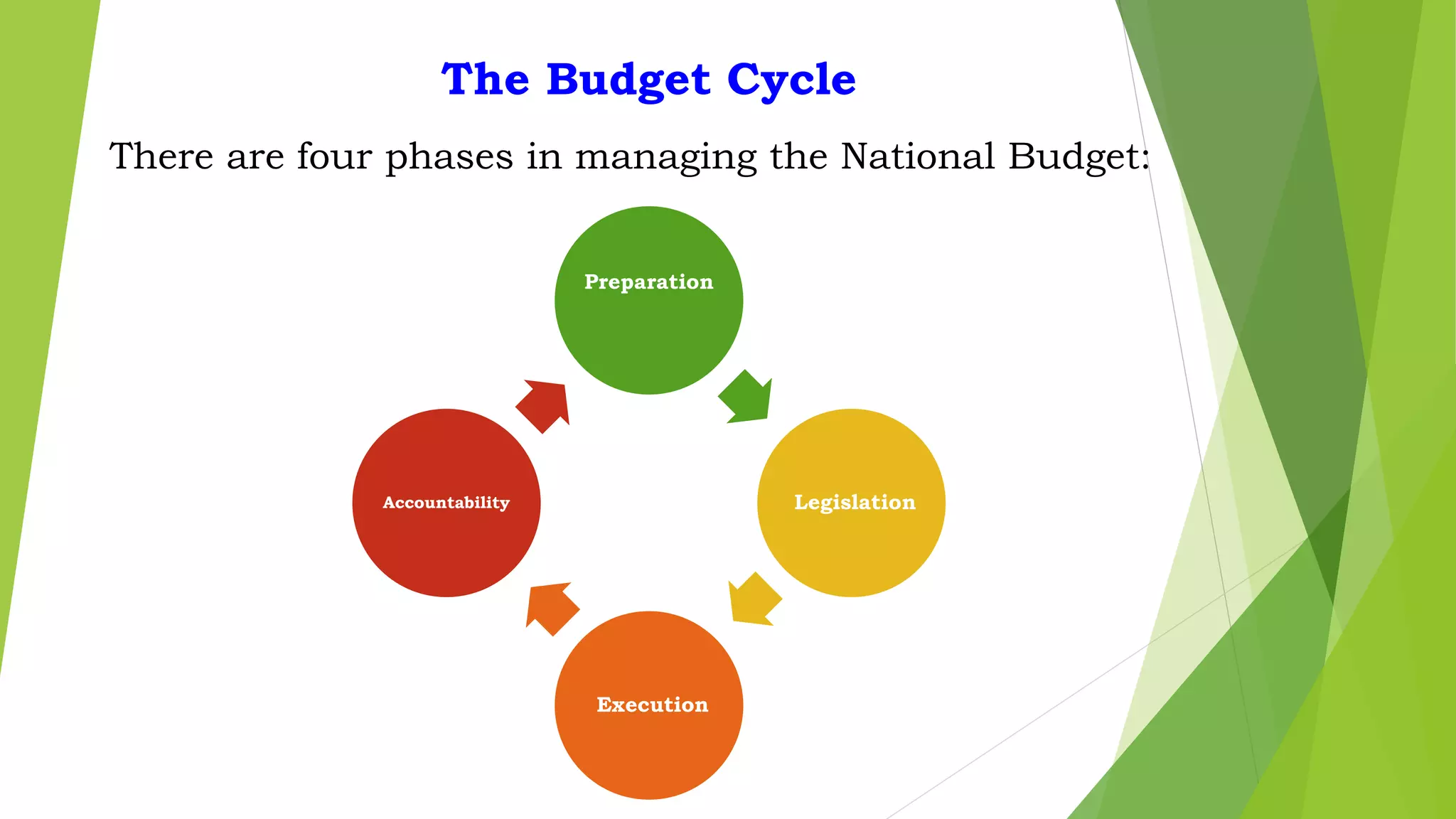
There are four phases in managing the National Budget:
Preparation
Legislation
Execution
Accountability
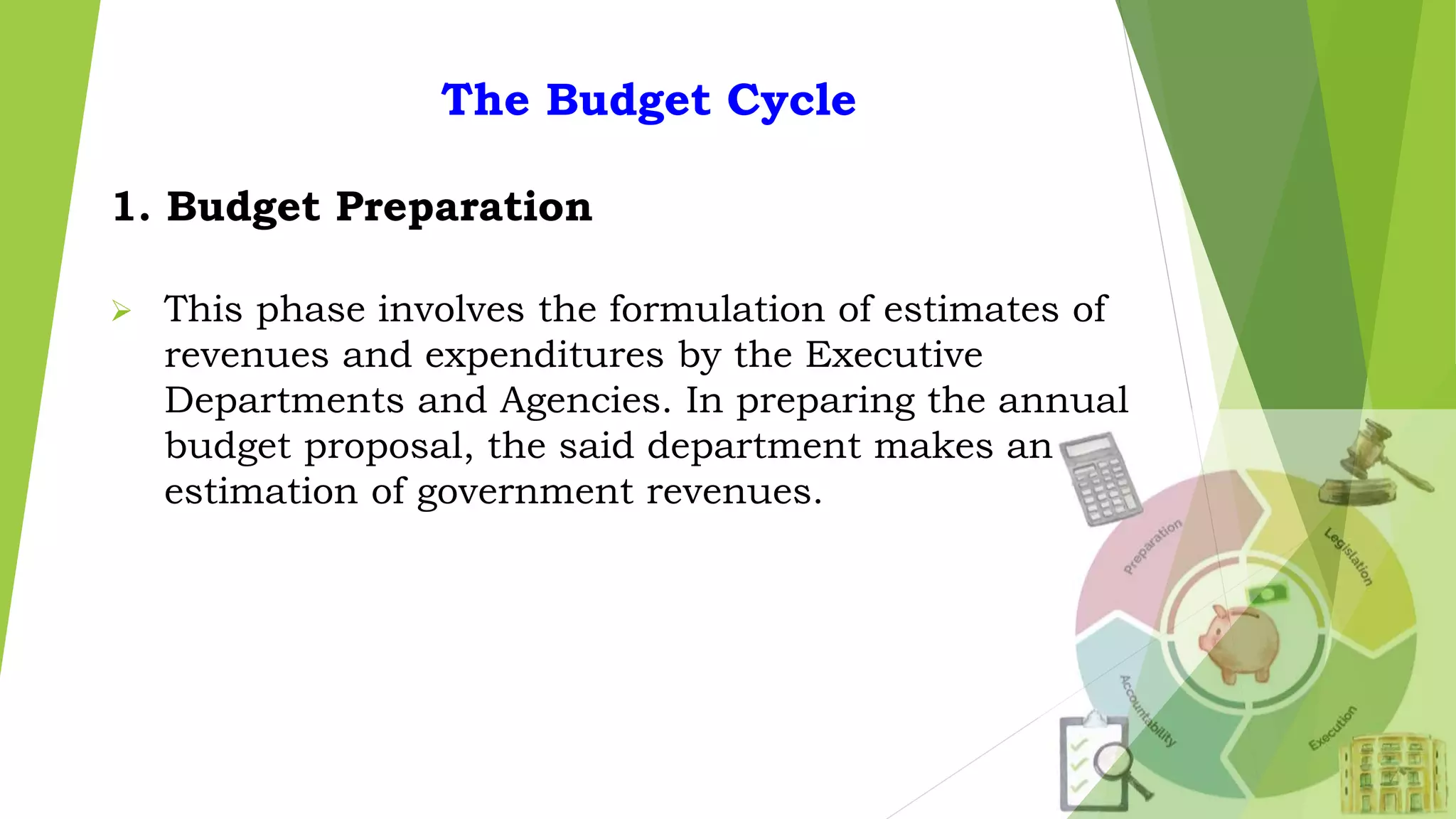
 This phase involves the formulation of estimates of
revenues and expenditures by the Executive
Departments and Agencies. In preparing the annual
budget proposal, the said department makes an
estimation of government revenues.
The Budget Cycle
1. Budget Preparation
The main agency involved is the Development Budget
Coordination Committee (DBCC) composed of the
following agencies:
The Budget Cycle
1. Budget Preparation
 Alternatively called the “Budget Authorization Phase”
The Budget Cycle
2. Budget Legislation
 This pertains to the whole range of legislative action on
the budget, leading to the enactment of a General
Appropriations Law for the year. The Philippine House
of Representatives first conducts hearings/debates on
the budget.
 Budget execution covers the allotment of
appropriations by the central budget authority to and
the incurrence of obligations by, the spending
departments and agencies of government.
The Budget Cycle
3. Budget Execution/Implementation
 This involved the reporting of actual performance against
plans or targets
The Budget Cycle
4. Budget Accountability & Review
 It involves the
1. Monitoring of agency budgetary performance
2. Comparison and evaluation of actual performance
with the initially-approved work targets
3. A summary list of checks issued is submitted on a
monthly basis
4. Physical & Financial Report of operations is submitted on a
quarterly basis in the form of a trial balance
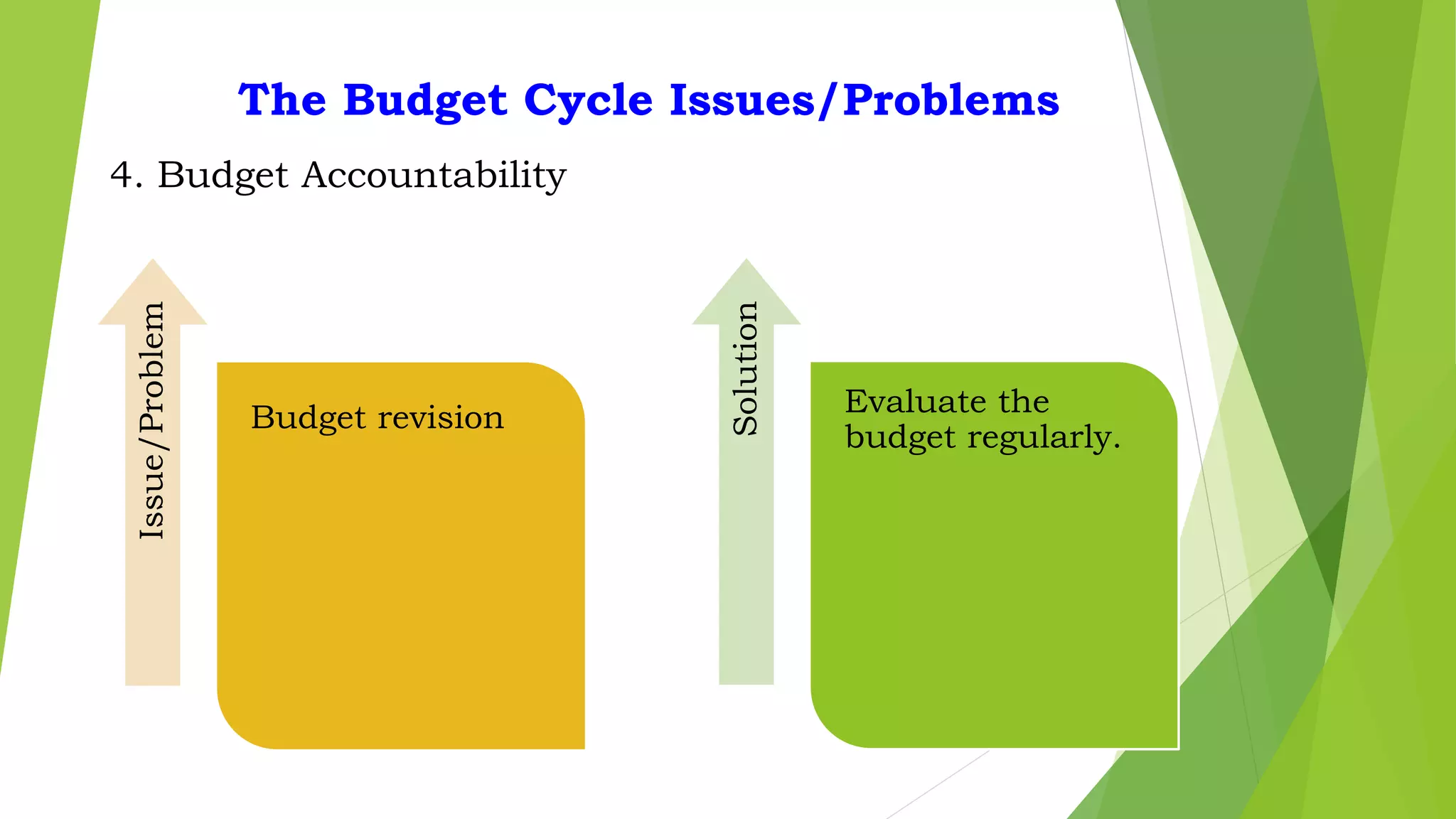
The Budget Cycle Issues/Problems
Have a
Performance-
based framework
allocating
resources to
specific objectives
or activities based
on appropriate
metrics.
Solution
Lack or resources
needed to prepare
and where those
budget will get.
Issue/Problem
1. Budget Preparation
The Budget Cycle Issues/Problems
Have large
amount of
supporters in the
Senate, cabinet
members and
house of
representatives.
Solution
The political
budgeting process
is a bit messy.
Issue/Problem
2. Budget Legislation
The Budget Cycle Issues/Problems
Adjust the
program/project
implementation to
handle increases in
spending or lower
than expected
revenues. Most of
the time money
comes in and goes
out in accordance
with the budget.
Solution
The timing may
not always be
right.
Issue/Problem
3. Budget Execution
The Budget Cycle Issues/Problems
Evaluate the
budget regularly.
Solution
Budget revision
Issue/Problem
4. Budget Accountability
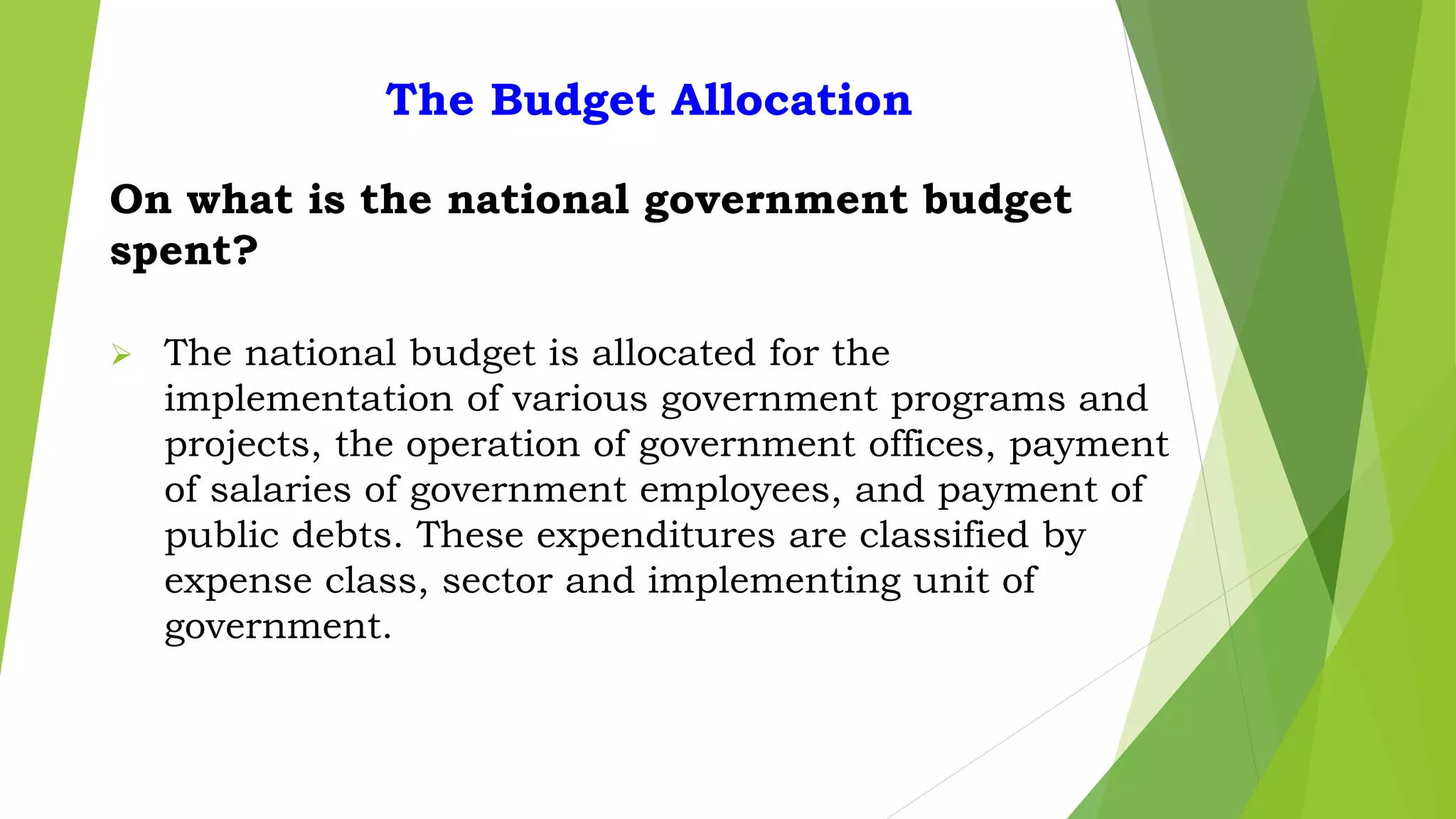
The Budget Allocation
On what is the national government budget
spent?
 The national budget is allocated for the
implementation of various government programs and
projects, the operation of government offices, payment
of salaries of government employees, and payment of
public debts. These expenditures are classified by
expense class, sector and implementing unit of
government.
The Budget Allocation
Three important policy objectives:
Aggregate Fiscal
Discipline
Efficiency and
effectiveness in
implementing
activities
Allocation of
resources
consistent with
strategic policy
priorities
The Budget Allocation
Top 10 Departments of the proposed 2022 National Budget:
Budget Management.pptx

Budget Management.pptx

  • 1.
  • 2.
    Objectives:  Understanding thebudget concept  Understanding the four phases of budget cycle  Understanding the issues or problems in budget cycle  Understanding the budget allocation
  • 3.
     The termbudget is derived from the French word “bougette” which means a “leather bag” or a “wallet”. The Budget Concept What is a budget?  is an annual financial statement showing item wise estimates of expected revenue and anticipated expenditure during a fiscal year.
  • 4.
     is thecritical exercise of allocating revenues and borrowed funds to attain the economic and social goals of the country. The Budget Concept What is government budgeting?
  • 5.
     Government budgetingis important because it enables the government to plan and manage its financial resources to support the implementation of various programs and projects that best promote the development of the country. The Budget Concept Why is government budgeting important?
  • 6.
  • 7.
    The Budget Cycle Thereare four phases in managing the National Budget: Preparation Legislation Execution Accountability
  • 8.
     This phaseinvolves the formulation of estimates of revenues and expenditures by the Executive Departments and Agencies. In preparing the annual budget proposal, the said department makes an estimation of government revenues. The Budget Cycle 1. Budget Preparation
  • 9.
    The main agencyinvolved is the Development Budget Coordination Committee (DBCC) composed of the following agencies: The Budget Cycle 1. Budget Preparation
  • 10.
     Alternatively calledthe “Budget Authorization Phase” The Budget Cycle 2. Budget Legislation  This pertains to the whole range of legislative action on the budget, leading to the enactment of a General Appropriations Law for the year. The Philippine House of Representatives first conducts hearings/debates on the budget.
  • 11.
     Budget executioncovers the allotment of appropriations by the central budget authority to and the incurrence of obligations by, the spending departments and agencies of government. The Budget Cycle 3. Budget Execution/Implementation
  • 12.
     This involvedthe reporting of actual performance against plans or targets The Budget Cycle 4. Budget Accountability & Review  It involves the 1. Monitoring of agency budgetary performance 2. Comparison and evaluation of actual performance with the initially-approved work targets 3. A summary list of checks issued is submitted on a monthly basis 4. Physical & Financial Report of operations is submitted on a quarterly basis in the form of a trial balance
  • 13.
    The Budget CycleIssues/Problems Have a Performance- based framework allocating resources to specific objectives or activities based on appropriate metrics. Solution Lack or resources needed to prepare and where those budget will get. Issue/Problem 1. Budget Preparation
  • 14.
    The Budget CycleIssues/Problems Have large amount of supporters in the Senate, cabinet members and house of representatives. Solution The political budgeting process is a bit messy. Issue/Problem 2. Budget Legislation
  • 15.
    The Budget CycleIssues/Problems Adjust the program/project implementation to handle increases in spending or lower than expected revenues. Most of the time money comes in and goes out in accordance with the budget. Solution The timing may not always be right. Issue/Problem 3. Budget Execution
  • 16.
    The Budget CycleIssues/Problems Evaluate the budget regularly. Solution Budget revision Issue/Problem 4. Budget Accountability
  • 17.
    The Budget Allocation Onwhat is the national government budget spent?  The national budget is allocated for the implementation of various government programs and projects, the operation of government offices, payment of salaries of government employees, and payment of public debts. These expenditures are classified by expense class, sector and implementing unit of government.
  • 18.
    The Budget Allocation Threeimportant policy objectives: Aggregate Fiscal Discipline Efficiency and effectiveness in implementing activities Allocation of resources consistent with strategic policy priorities
  • 19.
    The Budget Allocation Top10 Departments of the proposed 2022 National Budget: