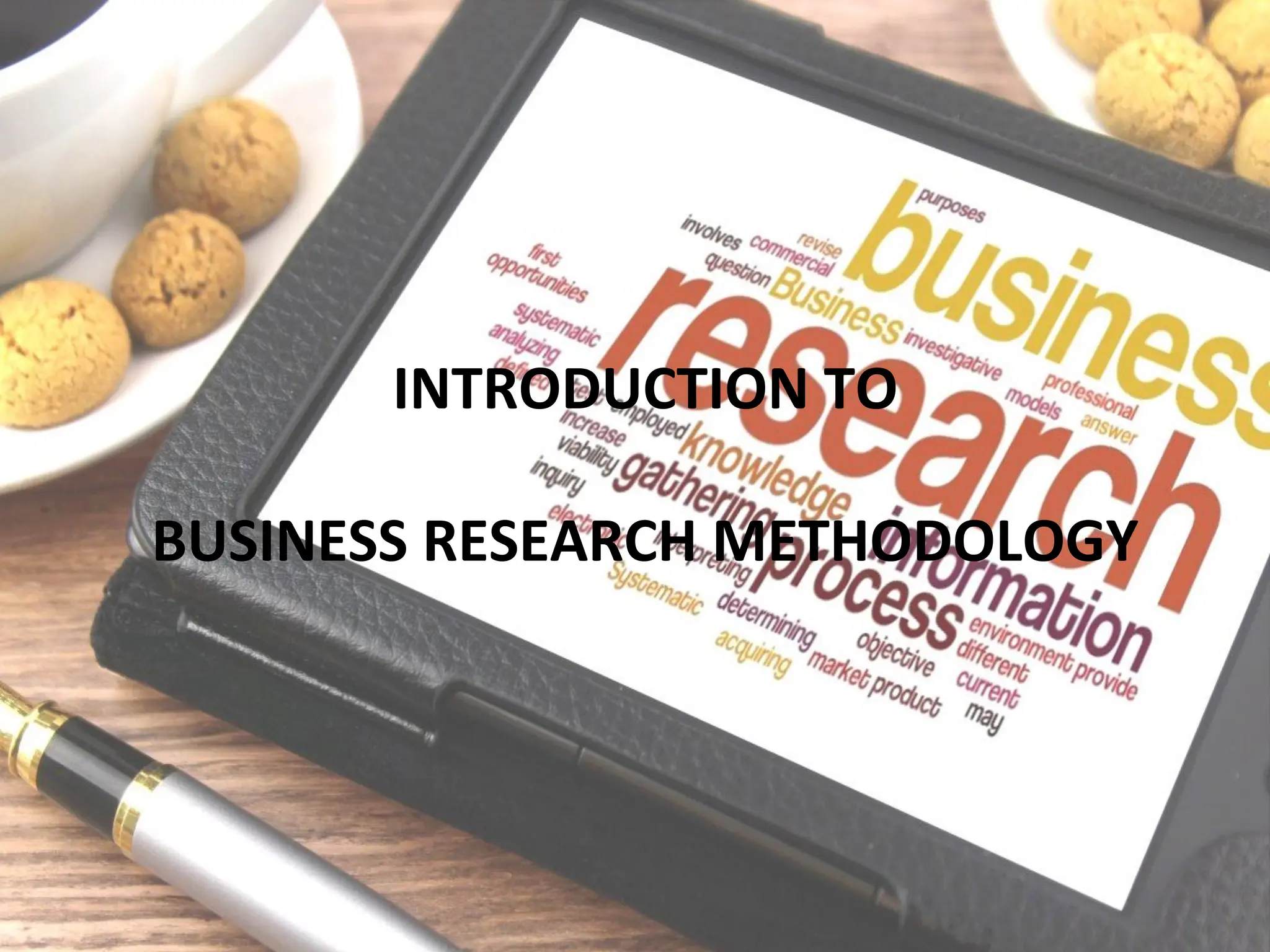
INTRODUCTION TO
BUSINESS RESEARCH METHODOLOGY
DEFINING BUSINESS RESEARCH
METHODS
• Business research is defined as the systematic
and objective process of generating
information for aid in making business
decisions.
• Acquisition of information or knowledge for
professional or commercial purpose to
determine opportunities and goals for a
business.
METHODS VS. METHODOLOGY
WHAT RESEARCH IS NOT
• Mere data collection
• Mere Literature Review
- Synthesis and analysis
5
WHAT IS GOOD RESEARCH
• Purpose clearly defined
• Research process detailed
• Research design thoroughly planned
• High ethical standards applied
• Limitations frankly revealed
• Adequate analysis for decision makers’ needs
• Findings presented unambiguously
• Conclusions justified
• Researcher's experience reflected
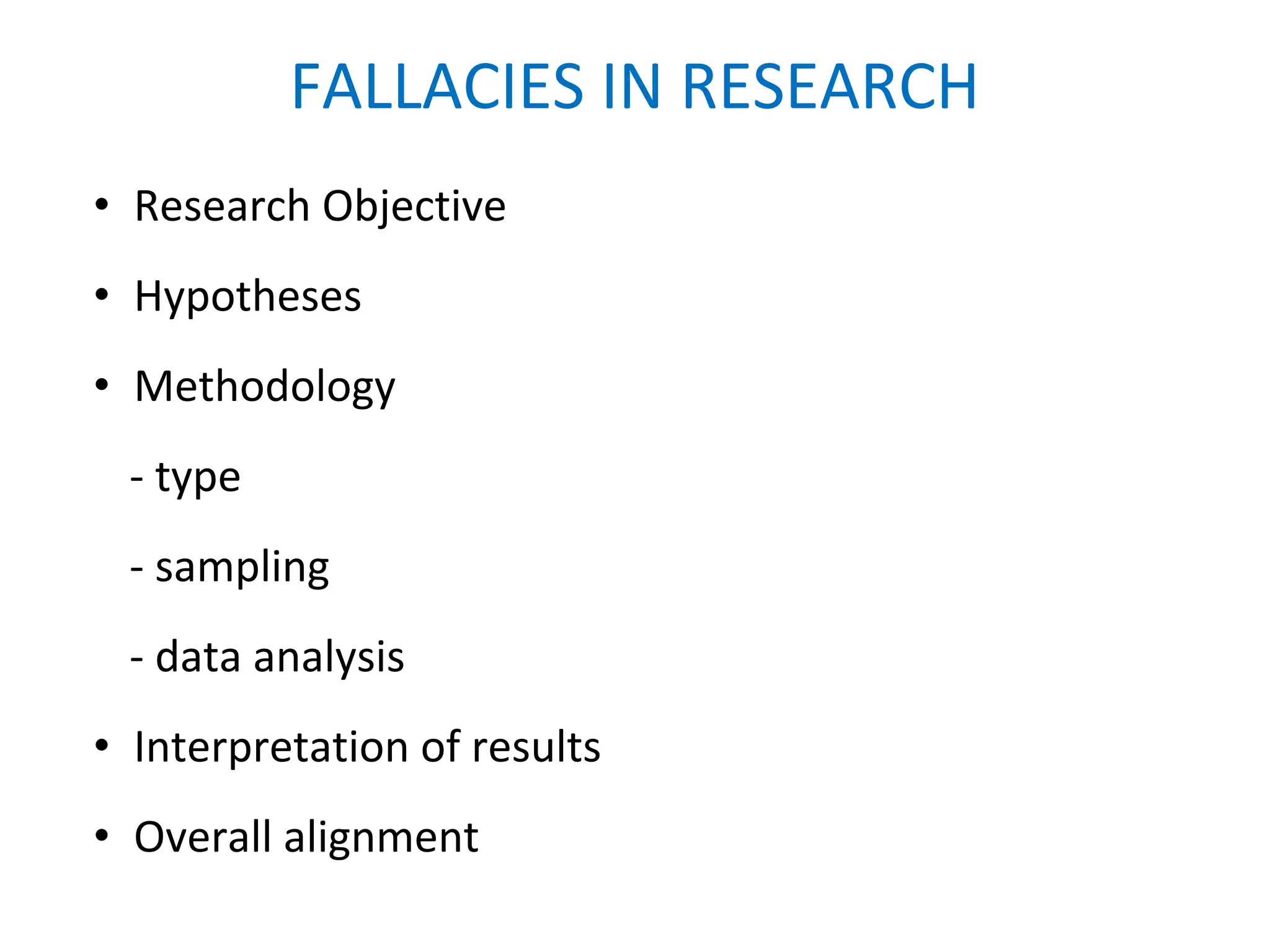
FALLACIES IN RESEARCH
• Research Objective
• Hypotheses
• Methodology
- type
- sampling
- data analysis
• Interpretation of results
• Overall alignment
TYPES OF BUSINESS RESEARCH: BY SOURCE
Primary Collection of data specifically for the problem or
project in hand.
Secondary Based on data previously collected for purposes
other than the research in hand (e.g. published articles,
government statistics, etc.).
QUALITATIVE VS. QUANTITATIVE
RESEARCH
OBJECTIVITY IN RESEARCH
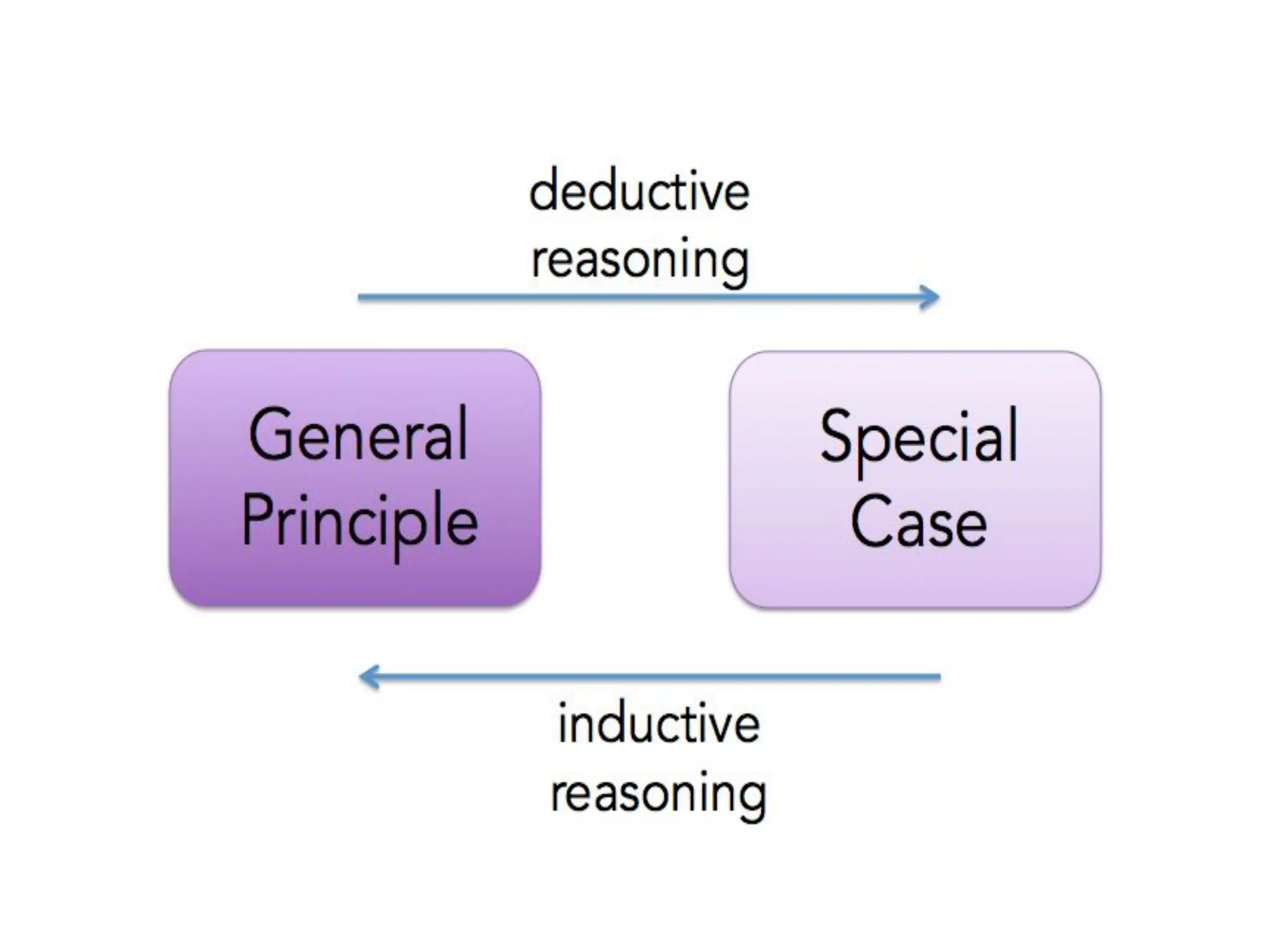
Deductive Research
Starts with theory,
moves to hypothesis,
observation, and
conclusion
Inductive Research:
Starts with observation
and moves to form a
theory
(Wolfer cited in Allyn & Bacon, 2008)
INDUCTIVE & DEDUCTIVE REASONING
BASIC RESEARCH CONCEPTS
• Concepts
• Constructs
• Definitions
• Variables
• Hypothesis
• Theories
• Models
(Cooper & Schindler, 2014)
Concepts
• Scientific methods and scientific thinking are
based on concepts, the symbols we attach to
bundles of meaning that we hold and share with
others.
• A concept is a generally accepted collection of
meanings or characteristics associated with
certain events, objects, conditions, situations, and
behaviors.
• We invent concepts to think about and
communicate abstractions.
Constructs
• We build constructs by combining the simpler,
more concrete concepts, especially when the
idea or image we intend to convey is not
subject to direct observation.
• Higher-level concepts are called constructs.
COMMUNICATING
EXTERNAL
CONDITIONS
INTERNAL
CONDITIONS
STRATEGIC
ALIGNMENT
1. Approach
2. Structure
FORMULATING
1. Proactive
2. Reactive
IMPLEMENTING
1. Impure Employee
Volunteering
2. Partnering
3. Monitoring
ASSESSING
IMPACT
FACILITATING
1. Managerial Aspects
2. Managing Relationships
COMMUNICATING
Managerial Decision-Making Process in CSR (Tyagi & Mallya, 2018)
Definitions
• An operational definition is a definition stated
in terms of specific criteria for testing or
measurement.
• Operational definitions may vary, depending
on your purpose and the way you choose to
measure them.
Variables
• In practice, the term variable is used as a synonym
for construct, or the property being studied.
• A variable is a symbol of an event, act,
characteristic, trait, or attribute that can be
measured and to which we assign values.
• For purposes of data entry and analysis, we assign
numerical value to a variable based on the
variable’s properties.
• Dichotomous and Continuous Variables
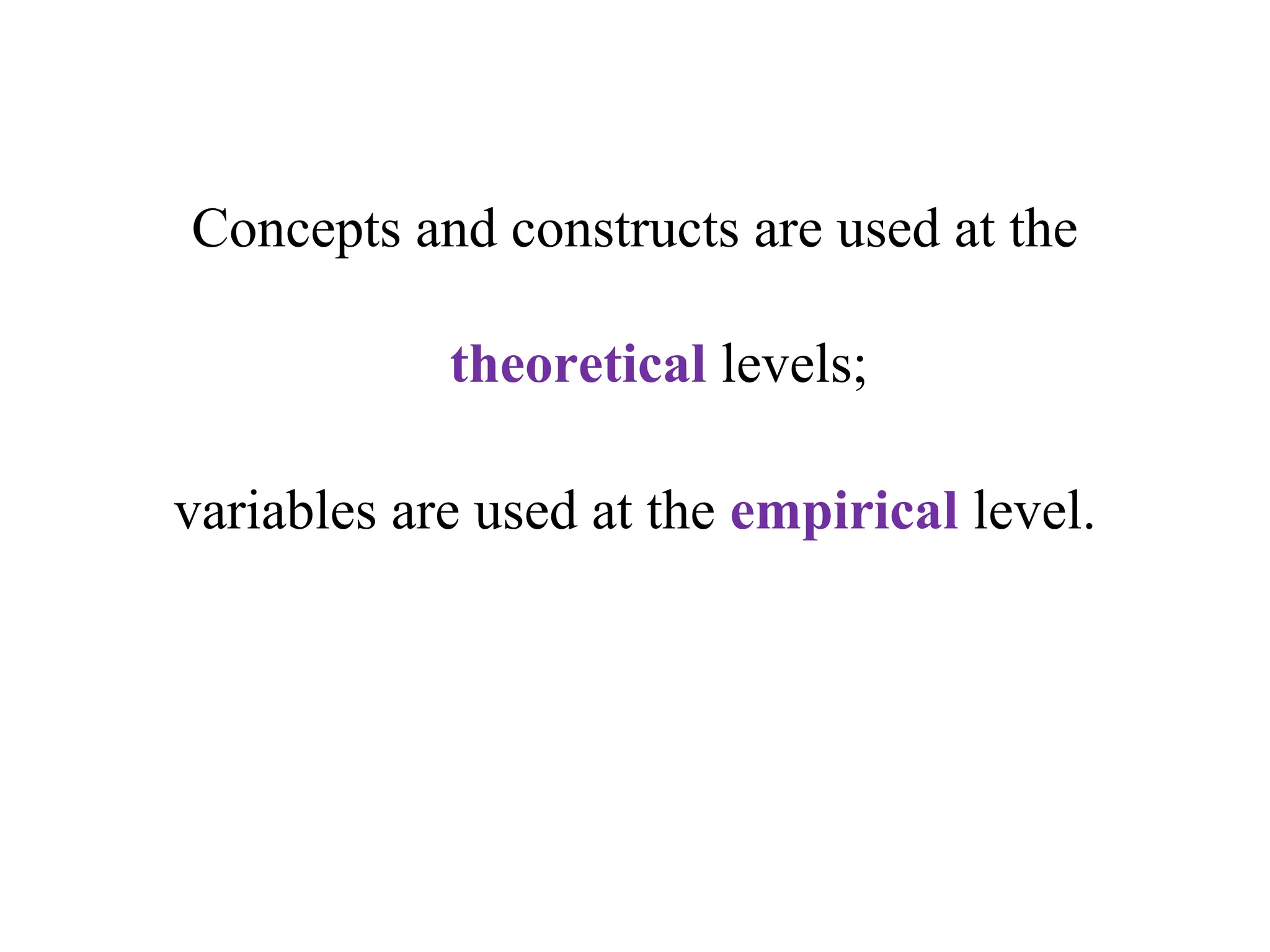
Concepts and constructs are used at the
theoretical levels;
variables are used at the empirical level.
Types of variables
• Independent
• Dependent
• Moderating
• Mediating
EXAMPLES
• In a study to determine
whether how long a
student sleeps affects
test scores the
independent variable is
the length of time spent
sleeping while the
dependent variable is
the test score.
• How does service
tenure affect job
performance of an
employee.
Duration of
Sleep
Test Scores
Tenure
Job
Performance
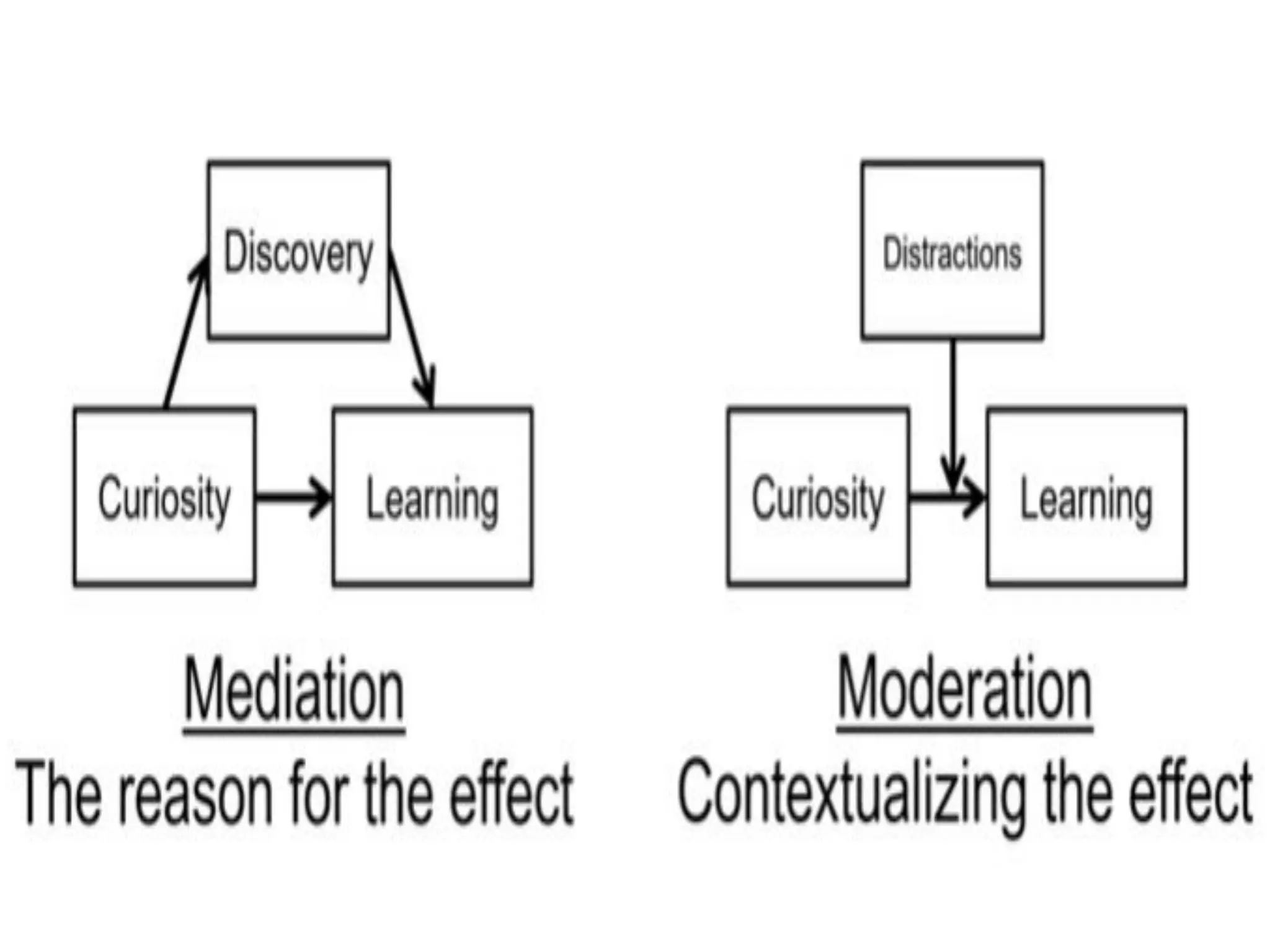
Moderator
• A moderator affects the
strength of the relationship
between the independent
and the dependent variable.
Mediator
• A mediating variable
explains the relationship
between the independent
and dependent variable.
• It explains the ‘how’ or
‘why’ there is a relationship
between two variables.
Note-taking Performance in
exam
No. of hours put in
studying
Hypotheses
• A hypothesis describes the relationships
between or among variables.
• A good hypothesis is one that can explain
what it claims to explain; is testable; and has
greater range, probability, and simplicity than
its rivals.
• As a declarative statement about the
relationship between two or more variables, a
hypothesis is of a tentative and conjectural
nature.
Theories
• Sets of interrelated concepts, definitions, and
propositions that are advanced to explain and
predict phenomena are called theories.
• Theories are the generalizations we make
about variables and the relationships among
them.
• In general, theories tend to be complex and
abstract and to involve multiple variables.
Models
• Models differ from theories in that models are
analogies or representations of some aspect of a
system or of the system as a whole.
• Models are used for description, prediction, and
control.
• Models differ from theories in that a theory’s role
is explanation whereas a model’s role is
representation.
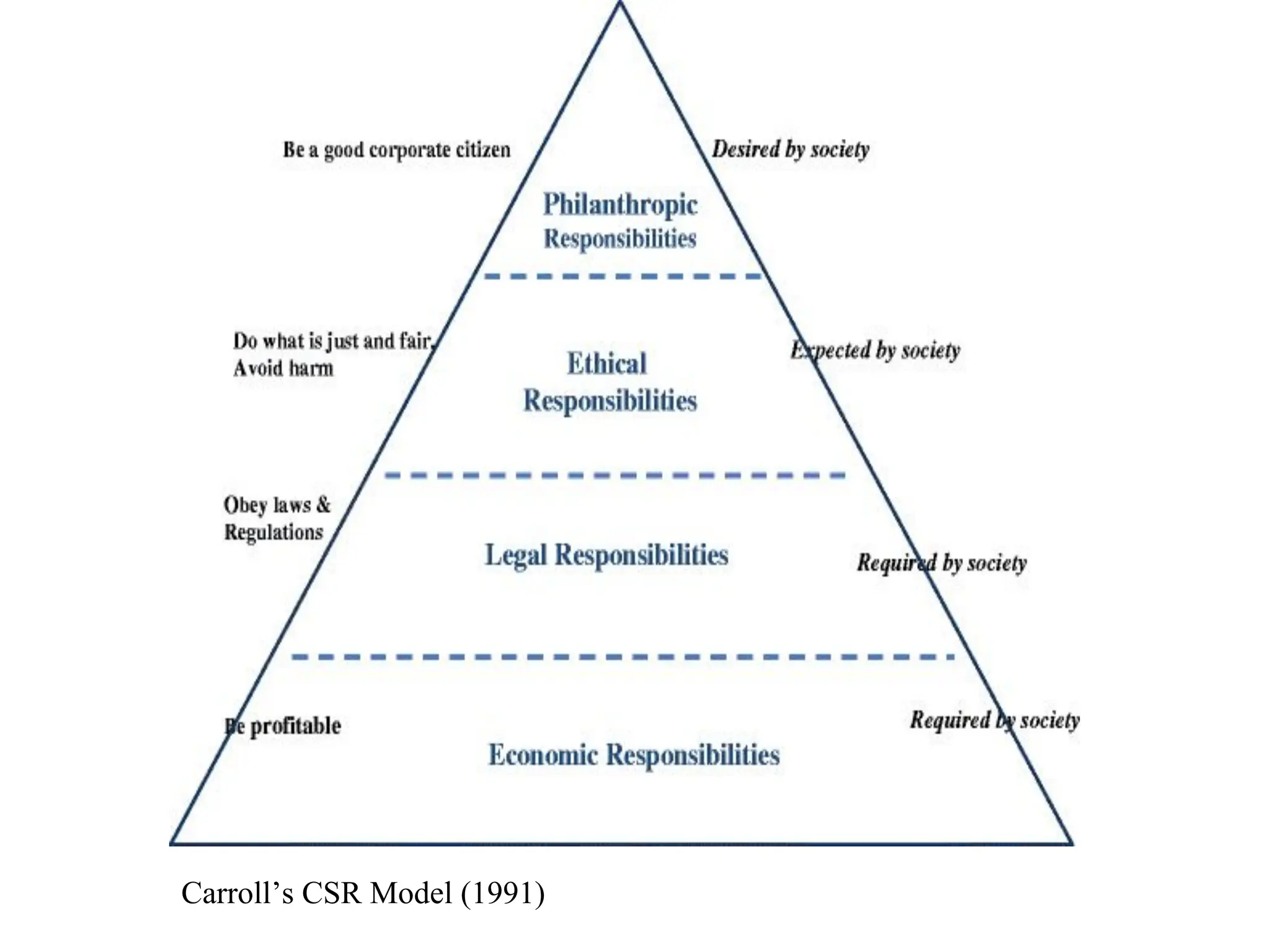
Carroll’s CSR Model (1991)
ETHICAL ASPECTS
• Plagiarism
• Informed consent
• Confidentiality/Anonymity
• If there were any findings that refuted the researcher’s hypothesis, did he or she
address these findings?
• If any results were unexpected, did the researcher acknowledge this?
• Did the researcher discuss any explanations for the unexpected effects?
• Did the researcher adequately acknowledge the limitations of the research?
Wolfer cited in Allyn and Bacon, (2008)

BRM.pdf

  • 1.
  • 2.
    DEFINING BUSINESS RESEARCH METHODS •Business research is defined as the systematic and objective process of generating information for aid in making business decisions. • Acquisition of information or knowledge for professional or commercial purpose to determine opportunities and goals for a business.
  • 3.
  • 5.
    WHAT RESEARCH ISNOT • Mere data collection • Mere Literature Review - Synthesis and analysis 5
  • 6.
    WHAT IS GOODRESEARCH • Purpose clearly defined • Research process detailed • Research design thoroughly planned • High ethical standards applied • Limitations frankly revealed • Adequate analysis for decision makers’ needs • Findings presented unambiguously • Conclusions justified • Researcher's experience reflected
  • 7.
    FALLACIES IN RESEARCH •Research Objective • Hypotheses • Methodology - type - sampling - data analysis • Interpretation of results • Overall alignment
  • 8.
    TYPES OF BUSINESSRESEARCH: BY SOURCE Primary Collection of data specifically for the problem or project in hand. Secondary Based on data previously collected for purposes other than the research in hand (e.g. published articles, government statistics, etc.).
  • 9.
  • 10.
  • 11.
    Deductive Research Starts withtheory, moves to hypothesis, observation, and conclusion Inductive Research: Starts with observation and moves to form a theory (Wolfer cited in Allyn & Bacon, 2008) INDUCTIVE & DEDUCTIVE REASONING
  • 15.
    BASIC RESEARCH CONCEPTS •Concepts • Constructs • Definitions • Variables • Hypothesis • Theories • Models (Cooper & Schindler, 2014)
  • 16.
    Concepts • Scientific methodsand scientific thinking are based on concepts, the symbols we attach to bundles of meaning that we hold and share with others. • A concept is a generally accepted collection of meanings or characteristics associated with certain events, objects, conditions, situations, and behaviors. • We invent concepts to think about and communicate abstractions.
  • 17.
    Constructs • We buildconstructs by combining the simpler, more concrete concepts, especially when the idea or image we intend to convey is not subject to direct observation. • Higher-level concepts are called constructs.
  • 18.
    COMMUNICATING EXTERNAL CONDITIONS INTERNAL CONDITIONS STRATEGIC ALIGNMENT 1. Approach 2. Structure FORMULATING 1.Proactive 2. Reactive IMPLEMENTING 1. Impure Employee Volunteering 2. Partnering 3. Monitoring ASSESSING IMPACT FACILITATING 1. Managerial Aspects 2. Managing Relationships COMMUNICATING Managerial Decision-Making Process in CSR (Tyagi & Mallya, 2018)
  • 19.
    Definitions • An operationaldefinition is a definition stated in terms of specific criteria for testing or measurement. • Operational definitions may vary, depending on your purpose and the way you choose to measure them.
  • 20.
    Variables • In practice,the term variable is used as a synonym for construct, or the property being studied. • A variable is a symbol of an event, act, characteristic, trait, or attribute that can be measured and to which we assign values. • For purposes of data entry and analysis, we assign numerical value to a variable based on the variable’s properties. • Dichotomous and Continuous Variables
  • 21.
    Concepts and constructsare used at the theoretical levels; variables are used at the empirical level.
  • 22.
    Types of variables •Independent • Dependent • Moderating • Mediating
  • 24.
    EXAMPLES • In astudy to determine whether how long a student sleeps affects test scores the independent variable is the length of time spent sleeping while the dependent variable is the test score. • How does service tenure affect job performance of an employee. Duration of Sleep Test Scores Tenure Job Performance
  • 25.
    Moderator • A moderatoraffects the strength of the relationship between the independent and the dependent variable. Mediator • A mediating variable explains the relationship between the independent and dependent variable. • It explains the ‘how’ or ‘why’ there is a relationship between two variables.
  • 28.
    Note-taking Performance in exam No.of hours put in studying
  • 29.
    Hypotheses • A hypothesisdescribes the relationships between or among variables. • A good hypothesis is one that can explain what it claims to explain; is testable; and has greater range, probability, and simplicity than its rivals.
  • 30.
    • As adeclarative statement about the relationship between two or more variables, a hypothesis is of a tentative and conjectural nature.
  • 31.
    Theories • Sets ofinterrelated concepts, definitions, and propositions that are advanced to explain and predict phenomena are called theories. • Theories are the generalizations we make about variables and the relationships among them. • In general, theories tend to be complex and abstract and to involve multiple variables.
  • 33.
    Models • Models differfrom theories in that models are analogies or representations of some aspect of a system or of the system as a whole. • Models are used for description, prediction, and control. • Models differ from theories in that a theory’s role is explanation whereas a model’s role is representation.
  • 34.
  • 35.
    ETHICAL ASPECTS • Plagiarism •Informed consent • Confidentiality/Anonymity • If there were any findings that refuted the researcher’s hypothesis, did he or she address these findings? • If any results were unexpected, did the researcher acknowledge this? • Did the researcher discuss any explanations for the unexpected effects? • Did the researcher adequately acknowledge the limitations of the research? Wolfer cited in Allyn and Bacon, (2008)