Brainstorming
The SCAMPER method
Substitute
Combine
Add / adapt
Modify / maximize / minimize
Put to other use
Eliminate
Rearrange or reverse
Question # 1
What can we substitute?
Examples of questions to ask
 What other purpose?
 What other values?
 What other products / services?
 What other competencies?
 What other technologies?
 What other methods?
 What other times?
 What other places?
 What other shapes / colours?
 What other components / materials / parts?
Question # 2
What can we combine?
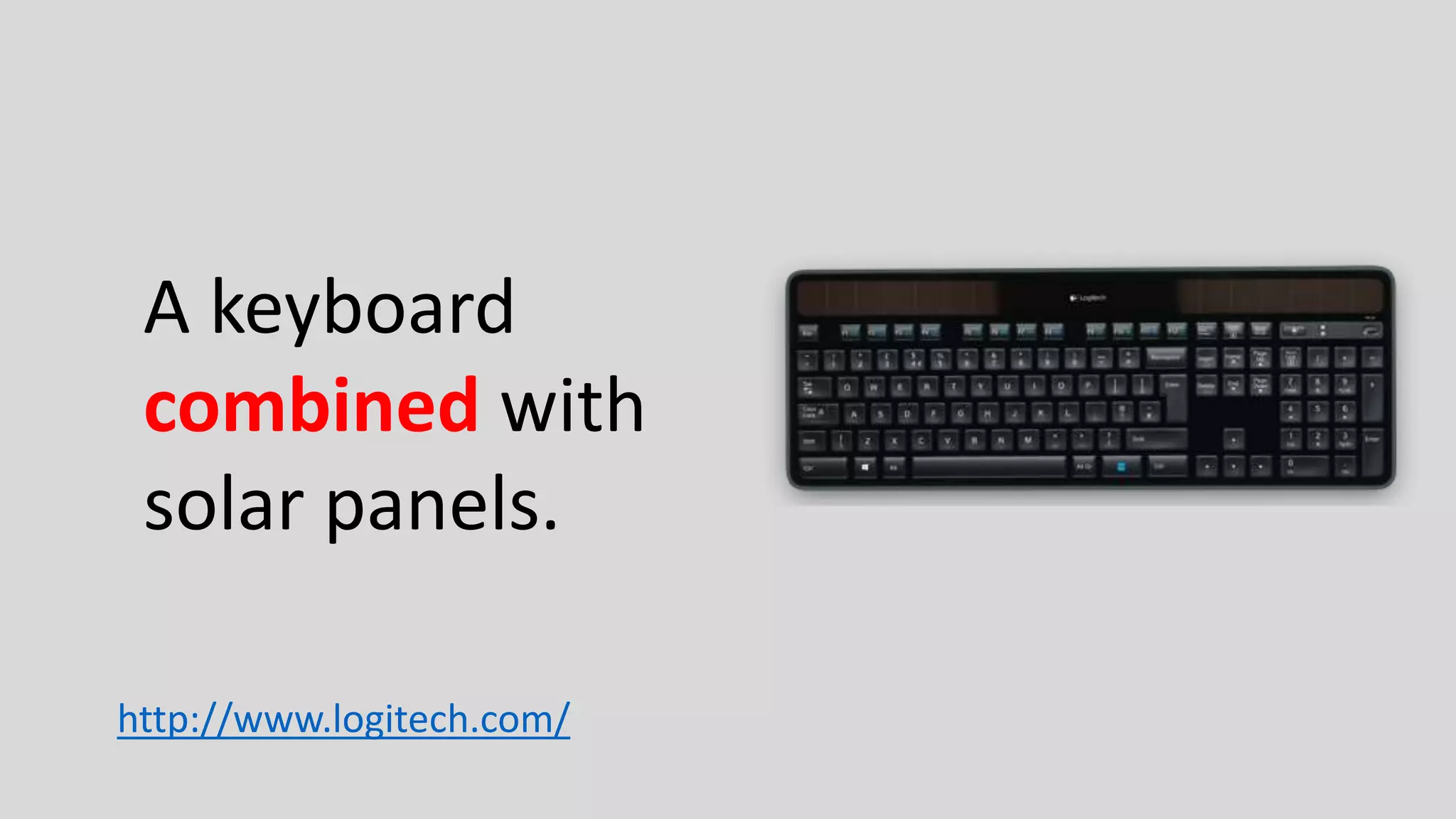
A keyboard
combined with
solar panels.
http://www.logitech.com/
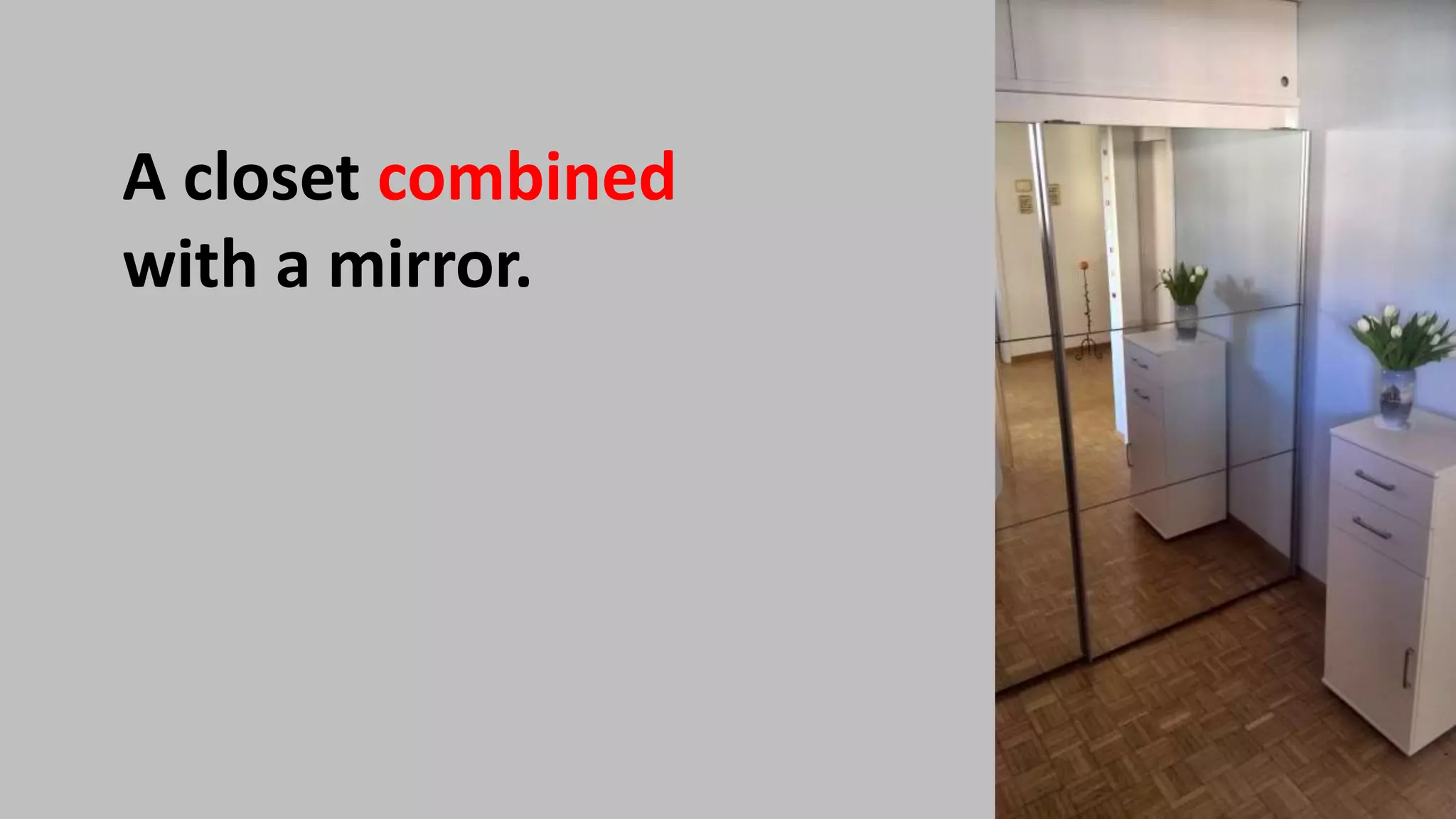
A closet combined
with a mirror.
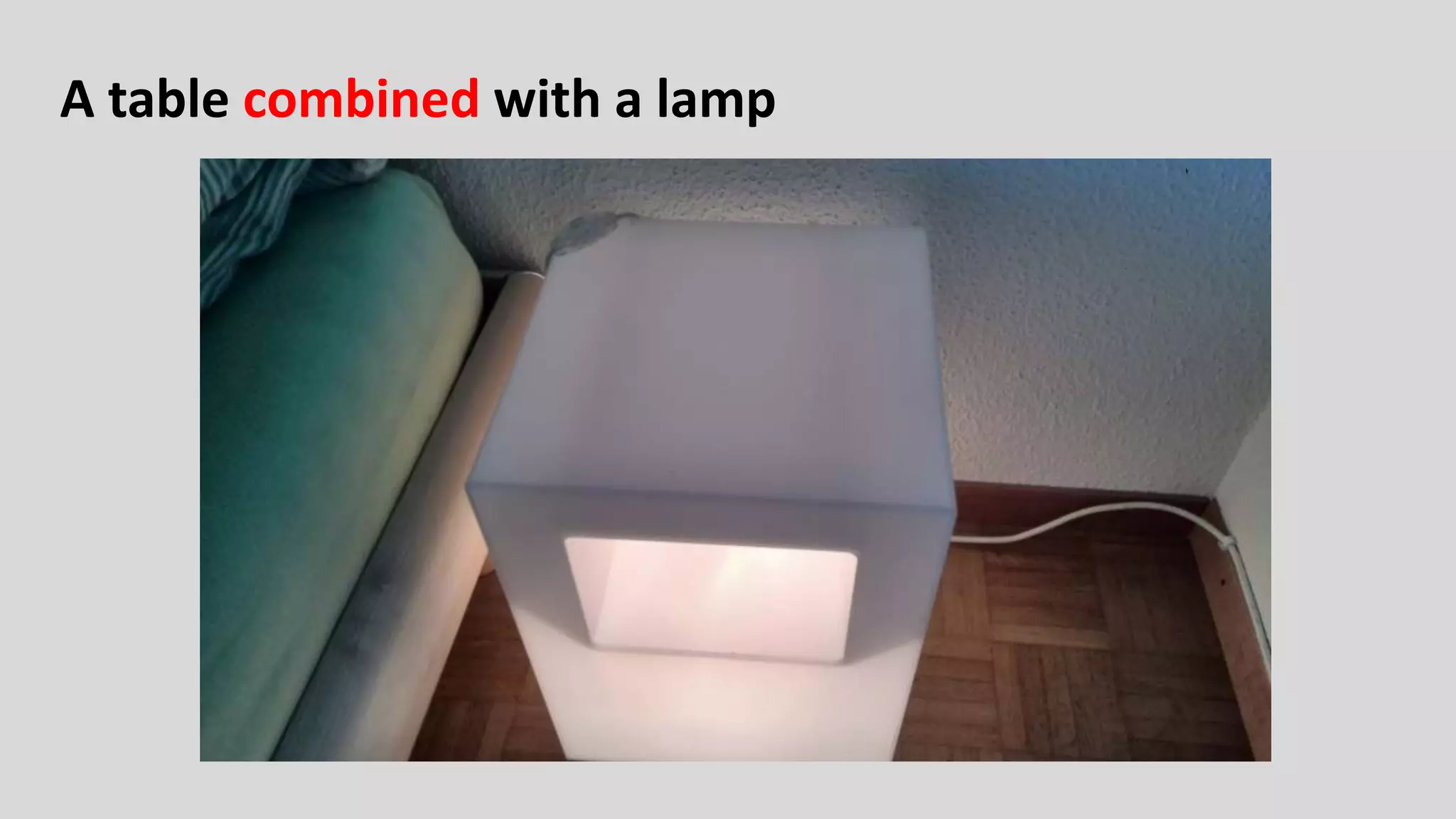
A table combined with a lamp
Questions to ask
 What technologies can be combined?
 What parts / materials can be combined?
 What people can be combined?
Question # 3
What can we add or adapt?
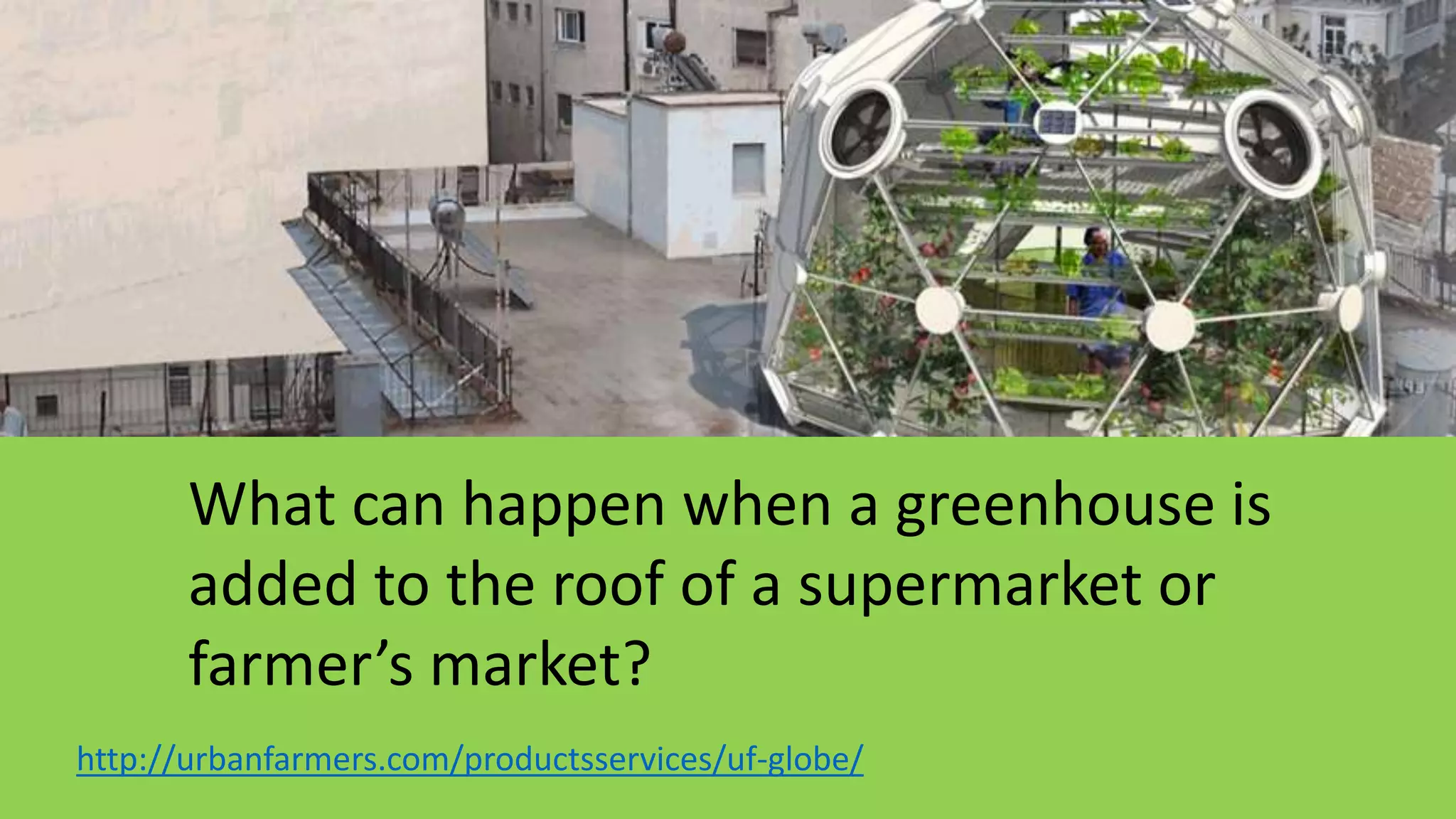
http://urbanfarmers.com/productsservices/uf-globe/
What can happen when a greenhouse is
added to the roof of a supermarket or
farmer’s market?
Questions to ask
 What ideas outside my field can I use / add?
 What products / services can I learn from?
 What people can I learn from?
 What different contexts can I put my concept in?
 Which extra function can be added?
 What photo or sound can be added?
 What color or form can be added?
Question # 4
What can we modify,
maximize and/or minimize?
Questions to ask
 What can be made larger / taller / bigger?
 What can be exaggerated / overstated?
 What can be made smaller / lighter?
 What can be duplicated / repeated?
 What can be increased in frequency?
Serve yourself, pay what you think is fair.
Thank you very much in advance for your crowdfunding contribution.
When you give a tip / donate, you help to
1. keep content openly accessible for anyone.
2. keep content free of advertisements.
3. support ongoing development - including updates to existing content and creation of new content.
http://www.frankcalberg.com/payment
Question # 5
What can we
put to other use?
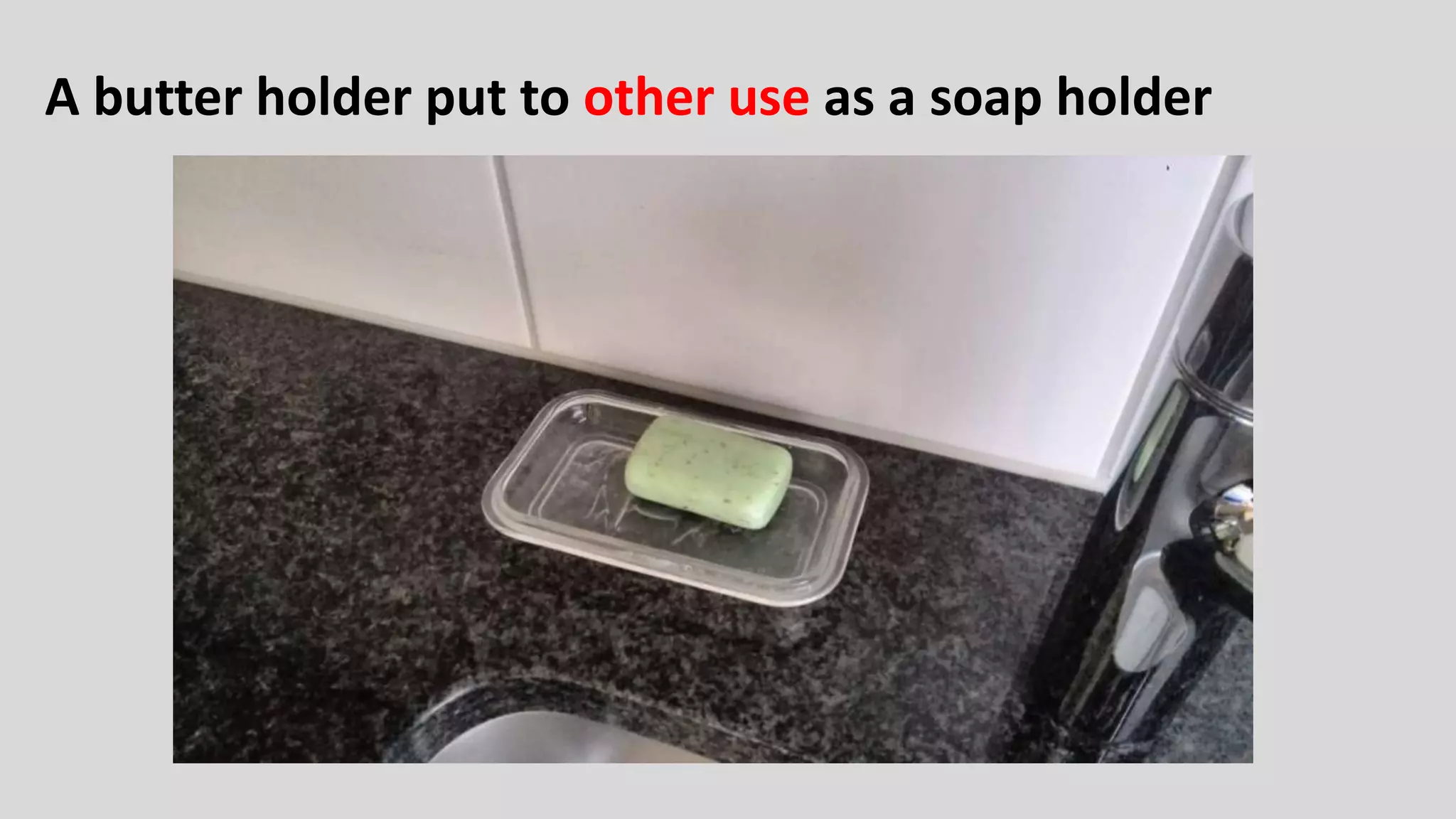
A butter holder put to other use as a soap holder
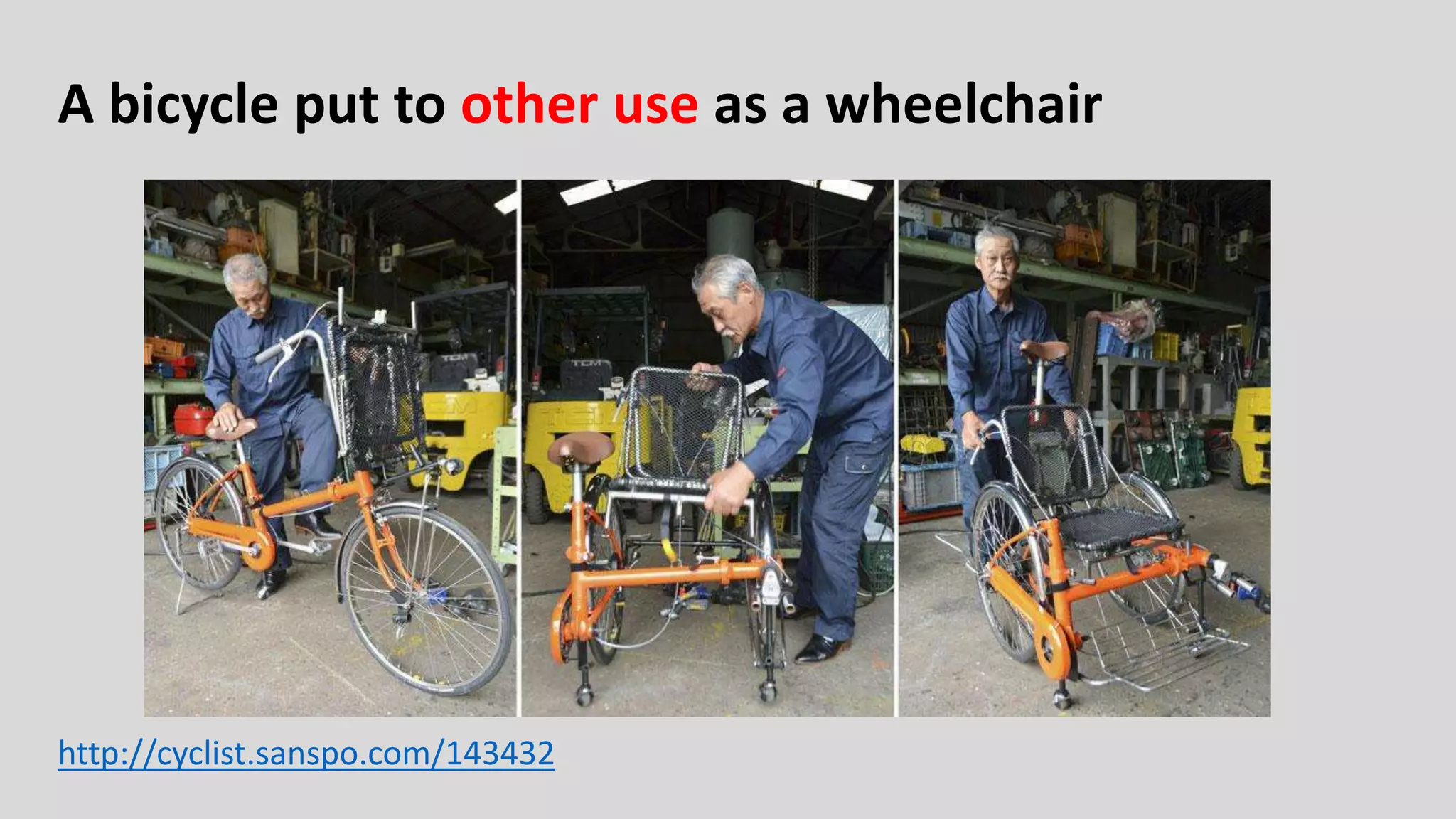
A bicycle put to other use as a wheelchair
http://cyclist.sanspo.com/143432
How could improved bicycle infrastructure
in cities be used to simultaneously
 help increase sales of shops?
 reduce congestion in cities?
 improve the environment?
http://www.slideshare.net/frankcalberg/bicycle-friendly-cities
Questions to ask
 What else can the product / service be used for?
 Who else can the product / service be used by?
 How would a child use it? An elderly person?
 How would people with diabilities use it?
 What new ways are there to use it in its current form?
 What other possible uses are there if it’s modified?
 Can I use it in other industries?
 Can I use it in other markets / places?
Question # 6
What can we
eliminate / subtract?
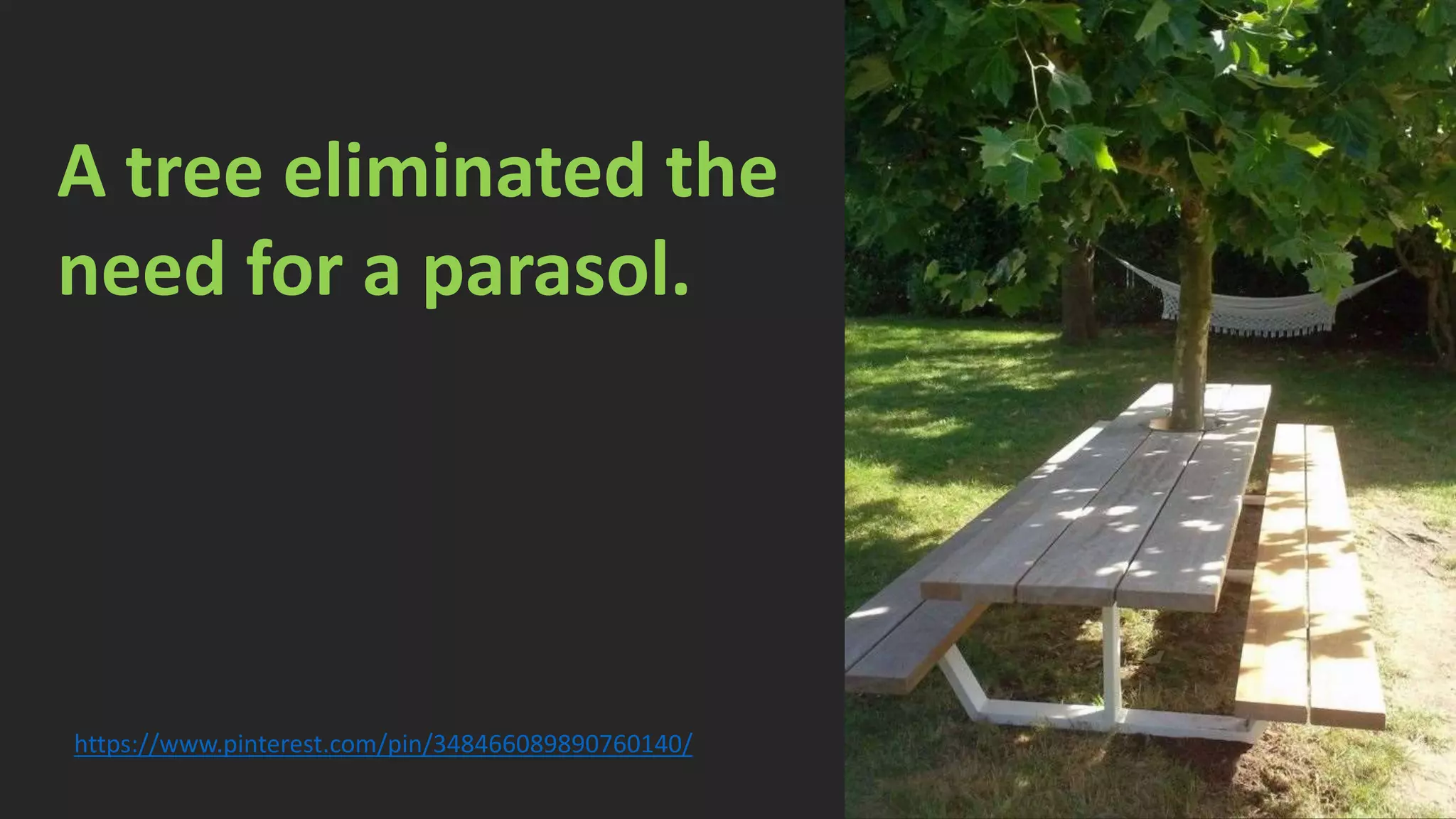
https://www.pinterest.com/pin/348466089890760140/
A tree eliminated the
need for a parasol.
What if lecture halls at university buildings
were removed or redesigned as
 individual, quiet study booths, and/or
 workshop rooms for small groups?
Questions to ask
 What is nonessential or unnecessary?
 What would happen if it was made smaller?
 What would happen if which rules are eliminated?
 How can it be made more simple?
 How can it me made smaller / lower / shorter / lighter?
 What parts can be removed without changing its function?
 In which different parts could it be split?
Question # 7
What can we
rearrange or reverse?
What if external people are
involved in what companies do?
https://delicious.com/frankcalberg/crowdsourcing
Questions to ask
 What can be moved?
 What can be arranged in a different way?
 What can be turned / twisted?
 What can be reversed / turned up side down?
Further sources of inspiration
http://www.adb.org/documents/information/knowledge-solutions/the-scamper-technique.pdf
http://www.brainstorming.co.uk/tutorials/scampertutorial.html
http://www.business-strategy-innovation.com/2010/04/scamper-your-way-to-increased.html
http://e-articles.info/e/a/title/Creativity:-Using-the-SCAMPER-Process/
http://fosenabling.wetpaint.com/page/Scamper
http://litemind.com/scamper/
http://www.managementexchange.com/blog/so-you-want-be-creative-genius
http://www.mycoted.com/SCAMPER
http://www.slideshare.net/Tabby/in-4-scamper-toyota-iq
http://thinkjarcollective.com/tools/thomas-edisons-creative-thinking-habits/
Thank you for your interest. For further inspiration
and personalized services, feel welcome to visit
http://www.frankcalberg.com
Have a great day.

Brainstorming - the SCAMPER method

  • 1.
  • 2.
    Substitute Combine Add / adapt Modify/ maximize / minimize Put to other use Eliminate Rearrange or reverse
  • 3.
    Question # 1 Whatcan we substitute?
  • 4.
    Examples of questionsto ask  What other purpose?  What other values?  What other products / services?  What other competencies?  What other technologies?  What other methods?  What other times?  What other places?  What other shapes / colours?  What other components / materials / parts?
  • 5.
    Question # 2 Whatcan we combine?
  • 6.
    A keyboard combined with solarpanels. http://www.logitech.com/
  • 7.
  • 8.
    A table combinedwith a lamp
  • 9.
    Questions to ask What technologies can be combined?  What parts / materials can be combined?  What people can be combined?
  • 10.
    Question # 3 Whatcan we add or adapt?
  • 11.
    http://urbanfarmers.com/productsservices/uf-globe/ What can happenwhen a greenhouse is added to the roof of a supermarket or farmer’s market?
  • 12.
    Questions to ask What ideas outside my field can I use / add?  What products / services can I learn from?  What people can I learn from?  What different contexts can I put my concept in?  Which extra function can be added?  What photo or sound can be added?  What color or form can be added?
  • 13.
    Question # 4 Whatcan we modify, maximize and/or minimize?
  • 14.
    Questions to ask What can be made larger / taller / bigger?  What can be exaggerated / overstated?  What can be made smaller / lighter?  What can be duplicated / repeated?  What can be increased in frequency?
  • 15.
    Serve yourself, paywhat you think is fair. Thank you very much in advance for your crowdfunding contribution. When you give a tip / donate, you help to 1. keep content openly accessible for anyone. 2. keep content free of advertisements. 3. support ongoing development - including updates to existing content and creation of new content. http://www.frankcalberg.com/payment
  • 16.
    Question # 5 Whatcan we put to other use?
  • 17.
    A butter holderput to other use as a soap holder
  • 18.
    A bicycle putto other use as a wheelchair http://cyclist.sanspo.com/143432
  • 19.
    How could improvedbicycle infrastructure in cities be used to simultaneously  help increase sales of shops?  reduce congestion in cities?  improve the environment? http://www.slideshare.net/frankcalberg/bicycle-friendly-cities
  • 20.
    Questions to ask What else can the product / service be used for?  Who else can the product / service be used by?  How would a child use it? An elderly person?  How would people with diabilities use it?  What new ways are there to use it in its current form?  What other possible uses are there if it’s modified?  Can I use it in other industries?  Can I use it in other markets / places?
  • 21.
    Question # 6 Whatcan we eliminate / subtract?
  • 22.
  • 23.
    What if lecturehalls at university buildings were removed or redesigned as  individual, quiet study booths, and/or  workshop rooms for small groups?
  • 24.
    Questions to ask What is nonessential or unnecessary?  What would happen if it was made smaller?  What would happen if which rules are eliminated?  How can it be made more simple?  How can it me made smaller / lower / shorter / lighter?  What parts can be removed without changing its function?  In which different parts could it be split?
  • 25.
    Question # 7 Whatcan we rearrange or reverse?
  • 26.
    What if externalpeople are involved in what companies do? https://delicious.com/frankcalberg/crowdsourcing
  • 27.
    Questions to ask What can be moved?  What can be arranged in a different way?  What can be turned / twisted?  What can be reversed / turned up side down?
  • 28.
    Further sources ofinspiration http://www.adb.org/documents/information/knowledge-solutions/the-scamper-technique.pdf http://www.brainstorming.co.uk/tutorials/scampertutorial.html http://www.business-strategy-innovation.com/2010/04/scamper-your-way-to-increased.html http://e-articles.info/e/a/title/Creativity:-Using-the-SCAMPER-Process/ http://fosenabling.wetpaint.com/page/Scamper http://litemind.com/scamper/ http://www.managementexchange.com/blog/so-you-want-be-creative-genius http://www.mycoted.com/SCAMPER http://www.slideshare.net/Tabby/in-4-scamper-toyota-iq http://thinkjarcollective.com/tools/thomas-edisons-creative-thinking-habits/
  • 29.
    Thank you foryour interest. For further inspiration and personalized services, feel welcome to visit http://www.frankcalberg.com Have a great day.