10 Principles of the Bogleheads®
Investment philosophy
• Milwaukee Bogleheads
• September 11, 2017
Student Level Expertise Ages: All
Develop a Plan
• Live below your means
o Have a budget
o Save
o Avoid excess debt
• Put it in writing
o Imagine a likely scenario, make assumptions
o The enemy of a good plan is the search for a perfect plan
o Write down your Investment Policy Statement (IPS) so you can reference it
occasionally, discuss it with advisors and family members.
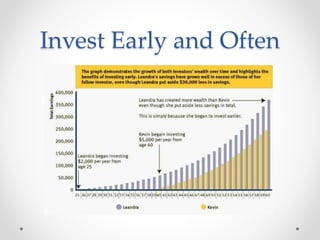
Invest Early and Often
Never Bear Too Much or
Too Little Risk
• Too much risk will drive you to the wrong decisions
during market downturns.
• Too little risk will lower returns significantly and allow
inflation to erode the value of your savings.
• Try out a variety of tools to find the asset allocation that
suits you best.
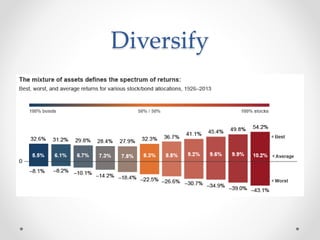
Diversify
Never try to time the
market
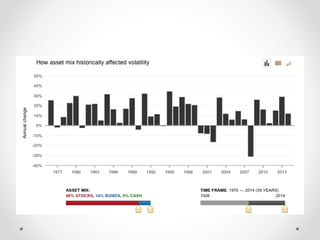
• Typical investors buy high and sell low. Don’t be typical.
• Don’t be one of the “Smartest Guys in the Room” like
Enron.
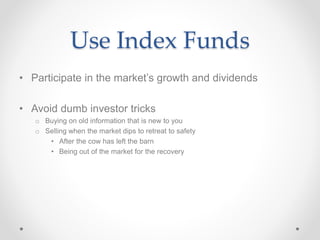
Use Index Funds
• Participate in the market’s growth and dividends
• Avoid dumb investor tricks
o Buying on old information that is new to you
o Selling when the market dips to retreat to safety
• After the cow has left the barn
• Being out of the market for the recovery
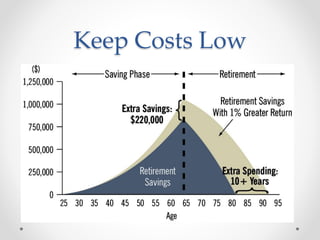
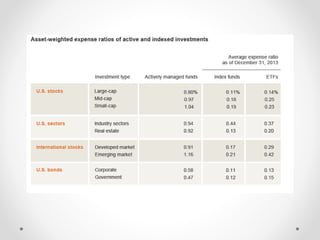
Keep Costs Low
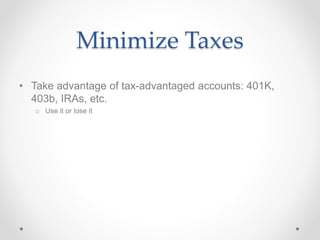
Minimize Taxes
• Take advantage of tax-advantaged accounts: 401K,
403b, IRAs, etc.
o Use it or lose it
Invest with Simplicity
• “When there are multiple solutions to a problem, choose
the simplest one.”
Occam's Razor explained John Bogle
• 3 Fund Lazy Portfolio:
o US Stocks
o Bonds
o International Stocks
• Target Retirement or Life Strategy Fund
Stay the Course
• Essential to success
o When the market drops, it can be difficult to follow your plan. Create an asset
allocation that suits your appetite for risk.
• Tune out the chatter
o “Bad news sells papers.”
Where to Get More
Information
• http://www.bogleheads.org/wiki/Investment_policy_state
ment
• http://www.bogleheads.org/wiki/Video:Bogleheads®_inve
stment_philosophy

Boglehead principles

  • 1.
    10 Principles ofthe Bogleheads® Investment philosophy • Milwaukee Bogleheads • September 11, 2017 Student Level Expertise Ages: All
  • 2.
    Develop a Plan •Live below your means o Have a budget o Save o Avoid excess debt • Put it in writing o Imagine a likely scenario, make assumptions o The enemy of a good plan is the search for a perfect plan o Write down your Investment Policy Statement (IPS) so you can reference it occasionally, discuss it with advisors and family members.
  • 3.
  • 4.
  • 5.
    Never Bear TooMuch or Too Little Risk • Too much risk will drive you to the wrong decisions during market downturns. • Too little risk will lower returns significantly and allow inflation to erode the value of your savings. • Try out a variety of tools to find the asset allocation that suits you best.
  • 6.
  • 7.
    Never try totime the market • Typical investors buy high and sell low. Don’t be typical. • Don’t be one of the “Smartest Guys in the Room” like Enron.
  • 9.
    Use Index Funds •Participate in the market’s growth and dividends • Avoid dumb investor tricks o Buying on old information that is new to you o Selling when the market dips to retreat to safety • After the cow has left the barn • Being out of the market for the recovery
  • 10.
  • 12.
    Minimize Taxes • Takeadvantage of tax-advantaged accounts: 401K, 403b, IRAs, etc. o Use it or lose it
  • 13.
    Invest with Simplicity •“When there are multiple solutions to a problem, choose the simplest one.” Occam's Razor explained John Bogle • 3 Fund Lazy Portfolio: o US Stocks o Bonds o International Stocks • Target Retirement or Life Strategy Fund
  • 14.
    Stay the Course •Essential to success o When the market drops, it can be difficult to follow your plan. Create an asset allocation that suits your appetite for risk. • Tune out the chatter o “Bad news sells papers.”
  • 15.
    Where to GetMore Information • http://www.bogleheads.org/wiki/Investment_policy_state ment • http://www.bogleheads.org/wiki/Video:Bogleheads®_inve stment_philosophy

Editor's Notes

  • #8 Typical investors buy high and sell low. Don’t be typical. Don’t be one of the “Smartest Guys in the Room” like Enron.
  • #9 Looking at actual market returns, many people SOLD at the bottom and BOUGHT at the top.
  • #11 Someone who lowers costs by 1%, will have an extra $220k by retirement, which extends their retirement spending by over 10 years. US Stock Index Fund fees:
  • #15 The media is in the business of “selling papers” not giving prudent investor advice. Tune out the chatter so you can stay the course.