Types of biologic specimen
and biologic variation
Definition of terms
• Specimen
• Sample
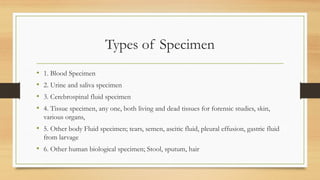
Types of Specimen
• 1. Blood Specimen
• 2. Urine and saliva specimen
• 3. Cerebrospinal fluid specimen
• 4. Tissue specimen, any one, both living and dead tissues for forensic studies, skin,
various organs,
• 5. Other body Fluid specimen; tears, semen, ascitic fluid, pleural effusion, gastric fluid
from larvage
• 6. Other human biological specimen; Stool, sputum, hair
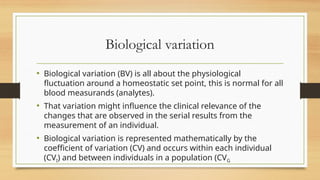
Biological variation
• Biological variation (BV) is all about the physiological
fluctuation around a homeostatic set point, this is normal for all
blood measurands (analytes).
• That variation might influence the clinical relevance of the
changes that are observed in the serial results from the
measurement of an individual.
• Biological variation is represented mathematically by the
coefficient of variation (CV) and occurs within each individual
(CVI) and between individuals in a population (CVG
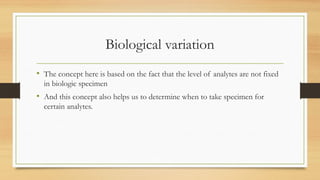
Biological variation
• The concept here is based on the fact that the level of analytes are not fixed
in biologic specimen
• And this concept also helps us to determine when to take specimen for
certain analytes.
Types
• Types: within subject and between subject
• Within subject has to do with natural rhythms and life patterns with some
genetic uniqueness and predisposition. (reference ranges come to play here)
• Between subjects (also involve reference intervals) has to do with variations
involving sex, age, race, pregnancy.
Biological rhythms
• Biological rhythm is a phrase often used interchangeably with
circadian rhythm. These rhythms are a series of bodily
functions regulated by your internal clock. They control cycles
like sleep and wakefulness, body temperature, hormone
secretion, and more.
• Light and darkness have a strong role to play.
• Diurnal: this has to do with night and day variations
• Circadian; this has to so with 24 hours cycles
• Ultradian; less than 24 hours
• Infradian/Circalunar: this has to do with a month cycle
• Circannual: this has to do with yearly cycles
• The first two are tied most affected by light and send signals to
your brain on what to do based on light and darkness.
• Beyond sleep these cycles and rhythms control other things such as
• Metabolism
• Heart rate
• Blood pressure
• Body temperature
• Hormone levels
• Urine production
• appetite
• hormone levels
• alertness
• daily performance
• reaction times
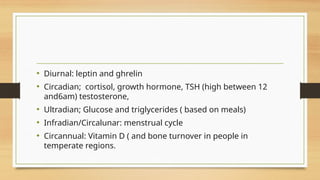
• Diurnal: leptin and ghrelin
• Circadian; cortisol, growth hormone, TSH (high between 12
and6am) testosterone,
• Ultradian; Glucose and triglycerides ( based on meals)
• Infradian/Circalunar: menstrual cycle
• Circannual: Vitamin D ( and bone turnover in people in
temperate regions.
References
• 1. Rossi G, Liu KF, Kershaw H, Riddell D, Hyndman TH, Monks D,
Musk GC. Biological Variation in Biochemistry Analytes in
Laboratory Guinea Pigs (Cavia porcellus). Vet Sci. 2023 Oct
17;10(10):621. doi: 10.3390/vetsci10100621. PMID: 37888573;
PMCID: PMC10610888.
• 2. https://www.webmd.com/a-to-z-guides/what-are-biological-
rhythms

biologic specimen and biologic variation.pptx

  • 1.
    Types of biologicspecimen and biologic variation
  • 3.
    Definition of terms •Specimen • Sample
  • 4.
    Types of Specimen •1. Blood Specimen • 2. Urine and saliva specimen • 3. Cerebrospinal fluid specimen • 4. Tissue specimen, any one, both living and dead tissues for forensic studies, skin, various organs, • 5. Other body Fluid specimen; tears, semen, ascitic fluid, pleural effusion, gastric fluid from larvage • 6. Other human biological specimen; Stool, sputum, hair
  • 5.
    Biological variation • Biologicalvariation (BV) is all about the physiological fluctuation around a homeostatic set point, this is normal for all blood measurands (analytes). • That variation might influence the clinical relevance of the changes that are observed in the serial results from the measurement of an individual. • Biological variation is represented mathematically by the coefficient of variation (CV) and occurs within each individual (CVI) and between individuals in a population (CVG
  • 6.
    Biological variation • Theconcept here is based on the fact that the level of analytes are not fixed in biologic specimen • And this concept also helps us to determine when to take specimen for certain analytes.
  • 7.
    Types • Types: withinsubject and between subject • Within subject has to do with natural rhythms and life patterns with some genetic uniqueness and predisposition. (reference ranges come to play here) • Between subjects (also involve reference intervals) has to do with variations involving sex, age, race, pregnancy.
  • 8.
    Biological rhythms • Biologicalrhythm is a phrase often used interchangeably with circadian rhythm. These rhythms are a series of bodily functions regulated by your internal clock. They control cycles like sleep and wakefulness, body temperature, hormone secretion, and more. • Light and darkness have a strong role to play.
  • 9.
    • Diurnal: thishas to do with night and day variations • Circadian; this has to so with 24 hours cycles • Ultradian; less than 24 hours • Infradian/Circalunar: this has to do with a month cycle • Circannual: this has to do with yearly cycles • The first two are tied most affected by light and send signals to your brain on what to do based on light and darkness.
  • 10.
    • Beyond sleepthese cycles and rhythms control other things such as • Metabolism • Heart rate • Blood pressure • Body temperature • Hormone levels • Urine production • appetite • hormone levels • alertness • daily performance • reaction times
  • 11.
    • Diurnal: leptinand ghrelin • Circadian; cortisol, growth hormone, TSH (high between 12 and6am) testosterone, • Ultradian; Glucose and triglycerides ( based on meals) • Infradian/Circalunar: menstrual cycle • Circannual: Vitamin D ( and bone turnover in people in temperate regions.
  • 12.
    References • 1. RossiG, Liu KF, Kershaw H, Riddell D, Hyndman TH, Monks D, Musk GC. Biological Variation in Biochemistry Analytes in Laboratory Guinea Pigs (Cavia porcellus). Vet Sci. 2023 Oct 17;10(10):621. doi: 10.3390/vetsci10100621. PMID: 37888573; PMCID: PMC10610888. • 2. https://www.webmd.com/a-to-z-guides/what-are-biological- rhythms