Free VPS For Gaming
Virtual Private Servers (VPS) have become an integral component of modern digital
infrastructure, offering a wide array of functionalities for various purposes. In this article,
we'll delve into the diverse applications of VPS, shedding light on its versatility and utility
across different domains.
Overview: Explaining Hosting
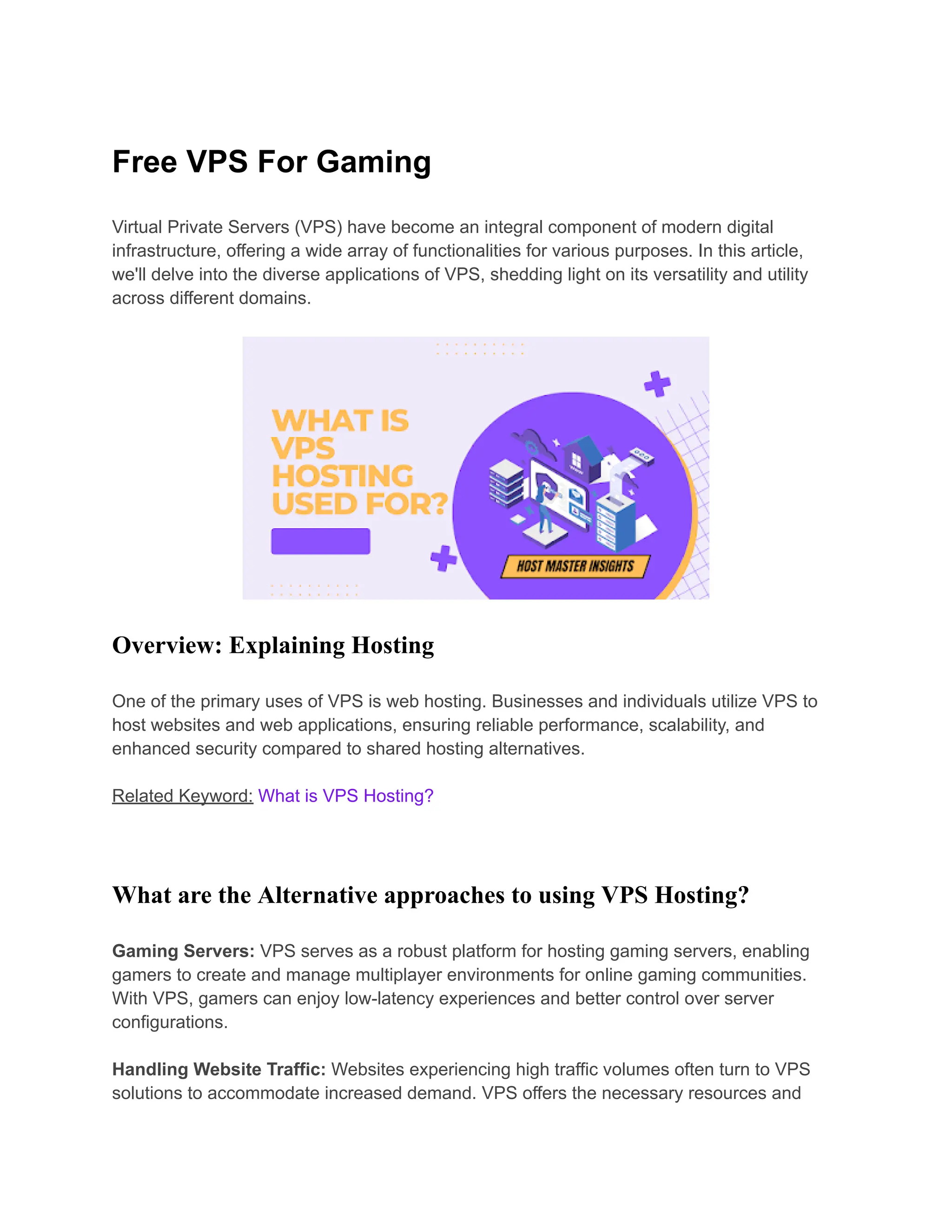
One of the primary uses of VPS is web hosting. Businesses and individuals utilize VPS to
host websites and web applications, ensuring reliable performance, scalability, and
enhanced security compared to shared hosting alternatives.
Related Keyword: What is VPS Hosting?
What are the Alternative approaches to using VPS Hosting?
Gaming Servers: VPS serves as a robust platform for hosting gaming servers, enabling
gamers to create and manage multiplayer environments for online gaming communities.
With VPS, gamers can enjoy low-latency experiences and better control over server
configurations.
Handling Website Traffic: Websites experiencing high traffic volumes often turn to VPS
solutions to accommodate increased demand. VPS offers the necessary resources and
scalability to handle surges in website traffic, ensuring optimal performance and user
experience during peak times.
Software Testing: Developers leverage VPS for software testing purposes, creating
isolated environments to test applications, updates, and configurations. VPS provides a
controlled setting for testing without impacting production systems, facilitating efficient
development and deployment processes.
Privacy Enhancement: VPS offers increased privacy compared to shared hosting
environments, as each VPS operates independently with its own resources and
configurations. This isolation ensures data privacy and security, making VPS an ideal
choice for sensitive applications and confidential information storage.
Private Backups: Businesses and individuals utilize VPS for creating private backups of
their data and applications. With VPS, users can set up automated backup routines,
ensuring data redundancy and disaster recovery preparedness without relying on third-party
services.
Reducing Server Errors: VPS minimizes the risk of server errors by providing dedicated
resources and isolation from other users. This isolation prevents issues such as resource
contention and ensures consistent performance, reducing the likelihood of downtime and
system failures.
Customization: VPS empowers users with unparalleled customization options, allowing
them to tailor server configurations and software environments to meet specific
requirements. From operating system choices to software installations, VPS offers flexibility
for customization according to individual needs.
Root Access: One of the key features of VPS is root access, granting users full
administrative control over the server environment. This level of access enables advanced
configurations, software installations, and system optimizations, empowering users to fully
manage their virtual servers.
What are the considerations for Choosing VPS?
Choosing the right Virtual Private Server (VPS) involves considering several key factors to
ensure it meets your specific requirements. Here are some considerations to keep in mind:
Resource Requirements: Assess your resource needs in terms of CPU, RAM, storage, and
bandwidth. Choose a VPS plan that offers adequate resources to support your applications
and expected traffic.
Scalability: Opt for a VPS provider that offers scalability, allowing you to easily upgrade or
downgrade your resources as your needs change. Scalability ensures flexibility and
prevents overpaying for unused resources.
Reliability and Uptime: Look for VPS providers with a track record of reliability and high
uptime guarantees. Downtime can impact your website's availability and reputation, so
choose a provider with robust infrastructure and redundancy measures.
Performance: Consider factors such as server hardware, virtualization technology, and
network infrastructure to ensure optimal performance. SSD storage, powerful CPUs, and
low-latency network connections contribute to faster response times and better user
experience.

Best VPS Provider for Gamers in 2024 (Free included)

  • 1.
    Free VPS ForGaming Virtual Private Servers (VPS) have become an integral component of modern digital infrastructure, offering a wide array of functionalities for various purposes. In this article, we'll delve into the diverse applications of VPS, shedding light on its versatility and utility across different domains. Overview: Explaining Hosting One of the primary uses of VPS is web hosting. Businesses and individuals utilize VPS to host websites and web applications, ensuring reliable performance, scalability, and enhanced security compared to shared hosting alternatives. Related Keyword: What is VPS Hosting? What are the Alternative approaches to using VPS Hosting? Gaming Servers: VPS serves as a robust platform for hosting gaming servers, enabling gamers to create and manage multiplayer environments for online gaming communities. With VPS, gamers can enjoy low-latency experiences and better control over server configurations. Handling Website Traffic: Websites experiencing high traffic volumes often turn to VPS solutions to accommodate increased demand. VPS offers the necessary resources and
  • 2.
    scalability to handlesurges in website traffic, ensuring optimal performance and user experience during peak times. Software Testing: Developers leverage VPS for software testing purposes, creating isolated environments to test applications, updates, and configurations. VPS provides a controlled setting for testing without impacting production systems, facilitating efficient development and deployment processes. Privacy Enhancement: VPS offers increased privacy compared to shared hosting environments, as each VPS operates independently with its own resources and configurations. This isolation ensures data privacy and security, making VPS an ideal choice for sensitive applications and confidential information storage. Private Backups: Businesses and individuals utilize VPS for creating private backups of their data and applications. With VPS, users can set up automated backup routines, ensuring data redundancy and disaster recovery preparedness without relying on third-party services. Reducing Server Errors: VPS minimizes the risk of server errors by providing dedicated resources and isolation from other users. This isolation prevents issues such as resource contention and ensures consistent performance, reducing the likelihood of downtime and system failures. Customization: VPS empowers users with unparalleled customization options, allowing them to tailor server configurations and software environments to meet specific requirements. From operating system choices to software installations, VPS offers flexibility for customization according to individual needs. Root Access: One of the key features of VPS is root access, granting users full administrative control over the server environment. This level of access enables advanced configurations, software installations, and system optimizations, empowering users to fully manage their virtual servers. What are the considerations for Choosing VPS? Choosing the right Virtual Private Server (VPS) involves considering several key factors to ensure it meets your specific requirements. Here are some considerations to keep in mind: Resource Requirements: Assess your resource needs in terms of CPU, RAM, storage, and bandwidth. Choose a VPS plan that offers adequate resources to support your applications and expected traffic.
  • 3.
    Scalability: Opt fora VPS provider that offers scalability, allowing you to easily upgrade or downgrade your resources as your needs change. Scalability ensures flexibility and prevents overpaying for unused resources. Reliability and Uptime: Look for VPS providers with a track record of reliability and high uptime guarantees. Downtime can impact your website's availability and reputation, so choose a provider with robust infrastructure and redundancy measures. Performance: Consider factors such as server hardware, virtualization technology, and network infrastructure to ensure optimal performance. SSD storage, powerful CPUs, and low-latency network connections contribute to faster response times and better user experience.