Mastering Contract
Drafting:
Best Practices and
Tips
Contract Bazar
Contract
Drafting
Introduction
In this presentation, we will explore best practices and tips for
drafting clear and effective contracts. Contracts are the foundation of
business relationships, and a well-drafted contract can help parties
avoid disputes and protect their interests. In this presentation, we will
cover key elements of a contract, drafting tips and techniques,
common mistakes to avoid, negotiation strategies, ethical
considerations, special considerations for specific types of contracts,
important provisions and clauses, and contract management and
administration. Let's get started!
What is Contract Drafting?
Contract drafting refers to the process of creating a legal document that
outlines the terms and conditions of an agreement between two or more parties.
Contract drafting involves identifying the parties, defining the subject matter of
the agreement, specifying the obligations of each party, and addressing
potential contingencies and disputes.
A well-drafted contract can help parties avoid misunderstandings, disputes, and
legal issues by clearly setting out the rights and obligations of each party.
Contract drafting is an important skill for lawyers, business professionals, and
anyone involved in commercial transactions.
The key elements of a contract are offer, acceptance,
consideration, and legal capacity. Offer refers to a proposal to
enter into a contract. Acceptance is the agreement to the terms
of the offer. Consideration is the exchange of something of
value between the parties. And legal capacity refers to the
ability of the parties to enter into a legally binding agreement. A
well-drafted contract must have all these elements to be
enforceable.
Key Elements of a Contract
Drafting Tips and Techniques
Drafting clear and effective contracts is essential to avoid disputes and ensure
that parties understand their rights and obligations. Here are some tips and
techniques to consider when drafting a contract:
• Use plain language and avoid legal jargon.
• Be specific and avoid ambiguity.
• Define key terms and concepts.
• Use active voice.
• Organize the contract logically and clearly.
• Incorporate boilerplate language and standard clauses.
Common Contract Drafting Mistakes
Even experienced contract drafters can make
mistakes that can lead to disputes and legal
issues. Here are some common mistakes to avoid:
• Using vague language or undefined terms.
• Failing to include essential terms.
• Omitting necessary provisions or clauses.
• Using inconsistent or contradictory language.
• Not anticipating potential disputes or
contingencies.
Contract Negotiation Strategies
Negotiating the terms of a contract is an essential part of the contract drafting
process. Here are some strategies to consider when negotiating a contract:
• Understand your leverage and the other party's interests.
• Prepare for contingencies and potential disputes.
• Remain flexible and open to compromise.
• Maintain a collaborative and respectful approach.
• Document all changes and modifications to the contract.
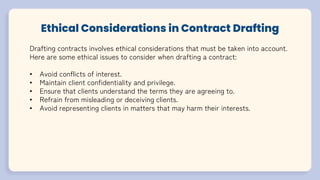
Ethical Considerations in Contract Drafting
Drafting contracts involves ethical considerations that must be taken into account.
Here are some ethical issues to consider when drafting a contract:
• Avoid conflicts of interest.
• Maintain client confidentiality and privilege.
• Ensure that clients understand the terms they are agreeing to.
• Refrain from misleading or deceiving clients.
• Avoid representing clients in matters that may harm their interests.
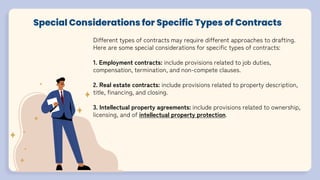
Different types of contracts may require different approaches to drafting.
Here are some special considerations for specific types of contracts:
1. Employment contracts: include provisions related to job duties,
compensation, termination, and non-compete clauses.
2. Real estate contracts: include provisions related to property description,
title, financing, and closing.
3. Intellectual property agreements: include provisions related to ownership,
licensing, and of intellectual property protection.
Special Considerations for Specific Types of Contracts
Contract Administration and Management
Drafting a contract is just the first step in the contract lifecycle. Once the
contract is executed, it must be managed and administered properly to ensure
compliance and enforceability. Here are some key tasks and considerations for
contract administration and management:
• Record-keeping and documentation.
• Monitoring performance and compliance.
• Managing changes and modifications.
• Addressing disputes and breaches.
• Renewal and termination.
Thanks

Best Practices and Tips for Contract Drafting - Contract Bazar

  • 1.
  • 2.
  • 3.
    Introduction In this presentation,we will explore best practices and tips for drafting clear and effective contracts. Contracts are the foundation of business relationships, and a well-drafted contract can help parties avoid disputes and protect their interests. In this presentation, we will cover key elements of a contract, drafting tips and techniques, common mistakes to avoid, negotiation strategies, ethical considerations, special considerations for specific types of contracts, important provisions and clauses, and contract management and administration. Let's get started!
  • 4.
    What is ContractDrafting? Contract drafting refers to the process of creating a legal document that outlines the terms and conditions of an agreement between two or more parties. Contract drafting involves identifying the parties, defining the subject matter of the agreement, specifying the obligations of each party, and addressing potential contingencies and disputes. A well-drafted contract can help parties avoid misunderstandings, disputes, and legal issues by clearly setting out the rights and obligations of each party. Contract drafting is an important skill for lawyers, business professionals, and anyone involved in commercial transactions.
  • 5.
    The key elementsof a contract are offer, acceptance, consideration, and legal capacity. Offer refers to a proposal to enter into a contract. Acceptance is the agreement to the terms of the offer. Consideration is the exchange of something of value between the parties. And legal capacity refers to the ability of the parties to enter into a legally binding agreement. A well-drafted contract must have all these elements to be enforceable. Key Elements of a Contract
  • 6.
    Drafting Tips andTechniques Drafting clear and effective contracts is essential to avoid disputes and ensure that parties understand their rights and obligations. Here are some tips and techniques to consider when drafting a contract: • Use plain language and avoid legal jargon. • Be specific and avoid ambiguity. • Define key terms and concepts. • Use active voice. • Organize the contract logically and clearly. • Incorporate boilerplate language and standard clauses.
  • 7.
    Common Contract DraftingMistakes Even experienced contract drafters can make mistakes that can lead to disputes and legal issues. Here are some common mistakes to avoid: • Using vague language or undefined terms. • Failing to include essential terms. • Omitting necessary provisions or clauses. • Using inconsistent or contradictory language. • Not anticipating potential disputes or contingencies.
  • 8.
    Contract Negotiation Strategies Negotiatingthe terms of a contract is an essential part of the contract drafting process. Here are some strategies to consider when negotiating a contract: • Understand your leverage and the other party's interests. • Prepare for contingencies and potential disputes. • Remain flexible and open to compromise. • Maintain a collaborative and respectful approach. • Document all changes and modifications to the contract.
  • 9.
    Ethical Considerations inContract Drafting Drafting contracts involves ethical considerations that must be taken into account. Here are some ethical issues to consider when drafting a contract: • Avoid conflicts of interest. • Maintain client confidentiality and privilege. • Ensure that clients understand the terms they are agreeing to. • Refrain from misleading or deceiving clients. • Avoid representing clients in matters that may harm their interests.
  • 10.
    Different types ofcontracts may require different approaches to drafting. Here are some special considerations for specific types of contracts: 1. Employment contracts: include provisions related to job duties, compensation, termination, and non-compete clauses. 2. Real estate contracts: include provisions related to property description, title, financing, and closing. 3. Intellectual property agreements: include provisions related to ownership, licensing, and of intellectual property protection. Special Considerations for Specific Types of Contracts
  • 11.
    Contract Administration andManagement Drafting a contract is just the first step in the contract lifecycle. Once the contract is executed, it must be managed and administered properly to ensure compliance and enforceability. Here are some key tasks and considerations for contract administration and management: • Record-keeping and documentation. • Monitoring performance and compliance. • Managing changes and modifications. • Addressing disputes and breaches. • Renewal and termination.
  • 12.