Thinking Battersea: Connecting Debate
Planning flourishing and sustainable communities

Saffron Woodcraft
Communities & Housing Practice Leader
March 2011


Slide 1   The Young Foundation 2010
About the Young Foundation
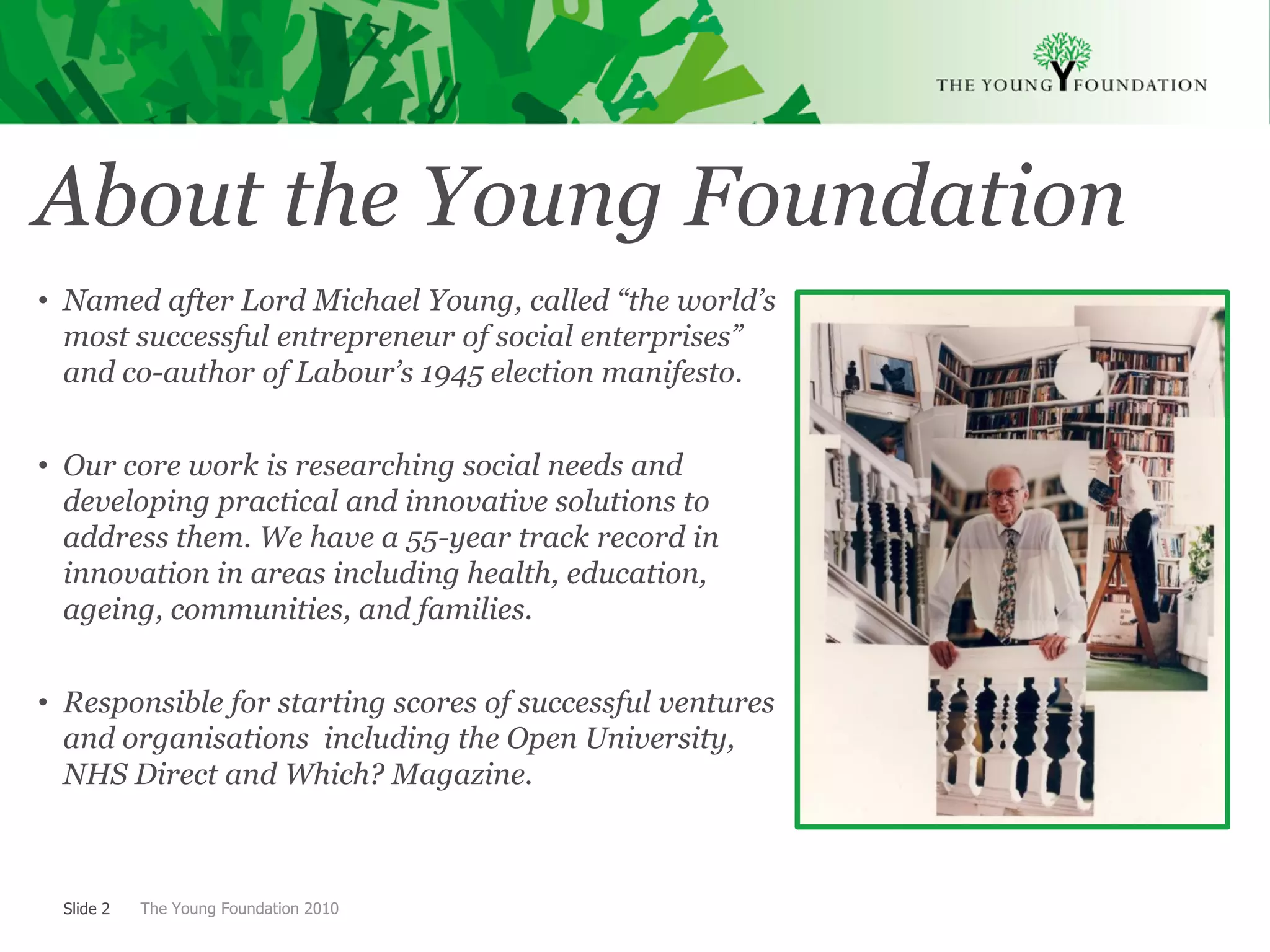
• Named after Lord Michael Young, called “the world’s
  most successful entrepreneur of social enterprises”
  and co-author of Labour’s 1945 election manifesto.


• Our core work is researching social needs and
  developing practical and innovative solutions to
  address them. We have a 55-year track record in
  innovation in areas including health, education,
  ageing, communities, and families.


• Responsible for starting scores of successful ventures
  and organisations including the Open University,
  NHS Direct and Which? Magazine.


 Slide 2   The Young Foundation 2010
What does
                              community
                              mean in 2011?


Slide 3   The Young Foundation 2010
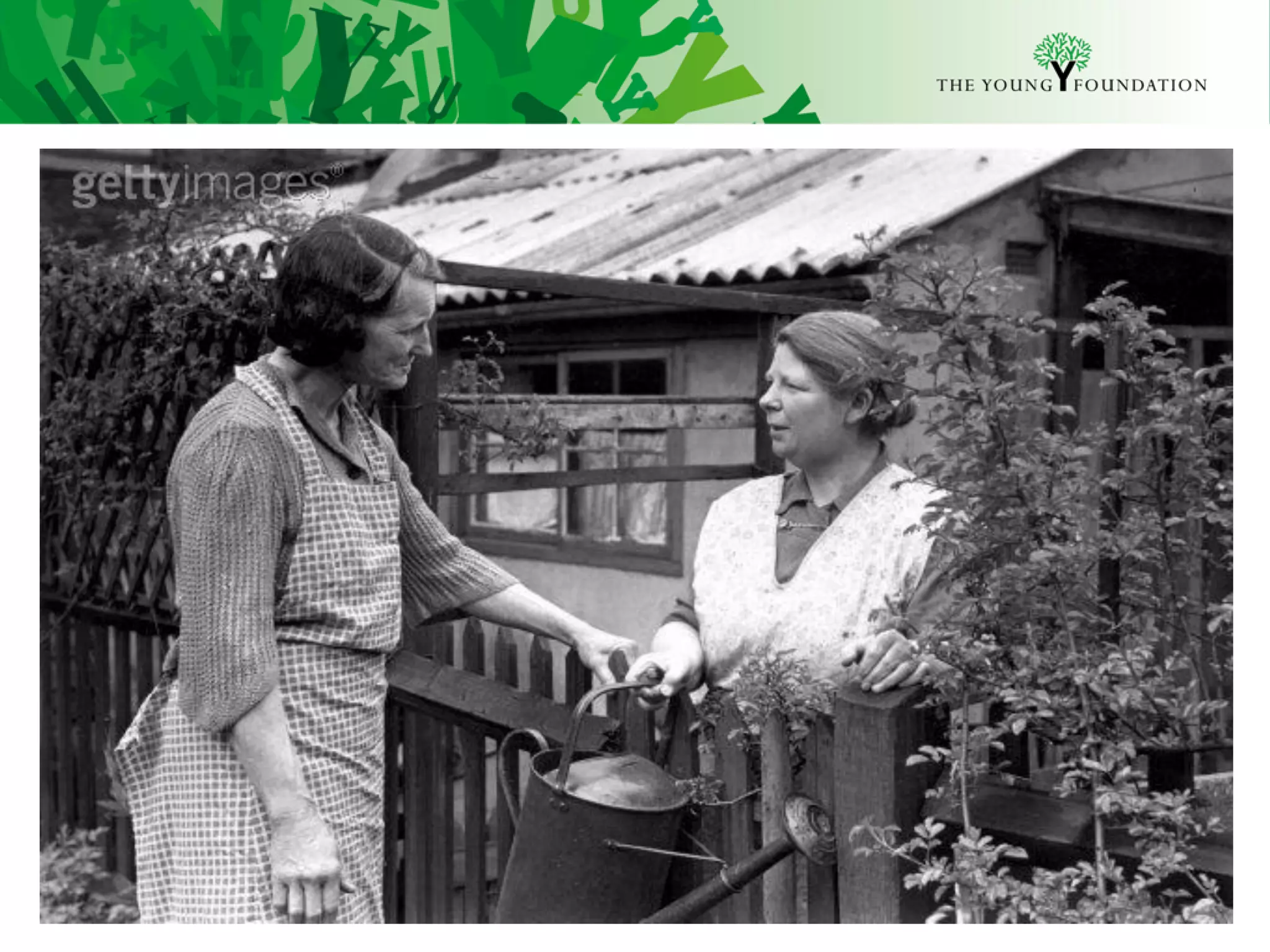
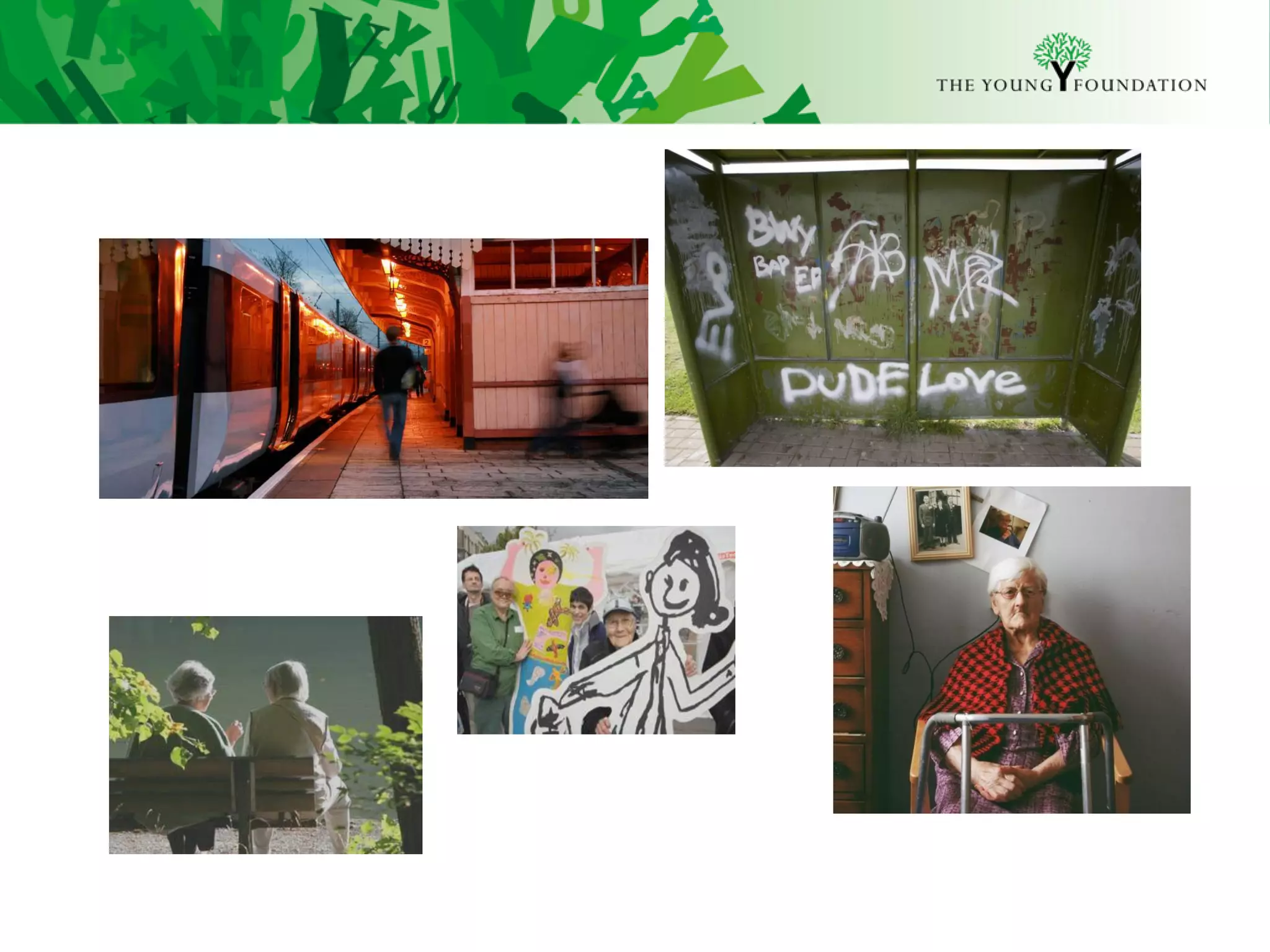
Slide 4   The Young Foundation 2010
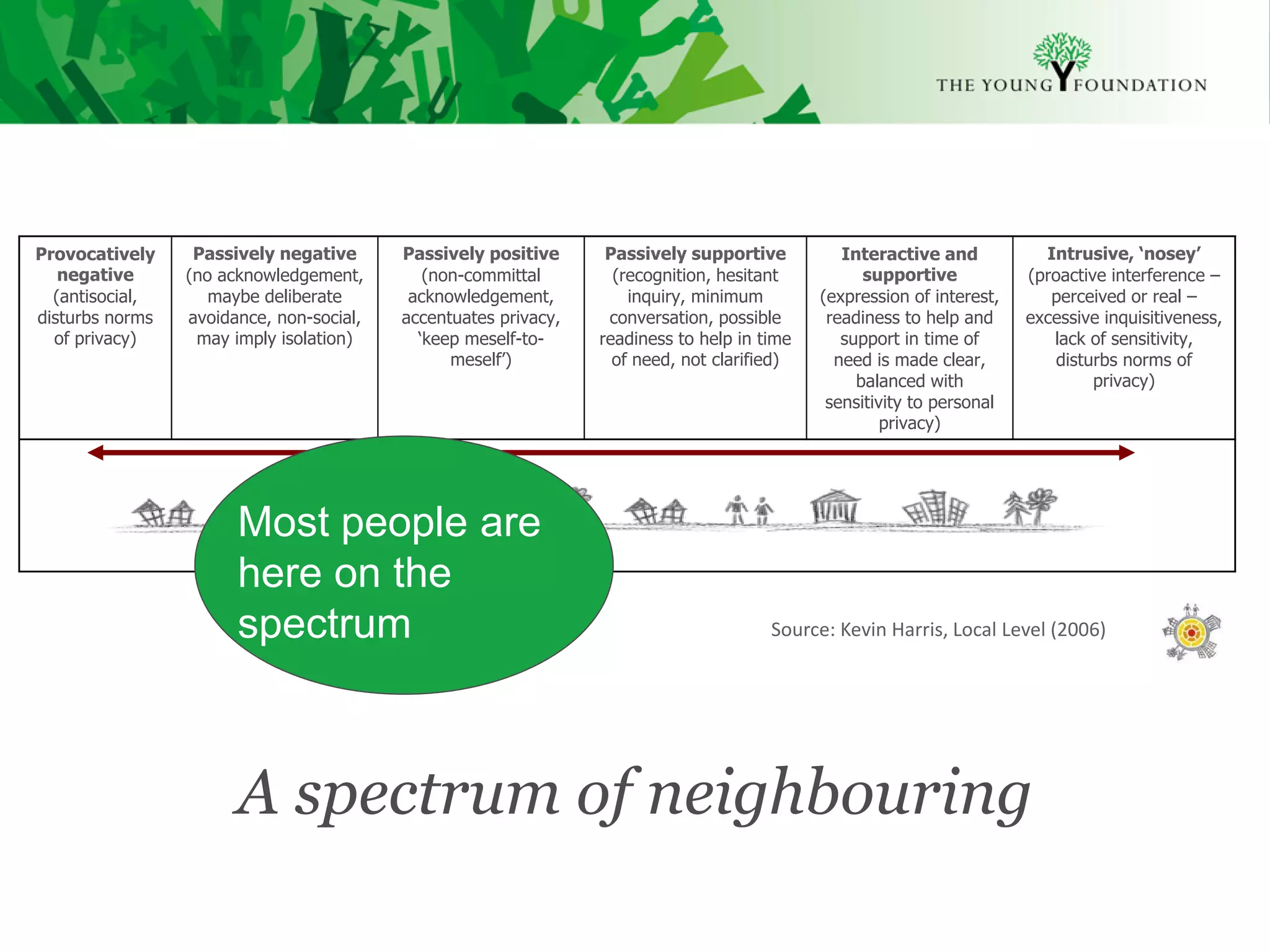
Provocatively     Passively negative      Passively positive      Passively supportive          Interactive and           Intrusive, ‘nosey’
   negative      (no acknowledgement,        (non-committal        (recognition, hesitant          supportive           (proactive interference –
  (antisocial,      maybe deliberate       acknowledgement,          inquiry, minimum        (expression of interest,      perceived or real –
disturbs norms   avoidance, non-social,   accentuates privacy,    conversation, possible      readiness to help and     excessive inquisitiveness,
  of privacy)     may imply isolation)      ‘keep meself-to-     readiness to help in time      support in time of         lack of sensitivity,
                                                meself’)           of need, not clarified)     need is made clear,          disturbs norms of
                                                                                                  balanced with                  privacy)
                                                                                              sensitivity to personal
                                                                                                      privacy)


                       Most people are
                       here on the
                       spectrum                                                        Source: Kevin Harris, Local Level (2006)


                       A spectrum of neighbouring
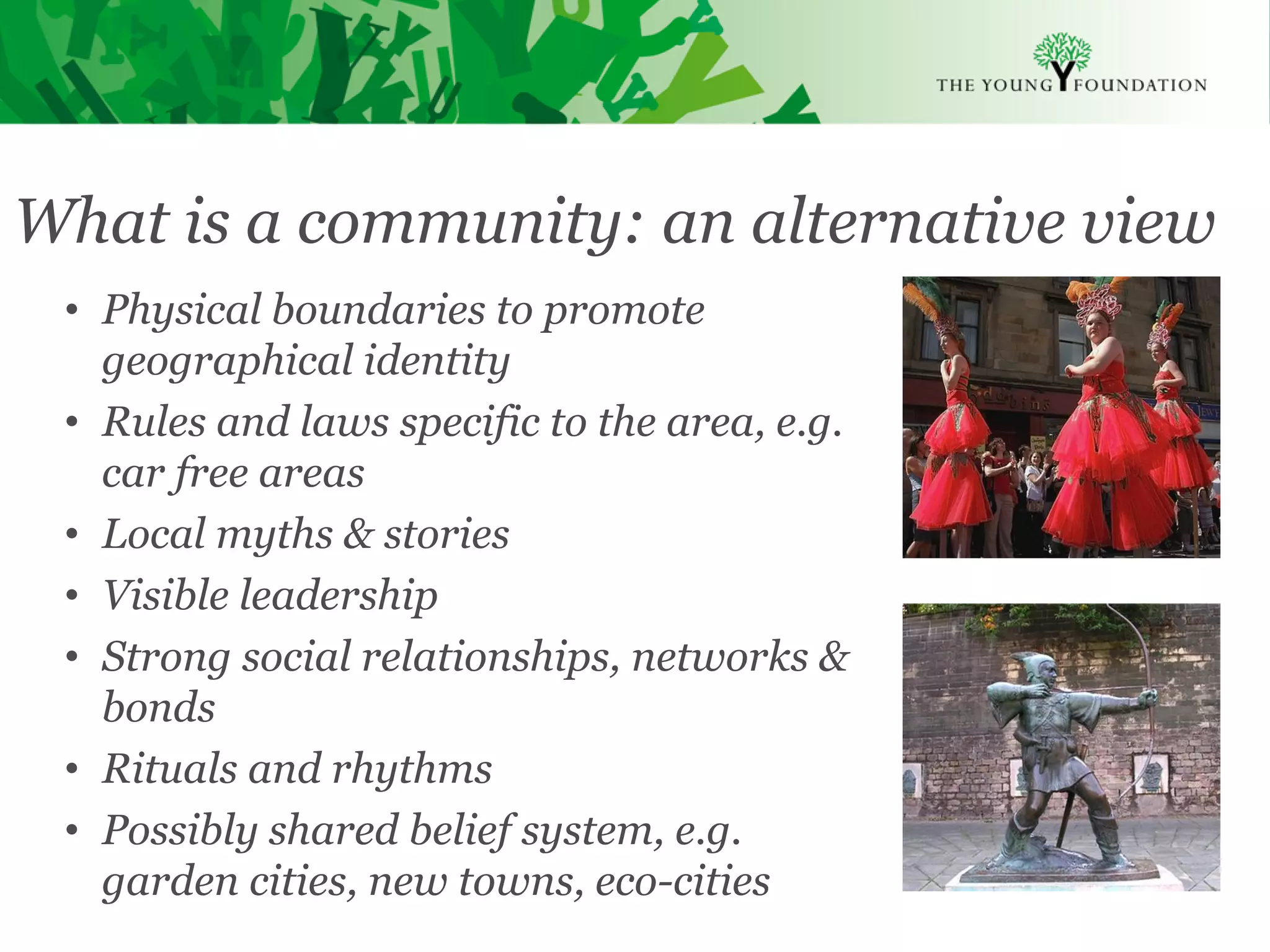
What is a community: an alternative view
 • Physical boundaries to promote
   geographical identity
 • Rules and laws specific to the area, e.g.
   car free areas
 • Local myths & stories
 • Visible leadership
 • Strong social relationships, networks &
   bonds
 • Rituals and rhythms
 • Possibly shared belief system, e.g.
   garden cities, new towns, eco-cities
Connecting
                              new and
                              existing
                              communities


Slide 8   The Young Foundation 2010
Common problems

1.           Engaging existing residents

2. Emotional & social barriers

3.           Creating neutral spaces

4. Engaging future residents
Slide 9   The Young Foundation 2010
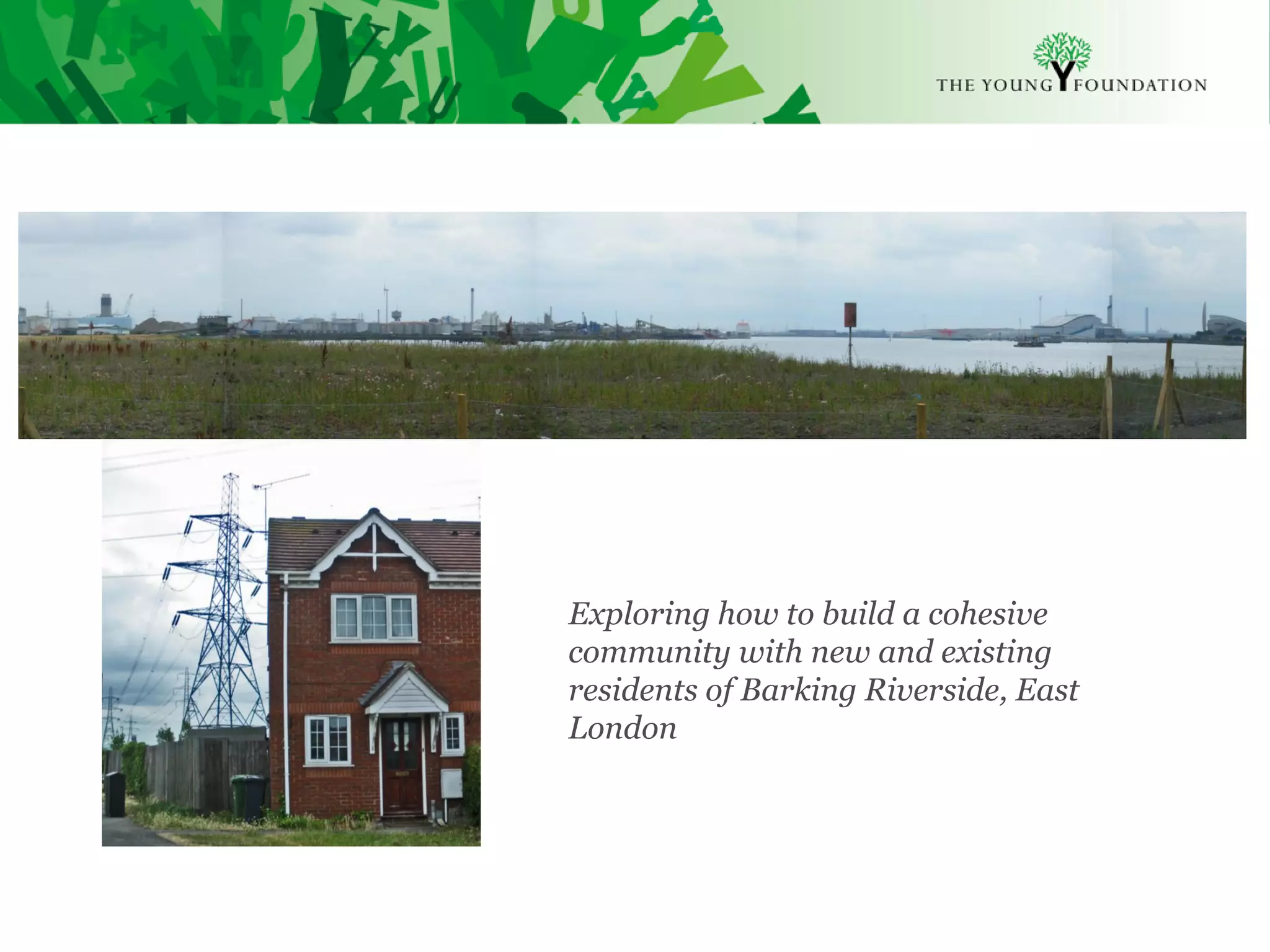
Exploring how to build a cohesive
                                       community with new and existing
                                       residents of Barking Riverside, East
                                       London


Slide 10   The Young Foundation 2010
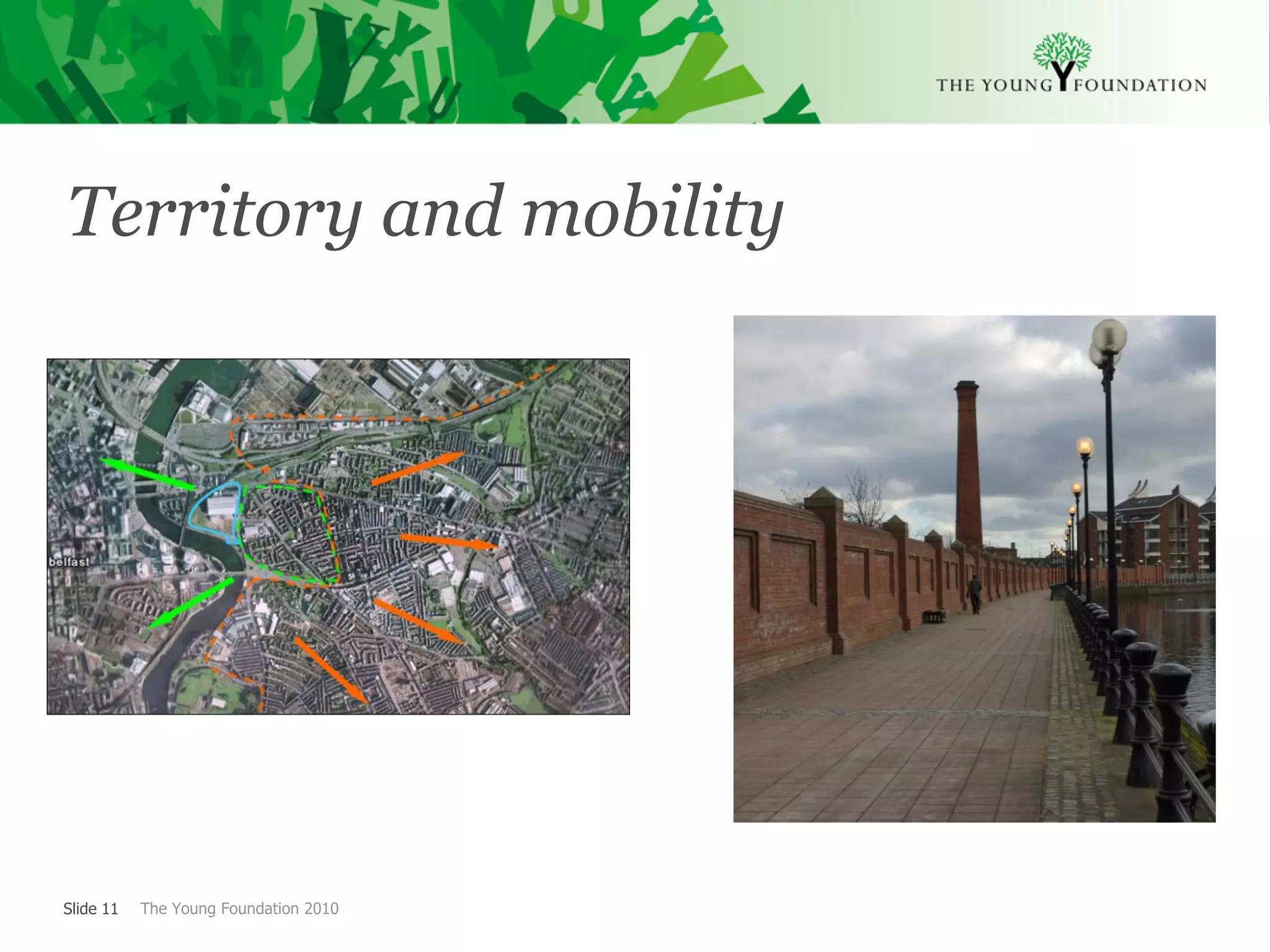
Territory and mobility


Slide 11   The Young Foundation 2010
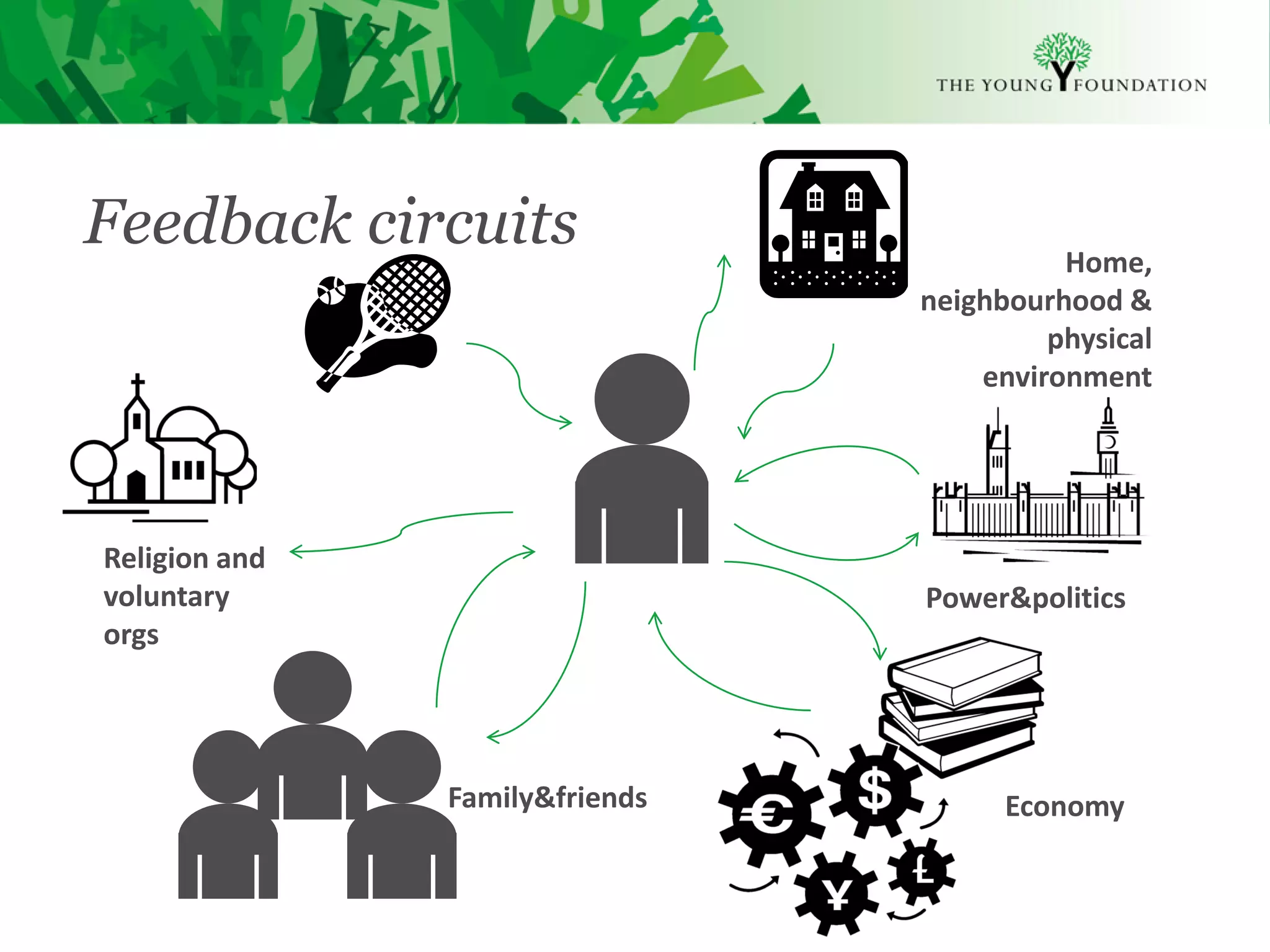
Feedback circuits                         Home,
                                neighbourhood &
                                         physical
                                    environment


Religion and
voluntary                       Power&politics
orgs


               Family&friends         Economy
Nurturing new
                               communities


Slide 13   The Young Foundation 2010
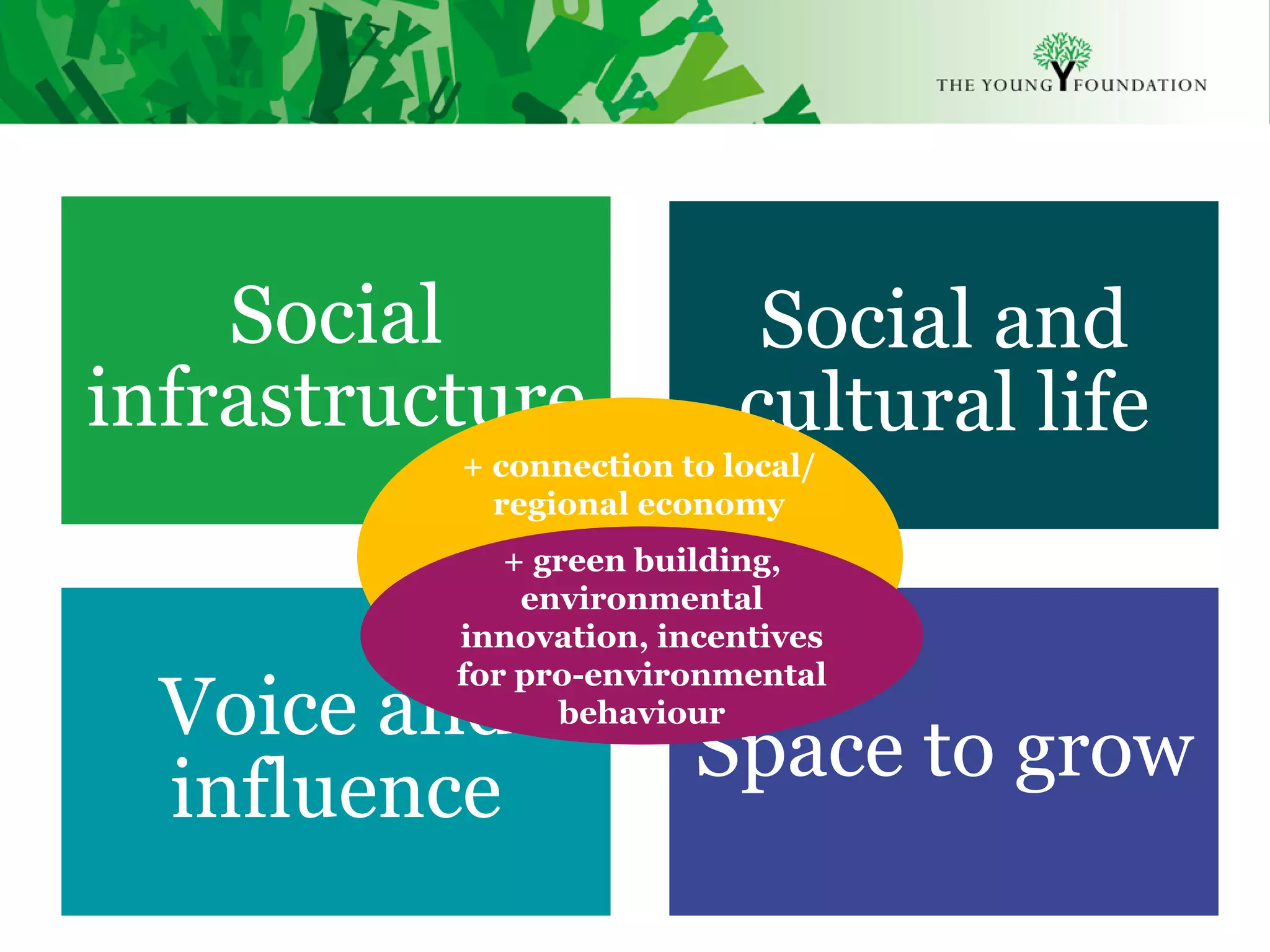
Social                  Social and
infrastructure             cultural life
          + connection to local/
            regional economy
             + green building,
              environmental
          innovation, incentives
          for pro-environmental
  Voice and     behaviour
                        Space to grow
  influence
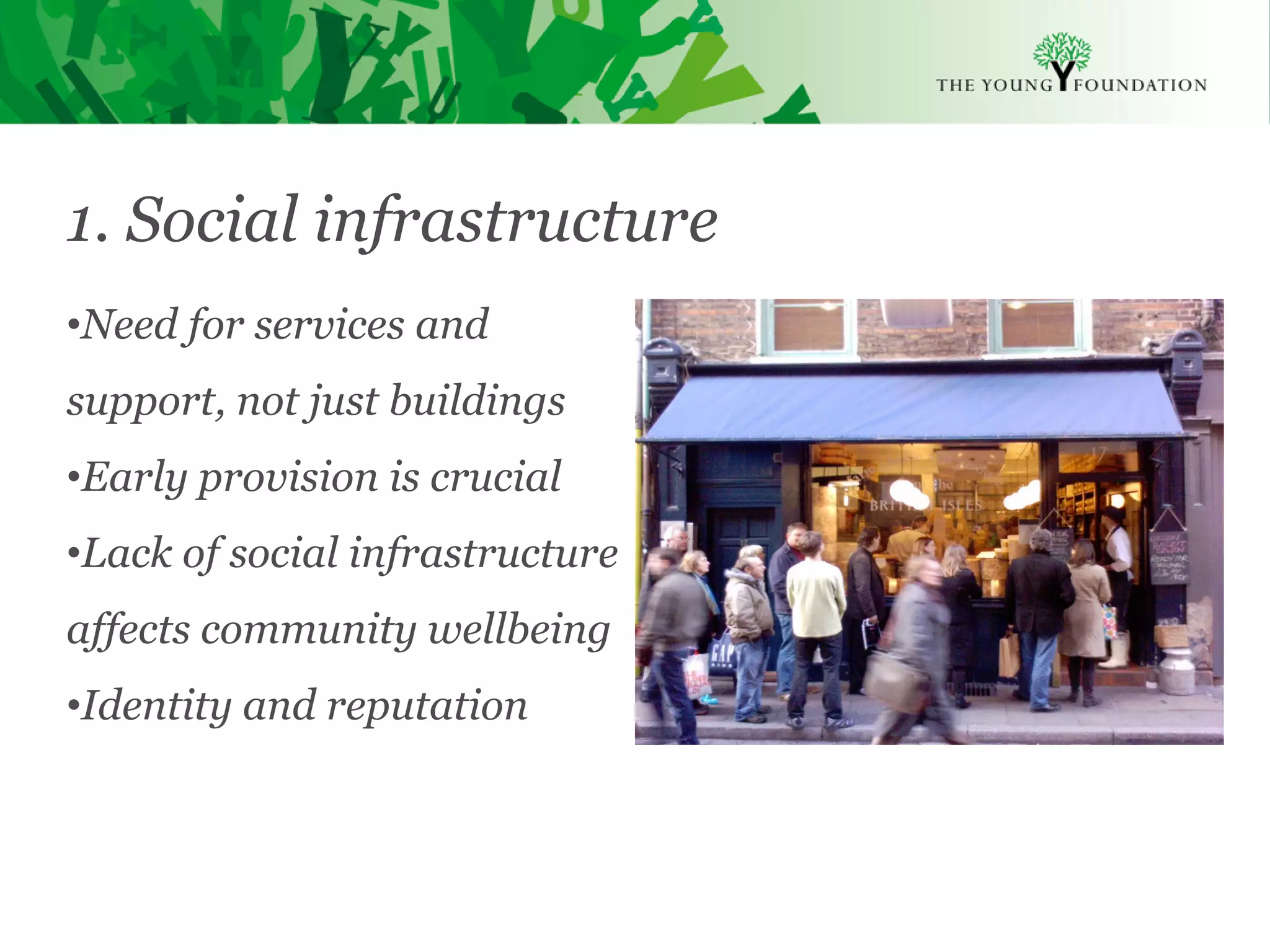
1. Social infrastructure
•Need for services and
support, not just buildings
•Early provision is crucial
•Lack of social infrastructure
affects community wellbeing
•Identity and reputation


Slide 15   The Young Foundation 2010
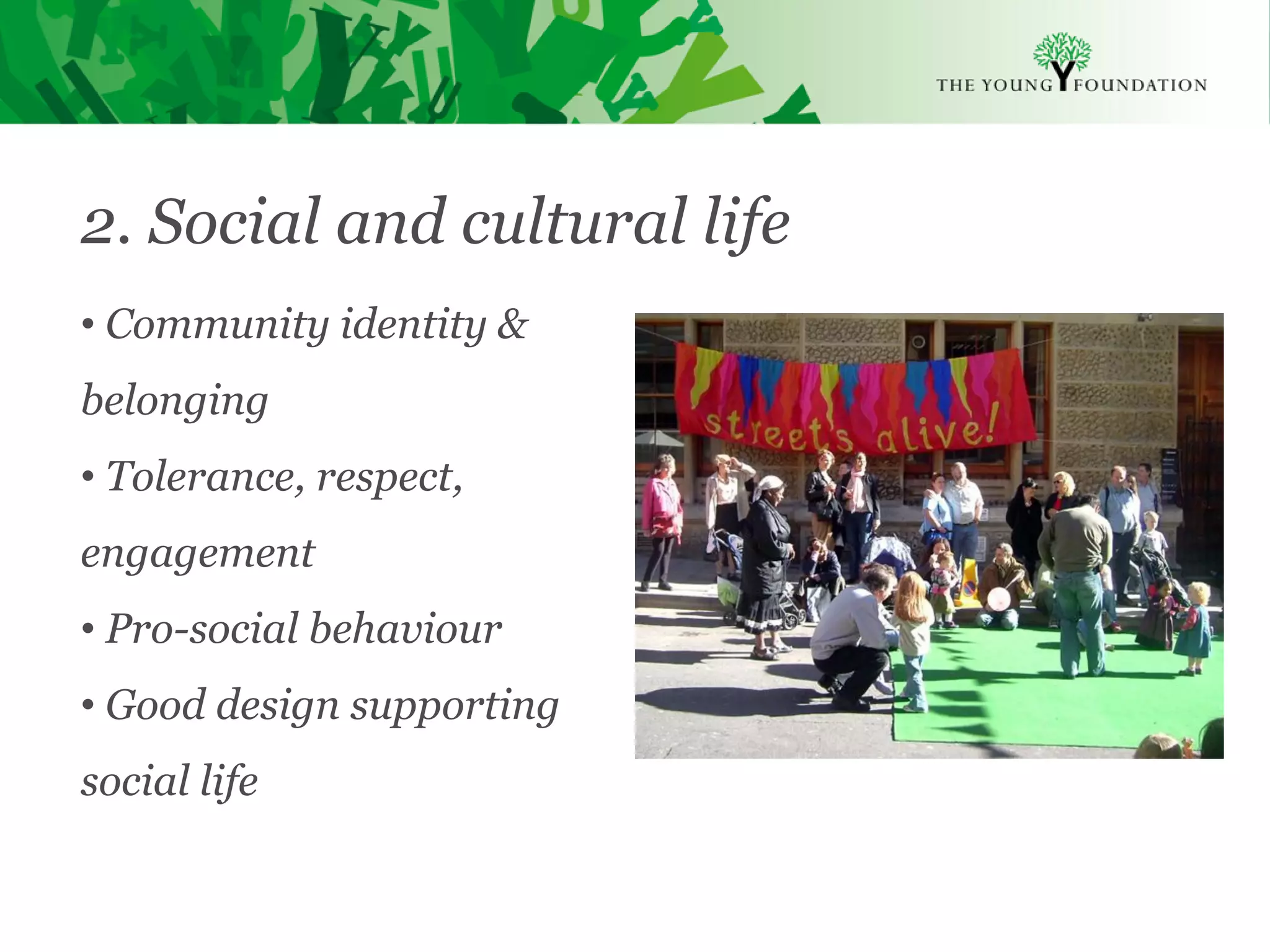
2. Social and cultural life
  • Community identity &
  belonging
  • Tolerance, respect,
  engagement
  • Pro-social behaviour
  • Good design supporting
  social life

Slide 16   The Young Foundation 2010
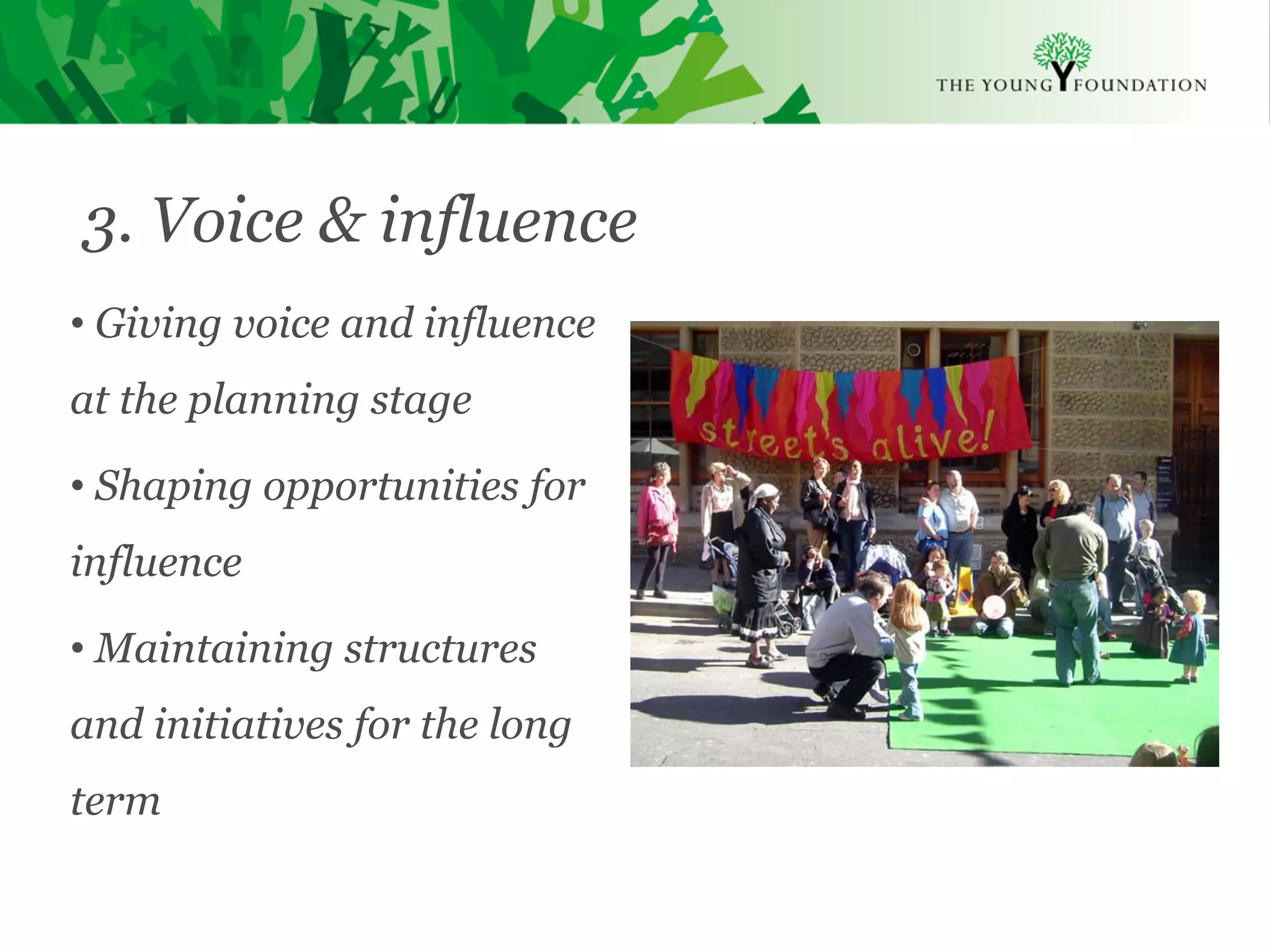
3. Voice & influence
• Giving voice and influence
at the planning stage

• Shaping opportunities for
influence

• Maintaining structures
and initiatives for the long
term

Slide 17   The Young Foundation 2010
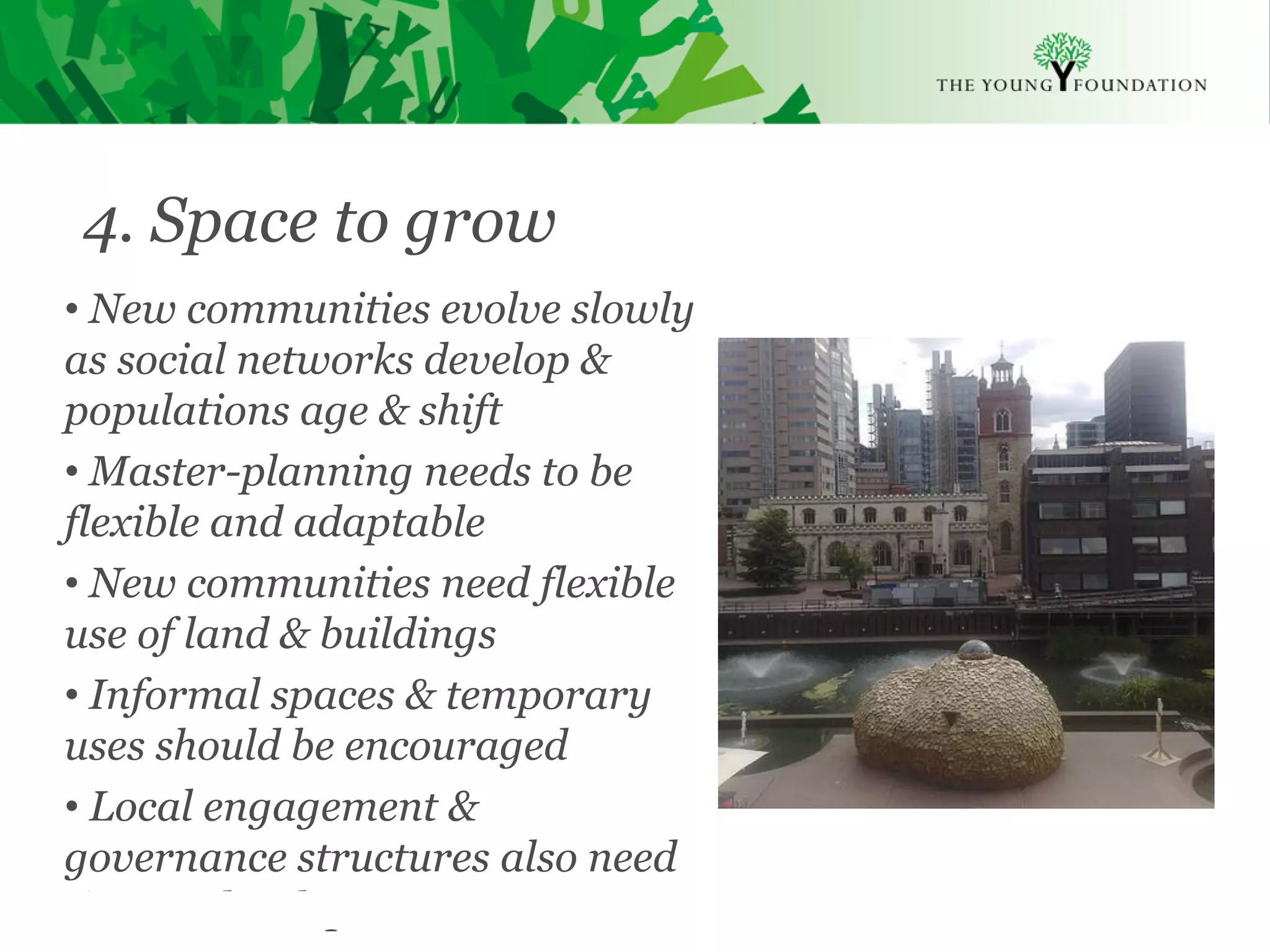
4. Space to grow
• New communities evolve slowly
as social networks develop &
populations age & shift
• Master-planning needs to be
flexible and adaptable
• New communities need flexible
use of land & buildings
• Informal spaces & temporary
uses should be encouraged
• Local engagement &
governance structures also need
time to develop
Slide 18   The Young Foundation 2010
Slide 19   The Young Foundation 2010
For more information about Future Communities
contact:

saffron.woodcraft@youngfoundation.org
tricia.hackett@youngfoundation.org


www.neveragainfuturecommunities.wordpress.com
www.futurecommunities.net
www.youngfoundation.org


Slide 20   The Young Foundation 2010
About the Young Foundation
The Young Foundation brings together insight, innovation and
entrepreneurship to meet social needs.

We have a 55-year track record of success with ventures such as the
Open University, Which?, the School for Social Entrepreneurs and
Healthline (the precursor of NHS Direct).

We work across the UK and internationally – carrying out research,
influencing policy, creating new organisations and supporting others
to do the same, often with imaginative uses of new technology.

www.youngfoundation.org
Slide 21   The Young Foundation 2010

Belonging and identity in new communities

  • 1.
    Thinking Battersea: ConnectingDebate Planning flourishing and sustainable communities Saffron Woodcraft Communities & Housing Practice Leader March 2011 Slide 1 The Young Foundation 2010
  • 2.
    About the YoungFoundation • Named after Lord Michael Young, called “the world’s most successful entrepreneur of social enterprises” and co-author of Labour’s 1945 election manifesto. • Our core work is researching social needs and developing practical and innovative solutions to address them. We have a 55-year track record in innovation in areas including health, education, ageing, communities, and families. • Responsible for starting scores of successful ventures and organisations including the Open University, NHS Direct and Which? Magazine. Slide 2 The Young Foundation 2010
  • 3.
    What does community mean in 2011? Slide 3 The Young Foundation 2010
  • 4.
    Slide 4 The Young Foundation 2010
  • 6.
    Provocatively Passively negative Passively positive Passively supportive Interactive and Intrusive, ‘nosey’ negative (no acknowledgement, (non-committal (recognition, hesitant supportive (proactive interference – (antisocial, maybe deliberate acknowledgement, inquiry, minimum (expression of interest, perceived or real – disturbs norms avoidance, non-social, accentuates privacy, conversation, possible readiness to help and excessive inquisitiveness, of privacy) may imply isolation) ‘keep meself-to- readiness to help in time support in time of lack of sensitivity, meself’) of need, not clarified) need is made clear, disturbs norms of balanced with privacy) sensitivity to personal privacy) Most people are here on the spectrum Source: Kevin Harris, Local Level (2006) A spectrum of neighbouring
  • 7.
    What is acommunity: an alternative view • Physical boundaries to promote geographical identity • Rules and laws specific to the area, e.g. car free areas • Local myths & stories • Visible leadership • Strong social relationships, networks & bonds • Rituals and rhythms • Possibly shared belief system, e.g. garden cities, new towns, eco-cities
  • 8.
    Connecting new and existing communities Slide 8 The Young Foundation 2010
  • 9.
    Common problems 1. Engaging existing residents 2. Emotional & social barriers 3. Creating neutral spaces 4. Engaging future residents Slide 9 The Young Foundation 2010
  • 10.
    Exploring how tobuild a cohesive community with new and existing residents of Barking Riverside, East London Slide 10 The Young Foundation 2010
  • 11.
    Territory and mobility Slide11 The Young Foundation 2010
  • 12.
    Feedback circuits Home, neighbourhood & physical environment Religion and voluntary Power&politics orgs Family&friends Economy
  • 13.
    Nurturing new communities Slide 13 The Young Foundation 2010
  • 14.
    Social Social and infrastructure cultural life + connection to local/ regional economy + green building, environmental innovation, incentives for pro-environmental Voice and behaviour Space to grow influence
  • 15.
    1. Social infrastructure •Needfor services and support, not just buildings •Early provision is crucial •Lack of social infrastructure affects community wellbeing •Identity and reputation Slide 15 The Young Foundation 2010
  • 16.
    2. Social andcultural life • Community identity & belonging • Tolerance, respect, engagement • Pro-social behaviour • Good design supporting social life Slide 16 The Young Foundation 2010
  • 17.
    3. Voice &influence • Giving voice and influence at the planning stage • Shaping opportunities for influence • Maintaining structures and initiatives for the long term Slide 17 The Young Foundation 2010
  • 18.
    4. Space togrow • New communities evolve slowly as social networks develop & populations age & shift • Master-planning needs to be flexible and adaptable • New communities need flexible use of land & buildings • Informal spaces & temporary uses should be encouraged • Local engagement & governance structures also need time to develop Slide 18 The Young Foundation 2010
  • 19.
    Slide 19 The Young Foundation 2010
  • 20.
    For more informationabout Future Communities contact: saffron.woodcraft@youngfoundation.org tricia.hackett@youngfoundation.org www.neveragainfuturecommunities.wordpress.com www.futurecommunities.net www.youngfoundation.org Slide 20 The Young Foundation 2010
  • 21.
    About the YoungFoundation The Young Foundation brings together insight, innovation and entrepreneurship to meet social needs. We have a 55-year track record of success with ventures such as the Open University, Which?, the School for Social Entrepreneurs and Healthline (the precursor of NHS Direct). We work across the UK and internationally – carrying out research, influencing policy, creating new organisations and supporting others to do the same, often with imaginative uses of new technology. www.youngfoundation.org Slide 21 The Young Foundation 2010