"The aim of marketing is
to know and understand the customer so well,
that the product or service fits him and sells
itself."
- Peter F. Drucker
CONSUMER
production
MARKETING
Model of buyer behaviour
OUTSIDE STIMULI
MARKETING
Product
Price
Place
Promotion
ENVIRONMENTAL
Economic
Technological
Political
Cultural
BUYER’S BLACK BOX
BUYER’S CHARACTERISTICS
Cultural
Social
Personal
Psychological
BUYER’S DECISION PROCESS
Problem recog
Info search
Evaluation
Decision
Post purchase behaviour
BUYER’S
PURCHASE
DECISIONS
Product choice
Brand choice
Dealer choice
Purchase timing
Purchase amount
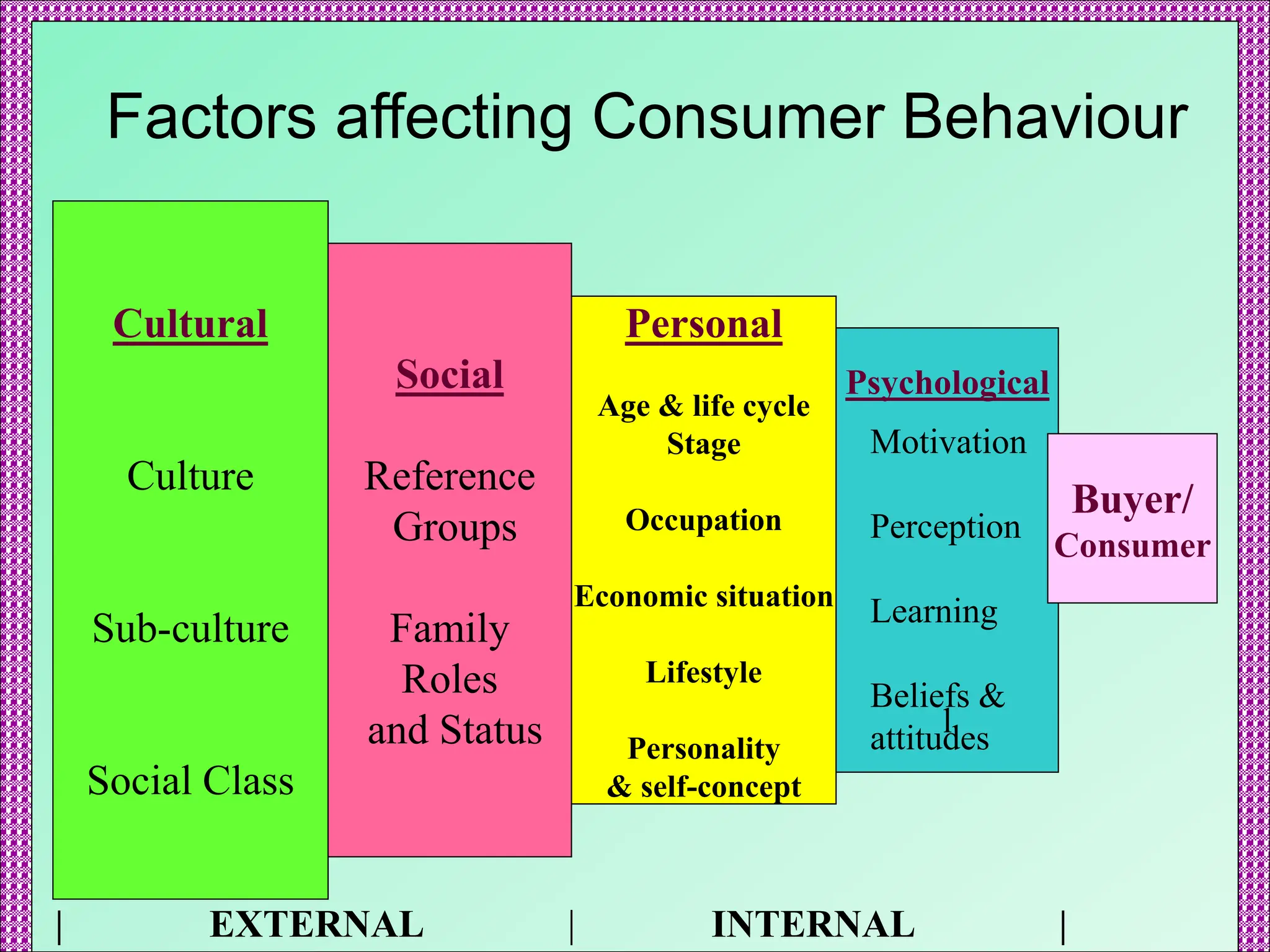
Factors affecting Consumer Behaviour
Cultural
Culture
Sub-culture
Social Class
Social
Reference
Groups
Family
Roles
and Status
Personal
Age & life cycle
Stage
Occupation
Economic situation
Lifestyle
Personality
& self-concept
Psychological
l
Buyer/
Consumer
Motivation
Perception
Learning
Beliefs &
attitudes
| EXTERNAL | INTERNAL |
1] Consumer Behaviour
by Batra and Kazmi
2] CONSUMER BEHAVIOUR
by Schiffman and Kanuk
3] CONSUMER BEHAVIOUR in the
Indian Context
by Srivastav and Khandai
4] CONSUMER BEHAVIOUR –
building marketing strategy
by Hawkins, Best and Cooney
Websites
1. afaqs.com
2. adage.com
3. exchange4media.com
Magazines
1. 4P’s
2. The Brand Reporter
3. Pitch
4. Impact
5. USPAge
6. Brand Equity with The Economic
Times
7. India Today/ Outlook/ The Week
8. Newspapers and their supplements
Culture is a complex set of ideas, values,
beliefs, attitudes, customs and other
meaningful symbols created by human
beings to shape human behaviour and
these are passed on from generation to
generation.
Enculturation
Acculturation
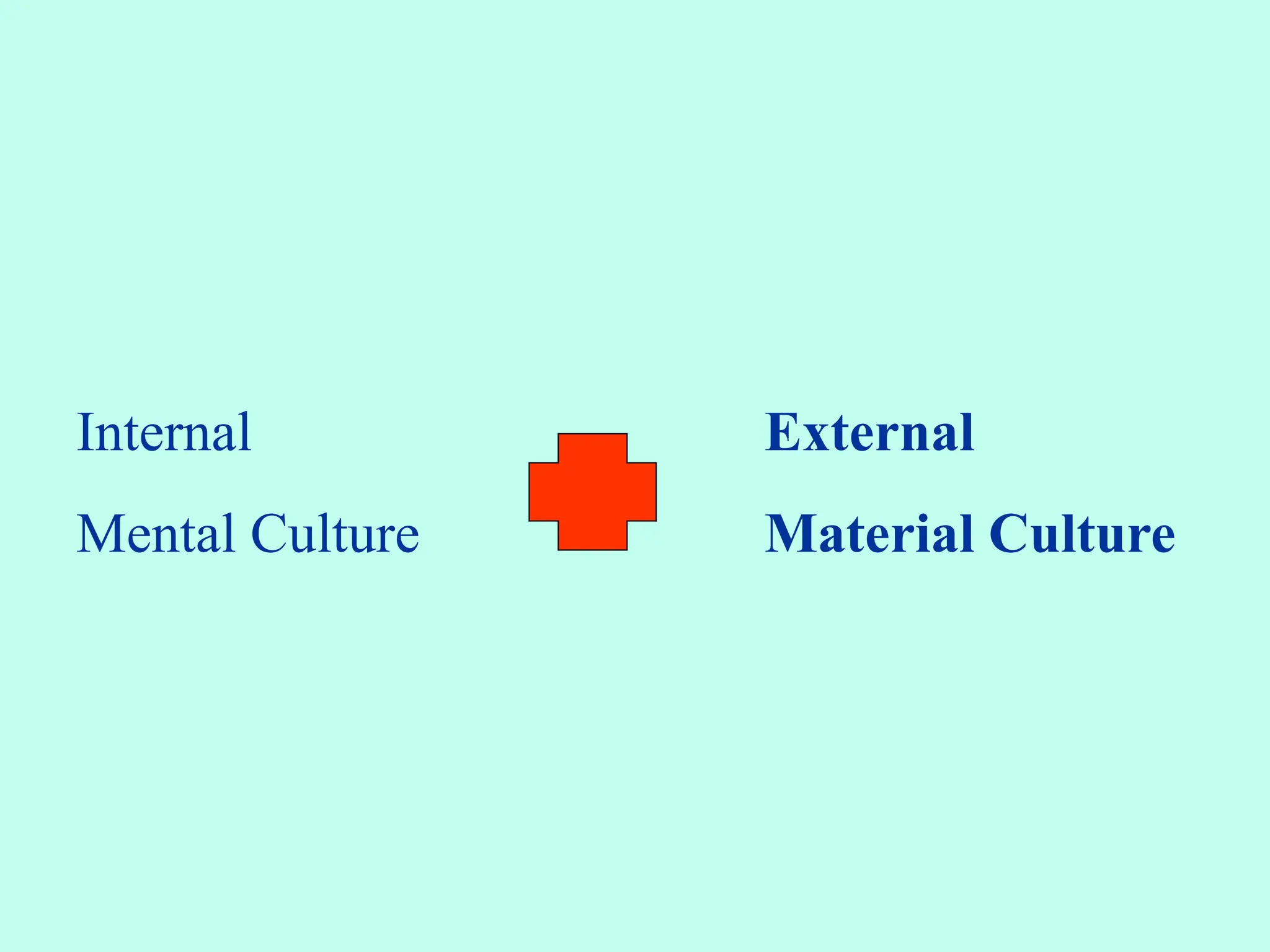
Internal
Mental Culture
External
Material Culture
Core Values
TERMINAL VALUES [ states of existence ]
INSTRUMENTAL VALUES [ modes of conduct ]
Ethnocentrism
Cultural Symbols
Globalisation
Name for the process of increasing the connectivity and interdependence of
the world's markets and businesses.
This process has speeded up dramatically in the last few decades as
technological advances make it easier for people to travel, communicate,
and do business internationally. Two major recent driving forces are
advances in telecommunications infrastructure and the growth of the
internet. In general, as economies become more connected to other
economies, they have increased opportunity but also increased
competition. Thus, as globalization becomes a more and more common
feature of world economics, powerful pro-globalization and anti-
globalization lobbies have arisen.
The pro-globalization lobby argues that globalization brings about much
increased opportunities for almost everyone, and increased competition is a
good thing since it makes agents of production more efficient.
Glocalisation
Think Global
Act Local
Subculture
A smaller, more homogenous group within a
culture
On the basis of
•Age
•Gender
•Religion
•Caste
•Occupation
•Education
•Geographical location
Price
Availability
Time/Effort in
selection
Frequency of purchase
Substitutes/options
Technology
Place or shop location
Brand Loyalty / Habit
Level of
knowledge/information
High Low
Types of buying behaviour
Complex
Buying behaviour
Low involvement High involvement
Habitual
Buying behaviour
Dissonance-reducing
Buying Behaviour
Variety-seeking
Buying behaviour
SIGNIFICANT
DIFFERENCES
BETWEEN BRANDS
FEW DIFFERENCES
BETWEEN BRANDS

Basics of Consumer Behaviour for marketing

  • 1.
    "The aim ofmarketing is to know and understand the customer so well, that the product or service fits him and sells itself." - Peter F. Drucker
  • 2.
  • 3.
    Model of buyerbehaviour OUTSIDE STIMULI MARKETING Product Price Place Promotion ENVIRONMENTAL Economic Technological Political Cultural BUYER’S BLACK BOX BUYER’S CHARACTERISTICS Cultural Social Personal Psychological BUYER’S DECISION PROCESS Problem recog Info search Evaluation Decision Post purchase behaviour BUYER’S PURCHASE DECISIONS Product choice Brand choice Dealer choice Purchase timing Purchase amount
  • 4.
    Factors affecting ConsumerBehaviour Cultural Culture Sub-culture Social Class Social Reference Groups Family Roles and Status Personal Age & life cycle Stage Occupation Economic situation Lifestyle Personality & self-concept Psychological l Buyer/ Consumer Motivation Perception Learning Beliefs & attitudes | EXTERNAL | INTERNAL |
  • 5.
    1] Consumer Behaviour byBatra and Kazmi 2] CONSUMER BEHAVIOUR by Schiffman and Kanuk 3] CONSUMER BEHAVIOUR in the Indian Context by Srivastav and Khandai 4] CONSUMER BEHAVIOUR – building marketing strategy by Hawkins, Best and Cooney
  • 6.
    Websites 1. afaqs.com 2. adage.com 3.exchange4media.com Magazines 1. 4P’s 2. The Brand Reporter 3. Pitch 4. Impact 5. USPAge 6. Brand Equity with The Economic Times 7. India Today/ Outlook/ The Week 8. Newspapers and their supplements
  • 7.
    Culture is acomplex set of ideas, values, beliefs, attitudes, customs and other meaningful symbols created by human beings to shape human behaviour and these are passed on from generation to generation.
  • 8.
  • 9.
  • 10.
    Core Values TERMINAL VALUES[ states of existence ] INSTRUMENTAL VALUES [ modes of conduct ]
  • 11.
  • 12.
  • 13.
    Globalisation Name for theprocess of increasing the connectivity and interdependence of the world's markets and businesses. This process has speeded up dramatically in the last few decades as technological advances make it easier for people to travel, communicate, and do business internationally. Two major recent driving forces are advances in telecommunications infrastructure and the growth of the internet. In general, as economies become more connected to other economies, they have increased opportunity but also increased competition. Thus, as globalization becomes a more and more common feature of world economics, powerful pro-globalization and anti- globalization lobbies have arisen. The pro-globalization lobby argues that globalization brings about much increased opportunities for almost everyone, and increased competition is a good thing since it makes agents of production more efficient.
  • 14.
  • 15.
    Subculture A smaller, morehomogenous group within a culture On the basis of •Age •Gender •Religion •Caste •Occupation •Education •Geographical location
  • 16.
    Price Availability Time/Effort in selection Frequency ofpurchase Substitutes/options Technology Place or shop location Brand Loyalty / Habit Level of knowledge/information High Low
  • 17.
    Types of buyingbehaviour Complex Buying behaviour Low involvement High involvement Habitual Buying behaviour Dissonance-reducing Buying Behaviour Variety-seeking Buying behaviour SIGNIFICANT DIFFERENCES BETWEEN BRANDS FEW DIFFERENCES BETWEEN BRANDS