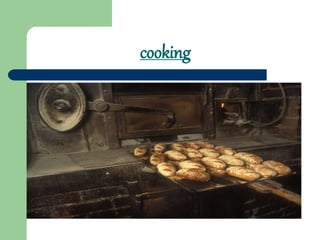
cooking
Purposes of cooking
 To improve the appearance, flavor and taste of food and also
helps to develop, blend or alter flavors
 To bring about structural changes in food. Meat fibers are
tenderized and the cellulose in vegetables and fruits is
softened so that they are easier to chew and digest
 To stimulate the appetite and the digestive juices. It gives
food an attractive appearance, aroma and taste
 To improve the keeping quality of food. It destroys some of
the harmful micro-organisms such as yeasts, and bacteria
that are naturally present
Principles of cooking
 Heat is the most important factor behind cooking.
 When food is cooked, it destroys the micro organisms and
makes food easier to ingest and digest.
BASIC COOKING PRINCIPLES
Effects of heat on food
Foods are composed of:
 Carbohydrates
 Fats
 Proteins
 Water
 Minerals, Vitamins & Pigments
BASIC COOKING PRINCIPLES
CARBOHYDRATES
o Starches and sugars are both carbohydrates found in:
fruits, vegetables, grains, beans and nuts. Meats and
fish also contain a small amount
o Two most important changes caused by cooking:
 Caramelization
 Gelatinization
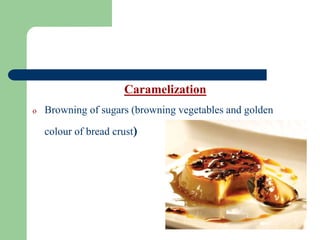
Caramelization
o Browning of sugars (browning vegetables and golden
colour of bread crust)
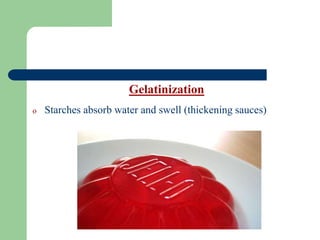
Gelatinization
o Starches absorb water and swell (thickening sauces)
BASIC COOKING PRINCIPLES
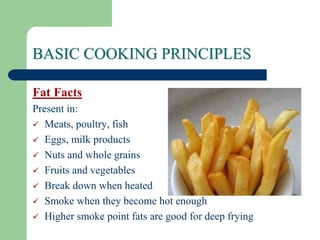
Fat Facts
Present in:
 Meats, poultry, fish
 Eggs, milk products
 Nuts and whole grains
 Fruits and vegetables
 Break down when heated
 Smoke when they become hot enough
 Higher smoke point fats are good for deep frying
BASIC COOKING PRINCIPLES
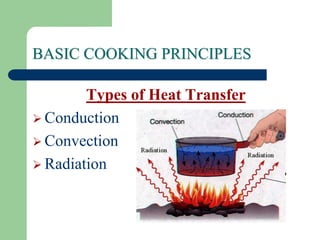
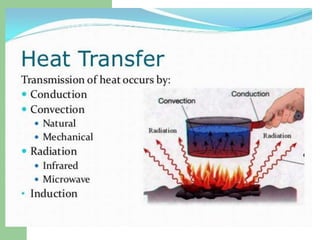
Types of Heat Transfer
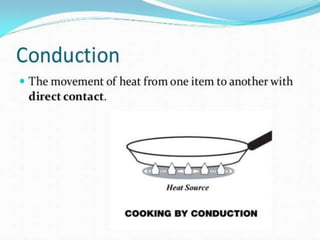
 Conduction
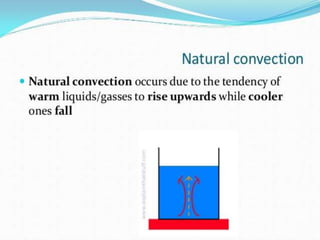
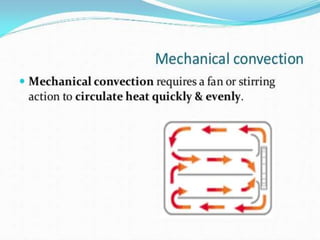
 Convection
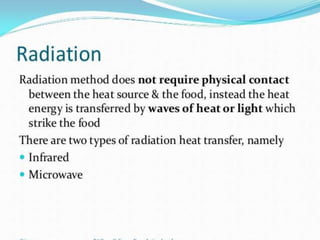
 Radiation
BASIC COOKING PRINCIPLES
The science of heat…
 Cooking is the transfer of heat energy from some source
to the food
Cooking Methods
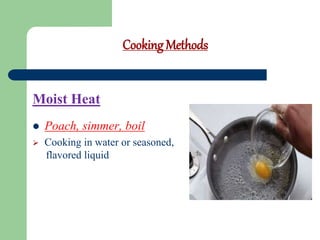
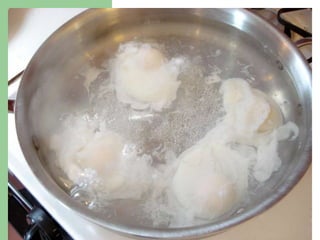
Moist Heat
 Poach, simmer, boil
 Cooking in water or seasoned,
flavored liquid
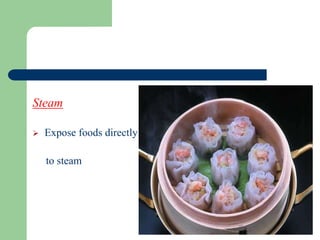
Steam
 Expose foods directly
to steam
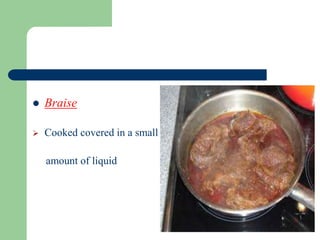
 Braise
 Cooked covered in a small
amount of liquid
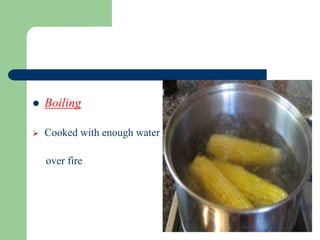
 Boiling
 Cooked with enough water
over fire
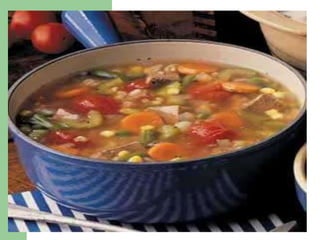
 Stewing
 Food is cooked using a lot of liquid. Different kinds of
vegetables or meat are chopped, diced or cubed and added
to the pot. The liquid is slightly thickened
 The only disadvantage is that some of the vegetables
might be overcooked and thus the nutrient content
becomes much less.
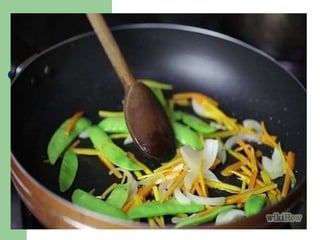
Sauté
 To cook quickly in a small amount of fat
 Preheat the pan
 Do not overcrowd the pan
 Meats are sometimes dusted with flour first
 Pan is deglazed with a liquid after sautéing to dissolve
brown bits of food on the pan bottom
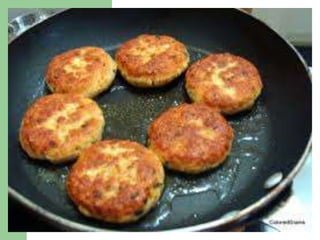
Pan-Fry
 To cook in a moderate amount of fat in a pan over
moderate heat
 Similar to sauté, but more fat is used
 Usually done over lower heat
 Amount of fat depends on food being cooked
 Food is normally turned at least once
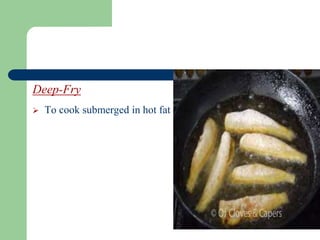
Deep-Fry
 To cook submerged in hot fat
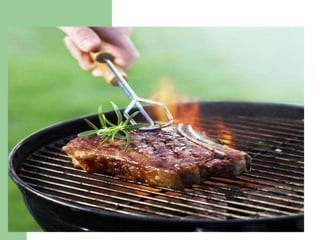
Barbequing
 It is most suitable to cooking meat cutlets, fish or chicken
pieces.
 The food is usually marinated with spices and tenderizers
(for meat cuts) for sometime before it is cooked.
 With this method of cooking, a sheet of metal with stands
is heated up and oil is used to cook the food.
 A sufficient amount of oil is heated up and food is added.
 The food is then turned over a couple of times before it is
dished out.
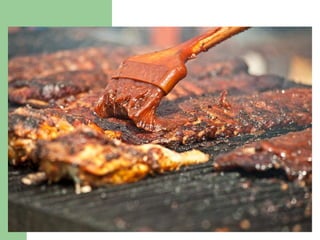
Basting
 This method of cooking is usually associated with
roasting.
 The juice or liquid that comes out of the meat being
cooked is spooned over the roast frequently while it is
being roasted.
 The outer part of the meat is moistened frequently during
the cooking process with the juice that is being spooned
over.
 Usually, the extra juice from the cooked meat is added to
a mixture to make the meat sauce.
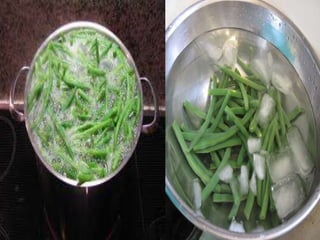
Blanching
 It is a cooking process wherein the food substance, usually
a vegetable or fruit, is plunged into boiling water,
removed after a brief, timed interval, and finally plunged
into iced water or placed under cold running water to halt
the cooking process.
Food is blanched :-
 to soften it
 to partly or fully cook it
 to remove a strong taste (for example of cabbage or
onions).
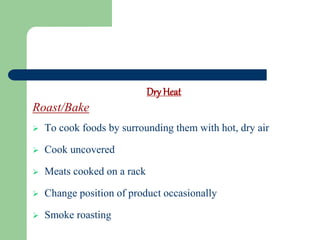
Dry Heat
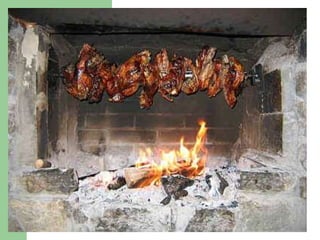
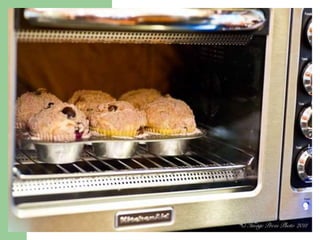
Roast/Bake
 To cook foods by surrounding them with hot, dry air
 Cook uncovered
 Meats cooked on a rack
 Change position of product occasionally
 Smoke roasting
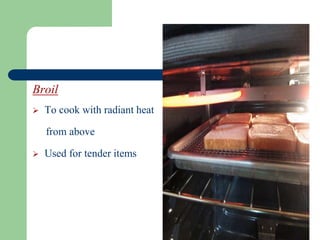
Broil
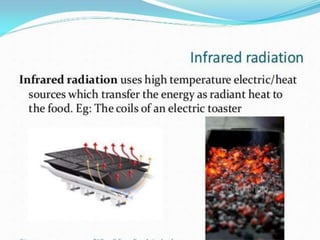
 To cook with radiant heat
from above
 Used for tender items
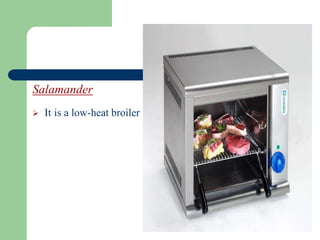
Salamander
 It is a low-heat broiler
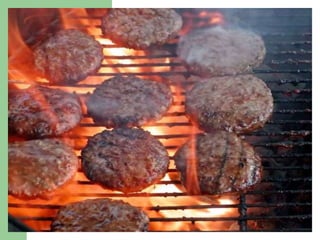
Grill
 To cook with heat from below on an open grid
 Griddling is done on a solid surface
Preservation of nutrients in cooking
 Keep fruits and vegetables cool to prevent enzymes from
destroying vitamins.
 Refrigerate food in airtight moisture-proof containers. The
loss of nutrients is slowed near freezing temperatures, at high
humidity, and less air contact.
 Avoid trimming and cutting fruits and vegetables into
small pieces.
 The greater surface area allows oxygen to break down
vitamins faster.
 The outer leaves of all greens and under the skins of fruits
and vegetables, such as potatoes, carrots and apples, have
more nutrients than the inner portion
 Microwaving cooking, steaming, or using a pan or wok
with very small amounts of water and a tight-fitting lid are
best.
 More nutrients are retained when there is less contact
with water and a shorter cooking time with less exposure
to heat.
 Cook fruits and vegetables with their skins on
 Minimize reheating food.
 Do not add baking soda to enhance a vegetable’s green
color. Alkaline products destroy vitamins.
 Store canned goods in a cool place and serve any liquid
packed with the food. If you don’t need all the liquid to
cook the food, reserve the remainder for soup stock.
 Keep milk refrigerated and tightly capped, away from
strong light.
 Riboflavin is very sensitive to direct light.
 Cook vegetables in a minimum amount of water or to use
the cooking water in soups and gravies.
 Boiling rice in excess water and discarding the gruel
(kanjee) also results in loss of some amount of minerals
and vitamins.
Foodstorage
Freezers and thawing food
 Freezer temperature should be maintained below 0°F.
 Food should never be thawed at room temperature, this
increases the risk of bacterial and fungal growth and
accordingly the risk of food poisoning.
 Once thawed, food should be used and never refrozen.
Frozen food should be thawed using the following
methods:-
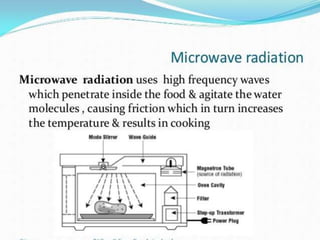
 Microwave oven
 During cooking
 In cold water (place food in watertight, plastic bag;
change water every 30 minutes)
 Throw out foods that have been warmer than 40 °F for
more than 2 hours.
 If there is any doubt at all about the length of time the
food has been defrosted at room temperature, it should be
thrown out
Refrigeration
Refrigerators should be set to maintain a temperature of
40 °F or below.
Storing oils and fats
 Oils and fats can begin to go rancid quickly when not
stored safely.
 Rancid cooking oils and fats do not often smell rancid
until well after they have spoiled.
 Oxygen, light and heat all contribute to cooking oils
becoming rancid.
 To help preserve oils from rancidification, they should be
refrigerated once opened.
 Unopened oils can have a storage life of up to one year,
but some types have a shorter shelf-life even when
unopened (such as sesame
Vegetables
 The guidelines vary for safe storage of vegetables under
dry conditions (without refrigerating or freezing).
 This is because different vegetables have different
characteristics, for example, tomatoes contain a lot of
water, while root vegetables such as carrots and potatoes
contain less.
 Many cultures have developed innovative ways of
preserving vegetables so that they can be stored for
several months between harvest seasons.
 Techniques include pickling, home canning, food
dehydration, or storage in a root cellar.
 Many factors affect the amount of time that a vegetable
can be kept in dry storage, as well as the temperature
needed to preserve its usefulness. The following guideline
shows the required dry storage conditions:
 Cool and dry: onion
 Cool and moist: root vegetable, potato, cabbage
 Warm and dry: winter squash, pumpkin, sweet potatoes,
dried hot peppers

Basic cooking principles

  • 1.
  • 2.
    Purposes of cooking To improve the appearance, flavor and taste of food and also helps to develop, blend or alter flavors  To bring about structural changes in food. Meat fibers are tenderized and the cellulose in vegetables and fruits is softened so that they are easier to chew and digest
  • 3.
     To stimulatethe appetite and the digestive juices. It gives food an attractive appearance, aroma and taste  To improve the keeping quality of food. It destroys some of the harmful micro-organisms such as yeasts, and bacteria that are naturally present
  • 4.
    Principles of cooking Heat is the most important factor behind cooking.  When food is cooked, it destroys the micro organisms and makes food easier to ingest and digest.
  • 5.
    BASIC COOKING PRINCIPLES Effectsof heat on food Foods are composed of:  Carbohydrates  Fats  Proteins  Water  Minerals, Vitamins & Pigments
  • 6.
    BASIC COOKING PRINCIPLES CARBOHYDRATES oStarches and sugars are both carbohydrates found in: fruits, vegetables, grains, beans and nuts. Meats and fish also contain a small amount o Two most important changes caused by cooking:  Caramelization  Gelatinization
  • 7.
    Caramelization o Browning ofsugars (browning vegetables and golden colour of bread crust)
  • 8.
    Gelatinization o Starches absorbwater and swell (thickening sauces)
  • 9.
    BASIC COOKING PRINCIPLES FatFacts Present in:  Meats, poultry, fish  Eggs, milk products  Nuts and whole grains  Fruits and vegetables  Break down when heated  Smoke when they become hot enough  Higher smoke point fats are good for deep frying
  • 10.
    BASIC COOKING PRINCIPLES Typesof Heat Transfer  Conduction  Convection  Radiation
  • 11.
    BASIC COOKING PRINCIPLES Thescience of heat…  Cooking is the transfer of heat energy from some source to the food
  • 21.
    Cooking Methods Moist Heat Poach, simmer, boil  Cooking in water or seasoned, flavored liquid
  • 23.
    Steam  Expose foodsdirectly to steam
  • 24.
     Braise  Cookedcovered in a small amount of liquid
  • 25.
     Boiling  Cookedwith enough water over fire
  • 26.
     Stewing  Foodis cooked using a lot of liquid. Different kinds of vegetables or meat are chopped, diced or cubed and added to the pot. The liquid is slightly thickened  The only disadvantage is that some of the vegetables might be overcooked and thus the nutrient content becomes much less.
  • 28.
    Sauté  To cookquickly in a small amount of fat  Preheat the pan  Do not overcrowd the pan  Meats are sometimes dusted with flour first  Pan is deglazed with a liquid after sautéing to dissolve brown bits of food on the pan bottom
  • 30.
    Pan-Fry  To cookin a moderate amount of fat in a pan over moderate heat  Similar to sauté, but more fat is used  Usually done over lower heat  Amount of fat depends on food being cooked  Food is normally turned at least once
  • 32.
    Deep-Fry  To cooksubmerged in hot fat
  • 33.
    Barbequing  It ismost suitable to cooking meat cutlets, fish or chicken pieces.  The food is usually marinated with spices and tenderizers (for meat cuts) for sometime before it is cooked.  With this method of cooking, a sheet of metal with stands is heated up and oil is used to cook the food.  A sufficient amount of oil is heated up and food is added.  The food is then turned over a couple of times before it is dished out.
  • 35.
    Basting  This methodof cooking is usually associated with roasting.  The juice or liquid that comes out of the meat being cooked is spooned over the roast frequently while it is being roasted.  The outer part of the meat is moistened frequently during the cooking process with the juice that is being spooned over.  Usually, the extra juice from the cooked meat is added to a mixture to make the meat sauce.
  • 37.
    Blanching  It isa cooking process wherein the food substance, usually a vegetable or fruit, is plunged into boiling water, removed after a brief, timed interval, and finally plunged into iced water or placed under cold running water to halt the cooking process.
  • 38.
    Food is blanched:-  to soften it  to partly or fully cook it  to remove a strong taste (for example of cabbage or onions).
  • 40.
    Dry Heat Roast/Bake  Tocook foods by surrounding them with hot, dry air  Cook uncovered  Meats cooked on a rack  Change position of product occasionally  Smoke roasting
  • 43.
    Broil  To cookwith radiant heat from above  Used for tender items
  • 44.
    Salamander  It isa low-heat broiler
  • 45.
    Grill  To cookwith heat from below on an open grid  Griddling is done on a solid surface
  • 47.
    Preservation of nutrientsin cooking  Keep fruits and vegetables cool to prevent enzymes from destroying vitamins.  Refrigerate food in airtight moisture-proof containers. The loss of nutrients is slowed near freezing temperatures, at high humidity, and less air contact.
  • 48.
     Avoid trimmingand cutting fruits and vegetables into small pieces.  The greater surface area allows oxygen to break down vitamins faster.  The outer leaves of all greens and under the skins of fruits and vegetables, such as potatoes, carrots and apples, have more nutrients than the inner portion
  • 49.
     Microwaving cooking,steaming, or using a pan or wok with very small amounts of water and a tight-fitting lid are best.  More nutrients are retained when there is less contact with water and a shorter cooking time with less exposure to heat.  Cook fruits and vegetables with their skins on
  • 50.
     Minimize reheatingfood.  Do not add baking soda to enhance a vegetable’s green color. Alkaline products destroy vitamins.  Store canned goods in a cool place and serve any liquid packed with the food. If you don’t need all the liquid to cook the food, reserve the remainder for soup stock.
  • 51.
     Keep milkrefrigerated and tightly capped, away from strong light.  Riboflavin is very sensitive to direct light.  Cook vegetables in a minimum amount of water or to use the cooking water in soups and gravies.  Boiling rice in excess water and discarding the gruel (kanjee) also results in loss of some amount of minerals and vitamins.
  • 52.
    Foodstorage Freezers and thawingfood  Freezer temperature should be maintained below 0°F.  Food should never be thawed at room temperature, this increases the risk of bacterial and fungal growth and accordingly the risk of food poisoning.
  • 53.
     Once thawed,food should be used and never refrozen. Frozen food should be thawed using the following methods:-  Microwave oven  During cooking  In cold water (place food in watertight, plastic bag; change water every 30 minutes)
  • 54.
     Throw outfoods that have been warmer than 40 °F for more than 2 hours.  If there is any doubt at all about the length of time the food has been defrosted at room temperature, it should be thrown out
  • 55.
    Refrigeration Refrigerators should beset to maintain a temperature of 40 °F or below.
  • 56.
    Storing oils andfats  Oils and fats can begin to go rancid quickly when not stored safely.  Rancid cooking oils and fats do not often smell rancid until well after they have spoiled.  Oxygen, light and heat all contribute to cooking oils becoming rancid.
  • 57.
     To helppreserve oils from rancidification, they should be refrigerated once opened.  Unopened oils can have a storage life of up to one year, but some types have a shorter shelf-life even when unopened (such as sesame
  • 58.
    Vegetables  The guidelinesvary for safe storage of vegetables under dry conditions (without refrigerating or freezing).  This is because different vegetables have different characteristics, for example, tomatoes contain a lot of water, while root vegetables such as carrots and potatoes contain less.
  • 59.
     Many cultureshave developed innovative ways of preserving vegetables so that they can be stored for several months between harvest seasons.  Techniques include pickling, home canning, food dehydration, or storage in a root cellar.
  • 60.
     Many factorsaffect the amount of time that a vegetable can be kept in dry storage, as well as the temperature needed to preserve its usefulness. The following guideline shows the required dry storage conditions:  Cool and dry: onion  Cool and moist: root vegetable, potato, cabbage  Warm and dry: winter squash, pumpkin, sweet potatoes, dried hot peppers