Bacterial Growth
SPOORTHI S SADAR
ASSISTANT PROFESSOR
Bacterial Growth
 Increase in number of cells, not cell size
 One cell becomes colony of millions of cells
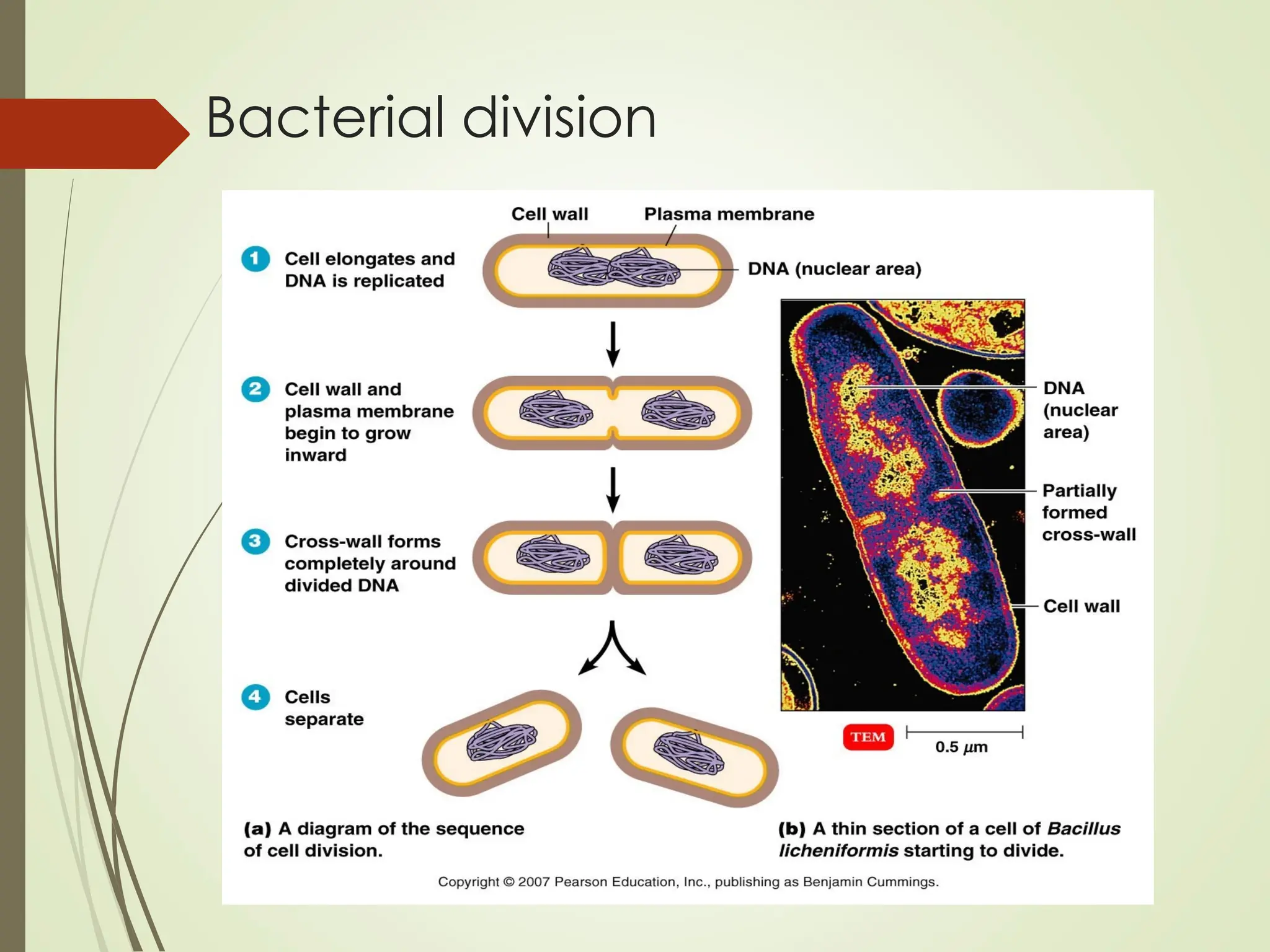
Bacterial division
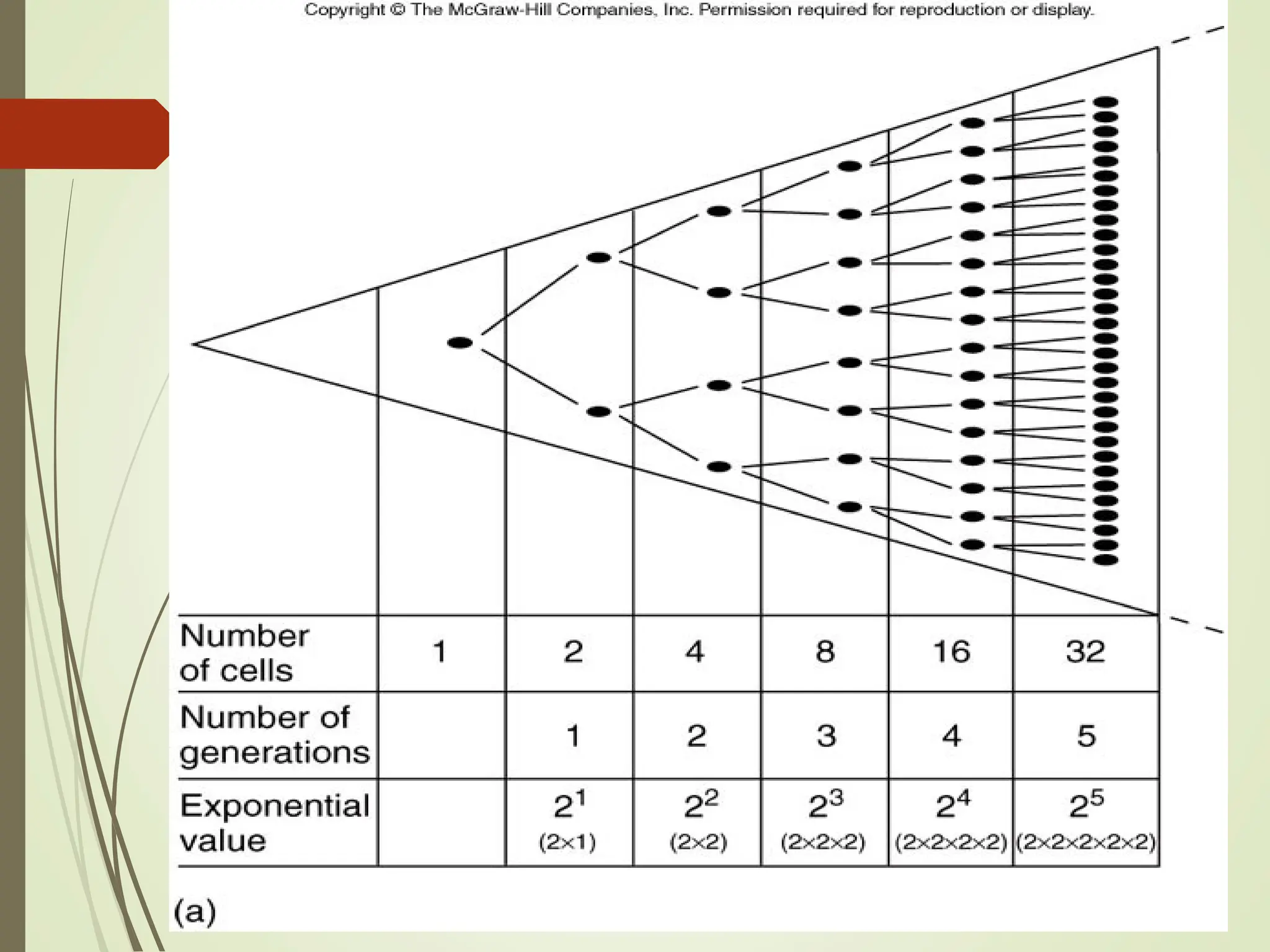
Generation Time
 Time required for cell to divide/for population to double.
 Average for bacteria is 1-3 hours
 E. coli generation time = 20 min
 20 generations (7 hours), 1 cell becomes 1 million cells!
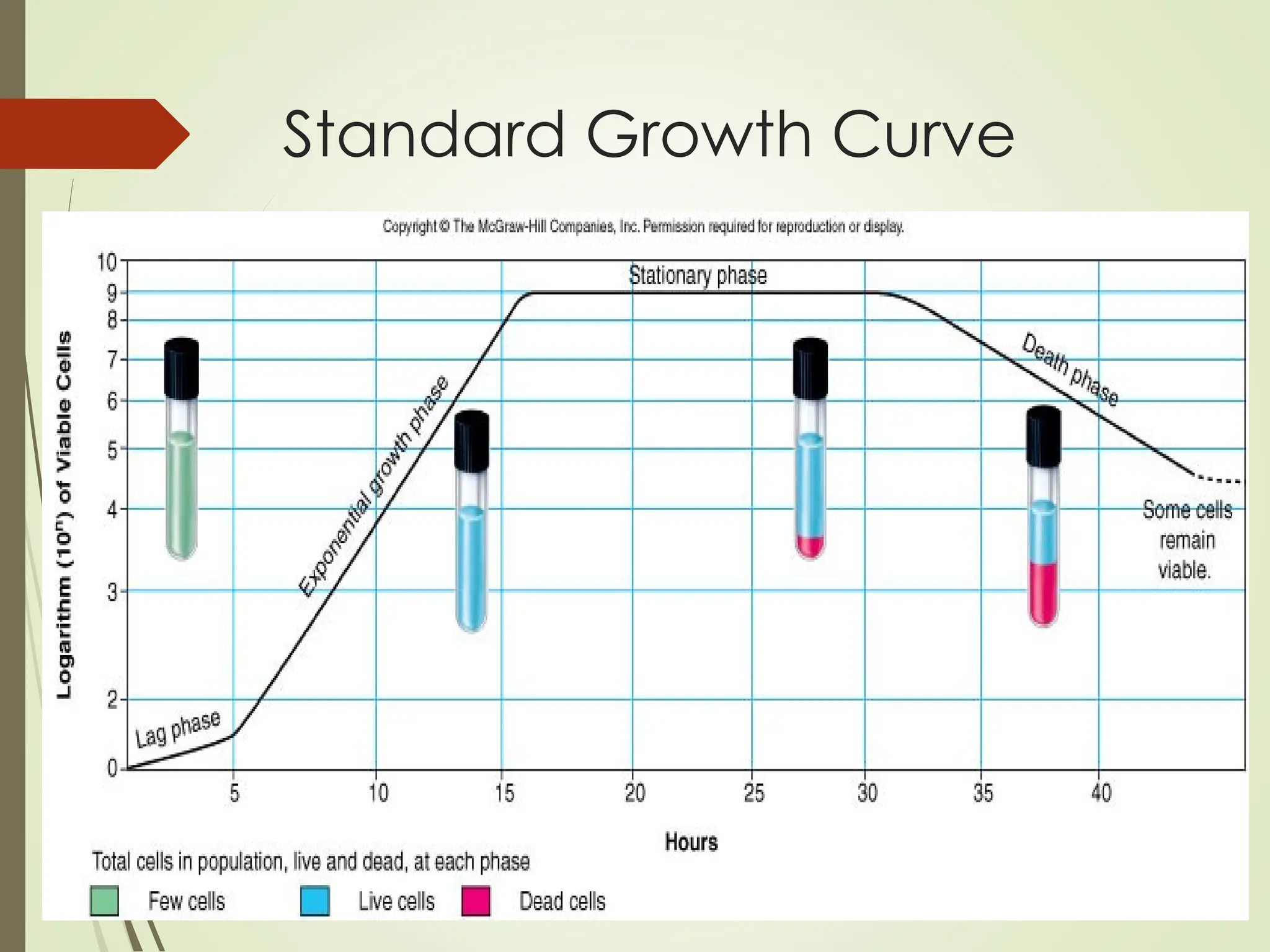
Standard Growth Curve
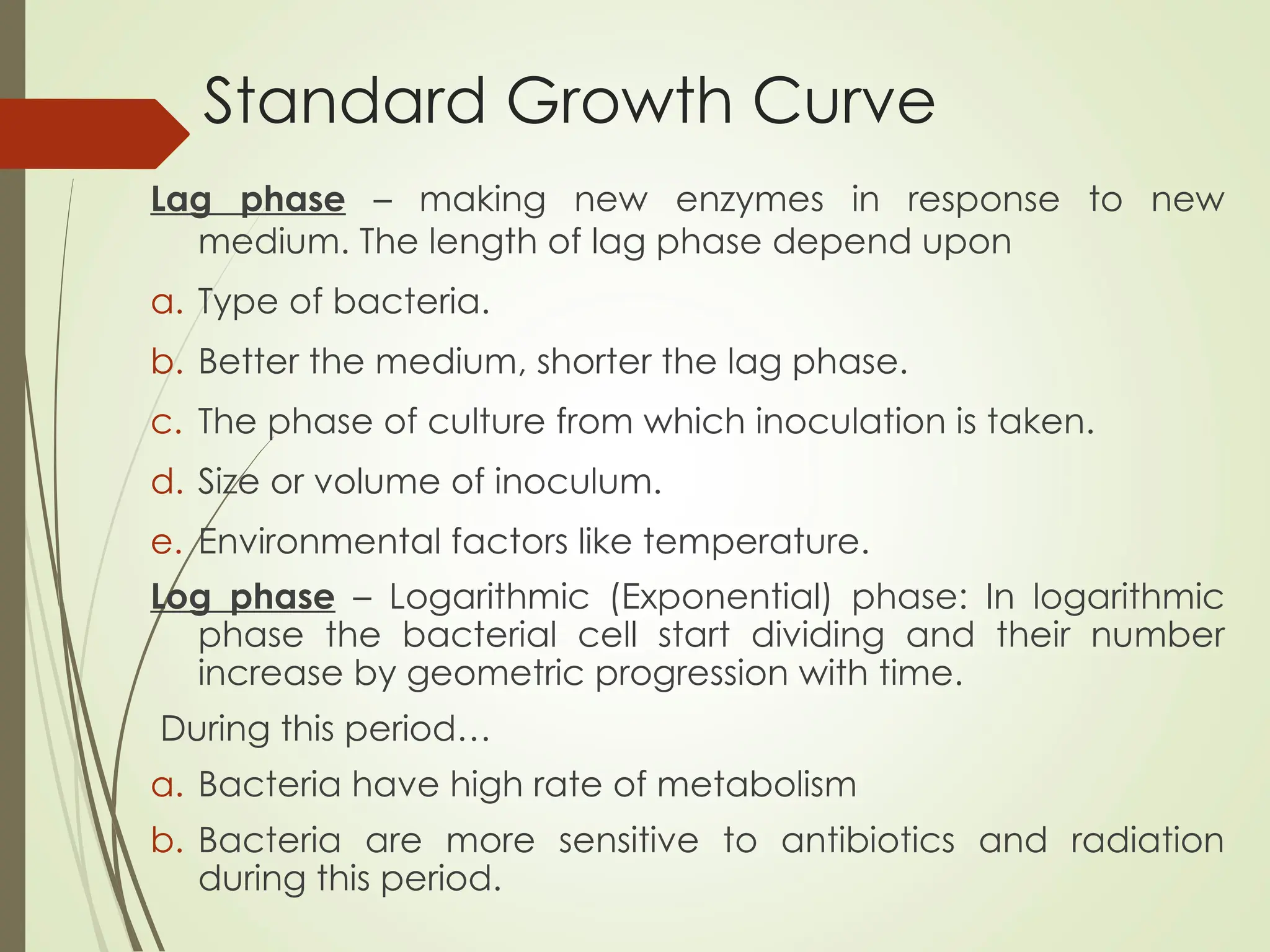
Lag phase – making new enzymes in response to new
medium. The length of lag phase depend upon
a. Type of bacteria.
b. Better the medium, shorter the lag phase.
c. The phase of culture from which inoculation is taken.
d. Size or volume of inoculum.
e. Environmental factors like temperature.
Log phase – Logarithmic (Exponential) phase: In logarithmic
phase the bacterial cell start dividing and their number
increase by geometric progression with time.
During this period…
a. Bacteria have high rate of metabolism
b. Bacteria are more sensitive to antibiotics and radiation
during this period.
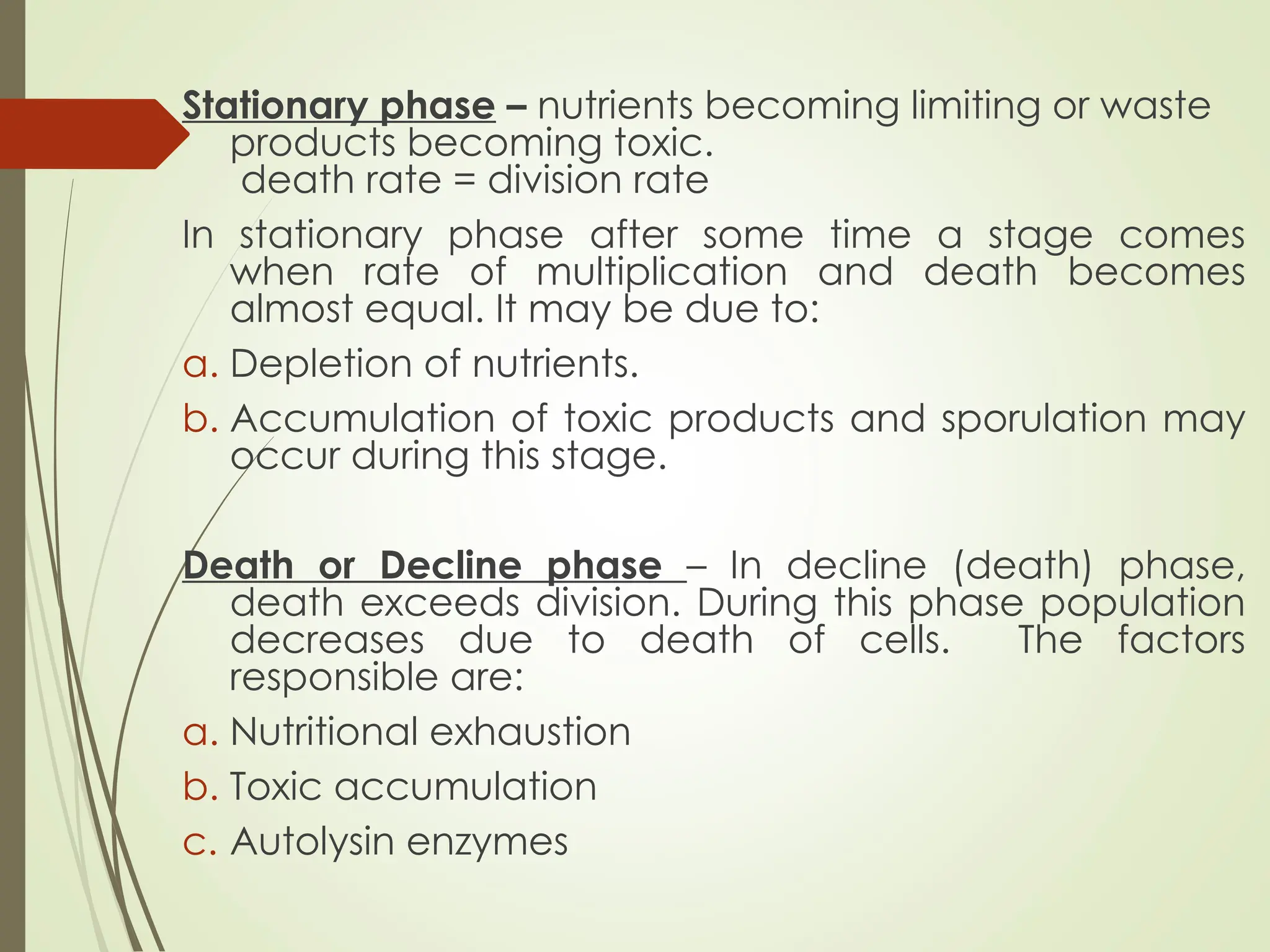
Stationary phase – nutrients becoming limiting or waste
products becoming toxic.
death rate = division rate
In stationary phase after some time a stage comes
when rate of multiplication and death becomes
almost equal. It may be due to:
a. Depletion of nutrients.
b. Accumulation of toxic products and sporulation may
occur during this stage.
Death or Decline phase – In decline (death) phase,
death exceeds division. During this phase population
decreases due to death of cells. The factors
responsible are:
a. Nutritional exhaustion
b. Toxic accumulation
c. Autolysin enzymes
Measuring Growth
 Dilution Plating
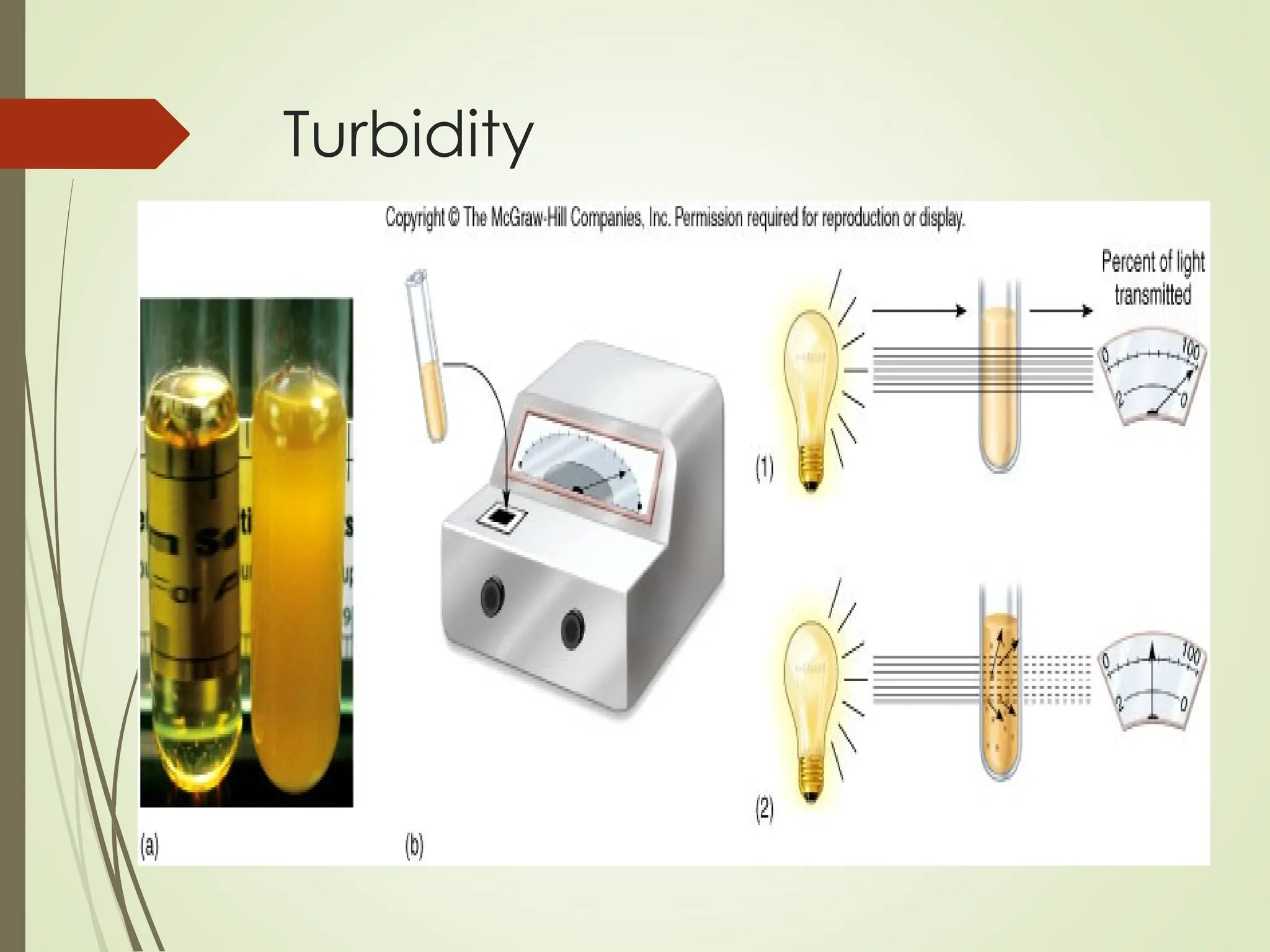
 Turbidity analysis using spectrophotometer
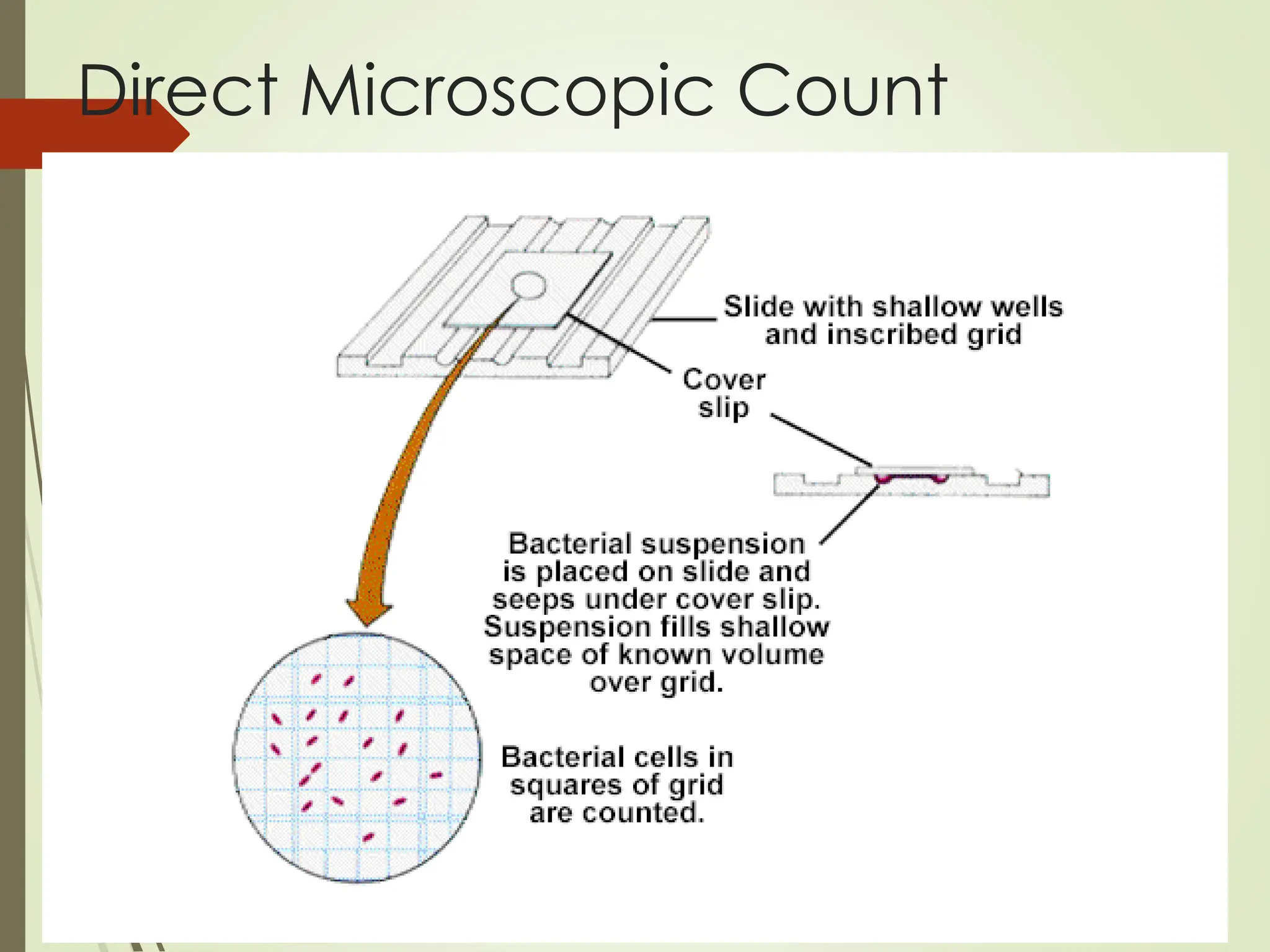
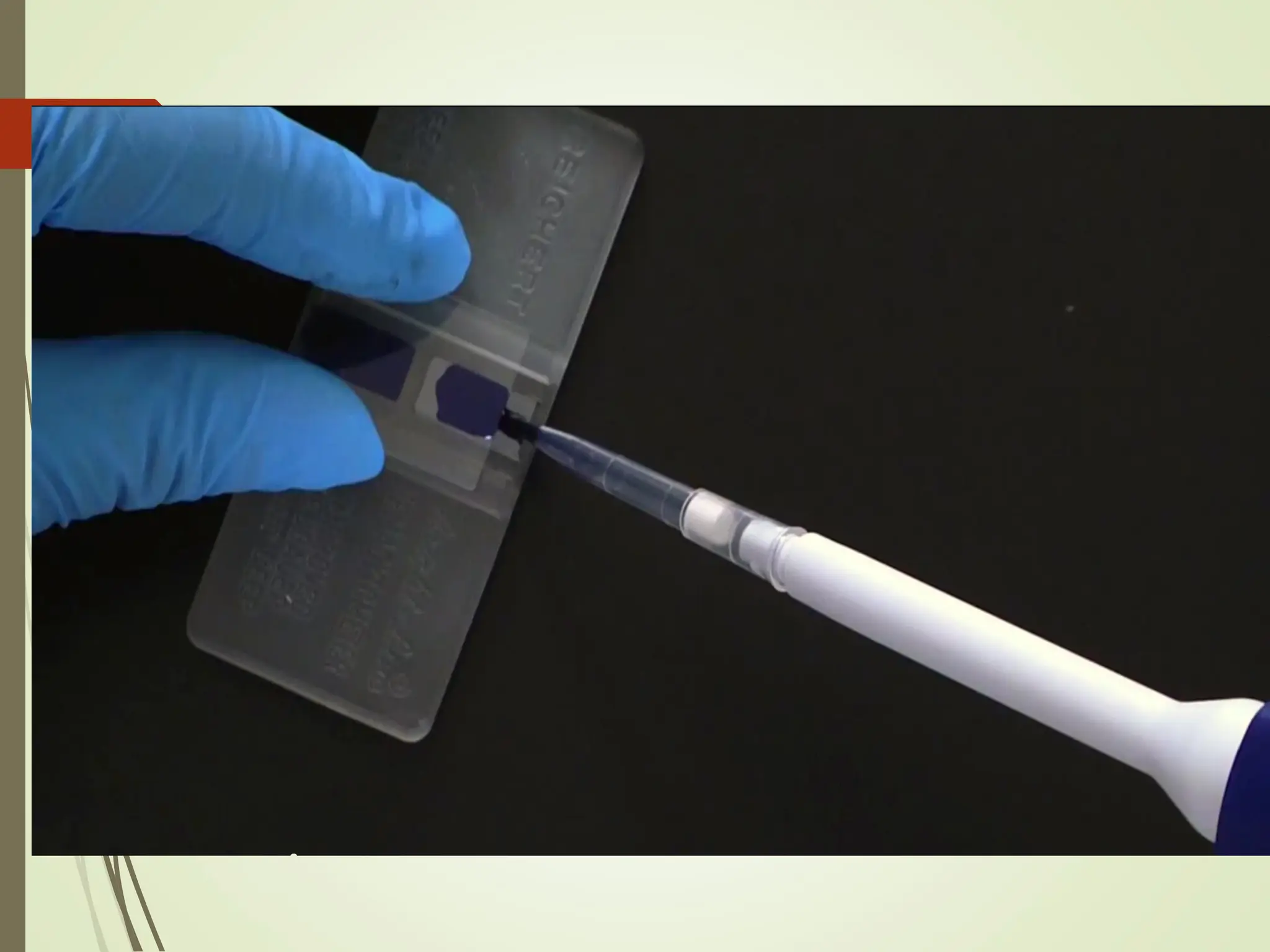
 Direct count with hemacytometer
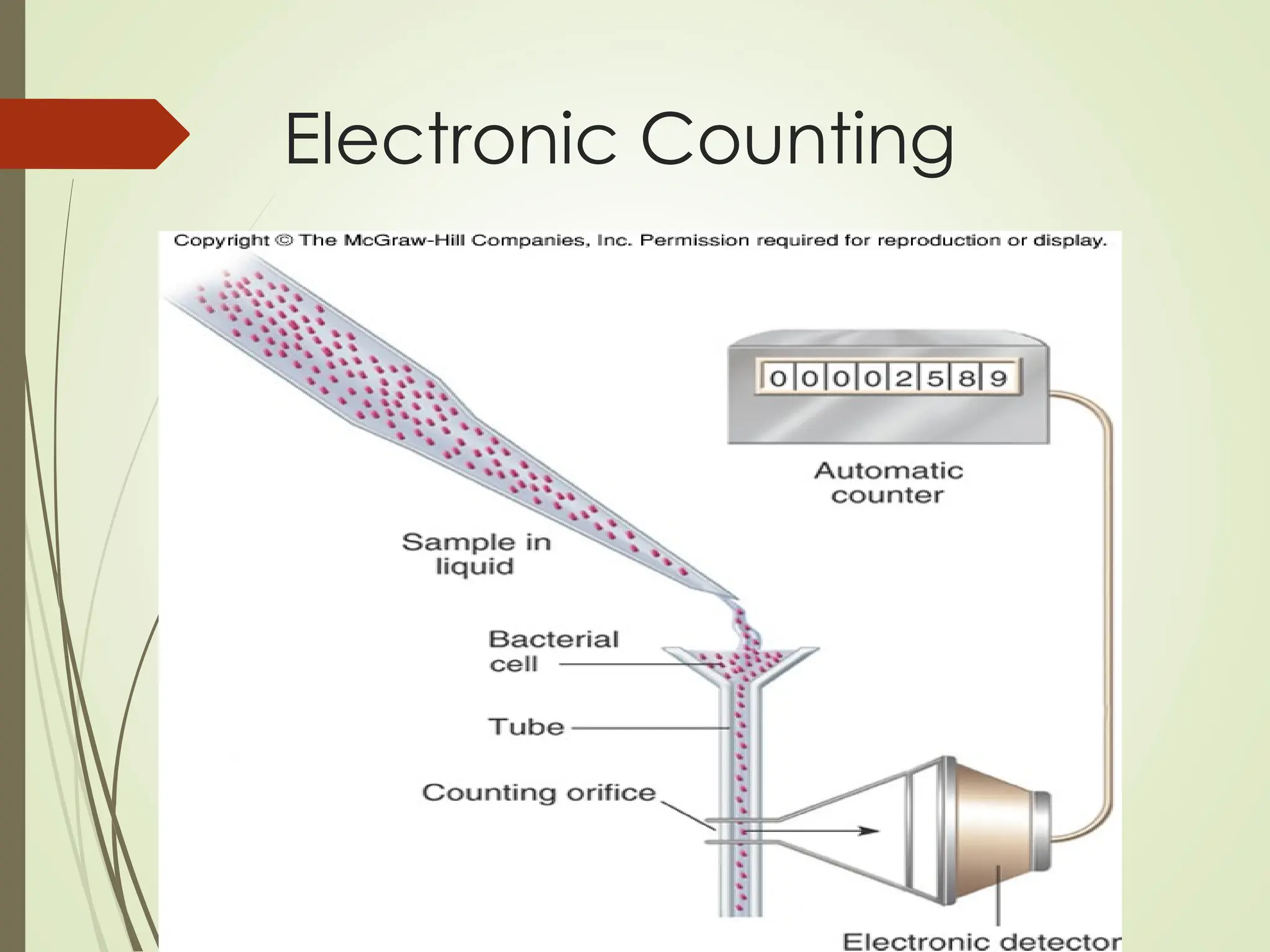
 Optical detection – Coulter Counter
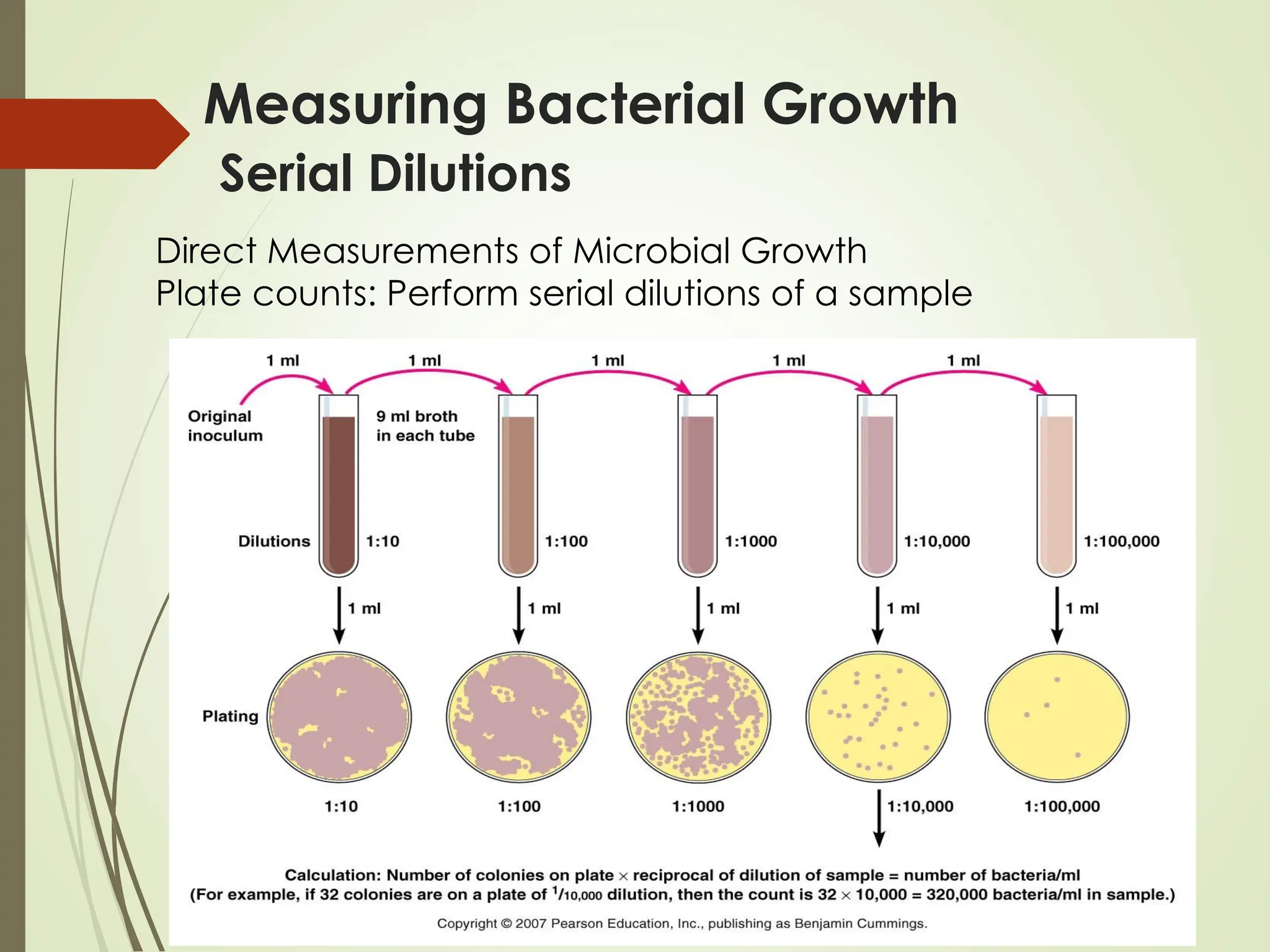
Measuring Bacterial Growth
Serial Dilutions
Direct Measurements of Microbial Growth
Plate counts: Perform serial dilutions of a sample
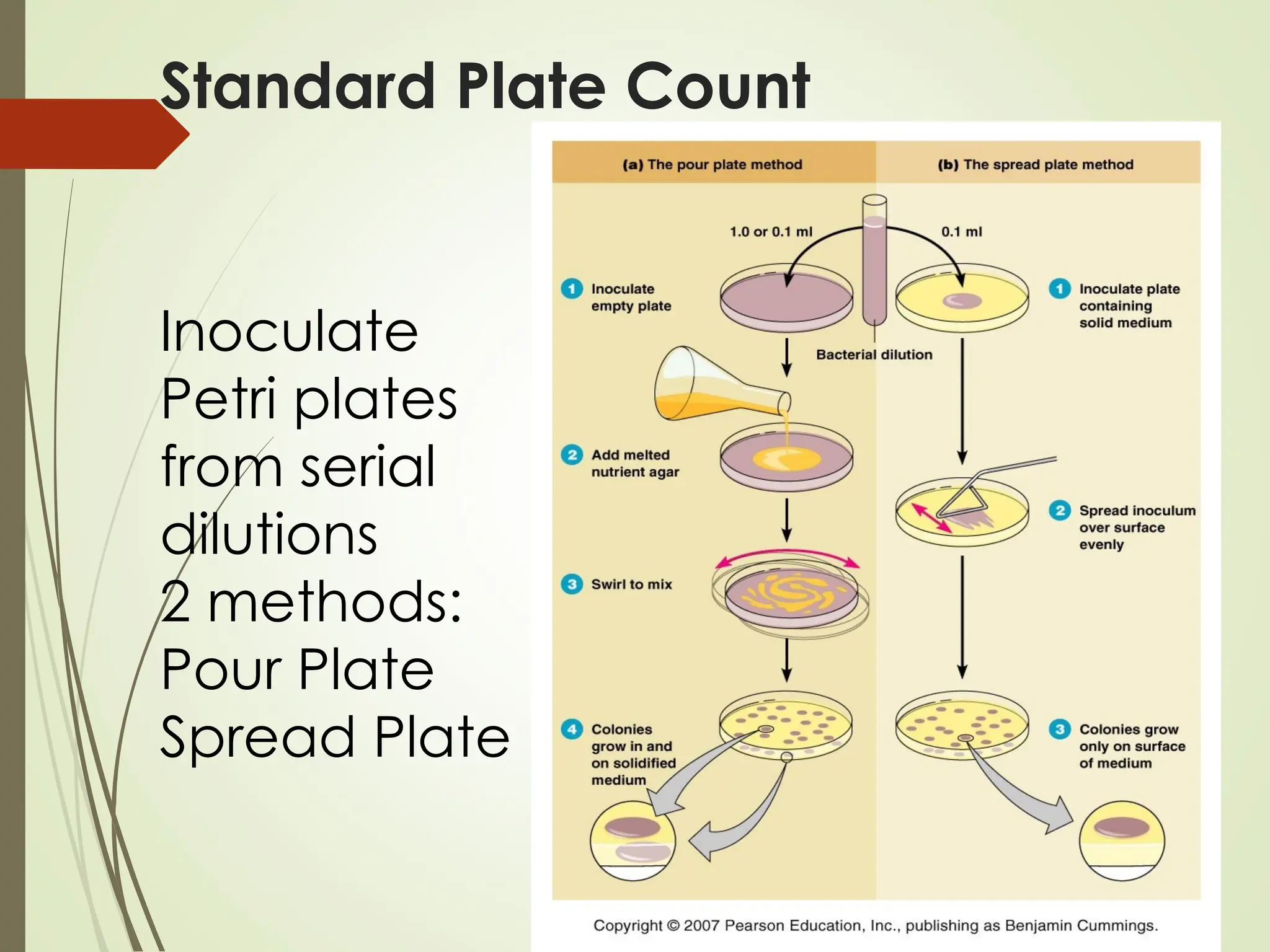
Standard Plate Count
Inoculate
Petri plates
from serial
dilutions
2 methods:
Pour Plate
Spread Plate
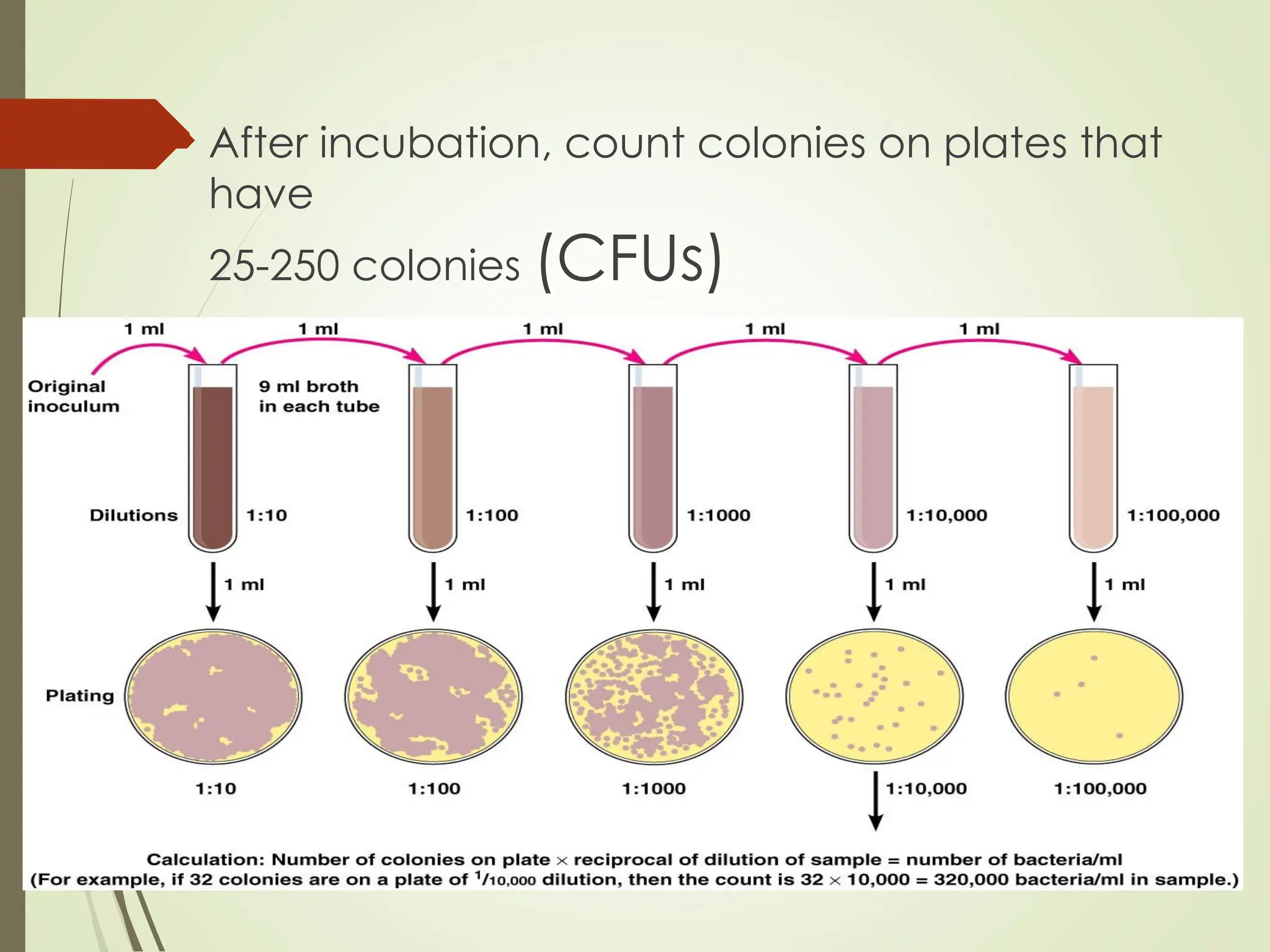
 After incubation, count colonies on plates that
have
25-250 colonies (CFUs)
Turbidity
Electronic Counting
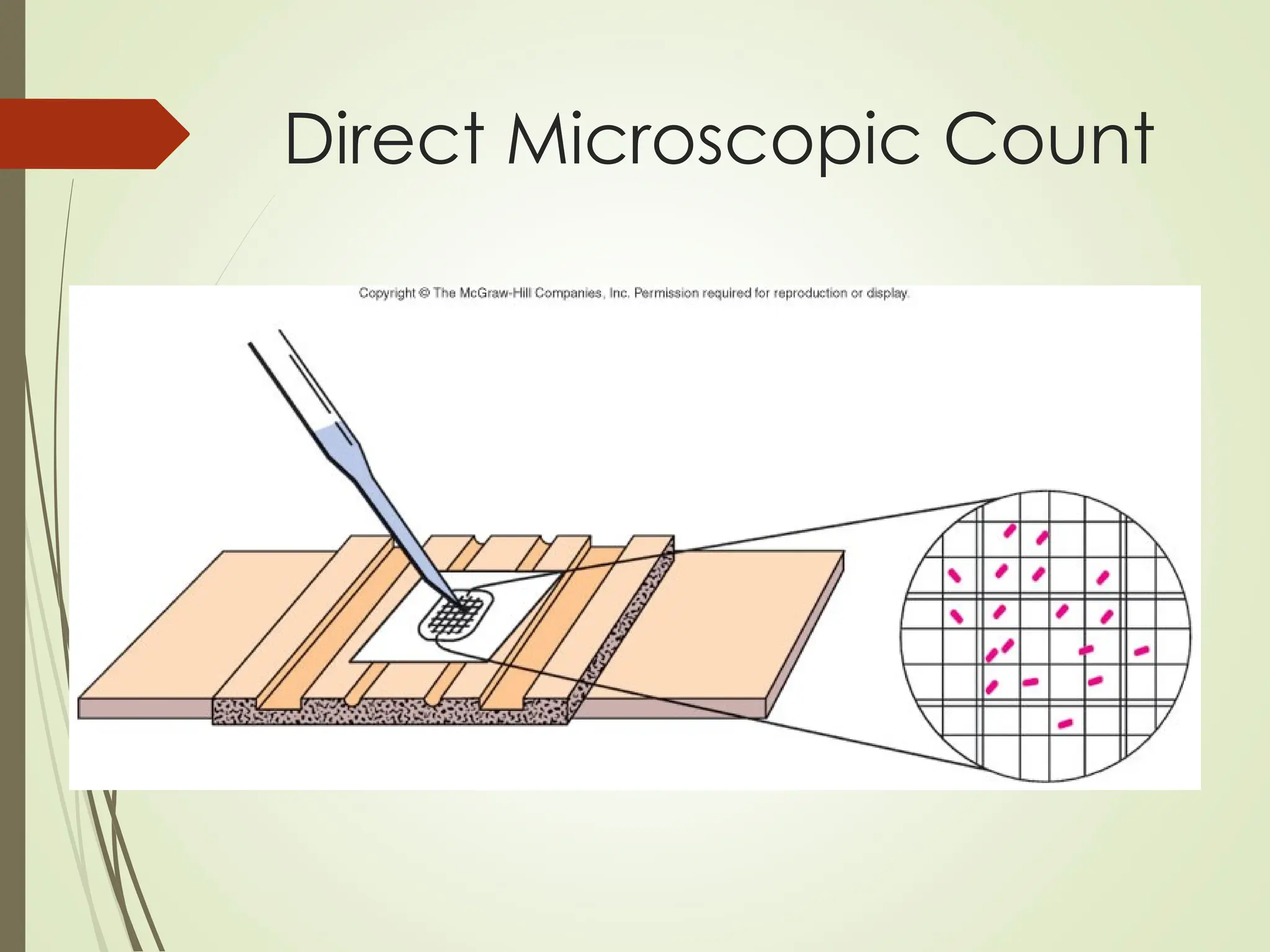
Direct Microscopic Count
Factors Affecting Growth
Environmental Factors
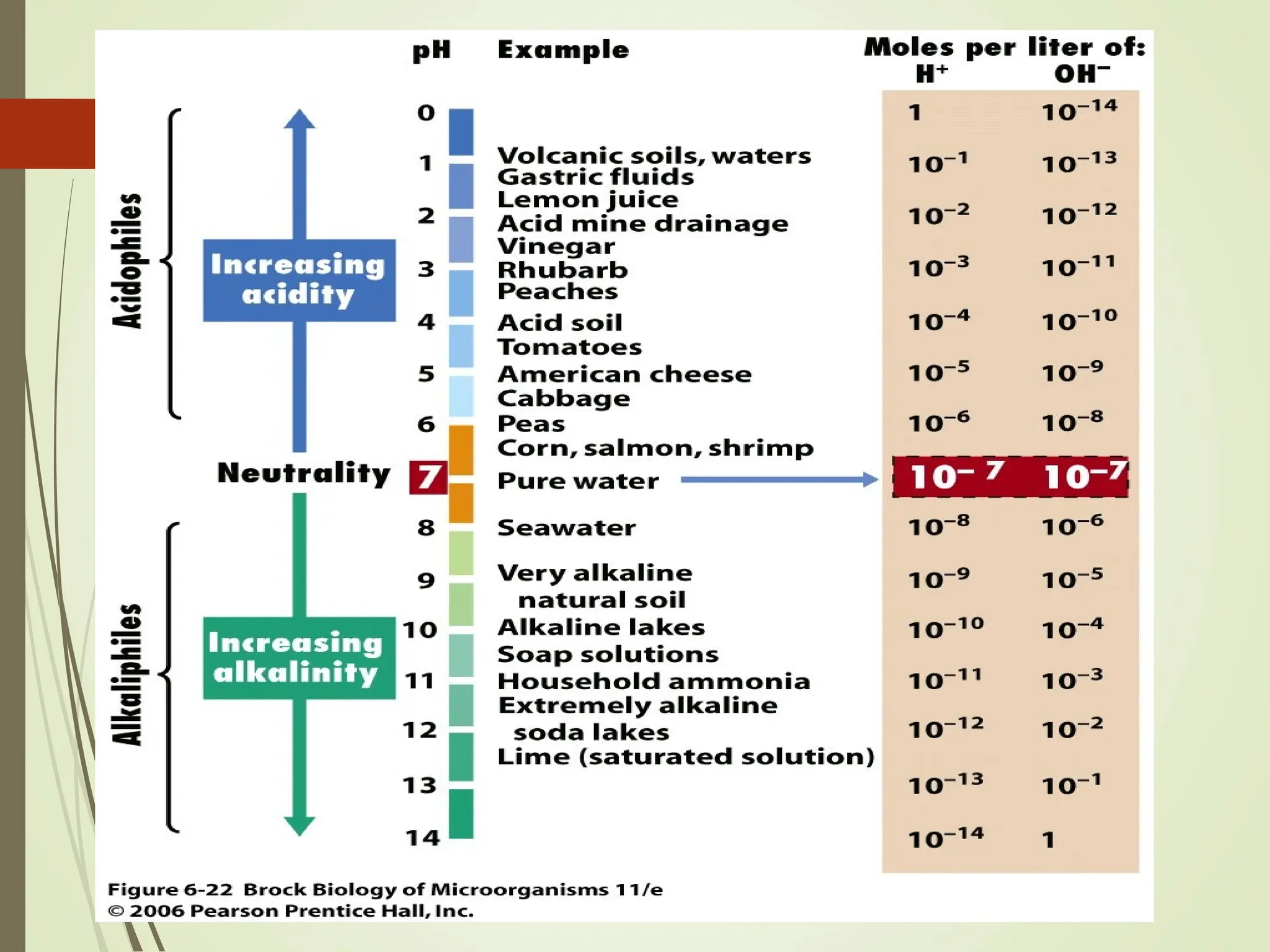
1. pH: measure of [H+
]
each organism has a pH range and a pH
optimum.
acidophiles – optimum in pH range 1-4
alkalophiles – optimum in pH range 8.5-11
lactic acid bacteria – 4-7
Thiobacillus thiooxidans – 2.2-2.8
Fungi – 4-6
Internal pH regulated by BUFFERS and near neutral
adjusted with ion pumps
Human blood and tissues has pH 7.2+0.2
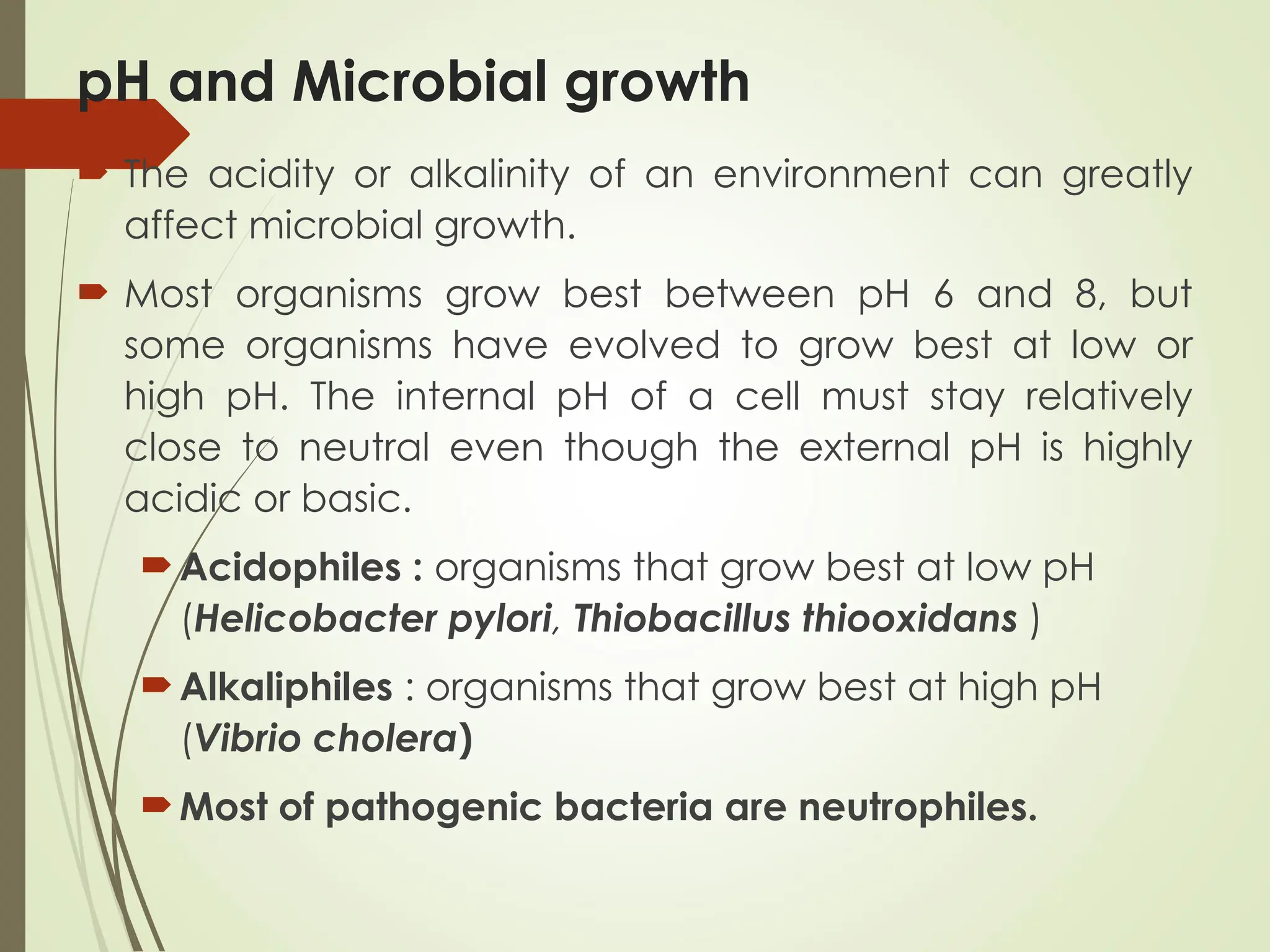
pH and Microbial growth
 The acidity or alkalinity of an environment can greatly
affect microbial growth.
 Most organisms grow best between pH 6 and 8, but
some organisms have evolved to grow best at low or
high pH. The internal pH of a cell must stay relatively
close to neutral even though the external pH is highly
acidic or basic.
Acidophiles : organisms that grow best at low pH
(Helicobacter pylori, Thiobacillus thiooxidans )
Alkaliphiles : organisms that grow best at high pH
(Vibrio cholera)
Most of pathogenic bacteria are neutrophiles.
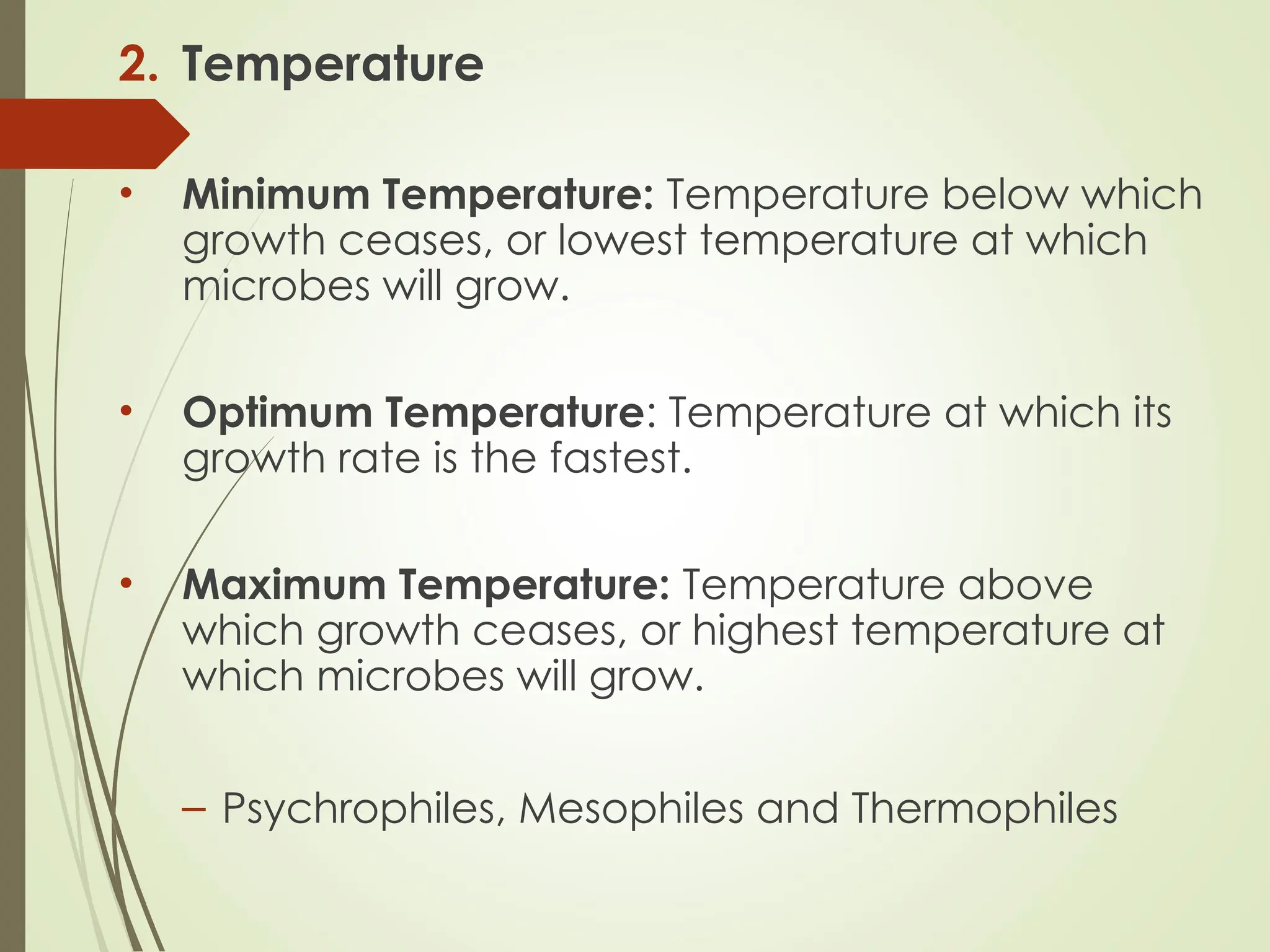
2. Temperature
• Minimum Temperature: Temperature below which
growth ceases, or lowest temperature at which
microbes will grow.
• Optimum Temperature: Temperature at which its
growth rate is the fastest.
• Maximum Temperature: Temperature above
which growth ceases, or highest temperature at
which microbes will grow.
– Psychrophiles, Mesophiles and Thermophiles
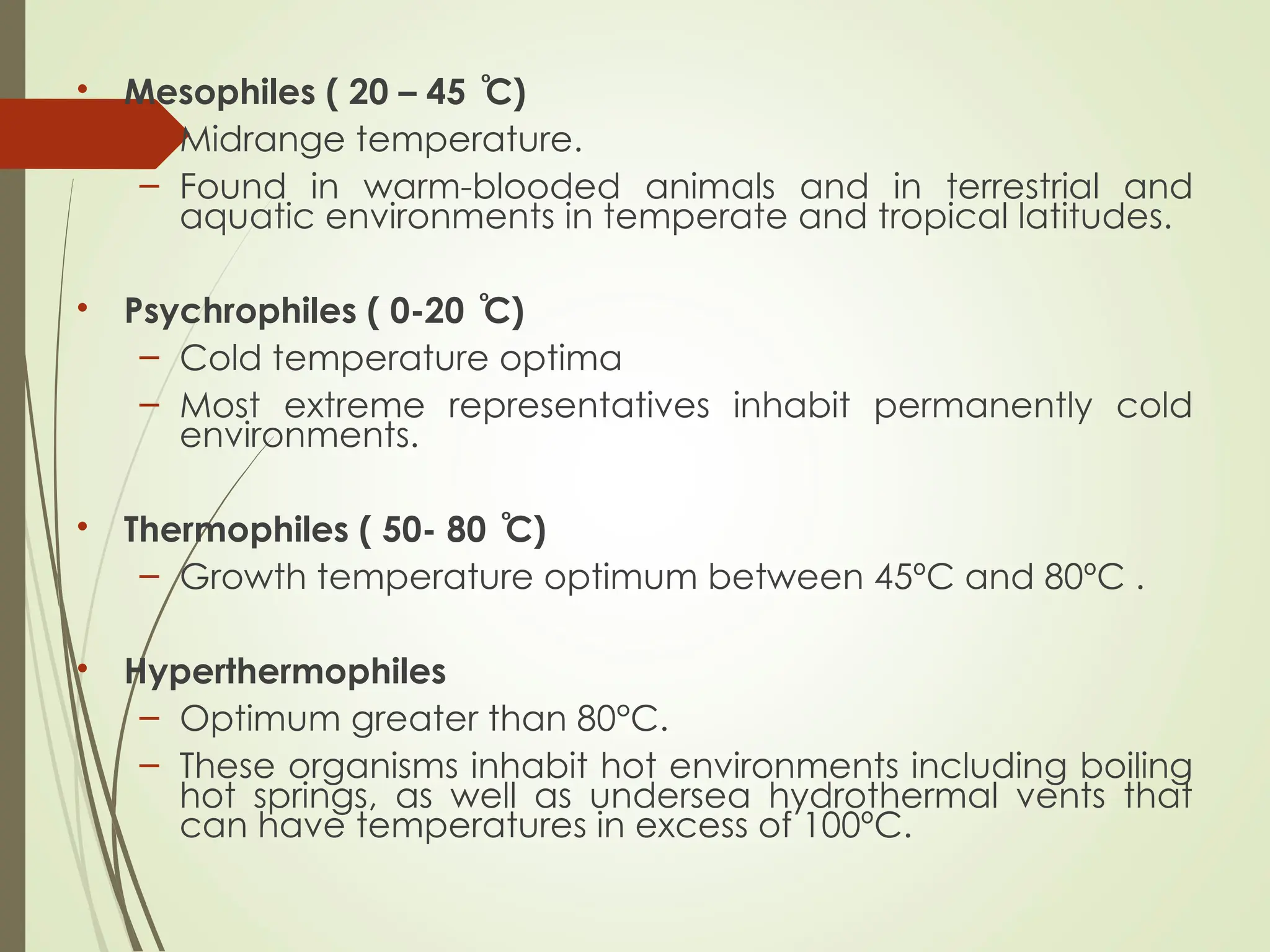
• Mesophiles ( 20 – 45 C)
ͦ
– Midrange temperature.
– Found in warm-blooded animals and in terrestrial and
aquatic environments in temperate and tropical latitudes.
• Psychrophiles ( 0-20 C)
ͦ
– Cold temperature optima
– Most extreme representatives inhabit permanently cold
environments.
• Thermophiles ( 50- 80 C)
ͦ
– Growth temperature optimum between 45ºC and 80ºC .
• Hyperthermophiles
– Optimum greater than 80°C.
– These organisms inhabit hot environments including boiling
hot springs, as well as undersea hydrothermal vents that
can have temperatures in excess of 100ºC.
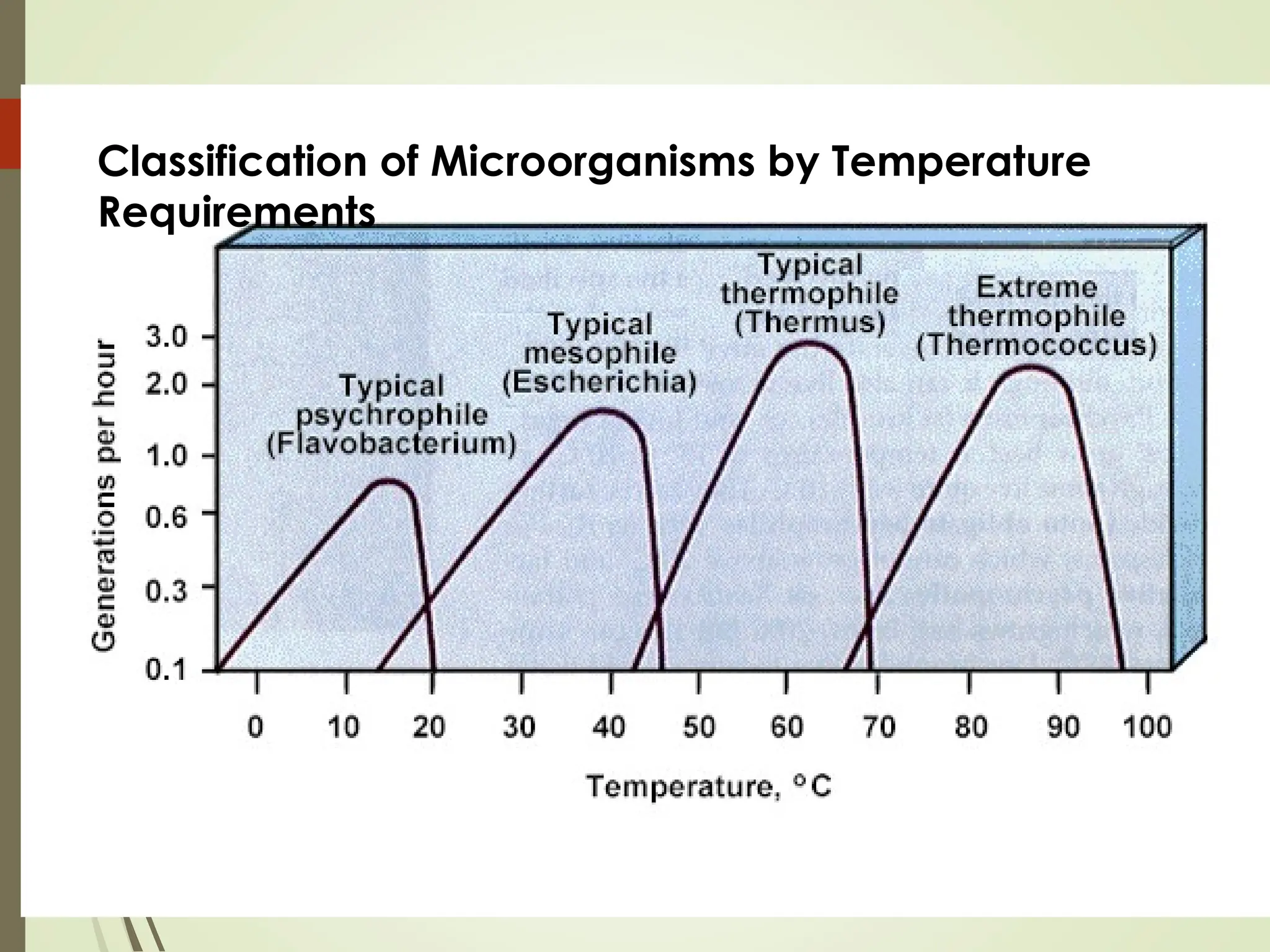
Classification of Microorganisms by Temperature
Requirements
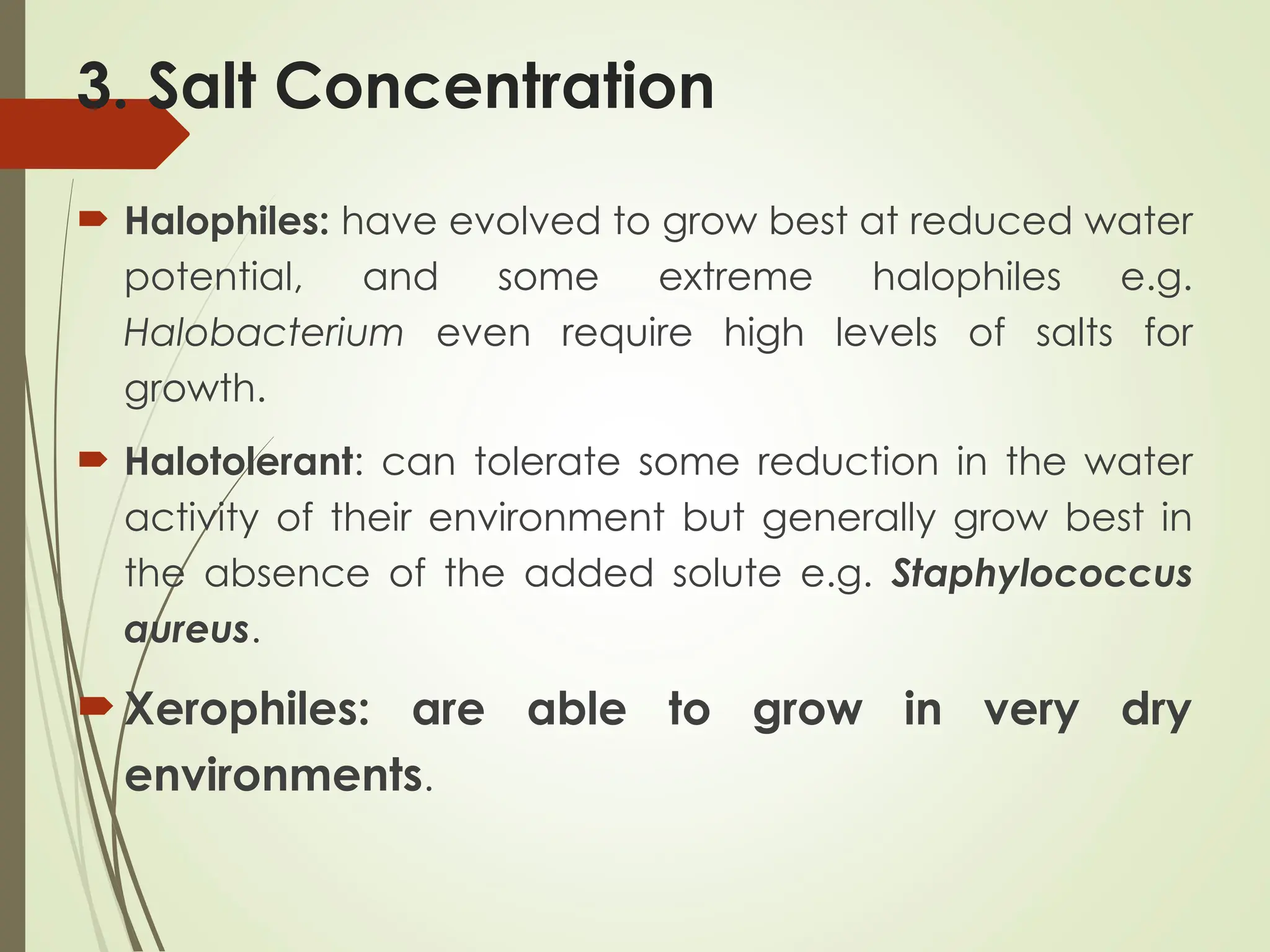
3. Salt Concentration
 Halophiles: have evolved to grow best at reduced water
potential, and some extreme halophiles e.g.
Halobacterium even require high levels of salts for
growth.
 Halotolerant: can tolerate some reduction in the water
activity of their environment but generally grow best in
the absence of the added solute e.g. Staphylococcus
aureus.
Xerophiles: are able to grow in very dry
environments.
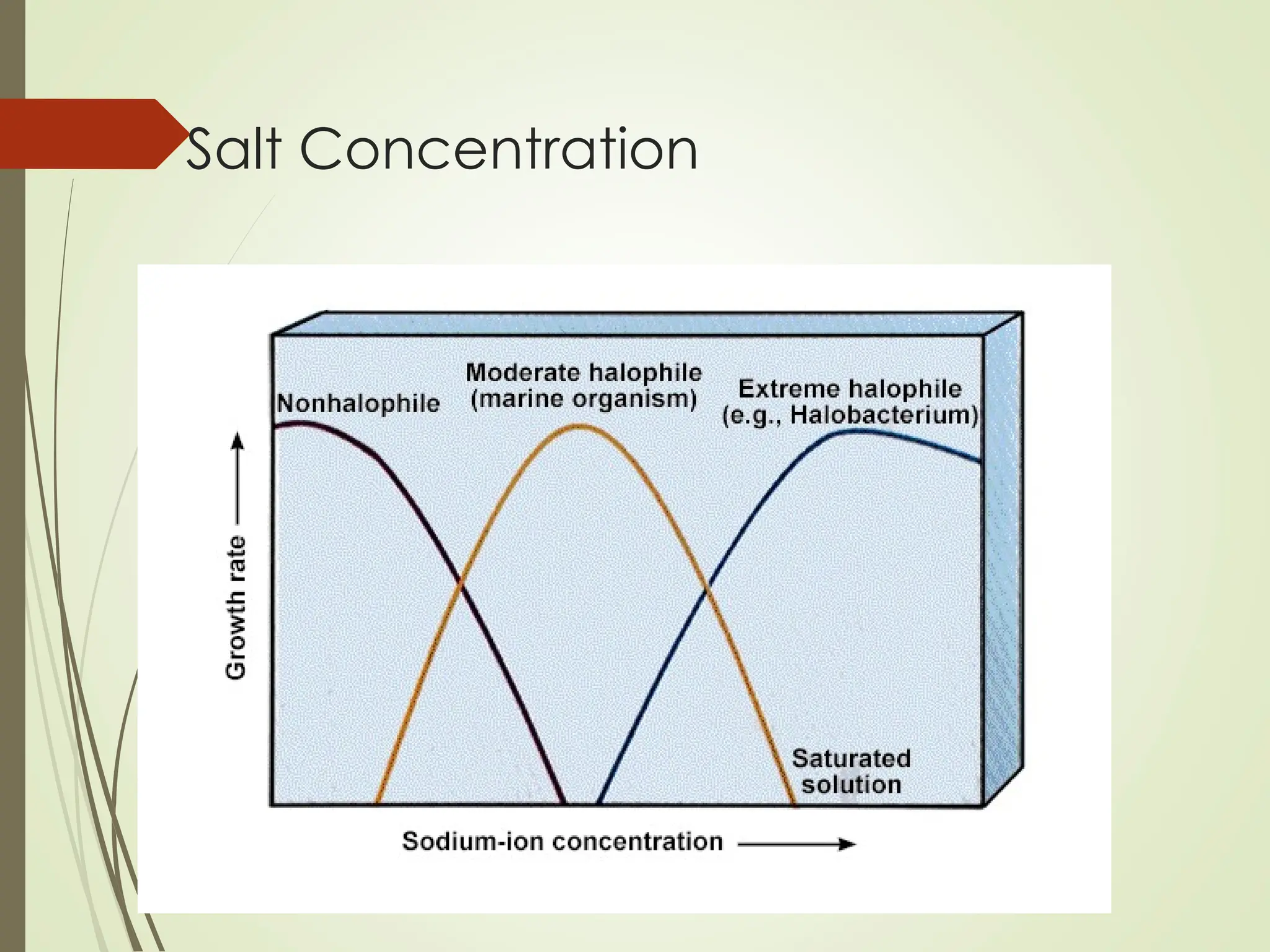
Salt Concentration
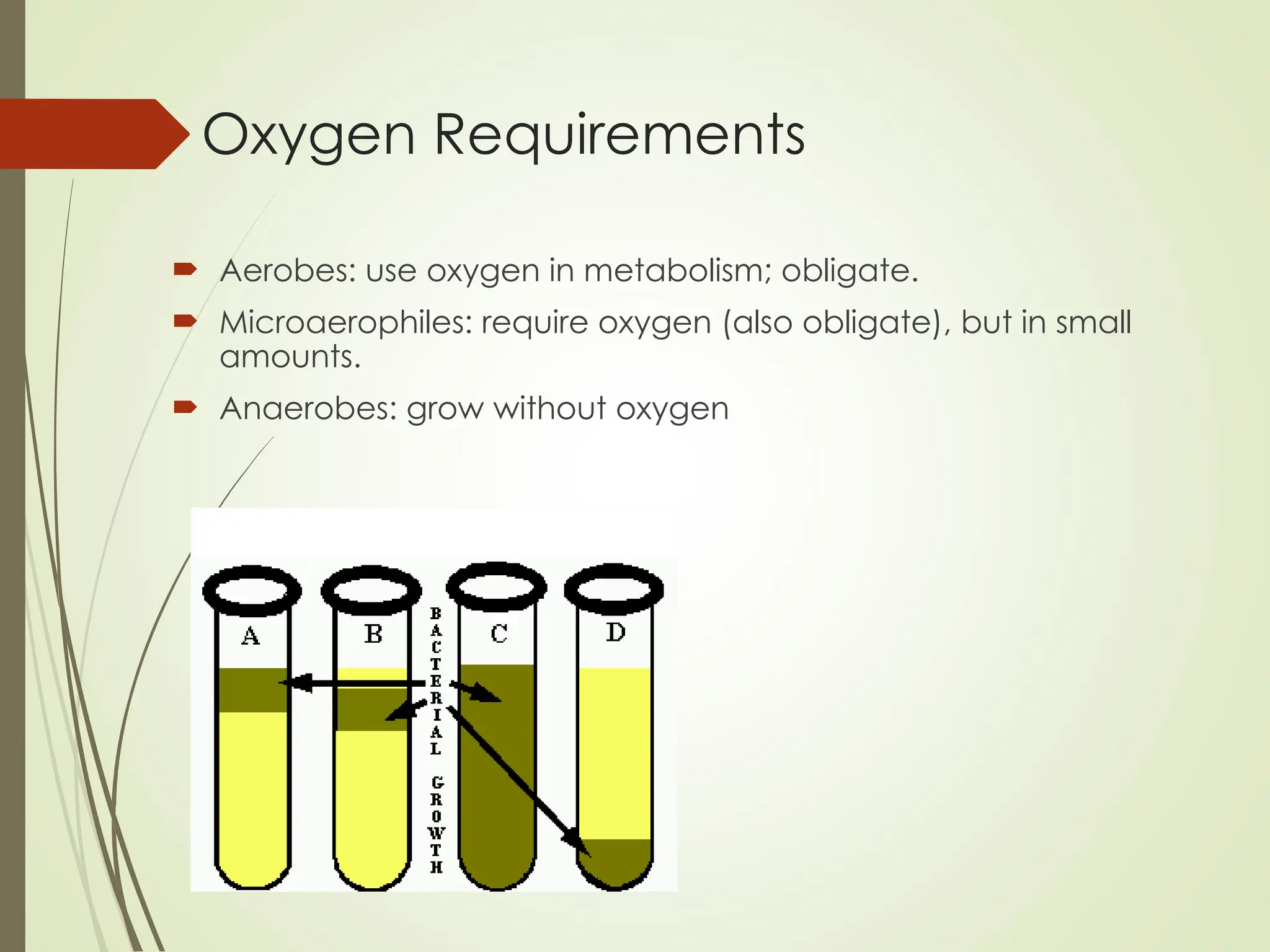
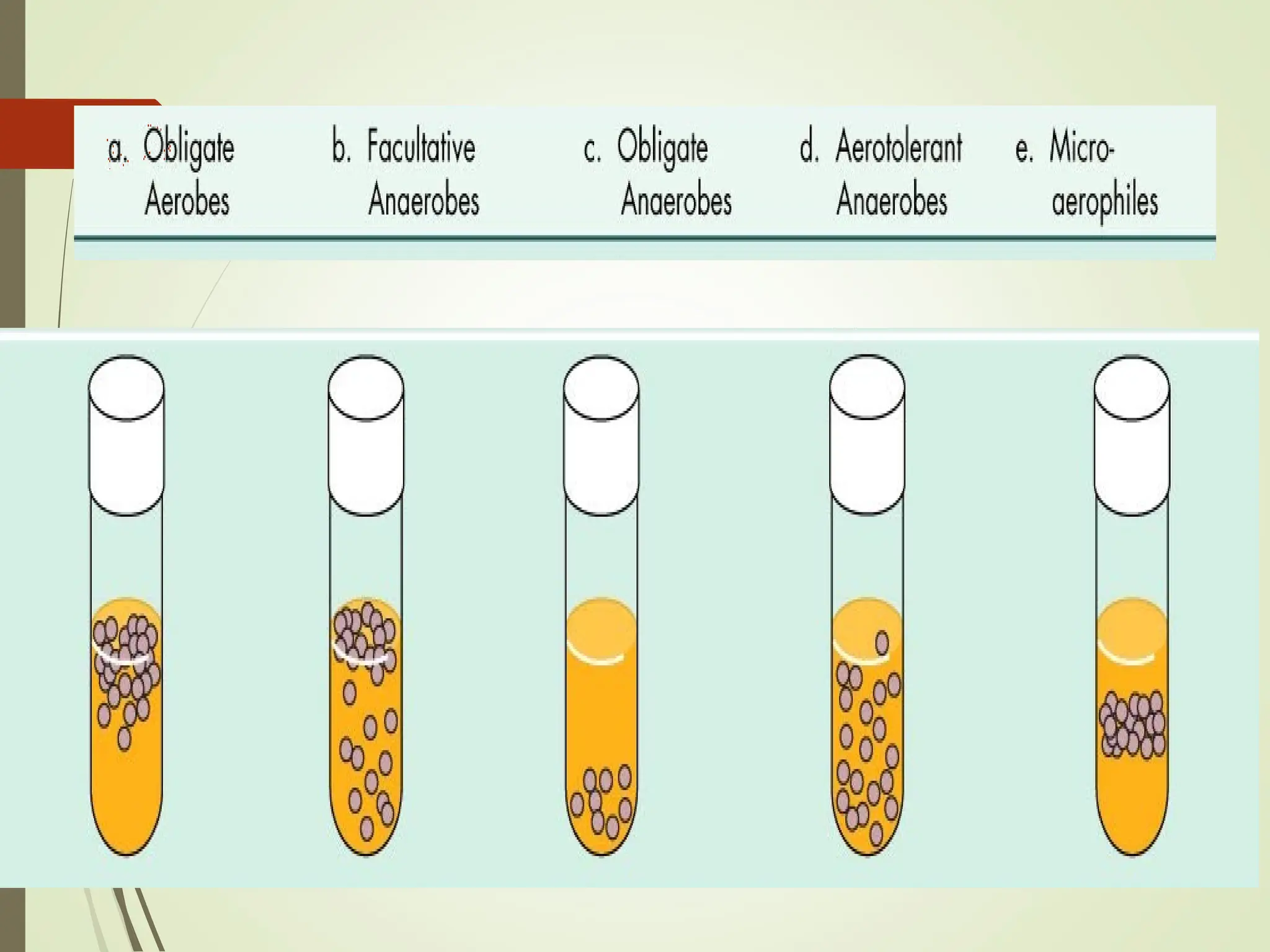
Oxygen Requirements
 Aerobes: use oxygen in metabolism; obligate.
 Microaerophiles: require oxygen (also obligate), but in small
amounts.
 Anaerobes: grow without oxygen
THANK YOU

bacterial growth , bacterial growth curve , measurement.ppt

  • 1.
    Bacterial Growth SPOORTHI SSADAR ASSISTANT PROFESSOR
  • 2.
    Bacterial Growth  Increasein number of cells, not cell size  One cell becomes colony of millions of cells
  • 3.
  • 4.
    Generation Time  Timerequired for cell to divide/for population to double.  Average for bacteria is 1-3 hours  E. coli generation time = 20 min  20 generations (7 hours), 1 cell becomes 1 million cells!
  • 6.
  • 7.
    Standard Growth Curve Lagphase – making new enzymes in response to new medium. The length of lag phase depend upon a. Type of bacteria. b. Better the medium, shorter the lag phase. c. The phase of culture from which inoculation is taken. d. Size or volume of inoculum. e. Environmental factors like temperature. Log phase – Logarithmic (Exponential) phase: In logarithmic phase the bacterial cell start dividing and their number increase by geometric progression with time. During this period… a. Bacteria have high rate of metabolism b. Bacteria are more sensitive to antibiotics and radiation during this period.
  • 8.
    Stationary phase –nutrients becoming limiting or waste products becoming toxic. death rate = division rate In stationary phase after some time a stage comes when rate of multiplication and death becomes almost equal. It may be due to: a. Depletion of nutrients. b. Accumulation of toxic products and sporulation may occur during this stage. Death or Decline phase – In decline (death) phase, death exceeds division. During this phase population decreases due to death of cells. The factors responsible are: a. Nutritional exhaustion b. Toxic accumulation c. Autolysin enzymes
  • 9.
    Measuring Growth  DilutionPlating  Turbidity analysis using spectrophotometer  Direct count with hemacytometer  Optical detection – Coulter Counter
  • 10.
    Measuring Bacterial Growth SerialDilutions Direct Measurements of Microbial Growth Plate counts: Perform serial dilutions of a sample
  • 11.
    Standard Plate Count Inoculate Petriplates from serial dilutions 2 methods: Pour Plate Spread Plate
  • 12.
     After incubation,count colonies on plates that have 25-250 colonies (CFUs)
  • 13.
  • 14.
  • 15.
  • 17.
  • 18.
  • 19.
    Environmental Factors 1. pH:measure of [H+ ] each organism has a pH range and a pH optimum. acidophiles – optimum in pH range 1-4 alkalophiles – optimum in pH range 8.5-11 lactic acid bacteria – 4-7 Thiobacillus thiooxidans – 2.2-2.8 Fungi – 4-6 Internal pH regulated by BUFFERS and near neutral adjusted with ion pumps Human blood and tissues has pH 7.2+0.2
  • 20.
    pH and Microbialgrowth  The acidity or alkalinity of an environment can greatly affect microbial growth.  Most organisms grow best between pH 6 and 8, but some organisms have evolved to grow best at low or high pH. The internal pH of a cell must stay relatively close to neutral even though the external pH is highly acidic or basic. Acidophiles : organisms that grow best at low pH (Helicobacter pylori, Thiobacillus thiooxidans ) Alkaliphiles : organisms that grow best at high pH (Vibrio cholera) Most of pathogenic bacteria are neutrophiles.
  • 22.
    2. Temperature • MinimumTemperature: Temperature below which growth ceases, or lowest temperature at which microbes will grow. • Optimum Temperature: Temperature at which its growth rate is the fastest. • Maximum Temperature: Temperature above which growth ceases, or highest temperature at which microbes will grow. – Psychrophiles, Mesophiles and Thermophiles
  • 23.
    • Mesophiles (20 – 45 C) ͦ – Midrange temperature. – Found in warm-blooded animals and in terrestrial and aquatic environments in temperate and tropical latitudes. • Psychrophiles ( 0-20 C) ͦ – Cold temperature optima – Most extreme representatives inhabit permanently cold environments. • Thermophiles ( 50- 80 C) ͦ – Growth temperature optimum between 45ºC and 80ºC . • Hyperthermophiles – Optimum greater than 80°C. – These organisms inhabit hot environments including boiling hot springs, as well as undersea hydrothermal vents that can have temperatures in excess of 100ºC.
  • 24.
    Classification of Microorganismsby Temperature Requirements
  • 25.
    3. Salt Concentration Halophiles: have evolved to grow best at reduced water potential, and some extreme halophiles e.g. Halobacterium even require high levels of salts for growth.  Halotolerant: can tolerate some reduction in the water activity of their environment but generally grow best in the absence of the added solute e.g. Staphylococcus aureus. Xerophiles: are able to grow in very dry environments.
  • 26.
  • 27.
    Oxygen Requirements  Aerobes:use oxygen in metabolism; obligate.  Microaerophiles: require oxygen (also obligate), but in small amounts.  Anaerobes: grow without oxygen
  • 29.