Download to read offline

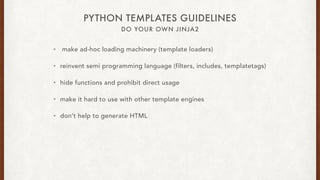



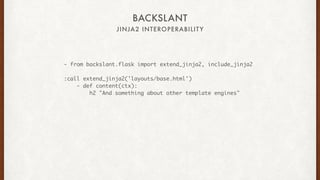

The document provides alternative guidelines for designing Python templates that improve interoperability between template engines like Jinja2. It recommends using Python's import to load templates, defining all template components as functions, and generating HTML from markup languages to play nicely with other engines like Jinja2. An example Backslant template language is shown that follows these principles and allows easy rendering from Python code and interoperability with Jinja2.


