Automation Trends
WWW.DAMCOGROUP.COM
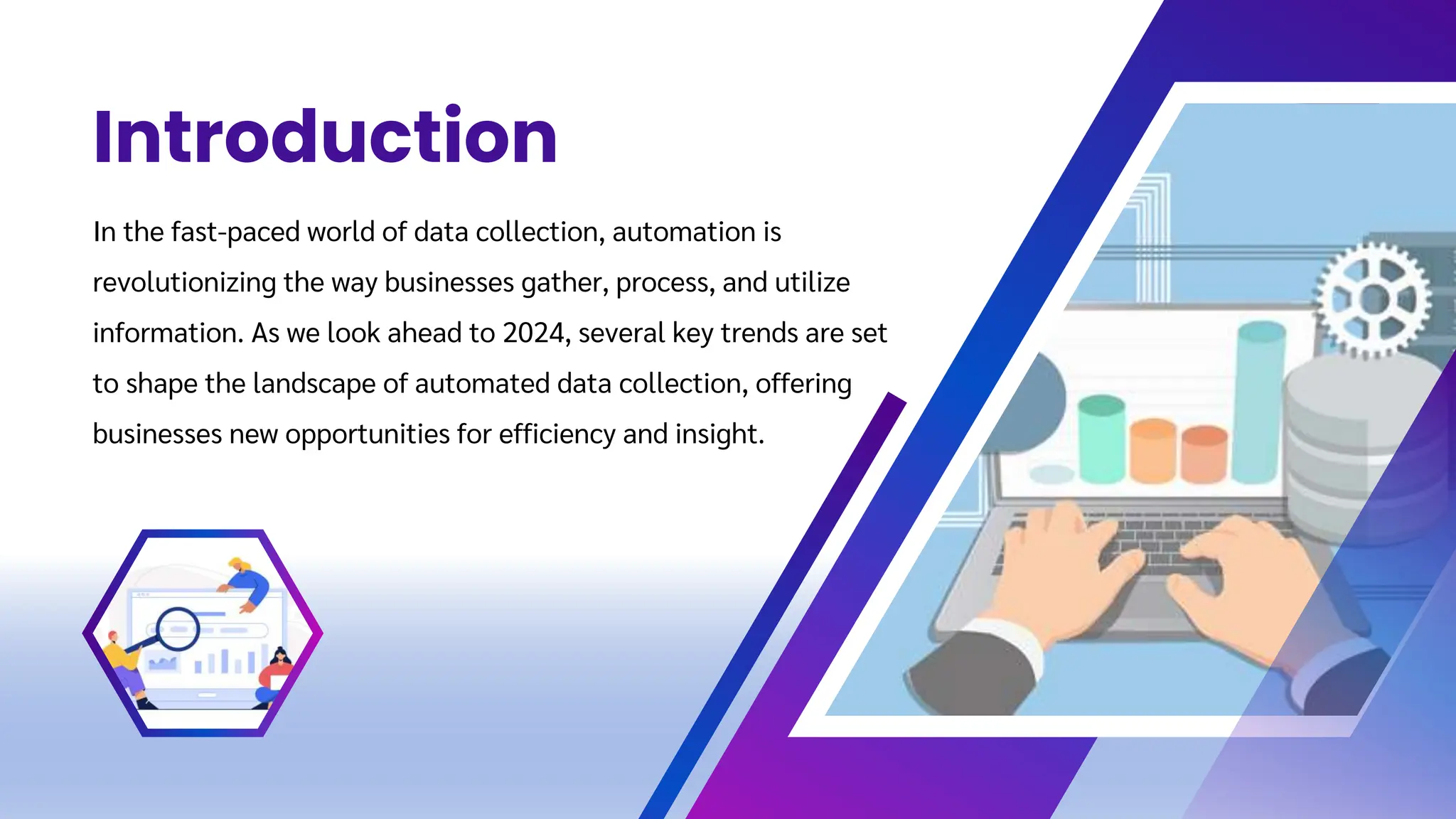
In the fast-paced world of data collection, automation is
revolutionizing the way businesses gather, process, and utilize
information. As we look ahead to 2024, several key trends are set
to shape the landscape of automated data collection, offering
businesses new opportunities for efficiency and insight.
Introduction
Democratization of Automated Data Collection
• Businesses increasingly turn to automated solutions powered by AI, ML, and RPA to streamline data collection
processes.
• This democratization of technology ensures that organizations of all sizes can access efficient and accurate
data collection tools, leveling the playing field in the competitive market landscape.
Rise of Web-based Data Collection
• Web-based platforms are becoming indispensable for collecting data from diverse online sources in real-time.
• These platforms offer flexibility, security, and accessibility, empowering organizations to make informed
decisions promptly based on up-to-date information.
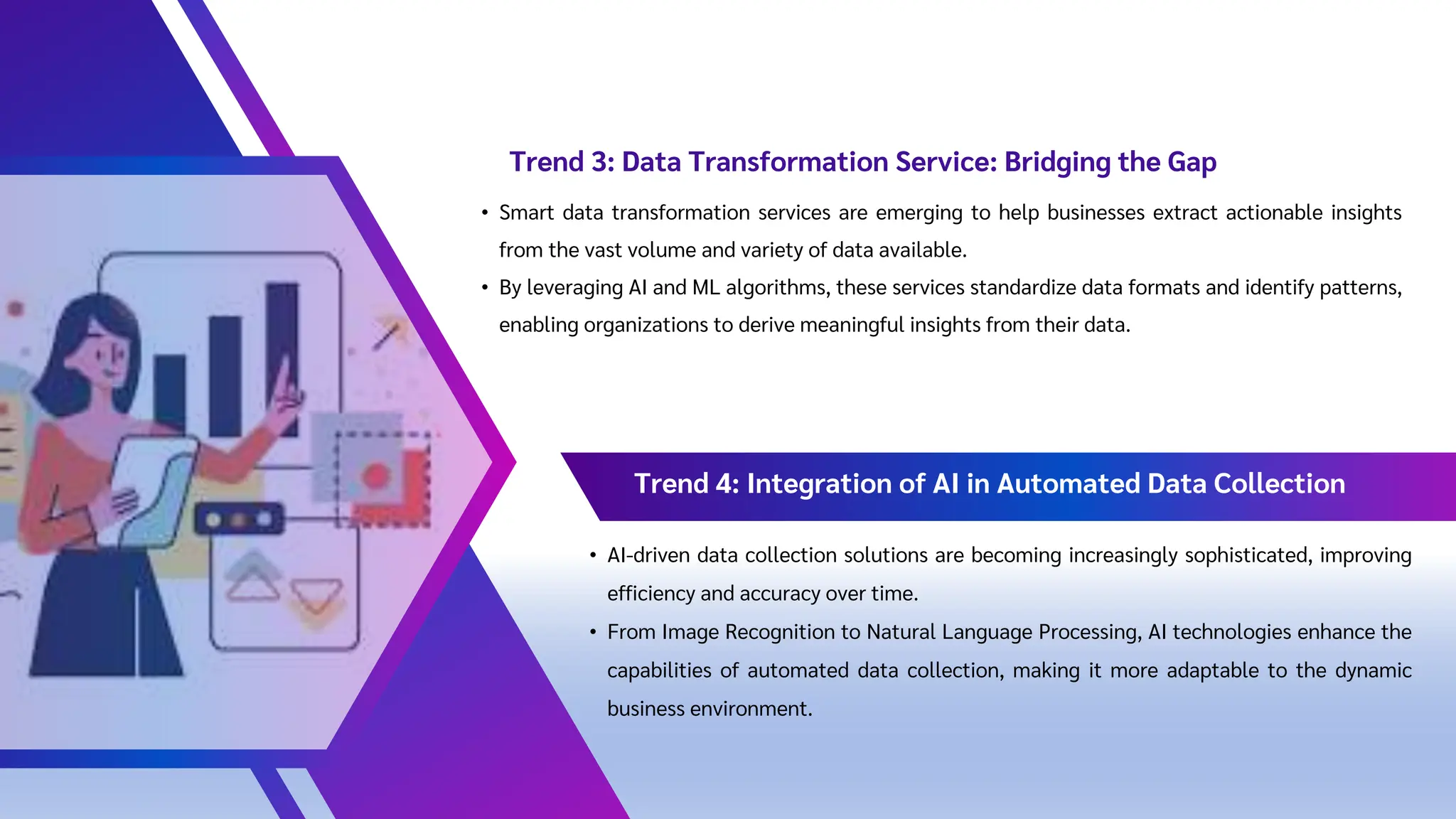
• Smart data transformation services are emerging to help businesses extract actionable insights
from the vast volume and variety of data available.
• By leveraging AI and ML algorithms, these services standardize data formats and identify patterns,
enabling organizations to derive meaningful insights from their data.
Trend 3: Data Transformation Service: Bridging the Gap
Trend 4: Integration of AI in Automated Data Collection
• AI-driven data collection solutions are becoming increasingly sophisticated, improving
efficiency and accuracy over time.
• From Image Recognition to Natural Language Processing, AI technologies enhance the
capabilities of automated data collection, making it more adaptable to the dynamic
business environment.
Automated Data Capture Solutions
• Automated data capture solutions utilizing OCR and
barcode scanning minimize manual errors and accelerate
the data collection process.
• With the ever-increasing volume of data, these solutions
are essential for maintaining accuracy and efficiency in
data collection processes.
IoT and Automated Data Collection
• IoT technologies enable seamless communication between
devices, expanding the scope of data collection.
• Integration with automated data collection systems allows
businesses to capture real-time data from sensors and
connected devices, facilitating holistic decision-making.
Robust Security Measures
• With data privacy and security becoming paramount concerns, automated data collection solutions
are incorporating advanced encryption and secure transmission protocols.
• End-to-end encryption, secure APIs, and multi-factor authentication ensure the confidentiality and
integrity of collected data, safeguarding against cyber threats.
Cloud-Based Data Collection Services
• Cloud-based platforms offer scalability, flexibility, and accessibility, centralizing data collection
processes for businesses.
• The ability to manage data from anywhere coupled with scalability positions cloud-based services as
integral components of automated data collection strategies.
Human-AI Collaboration in Data Collection
• While automation drives efficiency in data collection, human expertise remains essential for
complex decision-making.
• A collaborative approach between humans and AI ensures the effectiveness of data collection
processes, harnessing the strengths of both automation and human intelligence.
Smart Data Transformation: Predictive Analytics
• Smart data transformation is evolving to include predictive analytics, enabling businesses to
anticipate future trends.
• Integration with automated data collection systems empowers organizations to make strategic
decisions based on foresight, gaining a competitive edge in the market.
Conclusion
The future of automated data collection is characterized by
technological innovation, increased connectivity, and a
heightened focus on security and compliance. By embracing
these trends, businesses can harness the power of data to
drive informed decision-making and achieve success in the
dynamic landscape of 2024.
Contact Us
Get in touch with us:
Contact us to learn more about how our cutting-edge
technologies can transform your data processes and drive
business growth.
info@damcogroup.com
www.damcogroup.com
F o r Y o u r A t t e n t i o n
Thank You
www.damcogroup.com

Automation Trends What to Expect in Automated Data Collection in 2024

  • 1.
  • 2.
    In the fast-pacedworld of data collection, automation is revolutionizing the way businesses gather, process, and utilize information. As we look ahead to 2024, several key trends are set to shape the landscape of automated data collection, offering businesses new opportunities for efficiency and insight. Introduction
  • 3.
    Democratization of AutomatedData Collection • Businesses increasingly turn to automated solutions powered by AI, ML, and RPA to streamline data collection processes. • This democratization of technology ensures that organizations of all sizes can access efficient and accurate data collection tools, leveling the playing field in the competitive market landscape. Rise of Web-based Data Collection • Web-based platforms are becoming indispensable for collecting data from diverse online sources in real-time. • These platforms offer flexibility, security, and accessibility, empowering organizations to make informed decisions promptly based on up-to-date information.
  • 4.
    • Smart datatransformation services are emerging to help businesses extract actionable insights from the vast volume and variety of data available. • By leveraging AI and ML algorithms, these services standardize data formats and identify patterns, enabling organizations to derive meaningful insights from their data. Trend 3: Data Transformation Service: Bridging the Gap Trend 4: Integration of AI in Automated Data Collection • AI-driven data collection solutions are becoming increasingly sophisticated, improving efficiency and accuracy over time. • From Image Recognition to Natural Language Processing, AI technologies enhance the capabilities of automated data collection, making it more adaptable to the dynamic business environment.
  • 5.
    Automated Data CaptureSolutions • Automated data capture solutions utilizing OCR and barcode scanning minimize manual errors and accelerate the data collection process. • With the ever-increasing volume of data, these solutions are essential for maintaining accuracy and efficiency in data collection processes. IoT and Automated Data Collection • IoT technologies enable seamless communication between devices, expanding the scope of data collection. • Integration with automated data collection systems allows businesses to capture real-time data from sensors and connected devices, facilitating holistic decision-making.
  • 6.
    Robust Security Measures •With data privacy and security becoming paramount concerns, automated data collection solutions are incorporating advanced encryption and secure transmission protocols. • End-to-end encryption, secure APIs, and multi-factor authentication ensure the confidentiality and integrity of collected data, safeguarding against cyber threats. Cloud-Based Data Collection Services • Cloud-based platforms offer scalability, flexibility, and accessibility, centralizing data collection processes for businesses. • The ability to manage data from anywhere coupled with scalability positions cloud-based services as integral components of automated data collection strategies.
  • 7.
    Human-AI Collaboration inData Collection • While automation drives efficiency in data collection, human expertise remains essential for complex decision-making. • A collaborative approach between humans and AI ensures the effectiveness of data collection processes, harnessing the strengths of both automation and human intelligence. Smart Data Transformation: Predictive Analytics • Smart data transformation is evolving to include predictive analytics, enabling businesses to anticipate future trends. • Integration with automated data collection systems empowers organizations to make strategic decisions based on foresight, gaining a competitive edge in the market.
  • 8.
    Conclusion The future ofautomated data collection is characterized by technological innovation, increased connectivity, and a heightened focus on security and compliance. By embracing these trends, businesses can harness the power of data to drive informed decision-making and achieve success in the dynamic landscape of 2024.
  • 9.
    Contact Us Get intouch with us: Contact us to learn more about how our cutting-edge technologies can transform your data processes and drive business growth. info@damcogroup.com www.damcogroup.com
  • 10.
    F o rY o u r A t t e n t i o n Thank You www.damcogroup.com