Automated Student
Attendance Monitoring
System using Face
Recognition
The main objective of this project is to develop an efficient and accurate
student attendance monitoring system utilizing face recognition
technology, aiming to streamline attendance tracking in educational
institutions.
by Kifayat Irfan
Background
Challenges of Manual Tracking
In the traditional education system, manual
attendance tracking can be time-consuming
and prone to errors.
The proposed system aims to address these
challenges by automating the process
through the use of facial recognition
technology.
Benefits of Automation
This project aims to reduce administrative
burden, enhance data accuracy, and provide
real-time attendance insights for educators.
Objectives and Scope
1 Main Objective
To develop an efficient and accurate
attendance monitoring system
utilizing face recognition technology.
2 Scope
This project includes the design and
implementation of a web-based
application for automated
attendance monitoring.
3 Key Focus
Designing face recognition algorithms, integration with a database, and a user-
friendly interface for administrators.
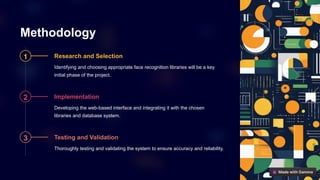
Methodology
1 Research and Selection
Identifying and choosing appropriate face recognition libraries will be a key
initial phase of the project.
2 Implementation
Developing the web-based interface and integrating it with the chosen
libraries and database system.
3 Testing and Validation
Thoroughly testing and validating the system to ensure accuracy and reliability.
Literature Review
Biometric Systems
Relevant studies indicate the increasing
use of biometric systems in educational
settings for attendance monitoring.
Advancements
Key works include cutting-edge research
on facial recognition technology and its
application in educational institutions.
Significance
1 Efficiency
The proposed system offers a more
efficient and accurate alternative to
traditional attendance tracking
methods.
2 Impact
It reduces administrative burden and
enhances data accuracy, providing
real-time attendance insights for
educators.
Deliverables
Web-Based App
A functional web-based
application for attendance
monitoring.
Face Recognition
Integrated face recognition
algorithm.
User Documentation
Comprehensive
documentation for
administrators.
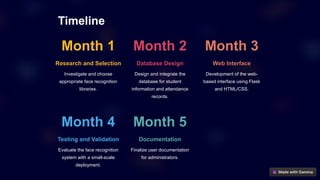
Timeline
Month 1
Research and Selection
Investigate and choose
appropriate face recognition
libraries.
Month 2
Database Design
Design and integrate the
database for student
information and attendance
records.
Month 3
Web Interface
Development of the web-
based interface using Flask
and HTML/CSS.
Month 4
Testing and Validation
Evaluate the face recognition
system with a small-scale
deployment.
Month 5
Documentation
Finalize user documentation
for administrators.
Resources Required
Python programming language Flask web framework
Face recognition libraries (e.g., OpenCV, Dlib) Database management system (e.g., SQLite)
Web hosting service for deployment
Risks and Ethical Considerations
Risks
Integration challenges
between the face
recognition library and the
database.
Mitigations
Conduct thorough testing
and seek assistance from
experts in the respective
fields.
Ethical Principles
User consent, data privacy,
and secure storage of
sensitive information.

Automated-Student-Attendance-Monitoring-System-using-Face-Recognition (1).pptx

  • 1.
    Automated Student Attendance Monitoring Systemusing Face Recognition The main objective of this project is to develop an efficient and accurate student attendance monitoring system utilizing face recognition technology, aiming to streamline attendance tracking in educational institutions. by Kifayat Irfan
  • 2.
    Background Challenges of ManualTracking In the traditional education system, manual attendance tracking can be time-consuming and prone to errors. The proposed system aims to address these challenges by automating the process through the use of facial recognition technology. Benefits of Automation This project aims to reduce administrative burden, enhance data accuracy, and provide real-time attendance insights for educators.
  • 3.
    Objectives and Scope 1Main Objective To develop an efficient and accurate attendance monitoring system utilizing face recognition technology. 2 Scope This project includes the design and implementation of a web-based application for automated attendance monitoring. 3 Key Focus Designing face recognition algorithms, integration with a database, and a user- friendly interface for administrators.
  • 4.
    Methodology 1 Research andSelection Identifying and choosing appropriate face recognition libraries will be a key initial phase of the project. 2 Implementation Developing the web-based interface and integrating it with the chosen libraries and database system. 3 Testing and Validation Thoroughly testing and validating the system to ensure accuracy and reliability.
  • 5.
    Literature Review Biometric Systems Relevantstudies indicate the increasing use of biometric systems in educational settings for attendance monitoring. Advancements Key works include cutting-edge research on facial recognition technology and its application in educational institutions.
  • 6.
    Significance 1 Efficiency The proposedsystem offers a more efficient and accurate alternative to traditional attendance tracking methods. 2 Impact It reduces administrative burden and enhances data accuracy, providing real-time attendance insights for educators.
  • 7.
    Deliverables Web-Based App A functionalweb-based application for attendance monitoring. Face Recognition Integrated face recognition algorithm. User Documentation Comprehensive documentation for administrators.
  • 8.
    Timeline Month 1 Research andSelection Investigate and choose appropriate face recognition libraries. Month 2 Database Design Design and integrate the database for student information and attendance records. Month 3 Web Interface Development of the web- based interface using Flask and HTML/CSS. Month 4 Testing and Validation Evaluate the face recognition system with a small-scale deployment. Month 5 Documentation Finalize user documentation for administrators.
  • 9.
    Resources Required Python programminglanguage Flask web framework Face recognition libraries (e.g., OpenCV, Dlib) Database management system (e.g., SQLite) Web hosting service for deployment
  • 10.
    Risks and EthicalConsiderations Risks Integration challenges between the face recognition library and the database. Mitigations Conduct thorough testing and seek assistance from experts in the respective fields. Ethical Principles User consent, data privacy, and secure storage of sensitive information.