ASSIGNMENT 21
PSYCHOLOGY
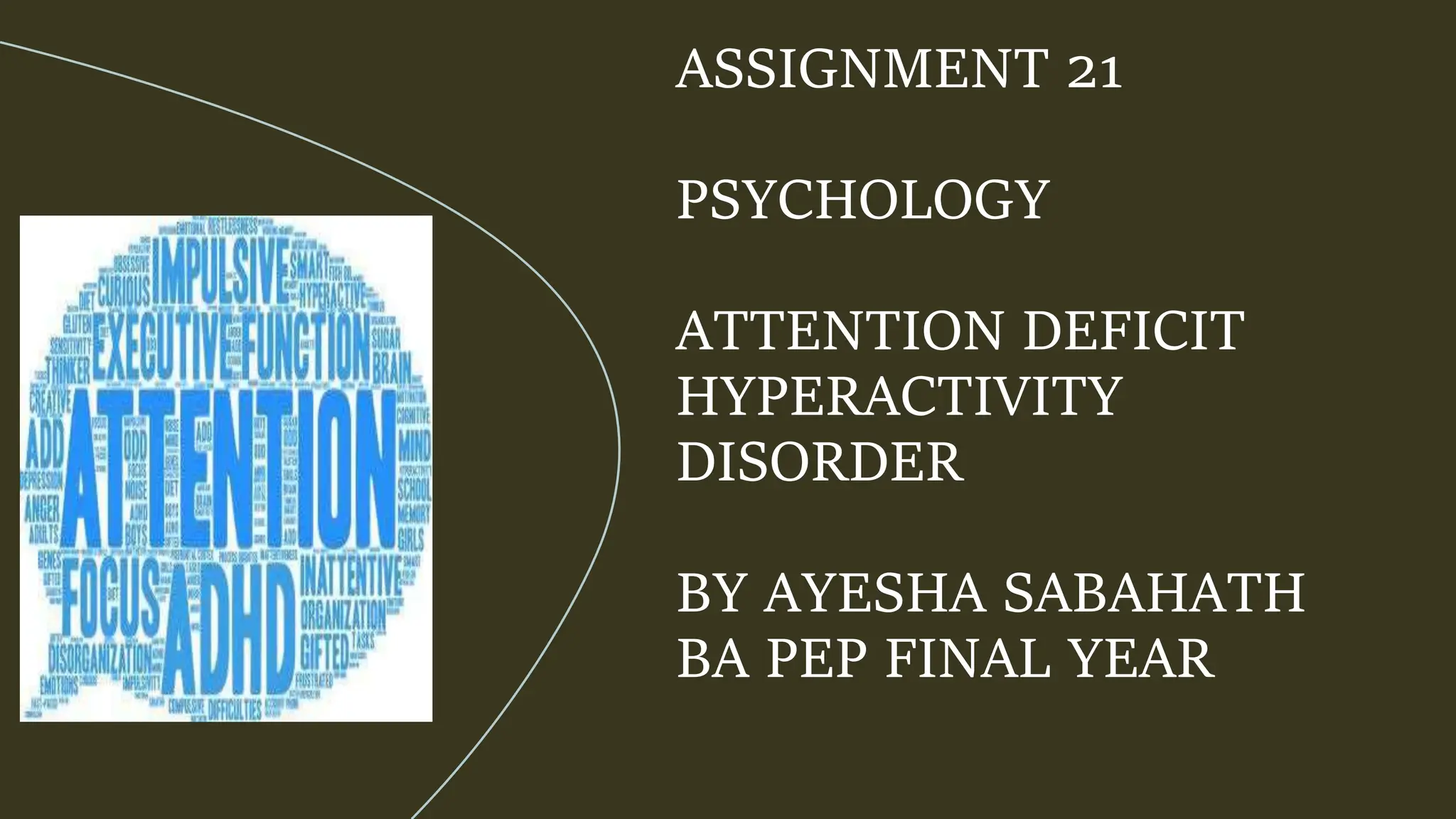
ATTENTION DEFICIT
HYPERACTIVITY
DISORDER
BY AYESHA SABAHATH
BA PEP FINAL YEAR
What is ADHD?
• ADHD is one of the most common neurodevelopmental disorders of childhood.
It is usually first diagnosed in childhood and often lasts into adulthood. Children
with ADHD may have trouble paying attention, controlling impulsive behaviors
(may act without thinking about what the result will be), or be overly active.
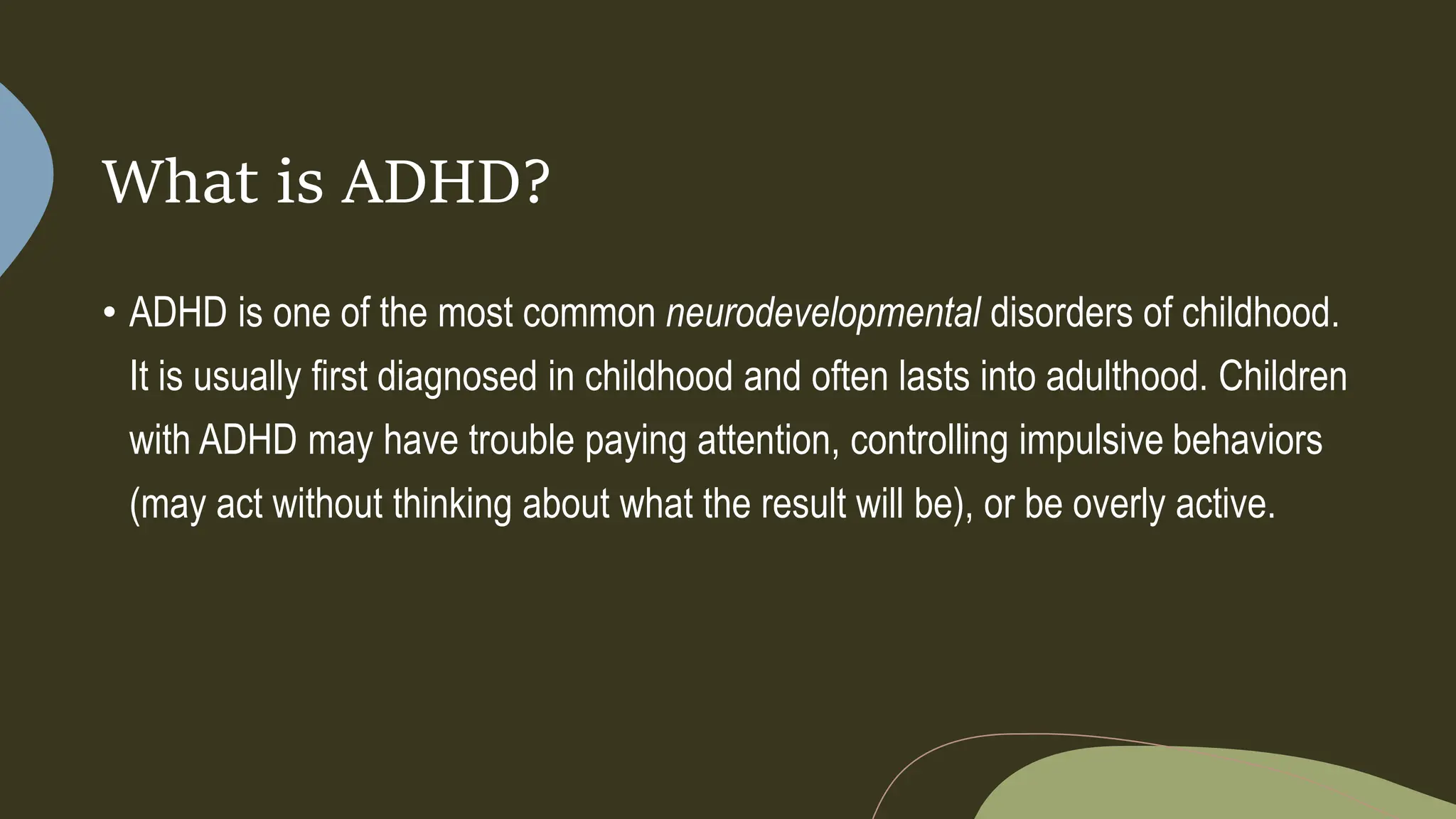
Signs and Symptoms
• Causes of ADHD
• Scientists are studying cause(s) and risk factors in an effort to find better ways to manage and reduce the chances of a person having
ADHD. The cause(s) and risk factors for ADHD are unknown, but current research shows that genetics plays an important role.
Recent studies link genetic factors with ADHD.1
• In addition to genetics, scientists are studying other possible causes and risk factors including:
• Brain injury
• Exposure to environmental risks (e.g., lead) during pregnancy or at a young age
• Alcohol and tobacco use during pregnancy
• Premature delivery
• Low birth weight
• Research does not support the popularly held views that ADHD is caused by eating too much sugar, watching too much television,
parenting, or social and environmental factors such as poverty or family chaos. Of course, many things, including these, might make
symptoms worse, especially in certain people. But the evidence is not strong enough to conclude that they are the main causes of
ADHD.
• Diagnosis
• Deciding if a child has ADHD is a process with several steps. There is no single
test to diagnose ADHD, and many other problems, like anxiety, depression,
sleep problems, and certain types of learning disabilities, can have similar
symptoms. One step of the process involves having a medical exam,
including hearing and vision tests, to rule out other problems with symptoms
like ADHD. Diagnosing ADHD usually includes a checklist for rating ADHD
symptoms and taking a history of the child from parents, teachers, and
sometimes, the child.
• Treatments
• In most cases, ADHD is best treated with a combination of
behavior therapy and medication. For preschool-aged
children (4-5 years of age) with ADHD, behavior therapy,
particularly training for parents, is recommended as the first
line of treatment before medication is tried. What works best
can depend on the child and family. Good treatment plans will
include close monitoring, follow-ups, and making changes, if
needed, along the way.
Managing Symptoms: Staying Healthy
Being healthy is important for all children and can be especially important for children with
ADHD. In addition to behavioral therapy and medication, having a healthy lifestyle can make it
easier for your child to deal with ADHD symptoms. Here are some healthy behaviors that may
help:
•Developing healthy eating habits such as eating plenty of fruits, vegetables, and whole grains and
choosing lean protein sources
•Participating in daily physical activity based on age
•Limiting the amount of daily screen time from TVs, computers, phones, and other electronics
•Getting the recommended amount of sleep each night based on age
ADHD in Adults
ADHD can last into adulthood. Some adults have ADHD but have never
been diagnosed. The symptoms can cause difficulty at work, at home, or
with relationships. Symptoms may look different at older ages, for
example, hyperactivity may appear as extreme restlessness. Symptoms
can become more severe when the demands of adulthood increase
Treating ADHD in Adults
Adults with ADHD who are not appropriately treated may experience poor
academic or work performance, difficulty with relationships, low self-
esteem and self-image, and mental health problems like anxiety or
depression.8
ADHD is treated the same in females and males, typically with a
combination of medications and psychotherapy.
• Medications
• Medication is typically the first line of treatment for ADHD for both females and males. These include stimulants and
non-stimulants that treat the symptoms of ADHD in different ways.12
• Stimulant medications are more commonly prescribed and generally more effective. Options include:12
• Non-amphetamines, such as Concerta (methylphenidate) and Focalin (dexmethylphenidate)
• Amphetamines, such as Adderall (dextroamphetamine) or Vyvanse (lisdexamfetamine dimesylate)
• Non-stimulant medications are typically used when stimulants fail to improve relief or cannot be tolerated. These
include:12
• Strattera (atomoxetine)
• Kapvay (clonidine HCL)
• Tenex (guanfacine)
• Psychotherapy
• In addition to medication, ADHD-focused therapies can address a broad range of issues, such as self-esteem,
interpersonal and family relationships, stress, and life management skills.
• Depending on the signs and symptoms of ADHD, psychotherapy may involve:2
• Cognitive behavioral therapy (CBT): This form of talk therapy focuses on identifying and changing negative thought
patterns and behaviors to improve impulse control and self-regulation. In recent years, CBT programs have been
developed specifically for adults with ADHD.
• Neurocognitive psychotherapy: This combines aspects of CBT with other therapeutic practices designed to sustain
attention and concentration for prolonged periods.
• Dialectical behavioral therapy (DBT): Like CBT, this is a tools-based form of therapy. DBT is aimed at increasing
mindfulness, self-acceptance, and self-esteem through one-on-one and/or group sessions that help with emotional
regulation and setting and respecting boundaries.
• Self-Care
• Self-care is essential to managing ADHD as it promotes well-being, self-esteem, and self-regulation.
• The National Institute of Mental Health recommends the following self-help measures for adults with ADHD:3
• Exercise regularly, especially when feeling hyperactive or restless.
• Keep to a regular sleep schedule, turning off electronics an hour before bedtime to avoid overstimulation.
• Make lists, prioritize time-sensitive tasks, and write down appointments and other things you cannot forget.
• Eat regular, healthy meals. Good nutrition provides energy and improves concentration.
• Take ADHD medications as directed, maintaining consistent care with a qualified provider.
• Avoid alcohol and drugs which can impair your focus and behavior.
• Regularly schedule activities with friends to maintain and strengthen relationships.
• Summary
• ADHD affects adults as well as children, manifesting with inattention and/or
hyperactivity and impulsiveness. Even so, ADHD is frequently misdiagnosed in adults
whose behavior may be regarded as restlessness or even rudeness. Many adults with
ADHD had symptoms as children but only seek treatment when their relationships,
work, or studies are severely affected.
• Females tend to be diagnosed with predominant inattentive type ADHD, while males
tend to be diagnosed with predominant hyperactive-impulsive type ADHD. Even so,
the treatment approach for each is similar and often involves medications and
psychotherapy.
attention deficit hyperactivity disorder ppt.pptx

attention deficit hyperactivity disorder ppt.pptx

  • 1.
  • 2.
    What is ADHD? •ADHD is one of the most common neurodevelopmental disorders of childhood. It is usually first diagnosed in childhood and often lasts into adulthood. Children with ADHD may have trouble paying attention, controlling impulsive behaviors (may act without thinking about what the result will be), or be overly active.
  • 3.
  • 5.
    • Causes ofADHD • Scientists are studying cause(s) and risk factors in an effort to find better ways to manage and reduce the chances of a person having ADHD. The cause(s) and risk factors for ADHD are unknown, but current research shows that genetics plays an important role. Recent studies link genetic factors with ADHD.1 • In addition to genetics, scientists are studying other possible causes and risk factors including: • Brain injury • Exposure to environmental risks (e.g., lead) during pregnancy or at a young age • Alcohol and tobacco use during pregnancy • Premature delivery • Low birth weight • Research does not support the popularly held views that ADHD is caused by eating too much sugar, watching too much television, parenting, or social and environmental factors such as poverty or family chaos. Of course, many things, including these, might make symptoms worse, especially in certain people. But the evidence is not strong enough to conclude that they are the main causes of ADHD.
  • 6.
    • Diagnosis • Decidingif a child has ADHD is a process with several steps. There is no single test to diagnose ADHD, and many other problems, like anxiety, depression, sleep problems, and certain types of learning disabilities, can have similar symptoms. One step of the process involves having a medical exam, including hearing and vision tests, to rule out other problems with symptoms like ADHD. Diagnosing ADHD usually includes a checklist for rating ADHD symptoms and taking a history of the child from parents, teachers, and sometimes, the child.
  • 7.
    • Treatments • Inmost cases, ADHD is best treated with a combination of behavior therapy and medication. For preschool-aged children (4-5 years of age) with ADHD, behavior therapy, particularly training for parents, is recommended as the first line of treatment before medication is tried. What works best can depend on the child and family. Good treatment plans will include close monitoring, follow-ups, and making changes, if needed, along the way.
  • 8.
    Managing Symptoms: StayingHealthy Being healthy is important for all children and can be especially important for children with ADHD. In addition to behavioral therapy and medication, having a healthy lifestyle can make it easier for your child to deal with ADHD symptoms. Here are some healthy behaviors that may help: •Developing healthy eating habits such as eating plenty of fruits, vegetables, and whole grains and choosing lean protein sources •Participating in daily physical activity based on age •Limiting the amount of daily screen time from TVs, computers, phones, and other electronics •Getting the recommended amount of sleep each night based on age
  • 9.
    ADHD in Adults ADHDcan last into adulthood. Some adults have ADHD but have never been diagnosed. The symptoms can cause difficulty at work, at home, or with relationships. Symptoms may look different at older ages, for example, hyperactivity may appear as extreme restlessness. Symptoms can become more severe when the demands of adulthood increase Treating ADHD in Adults Adults with ADHD who are not appropriately treated may experience poor academic or work performance, difficulty with relationships, low self- esteem and self-image, and mental health problems like anxiety or depression.8 ADHD is treated the same in females and males, typically with a combination of medications and psychotherapy.
  • 10.
    • Medications • Medicationis typically the first line of treatment for ADHD for both females and males. These include stimulants and non-stimulants that treat the symptoms of ADHD in different ways.12 • Stimulant medications are more commonly prescribed and generally more effective. Options include:12 • Non-amphetamines, such as Concerta (methylphenidate) and Focalin (dexmethylphenidate) • Amphetamines, such as Adderall (dextroamphetamine) or Vyvanse (lisdexamfetamine dimesylate) • Non-stimulant medications are typically used when stimulants fail to improve relief or cannot be tolerated. These include:12 • Strattera (atomoxetine) • Kapvay (clonidine HCL) • Tenex (guanfacine)
  • 11.
    • Psychotherapy • Inaddition to medication, ADHD-focused therapies can address a broad range of issues, such as self-esteem, interpersonal and family relationships, stress, and life management skills. • Depending on the signs and symptoms of ADHD, psychotherapy may involve:2 • Cognitive behavioral therapy (CBT): This form of talk therapy focuses on identifying and changing negative thought patterns and behaviors to improve impulse control and self-regulation. In recent years, CBT programs have been developed specifically for adults with ADHD. • Neurocognitive psychotherapy: This combines aspects of CBT with other therapeutic practices designed to sustain attention and concentration for prolonged periods. • Dialectical behavioral therapy (DBT): Like CBT, this is a tools-based form of therapy. DBT is aimed at increasing mindfulness, self-acceptance, and self-esteem through one-on-one and/or group sessions that help with emotional regulation and setting and respecting boundaries.
  • 12.
    • Self-Care • Self-careis essential to managing ADHD as it promotes well-being, self-esteem, and self-regulation. • The National Institute of Mental Health recommends the following self-help measures for adults with ADHD:3 • Exercise regularly, especially when feeling hyperactive or restless. • Keep to a regular sleep schedule, turning off electronics an hour before bedtime to avoid overstimulation. • Make lists, prioritize time-sensitive tasks, and write down appointments and other things you cannot forget. • Eat regular, healthy meals. Good nutrition provides energy and improves concentration. • Take ADHD medications as directed, maintaining consistent care with a qualified provider. • Avoid alcohol and drugs which can impair your focus and behavior. • Regularly schedule activities with friends to maintain and strengthen relationships.
  • 13.
    • Summary • ADHDaffects adults as well as children, manifesting with inattention and/or hyperactivity and impulsiveness. Even so, ADHD is frequently misdiagnosed in adults whose behavior may be regarded as restlessness or even rudeness. Many adults with ADHD had symptoms as children but only seek treatment when their relationships, work, or studies are severely affected. • Females tend to be diagnosed with predominant inattentive type ADHD, while males tend to be diagnosed with predominant hyperactive-impulsive type ADHD. Even so, the treatment approach for each is similar and often involves medications and psychotherapy.