Asset Securitization Theory And Practice Joseph C Huauth
Asset Securitization Theory And Practice Joseph C Huauth
Asset Securitization Theory And Practice Joseph C Huauth
Asset Securitization Theory And Practice Joseph C Huauth
Asset Securitization Theory And Practice Joseph C Huauth
1.
Asset Securitization TheoryAnd Practice Joseph
C Huauth download
https://ebookbell.com/product/asset-securitization-theory-and-
practice-joseph-c-huauth-4299514
Explore and download more ebooks at ebookbell.com
2.
Here are somerecommended products that we believe you will be
interested in. You can click the link to download.
Securitization Economics Deconstructing The Economic Foundations Of
Asset Securitization 1st Ed Laurent Gauthier
https://ebookbell.com/product/securitization-economics-deconstructing-
the-economic-foundations-of-asset-securitization-1st-ed-laurent-
gauthier-22503906
Structured Finance Leveraged Buyouts Project Finance Asset Finance And
Securitization Charleshenri Larreur
https://ebookbell.com/product/structured-finance-leveraged-buyouts-
project-finance-asset-finance-and-securitization-charleshenri-
larreur-46639502
Structured Finance Lbos Project Finance Asset Finance And
Securitization Charleshenri Larreur
https://ebookbell.com/product/structured-finance-lbos-project-finance-
asset-finance-and-securitization-charleshenri-larreur-23279920
Structured Finance Lbos Project Finance Asset Finance And
Securitization Charleshenri Larreur Larreur
https://ebookbell.com/product/structured-finance-lbos-project-finance-
asset-finance-and-securitization-charleshenri-larreur-larreur-30357396
3.
Structured Finance LbosProject Finance Asset Finance And
Securitization Charleshenri Larreur
https://ebookbell.com/product/structured-finance-lbos-project-finance-
asset-finance-and-securitization-charleshenri-larreur-30357400
The Securitization Markets Handbook Structures And Dynamics Of
Mortgage And Assetbacked Securities Charles A Stone Anne Zissu
https://ebookbell.com/product/the-securitization-markets-handbook-
structures-and-dynamics-of-mortgage-and-assetbacked-securities-
charles-a-stone-anne-zissu-4700956
The Securitization Markets Handbook Structures And Dynamics Of
Mortgage And Assetbacked Securities 2nd Edition 2nd Charles Austin
Stone Phd
https://ebookbell.com/product/the-securitization-markets-handbook-
structures-and-dynamics-of-mortgage-and-assetbacked-securities-2nd-
edition-2nd-charles-austin-stone-phd-45037546
The Mechanics Of Securitization A Practical Guide To Structuring And
Closing Assetbacked Security Transactions 1st Edition Moorad Choudhry
https://ebookbell.com/product/the-mechanics-of-securitization-a-
practical-guide-to-structuring-and-closing-assetbacked-security-
transactions-1st-edition-moorad-choudhry-4682424
Asset Allocation From Theory To Practice And Beyond Wiley Finance 1st
Edition Mark P Kritzman
https://ebookbell.com/product/asset-allocation-from-theory-to-
practice-and-beyond-wiley-finance-1st-edition-mark-p-kritzman-46538470
Copyright # 2011John Wiley & Sons (Asia) Pte. Ltd.
Published in 2011 by John Wiley & Sons (Asia) Pte. Ltd.
2 Clementi Loop, #02–01, Singapore 129809
All rights reserved.
No part of this publication may be reproduced, stored in a retrieval system, or transmitted in
any form or by any means, electronic, mechanical, photocopying, recording, scanning, or
otherwise, except as expressly permitted by law, without either the prior written permission of
the Publisher, or authorization through payment of the appropriate photocopy fee to the
Copyright Clearance Center. Requests for permission should be addressed to the Publisher,
John Wiley & Sons (Asia) Pte. Ltd., 2 Clementi Loop, #02–01, Singapore 129809,
tel: 65–6463–2400, fax: 65–6463–4605, e-mail: enquiry@wiley.com.
This publication is designed to provide accurate and authoritative information in regard to the
subject matter covered. It is sold with the understanding that the publisher is not engaged in
rendering professional services. If professional advice or other expert assistance is required, the
services of a competent professional person should be sought.
Neither the authors nor the publisher are liable for any actions prompted or caused by the
information presented in this book. Any views expressed herein are those of the authors and do
not represent the views of the organizations they work for.
Other Wiley Editorial Offices
John Wiley & Sons, 111 River Street, Hoboken, NJ 07030, USA
John Wiley & Sons, The Atrium, Southern Gate, Chichester, West Sussex, P019 8SQ,
United Kingdom
John Wiley & Sons (Canada) Ltd., 5353 Dundas Street West, Suite 400, Toronto, Ontario,
M9B 6HB, Canada
John Wiley & Sons Australia Ltd., 42 McDougall Street, Milton, Queensland 4064, Australia
Wiley-VCH, Boschstrasse 12, D-69469 Weinheim, Germany
Library of Congress Cataloging-in-Publication Data
ISBN 978–0–470–82603–4 (Hard cover)
ISBN 978–0–470–82898–4 (e-PDF)
ISBN 978–0–470–82897–7 (e-Mobi)
ISBN 978–0–470–82899–1 (e-Pub)
Typeset in 10/12pt, Sabon by Thomson Digital, India
Printed in Singapore by Toppan Security Printing Pte. Ltd.
10 9 8 7 6 5 4 3 2 1
8.
Contents
Preface xiii
Introduction xv
PARTONE
Basics of Asset Securitization 1
CHAPTER 1
Asset Securitization: Concept and Market Development 3
Basic Concept of Asset Securitization 3
Special Purpose Entity 5
Asset Sale versus Debt Financing 5
The Requirement of Servicing 7
Credit of the Underlying Assets 8
Need for Credit Enhancement 9
Development of the Asset Securitization Market in the
United States 10
CHAPTER 2
Originators and Investors of the Asset Securitization Market 19
Efficient Financing for Originators with Asset Securitization 19
Satisfying Varying Investor Demands with Asset Securitization 24
Cultivating Investors: Matching Products with Investment
Demands 25
The Importance of Understanding the Underlying Assets 25
Three Types of Investors 26
Yield-Oriented Investors 26
Credit-Oriented Investors 27
Maturity-Oriented Investors 27
v
9.
CHAPTER 3
Intermediary Participantsof the Asset Securitization Market 29
Attorneys 29
Accountants 31
Guarantors and Credit Enhancers 31
Self-Insurance 32
Bond Insurance 32
Corporate Parent Guarantee 32
Letter of Credit 33
GSE Credit Guarantee 33
Credit Rating Agencies 33
Investment Bankers 35
CHAPTER 4
Necessary Ingredients and Benefits of Asset Securitization 39
The Nine Necessary Ingredients 39
Sound Loan Origination Process 40
Complementary Legal Framework 40
High Integrity of Cash-Flow Analysis 40
Clearly Defined Accounting Rules 41
Prudent Risk Evaluation 42
Full-Fledged Investment Banking Services 42
Mature Government Debt Market 42
Active Secondary Market 43
Broad Investor Base 44
Benefits of Asset Securitization 45
Improvement in the Financial Operation for the Originator 45
Provision of Diversified Investment Products 45
Lowering the Borrowing Cost 46
PART TWO
Residential Mortgages and Securitization of Residential Mortgages 49
CHAPTER 5
Residential Mortgages 51
Description of a Residential Mortgage 51
Characteristics of a Fixed-Rate Mortgage 52
Amortizing a Mortgage 53
vi CONTENTS
10.
Comparison of TwoMortgages with Different Mortgage Rates 54
Alternative Mortgages 57
Adjustable-Rate Mortgages (ARMs) 57
Fifteen-Year Fixed-Rate Mortgages 60
Graduated-Payment Mortgages (GPMs) 61
Biweekly Mortgages 62
Balloon Mortgages 63
Second Mortgages 63
Home Equity Loans (Subprime Mortgages) 63
Hybrid Mortgages 64
Reverse Annuity Mortgages 65
CHAPTER 6
The Residential Mortgage Market 67
The Origination of a Residential Mortgage 67
Housing and Debt Ratios 68
Credit History 69
Property Appraisal 69
Down Payment 70
Mortgage Originators 71
Mortgage Servicers 72
Mortgage Insurers 72
FHA Mortgage Insurance 73
VA Loan Guarantee 73
Private Mortgage Insurance 73
The Development of the Residential Mortgage Market 74
CHAPTER 7
Residential Mortgage Pass-Through Securities 79
Mortgage Pass-Throughs 79
Ginnie Mae Mortgage Pass-Throughs 79
Concept and Terminology 82
Freddie Mac Participation Certificates 87
Fannie Mae Mortgage-Backed Securities 89
Private-Label Pass-Throughs 91
Subprime Mortgage-Backed Securities 92
Trading and Relative Value of Pass-Throughs 92
TBA Trade 93
Forward Settlement 93
Contents vii
11.
Specified Trades 93
Bid–OfferPrice Spreads 94
Benchmark Current-Coupon Yield Spreads 95
CHAPTER 8
Multiclass Mortgage Pass-Throughs 99
Prepayment of Mortgage Pass-Throughs 99
The Need for Multiclass Securities 100
Collateralized Mortgage Obligations 102
The Concept of Average Life 102
Real Estate Mortgage Investment Conduits 103
Issuance of Agency-Guaranteed Multiclass Securities 104
Variety of REMIC Classes 105
Planned Amortization Classes (PACs) 106
Floaters 106
Interest-Only and Principal-Only Securities (IOs and POs) 107
Z-Bonds 107
The Rise, Collapse, and Recovery of REMICs 108
The Rise of REMICs 108
The Collapse of REMICs 108
The Recovery of REMICs 109
Trading and Relative Value 111
CHAPTER 9
Private-Label Mortgage Pass-Throughs 115
The Growth of the Private-Label Pass-Through Market 115
A Typical Transaction 117
Characteristics of the Underlying Mortgages 119
Low Loan-to-Value Ratios 119
High Credit Quality of Borrowers 120
The Cash-Flow Structure—Mechanism of Credit
Enhancement 120
Senior/Subordinated Cash-Flow Structure 120
Bond Insurance 121
Pool Insurance and Corporate Guarantee 122
Letter of Credit 122
Credit Rating Criteria 122
Performance of Credit Ratings 124
viii CONTENTS
12.
Prepayment Pattern 126
Tradingand Relative Value 126
CHAPTER 10
Subprime Mortgage-Backed Securities 131
Evolution of the Subprime Mortgage Market 132
Features of Home Equity Loans 134
Two Types of HELs 134
Underwriting Criteria—Three Ratios 135
Credit Quality of Borrowers 136
Delinquencies and Defaults 136
Varying Characteristics of Pools of Subprime Mortgages 137
Examples of Transactions 142
An Early-Year Transaction: RASC 2003-KS4 143
Mixed Pools of Fixed- and Adjustable-Rate Mortgages 143
Mechanism of Credit Enhancement 143
Bond Insurance to Enhance Credit 145
Maturity Tranching to Capture Pricing Efficiency 145
A Later-Year Transaction: ABFC 2007-WMC1 146
Unique Prepayment Pattern 149
Performance of Credit Ratings 149
Trading and Relative Value 152
PART THREE
Securitization of Commercial Mortgages and Consumer Loans 155
CHAPTER 11
Commercial Mortgage-Backed Securities 157
The Growth of the CMBS Market 157
The Origination of a Commercial Mortgage 159
The Loan-to-Value Ratio 161
The Debt Service Coverage Ratio 161
Defaults and Losses of Commercial Mortgages 161
A Typical Transaction 164
Characteristics of Underlying Mortgages 165
Re-Underwriting Mortgages for Credit Ratings 167
Credit and Maturity Tranching 169
Contents ix
13.
Performance of CreditRatings 170
Trading and Relative Value 171
CHAPTER 12
Asset-Backed Securities 175
The Growth of the ABS Market 175
Credit Card ABS 176
Pattern of Cash Flow of the Underlying Collateral 176
Three Types of Issuers 177
Transaction Parameters 177
Investor Interest and Seller Interest 177
Revolving Period and Accumulation or Amortization Period 179
Portfolio Yield, Delinquency Rate, and Loss Rate 179
Payment Rate and Purchase Rate 180
Certificate Rate and Servicing Fee 180
Excess Spread 180
A Typical Transaction 181
Underlying Collateral 181
Credit Enhancement 182
Stress Test for Credit Ratings 183
Auto Loan ABS 184
Pattern of Cash Flow of the Underlying Collateral 184
Major Types of Issuers and Underlying Assets 184
A Typical Transaction 185
Cash Flow and Credit Enhancement 186
Prepayment 187
Performance of Credit Ratings 188
Trading and Relative Value 189
CHAPTER 13
Collateralized Debt Obligations 193
Basic Concept and Market Development of CDOs 194
CDOs Are Not Mutual Funds 195
Different Structural Types of CDOs 196
Cash Flow CDOs 196
Synthetic CDOs 197
Market Value CDOs and Hybrid CDOs 198
Motivations for Issuing CDOs 199
Arbitrage 199
x CONTENTS
14.
Capital Relief 199
RiskManagement 200
Facilitating the Growth of the Asset Securitization Market 200
Incentives for Investing in CDOs 200
Structuring and Credit Rating CDOs 201
A Simulation Model to Structure CDOs 203
Trading and Relative Value 205
PART FOUR
The Current Asset Securitization Market in the United States
and Asia-Pacific 209
CHAPTER 14
The Collapse and Recovery Prospects of the Asset Securitization Market 211
How the Market Collapsed 212
Sloppy Origination of the Underlying Assets 212
Overly Zealous Investment Banking 213
Complacent Credit Ratings 214
Irresponsible Investing Behavior 215
Prospects for Recovery 215
Underlying Asset Originators: Back to Basics 216
Investment Bankers: Reduce Leverage and Look
Out for Investors 217
Credit Rating Agencies: Strengthening Rating Criteria through
Research 217
Investors: Know What You Are Buying 218
CHAPTER 15
Asset Securitization in Asia-Pacific 221
Asset Securitization in Japan 221
Market Growth with Variety of Underlying Assets 221
Complementary Factors in Strong Growth 223
Asset Securitization in Australia 224
Rapid Growth with Focused Underlying Assets 224
Tapping the World Financial Markets for Funds 225
The Strong Base for the Australian RMBS 226
Different Patterns of Asset Securitization in Japan and Australia 226
Asset Securitization in Taiwan 226
Asset Securitization in China 229
Contents xi
15.
APPENDIX A
Analysis ofPrepayment and Prepayment Rate 233
Measurement of Prepayment Rate 233
Single Month Mortality (SMM) 233
Constant Prepayment Rate (CPR) 234
Public Securities Association Standard (PSA) 235
Two Fundamental Reasons for Prepayment 236
Refinancing 236
Housing Turnover 237
Home Sale 237
Default 238
Disaster 238
Death 238
APPENDIX B
Housing Price Appreciation and Mortgage Credit Performance 239
The Importance of Housing Price Appreciation 239
The National Experience 239
The California Experience 241
Credit Performance of Mortgages 241
Delinquencies and Defaults 241
The Standard Default Assumption 242
APPENDIX C
Fundamental Elements in Credit Ratings 245
Evaluating Credit Quality of the Underlying Assets 245
Reviewing Payment Structure and Cash-Flow Mechanics 247
Analyzing Legal and Regulatory Risks 247
Assessing Operational and Administrative Risks 248
Examining Third-Party Dependencies 248
APPENDIX D
The Collapse of the Asset Securitization Market 251
Index 255
xii CONTENTS
16.
Preface
This book, AssetSecuritization: Theory and Practice, is based on my
30 years of observations and work experience in the U.S. asset securitiza-
tion market. It is a celebration of this efficient financing method that has,
over the last four decades, benefited lenders, borrowers, and investors alike.
As a capstone for a career spent in some of the major investment banking
firms and a leading credit rating agency, this book is also written with an
unavoidable tinge of sadness. Powerhouses such as Salomon Brothers,
Bear Stearns, and Lehman Brothers, and venerable investment firms like
E. F. Hutton—places I admired or worked and honed my analytical skills
at as a young man—have been swept away by the change of times or mis-
management. And the asset securitization market was almost destroyed by
greed, abuse, and complacency. As a market practitioner who believes in
the power of asset securitization, and contributed in a small way to its suc-
cess, the events of the last three years have been painful to witness. How-
ever, ever the optimist, I am hopeful that the market will storm back bigger,
better, and stronger, to once again provide financing to consumers and busi-
nesses, creating wealth for our society.
This book could not have been published without the help of many of
my colleagues and friends. I would like to thank Rocco Sta. Maria, Head of
Sales and Client Services for Standard & Poor’s in Asia-Pacific, for putting
me in touch with John Wiley & Sons. I am grateful for the assistance
extended to me by my colleagues at Standard & Poor’s offices in Tokyo
(Yu-Tsung Chang), Melbourne (Vera Chaplin), Beijing (Li Jian), Hong
Kong (Frank Lu), and Taipei (Aaron Lai), who provided insights into the
development of the Japanese, Australian, Chinese, and Taiwanese asset
securitization markets. I would also like to express my gratitude to K. C.
Yu, Deputy CEO of SinoPac Holdings and Nick Ding of Standard & Poor’s
Beijing office, for providing me access to up-to-date market information.
Over the years, the excellent market commentaries of Citigroup Global
Markets, J. P. Morgan Securities, Merrill Lynch, Morgan Stanley, and UBS
Securities kept me abreast of the asset securitization market. I would also
like to thank many of my friends who helped me clarify and improve the
content of this book. Additionally, I greatly appreciate the assistance of
xiii
17.
Nick Melchior, SeniorPublishing Editor, John Wiley & Sons, without
whose encouragement and enthusiasm this book would not have been com-
pleted so expeditiously. Though I am solely responsible for the content
of this book, the skills and professionalism of my copy editor, Michael
Hanrahan, made the text eminently more readable. Finally, I wish to thank
my wife, Linda, and my children, Justin and Brian. Their love and support
made the writing of this book and, in fact, my whole professional journey
all the more rewarding and enjoyable.
Joseph Hu
November 2010
xiv PREFACE
18.
Introduction
In A Taleof Two Cities, Charles Dickens described the chaotic and brutal
period of the French Revolution as the best of times and the worst of
times. For the asset securitization market, one might similarly regard the
period after the subprime mortgage debacle that caused panic and tremen-
dous financial loss worldwide as the worst of times—the winter of hindsight
and reflection. Yet this period can also be viewed as the spring of hope and
rebirth, and as the best time to study the concept and practice of asset secu-
ritization, to once again make it a powerful financial engine that creates
wealth and prosperity.
Over the last 40 years, the asset securitization market has grown and
flourished to become the largest sector of the U.S. fixed-income securities
market. In the initial development of the asset securitization market in
1970, residential mortgages were the only type of securitized assets. Re-
markably, however, since the mid-1980s, many other types of financial
assets with a predictable future receivable cash flow began to be utilized as
the underlying asset for the issuance of asset-backed securities. These assets
include, but are not limited to, commercial mortgages, credit card receiv-
ables, auto loans, student loans, equipment leases, and small business loans.
By facilitating the funding of consumption and business activities, asset
securitization has contributed substantially to the steady growth of the U.S.
economy and the increase in the American standard of living. Asset securiti-
zation has been the living proof of the adage, ‘‘finance creates value.’’
Alas, asset securitization became the victim of its own success. With
the abundance of funds available to be invested, market participants
became overly creative with the underlying assets of their originations and
created a variety of new asset-backed securities. Throwing caution to the
wind, originations of residential mortgages—the securitization market’s
most prominent and best performing underlying assets—began to grossly
deviate from prudent underwriting guidelines. Driven by greed, more and
more of the low-credit-quality (subprime) mortgages were originated
and their inherent credit risks were consistently underestimated. When
incidences of delinquencies and defaults of these mortgages became abnor-
mally frequent, investors were alarmed and began to shy away from
xv
19.
subprime mortgage-backed securities.Like dominos, fear and panic quickly
spread to the mortgage-backed securities market and eventually put a stran-
gle hold on other sectors of the capital market as well.
A credit risk problem created a liquidity problem so severe that funding
became unavailable to consumption and business activities. Since late 2007,
the U.S. economy has experienced the worst contraction both in depth and
duration since the Great Depression. The rest of the world has been sim-
ilarly impacted with their economies languishing in a severe downturn. In
the initial panic, ‘‘asset securitization’’ became one of the most vilified and
demonized financial terms in the world. Critics questioned the justification
of such a market and there were doubts aplenty about whether the asset
securitization market would ever recover. It would seem that this is indeed
the worst time for asset securitization. Yet, the bottom of the market is the
perfect place and time to examine asset securitization anew—its successes
and failures—and plan for a future asset securitization market that is trans-
parent, self-disciplined, and rigorous in its regulation and supervision.
This book is intended for students and entry-level market professionals
alike who are interested in learning about asset securitization—its con-
cepts and practices. It is designed so that the readers will come away with a
fundamental but comprehensive understanding of the asset securitization
market. As such, the book aims to provide a review of the market’s develop-
ment, necessary framework, potential benefits, and detailed descriptions of
major asset securitization products.
Part 1 of the book, which consists of four chapters, will discuss the fun-
damental concepts, the funding efficiency, the market participants, and the
potential benefits of asset securitization. An analysis of mortgage finance
will be provided in Part 2, which consists of six chapters. They cover a vari-
ety of topics from the description of many different types of residential mort-
gages to the securitization of these mortgages, including the now infamous
subprime mortgages. Also included are important topics, such as prepay-
ments, cash-flow structure, maturity and credit tranching, and the trading
and relative value of the various mortgage-backed securities. The three chap-
ters in Part 3 will explain the other major asset securitization products, such
as commercial mortgage-backed securities, credit card receivable-backed
securities, auto loan-backed securities, and collateralized bond obligations.
Part 4 has two chapters: one reviews the collapse and the potential recovery
of the asset securitization market, and the other describes the asset securitiza-
tion efforts in Japan, Australia, Taiwan, and China.
Extensive tables and charts are presented to help illustrate a concept or
describe a product. Neither analytical discussions nor investment strategies
of the various asset-backed securities are included as they are not the focus
of this book.
xvi INTRODUCTION
20.
It is hopedthat, after reading this book, students of asset securitization
will gain new insight into and appreciation for the creative financial instru-
ments that make up this market. And be mindful of the critical lesson
learned that not all good things need come to an end, if prudence is always
the guiding principle of our behavior in the financial market.
Introduction xvii
Issuers of asset-backedsecurities are mostly originators of the assets
backing the securities. These assets can be a wide variety of residential or
commercial mortgages, consumer loans, commercial leases, or any financial
instruments that have predictable and stable receivable cash flows. In recent
years, there have been new and popular asset-backed securities that are sup-
ported by assets that are corporate bonds, commercial and industrial loans,
or even asset-backed securities themselves.
Since asset-backed securities are issued by lenders through the mechanism
of structuring future receivable cash flows of the underlying assets to finance
their funding needs, the securities are also called structured finance securities.
From an accounting point of view, the issuance of asset-backed securities is
considered an asset sale. This differs from the issuance of bonds, which is debt
financing by corporations, the various levels of government, or authorities.
Specifically, by issuing an asset-backed security to raise funds to finance
the origination of loans, the financing has the following five salient features:
& The asset-backed security is issued through a special purpose entity.
& The accounting treatment of issuing an asset-backed security is asset
sale rather than debt financing.
& An asset-backed security requires the servicing of the underlying assets
for the investor.
& The credit of the asset-backed security is derived primarily from the
credit of the underlying assets (the collateral).
& There is invariably a need of credit enhancement for the asset-backed
security.
At the outset, it is critical that several basic terms of asset securitization
are clarified to avoid possible confusion in future discussions. Throughout
this book, the presentation and the analysis, unless specifically noted, are
from the viewpoint of the lender, who is a loan originator. The originator
is the one who originates the loans that are pooled as the underlying assets
for the issuance of asset-backed securities in the asset securitization transac-
tion. Therefore, the term originator is synonymous with the term lender.
The two terms are used in the book interchangeably. Further, since asset
securitization is primarily enabling those originators to use their newly orig-
inated or existing loans to obtain funds, the loans are really their assets
(although from the point of view of the borrowers, they are debts). Thus,
the terms loans and assets in the context of structured finance are also syn-
onymous. They are interchangeable terms. The issuer of asset-backed secu-
rities is mostly an entity that is set up by the originator of the underlying
assets. So, while the originator and the issuer are legally two different enti-
ties, they are economically the same or very closely related business entities.
4 ASSET SECURITIZATION
24.
Special Purpose Entity
Aspecial purpose entity (SPE) is a unique feature of asset securitization.3
Alternatively, an SPE is also referred to as a special purpose vehicle (SPV)
or a special purpose trust (SPT). Basically, an SPE is a trust that is set up by
the originator for the purpose of purchasing the loans it originates and
issuing in the capital market a certificate of beneficial interest, for which the
cash flows are backed solely by the cash flow of loans purchased from
the originator (see Figure 1.1). Actually, the purchase of loans and the issu-
ance of the certificate of beneficial interest take place simultaneously. They
are two parts of a transaction. The SPE, on the one hand, raises the funds in
the capital market by issuing the asset-backed security; and on the other
hand, it uses the very issuance proceeds to pay for the purchase of the
underlying assets. The holder of the certificate of beneficial interest is gener-
ically called the investor of the asset-backed security.
From a balance-sheet point of view, the SPE has no assets other than
those purchased from the originator, and no liabilities other than those of
the asset-backed security it issues. With this special and strict asset–liability
structure, the cash flows of the assets are matched by those of the liabilities.
From the accounting and legal points of view, the SPE is considered
bankruptcy-remote. Asset securitization is also called structured finance,
because it is done through a special legal structure of the SPE and the inter-
est and principal payment of the security it issues is through the structuring
of the projected future receivable cash flows from the underlying assets.
Structured finance is a formal and generic term for asset securitization. The
term structured finance is often used to differentiate from corporate finance.
Colloquially, however, the term asset securitization is more often used to
describe precisely the process of pooling assets for the issuance of an asset-
backed security. To further simplify the description of asset securitization, it
sometimes is just called securitization.
Asset Sale versus Debt Financing
One great advantage of asset securitization is that it is an effective way of
managing the balance sheet by the originator through the selling of its
newly originated or existing loans to raise funds. This way of financing ena-
bles the originator to collect the present value, at the prevailing market
price, of the stream of the future receivable cash flows of their assets. Asset
securitization, therefore, is not a debt financing and the funding has no con-
sequence of expanding the issuer’s balance sheet. Further, by selling assets,
the originator does not rely on attracting deposits or borrowing from other
financial institutions to fund the origination of the assets, both of which will
Asset Securitization: Concept and Market Development 5
expand the liabilityside of the balance sheet. Actually, it can be said that
when a lender raises funds through asset securitization, the financing could
even have the effect of shrinking the lender’s balance sheet if it elects to use
the issuance proceeds to pay down liabilities (this being the case when the
lender sells existing loans on its portfolio). By contrast, a lender raising
funds through deposits, borrowing, issuing debt or equity securities to fund
the origination of loans would have the consequence of expanding its bal-
ance sheet.
The Requirement of Servicing
The function of servicing is unique for asset-backed securities because the
sole source of the interest and principal payments of the securities is sup-
ported entirely by the future cash flows of the underlying assets. The servic-
ing function is performed by a servicer, who often is the originator and also
the seller who sells the very assets to the SPE. Primarily, the servicer per-
forms the servicing function by collecting the interest and principal cash
flows generated from the underlying assets and then passing them, through
the SPE, to the investor (holder of certificate of beneficial interest). Other
important elements of the servicing function include working with delin-
quent borrowers, disposing of defaulted assets, and providing timely and
accurate cash-flow reports to investors.
In the early days of the legal structure of the SPE, which was a grantor
trust, the servicing function was passive in that the servicer was required not
to touch the cash flow generated from the underlying assets other than just
passing them on to the investor. This requirement was made necessary so
that the Internal Revenue Service would see through the SPE, not levying an
income tax at the SPE level on the interest cash flow generated from the
underlying assets. The income tax liability will fall on the investor, who is
the ultimate owner of the assets underlying the asset-backed securities. It
stands to reason that if the tax on interest income to the SPE were to be
levied while the interest income to the investor is also taxed, there would be
income taxes on two levels of the transaction. This double taxation would
completely nullify the economic benefits intended for securitization.
Under this passive management requirement, all the servicer was re-
quired to do was simply pass the cash flows onto the investor. The servicer
could not manage the cash flows to earn incremental yield for the trust by
reinvesting the interim cash flow (the cash flow the SPE owns temporarily
between the time it was collected by the servicer and the time it was distrib-
uted to the certificate holder). Nor was the servicer permitted to allocate the
principal cash flow of the underlying assets to satisfy the varying maturity
preferences of the different types of investors. Later on, new legislation
Asset Securitization: Concept and Market Development 7
27.
permitted active managementof the cash flow of the underlying assets. It
allowed the servicer to allocate the cash flow, without encountering tax
consequences, by prioritizing the principal payment of the underlying assets
to investors according to maturity and credit-risk preferences. Also, the
servicer was allowed to manage the interim cash flow to enhance the income
of the trust by purchasing short-term money market instruments with the
interim cash flow.
As will be explained in later chapters, the ability of the servicer to allo-
cate cash flows is critically important in the development of new types of
asset-backed securities. It allowed the innovative creation of maturity
tranching and credit tranching of the cash flows of the underlying assets.
Issuers were allowed to issue asset securitization securities in various matu-
rity classes and credit-risk classes.
In comparison with asset-backed securities, corporate or government
bonds do not need servicers. This is because the interest and principal pay-
ment of these obligations are paid out of the issuers’ earnings or tax reve-
nues. The cash flows of the liabilities are not matched by the cash flows of
any of their assets.
Credit of the Underlying Assets
Since the interest and principal cash flow of an asset-backed security come
solely from its underlying assets, the credit risk of the security is derived
primarily from the credit risk of the underlying assets. (As will be explained
in later chapters, the credit risk, or simply the credit, of a borrowing entity
or a debt instrument refers to the likelihood of the borrower defaulting on
its debt. The likelihood of default is assessed publicly by credit rating agen-
cies. According to credit rating agencies, the incidence of default is defined
as the borrower failing to make timely payment of interest and/or the repay-
ment of principal of the debt. A high credit rating, or a strong credit, would
mean a low probability of default. Conversely, a low credit rating, or a
weak credit, suggests a high probability of default.) More important, the
credit of the assets is highly dependent on economic conditions. In a pros-
perous economy, the underlying assets would perform strongly with less fre-
quent incidences of default. In a depressed economy, however, the
underlying asset would have a weak credit performance and the incidences
of default would become more frequent.
This feature contrasts sharply with the credit determinant of a debt ob-
ligation of a corporation or a government entity. The credit strength of a
corporate debt is first and foremost dependent on the management of the
corporation. A well-managed corporation is likely to have a stronger credit
because it is more likely to be financially healthy with a greater earning
8 ASSET SECURITIZATION
28.
potential. This wouldenable the corporation to service its debt in various
economic environments. Conversely, the credit of a poorly managed corpo-
ration is likely to be weaker. With the exception of the U.S. government,
whose debts are risk free, the credit of a state or local government is also
dependent on its ability to manage various expenditures in relation to tax
revenues under all economic conditions.
Need for Credit Enhancement
Credit risk of a security is an important investment consideration for inves-
tors. In order for an asset-backed security to attract certain investors, it has
to have a desirable credit rating. If the underlying assets cannot provide the
security with a desirable credit rating, then the security would require credit
enhancement as defined by the credit rating agencies. In this case, four ma-
jor sources of credit enhancement are available to strengthen the credit of
an asset-backed security. They are: (1) self-insurance, (2) corporate-parent
credit guarantee, (3) surety bond, and (4) letter of credit (detailed analysis
of credit enhancement will be provided in various later chapters when the
cash-flow structure of products is explained).
Credit enhancement through self-insurance can be in the form of senior/
subordination, over-collateralization, or interest spread. In senior/subordi-
nation, the cash flow of an asset-backed security is subdivided into two
classes: senior and subordinated classes. The principal cash flow of the sub-
ordinated class is structured to support (enhance) the credit of the principal
of the senior class. Under the senior/subordination structure, the investor of
the senior class of the security will be repaid before the investor of the sub-
ordinated class.
One simple example may be appropriate to explain the senior/subordi-
nate cash-flow credit enhancement. Consider a pool of assets that is
expected to experience a lifetime cumulative default rate (default frequency)
of 30 percent. After the default, the underlying assets may be liquidated to
recover 60 percent of the original loan amount. That is, the loss on the
defaulted assets is 40 percent (loss severity). For the life of the pool, the
cumulative loss therefore would be the product of default frequency and
loss severity; that is, 12 percent (30% 40% ¼ 12%). Based on these cash-
flow assumptions, it is possible to structure a senior/subordinate credit
enhancement with the senior class security being supported by the 88 per-
cent (1 – 12%) of the pool’s cash flow and the subordinate (junior) class
being supported by the first loss of 12 percent of the pool’s cash flow.
In an over-collateralization structure, the principal amount of the
underlying assets is greater than the principal amount of the asset-backed
security so that more principal protection can be provided by the excess
Asset Securitization: Concept and Market Development 9
29.
principal. For example,the underlying principal cash flow can be 110 percent
of that of the security. Thus, the additional 10 percent of over-collateralization
is behaving like a subordinate class that supports the principal of the senior
class. In addition to the principal, the interest can also be used in credit
enhancement. This is under the structure where the interest on the asset-
backed securities is set to be significantly less than that of the underlying
assets and the excess spread is used to support the credit of the asset-
backed securities. All these are viewed as self-insurance because the princi-
pal and/or the interest of the underlying assets are the sources of credit
enhancement.
Sometimes, it may be more economical to issue an asset-backed security
with the corporate-parent of the issuer providing the credit enhancement.
In this case, the credit strength of the security is equivalent to that of the
corporate parent. An alternative to a corporate-parent guarantee can be a
credit guarantee provided by a bond insurance company in the form of
surety bond. The bond insurance companies often have a very strong credit
so that the bond-insured structured security would also be highly rated. The
fourth alternative is credit enhancement via letter of credit from a commer-
cial bank with a strong credit. In this case, the credit of the asset-backed
security is the same as the credit of the commercial bank.
DEVELOPMENT OF THE ASSET SECURITIZATION
MARKET IN THE UNITED STATES
Asset securitization began in the United States in 1970, when residential mort-
gages were securitized by mortgage bankers with the issuance of mortgage-
backed securities. Over the last 40 years (1970 to 2009), more than $23 trillion
worth of principal amount of asset-backed securities has been issued with a
wide variety of underlying assets, ranging from residential mortgages to air-
plane leases to corporate bonds. As of year-end 2009, outstanding principal of
asset-backed securities approached $11 trillion.
Three major factors contributed to the rapid growth of the asset securi-
tization market. First, during the thrift crisis of the 1980s asset securitiza-
tion enabled thrifts to convert their holdings of residential and commercial
mortgages to mortgage-backed securities. It greatly increased the market-
ability of mortgages and expedited the resolution of failed thrifts. Second,
the coming of home-buying age in the late 1970s of the post–World War II
baby boomers created a strong demand for housing for nearly 20 years.
Securitization of residential mortgages facilitated the funding for the surge
of demographic demand for housing. Third, after the economic slowdown
in the early 1980s, consumption turned robust and persisted almost until
10 ASSET SECURITIZATION
30.
the severe recessionof 2008. Securitization of consumer loans, such as
credit cards and auto loans, provided needed financing for consumers.
This section will present a brief history of the development of the asset
securitization market in the United States. Detailed description of the
evolution of the major securitized products will be provided later in the
relevant chapters.
The earliest type of asset-backed security was Ginnie Maes. Actually,
during the 1970s, Ginnie Maes were not even thought of, in today’s sense,
as asset-backed securities. They were designed by the federal government
simply as a vehicle for mortgage bankers to raise funds in the capital market
to finance their originations of residential mortgages. It was natural that
mortgage bankers were the first originators to practice asset securitization
because they, unlike thrifts and banks, were non-depository lenders in that
they could not attract deposits as a source of funds. They could make loans
only with borrowed money and repay the borrowing after selling the newly
originated loans.
The issuance of Ginnie Maes efficiently facilitated the operation of
mortgage bankers by enabling them to borrow directly from the capital
market. The underlying mortgages backing Ginnie Maes were either in-
sured by the Federal Housing Administration (thus called FHA-insured
mortgages) or guaranteed by the Veterans Administration (now the Depart-
ment of Veterans Affairs, VA-guaranteed mortgages). Ginnie Maes were ac-
tually called mortgage pass-through securities (certificates of beneficial
interest) and the investors of Ginnie Maes owned the pro rata share of inter-
est in the pool of the mortgages backing Ginnie Maes. Because of the gov-
ernment insurance or guarantee, the credit of the underlying mortgages for
Ginnie Maes was enhanced to that of the U.S. government. (Here, the term
credit refers to the probability of the borrowers paying lenders the monthly
mortgage payment of interest and principal on time.) To further ensure the
acceptability of the pass-through securities among investors, the credit of
the securities was further enhanced by the guarantee of the Government
National Mortgage Association (GNMA, nowadays called Ginnie Mae).
The credit of GNMA in turn was backed by the full faith and credit of the
U.S. government. (Here, the credit refers to the probability of the issuer of
the pass-through security paying investors the monthly payment of interest
and principal on time.) In a sense, it can be said the Ginnie Maes are the
safest security because they carry a double credit guarantee from the U.S.
government.
In the early 1970s, there was another type of mortgage pass-through
security being issued in the marketplace. It was a participation certificate
called FHLMC PC (also a type of certificate of beneficial interest). This cer-
tificate was issued and guaranteed by the Federal Home Loan Mortgage
Asset Securitization: Concept and Market Development 11
31.
Corporation (FHLMC), nowa government-sponsored enterprise (GSE)
with a new official name of Freddie Mac.4
The reason this type of mortgage
pass-through was called a participation certificate was that the originator
who sold the mortgages to FHLMC was required to retain a 5 percent par-
ticipating interest in the pool of mortgages sold. One reason for the partici-
pating interest was to ensure that the originator, by retaining an interest and
therefore having a stake in the mortgage pool, would have a strong incen-
tive to maintain high underwriting standards of the mortgages. To differen-
tiate from Ginnie Maes, the underlying mortgages for FHLMC PCs were
conventional mortgages, meaning that they were not insured by FHA nor
guaranteed by VA. Generically, all mortgage pass-throughs are now termed
residential mortgage-backed securities (RMBS).
During the decade of the 1970s, the combined issuance volume of Gin-
nie Maes and FHLMC PCs was small; it never exceeded $30 billion annu-
ally. The pace of securitizing mortgages, however, accelerated dramatically
from 1981, when Freddie Mac and the Federal National Mortgage Associa-
tion (FNMA), another GSE now called Fannie Mae, became the guarantor
of RMBS. The sudden issuance surge of RMBS in the early 1980s was to
assist the thrifts that were in dire financial conditions to manage their bal-
ance sheets and improve earnings. The most critical financial problem of the
thrifts was their greatly mismatched assets and liabilities. They were hold-
ing long-term assets of mortgages (which were of mostly 30-year maturity)
with short-term liabilities of time deposits (which were of short maturities,
ranging from just a few months to mostly less than five years). In the early
1980s when interest rates were at a historical high with short-term interest
rates hovering significantly above long-term rates, thrifts were having great
difficulties rolling over their short-term debts. Worse, with the yields of
long-term asset substantially below those of market short-term rates, thrifts
were running huge negative cash flows, greatly depleting their capital
position.
The two GSEs initiated mortgage swap programs to facilitate the thrifts
to securitize their holdings of long-term residential mortgages. Through
the swap programs, the thrifts would sell their residential mortgages to the
GSEs and in return receive certificates of beneficial interest backed by
the very mortgages they sold. By doing the swap, thrifts would now own
more marketable and liquid RMBS rather than the illiquid residential mort-
gages. This would enable thrifts to more easily and quickly sell their RMBS
and pare down liabilities. The mortgage swap programs were also timely to
facilitate the financing for the demand for housing that was greatly strength-
ened in the late 1970s due to the coming of home-buying age of the post–
World War II baby boomers. This demand was temporarily suppressed by
the financial difficulties at thrifts and the historically high interest rates.
12 ASSET SECURITIZATION
32.
As the thriftsgradually returned to health and interest rates began to
decline, mortgage originations advanced sharply. Securitization facilitated
an increasingly larger portion of the originations.
As shown in Figure 1.2, issuance of GSE RMBS and Ginnie Maes
(together called agency-guaranteed RMBS, or simply agency RMBS) for the
first time exceeded $50 billion in 1982. In three years, the annual issuance
volume was over $100 billion. It soared pass $450 billion in 1992 and
exceeded $560 billion in 1993. Escalating mortgage rates in 1994, which
slowed housing activity and curtailed the mortgage financing needs, dimin-
ished the annual issuance from 1994 to 1996 to a range between $250 bil-
lion and $350 billion. However, as mortgage rates resumed their declines
toward the end of 1996, issuance of agency RMBS in 1998–99 jumped
back to around $700 billion annually.
In 2000, as the economy suffered a slowdown, the agency RMBS issu-
ance again dropped sharply to $480 billion. But in 2003, agency RMBS is-
suance soared dramatically to $2,130 billion. (As will be discussed in detail
in chapters on RMBS, the huge fluctuation in the annual issuance volume
was triggered primarily by the oscillation in mortgage rates that affected
home purchases and refinancings.) Between 2004 and 2008, agency RMBS
issuance fluctuated within a narrow range between $900 billion and
$1,150 billion. In 2009, as the economy suffered the most severe recession
since 1929, issuance of agency RMBS increased sharply to $1,670 billion.
This increase reflected the strong commitment of the federal housing
2,500
2,000
1,500
1,000
Billion
Dollars
500
0
1970 1973 1976 1979 1982 1985 1988 1991 1994 1997 2000 2003 2006 2009
Non-Agency-Guaranteed
Agency-Guaranteed
FIGURE 1.2 Agency- and Non-Agency-Guaranteed Mortgage-Backed Securities,
1970 to 2009
Sources: Agency-guaranteed securities: Ginnie Mae, Freddie Mac, and Fannie Mae;
non-agency guaranteed securities: Standard Poor’s.
Asset Securitization: Concept and Market Development 13
33.
agencies in supportingthe seriously weakened housing and mortgage fi-
nance markets.
As the agency RMBS grew rapidly over the past 20 years, RMBS issued
without the agency guarantee, called non-agency-guaranteed pass-throughs,
also developed with remarkable speed. In 1977, the first type of non-agency
pass-throughs, called private-label pass-throughs, were issued.5
The market
development in the next 13 years was rather slow, with the new issuance of
private-label pass-throughs between 1977 and 1989 totaling only $50 bil-
lion. Beginning in the 1990s, private-label pass-throughs started to grow
rapidly. By 1993, they registered a new issuance of over $100 billion. Be-
tween 1994 and 1996, due to escalating mortgage rates, private-label issu-
ance nearly halved to between $50 billion and $60 billion. However, it
resumed in 1997 with just under $120 billion offerings.
Beginning in the late 1980s, a new and more aggressive breed of mort-
gage finance began to catch fire in the mortgage securitization market. Bor-
rowers with a less pristine credit history had been granted loans to refinance
or purchase homes. The securitization of these new loans, generically called
subprime mortgages, became an increasingly important part of the non-
agency-guaranteed RMBS, sowing the seeds for the 2008 financial crisis. In
2003, out of the $535 billion new issuance of non-agency-guaranteed pass-
throughs, $215 billion were subprime mortgages. More significant, in 2005
and 2006, when non-agency RMBS issuance totaled around $1,150 billion
annually, over $500 billion belonged to subprime mortgages. As will be dis-
cussed later in more detail, the collapse of the mortgage-backed securities
market in 2008 was triggered by the rampant defaults of subprime mort-
gages, where the non-agency issuance plummeted to just $15 billion. The
non-agency market remained nonexistent in 2009 with the minuscule issu-
ance of under $30 billion.
The success of mortgage-backed securities was copied early on in many
other areas of consumer lending. In that respect, it was the mortgage swap
programs that revolutionized the thinking of asset securitization. No longer
was asset securitization practiced simply as an alternative method of raising
funds for mortgage bankers. It now had an additional, and more important,
benefit of balance-sheet management. Depository lenders, especially banks,
can now perform their intermediary function not just with deposits from
primarily consumers but also with funds from a great variety of institutional
investors in the capital market. More important, by securitizing their origi-
nations of consumer loans, banks can also strategically manage their assets
and liabilities with earnings and capital requirements.
Since the mid-1980s, commercial mortgages have also been pooled for
the issuance of commercial mortgage-backed securities (CMBS). Issuance of
CMBS in 1990 was merely $5 billion (see Figure 1.3). It exceeded
14 ASSET SECURITIZATION
34.
$25 billion in1996 and approached $95 billion in 2004. It grew further in
2005–07 with the 2007 issuance topping $230 billion. Amid the subprime
mortgage debacle, the 2008 CMBS issuance plunged 95 percent to $12 bil-
lion. It dropped further in 2009 to a mere $3 billion.
During roughly the same period, patterning after the issuance of
mortgage-backed securities, banks began to securitize in earnest their
originations of consumer loans. They pooled credit card receivables, auto-
mobile loans, student loans, and manufactured housing loans for the issu-
ance of Asset-Backed Securities (ABS).6
In recent years, other new financial
assets such as property-tax liens and equipment leases have been securi-
tized. Figure 1.3 also shows that the annual issuance of ABS expanded
from just over $15 billion in 1988 to $125 billion in 1996. It grew further
to exceed $190 billion in 2001. Between 2002 and 2007, annual issuance
was consistently high, in the range of $230 billion and $275 billion. How-
ever, amid the severe recession in 2008 and 2009, the issuance was halved
to around $125 billion in each year.
The latest creation of asset-backed securities was generically called col-
lateralized debt obligations (CDOs). These included collateralized loan
obligations (CLOs) and collateralized bond obligations (CBOs). The CLOs
FIGURE 1.3 Annual Issuance of RMBS, CMBS, ABS, and CDOs, 1980 to 2009
Sources: RMBS: Ginnie Mae, Freddie Mac, Fannie Mae, and Standard Poor’s;
CMBS: Commercial Mortgage Alert; ABS and CDO: Standard Poor’s, Merrill
Lynch, and Citigroup Global Markets.
Asset Securitization: Concept and Market Development 15
35.
were primarily issuedby banks by selling their holdings of commercial and
industrial (CI) loans. CBOs were mainly issued by bond or stock fund
managers, who issue these securities to raise funds to purchase more bonds
or stocks for their management. As mentioned earlier, CDOs are the new
and popular asset securitization securities, as their underlying assets are ac-
tually themselves securities which include asset securitization securities. In
1996, CDO issuance was around $20 billion. It quickly grew to $75 billion
in 1998. Between 1998 and 2004, issuance of CDOs hovered between
$50 billion and $70 billion. CDOs flourished in the banner years of 2005
and 2006 when they posted two consecutive years of record-breaking issu-
ance of around $150 billion and $340 billion respectively. In 2007, as the
situation of subprime mortgages got progressively worse, CDO issuance
dropped markedly by one-third to $250 billion. In 2008 and 2009, there
was virtually no issuance of CDOs.
In summary, the extensive effort to securitize a great variety of assets
over the past two decades has formed four major sectors of the asset securi-
tization market: RMBS, CMBS, ABS, and CDOs. Figure 1.4 shows that,
as of year-end 2009, outstanding balances of RMBS (agency, private label,
subprime), CMBS, ABS, and CDOs amounted to an estimated $7,600 bil-
lion, $700 billion, $2,100 billion, and $600 billion, respectively. Combined,
the asset securitization sector’s outstanding balance at year-end 2009
totaled $11 trillion. It represented the largest sector of the U.S. fixed-income
market (Figure 1.5). It surpassed U.S. Treasuries, corporate bonds, GSE
obligations, and tax-exempted debt (state and local government, or
municipals).
FIGURE 1.4 Outstanding Balances of Asset-Backed Securities by Type, Year-end 2009
Source: The Securities Industry and Financial Markets Association.
16 ASSET SECURITIZATION
36.
NOTES
1. Actually, thephrase asset securitization was unheard of back in 1970 and the
verb securitize to describe the action of ‘‘an issuer pools mortgages and issues a
security backed by the mortgages’ cash flows’’ was not even recognized as an
English word. Possibly, it was not until 1983, when this author, then a housing
economist at Salomon Brothers, published a research report, entitled The Multi-
faceted Revolution in Securitizing Residential Mortgages, that the word securi-
tizing was first used formally in a published report. The usage of the phrase
asset securitization in the press and financial reports became popular only in the
mid-1980s.
2. Asset securitization was originally a straightforward financing by primarily
mortgage bankers (who were non-depository lenders) and a limited number of
thrifts (savings and loan associations and savings banks, who were depository
lenders) to raise funds in the capital market to originate residential mortgages.
Toward the end of the 1980s, commercial banks had been increasingly involved
in the asset securitization market to originate consumer and business loans
more than just residential mortgages. In the 1990s, even money managers began
to rely on asset securitization as a way of raising funds and arbitraging in the
capital market.
3. There has been a claim that securitization actually started as early as the 1920s,
when the U.S. real estate market experienced a building boom and the construc-
tion financing was done by collateralizing profits of commercial buildings. This
type of securitization was different from the present one in that it did not have
the critical element of an SPE that purchases the underlying assets and
FIGURE 1.5 Outstanding Balances of Fixed-Income Securities by Type, Year-end 2009
Source: The Securities Industry and Financial Markets Association.
Asset Securitization: Concept and Market Development 17
37.
simultaneously issues theasset-backed securities. See ‘‘In the Packaging of
Loans, A Bust with Precedent,’’ Floyd Norris, New York Times, January 28,
2010.
4. In the midst of the global financial crisis of 2008, both Freddie Mac and Fannie
Mae experienced tremendous financial difficulties with huge negative earnings
and severe shortages of capital. In September 2008, the U.S. government placed
the two GSEs into conservatorship run by the Federal Housing Finance Agency.
5. As will be elaborated on in later chapters, for this book non-agency pass-
throughs include private-label pass-throughs and subprime mortgage–backed
securities. Private-label pass-throughs were first issued in 1977 and subprime
mortgage-backed securities made their debut in the RMBS market in the late
1980s.
6. It should be noted here that as a general practice of market participants the
generic term of asset-backed securities refers to all structured finance securities
that are backed by any type of assets. A specific term, Asset-Backed Securities,
however, refers to only those securities backed by non-residential and non-
commercial mortgages, such as receivable cash flows of credit cards, auto loans,
student loans, manufactured housing loans, and small and medium enterprise
(SME) loans. Structured securities backed by residential mortgages are specifi-
cally called Residential Mortgage-Backed Securities (RMBS), and those backed
by commercial mortgages are termed Commercial Mortgage-Backed Securities
(CMBS).
18 ASSET SECURITIZATION
The remainder ofthis section uses simple numerical examples to
describe how an originator finances its loan originations through securi-
tization. By way of securitization, the originator is able to raise funds effi-
ciently. This efficiency is achieved by producing higher returns in the use of
capital with an effectively managed balance sheet. An effectively managed
balance sheet puts no undue pressure on capital adequacy and limits the
exposure of various risks on assets.
Consider, for example, an originator, Bank XYZ, that was not in the
business of originating residential mortgages in 2008, but plans to do so in
2009. (Residential mortgages are used in the hypothetical example because
they were the first to be securitized. Also, the example selects a bank, not a
mortgage banker, to show the economics of securitization because the latter
cannot attract deposits and has no choice but to sell to finance its loan origi-
nation.)2
As of December 31, 2008, Bank XYZ had a balance sheet as
shown in Table 2.1. For the purpose of illustration, the balance sheet is sim-
plified to have only a few assets and liabilities. Among the few assets, the
bank held consumer loans totaling $500,000 and a cash position of
$25,000. To finance its $525,000 worth of total assets, the bank relies on
the traditional funding source of deposits and debentures totaling
$483,000. There is, of course, an additional source of funds: the sharehold-
ers’ equity of $42,000. This equity amounts to 8 percent of the total assets.
For the 2009 operation, assume this bank decides to originate
$4,000,000 worth of residential mortgages and to fund the origination
entirely by attracting deposits. This is the traditional way of banks funding
loan originations. It is generally referred to as portfolio lending, in that the
originator books the newly originated loans as an addition to its portfolio.
In this case, assume further that the bank does not engage in any other lend-
ing activities during the year; the asset side of its balance sheet at the end of
2009 will have an additional item of $4,000,000 mortgages (Table 2.2).
This portfolio lending has the consequence of substantially expanding the
size of the bank’s total assets to $4,525,000. Similarly, the lending also in-
creases its liabilities to $4,163,000. To maintain the same assets-to-capital
ratio, the bank also manages to raise its capital by $320,000 to $362,000.
TABLE 2.1 Balance Sheet of Bank XYZ, as of December 31, 2008
Cash $ 25,000 Deposits $433,000
Consumer loans $500,000 Debentures $ 50,000
Capital $ 42,000
Total Assets $525,000 Total Liabilities and Capital $525,000
20 ASSET SECURITIZATION
40.
With no securitization,Bank XYZ has three sources of income for
2009. First, it has an interest earning on the newly originated mortgages.
Second, for the origination of mortgages it also earns the origination fees.
The third income is the interest on the existing portfolio of consumer loans.
All these are indicated in its 2009 income statement, as shown in Table 2.3.
The interest on the $4,000,000 new mortgages is $120,000. (This amount is
arrived at by first assuming a 6 percent annual mortgage interest rate. Then,
it further assumes that the origination process is smooth throughout the
year so that the principal amount of the mortgages grows steadily from zero
in the beginning of the year to $4,000,000 at the end of the year. Thus, the
total interest earned for the first year on all the newly originated mortgages
amounts to 6 percent on only one-half of the $4,000,000 principal.) There
is also an $80,000 fee for originating the mortgages, assuming that the fee
is 2 percent (or called 2 points) on the principal balance of the mortgages.
For the interest income on the consumer loans, this example assumes an
8 percent annual interest rate. All told, the 2009 gross income amounts to
$240,000.
TABLE 2.2 Balance Sheet of Bank XYZ, as of December 31, 2009
(No Securitization)
Cash $ 25,000 Deposits $4,113,000
Mortgages $4,000,000 Debentures $ 50,000
Consumer loans $ 500,000 Capital $ 362,000
Total Assets $4,525,000 Total Liabilities and Capital $4,525,000
TABLE 2.3 Income Statement of Bank XYZ, December 31, 2009
(No Securitization)
Interest on mortgages $120,000 (half of 6% interest on $4,000,000)
Interest on consumer loans $ 40,000 (8% interest on $500,000)
Origination fees $ 80,000 (2-point origination fee on
$4,000,000)
Gross Income $240,000
Less: Interest costs on deposits $ 22,730 (1% interest on $433,000 and
half of 1% on $3,680,000)
Less: Interest costs on debentures $ 4,500 (9% interest on $50,000)
Net Income Before Tax $212,770
Originators and Investors of the Asset Securitization Market 21
41.
Bank XYZ hastwo expenses (for simplicity, ignore operation expenses)
in 2009. The first expense is the $22,730 interest paid on deposits, assuming
an annual 1 percent interest on both the existing and the new deposits.
There is the interest expense of $4,330 on the existing deposits of
$433,000. For the funding of the $4,000,000 mortgage originations, the in-
terest cost on the corresponding new deposits $3,680,000 steadily acquired
throughout the year is $18,400 (for the same reasoning as calculating the
interest earned on the new mortgages). The second expense is the $4,500
interest paid on the debenture (assuming an annual interest rate of 9 per-
cent). To sum up, after netting out the two expenses, the bank has a before-
tax income of $212,770. This income represents a 4.7 percent return on
assets and 58.8 percent return on equity.
Now, alternatively, suppose Bank XYZ decides to finance its mortgage
originations through securitization. Suppose further that the pace of the
origination is smooth; that it originates $1,000,000 worth of new mort-
gages every three months. That is, the bank originates and securitizes the
newly originated mortgages (the turnover rate of the origination–securitization
process) four times a year. To facilitate the mortgage originations, the bank
secures a warehousing line of credit from another financial institution. This
line of credit is revolving. As the bank originates the mortgages, it draws
down the credit line. However, once the loans have been originated, the
bank sells the loans (through securitization) and uses the selling proceeds to
replenish the credit line. But the bank will draw down the credit line again
to originate still more loans, only to replenish it again with the proceeds of
selling the newly originated loans.
As shown in Table 2.4, since the bank secures the funding of mortgage
originations through securitization, it will not alter the composition of its
balance sheet at the end of 2009. Thus, its total assets remain $525,000
with an unchanged equity capital of $42,000. This unchanged size of bal-
ance sheet is substantially smaller than the no-securitization balance sheet
of $4,525,000 at the year-end 2009.
With securitization, the bank has four sources of income on its in-
come statement during 2009 (Table 2.5). As the bank warehouses the
TABLE 2.4 Balance Sheet of Bank XYZ, as of December 31, 2009 (Securitization)
Cash $ 25,000 Deposits $433,000
Consumer loans $500,000 Debentures $ 50,000
Capital $ 42,000
Total Assets $525,000 Total Liabilities and Capital $525,000
22 ASSET SECURITIZATION
42.
newly originated loansbefore they are sold, it still earns interest on the
loans. On average, by holding the new loans for a three-month period, it
would earn one-and-a-half months of interest. To do it four times a year,
the total interest income would be equivalent to six months of interest,
or $30,000 on a principal of $1,000,000. The bank also has the same
interest income on the consumer loan and the same origination fee for
the new mortgages. However, by resorting to securitization the bank
also services the mortgages that it sells and earns the servicing fee.
Assuming an annual servicing fee of 50 basis points on the principal
amount of the mortgages, the servicing income for the first year is
$7,500. (The servicing income for the mortgages sold at the end of the
first quarters is three quarters of 0.5 percent on $1,000,000; at the end
of the second quarter, one-half on $1,000,000; at the end of the third
quarter, one-quarter on $1,000,000. The servicing income for the mort-
gages sold at the end of the fourth quarter can only be booked for the
next year.) The total income for the year amounts to $128,670.
On the cost side, while the bank no longer relies on deposits for funding
loan originations, it has to pay $20,000 interest on the warehousing line of
credit. (Assume that the interest cost on the credit line is 1 percent annually,
the same as the interest cost on the short-term deposit. Also, since the bank
only pays interest on the portion of the credit line that is actually used in
each quarter, the total interest cost of the revolving credit line is four times
one-half of the $1,000,000 credit line.) The bank still has two interest
expenses on the original deposits of $433,000 and the same debenture of
$50,000. The bottom line is that, for 2009, the bank would have a before-
tax net income of $128,670. This earning represents a 24 percent return on
assets and a whopping 306.4 percent return on equity.
TABLE 2.5 Income Statement for Bank XYZ, December 31, 2009 (Securitization)
Interest on mortgages $ 30,000 (6% on $1,000,000 for 6 months)
Interest on consumer loans $ 40,000 (8% on $500,000)
Origination fees $ 80,000 (2-point origination fee on
$4,000,000)
Servicing income $ 7,500 (one-and-a-half of 0.5% on
$1,000,000)
Gross Income $157,500
Less: Cost of bank credit lines $ 20,000 (4 times half of 1% on $1,000,000)
Less: Interest costs on deposits $ 4,330 (1% interest on $433,000)
Less: Interest costs on debentures $ 4,500 (9% interest on $50,000)
Net Income Before Tax $128,670
Originators and Investors of the Asset Securitization Market 23
43.
While Bank XYZproduces much smaller earnings through securitiza-
tion than no securitization, it earns more dollar-for-dollar in terms of return
on assets (24.5 percent versus 4.7 percent) and return on equity (306.4 per-
cent versus 58.8 percent). There are also additional advantages that are not
evident in financial figures. First, since the balance sheet has not expanded,
the bank is under no pressure to raise new capital. Second, with securitiza-
tion, there is no maturity mismatch between assets and liabilities. With no
securitization, the bank runs a huge interest rate risk with the maturity of its
assets being much longer than that of liabilities. Third, in addition to the
interest rate risk, the no-securitization approach also adds substantial credit
risk to the bank’s balance sheet.
The simplified example demonstrates this: through securitization, the
bank is able to not only satisfy its financing needs, but also generate better
earnings with an efficiently managed balance sheet. By generating better
earnings, the bank can maintain a stronger capital position. By efficiently
managing the balance sheet, the bank can free up precious capital for other
lending and investment activities.
SATISFYING VARYING INVESTOR DEMANDS WITH
ASSET SECURITIZATION
One important reason why the U.S. asset securitization market could
achieve a remarkably long run of success was its ability to create investment
products that satisfy the varying investor demands. It can also be said that
the steady expansion of the investor base through the years has facilitated
the rapid growth of the asset securitization market. This expanded base
comprises a great variety of investors, ranging from short-term money mar-
ket investors, commercial bank portfolio managers, to long-term pension
fund managers. (It is important to note that investors in asset-backed securi-
ties are primarily institutional investors with very few individual investors.
To the extent that individual investors do get involved, they basically invest
through mutual fund managers.) Nowadays, virtually all types of fixed-
income investors own, to a varying degree, asset-backed securities with
underlying assets in the form of various consumer loans, commercial loans,
residential mortgages, and commercial mortgages.
The rapid expansion of asset-backed securities investors is not inciden-
tal. It took a great deal of research and marketing efforts on the part of issu-
ers, investment bankers, and rating agencies to cultivate and educate
investors on the investment features and credit performances of the asset-
backed securities. Investors, through the prices they are willing to pay, also
constantly provided feedback on the asset securitization products, which
24 ASSET SECURITIZATION
44.
drove improvement andinnovation of asset-backed securities. (As will be
presented in later chapters on various asset-backed securities, the prices
are actually expressed in yield spreads through secondary market trading.)
The remainder of this section explains how investors facilitated the growth
of asset-backed securities and how the facilitation in turn benefited inves-
tors by providing attractive returns for their investments.
Cultivating Investors: Matching Products
with Investment Demands
One of the most important goals of investing is to achieve the highest possi-
ble return given the risks of the investment. Since the cash flows of asset-
backed securities are derived solely from the underlying collateral, it is
critical that investors understand the investment characteristics of the
underlying assets. One example of this is RMBS. As will be discussed later
in detail in the RMBS chapters, residential mortgages are prepayable at par.
Thus, RMBS have a unique prepayment risk. When mortgage rates decline,
mortgagors (homeowners who borrow money from lenders to purchase
homes) tend to refinance their existing mortgages with new mortgages that
carry lower interest rates. As mortgagors refinance, the proceeds of pre-
payment would be returned at par to the RMBS investors.
This prepayment hurts the potential return on the investment because
the proceeds now would have to be reinvested in a low-interest-rate envi-
ronment that would mean a lower rate of return for the RMBS. Because of
this prepayment risk, RMBS have been yielding significantly higher than
other securities with comparable maturities and credit risk. Investors who
do not appreciate the inherent prepayment risk of RMBS would mistakenly
view the higher yield as an excellent investment opportunity, not an incre-
mental return that is necessary to compensate for the extra risk. During the
1980s, when RMBS were in the early stage of development, investment
bankers spent a great deal of resources educating investors on the pre-
payment risk. Investors with different risk appetites also helped create inno-
vative products to satisfy their specific demands.
The Importance of Understanding
the Underlying Assets
The ability to appreciate the unique features of the underlying assets is a
prerequisite for understanding the potential investment performance of the
asset-backed securities. Once investors acquire the knowledge on the under-
lying assets, they will then be able to analyze the cash-flow behavior of
Originators and Investors of the Asset Securitization Market 25
45.
asset-backed securities undervarious economic conditions. Only then can
the investment demand be solid for the continued expansion of asset-backed
securities. Again, from the RMBS example, investors need to be able to
analyze the potential cash flow of the securities under various interest rate
scenarios. This ability is vitally important because they need to be sure that
the securities are the right investment for them.
Certain basic and unique measurements of the cash-flow characteristics
of asset-backed securities are critical for investors to fully comprehend.
They include the annual prepayment rate (calculated under various assump-
tions on the economy and interest rates), the average life (calculated on the
basis of the assumed prepayment rate), the option-adjusted yield and yield
spread, duration, and convexity (incorporating expectations of pre-
payment) of RMBS. Further, investors need to understand that the under-
lying cash flows of the securities have often been credit tranched and
maturity tranched. This means that the issuers of asset-backed securities
have often segmented the cash flow of the underlying assets into many
maturities and credit classes. These maturities and credit classes perform
very differently in various interest rate and economic environments. Invest-
ment bankers and rating agencies have spent an enormous amount of time
and effort to research and provide information on the historical perform-
ance of these maturities and credit classes as a service to the investors.
Three Types of Investors
Yield-Oriented Investors As the asset securitization market expanded and
became more sophisticated, so did the types of investors. In the early stage of
market development, the most important investors in asset-backed securities
were yield-oriented investors, such as savings and loan associations and com-
mercial banks. These investors are also known as the spread bankers who
focus on the spreads between the costs of their funds and the returns from
their investments. (Note that yield investors are not the junk bond investors
who are sometimes notorious, known as yield-oriented investors.) They were
naturally attracted to the securitization market because they had been first to
securitize their assets. They understood very well that asset-backed securities
offered significantly higher yields than corporate bonds with comparable
maturities and credit ratings. Another way of saying this is that asset-backed
securities offer substantially greater yield spreads to investors.
In the fixed-income market, the yields of all securities are measured
against the comparable maturity Treasury securities (Treasuries) which are
considered to be free of credit risk, or technically referred to as credit-risk
free. The yield differential between a fixed-income security and its compara-
ble-maturity Treasury is called the yield spread. In the early stage of market
26 ASSET SECURITIZATION
46.
development when theirinvestment characteristics were new and not well
understood, asset securitization securities offered generous yield spreads as
enticement for investors. Even to this day, yield spreads of asset-backed
securities are still markedly greater than corporate bonds with comparable
maturity and credit ratings. The rapid growth and increased popularity of
the asset securitization market is attributable significantly to the attractive
yield spreads to yield-oriented investors.
Credit-Oriented Investors It is well established in investment theory that
risk and return go hand in hand with an inverse relationship: the higher
the risk is, the higher the return will be, and vice versa. Since asset-backed
securities are backed by mainly consumer loans they are perceived by inves-
tors as of higher credit risk. Thus, credit ratings are a very important consid-
eration in the minds of investors. This is particularly so for institutional
investors, who have a fiduciary responsibility to the funds they manage and
therefore are limited to investments with only investment-grade credit
ratings. (These are credit ratings above BBB–/Baa3.) In other words, these
investors were prohibited from investing in any securities with non-
investment-grade credit ratings (any rating at BBþ/Ba1 or below). There-
fore, credit-oriented investors are just the opposite of yield-oriented inves-
tors. The primary concern of credit-oriented investors is to comply with the
fiduciary requirements. Only within the confines of investment grades do
credit-oriented investors start looking for greater yields.
Maturity-Oriented Investors Just as there are investors who are restricted to
investments of certain credit ratings, there are investors who are confined to
certain maturity ranges. As mentioned earlier, through maturity tranching,
asset-backed securities have the advantage of offering investors multiple
maturity choices within a given transaction. For example, one residential
mortgage-backed transaction may offer maturities ranging from 1, 3, 5, 7,
10 to 30 years. Money market mutual fund managers or commercial banks
may therefore purchase an RMBS with a 1- or 3-year maturity. An insur-
ance company portfolio manager may purchase a 5- to 10-year maturity
RMBS. A pension fund manager may purchase an RMBS with long matu-
rity of 10 or 30 years.
NOTES
1. Of the 40-year development of the asset securitization market that started in
1970, the first 37 years were basically without significant glitches. The sharp
increases in delinquencies and defaults of subprime mortgages in 2007
Originators and Investors of the Asset Securitization Market 27
47.
eventually brought downthe entire asset securitization market over the next
two years. To keep the matter simple, the book will discuss the success of the
market in all chapters except Chapter 14, where it will examine the causes of
the collapse of the asset securitization market. It will also discuss the potential
recovery of the market.
2. The author first used the balance sheet of a hypothetical bank as an example to
illustrate the benefits of asset securitization at a seminar in Taiwan in 2002.
The seminar represented the first comprehensive effort of a U.S. company to
share the country’s successful experience in asset securitization with capital
market participants in Taiwan. A portion of the seminar presentation was pub-
lished in a research report. See Joseph Hu, Real Estate Securitization and
the Capital Markets: A Study of U.S. Experience and Policy Implications for
Taiwan, Taiwan Ratings Corporation (a Standard Poor’s Rating Partner),
July 2002.
28 ASSET SECURITIZATION
involved to properlystructure an asset securitization transaction. Mainly,
the parties include the loan originator/seller, the issuer, the servicer, the
custodian (for the assets in the underlying pool backing the securities),
the trustee (for the trust that issues the securities), the insurer (against the
default on the individual underlying assets and/or the securities themselves),
the credit rating agencies (for the evaluation of credit risk of the underlying
assets and the securities), and finally the investors (who ultimately provide
financing for the origination of the underlying assets).
To clearly specify the responsibility and interest of each party in the
transaction, attorneys are needed to draft various documents and agree-
ments to govern the duties and compensations for the duties of the various
parties. Attorneys of different expertise represent the originator/seller,
the issuer, the credit insurer, the credit rating agency, the investment
banker, and the investors. The documents for the transaction must be
drafted to meet the satisfaction of the attorneys representing all parties.
Notably, there are four important legal documents in an asset securitiza-
tion transaction:
The loan purchase agreement. This agreement specifies the transaction
between the loan originator/seller and the trust (special purpose entity).
Elements of the agreement cover such items as the description of eligible
loans, commitment to purchase the loans, underwriting and property
appraisal, delivery of the loan documentations, payment for the pur-
chase, and seller’s obligations, representations and warranties, seller’s
repurchase obligations and repurchase price.
The trust agreement. The trust agreement creates the SPE, identifies the
trustees and describes the assets placed under the trust. The agreement
also specifies the responsibilities, the power, and the limitations of the
trustee in administrating the trust, and the reporting requirements.
The servicing agreement. This agreement enumerates the responsibili-
ties of the servicer. Major responsibilities include collecting and passing
onto the investors the periodical payments of the asset cash flows, keep-
ing accounting records of the assets, advancing the payment to inves-
tors when the underlying assets are in delinquency or default, and
making periodical reports to the investors on the performance of the
assets. For some transactions, there is a pooling and servicing agree-
ment, which essentially is the combination of the trust agreement and
the servicing agreement.
The indenture. This document contains the most nuts and bolts on the
financing aspect of the transaction. It is prepared for the issuer and the
investors, specifying the maturity terms of the asset-backed securities,
the coupon interest, the principal, and the repayment of the principal.
30 ASSET SECURITIZATION
50.
There are additionallegal documents, such as the custodian agreement
that specifies the duties of the custodian on behalf of the trust, the insurance
agreement that covers the elements of bond insurance of the transaction,
and the indemnification agreement that protects the bond insurer of the
transaction. In all, the attorneys for a transaction have to spell out in the
offering memorandum or the prospectus all the detailed agreements, duties
and responsibilities of all parties involved, expenses and payments, and ulti-
mately the interest and principal to be returned to the investors.
ACCOUNTANTS
The role of the accountants in an asset-backed transaction is to ensure the
cash-flow integrity of the underlying assets for the transaction. In structur-
ing a transaction backed by newly originated assets, it is difficult to predict
precisely the future cash-flow behavior of the underlying assets. For exam-
ple, for residential mortgage-backed securities, the question of how the
borrowers would fail to keep up the monthly payments due to delinquencies
or defaults will affect the cash flow generated from the underlying assets.
Also, an important factor that impacts the cash flow is the question of
whether the borrowers will repay their mortgages before maturity. These
situations need to be considered and assumptions need to be made in order
to cast out the cash flows of the underlying assets.
Accountants will examine the assumptions and tie out their projected
cash flows based on the assumptions provided by the issuer. Their major
function is to provide the necessary comfort to both the issuer and the inves-
tors that all parts of the transaction’s cash flows are accounted for. Also,
that all parties involved in the transaction are legally and reasonably com-
pensated for their responsibilities and contributions to the transaction. The
tying out of the cash flow becomes critically important when the transaction
involves segmenting the cash flows to create securities with different matur-
ities and credit ratings.
The comfort is documented in two letters for the transaction. One is the
comfort letter of accountants relating to the prospectus and its supplement.
The other letter is relating to all cash-flow computation materials.
GUARANTORS AND CREDIT ENHANCERS
As mentioned at the outset, one of the unique features of asset-backed secu-
rities is the requirement of credit enhancement. This is so because the credit
of the transaction’s underlying pool of assets by themselves may not
Intermediary Participants of the Asset Securitization Market 31
51.
necessarily be strongenough to warrant high credit ratings from rating
agencies for the various securities. To achieve high credit ratings that are
not obviously supported by the underlying assets, the credit of the securities
within a transaction needs to be enhanced from a variety of sources. In
general, there are four ways to enhance the credit of the securities: self-
insurance, bond insurance, corporate parent guarantee, and letter of credit.
Additionally, for RMBS, there is the unique federal government or GSE
credit guarantee.
Self-Insurance
In the case of self-insurance, the credit enhancer is the principal and/or in-
terest of the cash flow from the underlying assets. As explained briefly in
Chapter 1, the mechanism of self-insurance can be in the form of senior/
subordination, over-collateralization, or interest spread.
Bond Insurance
A bond insurance company may also be the credit enhancer for an asset
securitization transaction. A security for which the credit is enhanced by
a bond insurance company would therefore have the same credit rating
as the insurer, which is mostly rated triple-A. For example, an asset-
backed security may initially, at structuring, have only enough amount
of principal for self-insurance to obtain an A credit rating. In this case, a
triple-A–rated bond insurance company can use its own capital to pro-
vide the necessary additional principal credit support for the security so
that it can achieve a triple-A rating. There are several bond insurance
companies with the top credit rating of triple-A in the asset securitization
market whose function is solely to enhance the credit of asset-backed
securities.1
Corporate Parent Guarantee
The issuer of an asset-backed security may obtain a desired credit rating by
relying on the credit of its corporate parent. For example, a mortgage bank
may issue a private-label RMBS and opt to rely on its corporate company
to guarantee the credit of the RMBS. In this case, assuming that the credit
rating of the corporate parent is AA by Fitch and Standard Poor’s and
AA2 by Moody’s, the RMBS would be rated by the three rating agencies
with the same ratings. (Symbols of credit ratings by different rating agencies
are discussed in the following section.)
32 ASSET SECURITIZATION
52.
Letter of Credit
Sometimesthe issuer may ask for a commercial bank to provide credit
enhancement to a transaction through a letter of credit (LOC). This credit
enhancement, however, is usually for short-term transactions. Similar to
cases of bond insurance and corporate-parent guarantee, the credit of the
LOC-enhanced security will be that of the LOC issuing bank.
GSE Credit Guarantee
In the mortgage-backed security arena, there is an additional and unique
credit enhancement from three federal government agencies. As mentioned
in Chapter 1, the three agencies are Ginnie Mae, Fannie Mae, and Freddie
Mac. Through the credit guarantee of Ginnie Mae, the mortgage-backed
security will have a credit that is equivalent to the full faith and credit of the
U.S. government. The credit of Fannie Mae and Freddie Mac, on the other
hand, is not exactly that of the U.S. government. But, because they are fed-
eral GSEs, their credit has been perceived to be at least very close to that of
the U.S. government.2
CREDIT RATING AGENCIES
The role of a credit agency in an asset securitization transaction is critical on
two levels of the credit risk assessment. The first level is on the underlying
assets; the second, the transaction. At the issuance of a transaction, a credit
rating agency expresses its opinion on the credit risks of the many securities
of the transaction. (It is critical for all market participants to clearly under-
stand that a credit rating is an opinion of the credit rating agency on the
credit risk of a security. A credit rating is not an investment advice and
should not be treated as such. As time goes by, a credit rating agency can
change its opinion on the credit risk of a security. See Chapter 9 for more
on the fundamental elements of credit ratings.)
After the issuance of a transaction, the function of the credit rating
agency remains important because it continues to track the credit per-
formance of the underlying assets and the securities of the transaction. This
surveillance is an important responsibility of the credit rating agencies.
It is performed for as long as the principal of the underlying assets is still
outstanding.
Before issuing an asset-backed transaction, the originator will present
to a rating agency (in many cases, more than one agency) the underlying
assets for the transaction for the credit analysis of default frequency and
Intermediary Participants of the Asset Securitization Market 33
53.
loss severity ofthe assets. Based on the historical credit behavior of similar
types of assets, the rating agency will devise a base case loss curve for the
assets. This curve basically relates the expected cumulative loss and the age
of the assets. Assuming that the current economic conditions prevail, the
expected loss curve quantifies the amount of expected loss of the pool of
assets as they age during the term of a transaction.
Once the loss curve is devised, the rating agency can express its opinion
on the credit quality of the to-be-issued transaction. Given the expected loss
of the underlying assets, there will be varying amounts of credit enhance-
ment for the securities to achieve different credit ratings. The different
credit ratings entail different multiples of the expected loss as credit support
(credit enhancement) for the various securities.
In the current asset securitization market, there are four credit rating
agencies: Dominion Bond Rating Services (DBRS), Fitch Ratings, Moody’s
Investors Service, and Standard Poor’s Financial Services. DBRS is a rela-
tively young agency, having been formed only in the mid-1970s. Also, prior
to early 2000, there was another agency, Duff Phelps, which was ac-
quired and merged with Fitch. For Standard Poor’s, Fitch, and DBRS,
there are four major investment-grade rating grades (categories): AAA, AA,
A, and BBB. There are also two non-investment (speculative) rating catego-
ries: BB and B. With the exception of AAA, all other rating grades have þ
and notches to indicate slightly better or worse than the major grades. For
Moody’s, the symbols for the investment grades are Aaa, Aa2, A2, and
Baa2. For slightly better credits, the 2s will become 1s; for worse, 3s. Thus,
Standard Poor’s, Fitch’s, and DBRS’s AAþ would be comparable to
Moody’s Aa1, and BBB would be comparable to Baa3.
Once the credit enhancement requirements are agreed upon between
the issuer and the rating agency, the security will be issued. After the issu-
ance, the rating agency continues to track and to ensure that the credit of
the structured security constantly performs (in terms of its expected default
probability) as it was originally rated. If the performance becomes worse
than the original rating had allowed for, the security will be downgraded.
Conversely, if the performance turns out to be better than originally
expected, the security will be upgraded. The downgrade and upgrade con-
stitute the rating transition of asset-backed securities. (It is important to
mention the fundamental difference in the interpretation of ratings among
rating agencies. For Fitch and Standard Poor’s, a specific credit rating
reflects their opinions on the probability of default of the security. For
Moody’s, a rating reflects its view on the expected loss of a security after
default.)
Credit ratings, both the original and the subsequent transitions, are
important for the function of the asset securitization market. Given the
34 ASSET SECURITIZATION
54.
coupon rate, asecurity with a top credit rating will command a much higher
price (with a lower yield) than a lowly rated security. Given the cash flow
from the underlying assets, the issuer of a highly rated security will there-
fore obtain a greater amount of the issuing proceeds than the lowly rated
security. Further, in the secondary market trading, a highly rated security
will trade at a tighter yield spread than a lowly rated security. (The yield
spread is the difference in the yield between an asset-backed security and a
risk-free comparable-maturity Treasury security. In the trading of all fixed-
income securities, Treasury securities, or just Treasuries, are the bench-
marks for which yields are the lowest for a given maturity. Thus, for exam-
ple, given the maturity, an AAA security will trade at a tighter yield spread
than that of an AA security, and a much tighter yield spread than a BBB
security.) Further, for an asset-backed security for which the credit rating is
expected or perceived to be lower than its current rating (i.e., it is expected
to be downgraded), its trading yield spread will be wider than other simi-
larly rated securities for which the ratings are expected to remain stable.
It is interesting to note that while there is competition among the
four credit rating agencies in the credit rating market, one rating agency’s
expansion of market share may not necessarily be at the expense of the
other agencies. That is, the market shares of the four agencies always add
up to more than 100 percent. This is because normally two or more rating
agencies are asked to provide credit ratings for the same asset-backed
transaction.
INVESTMENT BANKERS
During the entire process of asset securitization, the role of an investment
banker is multifaceted.3
Generally, the role evolves from initially helping
the issuer structure the transaction, to assembling investors, to eventually
pricing (determining the market value) the transaction by taking down posi-
tion of the newly issued security.
In the very beginning of a transaction, an investment banker would
work with the issuer to conceptualize the pooling of underlying assets and
the legal structure of a transaction. The investment banker would involve
specialized attorneys and accountants to ensure the transaction is sound
from the economic, legal, and accounting perspectives. The purpose of the
transaction is to help the issuer secure funding efficiently for the origination
of the underlying assets.
As the structuring of a transaction is getting completed and ready for
the issuance of the asset-backed security, the investment banker’s role
switches to becoming a financial intermediary, to secure funding for the
Intermediary Participants of the Asset Securitization Market 35
equality, which makesalmsgiving in every form appear more as a
duty than a benefit, and the afore-mentioned tendency to hypocrisy.
Whatever Frau Migerka finds good in America which is not hypocrisy
or a relic of the past she ascribes to German influence. We are
undoubtedly indebted to Germans for many excellent and pleasant
usages, as well as for the rapid decay of that superstitious deference
to women of which she complains. Our increasing love of music she
rightly claims is due to her countrymen, but its primitive
manifestations are all our own, and her sufferings from them form
one of the few lively passages in the narrative. The piano in the
steamboat saloon; the boarding-school girl—dear Carry, who has
got on so splendidly with her music in such a short time; the
Canadian rustic dandy, who only knows his notes; the long-haired
travelling virtuoso with his violin (in all probability her own
countryman, however); the head-waiter and his harp; the young
bride in her smart clothes, with her thin voice and endless ballads;
the exulting bridegroom, who accompanies her on a three-stopped
tin trumpet,—form a Bedlamite procession through which our
sympathies follow her; but in setting down this experience as
American, although it occurred on a voyage up the Saguenay, she
overlooks the proud fact that German influence must be spreading to
Canada.
Frau Migerka's letters are not to be treated seriously, nor are they
merely to be made fun of. They would not deserve more than a
paragraph's notice but for their local interest, which will probably
make them more entertaining to Philadelphians than they could have
been to the female friend in Vienna. They are not written in an
unfriendly spirit; yet nothing the lady met with wins cordial, hearty
sympathy or approbation, her commendation of our charities being,
as we have seen, qualified by the motives for them which she
supposes. The one thing in America which she felt she should regret
is Niagara, which is unlucky for her, as there are few things for which
she could not more easily find a substitute. Of her reflections and
aspirations—
57.
Á la modeGermanorum,
With her sentimentalibus lachrymæ roar 'em,
And bathos and pathos delightful to see—
the following specimen will suffice: Here flows the Wissahickon,
silent, dark and motionless, as if dreaming of a bygone world and
unable to awaken to the bustling present. Many an Indian maiden
has beheld her brown visage and sparkling eyes mirrored in its
crystals. Yet let no one trust the quiet of that river: a short space
farther and the tranquil stream becomes a rushing mountain-torrent,
the friendly vale grows wildly romantic, full of gloomy, mysterious
beauty. How like is this water to many a human soul, which lives as
serene and shut within itself as if it scarce knew what it is to feel,
until passion sweeps over it and the whole being is changed and
uplifts its voice loud and tumultuous!
Jack. From the French of Alphonse Daudet, author of Sidonie,
Robert Helmont, etc., by Mary Neal Sherwood, translator of
Sidonie. Boston: Estes Lauriat.
Daudet's Sidonie in its English form certainly received in this country
all the praise it deserved. It has now been followed by the same
author's Jack, which has the additional advantage of its
predecessor's success, and shares with it the benefit of careful
translation. The story is an exceedingly pathetic one: it describes the
career of the son of a frivolous woman, of not even doubtful
reputation, from the time of his entering school until his death. This
mother is a silly creature with an affectionate heart, who is really
fond of her son and tries in her feeble way to do all she can for him.
Being rebuffed in her attempt to place him in one school, she thrusts
him into another, and leaves him to be first petted and then bullied
by a French translation of Squeers and a crowd of his satellites. With
one of the teachers, D'Argenton, the mother falls wildly in love, and
they are married. Jack runs away from school to their home, and
finds himself pursued by the malignity of his step-father, who finally
sends him off to work in a machine-shop. The people he sees here
58.
are kind tohim, but the work is much too hard for his delicate
health, and, to make matters worse, he is offered, and accepts in his
ignorance, a place as stoker in a large steamship. This is almost his
death, but he manages to escape penniless from the wreck of the
ship, and returns to Paris. He finds near by, in the suburb where he
had formerly lived, the old doctor who had been kind to him, and his
granddaughter, with whom he is soon in love. At this point it will be
well to stop abridging the story, so that the reader may find out for
himself the poor young fellow's subsequent misery. There are
occasional slight relapses into the happiness he has at rare intervals
already known in his life, and at the last he dies in the arms of the
woman he loves; but the general impression is that of great
wretchedness.
There is this relief to the somewhat monotonous gloom—that Jack's
character is refined and strengthened by what he goes through; and
there is very touching pathos in his treatment of his mother at all
times, and especially when she puts an end to his hopes of saving
enough money to marry on by returning to live with him. Yet it is a
question whether there is not a wanton and wilful accumulation of
wretchedness about the poor fellow's head, which, of course, does
its allotted work in depressing the reader, and so makes the book
effective, but also, it may be felt, offensive as regards literary art. A
cool inventory of Jack's causes for happiness and sorrow might leave
the reader undecided about the nature of the book, and its
mournfulness might be matched by that of many another novel
which is considered to be only allowably pathetic; but this one is
written with such virulence, so to speak, or at least with such
manifest design to accumulate miseries, that the reader's soul
revolts within him at being put on the rack in this violent way. What
makes it more noticeable is, that this is a French novel which is thus
marked by what are more distinctly the qualities of an English novel.
In French novels we expect to find a more temperate method of
writing and the absence of such heat as Daudet shows, which is of
common occurrence in those English novels where no pains are
spared to show the good man's virtues and the bad man's faults. Mr.
59.
Carker, in Dombeyand Son, may serve as an example of the way
this is sometimes done. Daudet is quite as energetic in pointing
obvious morals. The way he impales D'Argenton on the point of his
pen and spares no pains in holding him up to ridicule is an instance
of this, while a much clearer one, and one wholly unredeemed by
such permissible satire as at times redeems the portrait of
D'Argenton, is the account of the school to which Jack is sent. There
is no air of reality in the account of the little king of Dahomey who is
Jack's sole friend in that wretched place. Then, too, the poor silly
mother can never appear but the author, besides making her talk
and act like the foolish creature she is, must be for ever whispering
in the reader's ear that she is a great fool and a frivolous creature.
This over-violent method defeats its own object, and surprises and
pains the reader instead of gratifying him. Nothing is taken for
granted; we are not left to perceive anything by our own unaided
vision; everything is made as plain for us as if it were written in
words of one syllable. But that way of writing palls at length, and
calls forth a feeling of disappointment with what is in some respects
a very able novel.
X. Doudan, Mélanges et Lettres. Avec une introduction par M. le
comte d'Haussonville, et des notices par MM. de Sacy et Cuvillier-
Fleury. Tome III. Paris: Calmann Lévy.
Only a year ago two volumes of M. Doudan's correspondence were
given to the public—they received notice in these pages,[10] it will be
remembered—with a conditional promise of more in case the first
should be duly appreciated. Fortunately, these letters were widely
read and heartily admired, so that now we have this third volume,
with further selections up to the year 1860, and the promise of the
speedy appearance of a fourth, to contain letters after that date and
Doudan's essay on the Revolutions of Taste. There need be no fear
in any one's mind that all the best letters were taken for the first
publication, and that the editor has been obliged to swell the pages
of this volume with Doudan's hasty, uninteresting notes. Far from it:
everything that Doudan wrote had, as some one has well said, the
60.
flavor of perfection:he never wrote letters as one writes prize
essays, cramming into some of them all his wit and wisdom, leaving
his less fortunate correspondents to content themselves with the
meagre statement of facts. All the qualities that were to be noticed
in the volumes that first appeared are to be found here; and they
are qualities of the rarest sort. His method of expressing himself is
simply delightful, his French is most charming, and his wit and
humor must fascinate those who are capable of appreciating
anything outside of mathematical exactness of statement. Critics
have been by no means unanimous in his praise: some have
complained that he wrote his letters with the direct intention of
pleasing—not so much those to whom the letters were avowedly
sent as deceived posterity. The only reason for this ill-natured
supposition would seem to be that the letters were too good for
private correspondence; which is a strong argument in favor of
reading them. Others—and they are French critics—despise him
because he was a friend of the duc de Broglie, but in the course of
time this will doubtless be forgiven him. Some, too, object to his
humor. M.G. Monod, for instance, who is a very intelligent man, says
in the Academy that Doudan makes fun of everything, even when
fun is quite out of place. Even in the most tragic occurrences he
finds occasion for wit. But, after all, it is a way humorists have: the
only remedy for such levity would seem to be decapitation or solitary
confinement in prison without pen, ink and paper. Some are so
captious that they say Doudan was too delicate and refined a critic
for the crude world he lived in. But what is the use of a critic who
praises what is worthless, and has no word of encouragement for
what is good and deserving of praise? The value of a man like
Doudan is that he rises above the common herd by the exactest
discrimination: he never follows the multitude in adoring false gods,
but is true to his own delicate taste. If common sense is the power
of applying the judgment to trifles as well as to important matters,
good taste in literature is the habit of applying the judgment to
slight as well as to serious questions. Doudan's taste is most refined;
that is to say, he is not influenced by general rumor, but he
examines everything on its own merits, overlooking nothing, and
61.
appreciating even slightmatters without placing them above things
of real importance.
[10] See number for October, 1876.
Here is a bit of his criticism: You were quite right to be irritated with
this Fanny. I had to see what success Madame Bovary had with all
the clever people of society to believe in the success of Fanny. His
emphatic and declamatory style has helped the author in putting into
his book more shocking and absurd things than there were in the
vile anecdotes about Madame Bovary. If a young buffalo in the
Pontine Marshes were to write his memoirs, with a detailed account
of his loves, his jealousy, his excesses and his despair, he would
doubtless give expression to the same sentiment of moral good and
evil among buffaloes, but he would not exaggerate the fashion of
description in such a ridiculous way. The genuineness of his feelings
would prevent his seeing a number of things which do not concern
his passions. He would not describe, while sharpening his horns for
the fight, the little field-flowers, which he could not notice, nor the
village curé's wig, which does not concern him at all; but this small
and numerous school of self-styled realists has, in my opinion, so
little keen feeling and true passion that it is like the mathematician
who wrote from his mother's deathbed, 'I lost my mother this day at
twenty-two and one-half minutes after eight [mean time].' The
passions are not so accurate, and do not see so many things.
Here is an extract from a letter written in the perturbed days of
1848: In the country, whence I write, there is no news. The
vervain, the heliotropes, are in flower, as they are every year, and
the squirrels run up and down the trees without asking what is going
on in Paris. Not one has subscribed to the most insignificant
newspaper. By the way, do you suppose there are social
disturbances among the beasts of the air, or of the fields, or of the
waters? That is not impossible, and I should be very sorry if it were
the case: it pleases my imagination more to think that the squirrels
are living to-day just as they lived in the garden of Eden; but I have
already told you that at a not very remote period a race of rats,
62.
stronger than thosewho dwelt here, came by chance on a merchant
vessel from the East Indies, and drove out all the former population
of rats that had lived under our old kings. The ancient race of rats is
to be found only in isolated farms. We have no longer the rats that
gnawed the cloaks of the knights of the Middle Ages. Ask some
professor of the Jardin des Plantes what he thinks of it.
When I say that everything is quiet here, I am wrong, for the men
at least were very uneasy regarding what might take place on the
14th of July. It was whispered that there was confusion in the
capital, and when the diligence passed by a great many small land-
owners were on their doorsteps waiting for their newspaper, while
their cows were feeding quietly in the meadow, not suspecting that
there was a Ledru-Rollin or a Louis Blanc in the world who wanted to
begin the world over again on a better model. This eagerness to
know what is going on in Paris is a customary sign of disturbance. At
present one is naturally anxious to know whether the little field one
has planted with handsome trees will by to-morrow's sunrise belong
to some obscure soldier of the obscure Sobrier. Formerly they were
the veterans of Sylla or of Cæsar, at least, who took the house of
Virgil, but now-a-days they are the veterans of Sobrier who threaten
the house of Victor Hugo. The times are deteriorating in every
direction.
Further extracts might be made in abundance to show the humor
that played over not the surface of things, but their inmost depths,
and threw such a clear light on all sorts of topics; but the reader
would do best to add this volume to the other two, and judge for
himself how great is the merit of these letters, how rare the
intelligence they show, how fine the appreciation of literature and of
men which breathes through them all. They are books for all time.
Books Received.
63.
The Wings ofCourage: Stories for American Boys and Girls. From
the French, by Mary E. Field. With Illustrations. New York: G.P.
Putnam's Sons.
Lotus Land, and Other Poems. By G.S. Ladson. Cincinnati: Peter G.
Thomson.
The Young Magdalen, and Other Poems. By Francis S. Smith. With
Portrait of the Author. Philadelphia: T.B. Peterson Brothers.
Imaginary Conversations. By Walter Savage Landor. Fifth Series—
Miscellaneous Dialogues (concluded). Boston: Roberts Brothers.
Biology, with Preludes on Current Events. By Joseph Cook. (Boston
Monday Lectures.) Boston: James R. Osgood Co.
The Sanitary Condition of City and Country Dwelling-houses. By
George E. Waring, Jr. New York: D. Van Nostrand.
Meister Karl's Sketch-Book. By Charles G. Leland (Hans Breitmann).
Philadelphia: T.B. Peterson Brothers.
Beautiful Snow, and Other Poems. By J.W. Watson. Illustrated.
Philadelphia: T.B. Peterson Brothers.
Dick's Recitations and Readings. No. 5. Edited by William B. Dick.
New York: Dick Fitzgerald.
Nicholas Minturn: A Study in a Story. By J.G. Holland. New York:
Scribner, Armstrong Co.
Cooking Receipts from Harper's Bazaar. (Half-Hour Series.) New
York: Harper Brothers.
Devil-Puzzlers, and Other Studies. By Frederick B. Perkins. New York:
G. P. Putnam's Sons.
The Outcast, and Other Poems. By J.W. Watson. Philadelphia: T.B.
Peterson Brothers.
64.
The Publishers' Trade-ListAnnual, 1877. New York: Office of
Publishers' Weekly.
Egypt as it Is. By J.C. McCoan. With Map. New York: Henry Holt
Co.
The New School-Ma'am; or, A Summer in North Sparta. Boston:
Loring.
Hetty's Strange History. (No-Name Series.) Boston: Roberts Brothers.
East Lynne. By Mrs. Henry Wood. New York: Dick Fitzgerald.
Tangled: A Novel. By Rachel Carew. Chicago: S.C. Griggs Co.
Selections from Epictetus. Boston: Roberts Brothers.
New Music.
Sweet and Low: Cradle Song. Words by Tennyson; Music by Mrs.
R.H. Alexander. Philadelphia: W.H. Boner Co.
Beneath the Stars: Serenade. Words and Music by Charles T. Dazey.
Louisville, Ky.: D.P. Faulds. C Co.: Ne Plus Ultra March. By Frank
Green. Philadelphia: W.H. Boner Co.
Buttercup Polka. By Eastburn. Philadelphia: W.H. Boner Co.
Transcriber's Notes:
Table of Contents and List of Illustrations added by Transcriber.
Page 538 Why should not good and virtuous German Fraüleins,
should be Fräuleins.
Page 548 she answered dreamily. Changed closing punctuation
with
period not comma as original text printed.
Pages 580-581 end-of-page hyphenation break-fast-tray.
Changed to
65.
breakfast tray.
Page 601The Fräulien colored slightly. Changed to Fräulein
colored slightly.
Page 633 diadem, This ... comma should be period, changed to
period.
Page 648 Harper's Bazar. Changed to Harper's Bazaar
66.
*** END OFTHE PROJECT GUTENBERG EBOOK LIPPINCOTT'S
MAGAZINE OF POPULAR LITERATURE AND SCIENCE, VOL. 20, NO.
33, NOVEMBER 1877 ***
Updated editions will replace the previous one—the old editions will
be renamed.
Creating the works from print editions not protected by U.S.
copyright law means that no one owns a United States copyright in
these works, so the Foundation (and you!) can copy and distribute it
in the United States without permission and without paying
copyright royalties. Special rules, set forth in the General Terms of
Use part of this license, apply to copying and distributing Project
Gutenberg™ electronic works to protect the PROJECT GUTENBERG™
concept and trademark. Project Gutenberg is a registered trademark,
and may not be used if you charge for an eBook, except by following
the terms of the trademark license, including paying royalties for use
of the Project Gutenberg trademark. If you do not charge anything
for copies of this eBook, complying with the trademark license is
very easy. You may use this eBook for nearly any purpose such as
creation of derivative works, reports, performances and research.
Project Gutenberg eBooks may be modified and printed and given
away—you may do practically ANYTHING in the United States with
eBooks not protected by U.S. copyright law. Redistribution is subject
to the trademark license, especially commercial redistribution.
START: FULL LICENSE
PLEASE READ THISBEFORE YOU DISTRIBUTE OR USE THIS WORK
To protect the Project Gutenberg™ mission of promoting the free
distribution of electronic works, by using or distributing this work (or
any other work associated in any way with the phrase “Project
Gutenberg”), you agree to comply with all the terms of the Full
Project Gutenberg™ License available with this file or online at
www.gutenberg.org/license.
Section 1. General Terms of Use and
Redistributing Project Gutenberg™
electronic works
1.A. By reading or using any part of this Project Gutenberg™
electronic work, you indicate that you have read, understand, agree
to and accept all the terms of this license and intellectual property
(trademark/copyright) agreement. If you do not agree to abide by all
the terms of this agreement, you must cease using and return or
destroy all copies of Project Gutenberg™ electronic works in your
possession. If you paid a fee for obtaining a copy of or access to a
Project Gutenberg™ electronic work and you do not agree to be
bound by the terms of this agreement, you may obtain a refund
from the person or entity to whom you paid the fee as set forth in
paragraph 1.E.8.
1.B. “Project Gutenberg” is a registered trademark. It may only be
used on or associated in any way with an electronic work by people
who agree to be bound by the terms of this agreement. There are a
few things that you can do with most Project Gutenberg™ electronic
works even without complying with the full terms of this agreement.
See paragraph 1.C below. There are a lot of things you can do with
Project Gutenberg™ electronic works if you follow the terms of this
agreement and help preserve free future access to Project
Gutenberg™ electronic works. See paragraph 1.E below.
69.
1.C. The ProjectGutenberg Literary Archive Foundation (“the
Foundation” or PGLAF), owns a compilation copyright in the
collection of Project Gutenberg™ electronic works. Nearly all the
individual works in the collection are in the public domain in the
United States. If an individual work is unprotected by copyright law
in the United States and you are located in the United States, we do
not claim a right to prevent you from copying, distributing,
performing, displaying or creating derivative works based on the
work as long as all references to Project Gutenberg are removed. Of
course, we hope that you will support the Project Gutenberg™
mission of promoting free access to electronic works by freely
sharing Project Gutenberg™ works in compliance with the terms of
this agreement for keeping the Project Gutenberg™ name associated
with the work. You can easily comply with the terms of this
agreement by keeping this work in the same format with its attached
full Project Gutenberg™ License when you share it without charge
with others.
1.D. The copyright laws of the place where you are located also
govern what you can do with this work. Copyright laws in most
countries are in a constant state of change. If you are outside the
United States, check the laws of your country in addition to the
terms of this agreement before downloading, copying, displaying,
performing, distributing or creating derivative works based on this
work or any other Project Gutenberg™ work. The Foundation makes
no representations concerning the copyright status of any work in
any country other than the United States.
1.E. Unless you have removed all references to Project Gutenberg:
1.E.1. The following sentence, with active links to, or other
immediate access to, the full Project Gutenberg™ License must
appear prominently whenever any copy of a Project Gutenberg™
work (any work on which the phrase “Project Gutenberg” appears,
or with which the phrase “Project Gutenberg” is associated) is
accessed, displayed, performed, viewed, copied or distributed:
70.
This eBook isfor the use of anyone anywhere in the United
States and most other parts of the world at no cost and with
almost no restrictions whatsoever. You may copy it, give it away
or re-use it under the terms of the Project Gutenberg License
included with this eBook or online at www.gutenberg.org. If you
are not located in the United States, you will have to check the
laws of the country where you are located before using this
eBook.
1.E.2. If an individual Project Gutenberg™ electronic work is derived
from texts not protected by U.S. copyright law (does not contain a
notice indicating that it is posted with permission of the copyright
holder), the work can be copied and distributed to anyone in the
United States without paying any fees or charges. If you are
redistributing or providing access to a work with the phrase “Project
Gutenberg” associated with or appearing on the work, you must
comply either with the requirements of paragraphs 1.E.1 through
1.E.7 or obtain permission for the use of the work and the Project
Gutenberg™ trademark as set forth in paragraphs 1.E.8 or 1.E.9.
1.E.3. If an individual Project Gutenberg™ electronic work is posted
with the permission of the copyright holder, your use and distribution
must comply with both paragraphs 1.E.1 through 1.E.7 and any
additional terms imposed by the copyright holder. Additional terms
will be linked to the Project Gutenberg™ License for all works posted
with the permission of the copyright holder found at the beginning
of this work.
1.E.4. Do not unlink or detach or remove the full Project
Gutenberg™ License terms from this work, or any files containing a
part of this work or any other work associated with Project
Gutenberg™.
1.E.5. Do not copy, display, perform, distribute or redistribute this
electronic work, or any part of this electronic work, without
prominently displaying the sentence set forth in paragraph 1.E.1
71.
with active linksor immediate access to the full terms of the Project
Gutenberg™ License.
1.E.6. You may convert to and distribute this work in any binary,
compressed, marked up, nonproprietary or proprietary form,
including any word processing or hypertext form. However, if you
provide access to or distribute copies of a Project Gutenberg™ work
in a format other than “Plain Vanilla ASCII” or other format used in
the official version posted on the official Project Gutenberg™ website
(www.gutenberg.org), you must, at no additional cost, fee or
expense to the user, provide a copy, a means of exporting a copy, or
a means of obtaining a copy upon request, of the work in its original
“Plain Vanilla ASCII” or other form. Any alternate format must
include the full Project Gutenberg™ License as specified in
paragraph 1.E.1.
1.E.7. Do not charge a fee for access to, viewing, displaying,
performing, copying or distributing any Project Gutenberg™ works
unless you comply with paragraph 1.E.8 or 1.E.9.
1.E.8. You may charge a reasonable fee for copies of or providing
access to or distributing Project Gutenberg™ electronic works
provided that:
• You pay a royalty fee of 20% of the gross profits you derive
from the use of Project Gutenberg™ works calculated using the
method you already use to calculate your applicable taxes. The
fee is owed to the owner of the Project Gutenberg™ trademark,
but he has agreed to donate royalties under this paragraph to
the Project Gutenberg Literary Archive Foundation. Royalty
payments must be paid within 60 days following each date on
which you prepare (or are legally required to prepare) your
periodic tax returns. Royalty payments should be clearly marked
as such and sent to the Project Gutenberg Literary Archive
Foundation at the address specified in Section 4, “Information
72.
about donations tothe Project Gutenberg Literary Archive
Foundation.”
• You provide a full refund of any money paid by a user who
notifies you in writing (or by e-mail) within 30 days of receipt
that s/he does not agree to the terms of the full Project
Gutenberg™ License. You must require such a user to return or
destroy all copies of the works possessed in a physical medium
and discontinue all use of and all access to other copies of
Project Gutenberg™ works.
• You provide, in accordance with paragraph 1.F.3, a full refund of
any money paid for a work or a replacement copy, if a defect in
the electronic work is discovered and reported to you within 90
days of receipt of the work.
• You comply with all other terms of this agreement for free
distribution of Project Gutenberg™ works.
1.E.9. If you wish to charge a fee or distribute a Project Gutenberg™
electronic work or group of works on different terms than are set
forth in this agreement, you must obtain permission in writing from
the Project Gutenberg Literary Archive Foundation, the manager of
the Project Gutenberg™ trademark. Contact the Foundation as set
forth in Section 3 below.
1.F.
1.F.1. Project Gutenberg volunteers and employees expend
considerable effort to identify, do copyright research on, transcribe
and proofread works not protected by U.S. copyright law in creating
the Project Gutenberg™ collection. Despite these efforts, Project
Gutenberg™ electronic works, and the medium on which they may
be stored, may contain “Defects,” such as, but not limited to,
incomplete, inaccurate or corrupt data, transcription errors, a
copyright or other intellectual property infringement, a defective or
73.
damaged disk orother medium, a computer virus, or computer
codes that damage or cannot be read by your equipment.
1.F.2. LIMITED WARRANTY, DISCLAIMER OF DAMAGES - Except for
the “Right of Replacement or Refund” described in paragraph 1.F.3,
the Project Gutenberg Literary Archive Foundation, the owner of the
Project Gutenberg™ trademark, and any other party distributing a
Project Gutenberg™ electronic work under this agreement, disclaim
all liability to you for damages, costs and expenses, including legal
fees. YOU AGREE THAT YOU HAVE NO REMEDIES FOR
NEGLIGENCE, STRICT LIABILITY, BREACH OF WARRANTY OR
BREACH OF CONTRACT EXCEPT THOSE PROVIDED IN PARAGRAPH
1.F.3. YOU AGREE THAT THE FOUNDATION, THE TRADEMARK
OWNER, AND ANY DISTRIBUTOR UNDER THIS AGREEMENT WILL
NOT BE LIABLE TO YOU FOR ACTUAL, DIRECT, INDIRECT,
CONSEQUENTIAL, PUNITIVE OR INCIDENTAL DAMAGES EVEN IF
YOU GIVE NOTICE OF THE POSSIBILITY OF SUCH DAMAGE.
1.F.3. LIMITED RIGHT OF REPLACEMENT OR REFUND - If you
discover a defect in this electronic work within 90 days of receiving
it, you can receive a refund of the money (if any) you paid for it by
sending a written explanation to the person you received the work
from. If you received the work on a physical medium, you must
return the medium with your written explanation. The person or
entity that provided you with the defective work may elect to provide
a replacement copy in lieu of a refund. If you received the work
electronically, the person or entity providing it to you may choose to
give you a second opportunity to receive the work electronically in
lieu of a refund. If the second copy is also defective, you may
demand a refund in writing without further opportunities to fix the
problem.
1.F.4. Except for the limited right of replacement or refund set forth
in paragraph 1.F.3, this work is provided to you ‘AS-IS’, WITH NO
OTHER WARRANTIES OF ANY KIND, EXPRESS OR IMPLIED,
74.
INCLUDING BUT NOTLIMITED TO WARRANTIES OF
MERCHANTABILITY OR FITNESS FOR ANY PURPOSE.
1.F.5. Some states do not allow disclaimers of certain implied
warranties or the exclusion or limitation of certain types of damages.
If any disclaimer or limitation set forth in this agreement violates the
law of the state applicable to this agreement, the agreement shall be
interpreted to make the maximum disclaimer or limitation permitted
by the applicable state law. The invalidity or unenforceability of any
provision of this agreement shall not void the remaining provisions.
1.F.6. INDEMNITY - You agree to indemnify and hold the Foundation,
the trademark owner, any agent or employee of the Foundation,
anyone providing copies of Project Gutenberg™ electronic works in
accordance with this agreement, and any volunteers associated with
the production, promotion and distribution of Project Gutenberg™
electronic works, harmless from all liability, costs and expenses,
including legal fees, that arise directly or indirectly from any of the
following which you do or cause to occur: (a) distribution of this or
any Project Gutenberg™ work, (b) alteration, modification, or
additions or deletions to any Project Gutenberg™ work, and (c) any
Defect you cause.
Section 2. Information about the Mission
of Project Gutenberg™
Project Gutenberg™ is synonymous with the free distribution of
electronic works in formats readable by the widest variety of
computers including obsolete, old, middle-aged and new computers.
It exists because of the efforts of hundreds of volunteers and
donations from people in all walks of life.
Volunteers and financial support to provide volunteers with the
assistance they need are critical to reaching Project Gutenberg™’s
goals and ensuring that the Project Gutenberg™ collection will
75.
remain freely availablefor generations to come. In 2001, the Project
Gutenberg Literary Archive Foundation was created to provide a
secure and permanent future for Project Gutenberg™ and future
generations. To learn more about the Project Gutenberg Literary
Archive Foundation and how your efforts and donations can help,
see Sections 3 and 4 and the Foundation information page at
www.gutenberg.org.
Section 3. Information about the Project
Gutenberg Literary Archive Foundation
The Project Gutenberg Literary Archive Foundation is a non-profit
501(c)(3) educational corporation organized under the laws of the
state of Mississippi and granted tax exempt status by the Internal
Revenue Service. The Foundation’s EIN or federal tax identification
number is 64-6221541. Contributions to the Project Gutenberg
Literary Archive Foundation are tax deductible to the full extent
permitted by U.S. federal laws and your state’s laws.
The Foundation’s business office is located at 809 North 1500 West,
Salt Lake City, UT 84116, (801) 596-1887. Email contact links and up
to date contact information can be found at the Foundation’s website
and official page at www.gutenberg.org/contact
Section 4. Information about Donations to
the Project Gutenberg Literary Archive
Foundation
Project Gutenberg™ depends upon and cannot survive without
widespread public support and donations to carry out its mission of
increasing the number of public domain and licensed works that can
be freely distributed in machine-readable form accessible by the
widest array of equipment including outdated equipment. Many
76.
small donations ($1to $5,000) are particularly important to
maintaining tax exempt status with the IRS.
The Foundation is committed to complying with the laws regulating
charities and charitable donations in all 50 states of the United
States. Compliance requirements are not uniform and it takes a
considerable effort, much paperwork and many fees to meet and
keep up with these requirements. We do not solicit donations in
locations where we have not received written confirmation of
compliance. To SEND DONATIONS or determine the status of
compliance for any particular state visit www.gutenberg.org/donate.
While we cannot and do not solicit contributions from states where
we have not met the solicitation requirements, we know of no
prohibition against accepting unsolicited donations from donors in
such states who approach us with offers to donate.
International donations are gratefully accepted, but we cannot make
any statements concerning tax treatment of donations received from
outside the United States. U.S. laws alone swamp our small staff.
Please check the Project Gutenberg web pages for current donation
methods and addresses. Donations are accepted in a number of
other ways including checks, online payments and credit card
donations. To donate, please visit: www.gutenberg.org/donate.
Section 5. General Information About
Project Gutenberg™ electronic works
Professor Michael S. Hart was the originator of the Project
Gutenberg™ concept of a library of electronic works that could be
freely shared with anyone. For forty years, he produced and
distributed Project Gutenberg™ eBooks with only a loose network of
volunteer support.
77.
Project Gutenberg™ eBooksare often created from several printed
editions, all of which are confirmed as not protected by copyright in
the U.S. unless a copyright notice is included. Thus, we do not
necessarily keep eBooks in compliance with any particular paper
edition.
Most people start at our website which has the main PG search
facility: www.gutenberg.org.
This website includes information about Project Gutenberg™,
including how to make donations to the Project Gutenberg Literary
Archive Foundation, how to help produce our new eBooks, and how
to subscribe to our email newsletter to hear about new eBooks.
78.
Welcome to ourwebsite – the perfect destination for book lovers and
knowledge seekers. We believe that every book holds a new world,
offering opportunities for learning, discovery, and personal growth.
That’s why we are dedicated to bringing you a diverse collection of
books, ranging from classic literature and specialized publications to
self-development guides and children's books.
More than just a book-buying platform, we strive to be a bridge
connecting you with timeless cultural and intellectual values. With an
elegant, user-friendly interface and a smart search system, you can
quickly find the books that best suit your interests. Additionally,
our special promotions and home delivery services help you save time
and fully enjoy the joy of reading.
Join us on a journey of knowledge exploration, passion nurturing, and
personal growth every day!
ebookbell.com


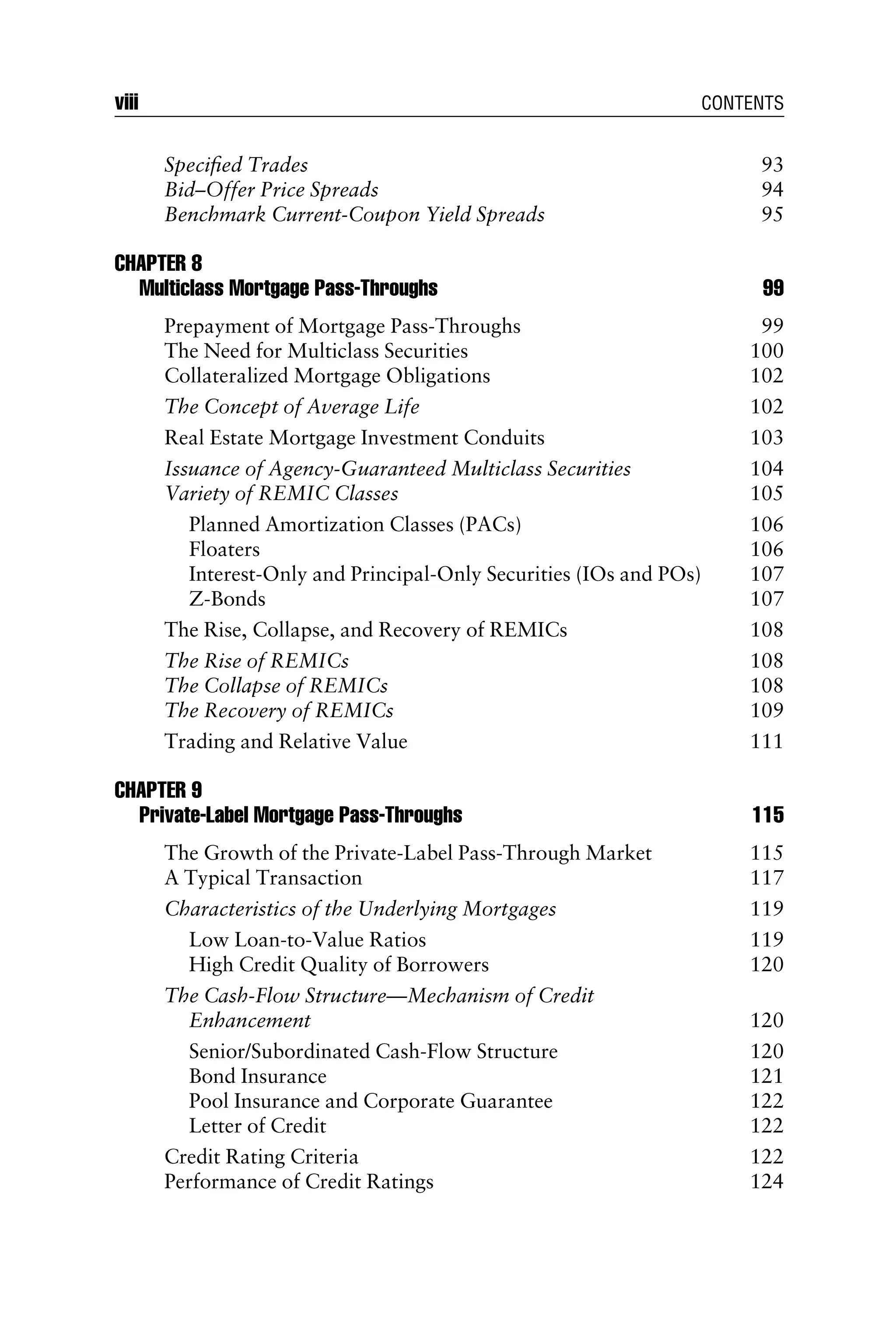
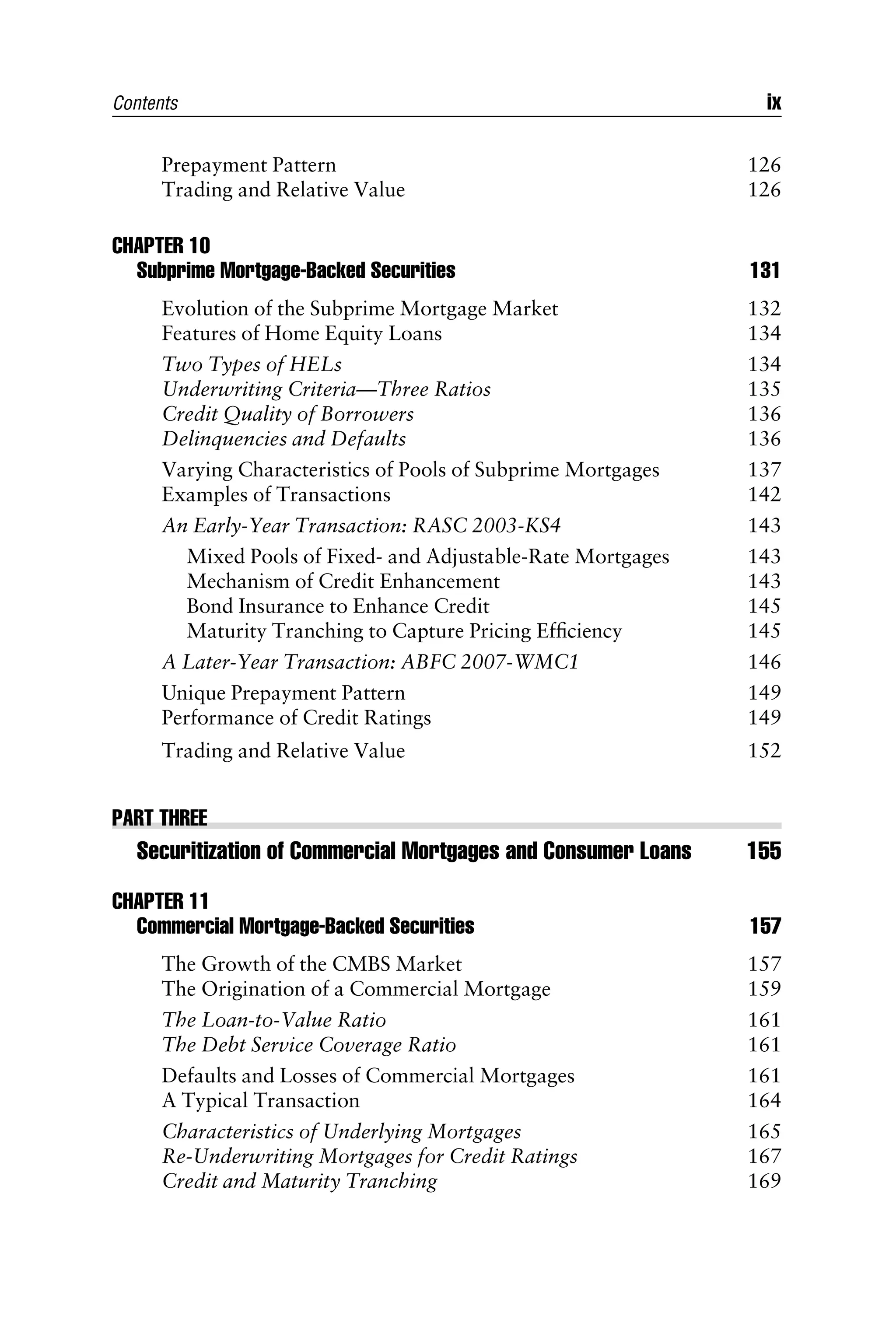
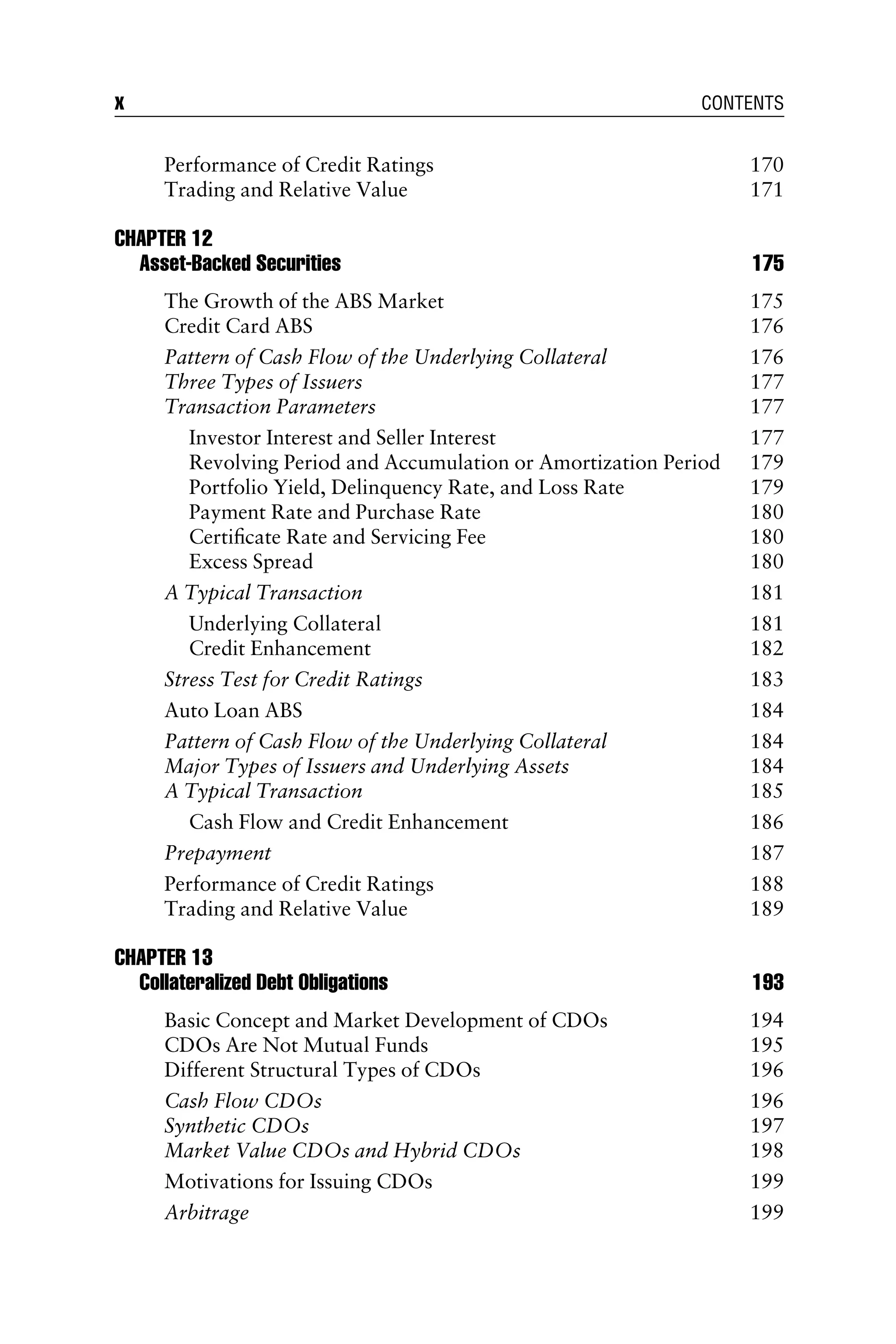
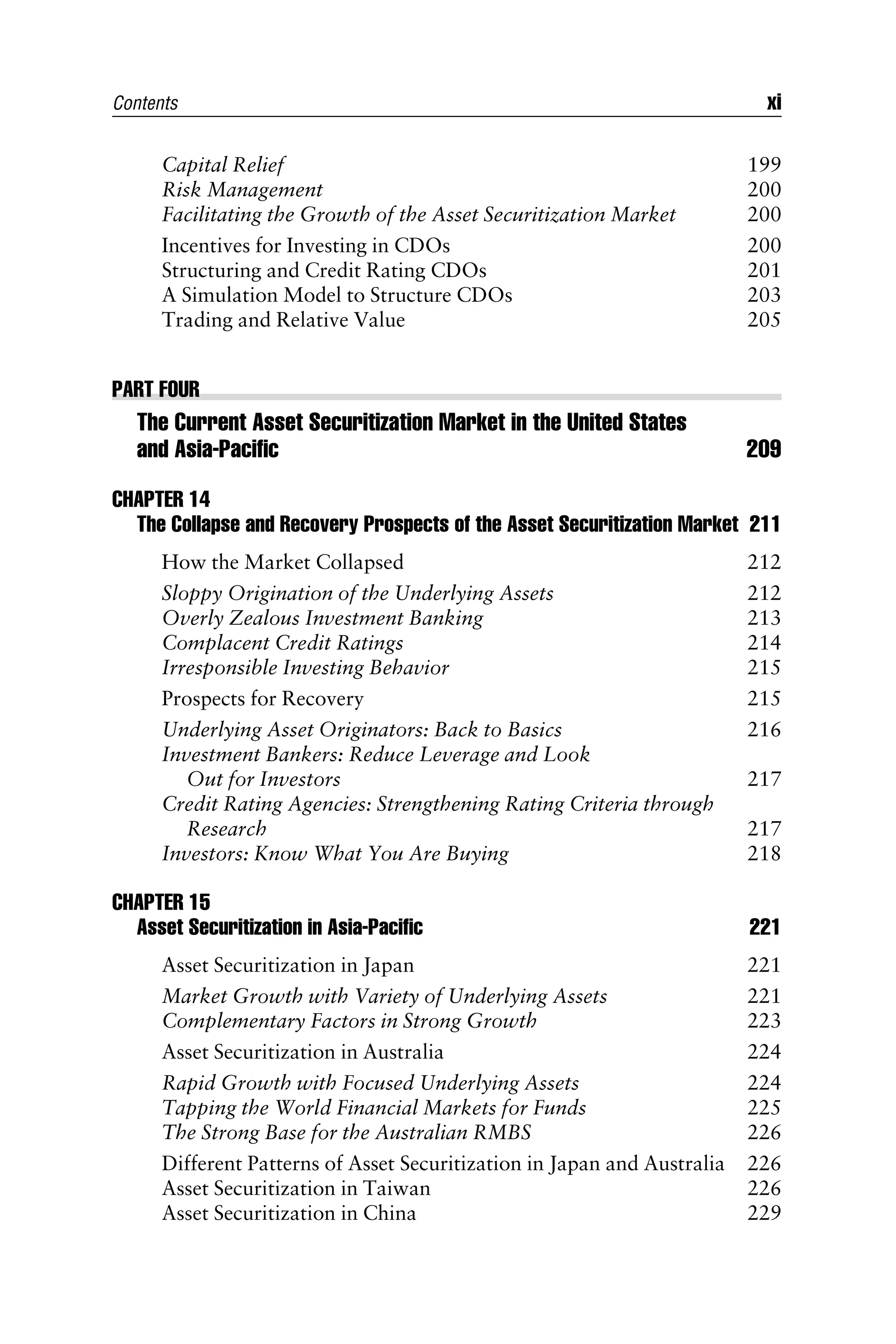
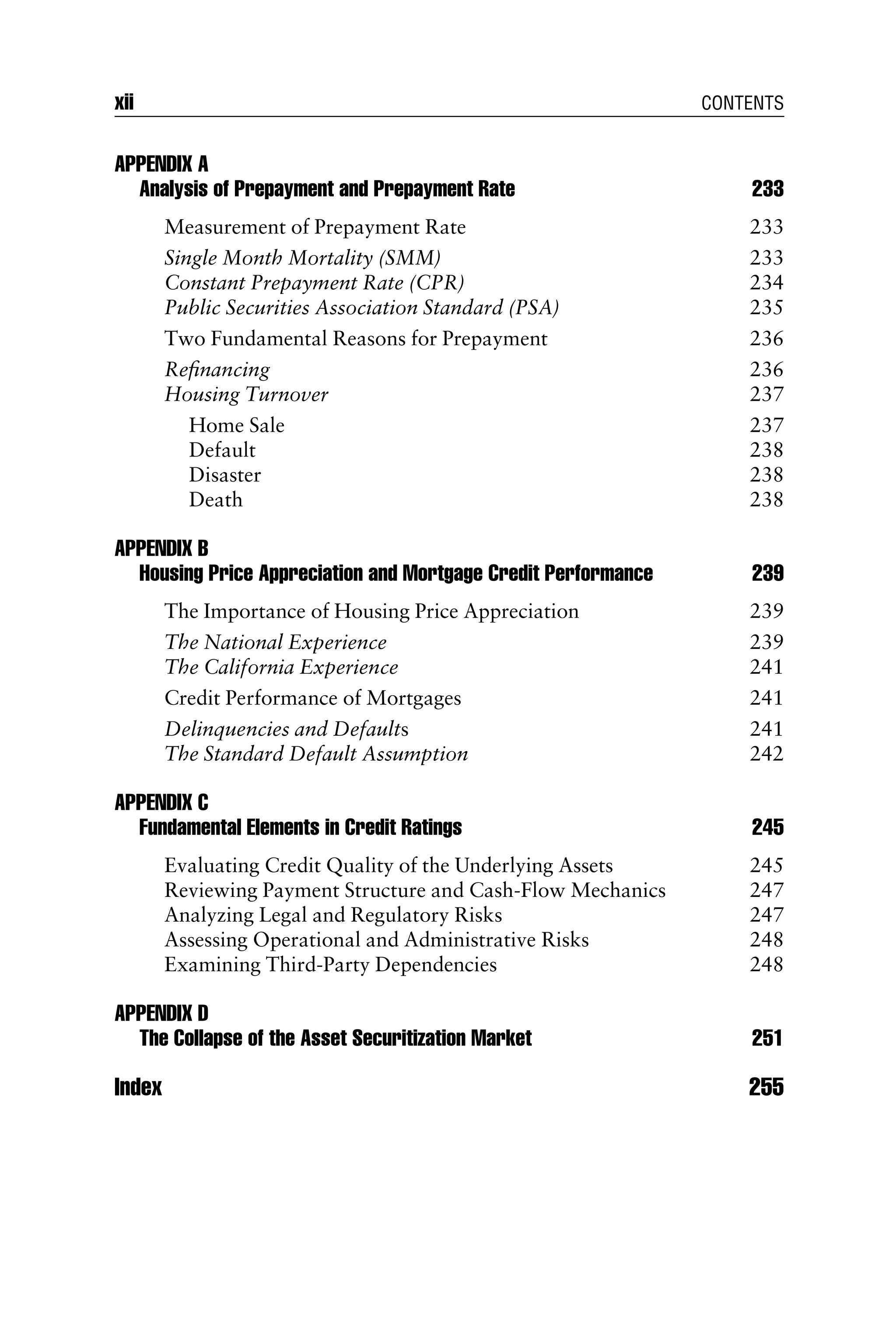

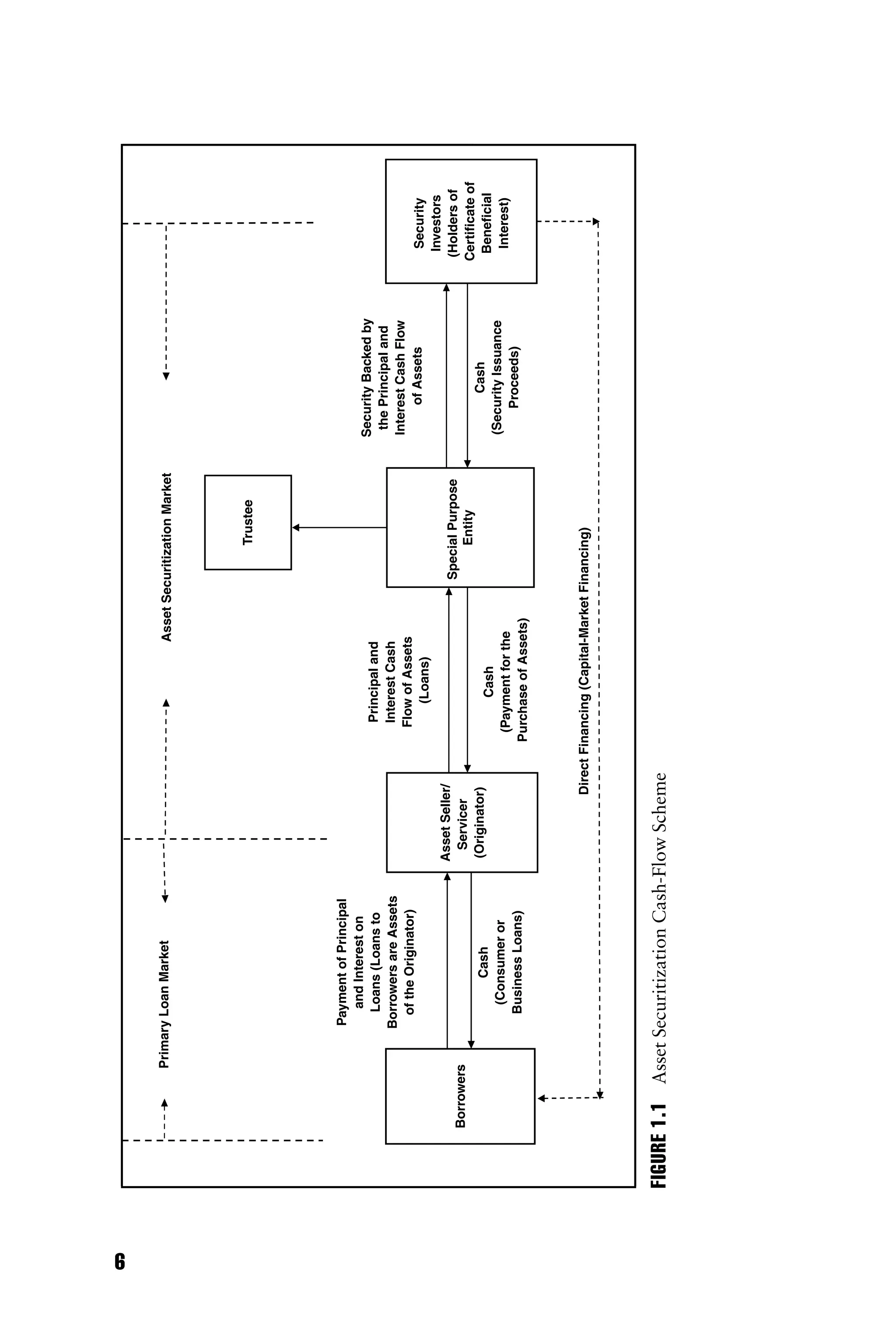
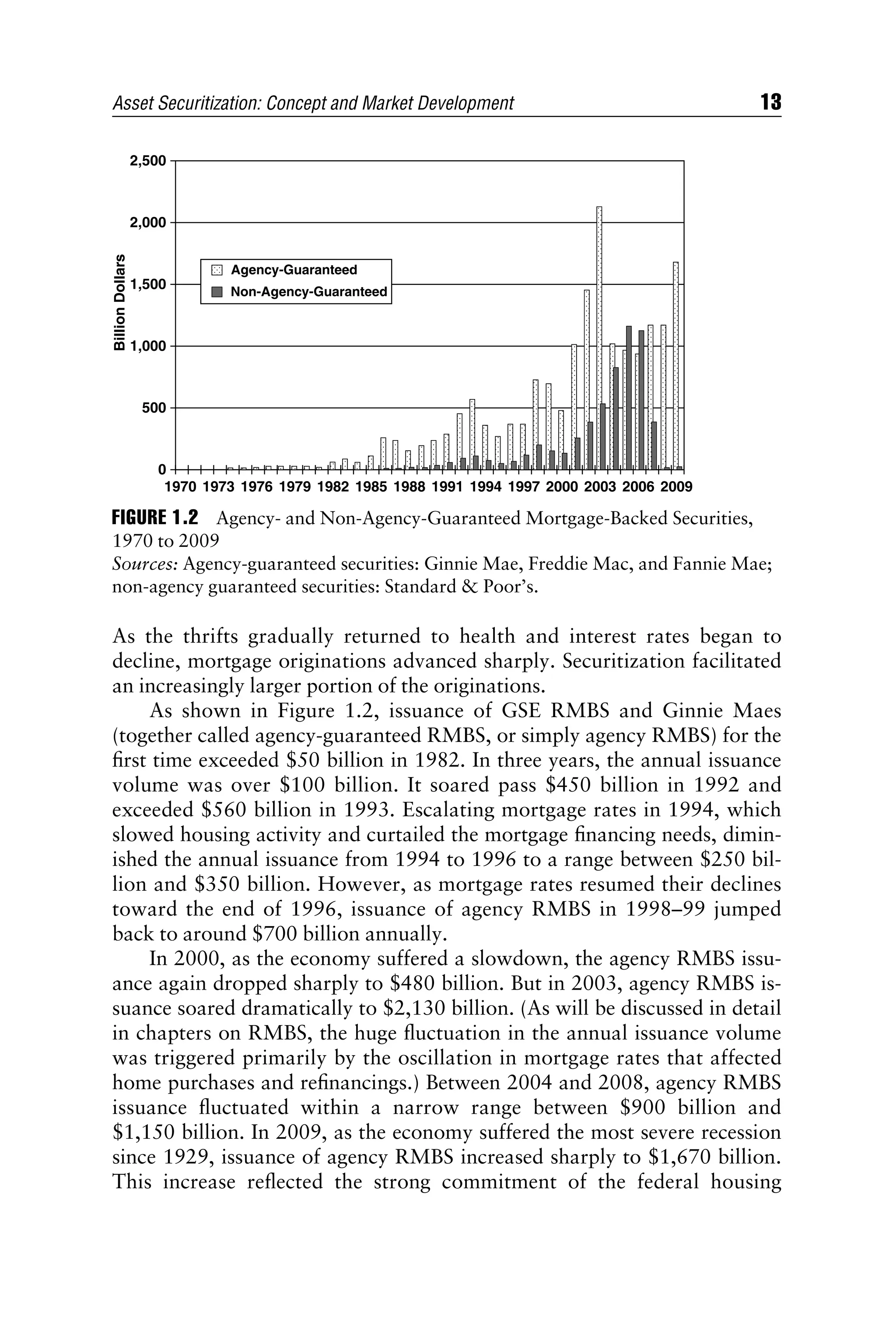
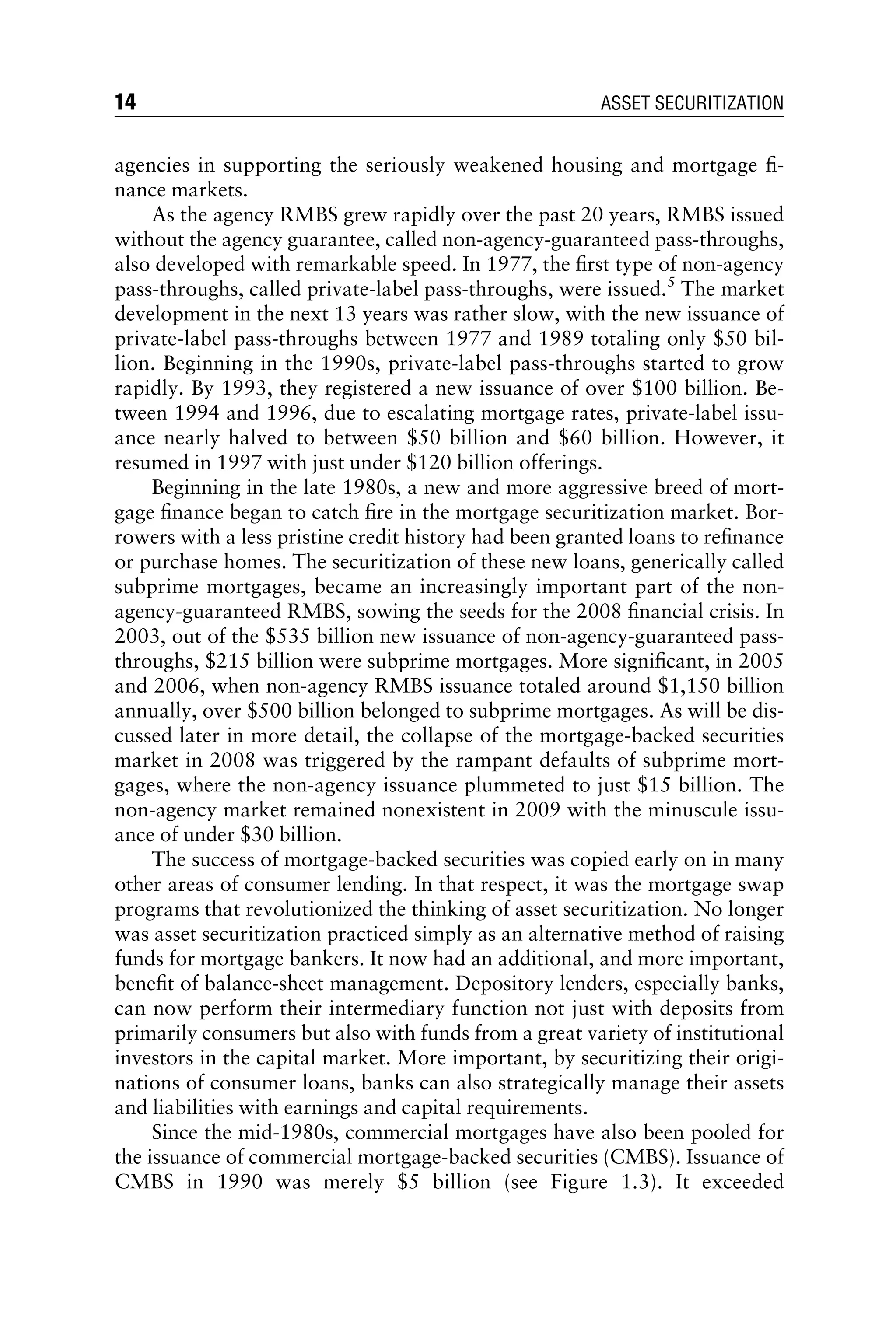
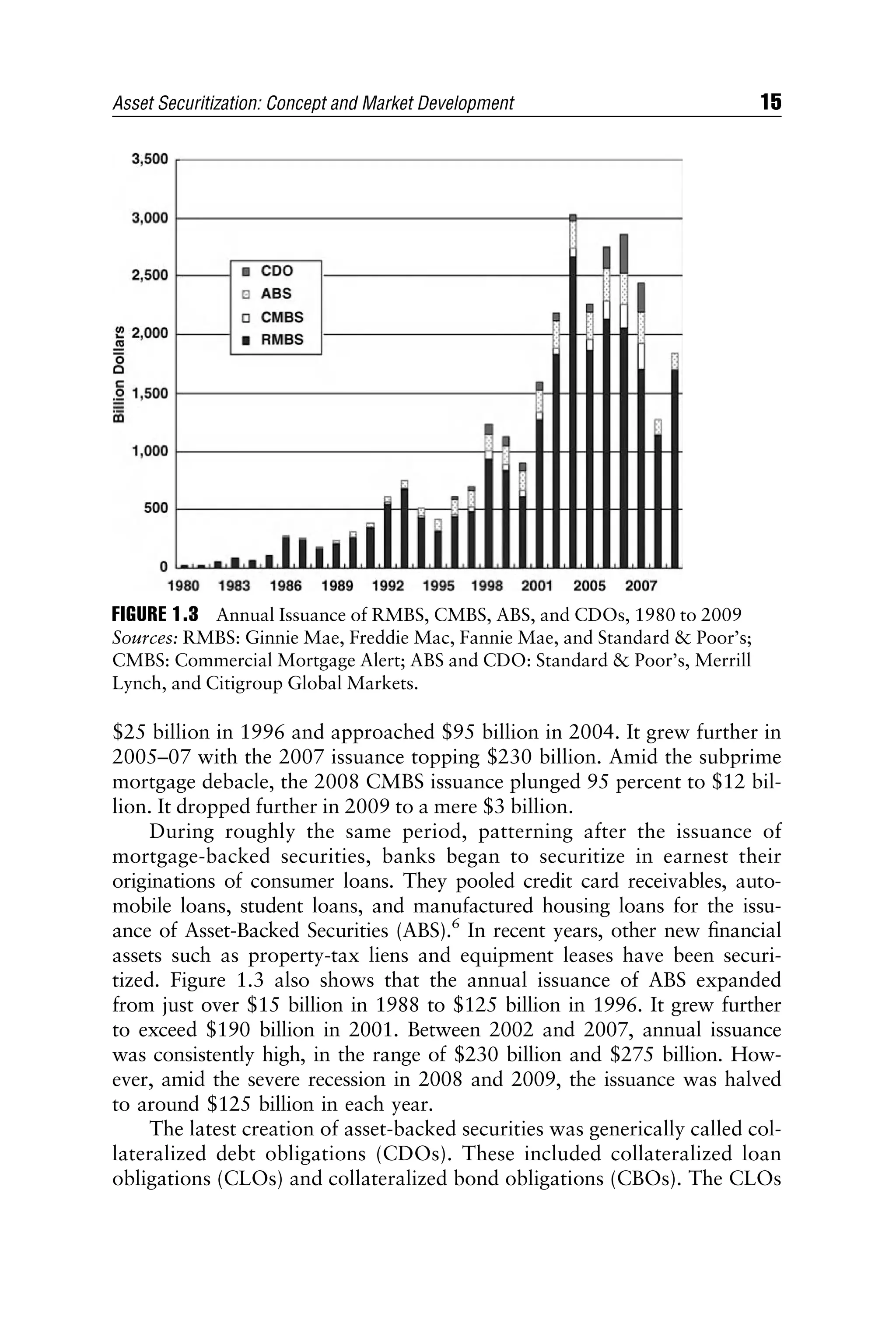
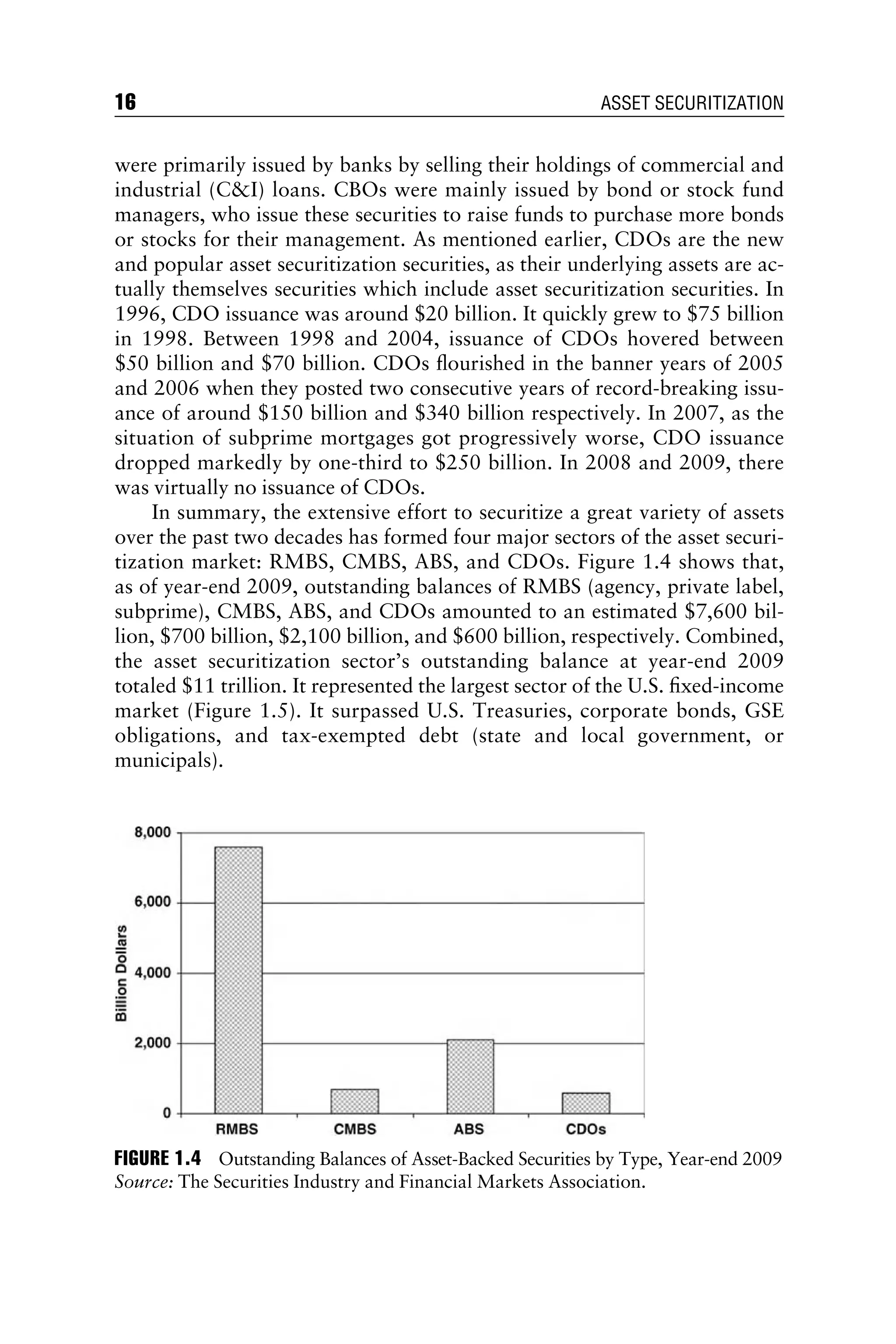
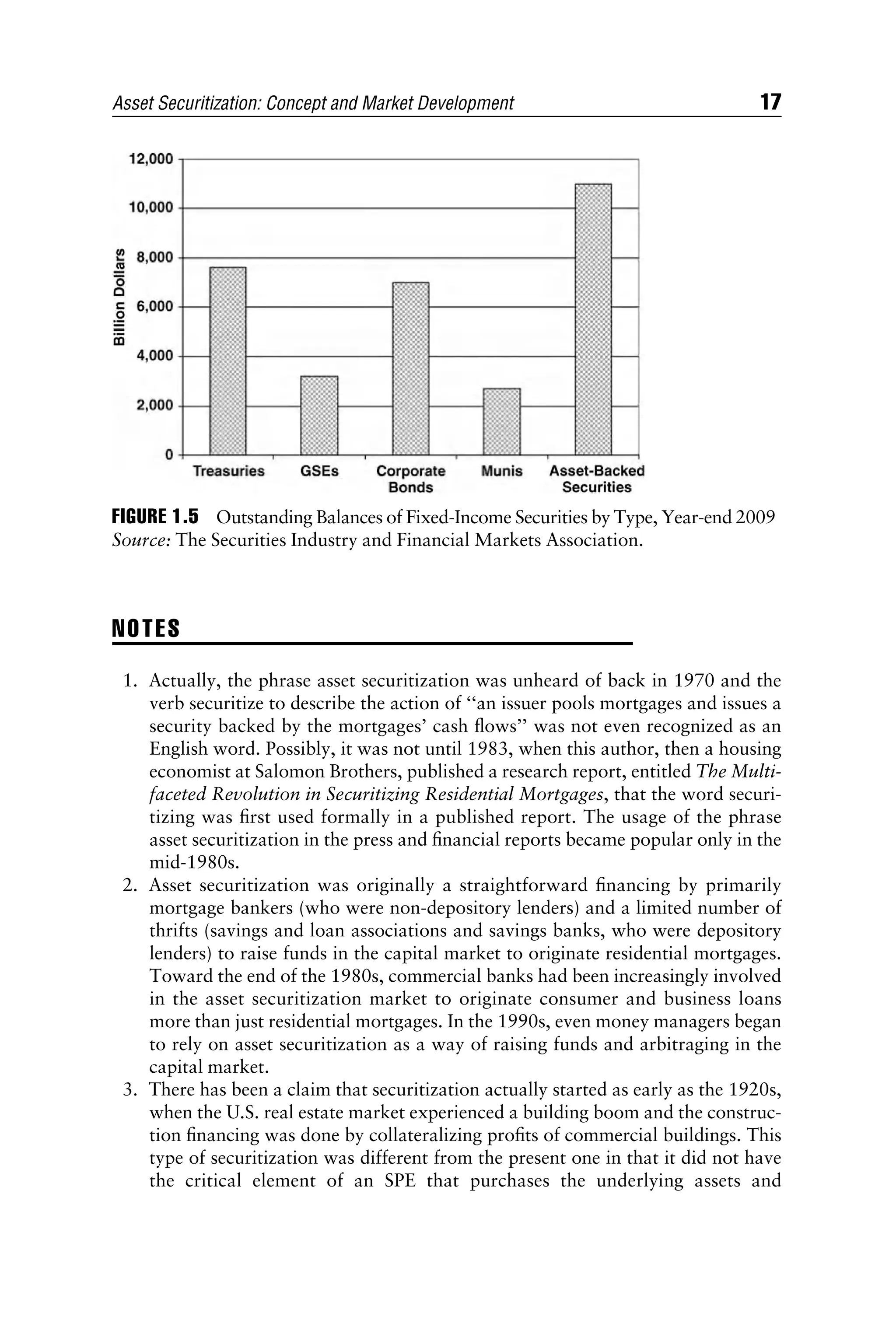
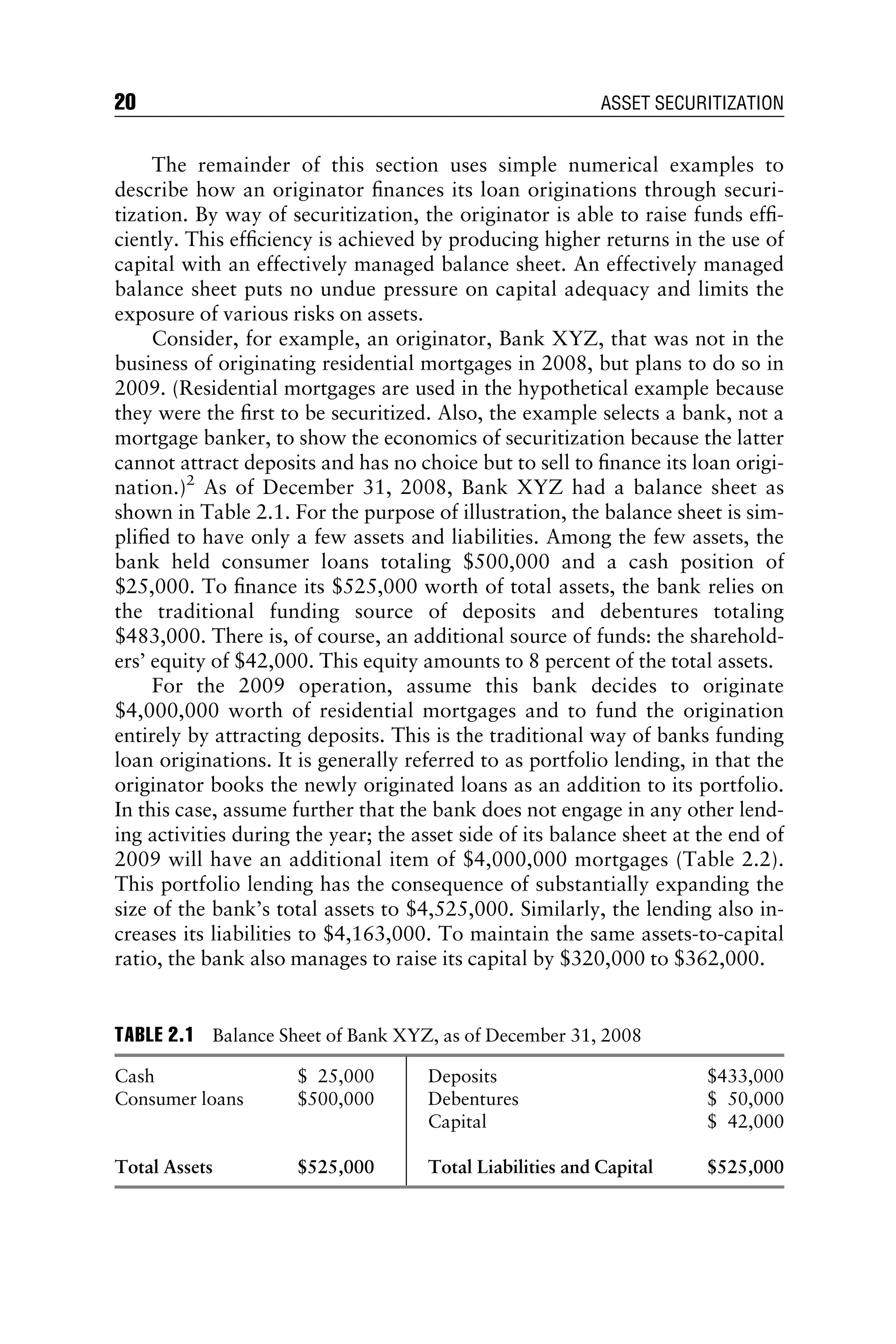
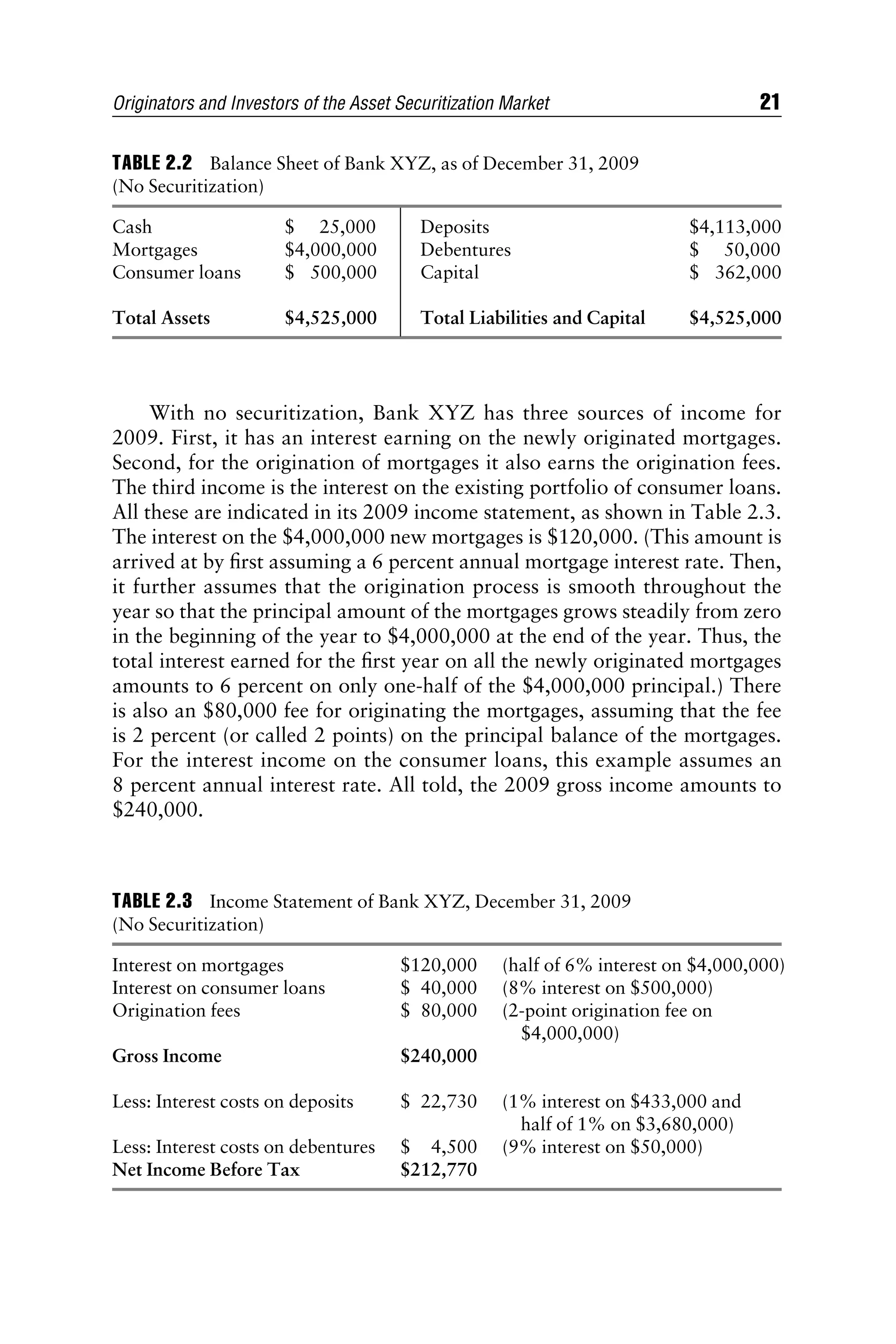
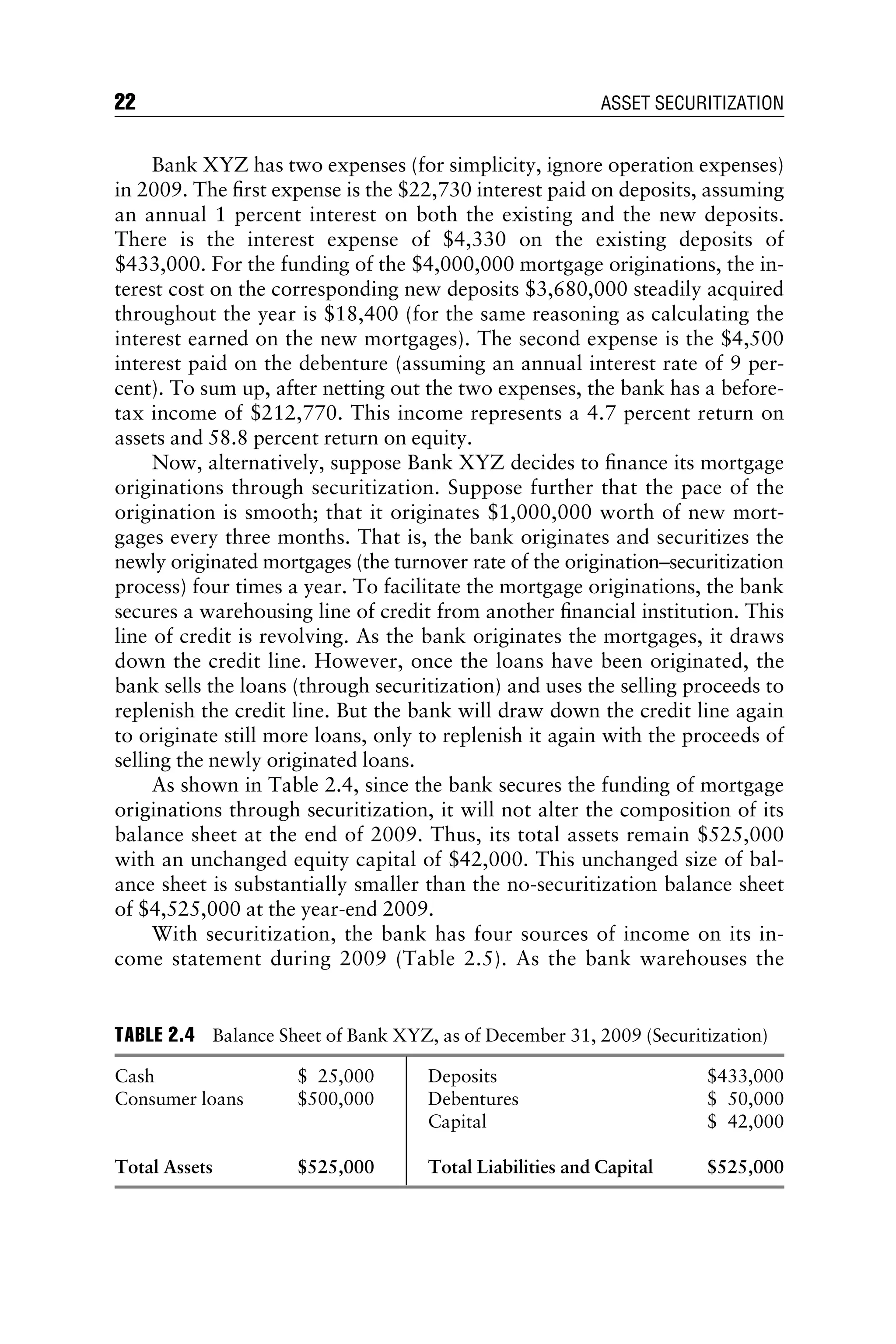
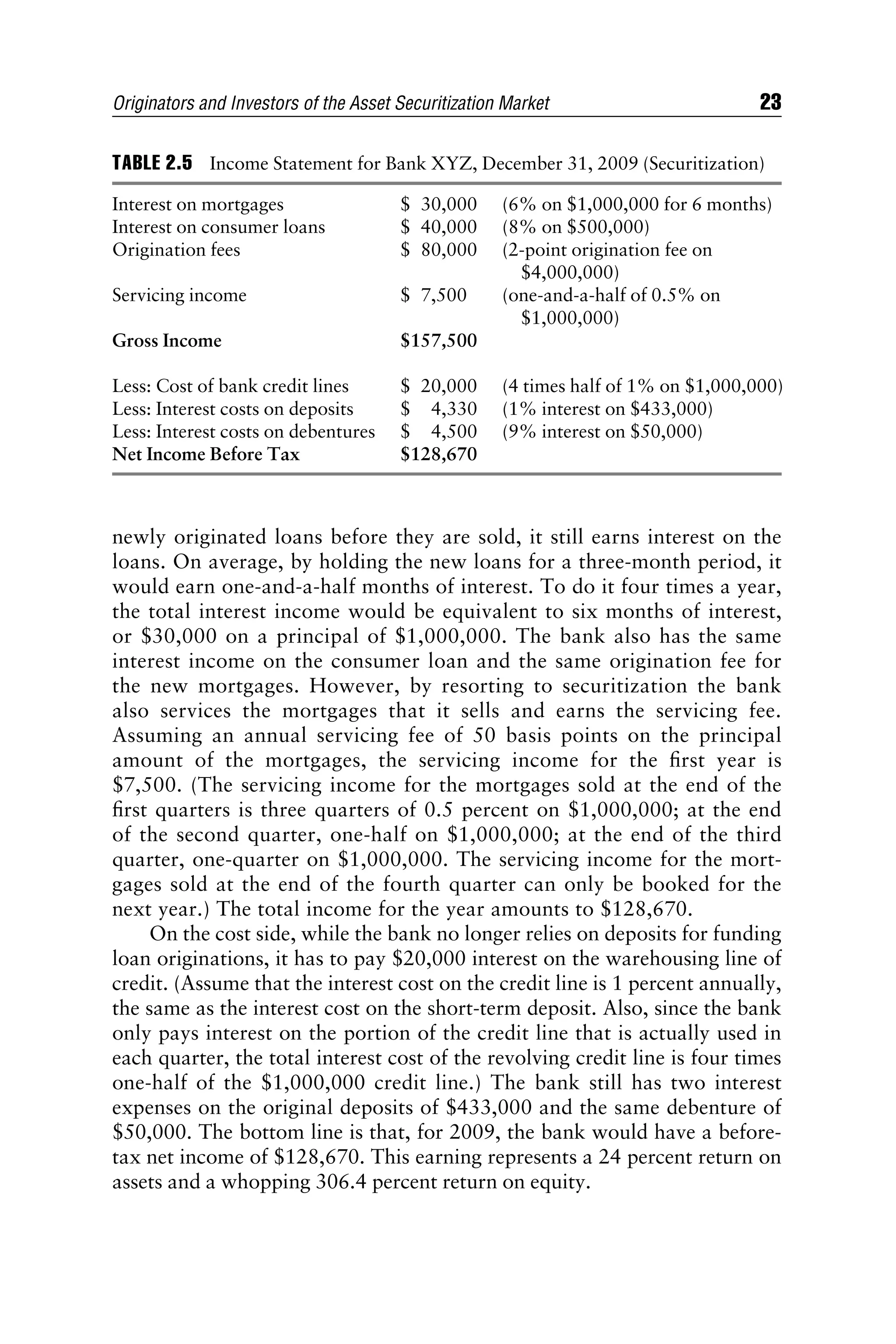
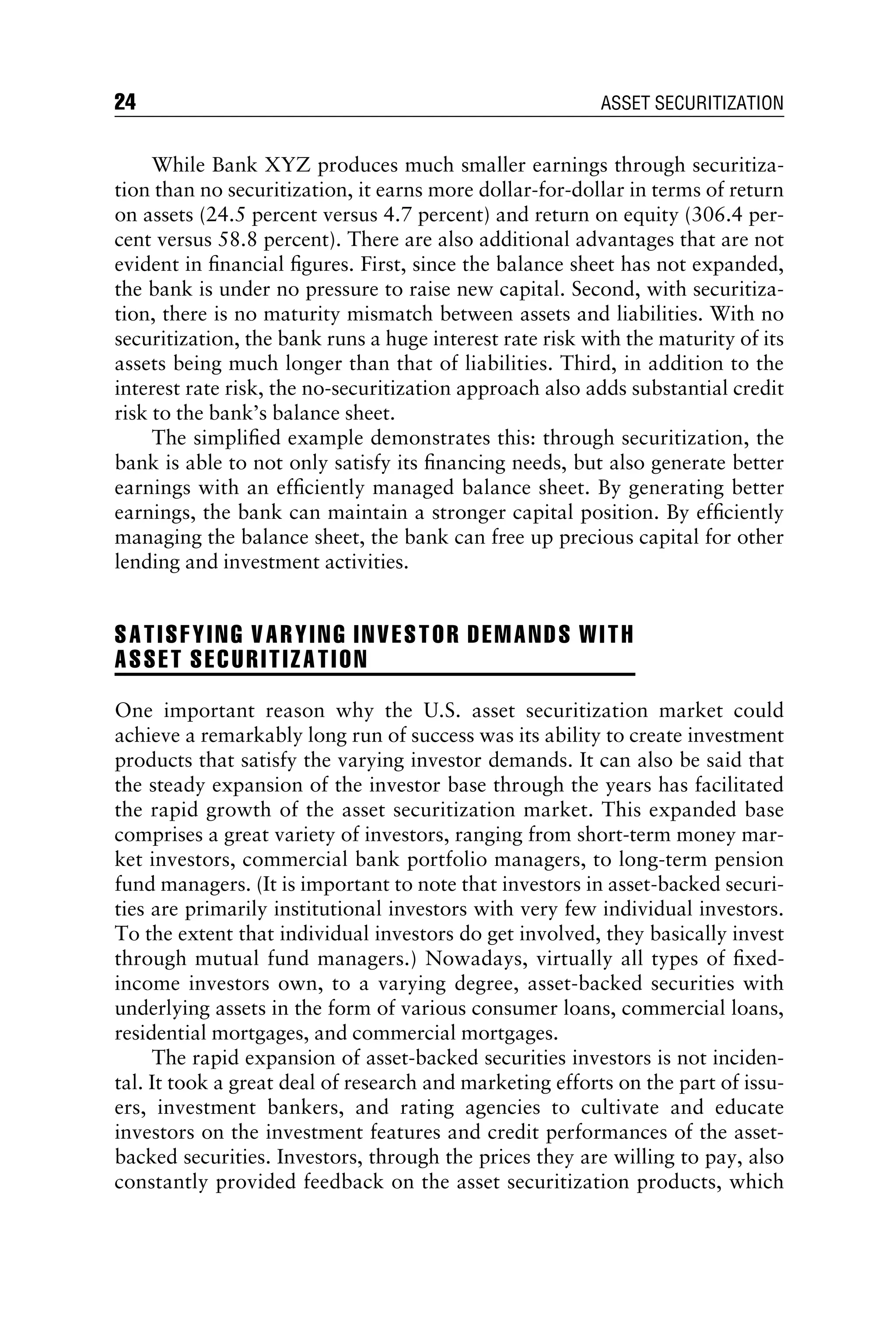




![Carker, in Dombey and Son, may serve as an example of the way
this is sometimes done. Daudet is quite as energetic in pointing
obvious morals. The way he impales D'Argenton on the point of his
pen and spares no pains in holding him up to ridicule is an instance
of this, while a much clearer one, and one wholly unredeemed by
such permissible satire as at times redeems the portrait of
D'Argenton, is the account of the school to which Jack is sent. There
is no air of reality in the account of the little king of Dahomey who is
Jack's sole friend in that wretched place. Then, too, the poor silly
mother can never appear but the author, besides making her talk
and act like the foolish creature she is, must be for ever whispering
in the reader's ear that she is a great fool and a frivolous creature.
This over-violent method defeats its own object, and surprises and
pains the reader instead of gratifying him. Nothing is taken for
granted; we are not left to perceive anything by our own unaided
vision; everything is made as plain for us as if it were written in
words of one syllable. But that way of writing palls at length, and
calls forth a feeling of disappointment with what is in some respects
a very able novel.
X. Doudan, Mélanges et Lettres. Avec une introduction par M. le
comte d'Haussonville, et des notices par MM. de Sacy et Cuvillier-
Fleury. Tome III. Paris: Calmann Lévy.
Only a year ago two volumes of M. Doudan's correspondence were
given to the public—they received notice in these pages,[10] it will be
remembered—with a conditional promise of more in case the first
should be duly appreciated. Fortunately, these letters were widely
read and heartily admired, so that now we have this third volume,
with further selections up to the year 1860, and the promise of the
speedy appearance of a fourth, to contain letters after that date and
Doudan's essay on the Revolutions of Taste. There need be no fear
in any one's mind that all the best letters were taken for the first
publication, and that the editor has been obliged to swell the pages
of this volume with Doudan's hasty, uninteresting notes. Far from it:
everything that Doudan wrote had, as some one has well said, the](https://image.slidesharecdn.com/2149757-250530152922-af809515/75/Asset-Securitization-Theory-And-Practice-Joseph-C-Huauth-59-2048.jpg)

![appreciating even slight matters without placing them above things
of real importance.
[10] See number for October, 1876.
Here is a bit of his criticism: You were quite right to be irritated with
this Fanny. I had to see what success Madame Bovary had with all
the clever people of society to believe in the success of Fanny. His
emphatic and declamatory style has helped the author in putting into
his book more shocking and absurd things than there were in the
vile anecdotes about Madame Bovary. If a young buffalo in the
Pontine Marshes were to write his memoirs, with a detailed account
of his loves, his jealousy, his excesses and his despair, he would
doubtless give expression to the same sentiment of moral good and
evil among buffaloes, but he would not exaggerate the fashion of
description in such a ridiculous way. The genuineness of his feelings
would prevent his seeing a number of things which do not concern
his passions. He would not describe, while sharpening his horns for
the fight, the little field-flowers, which he could not notice, nor the
village curé's wig, which does not concern him at all; but this small
and numerous school of self-styled realists has, in my opinion, so
little keen feeling and true passion that it is like the mathematician
who wrote from his mother's deathbed, 'I lost my mother this day at
twenty-two and one-half minutes after eight [mean time].' The
passions are not so accurate, and do not see so many things.
Here is an extract from a letter written in the perturbed days of
1848: In the country, whence I write, there is no news. The
vervain, the heliotropes, are in flower, as they are every year, and
the squirrels run up and down the trees without asking what is going
on in Paris. Not one has subscribed to the most insignificant
newspaper. By the way, do you suppose there are social
disturbances among the beasts of the air, or of the fields, or of the
waters? That is not impossible, and I should be very sorry if it were
the case: it pleases my imagination more to think that the squirrels
are living to-day just as they lived in the garden of Eden; but I have
already told you that at a not very remote period a race of rats,](https://image.slidesharecdn.com/2149757-250530152922-af809515/75/Asset-Securitization-Theory-And-Practice-Joseph-C-Huauth-61-2048.jpg)