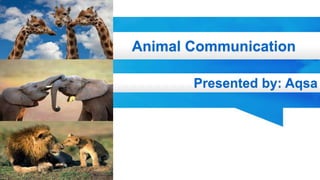
Animal Communication
Presented by: Aqsa
Content
Animal Communication
Why animals communicate?
Types of communication
(Vocal, Visual, Tactile, Chemical, Electrical and
Human Induced Communication)
Conclusion
Animal Communication
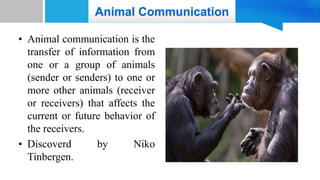
• Animal communication is the
transfer of information from
one or a group of animals
(sender or senders) to one or
more other animals (receiver
or receivers) that affects the
current or future behavior of
the receivers.
• Discoverd by Niko
Tinbergen.
Why Animal Communicate?
Communication is a fundamental aspect of animal
behavior as it helps to
• Attract a mate
• Establish territory
• Convey information about food
• To warn other animals about danger
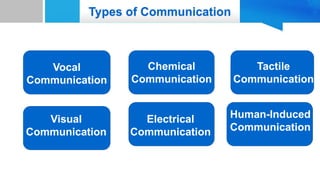
Types of Communication
Vocal
Communication
Visual
Communication
Chemical
Communication
Tactile
Communication
Electrical
Communication
Human-Induced
Communication
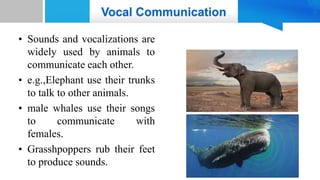
Vocal Communication
• Sounds and vocalizations are
widely used by animals to
communicate each other.
• e.g.,Elephant use their trunks
to talk to other animals.
• male whales use their songs
to communicate with
females.
• Grasshpoppers rub their feet
to produce sounds.
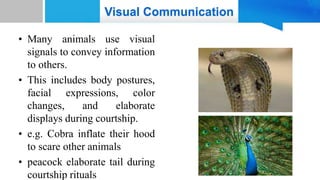
Visual Communication
• Many animals use visual
signals to convey information
to others.
• This includes body postures,
facial expressions, color
changes, and elaborate
displays during courtship.
• e.g. Cobra inflate their hood
to scare other animals
• peacock elaborate tail during
courtship rituals
Chemical Communication
• Animals release chemical
substances called
pheromones to communicate
with others of the same
species.
• Reproductive status, territory
boundaries, and social cues.
• Ants use pheromones trails to
follow each other
• Catsr rub against objects to
mark them with their scent.
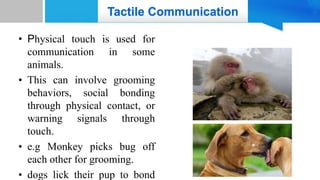
Tactile Communication
• Physical touch is used for
communication in some
animals.
• This can involve grooming
behaviors, social bonding
through physical contact, or
warning signals through
touch.
• e.g Monkey picks bug off
each other for grooming.
• dogs lick their pup to bond
Electrical Communication
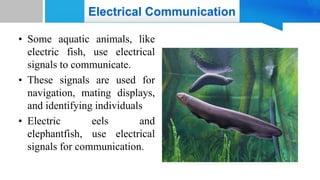
• Some aquatic animals, like
electric fish, use electrical
signals to communicate.
• These signals are used for
navigation, mating displays,
and identifying individuals
• Electric eels and
elephantfish, use electrical
signals for communication.
Human-Induced Communication
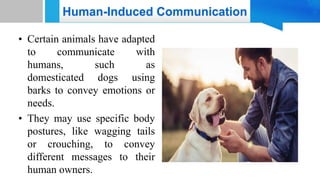
• Certain animals have adapted
to communicate with
humans, such as
domesticated dogs using
barks to convey emotions or
needs.
• They may use specific body
postures, like wagging tails
or crouching, to convey
different messages to their
human owners.
Conclusion
• In conclusion, animal communication is a vast and
captivating field, essential for understanding the
intricate lives of our fellow creatures. As zoologists,
exploring these communication methods enhances
our understanding of animal behavior and ultimately
contributes to the preservation of our diverse natural
world.
Reference
• Goodenough, J., McGuire, B., & Jakob, E. (2009).
Perspectives on animal behavior. John Wiley & Sons.
• Freed. K (2014). Animal Communication. Level V
Levelled Book.

Animal communication elephant communication

  • 1.
  • 2.
    Content Animal Communication Why animalscommunicate? Types of communication (Vocal, Visual, Tactile, Chemical, Electrical and Human Induced Communication) Conclusion
  • 3.
    Animal Communication • Animalcommunication is the transfer of information from one or a group of animals (sender or senders) to one or more other animals (receiver or receivers) that affects the current or future behavior of the receivers. • Discoverd by Niko Tinbergen.
  • 4.
    Why Animal Communicate? Communicationis a fundamental aspect of animal behavior as it helps to • Attract a mate • Establish territory • Convey information about food • To warn other animals about danger
  • 5.
  • 6.
    Vocal Communication • Soundsand vocalizations are widely used by animals to communicate each other. • e.g.,Elephant use their trunks to talk to other animals. • male whales use their songs to communicate with females. • Grasshpoppers rub their feet to produce sounds.
  • 7.
    Visual Communication • Manyanimals use visual signals to convey information to others. • This includes body postures, facial expressions, color changes, and elaborate displays during courtship. • e.g. Cobra inflate their hood to scare other animals • peacock elaborate tail during courtship rituals
  • 8.
    Chemical Communication • Animalsrelease chemical substances called pheromones to communicate with others of the same species. • Reproductive status, territory boundaries, and social cues. • Ants use pheromones trails to follow each other • Catsr rub against objects to mark them with their scent.
  • 9.
    Tactile Communication • Physicaltouch is used for communication in some animals. • This can involve grooming behaviors, social bonding through physical contact, or warning signals through touch. • e.g Monkey picks bug off each other for grooming. • dogs lick their pup to bond
  • 10.
    Electrical Communication • Someaquatic animals, like electric fish, use electrical signals to communicate. • These signals are used for navigation, mating displays, and identifying individuals • Electric eels and elephantfish, use electrical signals for communication.
  • 11.
    Human-Induced Communication • Certainanimals have adapted to communicate with humans, such as domesticated dogs using barks to convey emotions or needs. • They may use specific body postures, like wagging tails or crouching, to convey different messages to their human owners.
  • 12.
    Conclusion • In conclusion,animal communication is a vast and captivating field, essential for understanding the intricate lives of our fellow creatures. As zoologists, exploring these communication methods enhances our understanding of animal behavior and ultimately contributes to the preservation of our diverse natural world.
  • 13.
    Reference • Goodenough, J.,McGuire, B., & Jakob, E. (2009). Perspectives on animal behavior. John Wiley & Sons. • Freed. K (2014). Animal Communication. Level V Levelled Book.