Ms. Irine Q. Bonane
ENGLAND
The name
"England" is
derived from the
Old English name
ENGLALAND,
which means
“LAND OF THE
ANGLES“
OLD ENGLISH OR (ANGLO-SAXON)
• Few surviving texts with little in common.
• •Language closer to modern German than modern English.
• •Frequently reflect non-English influence.
THE ANGLO-SAXON PERIOD
Britain before the Anglo- Saxons
The Germanic Invasions
Anglo- Saxon Society
Anglo – Saxon Literature
ENGLAND
BEFORE
THE
ENGLISH
IN 600, Anglo- Saxons
conquered the
Britons.
-Languange becomes
more Germanic
-The Anglo- Saxons’
two urging- war and
wandering become
part of the oral
tradition
• Beowulf an
example of Anglo
Saxon hero tale.
LITERATURE:
BEOWULF
The earliest
literature, the
national epic of
Anglo-Saxon.
In 700, Christian
missionaries arrive to
convert the pagans.
King Alfred
-the Britons become
organized
-First true king of Britons
-period of properity
MIDDLE ENGLISH
Who is the Father of English Literature?
GEOFFREY CHAUCER
• His family name derives from the French chausseur, meaning
"shoemaker".
• known as the Father of English literature
• is widely considered the greatest English poet of the middle
Ages
LITERATURE
ALLEGORY BALLAD ROMANCE
3 ESTATES IN MIDDLE AGES
• Clergy
• Nobles
• commoners
FEUDALISM
• A social system which the nobility held lands from the Crown in
exchange for military service, and vassals were in turn tenants of
the nobles, while the peasants (villeins or serfs) were obliged to
live on their lord's land and give him homage, labor, and a share
of the produce, notionally in exchange for military protection.
CHARACTERISTICS OF MEDIEVAL
LITERATURE
• Heroism
• Presentations of idealized behavior
• Romance
• Christian message
ENGLISH RENAISSANCE
• Influence of Aristotle, Ovid, and other Greco-Roman thinkers, as well as
science and exploration.
•Primarily texts for public performance (plays) and some books of poetry.
•William Shakespeare, Christopher Marlowe, Ben Jonson, Francis Bacon,
John Fletcher, Francis Beaumont
RENAISSANCE
• marks the transition from the medieval to the modern world;
• •It means rebirth or revival of letters;
HUMANISM
• key-note of the Renaissance; emphasis on the dignity of human beings and the
importance of the present life; belief in the right to enjoy the beauty of this life and the
ability to perfect himself and to perform wonders.
DRAMA
• the highest glory of the English Renaissance with Christopher
Marlowe, Shakespeare and Ben Jonson
CHRISTOPHER MARLOWE-
• the most gifted of the “university
wits”, Doctor Faustus, blank verse
first used in his drama
SHAKESPEARE
• He was born in 1564 in Stratford- on
Avon, died in 1616
• His works---38 plays, 154 sonnets
THE RESTORATION
PERIOD
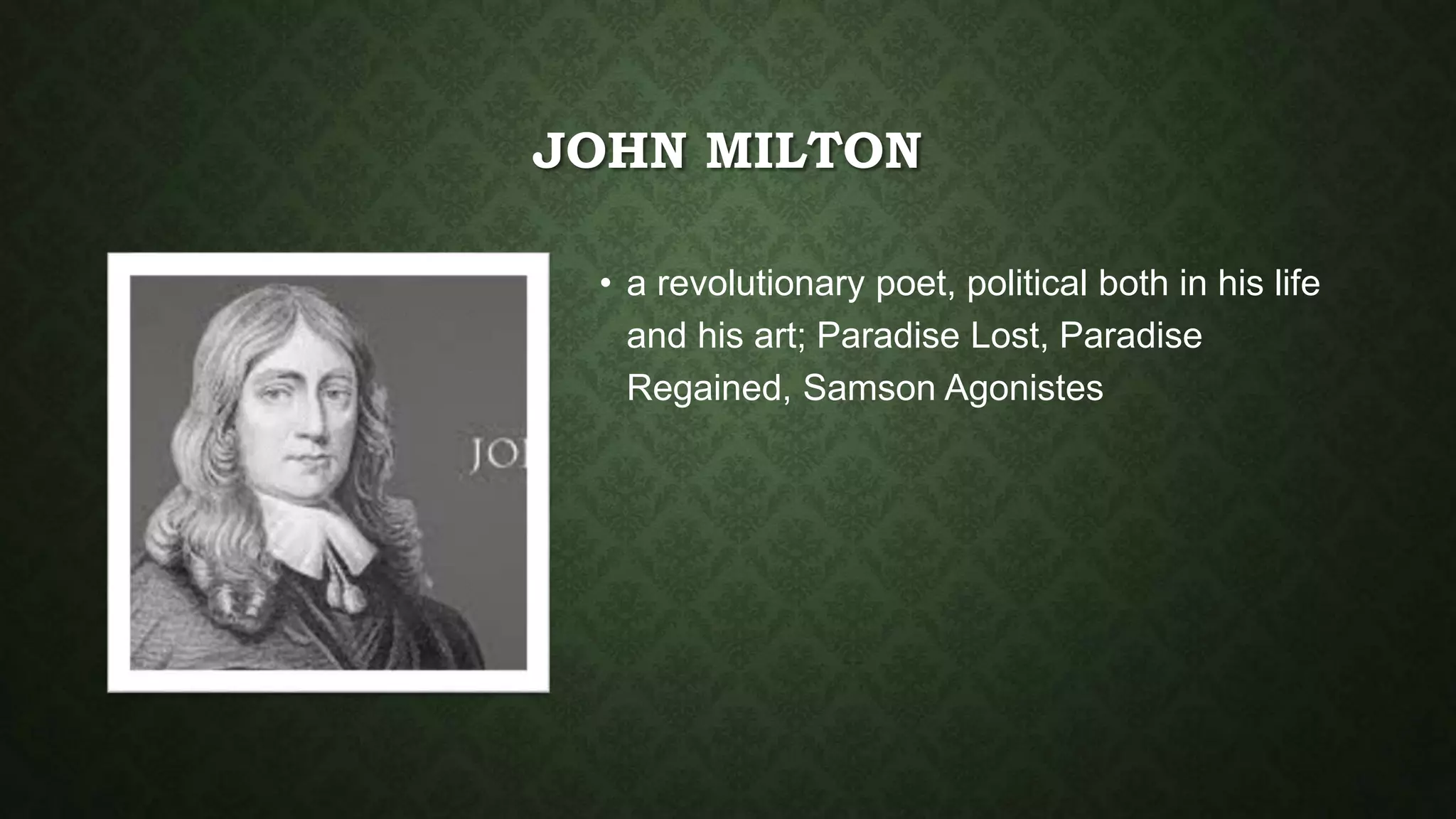
JOHN MILTON
• a revolutionary poet, political both in his life
and his art; Paradise Lost, Paradise
Regained, Samson Agonistes
JOHN DRYDEN
• the most distinguished literary figure of the Restoration period; use of
heroic couplet in his writing.
NEOCLASSICAL PERIOD
• Art should reflect the universal
commonality of human nature.
-All men are created equal
• Writing should be well-structured;
emotion should be controlled
emphasize qualities like wit.
DANIEL DEFOE
He wrote his famous novel “the life and
Strange Surprising Adventures of Robinson
Crusoe.
THOMAS JEFFERSON
JAMES MADISON
ROMANTIC PERIOD
• Romanticism- It designates a literary and
philosophical theory which tends to see the
individual as the very center of all life and all
experience.
• William Wordsworth- The Father of Romanticism.
• Elevation of common man (Folklore and Myth)
• Mystery and Supernatural
EDGAR ALLAN POE
• The Father of short stories
VICTORIAN PERIOD
• Named for the reign of Queen Victoria, Britain’s longest reigning
monarch.
•Period of stability and prosperity for Britain.
•British society extremely class conscious
•Generally emphasized realistic portrayals of common people, sometimes
to promote social change.
CHARLES
DICKENS
• was an English writer
and social critic. He
created some of the
world's best-known
fictional characters and
is regarded by many as
the greatest novelist of
the Victorian era.
MODERN PERIOD
• A century when information became easily accessible
through publications and through the manipulation of
information by computers and computer networks.
EDWARD
THOMAS
• He is considered a war
poet, although few of
his poems deal directly
with his war
experiences, and his
career in poetry only
came after he had
already been a
successful writer and
literary critic.
FAMOUS LANDMARK IN ENGLAND.
Anglo-American Literature.pptx

Anglo-American Literature.pptx

  • 1.
  • 3.
    ENGLAND The name "England" is derivedfrom the Old English name ENGLALAND, which means “LAND OF THE ANGLES“
  • 4.
    OLD ENGLISH OR(ANGLO-SAXON) • Few surviving texts with little in common. • •Language closer to modern German than modern English. • •Frequently reflect non-English influence.
  • 5.
    THE ANGLO-SAXON PERIOD Britainbefore the Anglo- Saxons The Germanic Invasions Anglo- Saxon Society Anglo – Saxon Literature
  • 6.
  • 7.
    IN 600, Anglo-Saxons conquered the Britons. -Languange becomes more Germanic -The Anglo- Saxons’ two urging- war and wandering become part of the oral tradition • Beowulf an example of Anglo Saxon hero tale.
  • 8.
  • 9.
    In 700, Christian missionariesarrive to convert the pagans. King Alfred -the Britons become organized -First true king of Britons -period of properity
  • 10.
    MIDDLE ENGLISH Who isthe Father of English Literature?
  • 11.
    GEOFFREY CHAUCER • Hisfamily name derives from the French chausseur, meaning "shoemaker". • known as the Father of English literature • is widely considered the greatest English poet of the middle Ages
  • 12.
  • 13.
    3 ESTATES INMIDDLE AGES • Clergy • Nobles • commoners
  • 14.
    FEUDALISM • A socialsystem which the nobility held lands from the Crown in exchange for military service, and vassals were in turn tenants of the nobles, while the peasants (villeins or serfs) were obliged to live on their lord's land and give him homage, labor, and a share of the produce, notionally in exchange for military protection.
  • 15.
    CHARACTERISTICS OF MEDIEVAL LITERATURE •Heroism • Presentations of idealized behavior • Romance • Christian message
  • 16.
    ENGLISH RENAISSANCE • Influenceof Aristotle, Ovid, and other Greco-Roman thinkers, as well as science and exploration. •Primarily texts for public performance (plays) and some books of poetry. •William Shakespeare, Christopher Marlowe, Ben Jonson, Francis Bacon, John Fletcher, Francis Beaumont
  • 17.
    RENAISSANCE • marks thetransition from the medieval to the modern world; • •It means rebirth or revival of letters;
  • 18.
    HUMANISM • key-note ofthe Renaissance; emphasis on the dignity of human beings and the importance of the present life; belief in the right to enjoy the beauty of this life and the ability to perfect himself and to perform wonders.
  • 19.
    DRAMA • the highestglory of the English Renaissance with Christopher Marlowe, Shakespeare and Ben Jonson
  • 20.
    CHRISTOPHER MARLOWE- • themost gifted of the “university wits”, Doctor Faustus, blank verse first used in his drama
  • 21.
    SHAKESPEARE • He wasborn in 1564 in Stratford- on Avon, died in 1616 • His works---38 plays, 154 sonnets
  • 22.
  • 23.
    JOHN MILTON • arevolutionary poet, political both in his life and his art; Paradise Lost, Paradise Regained, Samson Agonistes
  • 24.
    JOHN DRYDEN • themost distinguished literary figure of the Restoration period; use of heroic couplet in his writing.
  • 25.
    NEOCLASSICAL PERIOD • Artshould reflect the universal commonality of human nature. -All men are created equal • Writing should be well-structured; emotion should be controlled emphasize qualities like wit.
  • 26.
    DANIEL DEFOE He wrotehis famous novel “the life and Strange Surprising Adventures of Robinson Crusoe.
  • 27.
  • 28.
  • 29.
    ROMANTIC PERIOD • Romanticism-It designates a literary and philosophical theory which tends to see the individual as the very center of all life and all experience. • William Wordsworth- The Father of Romanticism. • Elevation of common man (Folklore and Myth) • Mystery and Supernatural
  • 30.
    EDGAR ALLAN POE •The Father of short stories
  • 31.
    VICTORIAN PERIOD • Namedfor the reign of Queen Victoria, Britain’s longest reigning monarch. •Period of stability and prosperity for Britain. •British society extremely class conscious •Generally emphasized realistic portrayals of common people, sometimes to promote social change.
  • 32.
    CHARLES DICKENS • was anEnglish writer and social critic. He created some of the world's best-known fictional characters and is regarded by many as the greatest novelist of the Victorian era.
  • 33.
    MODERN PERIOD • Acentury when information became easily accessible through publications and through the manipulation of information by computers and computer networks.
  • 34.
    EDWARD THOMAS • He isconsidered a war poet, although few of his poems deal directly with his war experiences, and his career in poetry only came after he had already been a successful writer and literary critic.
  • 35.