Amazon's Entry into
Pakistan:A Strategic
Roadmap
This presentation outlines a strategic roadmap for Amazon's entry into
the rapidly growing Pakistani e-commerce market. We'll explore the
opportunities, challenges, and a phased approach to capture market
share and drive innovation.
2.
The Opportunity
Market Growth
Pakistan'se-commerce market is rapidly expanding,
presenting a significant opportunity for Amazon.
Disruption & Innovation
Amazon's entry could disrupt the existing landscape and
drive innovation in the Pakistani e-commerce sector.
3.
Market Analysis
Economic Environment
Pakistan'seconomy is characterized
by a growing middle class, increasing
internet penetration, and a rising
demand for online goods and
services.
Political Environment
The political landscape is dynamic,
with potential for both opportunities
and challenges. Understanding the
regulatory environment and potential
policy changes is crucial.
Cultural Environment
Pakistan has a rich cultural heritage,
with diverse customs and traditions.
Adapting products and marketing
strategies to local preferences is
essential.
4.
Competitive Landscape
1 ExistingPlayers
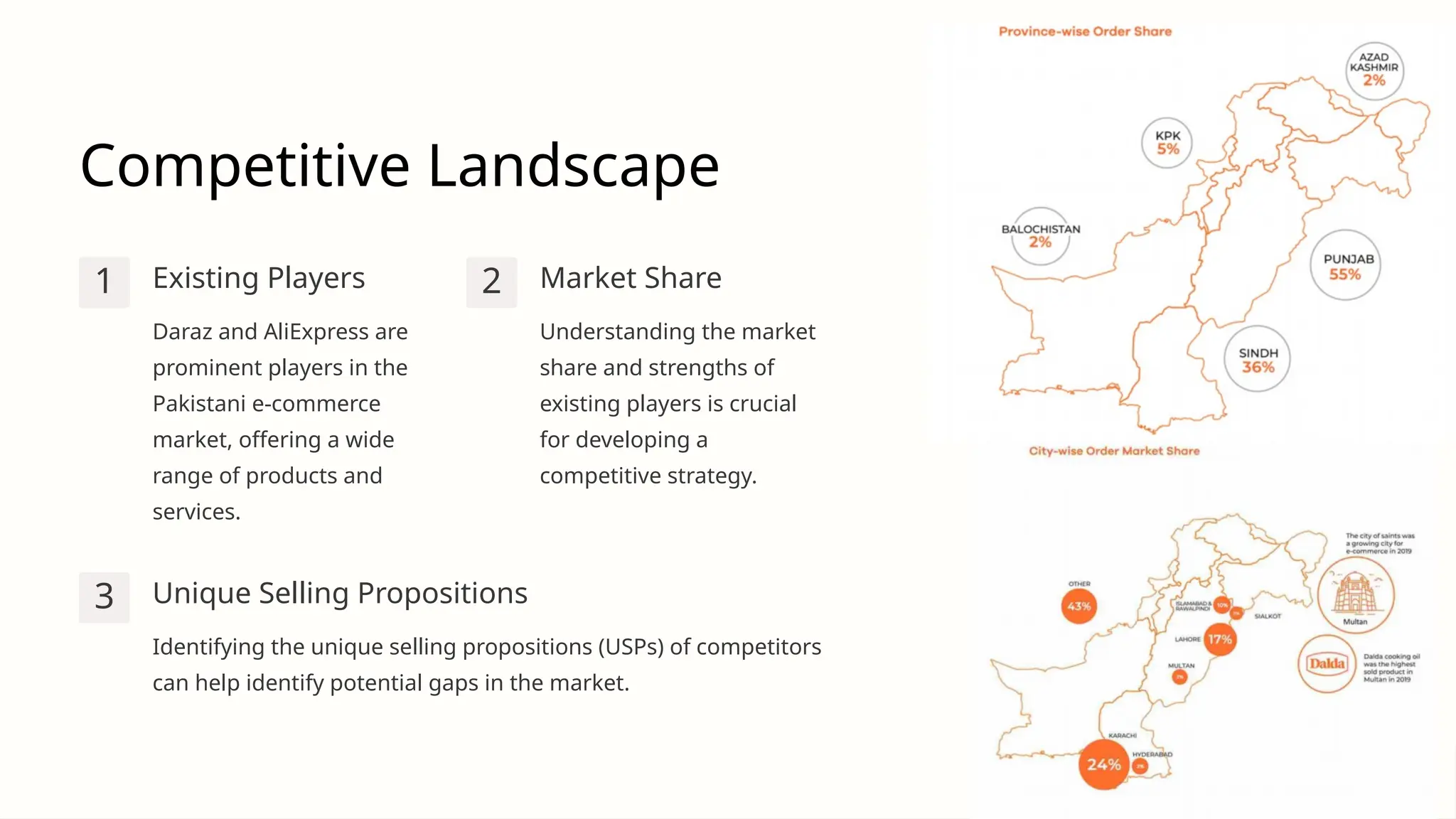
Daraz and AliExpress are
prominent players in the
Pakistani e-commerce
market, offering a wide
range of products and
services.
2 Market Share
Understanding the market
share and strengths of
existing players is crucial
for developing a
competitive strategy.
3 Unique Selling Propositions
Identifying the unique selling propositions (USPs) of competitors
can help identify potential gaps in the market.
5.
Market Landscape &Infrastructure
Demographic Studies
Identify target audience through demographic studies,
including age, income, location, and tech-savviness.
Understand cultural factors influencing purchasing
decisions.
Logistics & Infrastructure Assessment
Evaluate the logistics landscape, including shipping,
warehousing, and delivery. Investigate preferred payment
methods, such as cash on delivery versus digital payments.
6.
Navigating the Legal
Landscape
1Regulatory
Framework
Understand the regulatory
framework governing e-
commerce in Pakistan,
including taxes,
import/export regulations,
and consumer protection
laws.
2 Local Partnerships
Identify potential local
partners to facilitate market
entry and ensure
compliance with
regulations.
3 Key Regulatory Bodies
Key regulatory bodies include the SECP, FBR, SBP, Ministry of
Commerce, PTA, and CCP.
7.
Building a StrongEcosystem
Logistics Partners
Potential logistics partners
include courier companies like
TCS and Leopards, 3PLs like
Agility and DHL, and tech-driven
startups.
E-commerce & Technology
Partners
Potential partners include local
platforms like Daraz, payment
gateways like Easypaisa and
JazzCash, and tech providers
specializing in AI and cloud
computing.
Retail & Distribution Partners
Potential partners include large retail chains like Metro and Carrefour,
local distributors, and small and medium-sized enterprises (SMEs).
8.
Operational Readiness
1 TalentAcquisition &
Training
Recruit local talent and
invest in training programs
to build a skilled workforce.
2 Infrastructure
Development
Establish localized
fulfillment centers to
ensure efficient order
processing and delivery.
9.
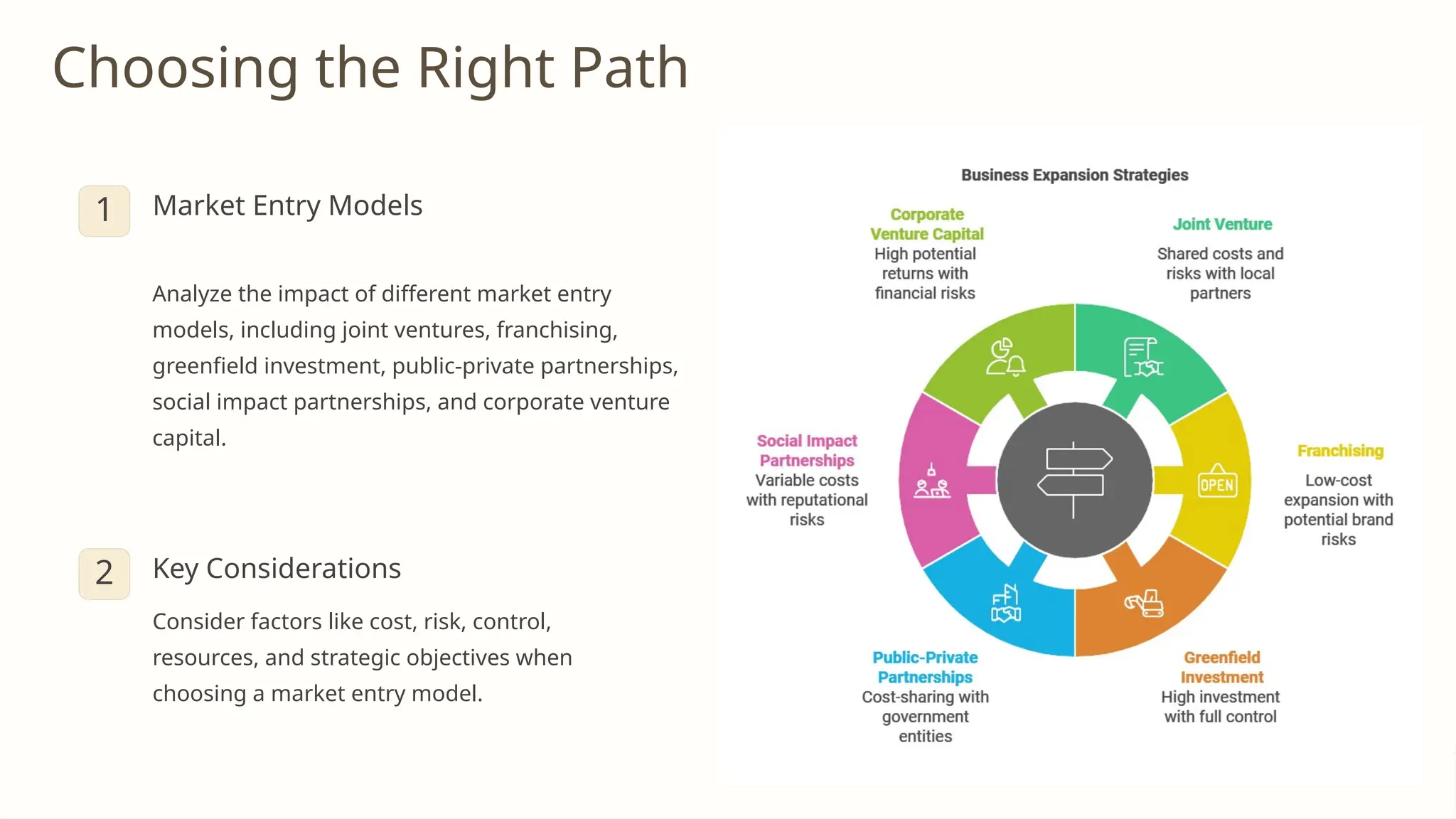
Choosing the RightPath
1 Market Entry Models
Analyze the impact of different market entry
models, including joint ventures, franchising,
greenfield investment, public-private partnerships,
social impact partnerships, and corporate venture
capital.
2 Key Considerations
Consider factors like cost, risk, control,
resources, and strategic objectives when
choosing a market entry model.
10.
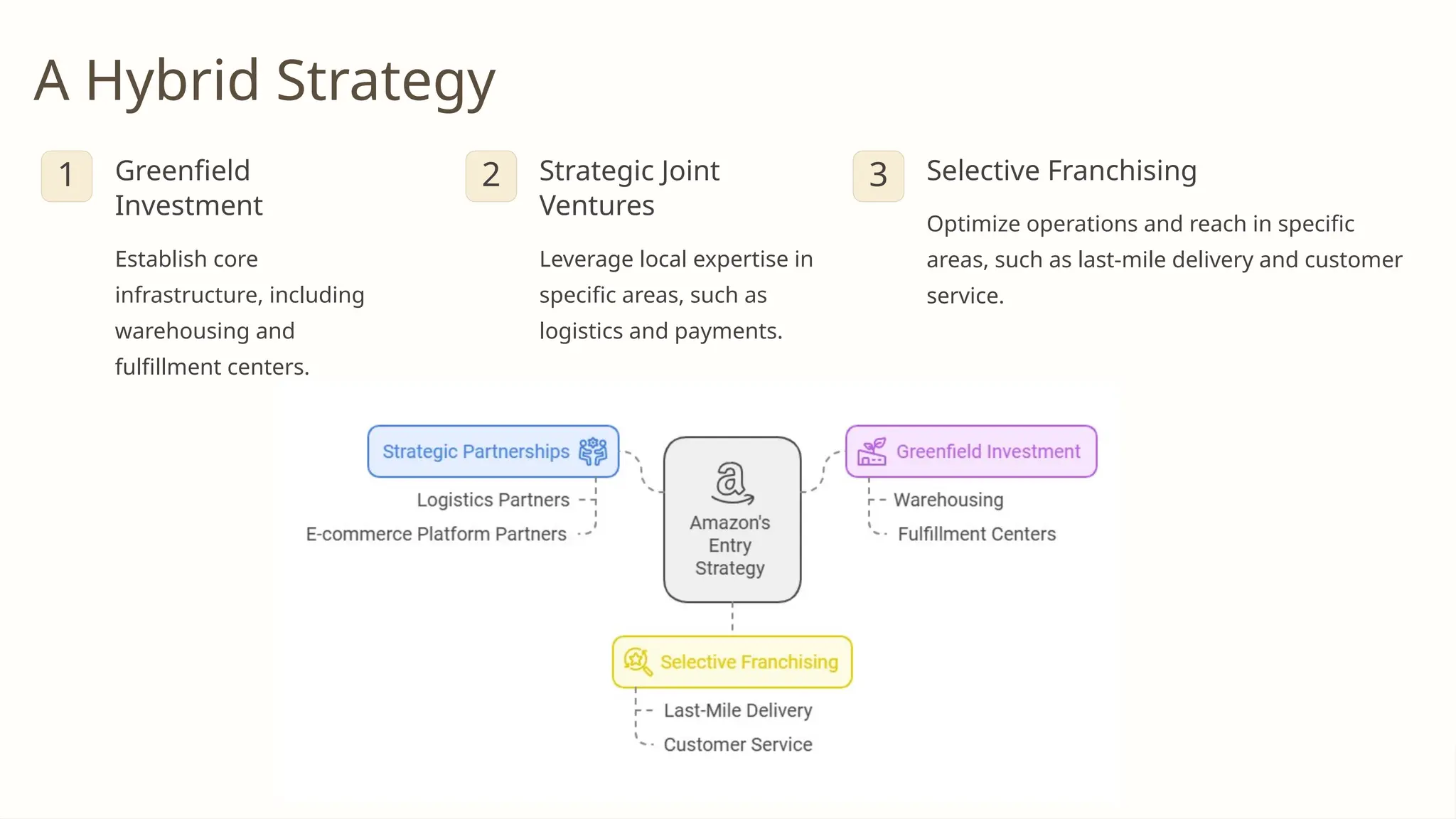
A Hybrid Strategy
1Greenfield
Investment
Establish core
infrastructure, including
warehousing and
fulfillment centers.
2 Strategic Joint
Ventures
Leverage local expertise in
specific areas, such as
logistics and payments.
3 Selective Franchising
Optimize operations and reach in specific
areas, such as last-mile delivery and customer
service.
Product & ServiceLocalization: Reaching the
Pakistani Consumer
Product Adaptation
Localized product offerings for Pakistani preferences
Urdu language support for all interfaces
Pakistani Rupees, Easypaisa, JazzCash for payments
Service Adaptation
Urdu-speaking customer support for local understanding
Efficient delivery services through local logistics partners
Flexible return and refund policy for local needs
13.
Marketing & Pricing:
BuildingCustomer Loyalty
1 Competitive Pricing
Balancing affordability with
profit margins
2 Promotional Offers
Attracting new customers
and driving sales
3 Loyalty Programs
Retaining existing
customers and fostering
brand loyalty
4 Localized Marketing
Urdu-language campaigns
engaging Pakistani
consumers
14.
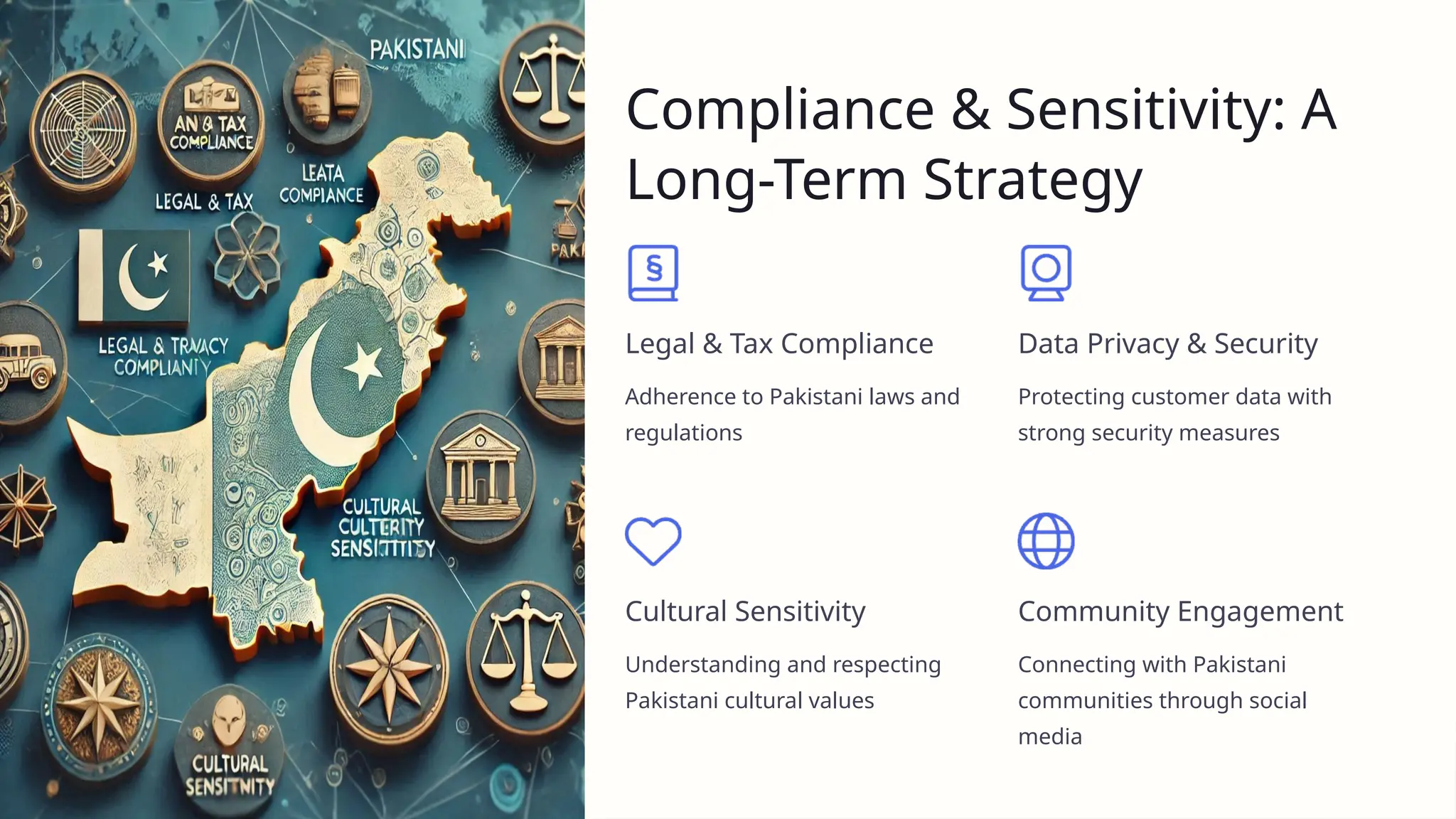
Compliance & Sensitivity:A
Long-Term Strategy
Legal & Tax Compliance
Adherence to Pakistani laws and
regulations
Data Privacy & Security
Protecting customer data with
strong security measures
Cultural Sensitivity
Understanding and respecting
Pakistani cultural values
Community Engagement
Connecting with Pakistani
communities through social
media
15.
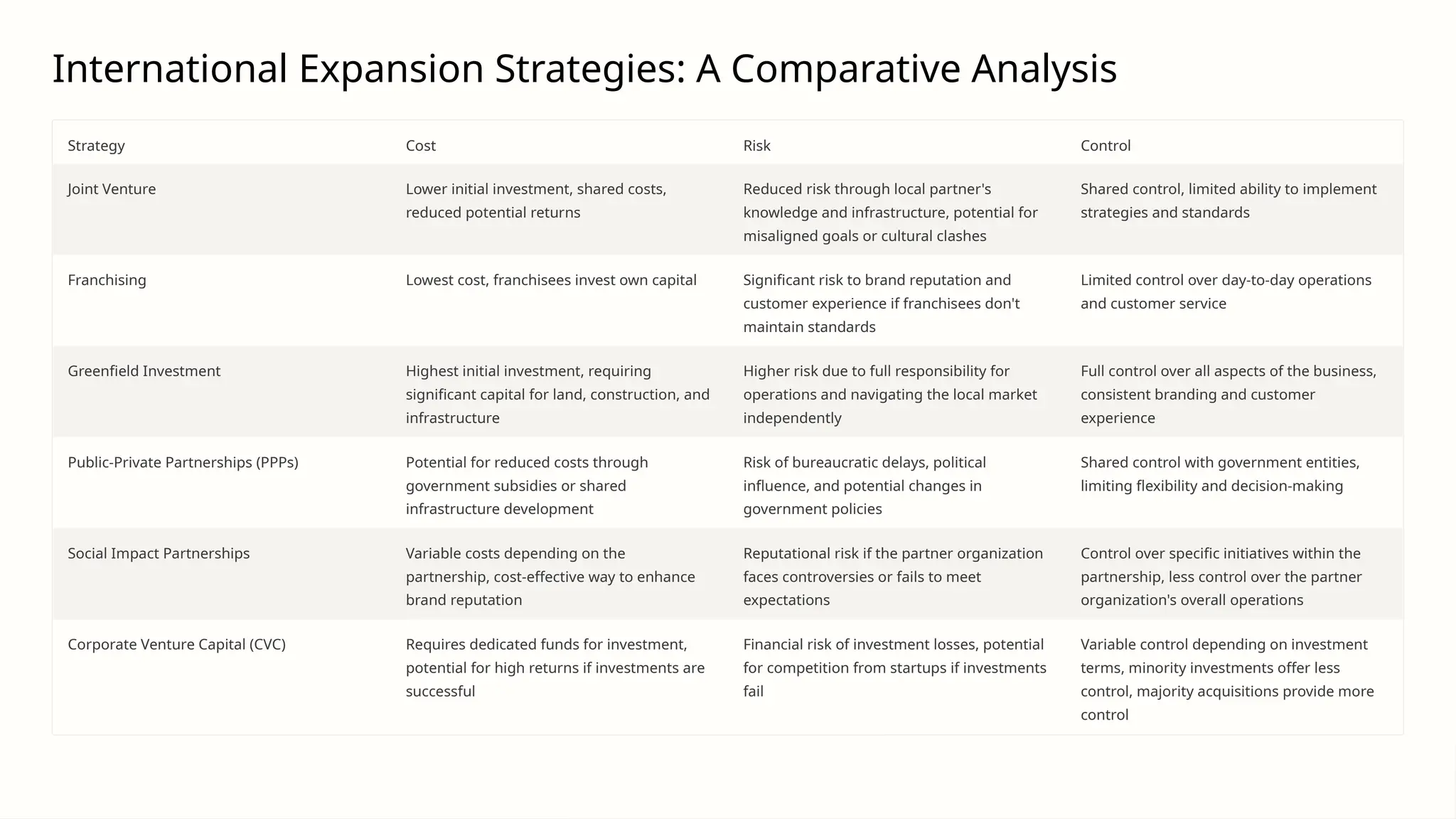
International Expansion Strategies:A Comparative Analysis
Strategy Cost Risk Control
Joint Venture Lower initial investment, shared costs,
reduced potential returns
Reduced risk through local partner's
knowledge and infrastructure, potential for
misaligned goals or cultural clashes
Shared control, limited ability to implement
strategies and standards
Franchising Lowest cost, franchisees invest own capital Significant risk to brand reputation and
customer experience if franchisees don't
maintain standards
Limited control over day-to-day operations
and customer service
Greenfield Investment Highest initial investment, requiring
significant capital for land, construction, and
infrastructure
Higher risk due to full responsibility for
operations and navigating the local market
independently
Full control over all aspects of the business,
consistent branding and customer
experience
Public-Private Partnerships (PPPs) Potential for reduced costs through
government subsidies or shared
infrastructure development
Risk of bureaucratic delays, political
influence, and potential changes in
government policies
Shared control with government entities,
limiting flexibility and decision-making
Social Impact Partnerships Variable costs depending on the
partnership, cost-effective way to enhance
brand reputation
Reputational risk if the partner organization
faces controversies or fails to meet
expectations
Control over specific initiatives within the
partnership, less control over the partner
organization's overall operations
Corporate Venture Capital (CVC) Requires dedicated funds for investment,
potential for high returns if investments are
successful
Financial risk of investment losses, potential
for competition from startups if investments
fail
Variable control depending on investment
terms, minority investments offer less
control, majority acquisitions provide more
control