AIRLINE RESERVATION SYSTEM
-Building Efficient Airline Management with
Java Presented by
-Sai Harika.P
INTRODUCTION:
Overview:
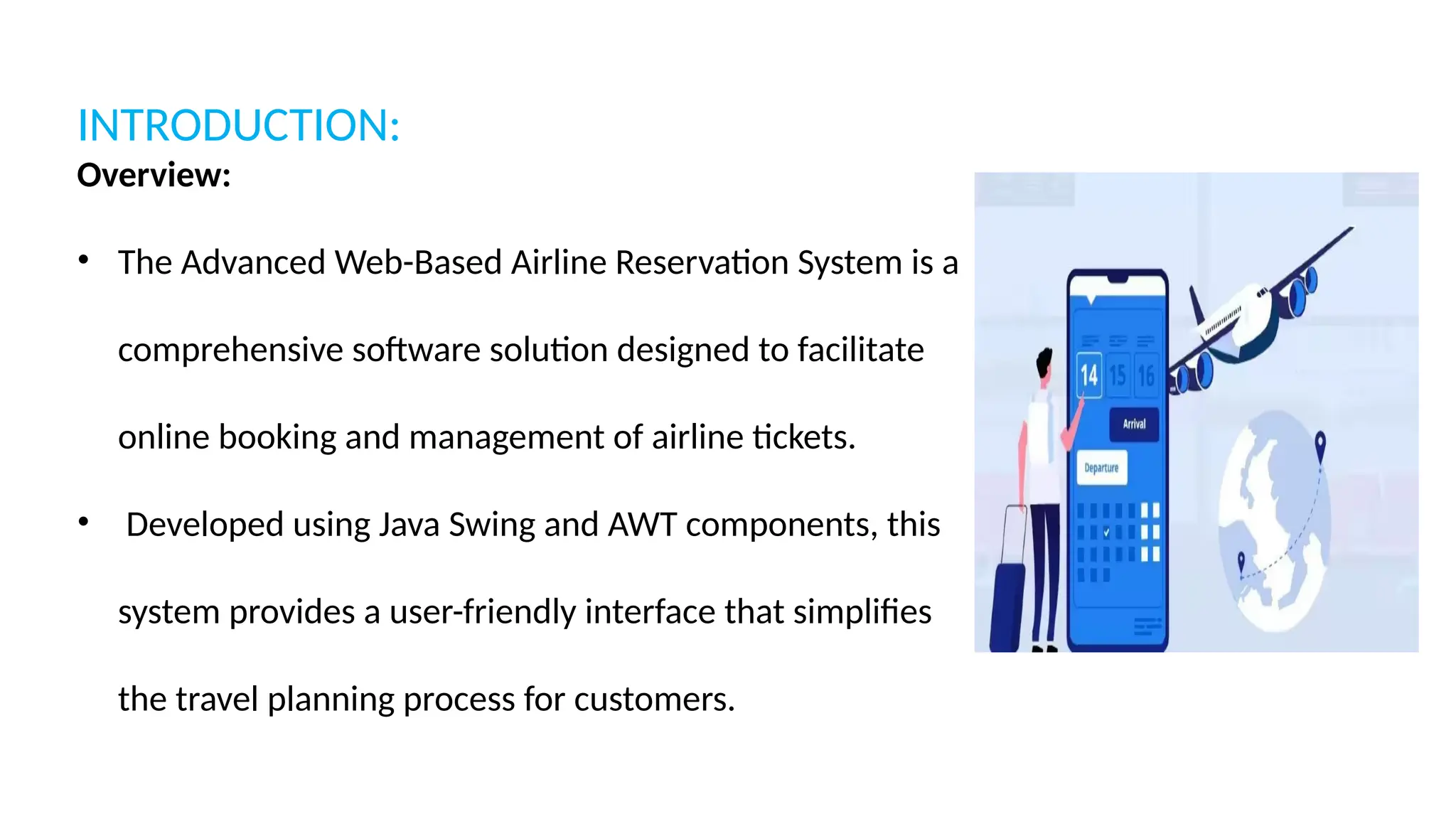
• The Advanced Web-Based Airline Reservation System is a
comprehensive software solution designed to facilitate
online booking and management of airline tickets.
• Developed using Java Swing and AWT components, this
system provides a user-friendly interface that simplifies
the travel planning process for customers.
Importance of Online Airline Reservation Systems:
• Convenience: Allows users to book tickets anytime, anywhere, reducing the need
for physical travel agencies.
• Efficiency: Streamlines the booking process, enabling users to search for flights,
select seats, and complete transactions quickly.
• Real-Time Updates: Provides up-to-date information on flight availability, pricing,
and schedules, enhancing user satisfaction.
• Admin Control: Empowers airlines with tools for managing flights and bookings,
resulting in better operational efficiency.
• Reporting Capabilities: Helps airlines analyze data and improve services based on
customer trends and behaviors.
PROJECT OBJECTIVES:
User-Friendly Platform:
• Develop an intuitive interface that simplifies the process of booking and
managing airline tickets for all users, including travelers and administrators.
Streamlined Booking Process:
• Enhance the efficiency of the booking experience by providing seamless
navigation, quick flight searches, and easy seat selection.
• Minimize the time and steps required to complete a booking, ensuring a hassle-
free experience.
Enhanced User Experience:
• Incorporate feedback mechanisms to continuously improve the system based on
user input, ensuring a high level of customer satisfaction.
Features:
Flight Search:
• Users can search for available flights by specifying departure and
arrival locations, travel dates, and passenger details.
Reporting:
• Generate insightful reports on bookings, revenue, and user activity
to help airlines make data-driven decisions.
Admin Controls:
• Comprehensive tools for administrators to manage flight schedules, monitor
bookings, and handle customer inquiries efficiently.
Booking Management:
• Users can view, modify, or cancel their bookings with ease, ensuring
flexibility in travel plans.
Web-Based Interface:
• A responsive and accessible web interface that ensures users can access the
system from any device without internet connectivity.
TECHNOLOGY STACK:
1. Java (Core and Swing/AWT):
The primary programming language used for
developing the application, leveraging Java Swing and
AWT for building a rich graphical user interface.
2. Integrated Development Environment (IDE):
Eclipse or IntelliJ IDEA: Used for efficient code development, debugging, and project
management, providing a robust environment for building the application.
3. Version Control:
Git: Utilized for version control to manage code changes and collaborate effectively with
team members.
Implementation:
1.Development Environment Setup:
• Configured the IDE (Eclipse/IntelliJ IDEA) with necessary libraries for Java Swing and
AWT.
• Established a local development environment with MySQL for database
management.
2. User Interface Development:
Designed the user interface using Java Swing and AWT components, focusing on:
• Navigation panels for easy access to features.
• Input forms for flight search and booking.
• Dynamic components for seat selection.
3.Testing:
• Conducted unit testing for individual components and integration
testing for overall functionality.
• Gathered user feedback during beta testing to identify and resolve
issues.
4. Deployment:
• Deployed the application on a web server for access by users and
administrators.
• Ensured the system is responsive and accessible across various devices.
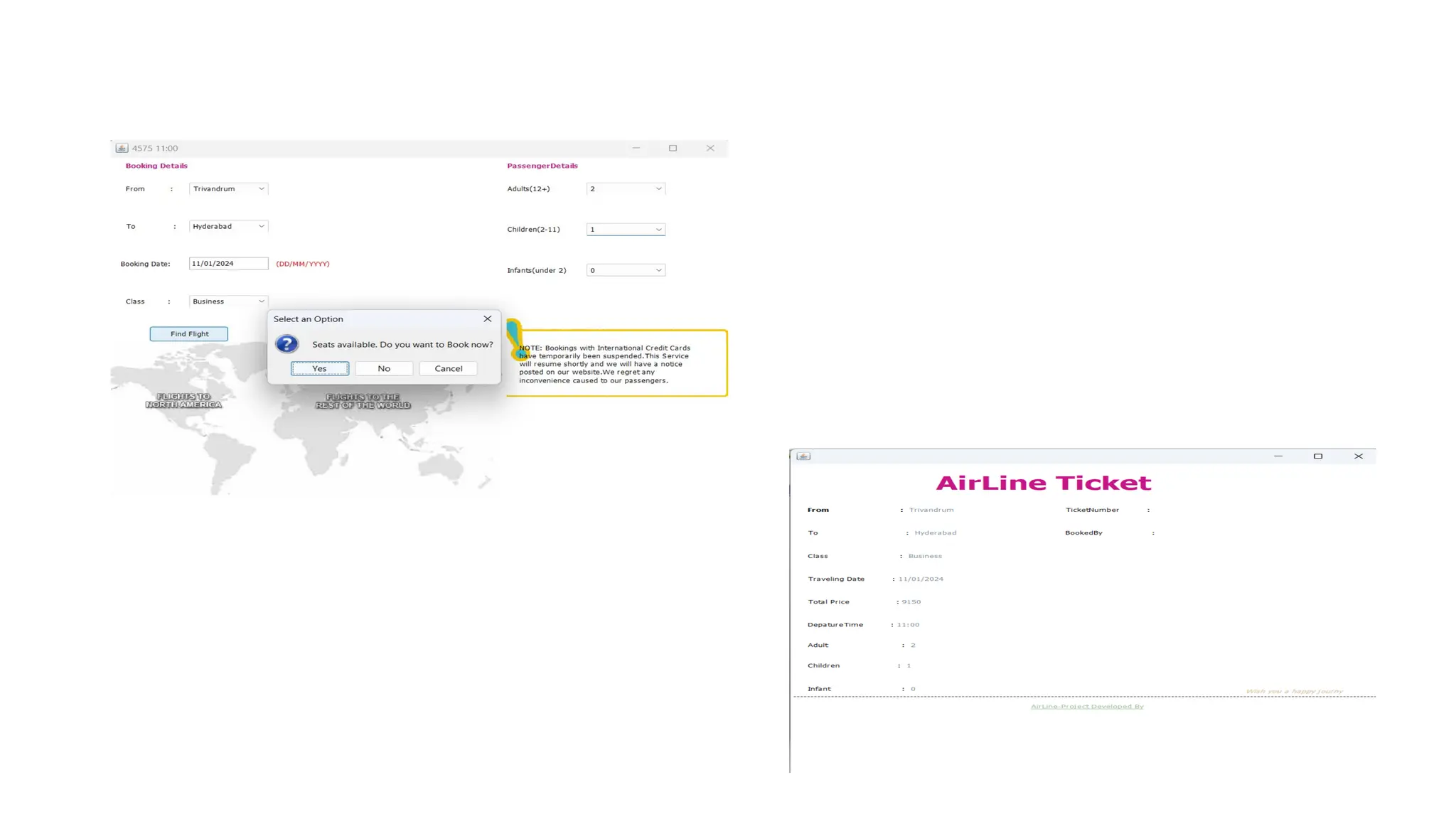
OUTPUT OF IMPLEMENTATION:
AIRLINE RESERVATION SYSTEM USING JAVA...

AIRLINE RESERVATION SYSTEM USING JAVA...

  • 1.
    AIRLINE RESERVATION SYSTEM -BuildingEfficient Airline Management with Java Presented by -Sai Harika.P
  • 2.
    INTRODUCTION: Overview: • The AdvancedWeb-Based Airline Reservation System is a comprehensive software solution designed to facilitate online booking and management of airline tickets. • Developed using Java Swing and AWT components, this system provides a user-friendly interface that simplifies the travel planning process for customers.
  • 3.
    Importance of OnlineAirline Reservation Systems: • Convenience: Allows users to book tickets anytime, anywhere, reducing the need for physical travel agencies. • Efficiency: Streamlines the booking process, enabling users to search for flights, select seats, and complete transactions quickly. • Real-Time Updates: Provides up-to-date information on flight availability, pricing, and schedules, enhancing user satisfaction. • Admin Control: Empowers airlines with tools for managing flights and bookings, resulting in better operational efficiency. • Reporting Capabilities: Helps airlines analyze data and improve services based on customer trends and behaviors.
  • 4.
    PROJECT OBJECTIVES: User-Friendly Platform: •Develop an intuitive interface that simplifies the process of booking and managing airline tickets for all users, including travelers and administrators. Streamlined Booking Process: • Enhance the efficiency of the booking experience by providing seamless navigation, quick flight searches, and easy seat selection. • Minimize the time and steps required to complete a booking, ensuring a hassle- free experience. Enhanced User Experience: • Incorporate feedback mechanisms to continuously improve the system based on user input, ensuring a high level of customer satisfaction.
  • 5.
    Features: Flight Search: • Userscan search for available flights by specifying departure and arrival locations, travel dates, and passenger details. Reporting: • Generate insightful reports on bookings, revenue, and user activity to help airlines make data-driven decisions. Admin Controls: • Comprehensive tools for administrators to manage flight schedules, monitor bookings, and handle customer inquiries efficiently. Booking Management: • Users can view, modify, or cancel their bookings with ease, ensuring flexibility in travel plans. Web-Based Interface: • A responsive and accessible web interface that ensures users can access the system from any device without internet connectivity.
  • 6.
    TECHNOLOGY STACK: 1. Java(Core and Swing/AWT): The primary programming language used for developing the application, leveraging Java Swing and AWT for building a rich graphical user interface. 2. Integrated Development Environment (IDE): Eclipse or IntelliJ IDEA: Used for efficient code development, debugging, and project management, providing a robust environment for building the application. 3. Version Control: Git: Utilized for version control to manage code changes and collaborate effectively with team members.
  • 7.
    Implementation: 1.Development Environment Setup: •Configured the IDE (Eclipse/IntelliJ IDEA) with necessary libraries for Java Swing and AWT. • Established a local development environment with MySQL for database management. 2. User Interface Development: Designed the user interface using Java Swing and AWT components, focusing on: • Navigation panels for easy access to features. • Input forms for flight search and booking. • Dynamic components for seat selection.
  • 8.
    3.Testing: • Conducted unittesting for individual components and integration testing for overall functionality. • Gathered user feedback during beta testing to identify and resolve issues. 4. Deployment: • Deployed the application on a web server for access by users and administrators. • Ensured the system is responsive and accessible across various devices.
  • 9.