https://blog.google/
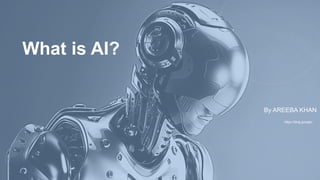
What is AI?
By AREEBA KHAN
Introduction of “AI”
Artificial intelligence AI is the ability of a computer or a
robot controlled by a computer to do tasks that are usually
done by humans because they require human intelligence
and discernment.
The term “artificial intelligence” was coined and came into
popular use. Dates of note: 1950: Alan Turing published
“Computer Machinery and Intelligence” which proposed a
test of machine intelligence called The Imitation Game .
For more
Types
Self awareness
Reactivemachine
Limited memory.
Theory of mind
AI
TYPE
Based
on
ability
Based
on
function
ality
ANI
AGI
ASI
AI Based on ability
• Narrow AI
Artificial narrow intelligence (ANI)
refers to the goal-oriented version
of AI designed to better perform a
single task.
• Super AI
It is a hypothetical form of AI that is not
yet possible to achieve.
• General AI
• The intention of an AGI system is to perform any
task that a human being is capable of. Related
information here.
Based on functionality
reactive machines
Reactive machines are AI systems that
have no memory and are task specific.
Theory of mind
Understand the needs of others
intelligent entities sophia is the best
example of it
Self awareness
Has human like intelligence and
self-awareness
Limited memory
Limited memory types refer to an A.I.'s
ability to store previous data and/or
predictions, using that data to make better
predictions
What is
machine
learning?
Machine
Learning
Machine learning focuses on developing
computer programs that can access data
and use it to learn for themselves.. IBM has
a rich history with machine learning.
Applications of AI
finance
government Auto
mobile
business
gaming
education
manufacturing
Health
care
Advantages and disadvantages
Advantages Disadvantages
• It can automate repetitive
tasks,
• improve efficiency,
• personalize experience
• Job replacement
• Ethical concern
• Security risk from hacking
more.
Robotics
What are the benefits of AI
robots for society?
Robots can offer increased productivity,
efficiency, quality, and consistency. Robots
can't get bored with their job. Until they
switch off, they can repeat the same task
continuously.
AI ppt .pptx

AI ppt .pptx

  • 1.
  • 2.
    Introduction of “AI” Artificialintelligence AI is the ability of a computer or a robot controlled by a computer to do tasks that are usually done by humans because they require human intelligence and discernment. The term “artificial intelligence” was coined and came into popular use. Dates of note: 1950: Alan Turing published “Computer Machinery and Intelligence” which proposed a test of machine intelligence called The Imitation Game . For more
  • 3.
    Types Self awareness Reactivemachine Limited memory. Theoryof mind AI TYPE Based on ability Based on function ality ANI AGI ASI
  • 4.
    AI Based onability • Narrow AI Artificial narrow intelligence (ANI) refers to the goal-oriented version of AI designed to better perform a single task. • Super AI It is a hypothetical form of AI that is not yet possible to achieve. • General AI • The intention of an AGI system is to perform any task that a human being is capable of. Related information here.
  • 5.
    Based on functionality reactivemachines Reactive machines are AI systems that have no memory and are task specific. Theory of mind Understand the needs of others intelligent entities sophia is the best example of it Self awareness Has human like intelligence and self-awareness Limited memory Limited memory types refer to an A.I.'s ability to store previous data and/or predictions, using that data to make better predictions
  • 6.
    What is machine learning? Machine Learning Machine learningfocuses on developing computer programs that can access data and use it to learn for themselves.. IBM has a rich history with machine learning.
  • 7.
    Applications of AI finance governmentAuto mobile business gaming education manufacturing Health care
  • 8.
    Advantages and disadvantages AdvantagesDisadvantages • It can automate repetitive tasks, • improve efficiency, • personalize experience • Job replacement • Ethical concern • Security risk from hacking more.
  • 9.
    Robotics What are thebenefits of AI robots for society? Robots can offer increased productivity, efficiency, quality, and consistency. Robots can't get bored with their job. Until they switch off, they can repeat the same task continuously.