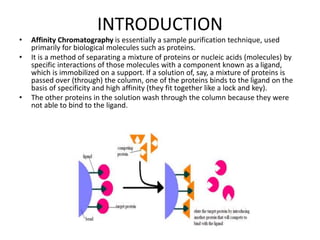
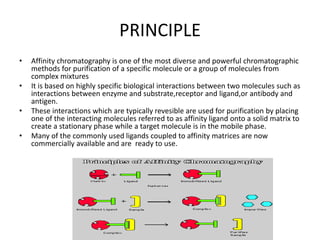
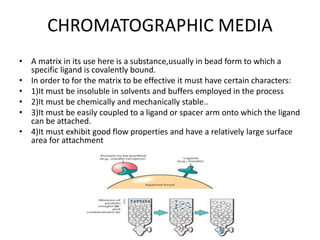
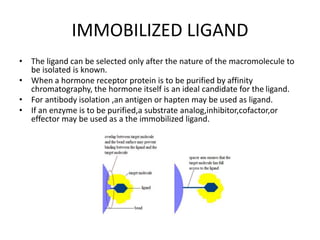
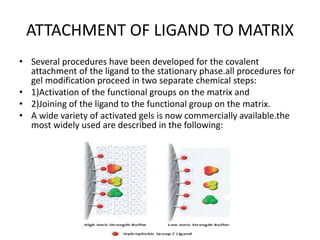
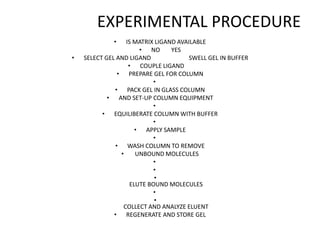
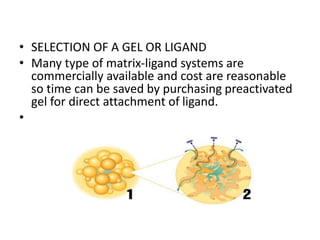
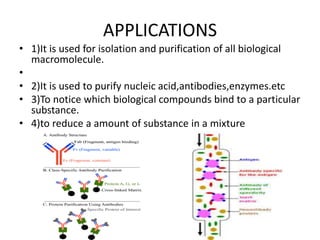
Affinity chromatography is a method used to separate biological molecules like proteins and nucleic acids. It works by immobilizing a ligand with specific affinity for the target molecule on a chromatographic matrix or support. When a sample containing the target molecule is passed through the column, the target molecule will selectively bind to the ligand due to affinity interactions, while other molecules pass through. The target molecule can then be eluted from the column by changing buffer conditions in a process called affinity elution. Common applications of affinity chromatography include purifying enzymes, antibodies, and nucleic acids.