Scales of
Measurement
Understanding the Different Types and Their Applications
Introduction
This presentation explores the various scales of
measurement, their applications, and significance in
research and data analysis.
Types
01
Nominal Scale
The nominal scale is the simplest form of
measurement, classifying data into distinct
categories without any order. Examples include
gender, race, and colors. Data can be counted but
not ordered mathematically.
Ordinal Scale
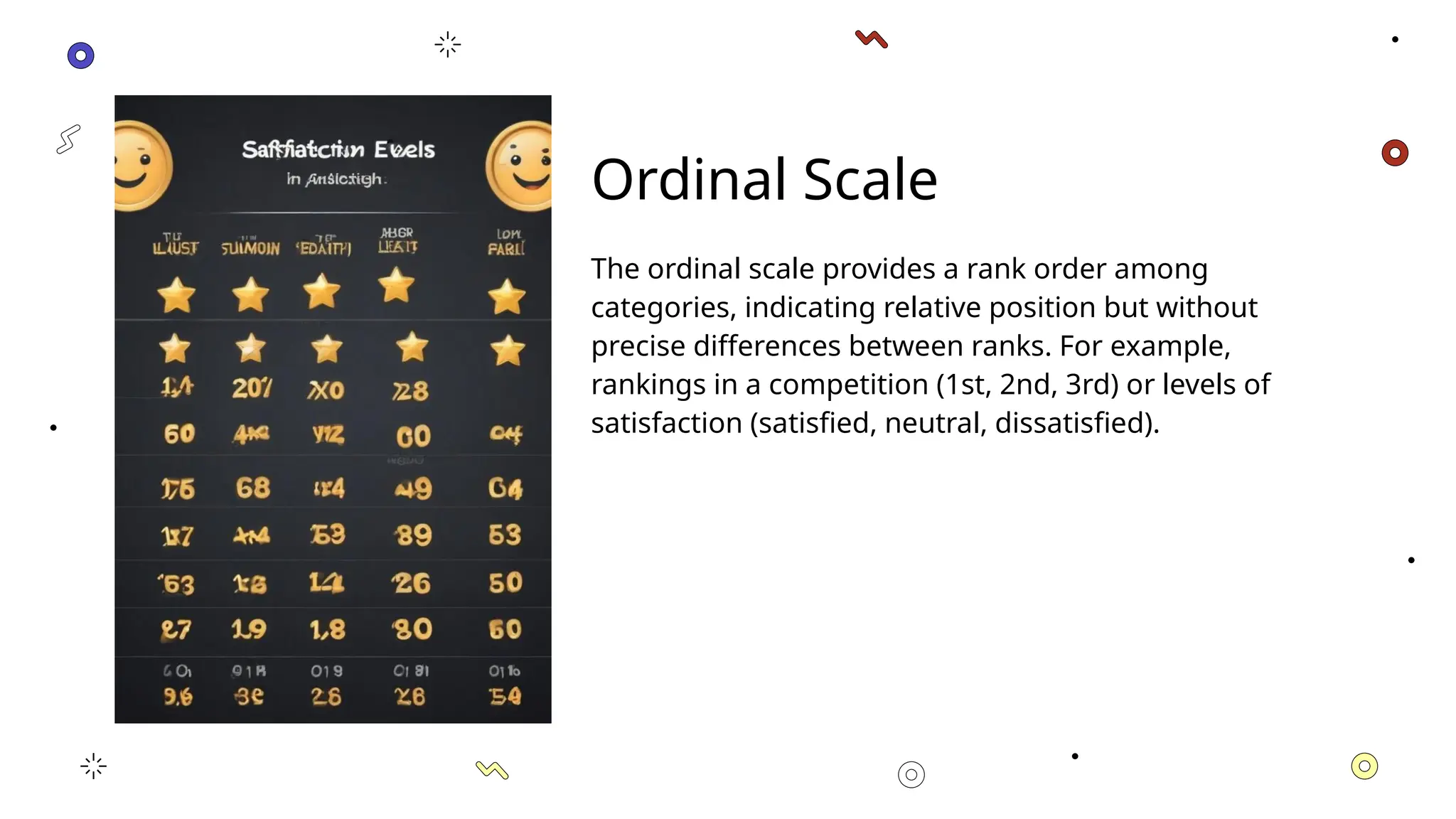
The ordinal scale provides a rank order among
categories, indicating relative position but without
precise differences between ranks. For example,
rankings in a competition (1st, 2nd, 3rd) or levels of
satisfaction (satisfied, neutral, dissatisfied).
Interval Scale
The interval scale measures variables where the
difference between values is meaningful. It has no
true zero point. A common example is temperature
in Celsius, where the difference matters but '0' does
not mean 'no temperature'.
Ratio Scale
The ratio scale is the highest level of measurement,
possessing all the properties of the interval scale,
with a true zero point. It enables meaningful
comparisons of ratios. Examples include weight,
height, and age, where '0' indicates absence of the
quantity.
Applications
02
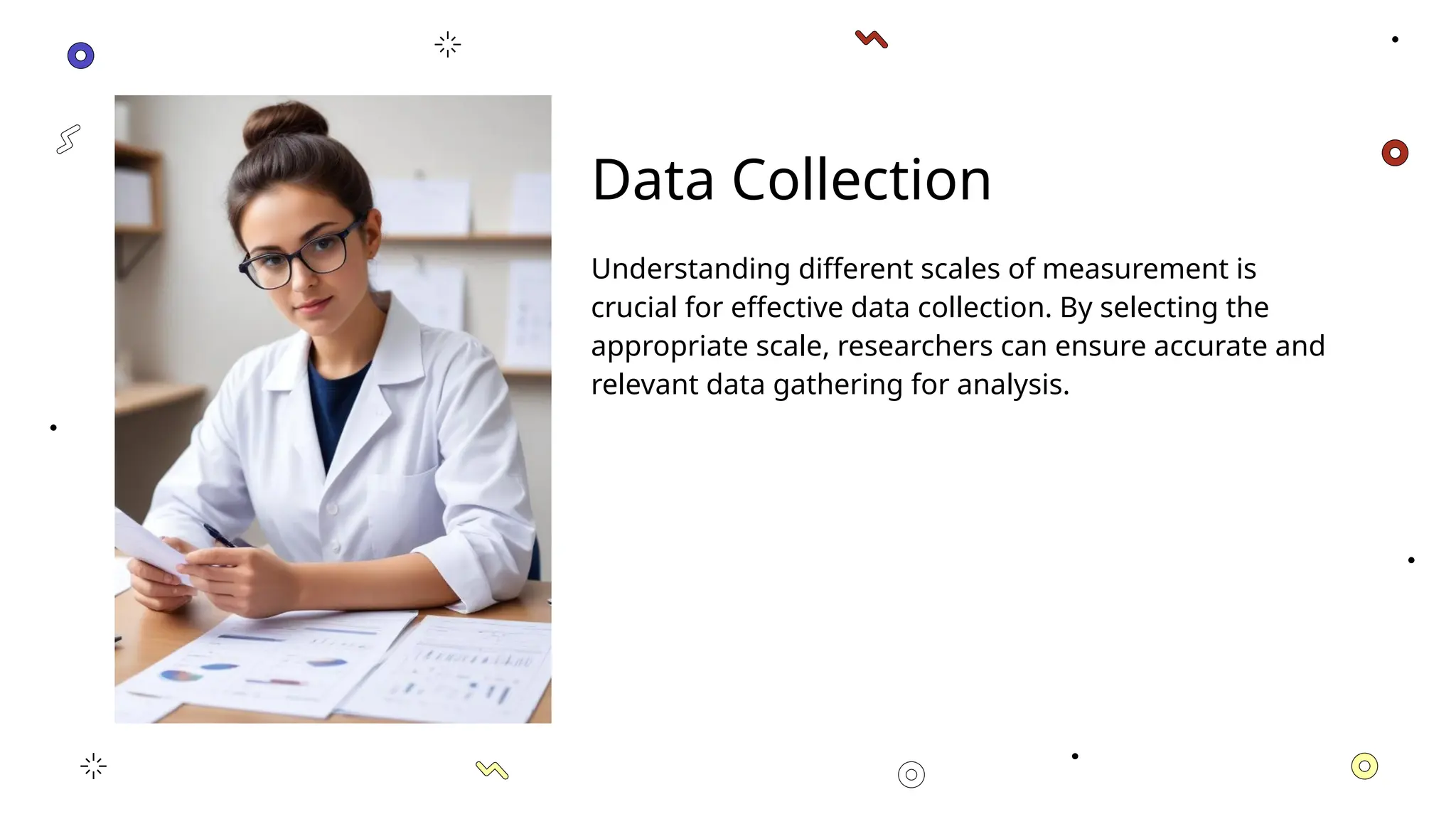
Data Collection
Understanding different scales of measurement is
crucial for effective data collection. By selecting the
appropriate scale, researchers can ensure accurate and
relevant data gathering for analysis.
Statistical Analysis
Different scales of measurement dictate the
statistical methods used for analysis. For example,
nominal data can be analyzed using frequency
counts, while interval or ratio data can utilize mean,
median, and more complex statistical techniques.
Survey Design
Effective survey design involves understanding the
appropriate scale of measurement to use based on
the type of data desired. This affects the clarity and
reliability of the responses gathered.
Examples
03
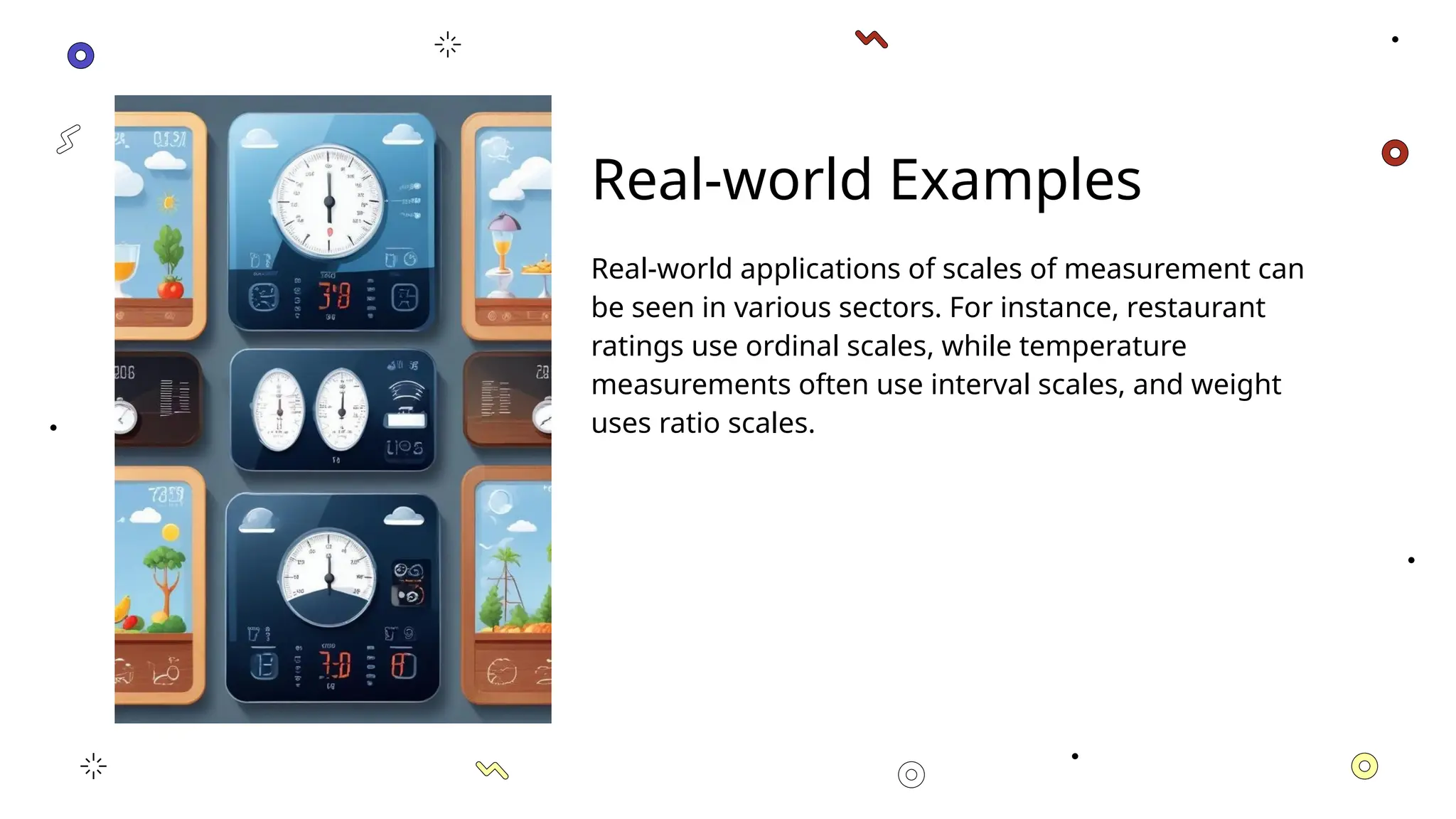
Real-world Examples
Real-world applications of scales of measurement can
be seen in various sectors. For instance, restaurant
ratings use ordinal scales, while temperature
measurements often use interval scales, and weight
uses ratio scales.
Case Studies
Case studies illustrate practical applications of
measurement scales. For example, a case study on
social media surveys may show how nominal scales
classify user demographics, while a health study
measures outcomes using ratio scales for weight and
BMI.
Common Mistakes
Common mistakes in measurement include using
the wrong scale, leading to invalid conclusions. For
instance, applying parametric tests on nominal data
or misinterpreting average scores from ordinal data
can skew results.
Significance
04
Impact on Research
The choice of measurement scale directly influences
research outcomes. A clear understanding of scales
allows for better data interpretation and more reliable
conclusions.
Influence on Results
Different scales yield different types of results and
insights. For example, ratio and interval data allow
for a wider range of statistical analysis compared to
nominal and ordinal data, affecting overall findings.
Understanding Measurement
Understanding measurement scales cultivates critical
thinking in data analysis, helping researchers to
select the appropriate techniques that align with
their research goals and enhance the accuracy of
results.
Conclusions
In conclusion, recognizing the different scales of
measurement and their applications is essential for
robust research design, accurate data collection, and
meaningful analysis. A firm grasp of these concepts
leads to more informed decisions and reliable
research outcomes.
CREDITS: This presentation template was created by Slidesgo,
and includes icons, infographics & images by Freepik
Thank you!
Do you have any questions?

Adobe Photoshop 2025 v26.4.1 for MacOS Free

  • 1.
    Scales of Measurement Understanding theDifferent Types and Their Applications
  • 2.
    Introduction This presentation exploresthe various scales of measurement, their applications, and significance in research and data analysis.
  • 3.
  • 4.
    Nominal Scale The nominalscale is the simplest form of measurement, classifying data into distinct categories without any order. Examples include gender, race, and colors. Data can be counted but not ordered mathematically.
  • 5.
    Ordinal Scale The ordinalscale provides a rank order among categories, indicating relative position but without precise differences between ranks. For example, rankings in a competition (1st, 2nd, 3rd) or levels of satisfaction (satisfied, neutral, dissatisfied).
  • 6.
    Interval Scale The intervalscale measures variables where the difference between values is meaningful. It has no true zero point. A common example is temperature in Celsius, where the difference matters but '0' does not mean 'no temperature'.
  • 7.
    Ratio Scale The ratioscale is the highest level of measurement, possessing all the properties of the interval scale, with a true zero point. It enables meaningful comparisons of ratios. Examples include weight, height, and age, where '0' indicates absence of the quantity.
  • 8.
  • 9.
    Data Collection Understanding differentscales of measurement is crucial for effective data collection. By selecting the appropriate scale, researchers can ensure accurate and relevant data gathering for analysis.
  • 10.
    Statistical Analysis Different scalesof measurement dictate the statistical methods used for analysis. For example, nominal data can be analyzed using frequency counts, while interval or ratio data can utilize mean, median, and more complex statistical techniques.
  • 11.
    Survey Design Effective surveydesign involves understanding the appropriate scale of measurement to use based on the type of data desired. This affects the clarity and reliability of the responses gathered.
  • 12.
  • 13.
    Real-world Examples Real-world applicationsof scales of measurement can be seen in various sectors. For instance, restaurant ratings use ordinal scales, while temperature measurements often use interval scales, and weight uses ratio scales.
  • 14.
    Case Studies Case studiesillustrate practical applications of measurement scales. For example, a case study on social media surveys may show how nominal scales classify user demographics, while a health study measures outcomes using ratio scales for weight and BMI.
  • 15.
    Common Mistakes Common mistakesin measurement include using the wrong scale, leading to invalid conclusions. For instance, applying parametric tests on nominal data or misinterpreting average scores from ordinal data can skew results.
  • 16.
  • 17.
    Impact on Research Thechoice of measurement scale directly influences research outcomes. A clear understanding of scales allows for better data interpretation and more reliable conclusions.
  • 18.
    Influence on Results Differentscales yield different types of results and insights. For example, ratio and interval data allow for a wider range of statistical analysis compared to nominal and ordinal data, affecting overall findings.
  • 19.
    Understanding Measurement Understanding measurementscales cultivates critical thinking in data analysis, helping researchers to select the appropriate techniques that align with their research goals and enhance the accuracy of results.
  • 20.
    Conclusions In conclusion, recognizingthe different scales of measurement and their applications is essential for robust research design, accurate data collection, and meaningful analysis. A firm grasp of these concepts leads to more informed decisions and reliable research outcomes.
  • 21.
    CREDITS: This presentationtemplate was created by Slidesgo, and includes icons, infographics & images by Freepik Thank you! Do you have any questions?