A D D I E M O D E L
GROUP 2
T H E B A C K G R O U D
• ADDIE is an Instructional Systems Design (ISD) framework.
• Developed in year 1975 at Florida State University for the purposes
of developing training (army) that was selected by Armed Services.
• The United States Military faced the need to train large number of
people to perform complex technical task. (the uses of ADDIE
MODEL).
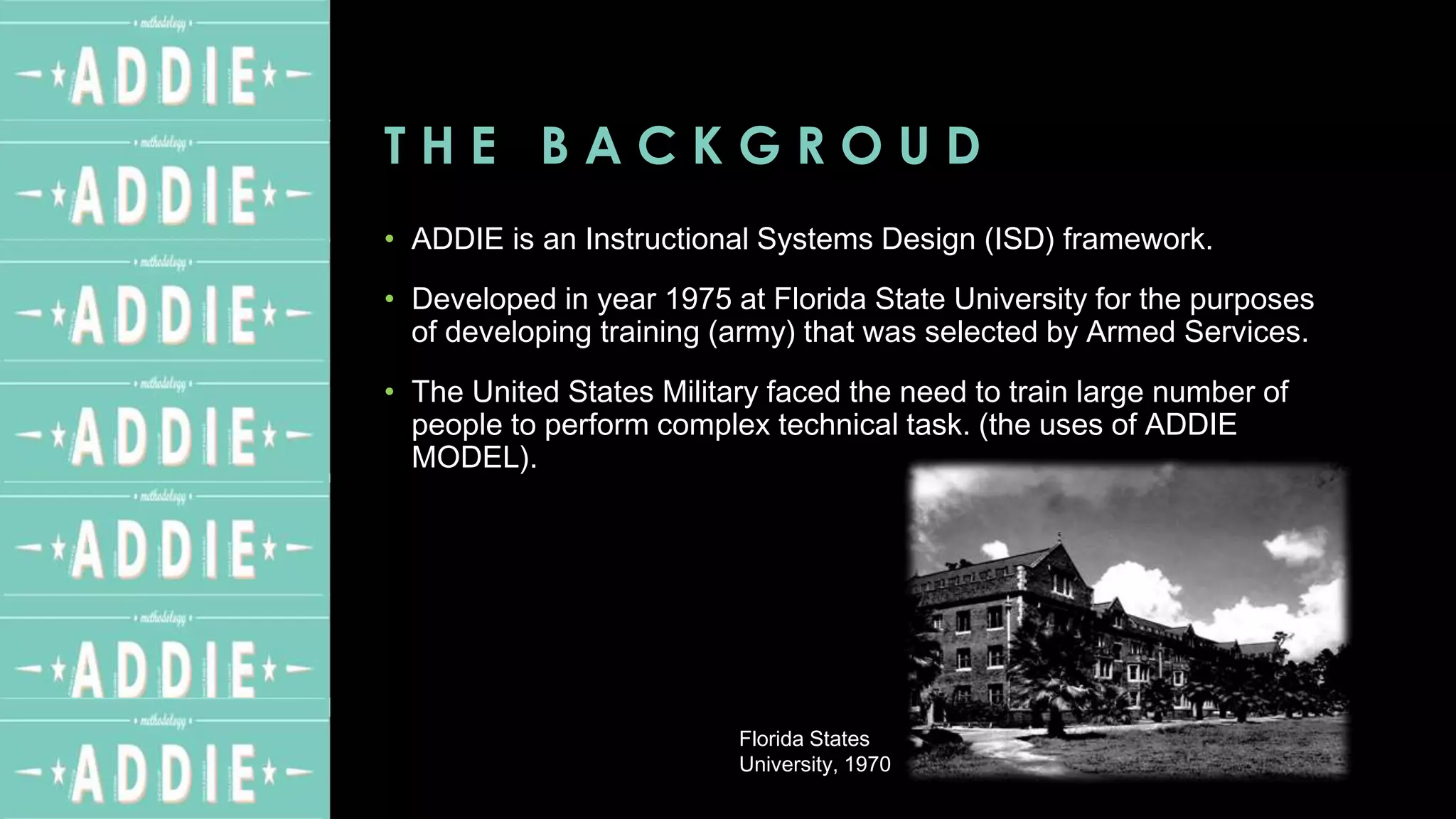
Florida States
University, 1970
D E F I N I T I O N
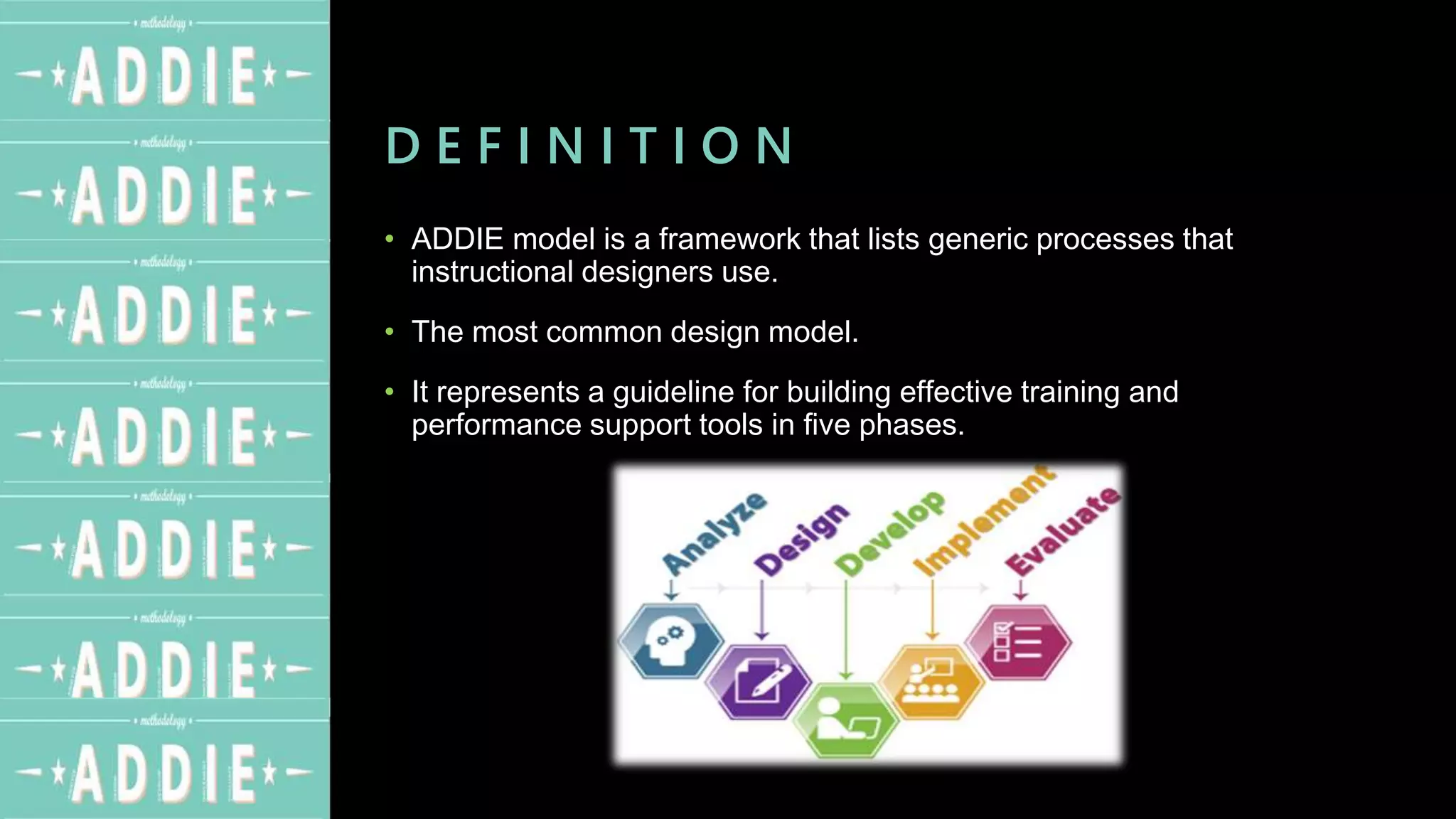
• ADDIE model is a framework that lists generic processes that
instructional designers use.
• The most common design model.
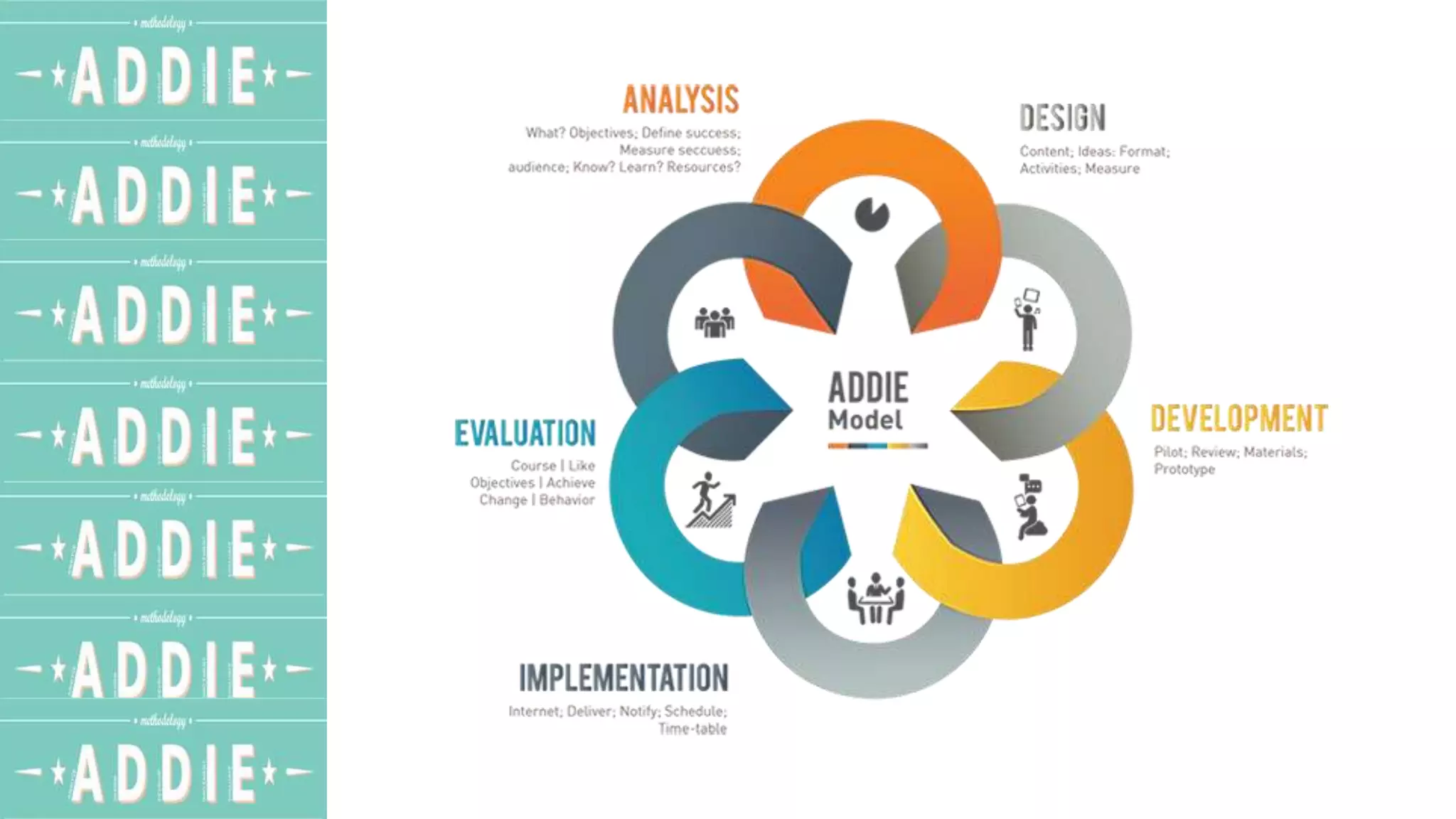
• It represents a guideline for building effective training and
performance support tools in five phases.
A N A L Y S I S P H A S E
Instructional problem is clarified, the instructional goals and objectives are
established..
• Learning environment and learner's existing knowledge and skills are
identified.
• Some of the questions that are addressed during the analysis phase:
• * Who is the audience and their characteristics?
• * Identify the new behavioral outcome?
• * What types of learning constraints exist?
D E S I G N P H A S E
• The design phase deals with learning objectives, assessment instruments,
exercises, content, subject matter analysis, lesson planning and media
selection.
• Systematic (logical) and specific (element should be executed).
• These are steps used for the design phase:
• * Documentation of the project's instructional, visual and technical design
strategy.
• * Apply instructional strategies according to the intended behavioral
outcomes
• * Create storyboards
• * Design the user interface and user experience
• * Apply visual design (graphic design)
D E V E L O P M E N T P H A S E
• Developers create and assemble the content assets that were
created in the design phase.
• Eg: Programmers work to develop and/integrate technologies.
Testers perform renovating procedures. The project is reviewed and
revised according to any feedback given.
I M P L E M E N T A T I O N P H A S E
• A procedure for training the facilitators and the learners is
developed.
• The facilitators' training should cover the course curriculum, learning
outcomes, method of delivery, and testing procedures.
• Preparation of the learners include training them on new tools
(software or hardware).
E V A L U A T I O N P H A S E
• Consists of two parts: formative and summative.
• Formative evaluation is present in each stage of the ADDIE process.
• Summative evaluation consists of tests designed for domain specific
criterion-related referenced items and providing opportunities for
feedback from the users.

Addie Model

  • 1.
    A D DI E M O D E L GROUP 2
  • 2.
    T H EB A C K G R O U D • ADDIE is an Instructional Systems Design (ISD) framework. • Developed in year 1975 at Florida State University for the purposes of developing training (army) that was selected by Armed Services. • The United States Military faced the need to train large number of people to perform complex technical task. (the uses of ADDIE MODEL). Florida States University, 1970
  • 3.
    D E FI N I T I O N • ADDIE model is a framework that lists generic processes that instructional designers use. • The most common design model. • It represents a guideline for building effective training and performance support tools in five phases.
  • 5.
    A N AL Y S I S P H A S E Instructional problem is clarified, the instructional goals and objectives are established.. • Learning environment and learner's existing knowledge and skills are identified. • Some of the questions that are addressed during the analysis phase: • * Who is the audience and their characteristics? • * Identify the new behavioral outcome? • * What types of learning constraints exist?
  • 6.
    D E SI G N P H A S E • The design phase deals with learning objectives, assessment instruments, exercises, content, subject matter analysis, lesson planning and media selection. • Systematic (logical) and specific (element should be executed). • These are steps used for the design phase: • * Documentation of the project's instructional, visual and technical design strategy. • * Apply instructional strategies according to the intended behavioral outcomes • * Create storyboards • * Design the user interface and user experience • * Apply visual design (graphic design)
  • 7.
    D E VE L O P M E N T P H A S E • Developers create and assemble the content assets that were created in the design phase. • Eg: Programmers work to develop and/integrate technologies. Testers perform renovating procedures. The project is reviewed and revised according to any feedback given.
  • 8.
    I M PL E M E N T A T I O N P H A S E • A procedure for training the facilitators and the learners is developed. • The facilitators' training should cover the course curriculum, learning outcomes, method of delivery, and testing procedures. • Preparation of the learners include training them on new tools (software or hardware).
  • 9.
    E V AL U A T I O N P H A S E • Consists of two parts: formative and summative. • Formative evaluation is present in each stage of the ADDIE process. • Summative evaluation consists of tests designed for domain specific criterion-related referenced items and providing opportunities for feedback from the users.