
Active and 
Passive voice
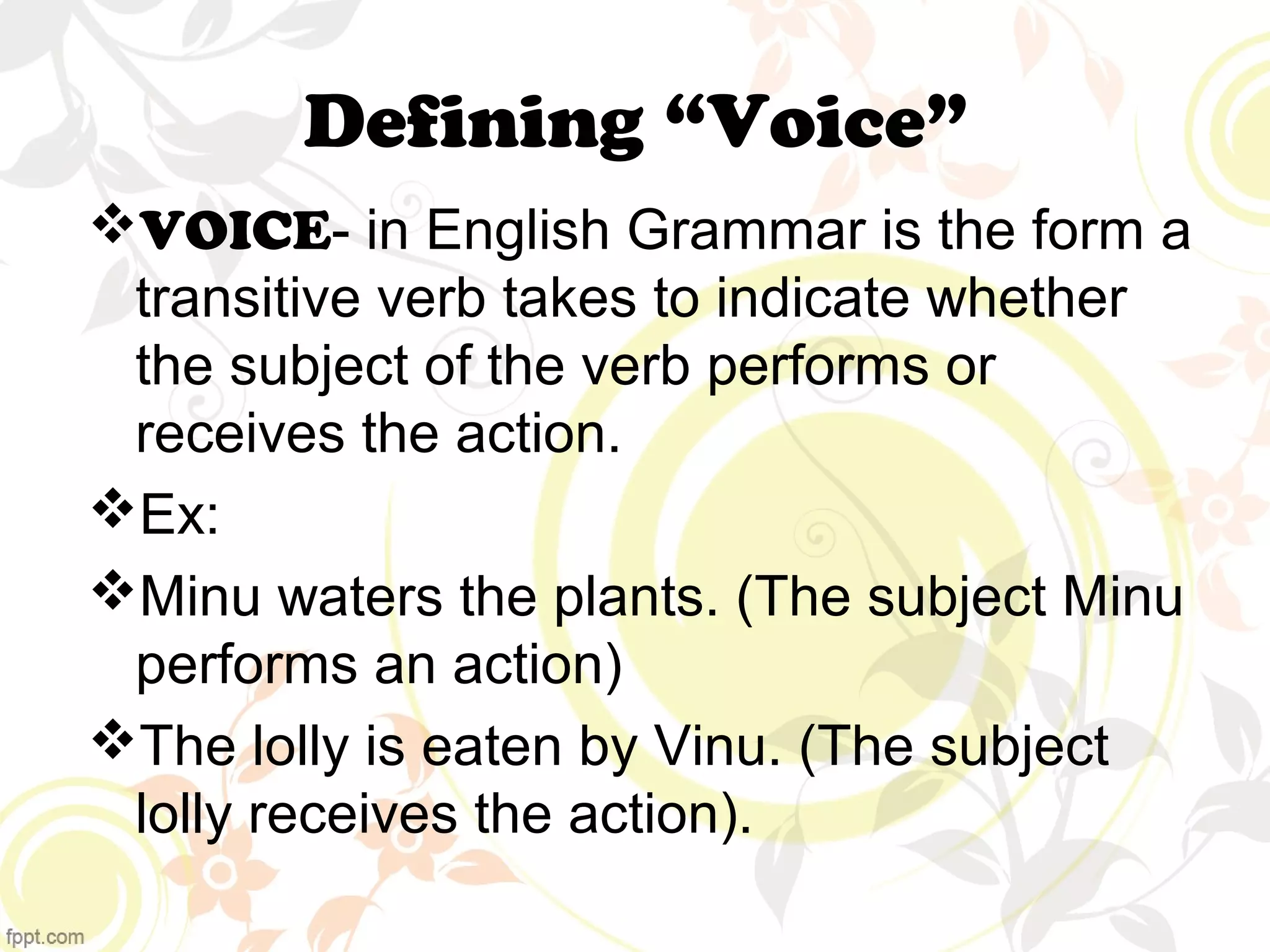
Defining “Voice” 
VOICE- in English Grammar is the form a 
transitive verb takes to indicate whether 
the subject of the verb performs or 
receives the action. 
Ex: 
Minu waters the plants. (The subject Minu 
performs an action) 
The lolly is eaten by Vinu. (The subject 
lolly receives the action).
There are Two Types of 
Voice 
Active 
Passive
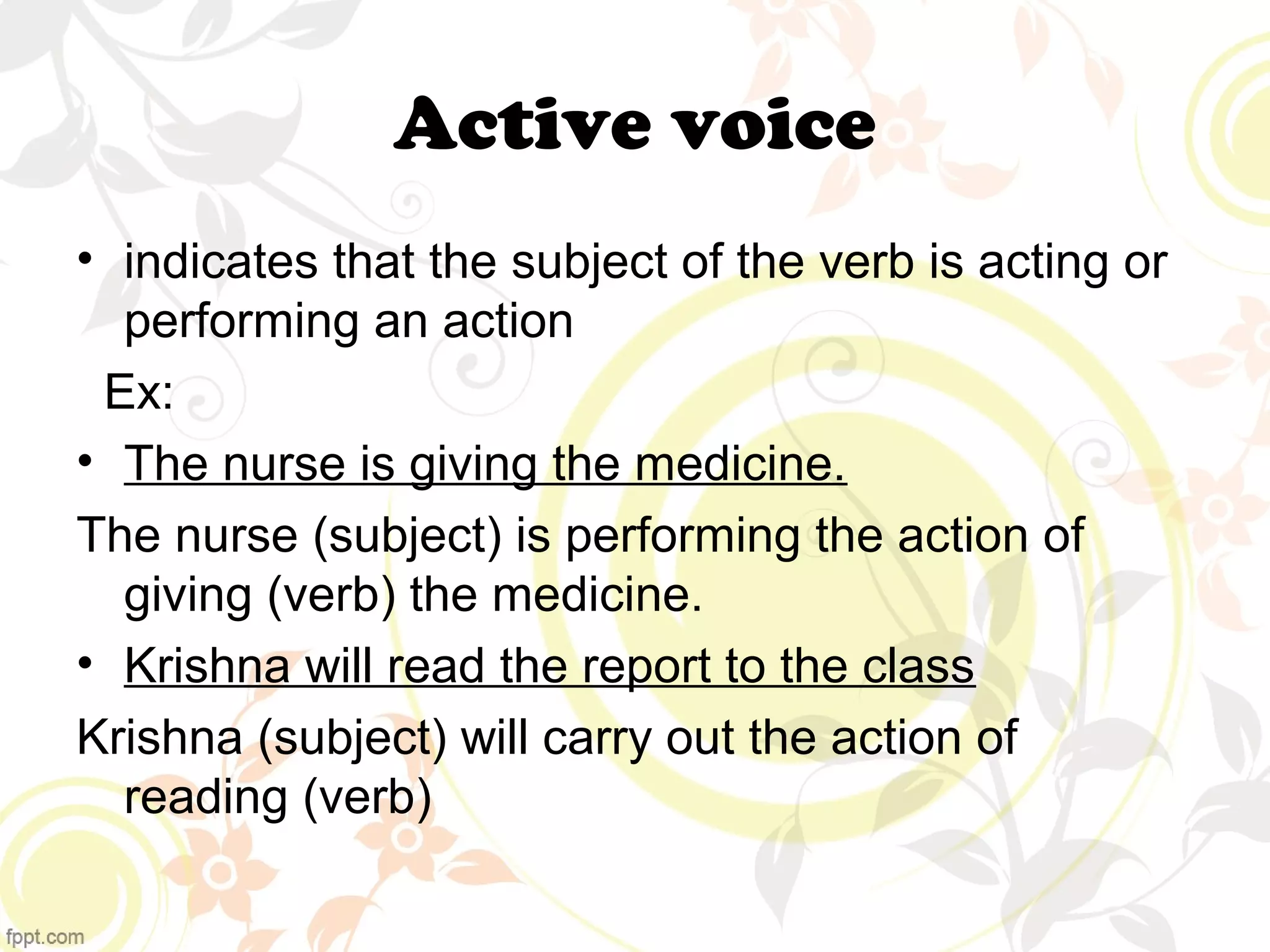
Active voice 
• indicates that the subject of the verb is acting or 
performing an action 
Ex: 
• The nurse is giving the medicine. 
The nurse (subject) is performing the action of 
giving (verb) the medicine. 
• Krishna will read the report to the class 
Krishna (subject) will carry out the action of 
reading (verb)
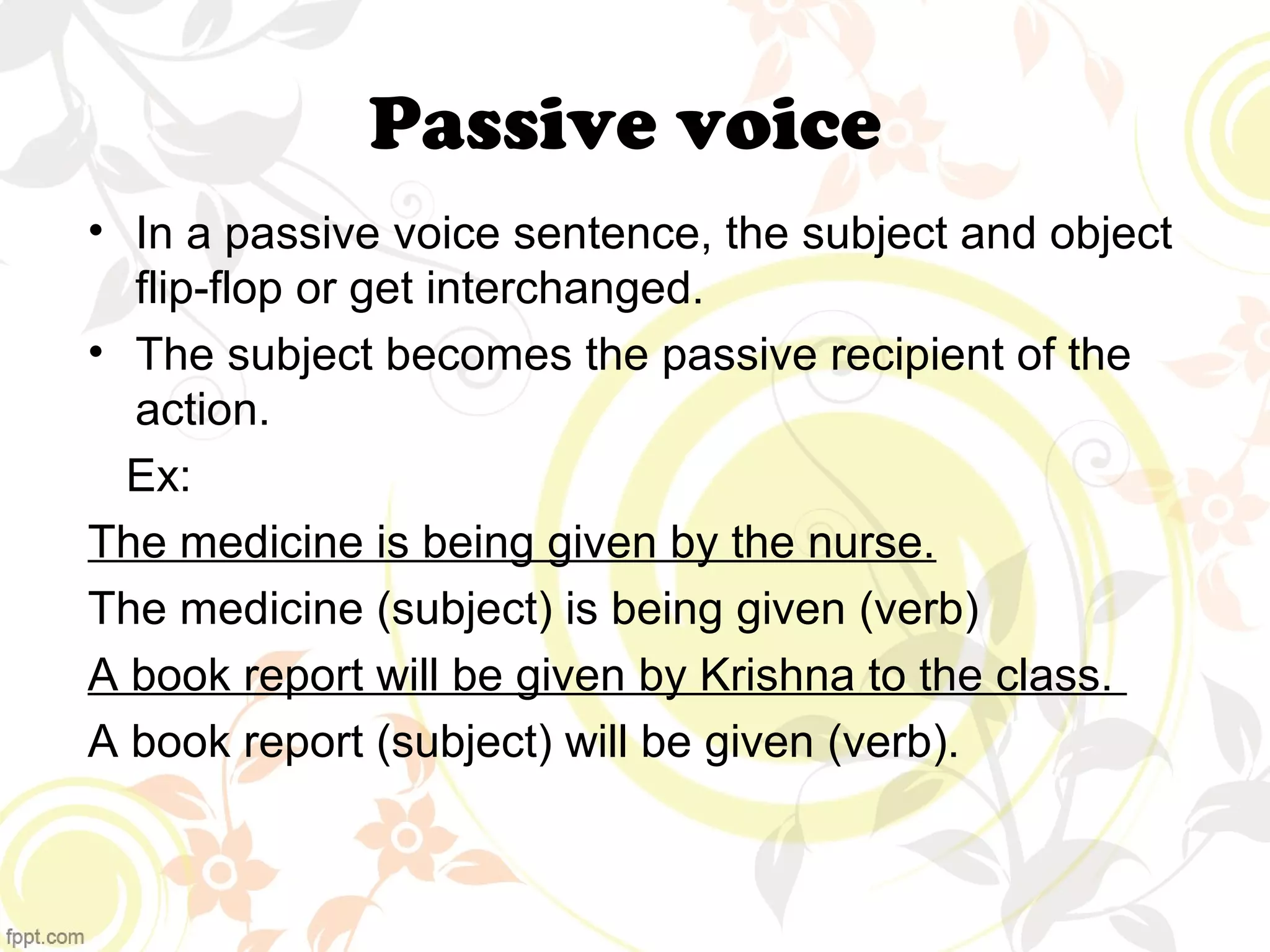
Passive voice 
• In a passive voice sentence, the subject and object 
flip-flop or get interchanged. 
• The subject becomes the passive recipient of the 
action. 
Ex: 
The medicine is being given by the nurse. 
The medicine (subject) is being given (verb) 
A book report will be given by Krishna to the class. 
A book report (subject) will be given (verb).
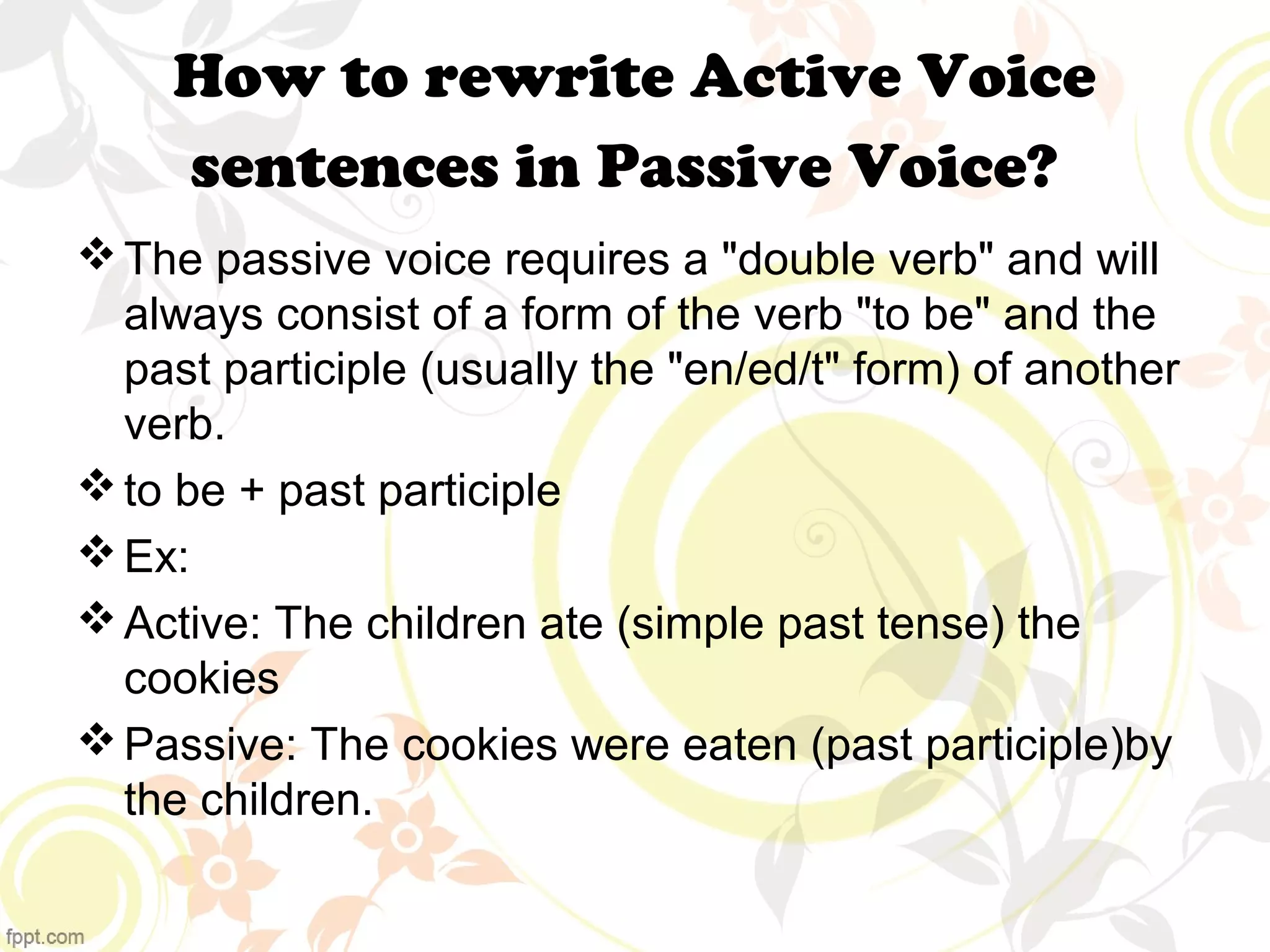
How to rewrite Active Voice 
sentences in Passive Voice? 
The passive voice requires a "double verb" and will 
always consist of a form of the verb "to be" and the 
past participle (usually the "en/ed/t" form) of another 
verb. 
to be + past participle 
Ex: 
Active: The children ate (simple past tense) the 
cookies 
Passive: The cookies were eaten (past participle)by 
the children.
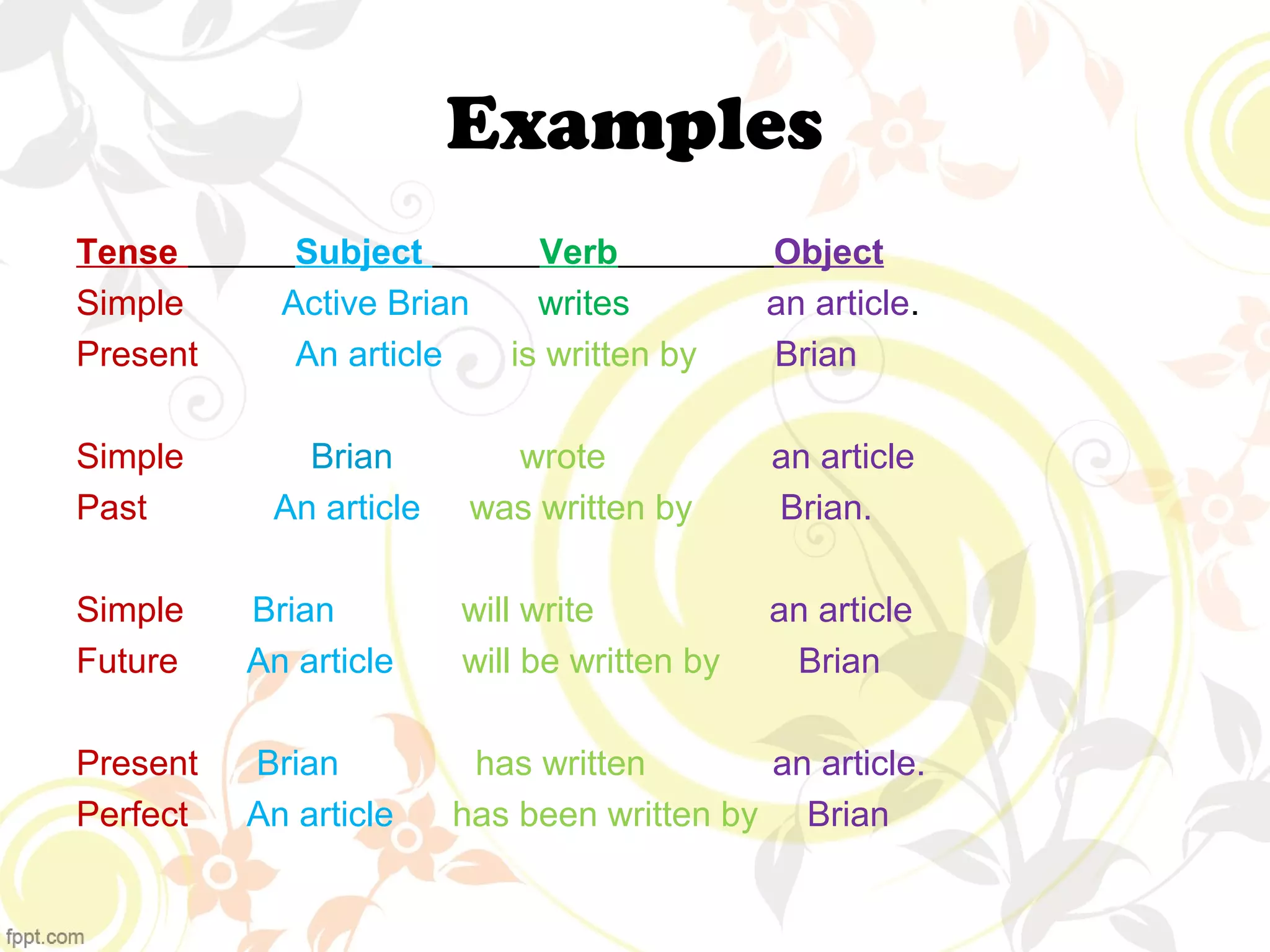
Examples 
Tense Subject Verb Object 
Simple Active Brian writes an article. 
Present An article is written by Brian 
Simple Brian wrote an article 
Past An article was written by Brian. 
Simple Brian will write an article 
Future An article will be written by Brian 
Present Brian has written an article. 
Perfect An article has been written by Brian
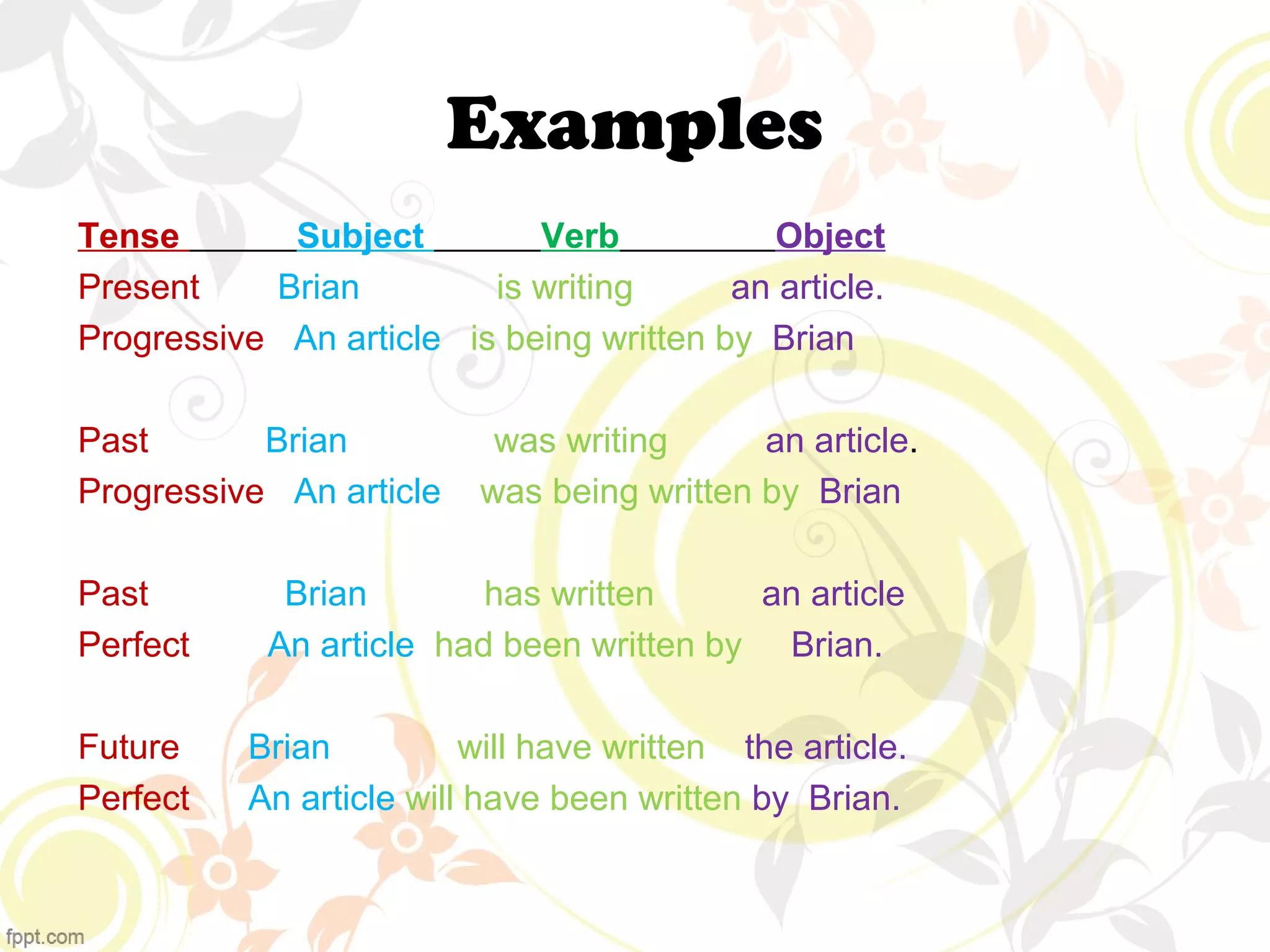
Examples 
Tense Subject Verb Object 
Present Brian is writing an article. 
Progressive An article is being written by Brian 
Past Brian was writing an article. 
Progressive An article was being written by Brian 
Past Brian has written an article 
Perfect An article had been written by Brian. 
Future Brian will have written the article. 
Perfect An article will have been written by Brian.
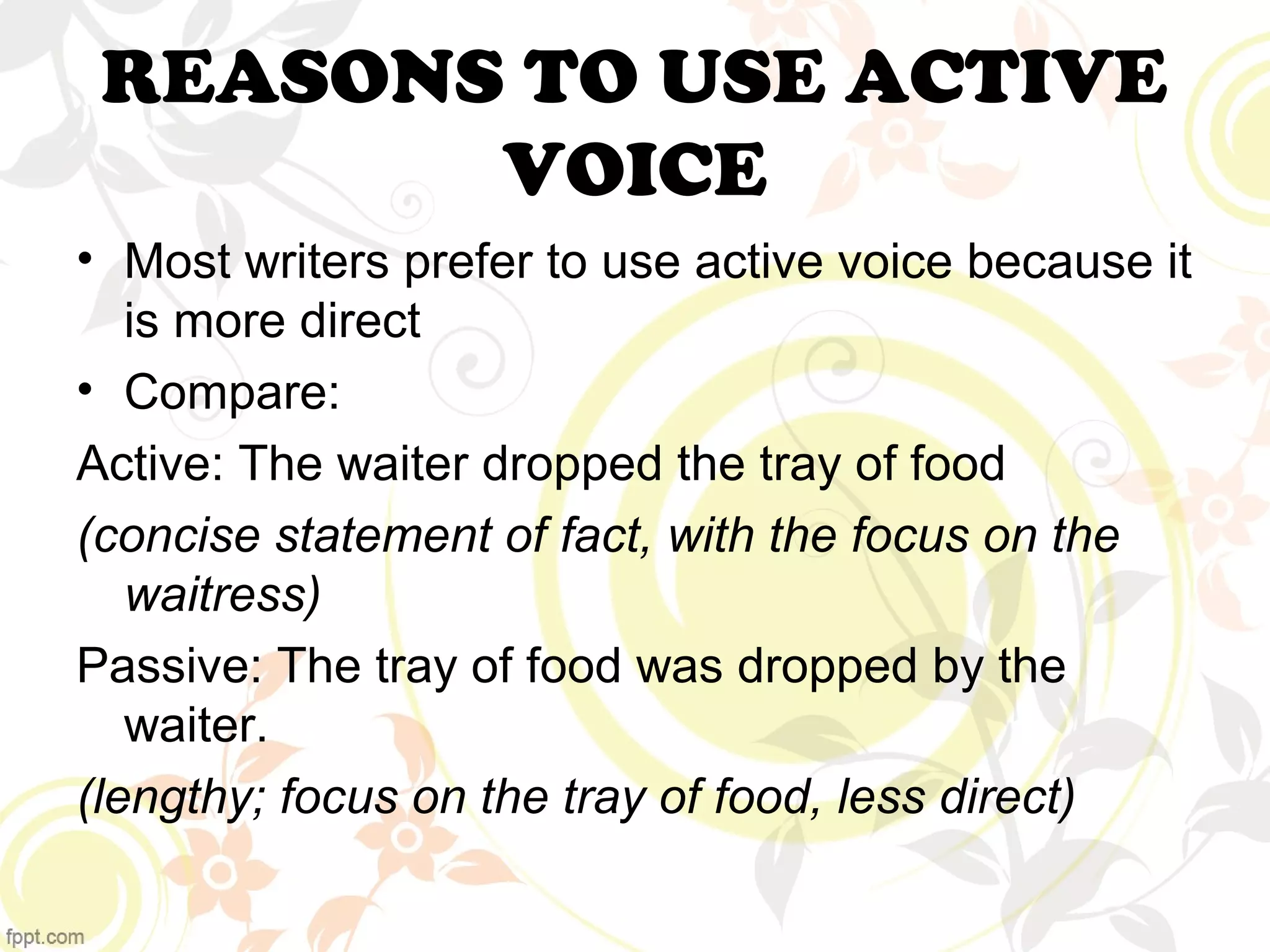
REASONS TO USE ACTIVE 
VOICE 
• Most writers prefer to use active voice because it 
is more direct 
• Compare: 
Active: The waiter dropped the tray of food 
(concise statement of fact, with the focus on the 
waitress) 
Passive: The tray of food was dropped by the 
waiter. 
(lengthy; focus on the tray of food, less direct)
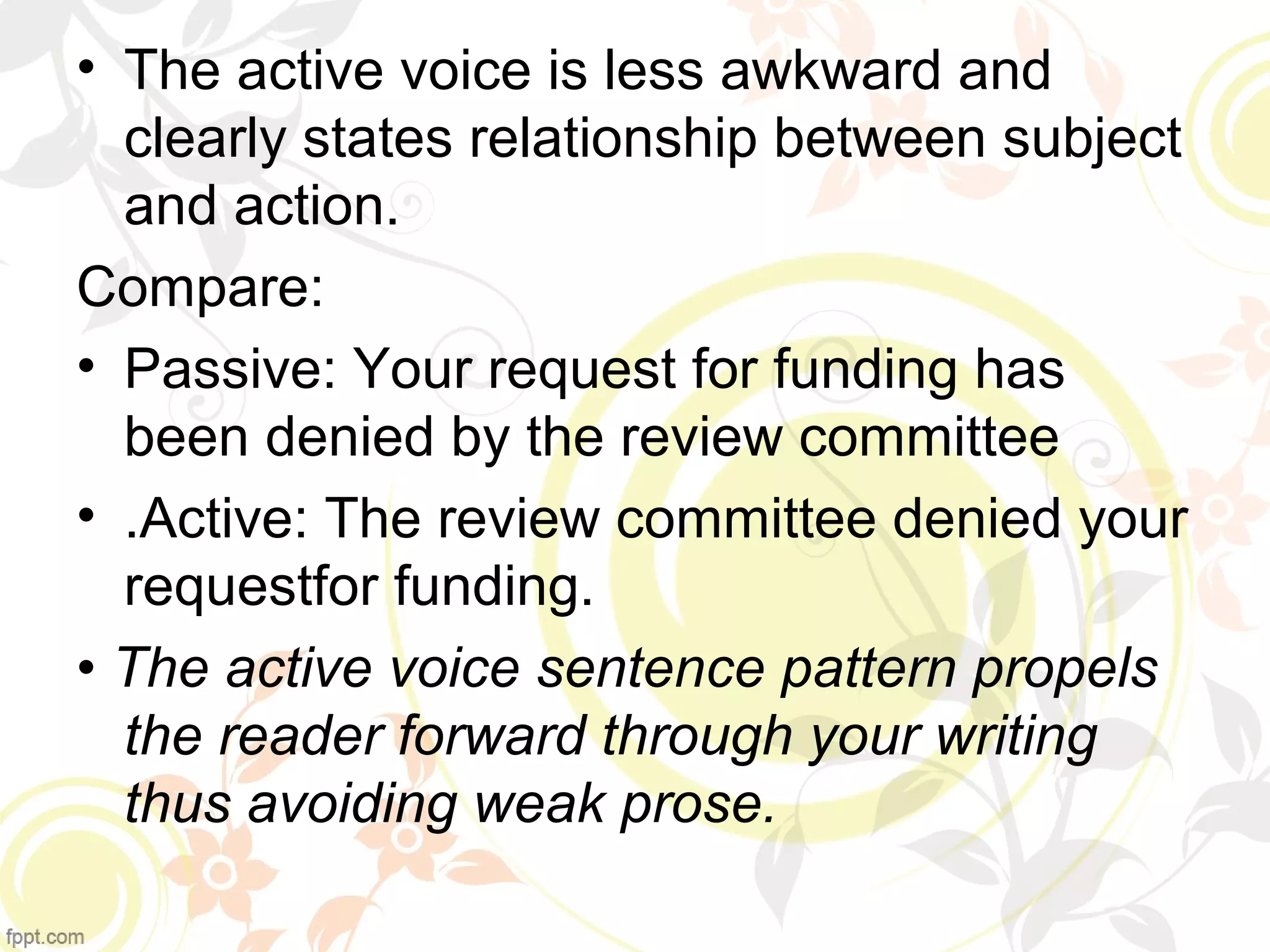
• The active voice is less awkward and 
clearly states relationship between subject 
and action. 
Compare: 
• Passive: Your request for funding has 
been denied by the review committee 
• .Active: The review committee denied your 
requestfor funding. 
• The active voice sentence pattern propels 
the reader forward through your writing 
thus avoiding weak prose.
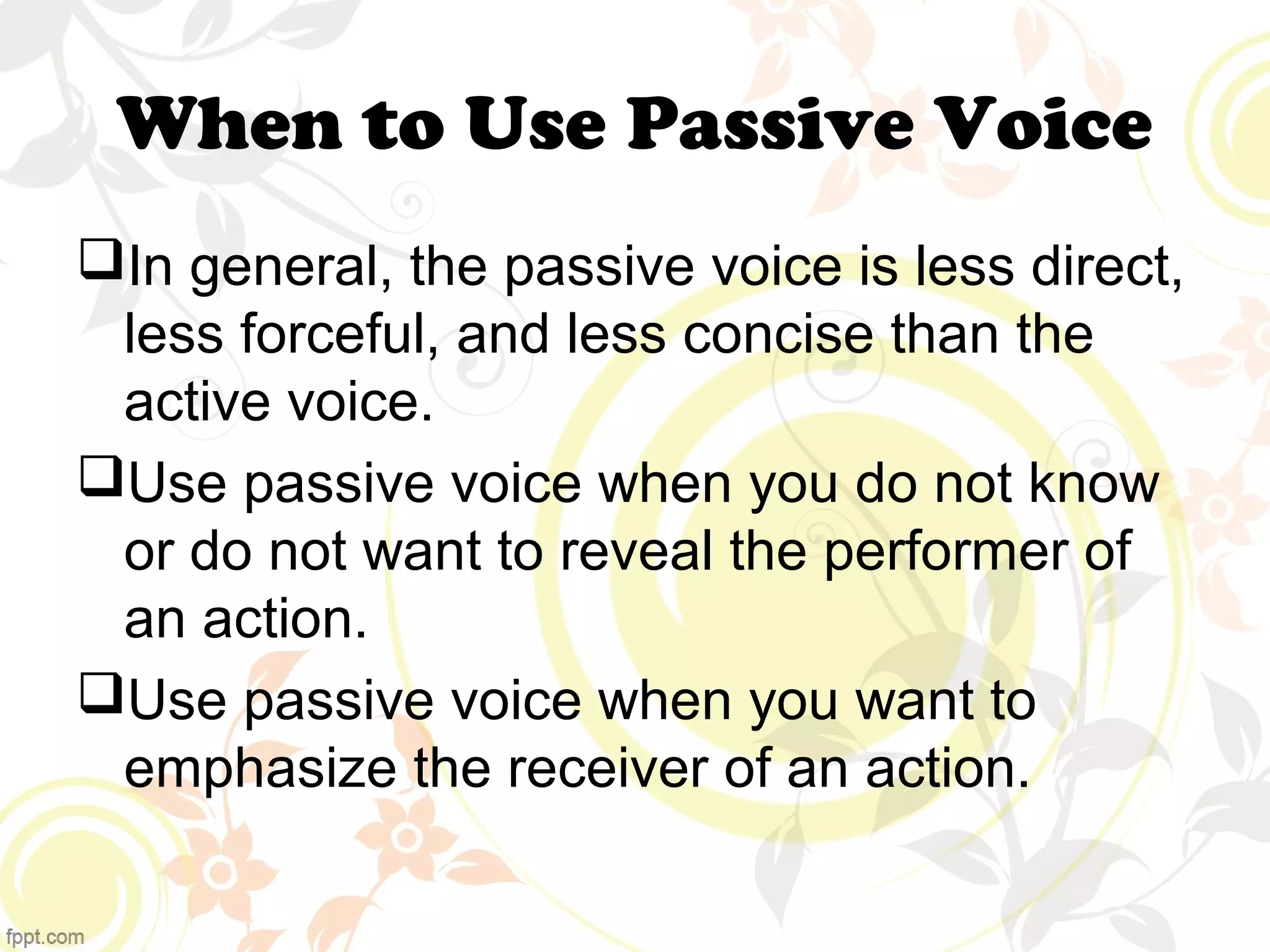
When to Use Passive Voice 
In general, the passive voice is less direct, 
less forceful, and less concise than the 
active voice. 
Use passive voice when you do not know 
or do not want to reveal the performer of 
an action. 
Use passive voice when you want to 
emphasize the receiver of an action.
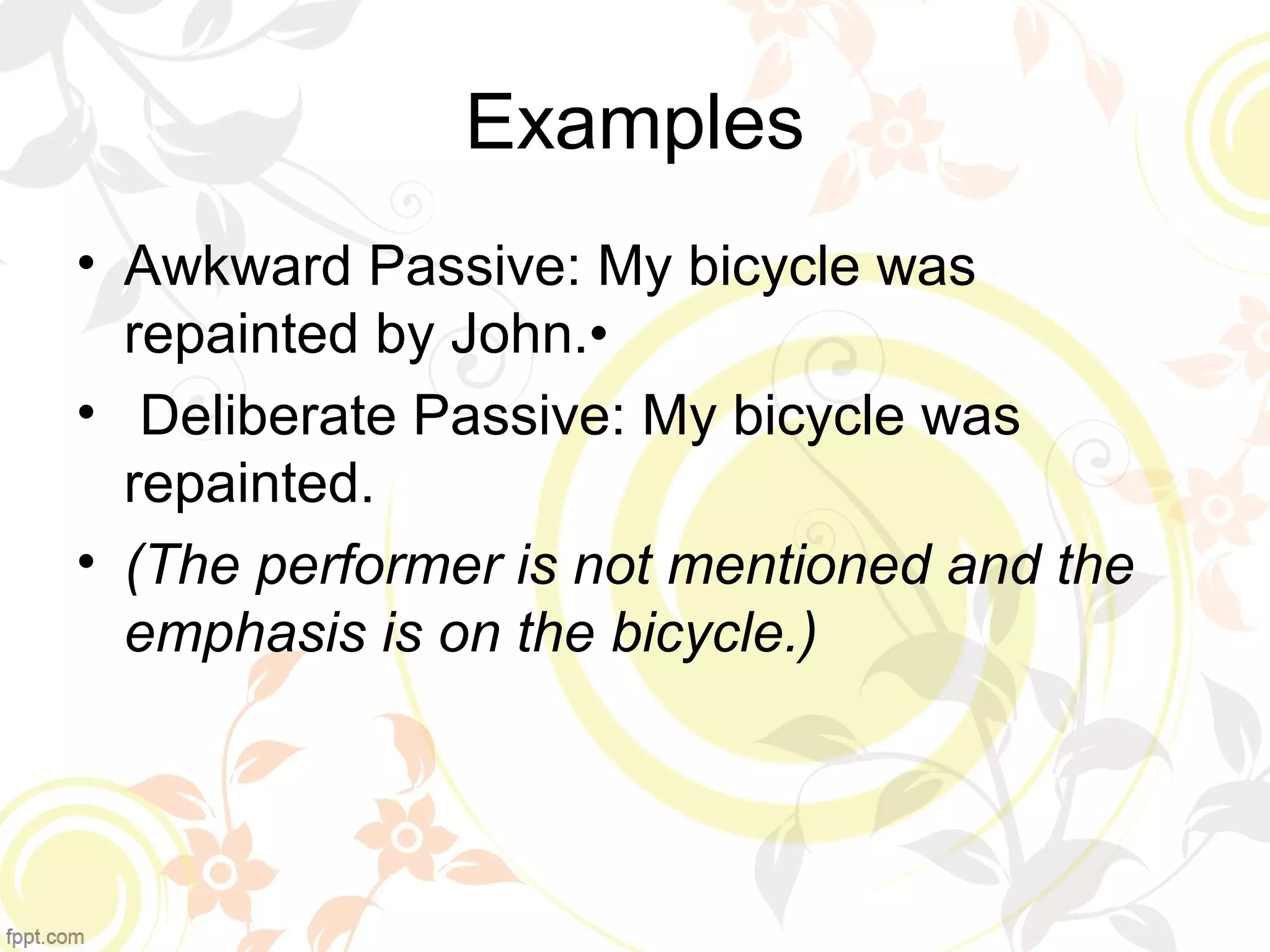
Examples 
• Awkward Passive: My bicycle was 
repainted by John.• 
• Deliberate Passive: My bicycle was 
repainted. 
• (The performer is not mentioned and the 
emphasis is on the bicycle.)

Active and passive voice

  • 1.
  • 2.
    Defining “Voice” VOICE-in English Grammar is the form a transitive verb takes to indicate whether the subject of the verb performs or receives the action. Ex: Minu waters the plants. (The subject Minu performs an action) The lolly is eaten by Vinu. (The subject lolly receives the action).
  • 3.
    There are TwoTypes of Voice Active Passive
  • 4.
    Active voice •indicates that the subject of the verb is acting or performing an action Ex: • The nurse is giving the medicine. The nurse (subject) is performing the action of giving (verb) the medicine. • Krishna will read the report to the class Krishna (subject) will carry out the action of reading (verb)
  • 5.
    Passive voice •In a passive voice sentence, the subject and object flip-flop or get interchanged. • The subject becomes the passive recipient of the action. Ex: The medicine is being given by the nurse. The medicine (subject) is being given (verb) A book report will be given by Krishna to the class. A book report (subject) will be given (verb).
  • 6.
    How to rewriteActive Voice sentences in Passive Voice? The passive voice requires a "double verb" and will always consist of a form of the verb "to be" and the past participle (usually the "en/ed/t" form) of another verb. to be + past participle Ex: Active: The children ate (simple past tense) the cookies Passive: The cookies were eaten (past participle)by the children.
  • 7.
    Examples Tense SubjectVerb Object Simple Active Brian writes an article. Present An article is written by Brian Simple Brian wrote an article Past An article was written by Brian. Simple Brian will write an article Future An article will be written by Brian Present Brian has written an article. Perfect An article has been written by Brian
  • 8.
    Examples Tense SubjectVerb Object Present Brian is writing an article. Progressive An article is being written by Brian Past Brian was writing an article. Progressive An article was being written by Brian Past Brian has written an article Perfect An article had been written by Brian. Future Brian will have written the article. Perfect An article will have been written by Brian.
  • 9.
    REASONS TO USEACTIVE VOICE • Most writers prefer to use active voice because it is more direct • Compare: Active: The waiter dropped the tray of food (concise statement of fact, with the focus on the waitress) Passive: The tray of food was dropped by the waiter. (lengthy; focus on the tray of food, less direct)
  • 10.
    • The activevoice is less awkward and clearly states relationship between subject and action. Compare: • Passive: Your request for funding has been denied by the review committee • .Active: The review committee denied your requestfor funding. • The active voice sentence pattern propels the reader forward through your writing thus avoiding weak prose.
  • 11.
    When to UsePassive Voice In general, the passive voice is less direct, less forceful, and less concise than the active voice. Use passive voice when you do not know or do not want to reveal the performer of an action. Use passive voice when you want to emphasize the receiver of an action.
  • 12.
    Examples • AwkwardPassive: My bicycle was repainted by John.• • Deliberate Passive: My bicycle was repainted. • (The performer is not mentioned and the emphasis is on the bicycle.)