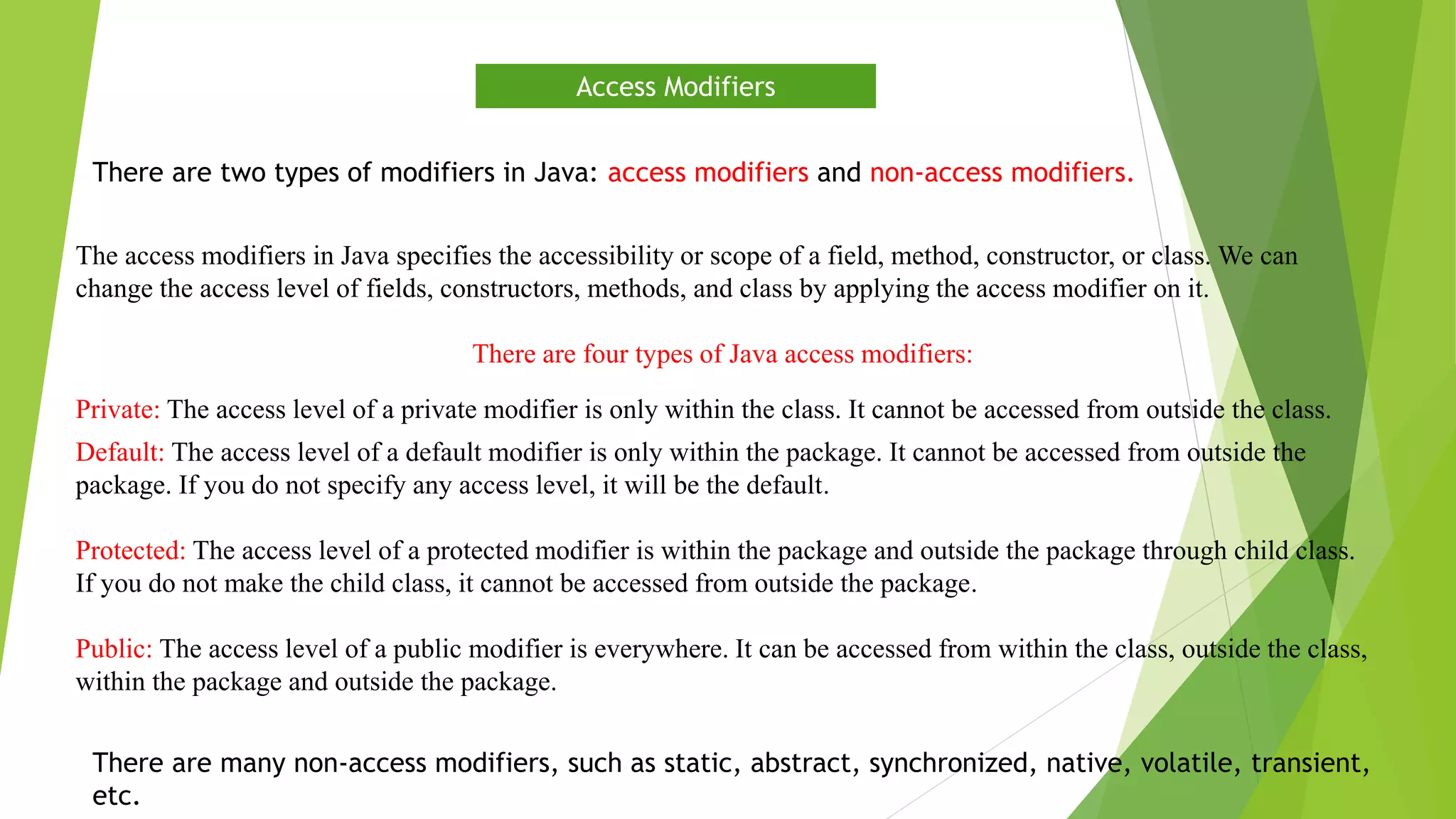

The access modifiers in Java specifies the accessibility or scope of a field, method, constructor, or class. We can
change the access level of fields, constructors, methods, and class by applying the access modifier on it.
There are four types of Java access modifiers:
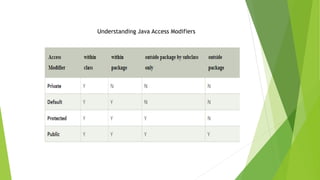
Private: The access level of a private modifier is only within the class. It cannot be accessed from outside the class.
Default: The access level of a default modifier is only within the package. It cannot be accessed from outside the
package. If you do not specify any access level, it will be the default.
Protected: The access level of a protected modifier is within the package and outside the package through child class.
If you do not make the child class, it cannot be accessed from outside the package.
Public: The access level of a public modifier is everywhere. It can be accessed from within the class, outside the class,
within the package and outside the package.
Access Modifiers
There are many non-access modifiers, such as static, abstract, synchronized, native, volatile, transient,
etc.
There are two types of modifiers in Java: access modifiers and non-access modifiers.
Understanding Java Access Modifiers
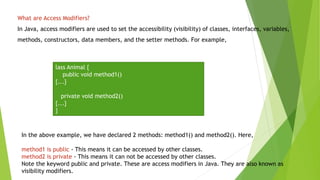
What are Access Modifiers?
In Java, access modifiers are used to set the accessibility (visibility) of classes, interfaces, variables,
methods, constructors, data members, and the setter methods. For example,
In the above example, we have declared 2 methods: method1() and method2(). Here,
method1 is public - This means it can be accessed by other classes.
method2 is private - This means it can not be accessed by other classes.
Note the keyword public and private. These are access modifiers in Java. They are also known as
visibility modifiers.
lass Animal {
public void method1()
{...}
private void method2()
{...}
}
There are four access modifiers keywords in Java and they are:
Modifier Description
Default declarations are visible only within the package (package private)
Private declarations are visible within the class only
Protected declarations are visible within the package or all subclasses
Public declarations are visible everywhere
Private Access Modifier
When variables and methods are declared private, they cannot be accessed
outside of the class. For example,
class Data {
// private variable
private String name;
}
public class Main {
public static void main(String[] main){
// create an object of Data
Data d = new Data();
// access private variable and field from another class
d.name = "Programiz";
}
}
In the above example, we have declared a private variable named name. When we run the
program, we will get the following error:
Main.java:18: error: name has private access in Data
d.name = "Programiz";
The error is generated because we are trying to access the private variable of the Data class from the Main class.
You might be wondering what if we need to access those private variables. In this case, we can use the getters and setters method. For
example,
class Data {
private String name;
// getter method
public String getName() {
return this.name;
}
// setter method
public void setName(String name) {
this.name= name;
}
}
public class Main {
public static void main(String[] main){
Data d = new Data();
// access the private variable using the getter and setter
d.setName("Programiz");
System.out.println(d.getName());
}
} Output:
The name is Programiz
In the above example, we have a private variable named name. In order to access the variable from
the outer class, we have used methods: getName() and setName(). These methods are called getter
and setter in Java.
Here, we have used the setter method (setName()) to assign value to the variable and the getter
method (getName()) to access the variable.
We have used this keyword inside the setName() to refer to the variable of the class
Note: We cannot declare classes and interfaces private in Java. However, the nested classes can be declared
private
Protected Access Modifier
When methods and data members are declared protected, we can access them within the same package as
well as from subclasses. For example,
class Animal {
// protected method
protected void display() {
System.out.println("I am an animal");
}
}
class Dog extends Animal {
public static void main(String[] args) {
// create an object of Dog class
Dog dog = new Dog();
// access protected method
dog.display();
}
} Output:
I am an animal
In the above example, we have a protected method named display() inside the Animal class. The Animal
class is inherited by the Dog class.
We then created an object dog of the Dog class. Using the object we tried to access the protected
method of the parent class.
Since protected methods can be accessed from the child classes, we are able to access the method
of Animal class from the Dog class.
Note: We cannot declare classes or interfaces protected in Java.
Public Access Modifier
When methods, variables, classes, and so on are declared public, then we can access them from anywhere.
The public access modifier has no scope restriction. For example,
/ Animal.java file
// public class
public class Animal {
// public variable
public int legCount;
// public method
public void display() {
System.out.println("I am an animal.");
System.out.println("I have " + legCount + " legs.");
}
}
// Main.java
public class Main {
public static void main( String[] args ) {
// accessing the public class
Animal animal = new Animal();
// accessing the public variable
animal.legCount = 4;
// accessing the public method
animal.display();
}
}
Here,
The public class Animal is accessed from the Main class.
The public variable legCount is accessed from the Main class.
The public method display() is accessed from the Main class.
Output:
I am an animal.
I have 4 legs.
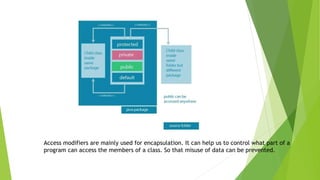
Access modifiers are mainly used for encapsulation. It can help us to control what part of a
program can access the members of a class. So that misuse of data can be prevented.
Access Modifier.pptx

Access Modifier.pptx

  • 1.
    The access modifiersin Java specifies the accessibility or scope of a field, method, constructor, or class. We can change the access level of fields, constructors, methods, and class by applying the access modifier on it. There are four types of Java access modifiers: Private: The access level of a private modifier is only within the class. It cannot be accessed from outside the class. Default: The access level of a default modifier is only within the package. It cannot be accessed from outside the package. If you do not specify any access level, it will be the default. Protected: The access level of a protected modifier is within the package and outside the package through child class. If you do not make the child class, it cannot be accessed from outside the package. Public: The access level of a public modifier is everywhere. It can be accessed from within the class, outside the class, within the package and outside the package. Access Modifiers There are many non-access modifiers, such as static, abstract, synchronized, native, volatile, transient, etc. There are two types of modifiers in Java: access modifiers and non-access modifiers.
  • 2.
  • 3.
    What are AccessModifiers? In Java, access modifiers are used to set the accessibility (visibility) of classes, interfaces, variables, methods, constructors, data members, and the setter methods. For example, In the above example, we have declared 2 methods: method1() and method2(). Here, method1 is public - This means it can be accessed by other classes. method2 is private - This means it can not be accessed by other classes. Note the keyword public and private. These are access modifiers in Java. They are also known as visibility modifiers. lass Animal { public void method1() {...} private void method2() {...} }
  • 4.
    There are fouraccess modifiers keywords in Java and they are: Modifier Description Default declarations are visible only within the package (package private) Private declarations are visible within the class only Protected declarations are visible within the package or all subclasses Public declarations are visible everywhere
  • 5.
    Private Access Modifier Whenvariables and methods are declared private, they cannot be accessed outside of the class. For example, class Data { // private variable private String name; } public class Main { public static void main(String[] main){ // create an object of Data Data d = new Data(); // access private variable and field from another class d.name = "Programiz"; } } In the above example, we have declared a private variable named name. When we run the program, we will get the following error: Main.java:18: error: name has private access in Data d.name = "Programiz";
  • 6.
    The error isgenerated because we are trying to access the private variable of the Data class from the Main class. You might be wondering what if we need to access those private variables. In this case, we can use the getters and setters method. For example, class Data { private String name; // getter method public String getName() { return this.name; } // setter method public void setName(String name) { this.name= name; } } public class Main { public static void main(String[] main){ Data d = new Data(); // access the private variable using the getter and setter d.setName("Programiz"); System.out.println(d.getName()); } } Output: The name is Programiz
  • 7.
    In the aboveexample, we have a private variable named name. In order to access the variable from the outer class, we have used methods: getName() and setName(). These methods are called getter and setter in Java. Here, we have used the setter method (setName()) to assign value to the variable and the getter method (getName()) to access the variable. We have used this keyword inside the setName() to refer to the variable of the class Note: We cannot declare classes and interfaces private in Java. However, the nested classes can be declared private
  • 8.
    Protected Access Modifier Whenmethods and data members are declared protected, we can access them within the same package as well as from subclasses. For example, class Animal { // protected method protected void display() { System.out.println("I am an animal"); } } class Dog extends Animal { public static void main(String[] args) { // create an object of Dog class Dog dog = new Dog(); // access protected method dog.display(); } } Output: I am an animal
  • 9.
    In the aboveexample, we have a protected method named display() inside the Animal class. The Animal class is inherited by the Dog class. We then created an object dog of the Dog class. Using the object we tried to access the protected method of the parent class. Since protected methods can be accessed from the child classes, we are able to access the method of Animal class from the Dog class. Note: We cannot declare classes or interfaces protected in Java.
  • 10.
    Public Access Modifier Whenmethods, variables, classes, and so on are declared public, then we can access them from anywhere. The public access modifier has no scope restriction. For example, / Animal.java file // public class public class Animal { // public variable public int legCount; // public method public void display() { System.out.println("I am an animal."); System.out.println("I have " + legCount + " legs."); } } // Main.java public class Main { public static void main( String[] args ) { // accessing the public class Animal animal = new Animal(); // accessing the public variable animal.legCount = 4; // accessing the public method animal.display(); } } Here, The public class Animal is accessed from the Main class. The public variable legCount is accessed from the Main class. The public method display() is accessed from the Main class. Output: I am an animal. I have 4 legs.
  • 11.
    Access modifiers aremainly used for encapsulation. It can help us to control what part of a program can access the members of a class. So that misuse of data can be prevented.