ANATOMY AND
PHYSIOLOGY

URINARY SYSTEM
 (RENAL SYSTEM)

         Pr epar ed by: Diana J eanne T. Paculanan
RENAL SYSTEM

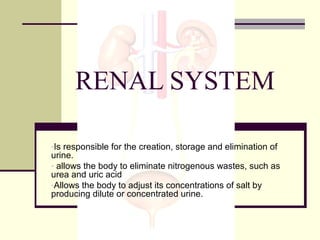
-Is responsible for the creation, storage and elimination of
urine.
- allows the body to eliminate nitrogenous wastes, such as
urea and uric acid
-Allows the body to adjust its concentrations of salt by
producing dilute or concentrated urine.
Functions
 Regulation of the volume of blood by
  excretion or conservation of water.
 Regulation of the electrolyte content of the
  blood by the excretion or conservation of
  minerals.
 Regulation of the acid-base balance of the
  blood by excretion or conservation of ions
 Regulation of all of the above in tissue fluid.
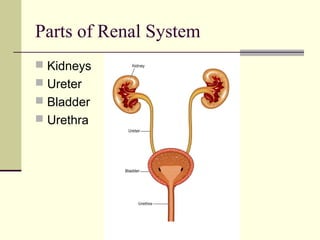
Parts of Renal System
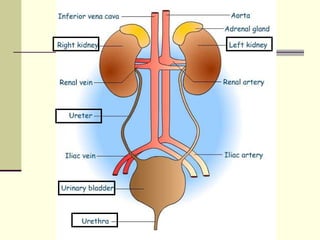
 Kidneys
 Ureter
 Bladder
 Urethra
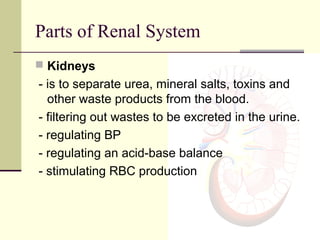
Parts of Renal System
 Kidneys
- is to separate urea, mineral salts, toxins and
  other waste products from the blood.
- filtering out wastes to be excreted in the urine.
- regulating BP
- regulating an acid-base balance
- stimulating RBC production
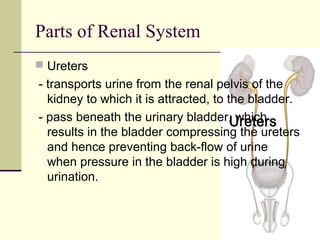
Parts of Renal System
 Ureters
- transports urine from the renal pelvis of the
  kidney to which it is attracted, to the bladder.
- pass beneath the urinary bladder, which
  results in the bladder compressing the ureters
  and hence preventing back-flow of urine
  when pressure in the bladder is high during
  urination.
Parts of Renal System
 Bladder
- store urine
- expels urine into the urethra (Micturation)


Micturation – involves both voluntary and
  involutary muscles.
Parts of Renal System
 Urethra
- is the passageway through which urine is
  discharged from the body
FACT :


Main difference between the urinary system of male
                  and female is the
               “ length of urethra.”
Other Parts of Renal System
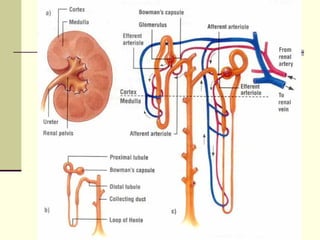
 Nephrons – functional unit of kidney. Each
  kidney is formed of about one million
  nephrons.
 Glomerulus – filters the blood
 Bowman’s Capsule – is a large double walled
  cup. It lies in the renal cortex
 Tubular Component – necessary substances
  are being reabsorbed
 Loop of Henle – create a concentration
  gradient in the medulla of the kidney.
  - reabsorb water and important nutrients in
  the filtrate.
 Renal Vein – a blood vessel that carries
  deoxygenated blood out of the kidneys
 Renal Artery – supply clean, oxygen-rich
  blood to the kidneys
 Adrenal Gland (Suprarenal Gland) – located
  on top of the kidneys and is essential for
  balancing salt and water in the body
Three process in Urine
Formation
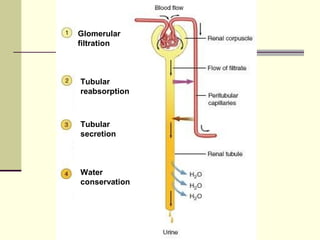
Glomerular filtration
 Beginning of the process.
 A process by which the blood courses
  through the glomeruli, much of its fluid,
  containg both useful chemicals and dissolve
  waste materials, soaks out the blood through
  membranes where it is filtered and then flows
  into Bowman’s capsule.
Tubular Reabsorption
 A movement of substances out of the renal
  tubules back into the blood capillaries located
  around the tubules (peritubular capillaries).
Tubular Secretion
 disposing of substances not already in the
  filtrate (drugs)
 eliminating undesirable substances that have
  been reabsorbed by passive processes (urea
  and uric acid)
 ridding the body of excess potassium ions
 controlling pH
Glomerular Filtration Rate
 is the amount of fluid filtered from the blood
  into the capsule each minute. Factors
  governing the filtration rate at the capillary
  beds are:
 1. total surface area available for filtration
 2. filtration membrane permeability
 3. net filtration pressure
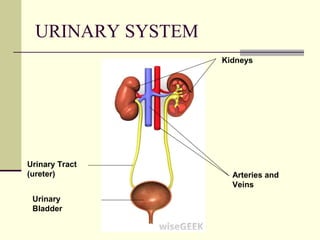
URINARY SYSTEM
                   Kidneys


Urinary Tract
(ureter)             Arteries and
                     Veins
 Urinary
 Bladder
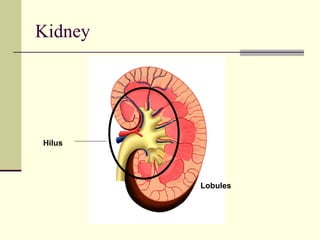
Kidney


Hilus


         Lobules
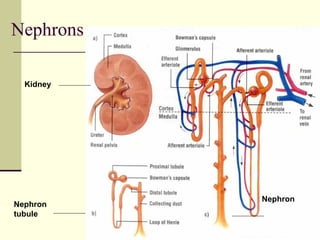
Nephrons

  Kidney


           Nephron
Nephron
tubule
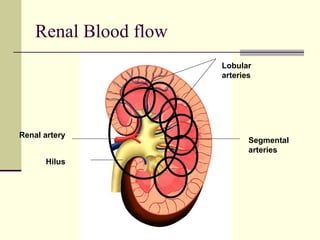
Renal Blood flow
                       Lobular
                       arteries


Renal artery
                              Segmental
                              arteries
      Hilus
Urine Formation
Glomerular
filtration


Tubular
reabsorption


Tubular
secretion


Water
conservation
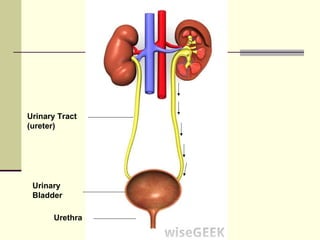
Urinary Tract
(ureter)


 Urinary
 Bladder

      Urethra
Summary
 Kidneys performed as the body’s main Excretory
  function by filtering the blood and selectively
  reabsorbed those materials that are needed to
  maintain a stable internal environment.
 Nephrons is the functional unit of the kidneys.
 It is composed by a glomerulus which filters the blood
  and the tubular component where necessary
  substances are reabsorbed into the the blood stream
  and the unneeded materials are secreted into the
  tubular filtrate for elimination and urine.
Thank you 

Anatomy and Physilogy of Urinary System (Renal System)

  • 1.
    ANATOMY AND PHYSIOLOGY URINARY SYSTEM (RENAL SYSTEM) Pr epar ed by: Diana J eanne T. Paculanan
  • 2.
    RENAL SYSTEM -Is responsiblefor the creation, storage and elimination of urine. - allows the body to eliminate nitrogenous wastes, such as urea and uric acid -Allows the body to adjust its concentrations of salt by producing dilute or concentrated urine.
  • 4.
    Functions  Regulation ofthe volume of blood by excretion or conservation of water.  Regulation of the electrolyte content of the blood by the excretion or conservation of minerals.  Regulation of the acid-base balance of the blood by excretion or conservation of ions  Regulation of all of the above in tissue fluid.
  • 5.
    Parts of RenalSystem  Kidneys  Ureter  Bladder  Urethra
  • 6.
    Parts of RenalSystem  Kidneys - is to separate urea, mineral salts, toxins and other waste products from the blood. - filtering out wastes to be excreted in the urine. - regulating BP - regulating an acid-base balance - stimulating RBC production
  • 7.
    Parts of RenalSystem  Ureters - transports urine from the renal pelvis of the kidney to which it is attracted, to the bladder. - pass beneath the urinary bladder, which results in the bladder compressing the ureters and hence preventing back-flow of urine when pressure in the bladder is high during urination.
  • 8.
    Parts of RenalSystem  Bladder - store urine - expels urine into the urethra (Micturation) Micturation – involves both voluntary and involutary muscles.
  • 9.
    Parts of RenalSystem  Urethra - is the passageway through which urine is discharged from the body
  • 10.
    FACT : Main differencebetween the urinary system of male and female is the “ length of urethra.”
  • 11.
    Other Parts ofRenal System  Nephrons – functional unit of kidney. Each kidney is formed of about one million nephrons.  Glomerulus – filters the blood  Bowman’s Capsule – is a large double walled cup. It lies in the renal cortex  Tubular Component – necessary substances are being reabsorbed
  • 12.
     Loop ofHenle – create a concentration gradient in the medulla of the kidney. - reabsorb water and important nutrients in the filtrate.  Renal Vein – a blood vessel that carries deoxygenated blood out of the kidneys  Renal Artery – supply clean, oxygen-rich blood to the kidneys  Adrenal Gland (Suprarenal Gland) – located on top of the kidneys and is essential for balancing salt and water in the body
  • 13.
    Three process inUrine Formation
  • 14.
    Glomerular filtration  Beginningof the process.  A process by which the blood courses through the glomeruli, much of its fluid, containg both useful chemicals and dissolve waste materials, soaks out the blood through membranes where it is filtered and then flows into Bowman’s capsule.
  • 15.
    Tubular Reabsorption  Amovement of substances out of the renal tubules back into the blood capillaries located around the tubules (peritubular capillaries).
  • 16.
    Tubular Secretion  disposingof substances not already in the filtrate (drugs)  eliminating undesirable substances that have been reabsorbed by passive processes (urea and uric acid)  ridding the body of excess potassium ions  controlling pH
  • 17.
    Glomerular Filtration Rate is the amount of fluid filtered from the blood into the capsule each minute. Factors governing the filtration rate at the capillary beds are:  1. total surface area available for filtration  2. filtration membrane permeability  3. net filtration pressure
  • 18.
    URINARY SYSTEM Kidneys Urinary Tract (ureter) Arteries and Veins Urinary Bladder
  • 19.
  • 20.
    Nephrons Kidney Nephron Nephron tubule
  • 21.
    Renal Blood flow Lobular arteries Renal artery Segmental arteries Hilus
  • 23.
  • 24.
  • 25.
  • 26.
    Summary  Kidneys performedas the body’s main Excretory function by filtering the blood and selectively reabsorbed those materials that are needed to maintain a stable internal environment.  Nephrons is the functional unit of the kidneys. It is composed by a glomerulus which filters the blood and the tubular component where necessary substances are reabsorbed into the the blood stream and the unneeded materials are secreted into the tubular filtrate for elimination and urine.
  • 27.