TYPE 2 DIABETES
NOVERO, LELANI
SINGH, AMAN
UGALE, KYLA
ZINGAPAN, JANELYN
General Data
LC
68 y/o
Filipino
Single
Female
Gonzaga, Cagayan
DIZZINES
S
Chief
Complaint:
History of present illness
4 months PTC
● Intermittent dizziness, non- rotatory, lasting for <5 mins, aggravated by sudden
movement and even at rest.
● No other associated signs and symptoms noted:
○ Nausea
○ Vomiting
○ Headache
○ Dyspnea
○ Chest pain
○ No tinnitus
● No consult done or meds taken
1 month PTC
- Intermittent dizziness, non rotatory
- Not associated with headache, tinnitus or dyspnea
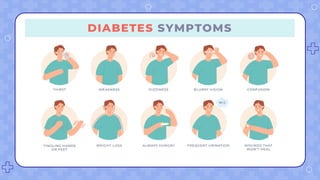
- Polyuria (6x day)
- Polyphagia
- Polydipsia
- Weakness
- Fatigue
- (-) weight loss/gain
- No consult done or meds taken at this time
History of Present Illness
1 day PTC
● Still with dizziness now experiencing almost
everyday.
● Associated with fatigue, weakness, pins and
needles sensation in her hands, polyphagia,
polyuria and polydipsia and blurring of vision.
● Thus, patient sought consult at our clinic.
Review of Systems
● Constitutional: (-) chills, (-) malaise, (-) fever
● Integumentary: (-) redness, (-) pruritus, (-) lesions, (-)
rashes
● HEENT: (-) headache, (-) hearing loss (-) diplopia, (-)
tinnitus, (-) history of ear discharge, (-) epistaxis, (-) loss
of sense of smell, (-) lesions
● Heart & lungs: (-)dob, (-) chest tightness
● Gastrointestinal: (-) constipation, (-) melena, (-)diarrhea,
● Musculoskeletal: (-) backache, (-) stiffness (-) joint
swelling
● Genitourinary: (-) dysuria, (-) incontinence
● Neurologic: (-) loss of consciousness
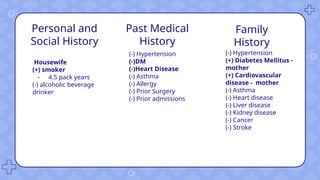
Personal and
Social History
Housewife
(+) smoker
- 4.5 pack years
(-) alcoholic beverage
drinker
Past Medical
History
(-) Hypertension
(-)DM
(-)Heart Disease
(-) Asthma
(-) Allergy
(-) Prior Surgery
(-) Prior admissions
Family
History
(-) Hypertension
(+) Diabetes Mellitus -
mother
(+) Cardiovascular
disease - mother
(-) Asthma
(-) Heart disease
(-) Liver disease
(-) Kidney disease
(-) Cancer
(-) Stroke
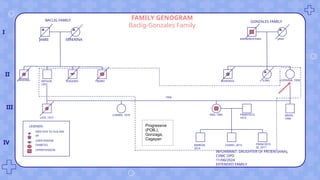
BACLIG FAMILY GONZALES FAMILY
JAMIE SERERINA
DEDONG ARTHUR,
1957
ENQERIO BERRY
LEVY, 1977
CHERRY, 1979
1956
ANA, 1982 FRANCISCO,
1973
MARION,
2014
CEDRIC, 2015 FRANCISCO
III, 2017
ARVIN,
1990
LUDIVINA, 1956
ILING
ROSENDO
BNENERENTNRA JANA
DIED DUE TO OLD AGE
VA
LIVER DISEASE
DIABETES
HYPERTENSION
LEGENDS:
INFORMANT: DAUGHTER OF PATIENT(ANA),
CVMC OPD
11/06/2024
EXTENDED FAMILY
FAMILY GENOGRAM
Baclig-Gonzales Family
I
II
III
Progressive
(POB.),
Gonzaga,
Cagayan
IV
OB History
G3P3 (3003)
G3 - 1998 NSD, CVMC
G2 - 1996 NSD, HOME
G1 - 1994 NSD, HOME
Menopause -at age 47
M - 12 y/o
I - regular
D - 3-5 days
A - 3 pads/dat
S - none
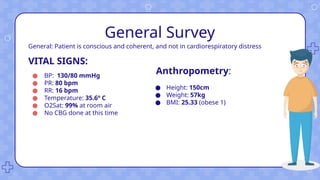
General Survey
General: Patient is conscious and coherent, and not in cardiorespiratory distress
VITAL SIGNS:
● BP: 130/80 mmHg
● PR: 80 bpm
● RR: 16 bpm
● Temperature: 35.6º C
● O2Sat: 99% at room air
● No CBG done at this time
Anthropometry:
● Height: 150cm
● Weight: 57kg
● BMI: 25.33 (obese 1)
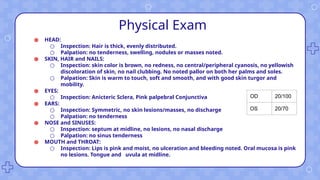
Physical Exam
● HEAD:
○ Inspection: Hair is thick, evenly distributed.
○ Palpation: no tenderness, swelling, nodules or masses noted.
● SKIN, HAIR and NAILS:
○ Inspection: skin color is brown, no redness, no central/peripheral cyanosis, no yellowish
discoloration of skin, no nail clubbing. No noted pallor on both her palms and soles.
○ Palpation: Skin is warm to touch, soft and smooth, and with good skin turgor and
mobility.
● EYES:
○ Inspection: Anicteric Sclera, Pink palpebral Conjunctiva
● EARS:
○ Inspection: Symmetric, no skin lesions/masses, no discharge
○ Palpation: no tenderness
● NOSE and SINUSES:
○ Inspection: septum at midline, no lesions, no nasal discharge
○ Palpation: no sinus tenderness
● MOUTH and THROAT:
○ Inspection: Lips is pink and moist, no ulceration and bleeding noted. Oral mucosa is pink
no lesions. Tongue and uvula at midline.
OD 20/100
OS 20/70
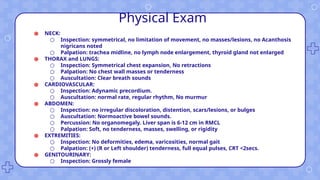
Physical Exam
● NECK:
○ Inspection: symmetrical, no limitation of movement, no masses/lesions, no Acanthosis
nigricans noted
○ Palpation: trachea midline, no lymph node enlargement, thyroid gland not enlarged
● THORAX and LUNGS:
○ Inspection: Symmetrical chest expansion, No retractions
○ Palpation: No chest wall masses or tenderness
○ Auscultation: Clear breath sounds
● CARDIOVASCULAR:
○ Inspection: Adynamic precordium.
○ Auscultation: normal rate, regular rhythm, No murmur
● ABDOMEN:
○ Inspection: no irregular discoloration, distention, scars/lesions, or bulges
○ Auscultation: Normoactive bowel sounds.
○ Percussion: No organomegaly. Liver span is 6-12 cm in RMCL
○ Palpation: Soft, no tenderness, masses, swelling, or rigidity
● EXTREMITIES:
○ Inspection: No deformities, edema, varicosities, normal gait
○ Palpation: (+) (R or Left shoulder) tenderness, full equal pulses, CRT <2secs.
● GENITOURINARY:
○ Inspection: Grossly female
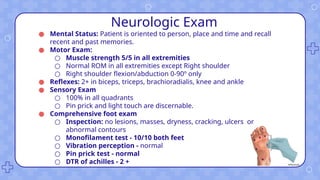
Neurologic Exam
● Mental Status: Patient is oriented to person, place and time and recall
recent and past memories.
● Motor Exam:
○ Muscle strength 5/5 in all extremities
○ Normal ROM in all extremities except Right shoulder
○ Right shoulder flexion/abduction 0-90º only
● Reflexes: 2+ in biceps, triceps, brachioradialis, knee and ankle
● Sensory Exam
○ 100% in all quadrants
○ Pin prick and light touch are discernable.
● Comprehensive foot exam
○ Inspection: no lesions, masses, dryness, cracking, ulcers or
abnormal contours
○ Monofilament test - 10/10 both feet
○ Vibration perception - normal
○ Pin prick test - normal
○ DTR of achilles - 2 +
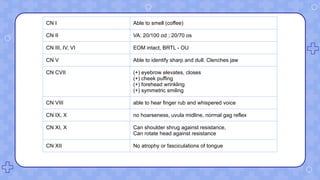
CN I Able to smell (coffee)
CN II VA: 20/100 od ; 20/70 os
CN III, IV, VI EOM intact, BRTL - OU
CN V Able to identify sharp and dull. Clenches jaw
CN CVII (+) eyebrow elevates, closes
(+) cheek puffing
(+) forehead wrinkling
(+) symmetric smiling
CN VIII able to hear finger rub and whispered voice
CN IX, X no hoarseness, uvula midline, normal gag reflex
CN XI, X Can shoulder shrug against resistance,
Can rotate head against resistance
CN XII No atrophy or fasciculations of tongue
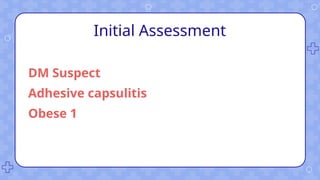
Initial Assessment
DM Suspect
Adhesive capsulitis
Obese 1
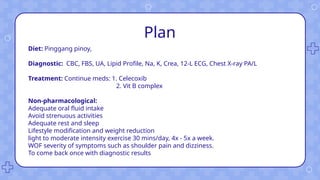
Plan
Diet: Pinggang pinoy,
Diagnostic: CBC, FBS, UA, Lipid Profile, Na, K, Crea, 12-L ECG, Chest X-ray PA/L
Treatment: Continue meds: 1. Celecoxib
2. Vit B complex
Non-pharmacological:
Adequate oral fluid intake
Avoid strenuous activities
Adequate rest and sleep
Lifestyle modification and weight reduction
light to moderate intensity exercise 30 mins/day, 4x - 5x a week.
WOF severity of symptoms such as shoulder pain and dizziness.
To come back once with diagnostic results
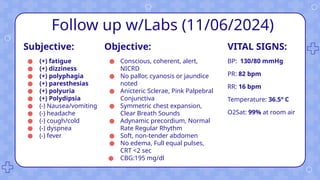
Follow up w/Labs (11/06/2024)
Subjective:
● (+) fatigue
● (+) dizziness
● (+) polyphagia
● (+) paresthesias
● (+) polyuria
● (+) Polydipsia
● (-) Nausea/vomiting
● (-) headache
● (-) cough/cold
● (-) dyspnea
● (-) fever
Objective:
● Conscious, coherent, alert,
NICRD
● No pallor, cyanosis or jaundice
noted
● Anicteric Sclerae, Pink Palpebral
Conjunctiva
● Symmetric chest expansion,
Clear Breath Sounds
● Adynamic precordium, Normal
Rate Regular Rhythm
● Soft, non-tender abdomen
● No edema, Full equal pulses,
CRT <2 sec
● CBG:195 mg/dl
VITAL SIGNS:
BP: 130/80 mmHg
PR: 82 bpm
RR: 16 bpm
Temperature: 36.5º C
O2Sat: 99% at room air
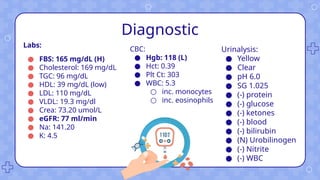
Diagnostic
Labs:
● FBS: 165 mg/dL (H)
● Cholesterol: 169 mg/dL
● TGC: 96 mg/dL
● HDL: 39 mg/dL (low)
● LDL: 110 mg/dL
● VLDL: 19.3 mg/dl
● Crea: 73.20 umol/L
● eGFR: 77 ml/min
● Na: 141.20
● K: 4.5
CBC:
● Hgb: 118 (L)
● Hct: 0.39
● Plt Ct: 303
● WBC: 5.3
○ inc. monocytes
○ inc. eosinophils
Urinalysis:
● Yellow
● Clear
● pH 6.0
● SG 1.025
● (-) protein
● (-) glucose
● (-) ketones
● (-) blood
● (-) bilirubin
● (N) Urobilinogen
● (-) Nitrite
● (-) WBC
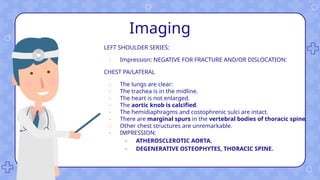
Imaging
LEFT SHOULDER SERIES:
- Impression: NEGATIVE FOR FRACTURE AND/OR DISLOCATION:
CHEST PA/LATERAL
- The lungs are clear:
- The trachea is in the midline.
- The heart is not enlarged.
- The aortic knob is calcified.
- The hemidiaphragms and costophrenic sulci are intact.
- There are marginal spurs in the vertebral bodies of thoracic spine.
- Other chest structures are unremarkable.
- IMPRESSION:
- ATHEROSCLEROTIC AORTA.
- DEGENERATIVE OSTEOPHYTES, THORACIC SPINE.
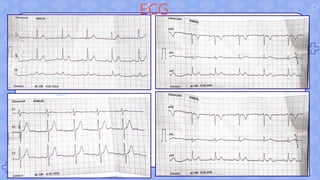
ECG
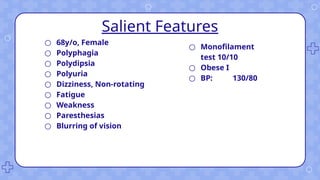
Salient Features
○ 68y/o, Female
○ Polyphagia
○ Polydipsia
○ Polyuria
○ Dizziness, Non-rotating
○ Fatigue
○ Weakness
○ Paresthesias
○ Blurring of vision
○ Monofilament
test 10/10
○ Obese I
○ BP: 130/80
Dizziness
Take off
point:
DIFFERENTIAL
DIAGNOSIS
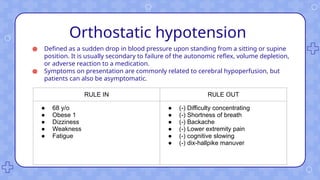
Orthostatic hypotension
● Defined as a sudden drop in blood pressure upon standing from a sitting or supine
position. It is usually secondary to failure of the autonomic reflex, volume depletion,
or adverse reaction to a medication.
● Symptoms on presentation are commonly related to cerebral hypoperfusion, but
patients can also be asymptomatic.
RULE IN RULE OUT
● 68 y/o
● Obese 1
● Dizziness
● Weakness
● Fatigue
● (-) Difficulty concentrating
● (-) Shortness of breath
● (-) Backache
● (-) Lower extremity pain
● (-) cognitive slowing
● (-) dix-hallpike manuver
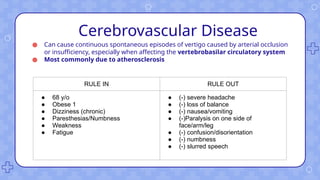
Cerebrovascular Disease
● Can cause continuous spontaneous episodes of vertigo caused by arterial occlusion
or insufficiency, especially when affecting the vertebrobasilar circulatory system
● Most commonly due to atherosclerosis
RULE IN RULE OUT
● 68 y/o
● Obese 1
● Dizziness (chronic)
● Paresthesias/Numbness
● Weakness
● Fatigue
● (-) severe headache
● (-) loss of balance
● (-) nausea/vomiting
● (-)Paralysis on one side of
face/arm/leg
● (-) confusion/disorientation
● (-) numbness
● (-) slurred speech
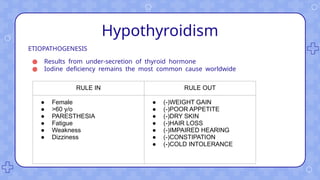
Hypothyroidism
ETIOPATHOGENESIS
● Results from under-secretion of thyroid hormone
● Iodine deficiency remains the most common cause worldwide
RULE IN RULE OUT
● Female
● >60 y/o
● PARESTHESIA
● Fatigue
● Weakness
● Dizziness
● (-)WEIGHT GAIN
● (-)POOR APPETITE
● (-)DRY SKIN
● (-)HAIR LOSS
● (-)IMPAIRED HEARING
● (-)CONSTIPATION
● (-)COLD INTOLERANCE
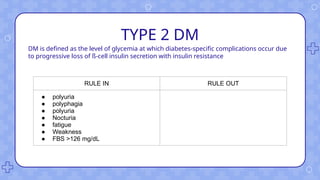
TYPE 2 DM
DM is defined as the level of glycemia at which diabetes-specific complications occur due
to progressive loss of ß-cell insulin secretion with insulin resistance
RULE IN RULE OUT
● polyuria
● polyphagia
● polyuria
● Nocturia
● fatigue
● Weakness
● FBS >126 mg/dL
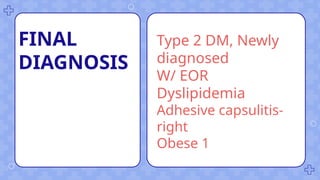
Type 2 DM, Newly
diagnosed
W/ EOR
Dyslipidemia
Adhesive capsulitis-
right
Obese 1
FINAL
DIAGNOSIS
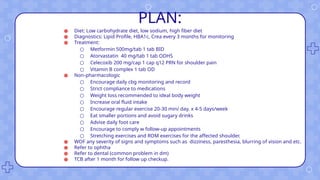
PLAN:
● Diet: Low carbohydrate diet, low sodium, high fiber diet
● Diagnostics: Lipid Profile, HBA1c, Crea every 3 months for monitoring
● Treatment:
○ Metformin 500mg/tab 1 tab BID
○ Atorvastatin 40 mg/tab 1 tab ODHS
○ Celecoxib 200 mg/cap 1 cap q12 PRN for shoulder pain
○ Vitamin B complex 1 tab OD
● Non-pharmacologic
○ Encourage daily cbg monitoring and record
○ Strict compliance to medications
○ Weight loss recommended to ideal body weight
○ Increase oral fluid intake
○ Encourage regular exercise 20-30 min/ day. x 4-5 days/week
○ Eat smaller portions and avoid sugary drinks
○ Advise daily foot care
○ Encourage to comply w follow-up appointments
○ Stretching exercises and ROM exercises for the affected shoulder.
● WOF any severity of signs and symptoms such as dizziness, paresthesia, blurring of vision and etc.
● Refer to ophtha
● Refer to dental (common problem in dm)
● TCB after 1 month for follow up checkup.
CASE
DISCUSSION
DIABETES MELLITUS
- Greek word DIABETES
meaning siphon (to pass
through)
- Latin word MELLITUS
meaning honeyed or sweet
- “A chronic condition that
occurs when there are
raised levels of glucose in
the blood because the body
cannot produce any or
enough of the hormone
insulin or use insulin
effectively.”
DIABETES MELLITUS
“GLOBAL REPORT ON DIABETES” WHO,
2016
- Diabetes is a major cause of
blindness, kidney failure, heart
attacks, stroke and lower limb
amputation.
- In 2016, an estimated 1.6 million
deaths were directly caused by
diabetes.
- WHO estimates that diabetes was
the seventh leading cause of death
in 2016.
BURDEN OF DISEASE
GLOBAL PREVALENCE OF DIABETES
DIABETES MELLITUS
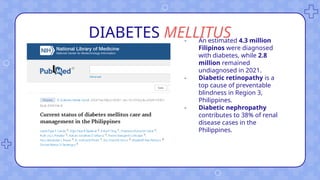
- An estimated 4.3 million
Filipinos were diagnosed
with diabetes, while 2.8
million remained
undiagnosed in 2021.
- Diabetic retinopathy is a
top cause of preventable
blindness in Region 3,
Philippines.
- Diabetic nephropathy
contributes to 38% of renal
disease cases in the
Philippines.
ETIOLOGY AND
PATHOGENESIS
How is diabetes classified?
Diabetes mellitus is classified into four major clinical types according to etiology:
•
Type 1 diabetes mellitus (formerly insulin dependent diabetes mellitus or Juvenile diabetes
mellitus): results from autoimmune beta-cell destruction, leading to absolute insulin deficiency.
Typically but not exclusively in children.
•
Type 2 diabetes mellitus (formerly non-insulin dependent diabetes mellitus or adult-onset DM):
results from a progressive insulin secretory defect on the background of insulin resistance
•
Gestational diabetes mellitus (GDM): diabetes first diagnosed during pregnancy
•
Secondary diabetes e.g., genetic defects in beta cell function or insulin action, diabetes of the
exocrine pancreas (pancreatitis, cystic fibrosis), drug- or chemical-induced diabetes (such as from
the treatment of AIDS, after organ transplantation, glucocorticoids),
other endocrine diseases (Cushing’s syndrome,hyperthyroidism)
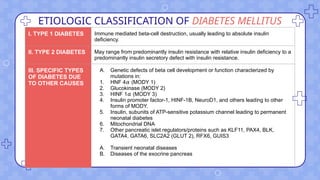
ETIOLOGIC CLASSIFICATION OF DIABETES MELLITUS
I. TYPE 1 DIABETES Immune mediated beta-cell destruction, usually leading to absolute insulin
deficiency.
II. TYPE 2 DIABETES May range from predominantly insulin resistance with relative insulin deficiency to a
predominantly insulin secretory defect with insulin resistance.
III. SPECIFIC TYPES
OF DIABETES DUE
TO OTHER CAUSES
A. Genetic defects of beta cell development or function characterized by
mutations in:
1. HNF 4 (MODY 1)
𝛼
2. Glucokinase (MODY 2)
3. HINF 1 (MODY 3)
𝛼
4. Insulin promoter factor-1, HINF-1B, NeuroD1, and others leading to other
forms of MODY.
5. Insulin, subunits of ATP-sensitive potassium channel leading to permanent
neonatal diabetes
6. Mitochondrial DNA
7. Other pancreatic islet regulators/proteins such as KLF11, PAX4, BLK,
GATA4, GATA6, SLC2A2 (GLUT 2), RFX6, GUIS3
A. Transient neonatal diseases
B. Diseases of the exocrine pancreas
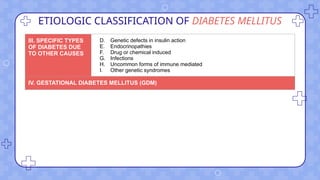
ETIOLOGIC CLASSIFICATION OF DIABETES MELLITUS
III. SPECIFIC TYPES
OF DIABETES DUE
TO OTHER CAUSES
D. Genetic defects in insulin action
E. Endocrinopathies
F. Drug or chemical induced
G. Infections
H. Uncommon forms of immune mediated
I. Other genetic syndromes
IV. GESTATIONAL DIABETES MELLITUS (GDM)
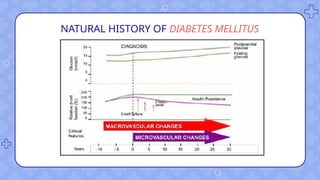
NATURAL HISTORY OF DIABETES MELLITUS
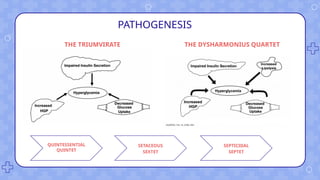
THE TRIUMVIRATE THE DYSHARMONIUS QUARTET
SETACEOUS
SEXTET
SEPTICIDAL
SEPTET
QUINTESSENTIAL
QUINTET
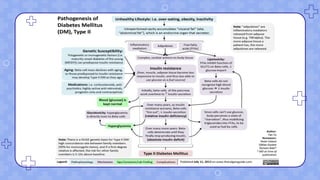
PATHOGENESIS
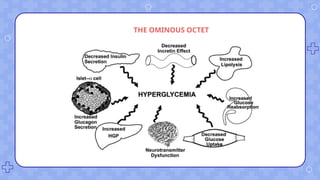
THE OMINOUS OCTET
PATHOPHYSIOLOGY
CLINICAL
MANIFESTATIONS
DIAGNOSTICS
SCREENING
● All individuals being seen at any
physician’s clinic or by any healthcare
provider should be evaluated annually
for risk factors for type 2 diabetes and
pre-diabetes.
● Universal screening using laboratory
tests is not recommended as it would
identify very few individuals who are at
risk
Should universal screening be
done and how should screening
be done?
SCREENING
● Laboratory testing for diabetes and
prediabetes is recommended for
individuals with any of the risk factors
for Type 2 diabetes mellitus.
Who should undergo laboratory
testing for diabetes/prediabetes?
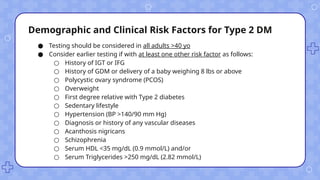
Demographic and Clinical Risk Factors for Type 2 DM
● Testing should be considered in all adults >40 yo
● Consider earlier testing if with at least one other risk factor as follows:
○ History of IGT or IFG
○ History of GDM or delivery of a baby weighing 8 lbs or above
○ Polycystic ovary syndrome (PCOS)
○ Overweight
○ First degree relative with Type 2 diabetes
○ Sedentary lifestyle
○ Hypertension (BP >140/90 mm Hg)
○ Diagnosis or history of any vascular diseases
○ Acanthosis nigricans
○ Schizophrenia
○ Serum HDL <35 mg/dL (0.9 mmol/L) and/or
○ Serum Triglycerides >250 mg/dL (2.82 mmol/L)
SCREENING
● Repeat testing should ideally be done
annually.
If initial test/s are negative for
diabetes, when should repeat
testing be done?
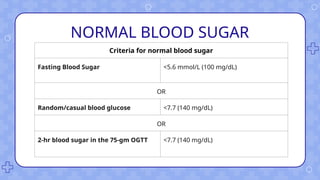
NORMAL BLOOD SUGAR
Criteria for normal blood sugar
Fasting Blood Sugar <5.6 mmol/L (100 mg/dL)
OR
Random/casual blood glucose <7.7 (140 mg/dL)
OR
2-hr blood sugar in the 75-gm OGTT <7.7 (140 mg/dL)
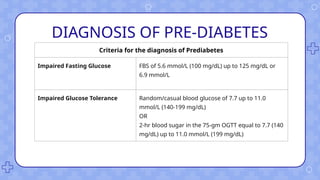
DIAGNOSIS OF PRE-DIABETES
Criteria for the diagnosis of Prediabetes
Impaired Fasting Glucose FBS of 5.6 mmol/L (100 mg/dL) up to 125 mg/dL or
6.9 mmol/L
Impaired Glucose Tolerance Random/casual blood glucose of 7.7 up to 11.0
mmol/L (140-199 mg/dL)
OR
2-hr blood sugar in the 75-gm OGTT equal to 7.7 (140
mg/dL) up to 11.0 mmol/L (199 mg/dL)
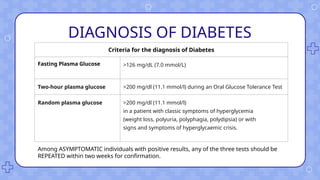
DIAGNOSIS OF DIABETES
Criteria for the diagnosis of Diabetes
Fasting Plasma Glucose >126 mg/dL (7.0 mmol/L)
Two-hour plasma glucose >200 mg/dl (11.1 mmol/l) during an Oral Glucose Tolerance Test
Random plasma glucose >200 mg/dl (11.1 mmol/l)
in a patient with classic symptoms of hyperglycemia
(weight loss, polyuria, polyphagia, polydipsia) or with
signs and symptoms of hyperglycaemic crisis.
Among ASYMPTOMATIC individuals with positive results, any of the three tests should be
REPEATED within two weeks for confirmation.
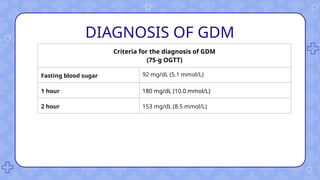
DIAGNOSIS OF GDM
Criteria for the diagnosis of GDM
(75-g OGTT)
Fasting blood sugar 92 mg/dL (5.1 mmol/L)
1 hour 180 mg/dL (10.0 mmol/L)
2 hour 153 mg/dL (8.5 mmol/L)
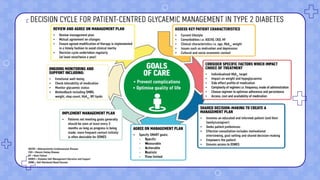
TREATMENT AND
MANAGEMENT
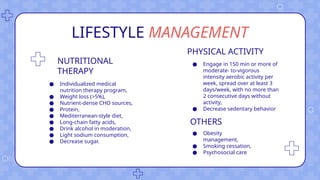
LIFESTYLE MANAGEMENT
NUTRITIONAL
THERAPY
● Individualized medical
nutrition therapy program,
● Weight loss (>5%),
● Nutrient-dense CHO sources,
● Protein,
● Mediterranean-style diet,
● Long-chain fatty acids,
● Drink alcohol in moderation,
● Light sodium consumption,
● Decrease sugar.
PHYSICAL ACTIVITY
● Engage in 150 min or more of
moderate- to-vigorous
intensity aerobic activity per
week, spread over at least 3
days/week, with no more than
2 consecutive days without
activity,
● Decrease sedentary behavior
OTHERS
● Obesity
management,
● Smoking cessation,
● Psychosocial care
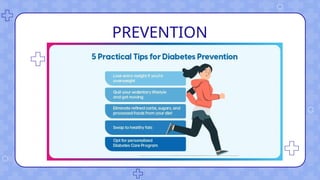
PREVENTION
THANK
YOU!

A presentation about Diabetes Mellitus Type 2

  • 1.
    TYPE 2 DIABETES NOVERO,LELANI SINGH, AMAN UGALE, KYLA ZINGAPAN, JANELYN
  • 2.
  • 3.
  • 4.
    History of presentillness 4 months PTC ● Intermittent dizziness, non- rotatory, lasting for <5 mins, aggravated by sudden movement and even at rest. ● No other associated signs and symptoms noted: ○ Nausea ○ Vomiting ○ Headache ○ Dyspnea ○ Chest pain ○ No tinnitus ● No consult done or meds taken
  • 5.
    1 month PTC -Intermittent dizziness, non rotatory - Not associated with headache, tinnitus or dyspnea - Polyuria (6x day) - Polyphagia - Polydipsia - Weakness - Fatigue - (-) weight loss/gain - No consult done or meds taken at this time
  • 6.
    History of PresentIllness 1 day PTC ● Still with dizziness now experiencing almost everyday. ● Associated with fatigue, weakness, pins and needles sensation in her hands, polyphagia, polyuria and polydipsia and blurring of vision. ● Thus, patient sought consult at our clinic.
  • 7.
    Review of Systems ●Constitutional: (-) chills, (-) malaise, (-) fever ● Integumentary: (-) redness, (-) pruritus, (-) lesions, (-) rashes ● HEENT: (-) headache, (-) hearing loss (-) diplopia, (-) tinnitus, (-) history of ear discharge, (-) epistaxis, (-) loss of sense of smell, (-) lesions ● Heart & lungs: (-)dob, (-) chest tightness ● Gastrointestinal: (-) constipation, (-) melena, (-)diarrhea, ● Musculoskeletal: (-) backache, (-) stiffness (-) joint swelling ● Genitourinary: (-) dysuria, (-) incontinence ● Neurologic: (-) loss of consciousness
  • 8.
    Personal and Social History Housewife (+)smoker - 4.5 pack years (-) alcoholic beverage drinker Past Medical History (-) Hypertension (-)DM (-)Heart Disease (-) Asthma (-) Allergy (-) Prior Surgery (-) Prior admissions Family History (-) Hypertension (+) Diabetes Mellitus - mother (+) Cardiovascular disease - mother (-) Asthma (-) Heart disease (-) Liver disease (-) Kidney disease (-) Cancer (-) Stroke
  • 9.
    BACLIG FAMILY GONZALESFAMILY JAMIE SERERINA DEDONG ARTHUR, 1957 ENQERIO BERRY LEVY, 1977 CHERRY, 1979 1956 ANA, 1982 FRANCISCO, 1973 MARION, 2014 CEDRIC, 2015 FRANCISCO III, 2017 ARVIN, 1990 LUDIVINA, 1956 ILING ROSENDO BNENERENTNRA JANA DIED DUE TO OLD AGE VA LIVER DISEASE DIABETES HYPERTENSION LEGENDS: INFORMANT: DAUGHTER OF PATIENT(ANA), CVMC OPD 11/06/2024 EXTENDED FAMILY FAMILY GENOGRAM Baclig-Gonzales Family I II III Progressive (POB.), Gonzaga, Cagayan IV
  • 10.
    OB History G3P3 (3003) G3- 1998 NSD, CVMC G2 - 1996 NSD, HOME G1 - 1994 NSD, HOME Menopause -at age 47 M - 12 y/o I - regular D - 3-5 days A - 3 pads/dat S - none
  • 11.
    General Survey General: Patientis conscious and coherent, and not in cardiorespiratory distress VITAL SIGNS: ● BP: 130/80 mmHg ● PR: 80 bpm ● RR: 16 bpm ● Temperature: 35.6º C ● O2Sat: 99% at room air ● No CBG done at this time Anthropometry: ● Height: 150cm ● Weight: 57kg ● BMI: 25.33 (obese 1)
  • 12.
    Physical Exam ● HEAD: ○Inspection: Hair is thick, evenly distributed. ○ Palpation: no tenderness, swelling, nodules or masses noted. ● SKIN, HAIR and NAILS: ○ Inspection: skin color is brown, no redness, no central/peripheral cyanosis, no yellowish discoloration of skin, no nail clubbing. No noted pallor on both her palms and soles. ○ Palpation: Skin is warm to touch, soft and smooth, and with good skin turgor and mobility. ● EYES: ○ Inspection: Anicteric Sclera, Pink palpebral Conjunctiva ● EARS: ○ Inspection: Symmetric, no skin lesions/masses, no discharge ○ Palpation: no tenderness ● NOSE and SINUSES: ○ Inspection: septum at midline, no lesions, no nasal discharge ○ Palpation: no sinus tenderness ● MOUTH and THROAT: ○ Inspection: Lips is pink and moist, no ulceration and bleeding noted. Oral mucosa is pink no lesions. Tongue and uvula at midline. OD 20/100 OS 20/70
  • 13.
    Physical Exam ● NECK: ○Inspection: symmetrical, no limitation of movement, no masses/lesions, no Acanthosis nigricans noted ○ Palpation: trachea midline, no lymph node enlargement, thyroid gland not enlarged ● THORAX and LUNGS: ○ Inspection: Symmetrical chest expansion, No retractions ○ Palpation: No chest wall masses or tenderness ○ Auscultation: Clear breath sounds ● CARDIOVASCULAR: ○ Inspection: Adynamic precordium. ○ Auscultation: normal rate, regular rhythm, No murmur ● ABDOMEN: ○ Inspection: no irregular discoloration, distention, scars/lesions, or bulges ○ Auscultation: Normoactive bowel sounds. ○ Percussion: No organomegaly. Liver span is 6-12 cm in RMCL ○ Palpation: Soft, no tenderness, masses, swelling, or rigidity ● EXTREMITIES: ○ Inspection: No deformities, edema, varicosities, normal gait ○ Palpation: (+) (R or Left shoulder) tenderness, full equal pulses, CRT <2secs. ● GENITOURINARY: ○ Inspection: Grossly female
  • 14.
    Neurologic Exam ● MentalStatus: Patient is oriented to person, place and time and recall recent and past memories. ● Motor Exam: ○ Muscle strength 5/5 in all extremities ○ Normal ROM in all extremities except Right shoulder ○ Right shoulder flexion/abduction 0-90º only ● Reflexes: 2+ in biceps, triceps, brachioradialis, knee and ankle ● Sensory Exam ○ 100% in all quadrants ○ Pin prick and light touch are discernable. ● Comprehensive foot exam ○ Inspection: no lesions, masses, dryness, cracking, ulcers or abnormal contours ○ Monofilament test - 10/10 both feet ○ Vibration perception - normal ○ Pin prick test - normal ○ DTR of achilles - 2 +
  • 15.
    CN I Ableto smell (coffee) CN II VA: 20/100 od ; 20/70 os CN III, IV, VI EOM intact, BRTL - OU CN V Able to identify sharp and dull. Clenches jaw CN CVII (+) eyebrow elevates, closes (+) cheek puffing (+) forehead wrinkling (+) symmetric smiling CN VIII able to hear finger rub and whispered voice CN IX, X no hoarseness, uvula midline, normal gag reflex CN XI, X Can shoulder shrug against resistance, Can rotate head against resistance CN XII No atrophy or fasciculations of tongue
  • 16.
  • 17.
    Plan Diet: Pinggang pinoy, Diagnostic:CBC, FBS, UA, Lipid Profile, Na, K, Crea, 12-L ECG, Chest X-ray PA/L Treatment: Continue meds: 1. Celecoxib 2. Vit B complex Non-pharmacological: Adequate oral fluid intake Avoid strenuous activities Adequate rest and sleep Lifestyle modification and weight reduction light to moderate intensity exercise 30 mins/day, 4x - 5x a week. WOF severity of symptoms such as shoulder pain and dizziness. To come back once with diagnostic results
  • 18.
    Follow up w/Labs(11/06/2024) Subjective: ● (+) fatigue ● (+) dizziness ● (+) polyphagia ● (+) paresthesias ● (+) polyuria ● (+) Polydipsia ● (-) Nausea/vomiting ● (-) headache ● (-) cough/cold ● (-) dyspnea ● (-) fever Objective: ● Conscious, coherent, alert, NICRD ● No pallor, cyanosis or jaundice noted ● Anicteric Sclerae, Pink Palpebral Conjunctiva ● Symmetric chest expansion, Clear Breath Sounds ● Adynamic precordium, Normal Rate Regular Rhythm ● Soft, non-tender abdomen ● No edema, Full equal pulses, CRT <2 sec ● CBG:195 mg/dl VITAL SIGNS: BP: 130/80 mmHg PR: 82 bpm RR: 16 bpm Temperature: 36.5º C O2Sat: 99% at room air
  • 19.
    Diagnostic Labs: ● FBS: 165mg/dL (H) ● Cholesterol: 169 mg/dL ● TGC: 96 mg/dL ● HDL: 39 mg/dL (low) ● LDL: 110 mg/dL ● VLDL: 19.3 mg/dl ● Crea: 73.20 umol/L ● eGFR: 77 ml/min ● Na: 141.20 ● K: 4.5 CBC: ● Hgb: 118 (L) ● Hct: 0.39 ● Plt Ct: 303 ● WBC: 5.3 ○ inc. monocytes ○ inc. eosinophils Urinalysis: ● Yellow ● Clear ● pH 6.0 ● SG 1.025 ● (-) protein ● (-) glucose ● (-) ketones ● (-) blood ● (-) bilirubin ● (N) Urobilinogen ● (-) Nitrite ● (-) WBC
  • 20.
    Imaging LEFT SHOULDER SERIES: -Impression: NEGATIVE FOR FRACTURE AND/OR DISLOCATION: CHEST PA/LATERAL - The lungs are clear: - The trachea is in the midline. - The heart is not enlarged. - The aortic knob is calcified. - The hemidiaphragms and costophrenic sulci are intact. - There are marginal spurs in the vertebral bodies of thoracic spine. - Other chest structures are unremarkable. - IMPRESSION: - ATHEROSCLEROTIC AORTA. - DEGENERATIVE OSTEOPHYTES, THORACIC SPINE.
  • 21.
  • 22.
    Salient Features ○ 68y/o,Female ○ Polyphagia ○ Polydipsia ○ Polyuria ○ Dizziness, Non-rotating ○ Fatigue ○ Weakness ○ Paresthesias ○ Blurring of vision ○ Monofilament test 10/10 ○ Obese I ○ BP: 130/80
  • 23.
  • 24.
  • 25.
    Orthostatic hypotension ● Definedas a sudden drop in blood pressure upon standing from a sitting or supine position. It is usually secondary to failure of the autonomic reflex, volume depletion, or adverse reaction to a medication. ● Symptoms on presentation are commonly related to cerebral hypoperfusion, but patients can also be asymptomatic. RULE IN RULE OUT ● 68 y/o ● Obese 1 ● Dizziness ● Weakness ● Fatigue ● (-) Difficulty concentrating ● (-) Shortness of breath ● (-) Backache ● (-) Lower extremity pain ● (-) cognitive slowing ● (-) dix-hallpike manuver
  • 26.
    Cerebrovascular Disease ● Cancause continuous spontaneous episodes of vertigo caused by arterial occlusion or insufficiency, especially when affecting the vertebrobasilar circulatory system ● Most commonly due to atherosclerosis RULE IN RULE OUT ● 68 y/o ● Obese 1 ● Dizziness (chronic) ● Paresthesias/Numbness ● Weakness ● Fatigue ● (-) severe headache ● (-) loss of balance ● (-) nausea/vomiting ● (-)Paralysis on one side of face/arm/leg ● (-) confusion/disorientation ● (-) numbness ● (-) slurred speech
  • 27.
    Hypothyroidism ETIOPATHOGENESIS ● Results fromunder-secretion of thyroid hormone ● Iodine deficiency remains the most common cause worldwide RULE IN RULE OUT ● Female ● >60 y/o ● PARESTHESIA ● Fatigue ● Weakness ● Dizziness ● (-)WEIGHT GAIN ● (-)POOR APPETITE ● (-)DRY SKIN ● (-)HAIR LOSS ● (-)IMPAIRED HEARING ● (-)CONSTIPATION ● (-)COLD INTOLERANCE
  • 28.
    TYPE 2 DM DMis defined as the level of glycemia at which diabetes-specific complications occur due to progressive loss of ß-cell insulin secretion with insulin resistance RULE IN RULE OUT ● polyuria ● polyphagia ● polyuria ● Nocturia ● fatigue ● Weakness ● FBS >126 mg/dL
  • 29.
    Type 2 DM,Newly diagnosed W/ EOR Dyslipidemia Adhesive capsulitis- right Obese 1 FINAL DIAGNOSIS
  • 30.
    PLAN: ● Diet: Lowcarbohydrate diet, low sodium, high fiber diet ● Diagnostics: Lipid Profile, HBA1c, Crea every 3 months for monitoring ● Treatment: ○ Metformin 500mg/tab 1 tab BID ○ Atorvastatin 40 mg/tab 1 tab ODHS ○ Celecoxib 200 mg/cap 1 cap q12 PRN for shoulder pain ○ Vitamin B complex 1 tab OD ● Non-pharmacologic ○ Encourage daily cbg monitoring and record ○ Strict compliance to medications ○ Weight loss recommended to ideal body weight ○ Increase oral fluid intake ○ Encourage regular exercise 20-30 min/ day. x 4-5 days/week ○ Eat smaller portions and avoid sugary drinks ○ Advise daily foot care ○ Encourage to comply w follow-up appointments ○ Stretching exercises and ROM exercises for the affected shoulder. ● WOF any severity of signs and symptoms such as dizziness, paresthesia, blurring of vision and etc. ● Refer to ophtha ● Refer to dental (common problem in dm) ● TCB after 1 month for follow up checkup.
  • 31.
  • 32.
    DIABETES MELLITUS - Greekword DIABETES meaning siphon (to pass through) - Latin word MELLITUS meaning honeyed or sweet - “A chronic condition that occurs when there are raised levels of glucose in the blood because the body cannot produce any or enough of the hormone insulin or use insulin effectively.”
  • 33.
    DIABETES MELLITUS “GLOBAL REPORTON DIABETES” WHO, 2016 - Diabetes is a major cause of blindness, kidney failure, heart attacks, stroke and lower limb amputation. - In 2016, an estimated 1.6 million deaths were directly caused by diabetes. - WHO estimates that diabetes was the seventh leading cause of death in 2016. BURDEN OF DISEASE GLOBAL PREVALENCE OF DIABETES
  • 34.
    DIABETES MELLITUS - Anestimated 4.3 million Filipinos were diagnosed with diabetes, while 2.8 million remained undiagnosed in 2021. - Diabetic retinopathy is a top cause of preventable blindness in Region 3, Philippines. - Diabetic nephropathy contributes to 38% of renal disease cases in the Philippines.
  • 35.
  • 36.
    How is diabetesclassified? Diabetes mellitus is classified into four major clinical types according to etiology: • Type 1 diabetes mellitus (formerly insulin dependent diabetes mellitus or Juvenile diabetes mellitus): results from autoimmune beta-cell destruction, leading to absolute insulin deficiency. Typically but not exclusively in children. • Type 2 diabetes mellitus (formerly non-insulin dependent diabetes mellitus or adult-onset DM): results from a progressive insulin secretory defect on the background of insulin resistance • Gestational diabetes mellitus (GDM): diabetes first diagnosed during pregnancy • Secondary diabetes e.g., genetic defects in beta cell function or insulin action, diabetes of the exocrine pancreas (pancreatitis, cystic fibrosis), drug- or chemical-induced diabetes (such as from the treatment of AIDS, after organ transplantation, glucocorticoids), other endocrine diseases (Cushing’s syndrome,hyperthyroidism)
  • 37.
    ETIOLOGIC CLASSIFICATION OFDIABETES MELLITUS I. TYPE 1 DIABETES Immune mediated beta-cell destruction, usually leading to absolute insulin deficiency. II. TYPE 2 DIABETES May range from predominantly insulin resistance with relative insulin deficiency to a predominantly insulin secretory defect with insulin resistance. III. SPECIFIC TYPES OF DIABETES DUE TO OTHER CAUSES A. Genetic defects of beta cell development or function characterized by mutations in: 1. HNF 4 (MODY 1) 𝛼 2. Glucokinase (MODY 2) 3. HINF 1 (MODY 3) 𝛼 4. Insulin promoter factor-1, HINF-1B, NeuroD1, and others leading to other forms of MODY. 5. Insulin, subunits of ATP-sensitive potassium channel leading to permanent neonatal diabetes 6. Mitochondrial DNA 7. Other pancreatic islet regulators/proteins such as KLF11, PAX4, BLK, GATA4, GATA6, SLC2A2 (GLUT 2), RFX6, GUIS3 A. Transient neonatal diseases B. Diseases of the exocrine pancreas
  • 38.
    ETIOLOGIC CLASSIFICATION OFDIABETES MELLITUS III. SPECIFIC TYPES OF DIABETES DUE TO OTHER CAUSES D. Genetic defects in insulin action E. Endocrinopathies F. Drug or chemical induced G. Infections H. Uncommon forms of immune mediated I. Other genetic syndromes IV. GESTATIONAL DIABETES MELLITUS (GDM)
  • 39.
    NATURAL HISTORY OFDIABETES MELLITUS
  • 40.
    THE TRIUMVIRATE THEDYSHARMONIUS QUARTET SETACEOUS SEXTET SEPTICIDAL SEPTET QUINTESSENTIAL QUINTET PATHOGENESIS
  • 41.
  • 42.
  • 44.
  • 47.
  • 48.
    SCREENING ● All individualsbeing seen at any physician’s clinic or by any healthcare provider should be evaluated annually for risk factors for type 2 diabetes and pre-diabetes. ● Universal screening using laboratory tests is not recommended as it would identify very few individuals who are at risk Should universal screening be done and how should screening be done?
  • 49.
    SCREENING ● Laboratory testingfor diabetes and prediabetes is recommended for individuals with any of the risk factors for Type 2 diabetes mellitus. Who should undergo laboratory testing for diabetes/prediabetes?
  • 50.
    Demographic and ClinicalRisk Factors for Type 2 DM ● Testing should be considered in all adults >40 yo ● Consider earlier testing if with at least one other risk factor as follows: ○ History of IGT or IFG ○ History of GDM or delivery of a baby weighing 8 lbs or above ○ Polycystic ovary syndrome (PCOS) ○ Overweight ○ First degree relative with Type 2 diabetes ○ Sedentary lifestyle ○ Hypertension (BP >140/90 mm Hg) ○ Diagnosis or history of any vascular diseases ○ Acanthosis nigricans ○ Schizophrenia ○ Serum HDL <35 mg/dL (0.9 mmol/L) and/or ○ Serum Triglycerides >250 mg/dL (2.82 mmol/L)
  • 51.
    SCREENING ● Repeat testingshould ideally be done annually. If initial test/s are negative for diabetes, when should repeat testing be done?
  • 52.
    NORMAL BLOOD SUGAR Criteriafor normal blood sugar Fasting Blood Sugar <5.6 mmol/L (100 mg/dL) OR Random/casual blood glucose <7.7 (140 mg/dL) OR 2-hr blood sugar in the 75-gm OGTT <7.7 (140 mg/dL)
  • 53.
    DIAGNOSIS OF PRE-DIABETES Criteriafor the diagnosis of Prediabetes Impaired Fasting Glucose FBS of 5.6 mmol/L (100 mg/dL) up to 125 mg/dL or 6.9 mmol/L Impaired Glucose Tolerance Random/casual blood glucose of 7.7 up to 11.0 mmol/L (140-199 mg/dL) OR 2-hr blood sugar in the 75-gm OGTT equal to 7.7 (140 mg/dL) up to 11.0 mmol/L (199 mg/dL)
  • 54.
    DIAGNOSIS OF DIABETES Criteriafor the diagnosis of Diabetes Fasting Plasma Glucose >126 mg/dL (7.0 mmol/L) Two-hour plasma glucose >200 mg/dl (11.1 mmol/l) during an Oral Glucose Tolerance Test Random plasma glucose >200 mg/dl (11.1 mmol/l) in a patient with classic symptoms of hyperglycemia (weight loss, polyuria, polyphagia, polydipsia) or with signs and symptoms of hyperglycaemic crisis. Among ASYMPTOMATIC individuals with positive results, any of the three tests should be REPEATED within two weeks for confirmation.
  • 55.
    DIAGNOSIS OF GDM Criteriafor the diagnosis of GDM (75-g OGTT) Fasting blood sugar 92 mg/dL (5.1 mmol/L) 1 hour 180 mg/dL (10.0 mmol/L) 2 hour 153 mg/dL (8.5 mmol/L)
  • 56.
  • 60.
    LIFESTYLE MANAGEMENT NUTRITIONAL THERAPY ● Individualizedmedical nutrition therapy program, ● Weight loss (>5%), ● Nutrient-dense CHO sources, ● Protein, ● Mediterranean-style diet, ● Long-chain fatty acids, ● Drink alcohol in moderation, ● Light sodium consumption, ● Decrease sugar. PHYSICAL ACTIVITY ● Engage in 150 min or more of moderate- to-vigorous intensity aerobic activity per week, spread over at least 3 days/week, with no more than 2 consecutive days without activity, ● Decrease sedentary behavior OTHERS ● Obesity management, ● Smoking cessation, ● Psychosocial care
  • 61.
  • 63.

Editor's Notes

  • #2 ABCs of diabetes A1c Blood Pressure Cholesterol
  • #4 Patient was previously seen at Department of Ortho last _____ and diagnosed as a case of Adhesive capsulitis on (what meds)?? Make your HPI more concise. Make use of bullets, arrows, in your slides then report as narrative in your actual presentation.
  • #5 No 3 P’s, weakness, fatigue, weight loss/gain 1 month PTC?
  • #6 Patient was last seen by Dept of Ortho last — and managed as a cased of… on what meds?and was referred into our department reg dizziness. Wag siyang i paragraph doc.. Bulleted lang.. -3 P’s, pins and needles etc only 7 days PTC?
  • #7 Since may blurring of vision mag lagay din tayo ng test: VA… Lagay din natin polyuria and polyphagia polydypsia..ano pa? -blurring of vision is a pertinent positive and should be part of your HPI. -tinnitus is already part of your HPI, please remove in the ROS
  • #9 Upper Portion: Family Genogram Baclig - Gonzales Family Asan yung index patient natin? Anong type ng family life cycle? And sa loob ng box yung magkakasama sa bahay ilagay niyo address Yung generations
  • #10 Patient had her menarche at 12 y/o at regular monthly intervals for 3-5 days/month using 3 pads/day without any recalled dysmenorrhea or headaches.
  • #11 -CBG upon initial consultation?
  • #13 -include in the neck PE: ( ) acanthosis nigricans? -Comprehensive foot exam(separate)
  • #14 Itatanong nila here pano mo pinerform yang test na yan? Tingin ka ng pick then insert mo jan.. -rearrange the sequence of your neuro exam Motor exam -indicate the grading ex. 5/5 in all quadrants Sensory exam -indicate the percentage ex. 100% in all quadrants -Monofilament test should be part of the comprehensive foot exam
  • #17 -What is the indication of urinalysis, Na, K, Crea, 12L ECG - entertaining what? CXR for? CBG - 191mg/dl
  • #18 -CBG?
  • #19 Cholesterol normal <200 mg/dL 200-239mg /dl = borderline high >240mg = HIGH -did you ask if the patient had sufficient number of fasting hours?( 8-10 hours?)
  • #21 -if you will really include 12L ECG, what your interpretation? RRAHIM method Rate Rhythm Axis Hypertrophy Ischemia, Infarction Miscellaneous
  • #22 Doc dapat may Objective and Subjective -separate subjective and objective salient features -please include pertinent positive and pertinent negatives
  • #25 -DM is a straightforward diagnosis. May opt not to present any differentials.
  • #26 Orthostatic hypotension occurs with an abnormal or delayed response to shifts in the body's fluid balance on standing. “Classic" orthostatic hypotension - within three minutes of standing "Delayed" orthostatic hypotension - after three minutes. Neurogenic orthostatic hypotension is characterized by autonomic instability secondary to neuropathic disease, neurodegenerative disease, or aging. Neuropathic conditions include diabetes, B12 deficiency,cholinergic receptor autoantibodies, and familial dysautonomia. Neurodegenerative diseases include Parkinson disease, multiple-system atrophy, and pure autonomic failure Non-neurogenic orthostatic hypotension is most commonly due to volume depletion Volume depletion - Anemia, dehydration, hemorrhage, hyperglycemia Cardiovascular diseases - Aortic stenosis, hypertension, atherosclerosis, heart failure, vascular stiffening, or arrhythmias Other - Adrenal insufficiency, physical deconditioning, aging
  • #28 Vertebrobasilar insufficiency is a condition characterized by poor blood flow to the posterior (back) portion of the brain, which is fed by two vertebral arteries that join to become the basilar artery. Blockage of these arteries occurs over time through a process called atherosclerosis, or the build-up of plaque.
  • #29 Paroxysmal fibrillation is when the heart returns to a normal rhythm on its own, or with intervention, within seven days of abnormality. People who have this type of AFib may have episodes only a few times a year or their symptoms may occur every day. These symptoms are very unpredictable and can often turn into a permanent form of AFib. Persistent AFib is an irregular rhythm that lasts for longer than seven days. This type of AFib will not return to a normal sinus rhythm on its own and will require some form of treatment. Longstanding AFib is when the heart is consistently in an irregular rhythm for longer than 12 months. Permanent AFib occurs when the condition lasts indefinitely, and the patient and doctor have decided not to continue trying to restore a normal rhythm. Nonvalvular AFib is AFib not caused by a heart valve issue

  • #33 -why every 3 months lipid profile? -meds for adhesive capsulitis? -why Metformin BID?(basis?) -CBG monitoring is ideally for insulin-requiring. -referral to Ophtha for official fundoscopy -referral to Dental Service for oral examination -follow up after 1 month(for newly diagnosed DM) Non-pharma for adhesive capsulitis? Non-pharma for obesity?
  • #40 -focus on DM type 2 -indicate your references
  • #54 Overweight: Body Mass Index (BMI)2 of >23 kg/m2 or Obese: BMI of >25 kg/m2, or Waist circumference >80 cm (females) and >90 cm( males), or Waist-hip ratio (WHR) of >1 for males and >0.85 for females Diagnosis or history of any vascular diseases including stroke, peripheral arterial occlusive disease, coronary artery disease
  • #58 Plasma glucose >126 mg/dL (7.0 mmol/L) after an overnight fast o Fasting is defined as no caloric intake for at least 8 hours up to a maximum of 14 hours, OGTT- The test should be performed as described by the World Health Organization, using a glucose load containing the equivalent of 75 g anhydrous glucose dissolved in water after an overnight fast of between 8 and 14 Hours, RANDOM- in a patient with classic symptoms of hyperglycemia (weight loss, polyuria, polyphagia, polydipsia) or with signs and symptoms of hyperglycaemic crisis.
  • #59 An oral glucose tolerance test (OGTT), preferably the 75-g OGTT, should be used to screen for gestational diabetes (Grade B, Level 3).
  • #64 Individualized medical nutrition therapy program as needed to achieve treatment goals, preferably provided by a registered dietitian, is recommended Weight loss (>5%) achievable by the combination of reduction of calorie intake and lifestyle modification Nutrient-dense carbohydrate sources that are high in fiber, including vegetables, fruits, legumes, whole grains, as well as dairy products Ingested protein increases insulin response without increasing plasma glucose concentrations Mediterranean-style diet rich in monounsaturated and polyunsaturated fats may be considered Eating food rich in long-chain n-3 fatty acids, such as fatty fish (EPA and DHA) and nuts and seeds (ALA), is recommended No clear evidence that dietary supplementation with vitamins, minerals, herbs, or spices can improve outcomes Drink alcohol in moderation (no more than 1 drink/day for adult women and no more than 2 drinks/day for adult men) Limit sodium consumption to 2,300 mg/day Decrease both sweetened and nonnutritive- sweetened beverages with an emphasis on water intake
  • #66 -References?