A Metric for
Software
Readability
Ray Buse ∙ Westley Weimer
ISSTA 2008
2
Readability
“The quality that enables the observer to correctly
perceive the message”
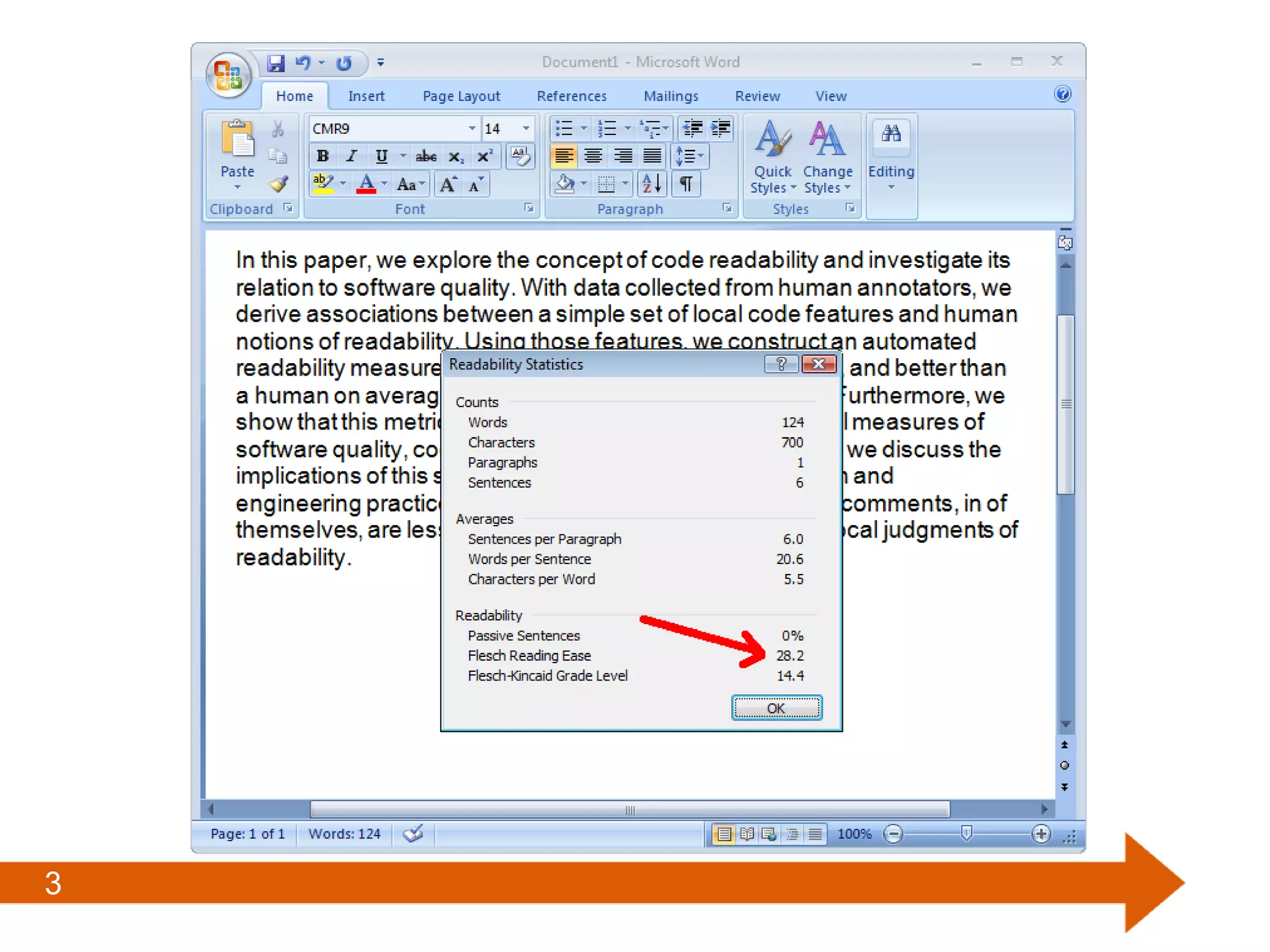
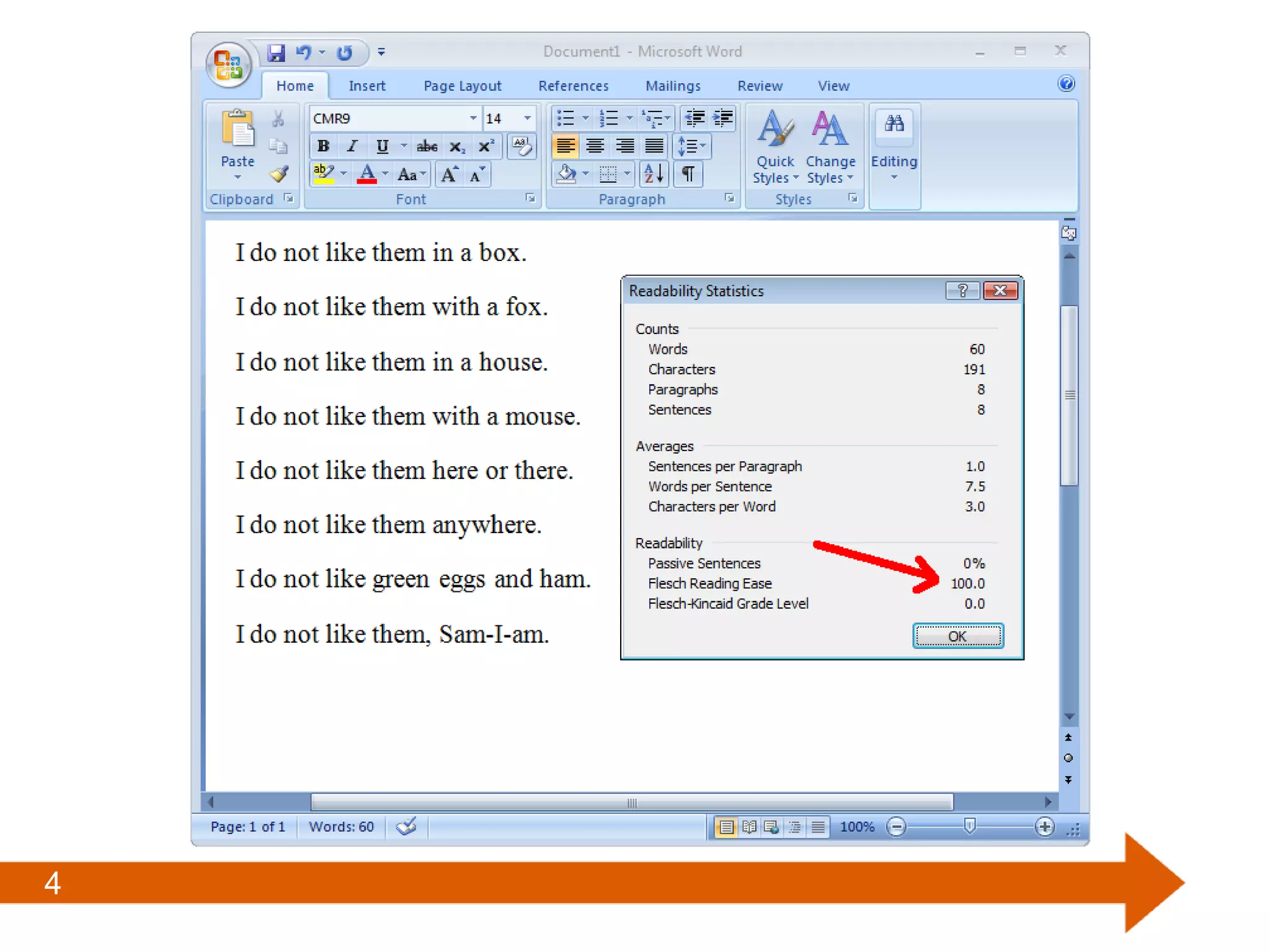
Metrics for Natural Language
 Flesch-Kincaid Grade Level
 Gunning-Fog Index
 SMOG Index
 Automated Readability Index
3
4
5
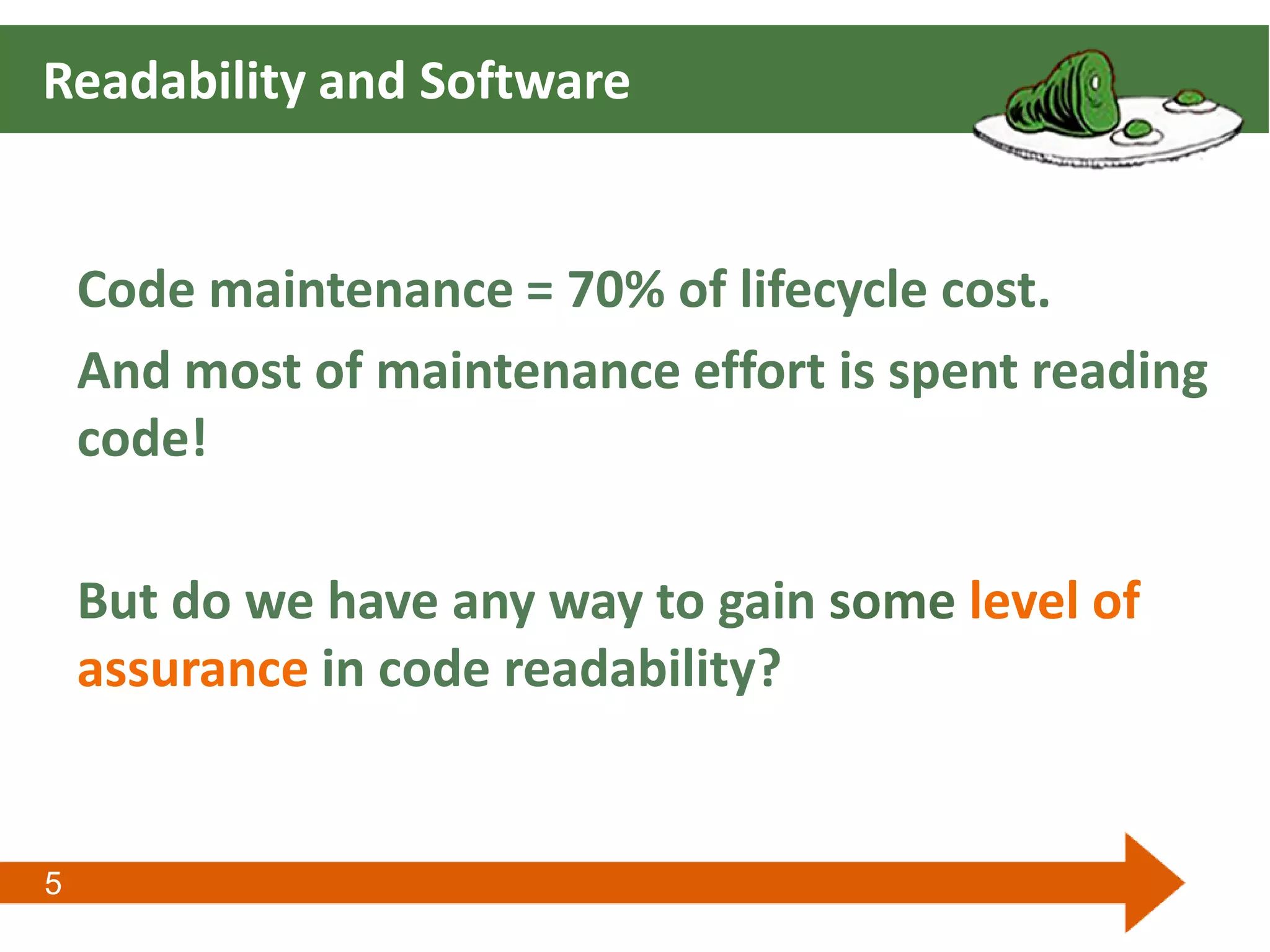
Readability and Software
Code maintenance = 70% of lifecycle cost.
And most of maintenance effort is spent reading
code!
But do we have any way to gain some level of
assurance in code readability?
6
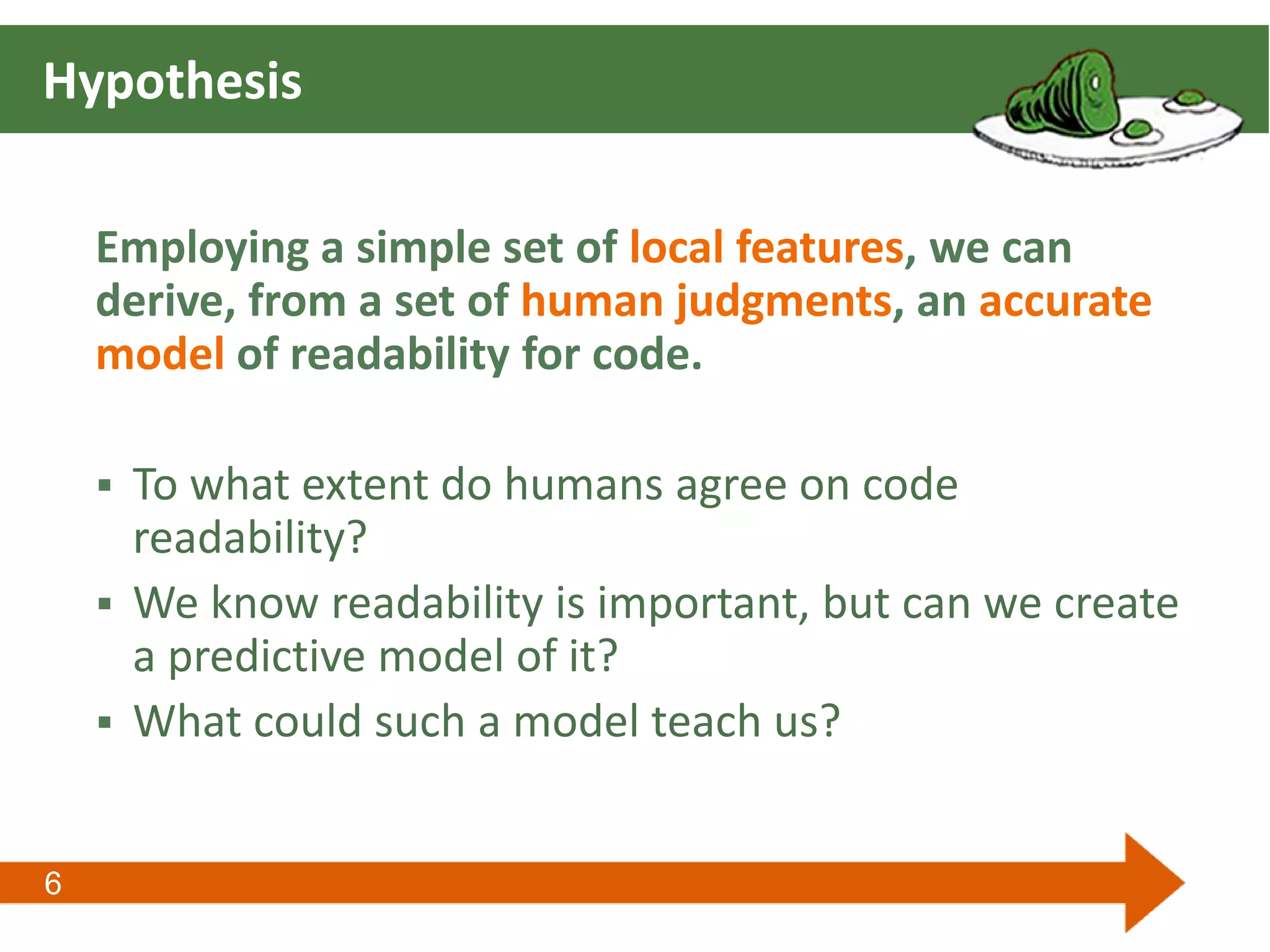
Hypothesis
Employing a simple set of local features, we can
derive, from a set of human judgments, an accurate
model of readability for code.
 To what extent do humans agree on code
readability?
 We know readability is important, but can we create
a predictive model of it?
 What could such a model teach us?
7
Outline
 Acquiring Human Readability Judgments
 Extracting a Model
 Model Performance
 Correlation with External Notions of Software
Quality
 Readability and the Software Lifecycle
8
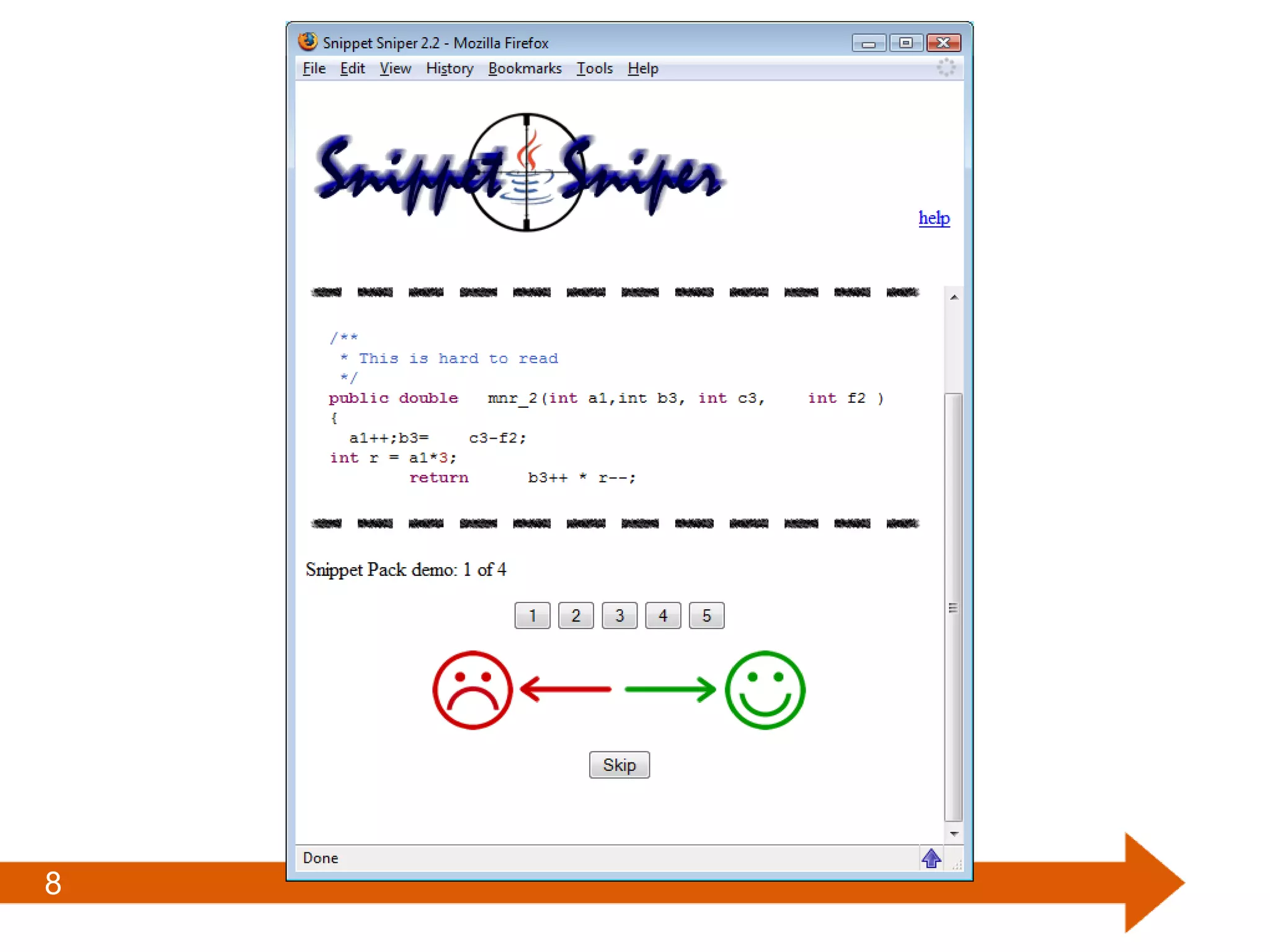
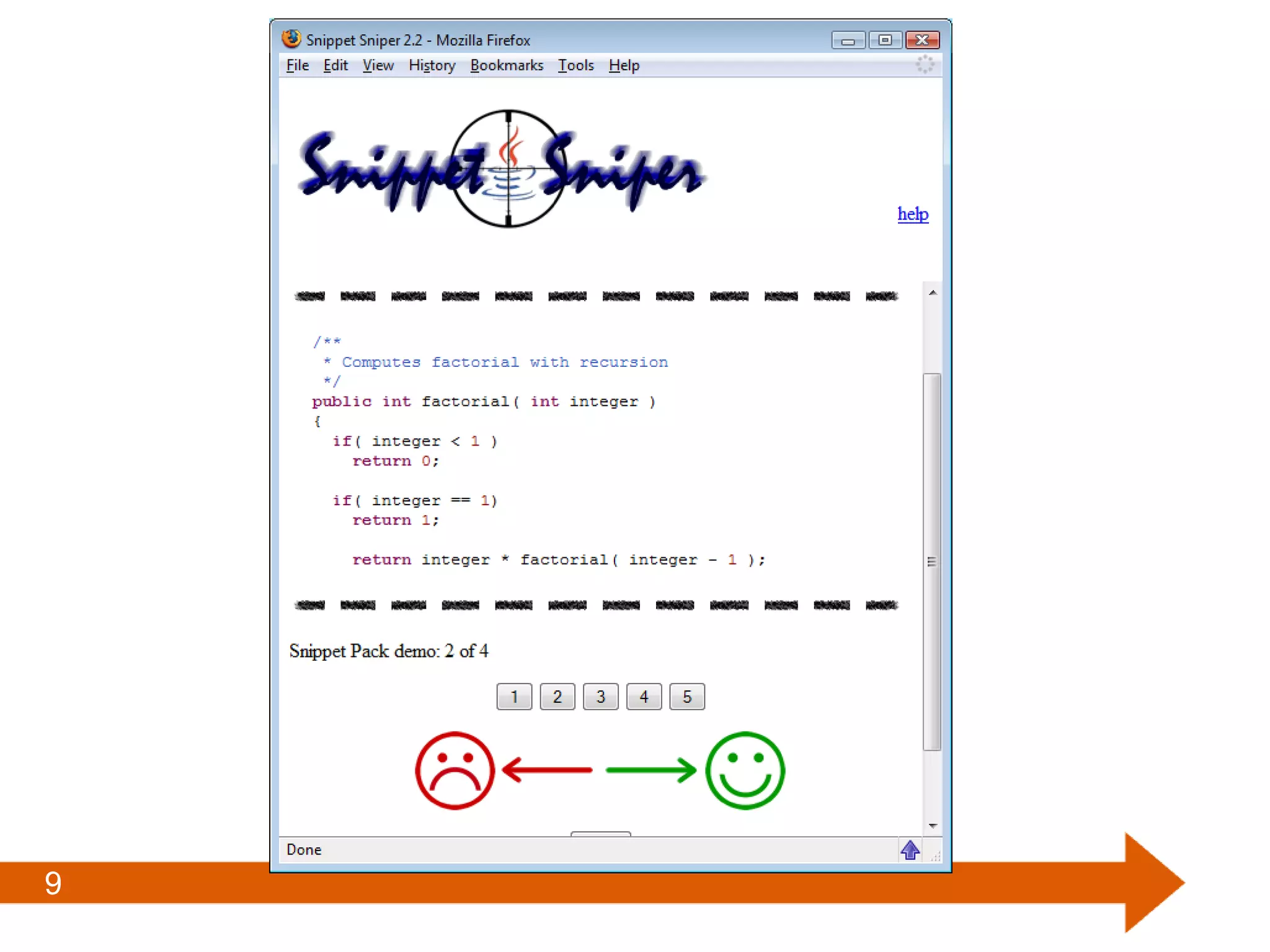
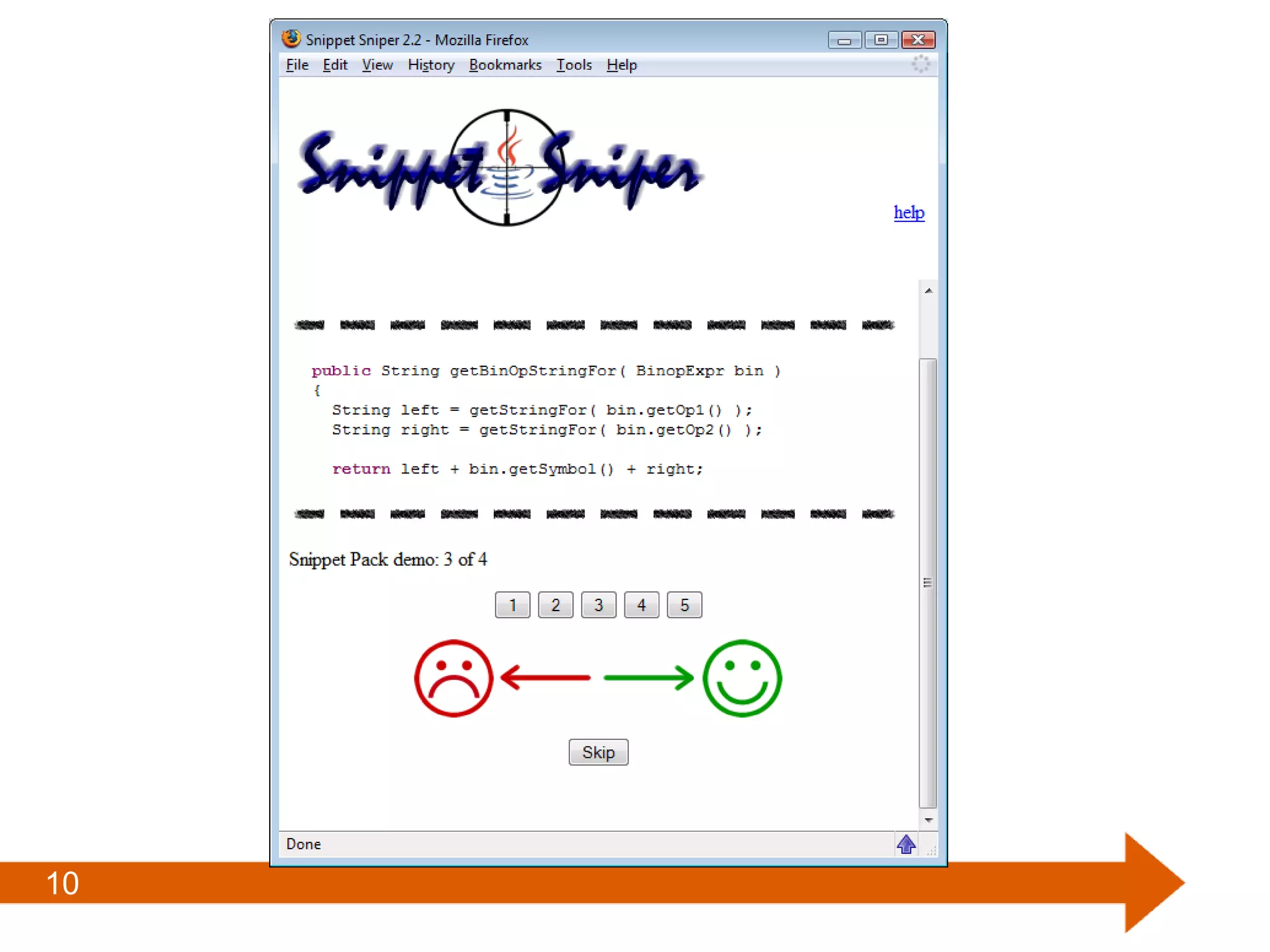
Snippet Sniper Demo
9
10
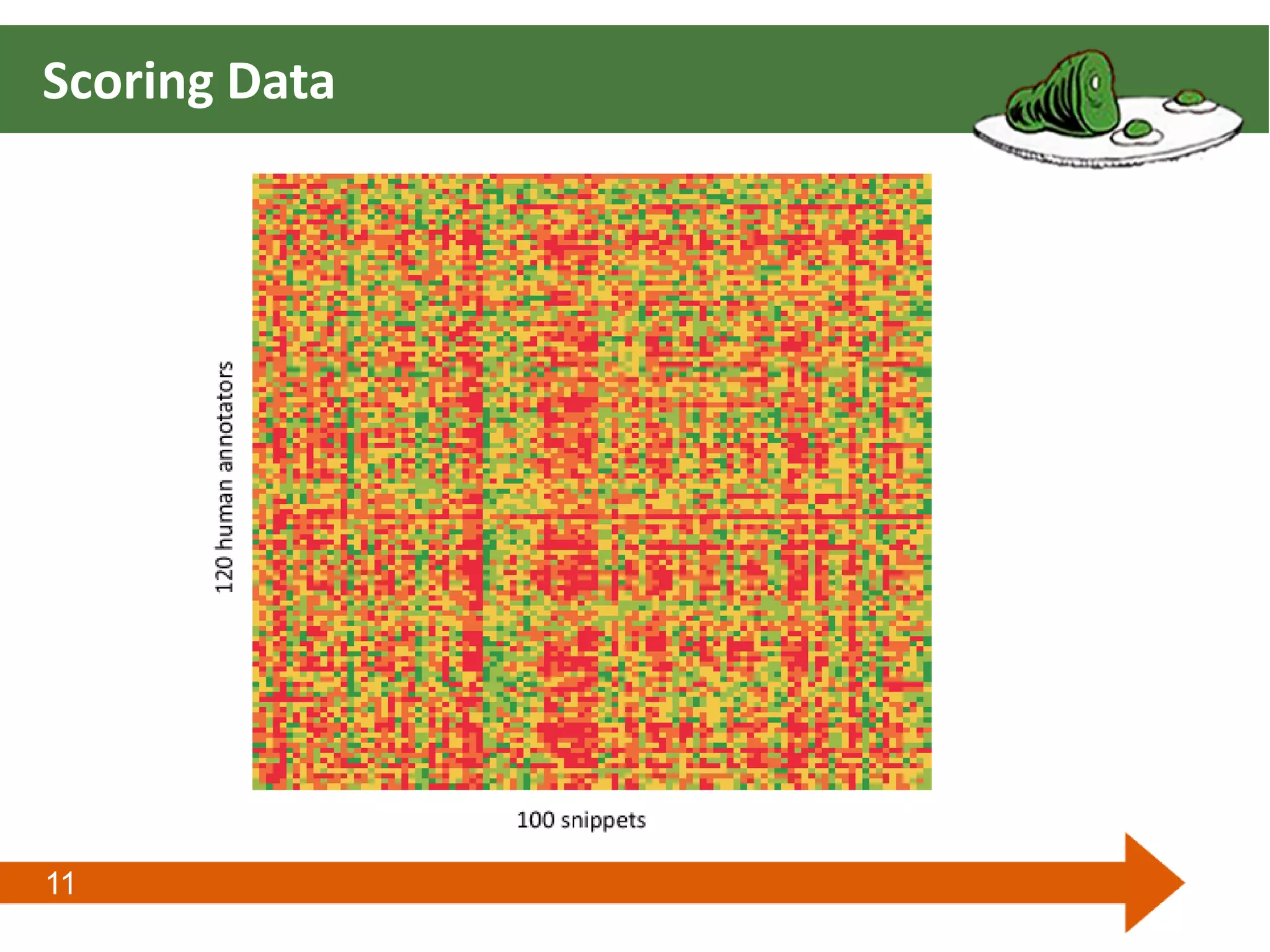
11
Scoring Data
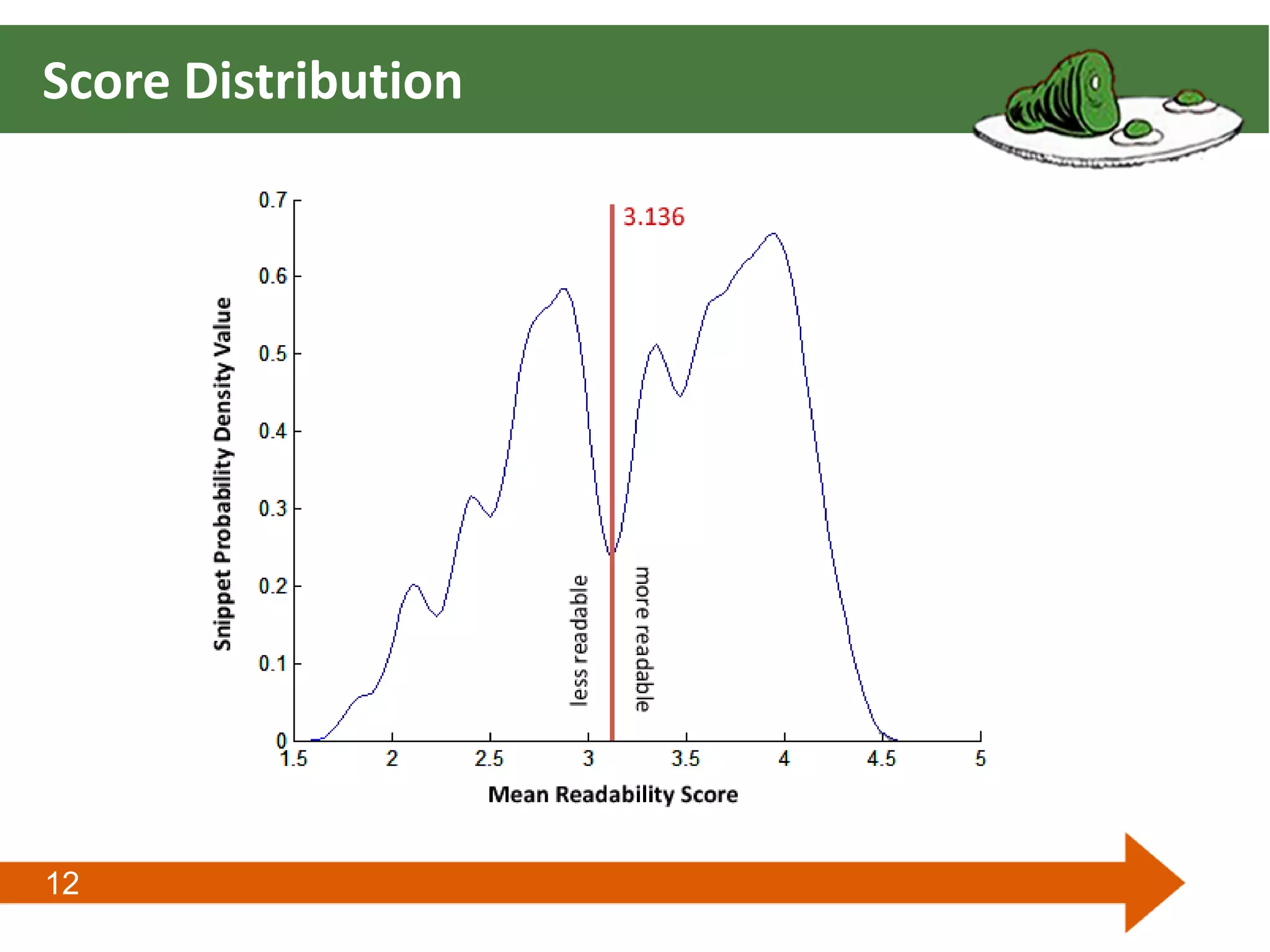
12
Score Distribution
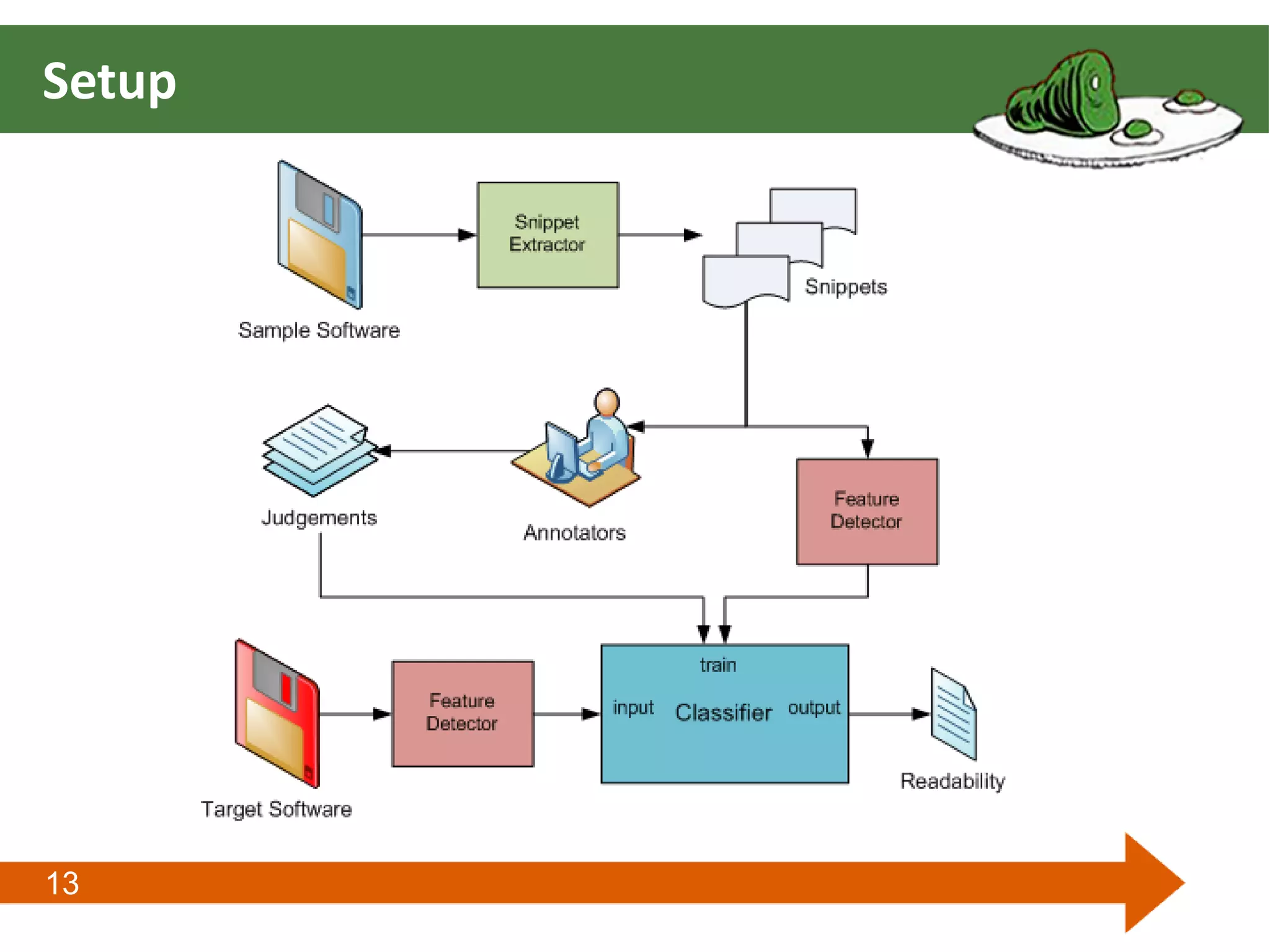
13
Setup
14
Features
We choose “local” code features
 Line length
 Length of identifier names
 Comment density
 Blank lines
 Presence of numbers
 [and 20 others]
15
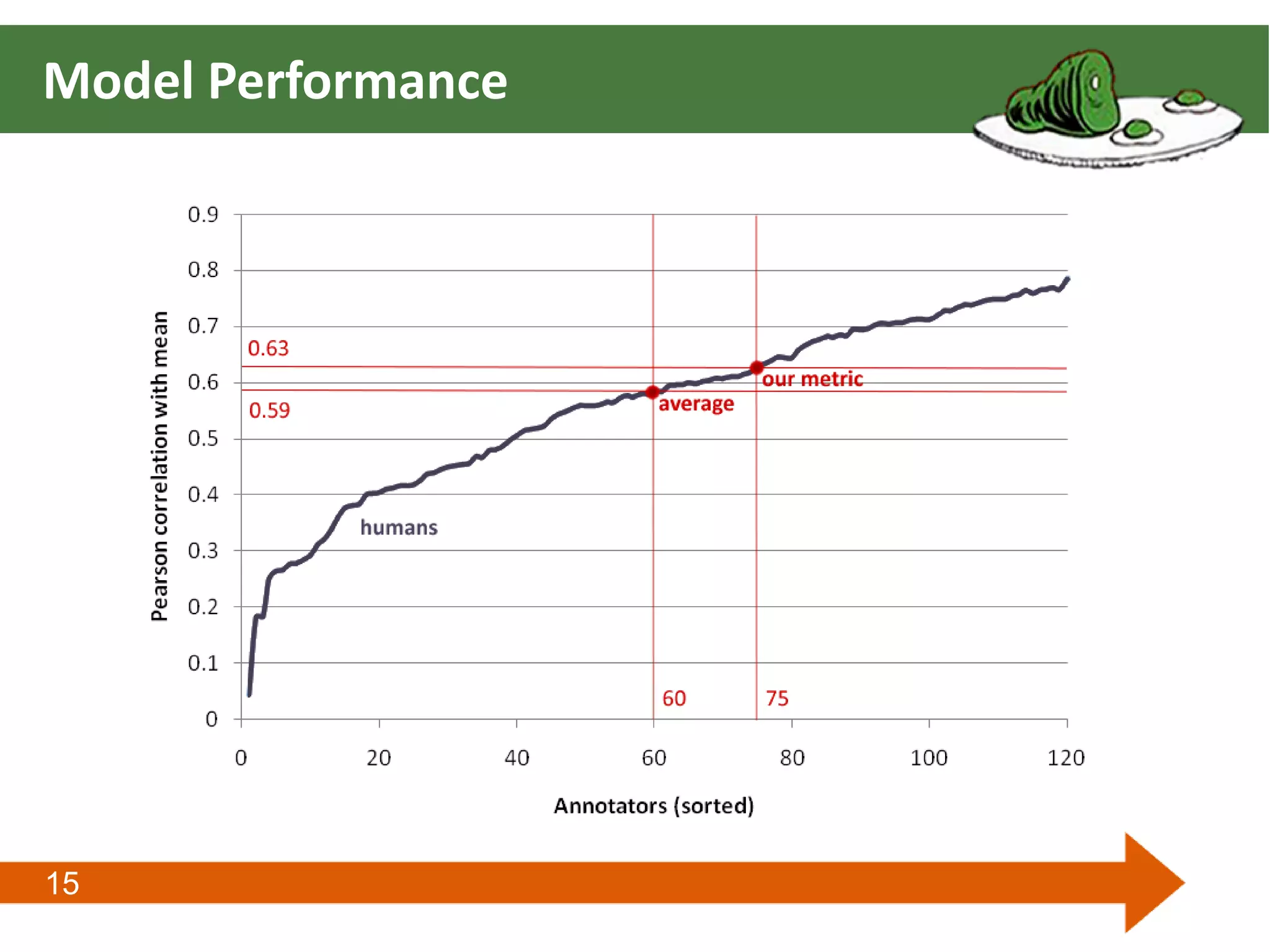
Model Performance
16
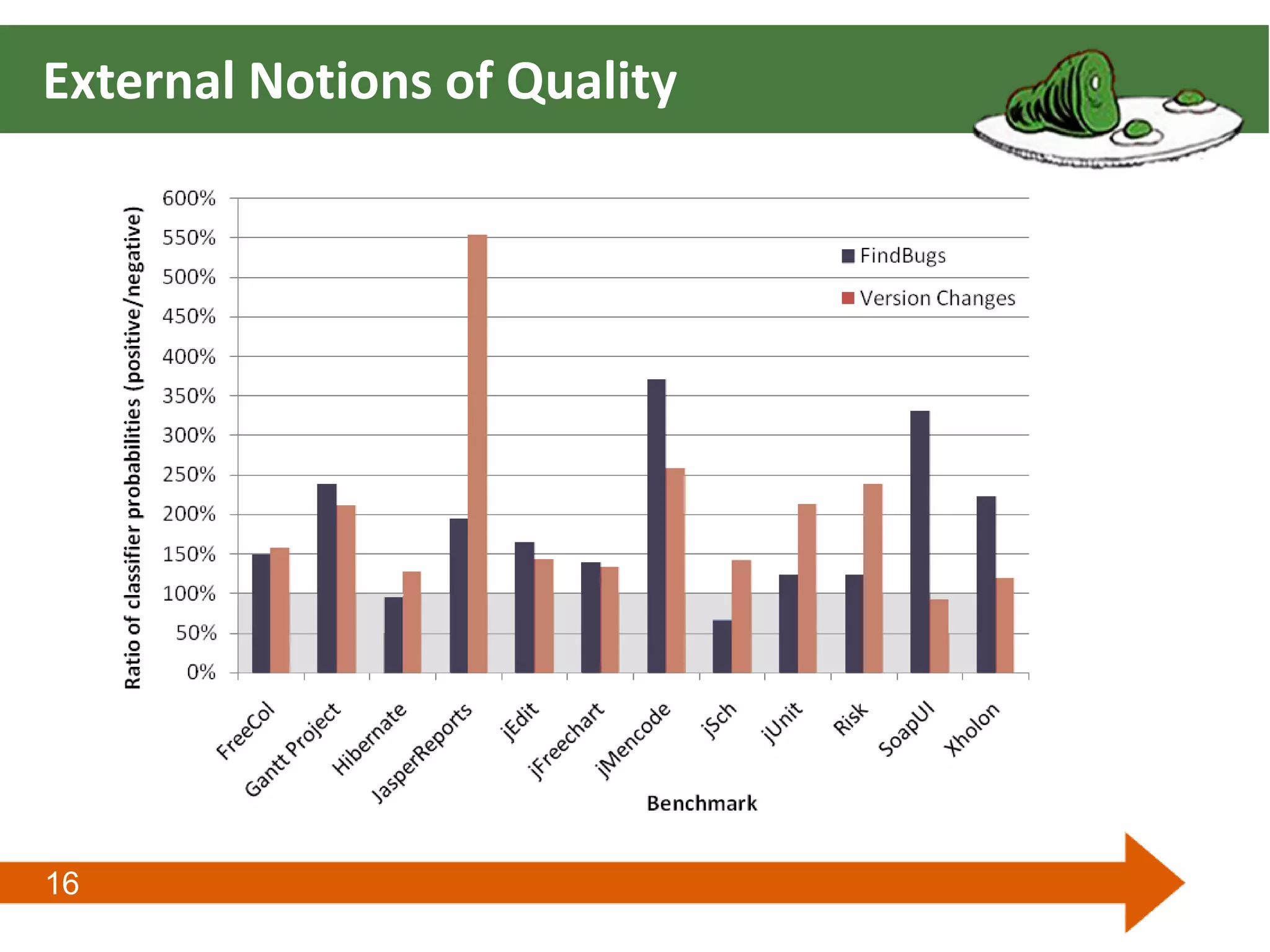
External Notions of Quality
17
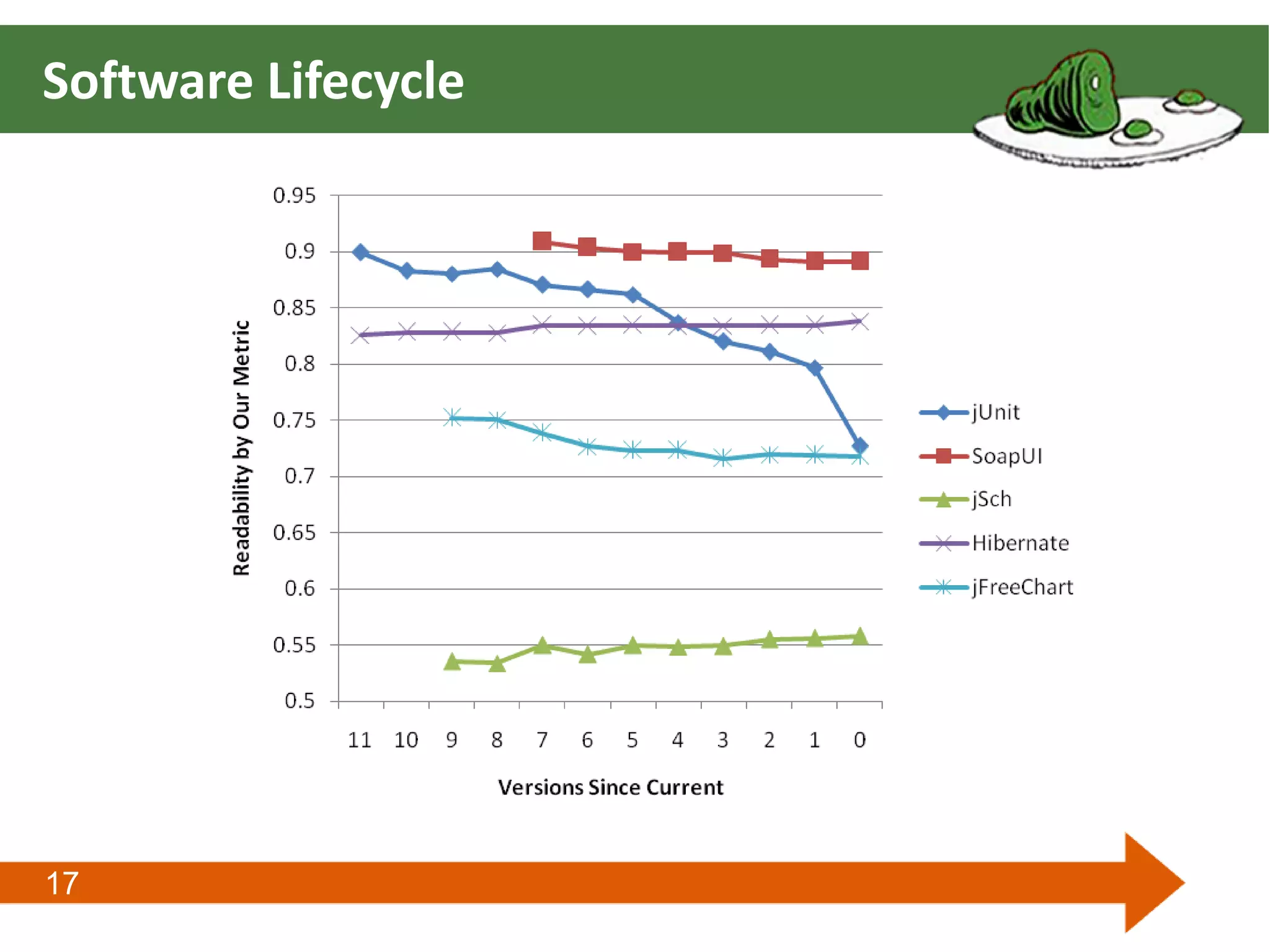
Software Lifecycle
18
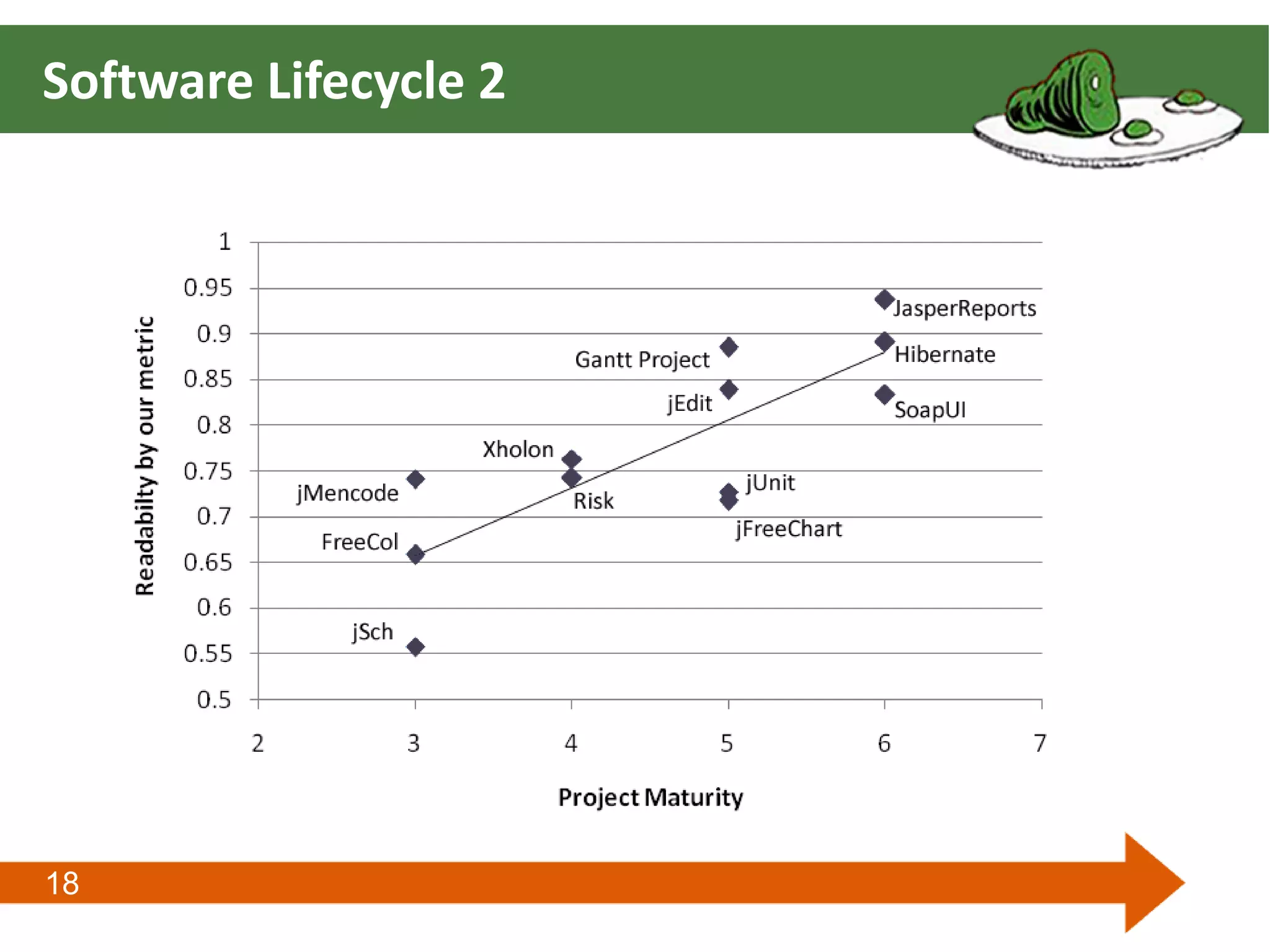
Software Lifecycle 2
19
Conclusions
We can automatically judge readability about as
well as the “average” human can
This notion of readability shows significant
correlation with:
 Version Changes
 The output of a bug finder
 Self-reported program maturity
We may also learn more about software readability
by looking at the predictive power of our model’s
features
20
Questions?
Questions?

A Metric for Code Readability