A comparative study on uroculturome
antimicrobial susceptibility in apparently
healthy and urinary tract infected humans
Bhoj R Singh1, Himani Agri2*
Presented at 6th Edition of World Congress on Infectious Diseases (Infection 2024) Dates: June 24-26, 2024 at Paris, France
1Principal Scientist (Microbiology) & Head of the Division of Epidemiology
2*Ph.D. Scholar, Vet. Public Health and Epidemiology
ICAR-Indian Veterinary Research Institute, Izatnagar-243 122, India
Email: br.singh@icar.gov.in/ brs18762@gmail.com
Epidemiology, ICAR-IVRI, Izatnagar
Abstract
The uroculturome indicates the profile of culturable microbes inhabiting the urinary tract, and it is often required to do a urine
culture to find an effective antimicrobial to treat UTIs. This study targeted to understand the profile of culturable pathogens in the urine of
apparently healthy (128) and humans with clinical UTIs (161). All the urine samples were analyzed to quantify microbial load and
determine the diversity and antimicrobial susceptibility of microbes following standard microbiological methods. In urine samples from
UTI cases, microbial counts were 1.2×10⁴ ± 6.02×10³ colony-forming units (cfu)/ mL, while in urine samples from apparently healthy
humans, the average count was 3.33± 1.34×10³ cfu/ mL. In eight samples (six from UTI cases and two from apparently healthy people) of
urine, Candida (C. albicans 3, C. catenulata 1, C. krusei 1, C. tropicalis 1, C. parapsiplosis 1, C. gulliermondii 1) and Rhizopus species (1) were
detected. Candida krusei was detected only in a single urine sample from a healthy person and C. albicans was detected both in urine of
healthy and clinical UTI cases. Fungal strains were always detected with one or more types of bacteria. Gram-positive bacteria were more
commonly (OR, 1.98; CI99, 1.01-3.87) detected in urine samples of apparently healthy humans, and Gram -ve bacteria (OR, 2.74; CI99, 1.44-
5.23) in urines of UTI cases. From urine samples of 161 UTI cases, a total of 90 different types of microbes were detected and, 73 samples
had only a single type of bacteria. In contrast, 49, 29, 3, 4, 1, and 2 samples had 2, 3, 4, 5, 6 and 7 types of bacteria, respectively. The most
common bacteria detected in urine of UTI cases was Escherichia coli detected in 52 samples, in 20 cases as the single type of bacteria, other
34 types of bacteria were detected in pure form in 53 cases. From 128 urine samples of apparently healthy people, 88 types of microbes
were detected either singly or in association with others, from 64 urine samples only a single type of bacteria was detected while 34, 13, 3,
11, 2 and 1 samples yielded 2, 3, 4, 5, 6 and seven types of microbes, respectively. In the urine of apparently healthy humans too, E. coli was
the most common bacteria, detected in pure culture from 10 samples followed by Staphylococcus haemolyticus (9), S. intermedius (5), and S.
aureus (5), and similar types of bacteria also dominated in cases of mixed occurrence, E. coli was detected in 26, S. aureus in 22 and S.
haemolyticus in 19 urine samples, respectively. Gram +ve bacteria isolated from urine samples' irrespective of health status were more
often (p, <0.01) resistant than Gram -ve bacteria to ajowan oil, holy basil oil, cinnamaldehyde, and cinnamon oil, but more susceptible to
sandalwood oil (p, <0.01). However, for antibiotics, Gram +ve were more often susceptible than Gram -ve bacteria to cephalosporins,
doxycycline, and nitrofurantoin. The study concludes that to understand the role of good and bad bacteria in the urinary tract microbiome
more targeted studies are needed to discern the isolates at the pathotype level. Further, the study suggests the use of antibiotics by
observing good antibiotic stewardship following antibiotic susceptibility testing (AST) only.
Keywords: Uro-microbiome, UTI, Antimicrobial susceptibility testing (AST), Herbal antimicrobials, ESBL, Carbapenem resistance,
MDR, Multiple herbal drug resistance
Epidemiology, ICAR-IVRI, Izatnagar
Uroculturome
• Culturable microbiota of urine.
• Life within life.
• Bacteria modulate our lives through changing physiological functions, changes
may either be induced or affected by the use of antimicrobials (Singh et al., 2024,
Singh, 2012; Schluter and Foster, 2012)
• Urine incontinence and urinary tract microbiome (Price et al., 2020)
• Urinary tract problems are associated with dysbiosis and can be corrected by
inducing eubiosis (Colella et al., 2023; Kawalec and Zwoli´nska, 2022).
• Bounderies in eubiotic and dysbiotic microflora are often blurred, most of the
urinary tract infections (UTI) are associated with opportunistic pathogens also
present as normal inhabitants there (Chesca et al., 2022; Mironov et al., 2021)
Epidemiology, ICAR-IVRI, Izatnagar
Common causes of UTI reported (Singh, 2019)
• In Humans: Ten most commonly bacteria from UTI cases: Escherichia,
Staphylococcus, Streptococcus, Enterococcus, Enterobacter, Proteus, Aerococcus,
Erwinia, Klebsiella and Pseudomonas genus Rare causes: Actinobacillus,
Bacillus, Budvicia, Candida, Citrobacter, Edwardsiella, Moraxella, Morganella,
Serratia and Vibrio spp.
• In animals, the most common causes of UTIs: Escherichia, Staphylococcus,
Streptococcus, Proteus, Bacillus, Enterobacter, Enterococcus, Micrococcus,
Moraxella and Acinetobacter.
• In carnivore animals: The major causes of UTIs: E. coli, Staphylococcus,
Streptococcus, Proteus, Enterobacter, Micrococcus, Moraxella, Enterococcus,
Acinetobacter and Aeromonas species.
• In herbivore animals: E. coli, the leading cause of UTI, causing almost one-third
of total infections followed by Streptococcus, Staphylococcus species and B.
sphaericus.
Epidemiology, ICAR-IVRI, Izatnagar
Objectives
• Understanding diversity of culturable urine microflora of healthy
and sick (UTI) humans
• To understand the difference in antimicrobial susceptibility of
aerobically growing bacteria present in healthy and sick (UTI)
humans.
Epidemiology, ICAR-IVRI, Izatnagar
Samples and their processing
• Study period: January 2020 to February 2024 in Bareilly, India.
• Urine samples: Collected from128 apparently healthy adult humans and from 161 cases of
UTI with written informed consent.
• Samples were inoculated (2 µL) within 30 min of receipt of samples (brought to lab within
30 min of collection) on blood agar and MacConkey agar medium for bacteria and on
Sabouraud’s dextrose medium for fungi, incubated aerobically for bacteria at 37oC for 24 h
and 5-7 days at 30oC for fungi.
• All colonies growing on inoculated plates were counted if countable (≤200).
• Bacterial and fungal isolates were identified based on their growth, morphological,
staining, and biochemical characteristics and further confirmed using their MALDITOF-MS
profiles (Brenner et al., 2005; Carter, 1975; Singh 2009).
• All isolates were tested for antimicrobial susceptibility to conventional antibiotics (CLSI,
2017) and herbal antimicrobials (Singh et al., 2020).
Epidemiology, ICAR-IVRI, Izatnagar
Results
Epidemiology, ICAR-IVRI, Izatnagar
Characteristics Healthy (n=128) UTI (n=161)
Microbial load in urine <3.33×10³ cfu/ mL >6000 (1.2×10⁴ ± 6.02×10³) cfu/ mL
Fungi in urine Candida krusei 1 and C. albicans
1
C. albicans 2, C. catenulata 1, C.
tropicalis 1, C. parapsiplosis 1, C.
gulliermondii 1
Bacteria in urine 88 types, in 64 urine samples
only single type of bacteria, 34,
13, 3, 11, 2 and 1 sample had 2,
3, 4, 5, 6 and seven types of
microbes, respectively.
90 types, 73 samples had only single
type of bacteria, 49, 29, 3, 4, 1
sample had 2, 3, 4, 5, 6 and 7 types
of bacteria, respectively.
The most common types of
Bacteria
E. coli (26), S. aureus (22), S.
haemolyticus (19), Enterococcus
faecalis (11), S. epidermidis (11),
E. faecium (7), S. delphinii (7)
E. coli (52), E. faecalis (22), S.
epidermidis (20), S. haemolyticus
(17), K. pneumoniae (13), P.
agglomerans (13), Raoultella
terrigena (8)
Exclusively detected bacteria 39 species, Mammaliicoccus
sciuri (3) and Staphylococcus
cohnii ssp. urealyticus (3),
Aeromonas media, A. trota
41 species, most common types
Alcaligenes faecalis (6),
Acinetobacter indicus (4) and
Streptococcus pyogenes (3).
Epidemiology, ICAR-IVRI, Izatnagar
Characteristics Healthy (n=128) UTI (n=161)
Significantly more
common
M. sciuri, S. aureus, S.
delphini, S. intermedius, S.
cohnii
A. faecalis, E. coli, K. pneumoniae
Maximum 7 types of
microbes detected in a
single sample
1 (Staphylococcus auricularis,
S. aureus, Lysinibacillus
sphaericus, Paenibacillus
amylolyticus, Streptococcus
milleri, S. cohnii ssp. cohnii,
Geobacillus
stearothermophilus)
2 (E. coli, Staphylococcus xylosus, A.
faecalis, S. capitis ssp. capitis, Citrobacter
freundii, E. faecalis, E. faecium;
S. epidermidis, Rhizopus spp., Micrococcus
luteus, S. haemolyticus, Pluralibacter
gergoviae, A. faecalis, S. aureus
49 types of Bacteria
were detected in both
types of samples, The
most common ones
detected in more than
10 samples
E. faecalis, E. coli, S. aureus, S.
epidermidis, S. haemolyticus
E. faecalis, E. coli, K. pneumoniae ssp.
pneumoniae, P. agglomerans, S.
epidermidis, S. haemolyticus
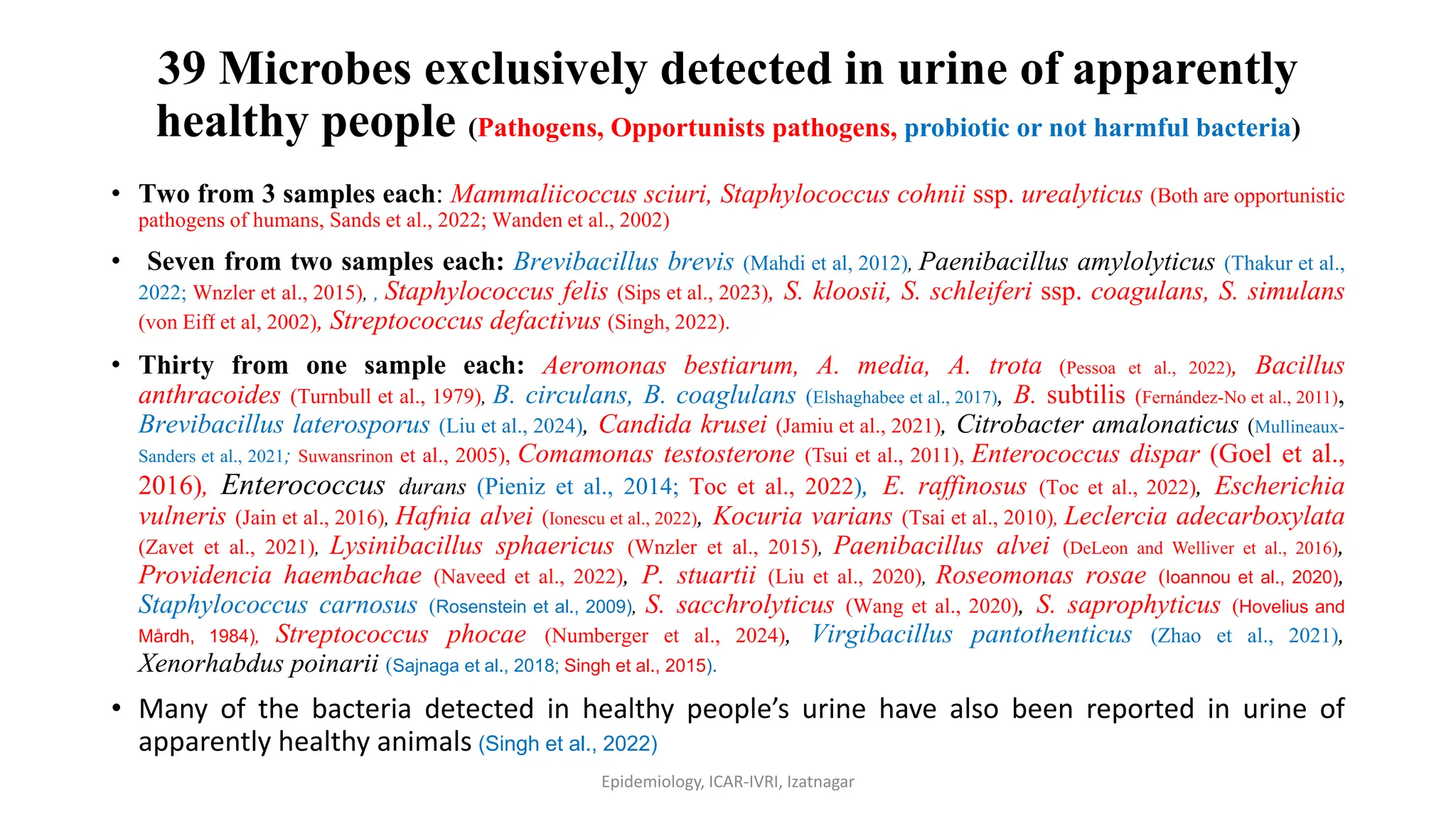
39 Microbes exclusively detected in urine of apparently
healthy people (Pathogens, Opportunists pathogens, probiotic or not harmful bacteria)
• Two from 3 samples each: Mammaliicoccus sciuri, Staphylococcus cohnii ssp. urealyticus (Both are opportunistic
pathogens of humans, Sands et al., 2022; Wanden et al., 2002)
• Seven from two samples each: Brevibacillus brevis (Mahdi et al, 2012), Paenibacillus amylolyticus (Thakur et al.,
2022; Wnzler et al., 2015), , Staphylococcus felis (Sips et al., 2023), S. kloosii, S. schleiferi ssp. coagulans, S. simulans
(von Eiff et al, 2002), Streptococcus defactivus (Singh, 2022).
• Thirty from one sample each: Aeromonas bestiarum, A. media, A. trota (Pessoa et al., 2022), Bacillus
anthracoides (Turnbull et al., 1979), B. circulans, B. coaglulans (Elshaghabee et al., 2017), B. subtilis (Fernández-No et al., 2011),
Brevibacillus laterosporus (Liu et al., 2024), Candida krusei (Jamiu et al., 2021), Citrobacter amalonaticus (Mullineaux-
Sanders et al., 2021; Suwansrinon et al., 2005), Comamonas testosterone (Tsui et al., 2011), Enterococcus dispar (Goel et al.,
2016), Enterococcus durans (Pieniz et al., 2014; Toc et al., 2022), E. raffinosus (Toc et al., 2022), Escherichia
vulneris (Jain et al., 2016), Hafnia alvei (Ionescu et al., 2022), Kocuria varians (Tsai et al., 2010), Leclercia adecarboxylata
(Zavet et al., 2021), Lysinibacillus sphaericus (Wnzler et al., 2015), Paenibacillus alvei (DeLeon and Welliver et al., 2016),
Providencia haembachae (Naveed et al., 2022), P. stuartii (Liu et al., 2020), Roseomonas rosae (Ioannou et al., 2020),
Staphylococcus carnosus (Rosenstein et al., 2009), S. sacchrolyticus (Wang et al., 2020), S. saprophyticus (Hovelius and
Mårdh, 1984), Streptococcus phocae (Numberger et al., 2024), Virgibacillus pantothenticus (Zhao et al., 2021),
Xenorhabdus poinarii (Sajnaga et al., 2018; Singh et al., 2015).
• Many of the bacteria detected in healthy people’s urine have also been reported in urine of
apparently healthy animals (Singh et al., 2022)
Epidemiology, ICAR-IVRI, Izatnagar
41 Microbes exclusively detected in urine of UTI cases
• From 6 samples: Alcaligenes faecalis
• From four samples: Acinetobacter indicus
• From three samples: Streptococcus pyogenes
• From two samples each: Acinetobacter variabilis, Bacillus mycoides, Moraxella osloensis,
Streptococcus agalactiae
• From one sample each: Acinetobacter baumannii, A. schindleri, Actinobacillus equeli, A.
seminist, Aerococcus viridans, Aeromonas eucranophila, A. hydrophila, A. schubertii, Budvicia
aquatica, Candida catenulate, Candida gulliermondii, Candida parapsiplosis, C. tropicalis Biovar
urealyticus, Edwardsiella hoshiniae, E. ictalurid, Enterococcus durans, Enterobacter taylorae,
Flavobacterium aquatile, F. branchiophilum, Gardnerella spp., Gemella haemolysans, Kluyvera
intermedia, Morganella morganii, Proteus penneri, Pseudomonas fluorescens, P. stutzeri,
Rhizopus spp., Serratia odorifera, Staphylococcus capitis ssp. urealyticus, S. caseolyticus, S.
equorum, Streptococcus adjacens, S. equi ssp. zooepidemicus, S. mitis, Vibrio alginolyticus
• They are potentially pathogenic and similar causes of Urogenital tract infections have been
reported in animals also, Singh, 2015; 2019.
Epidemiology, ICAR-IVRI, Izatnagar
49 Microbes detected in urine of both UTI cases and
apparently healthy people
• From ≥10 samples each: Escherichia coli (78), Staphylococcus haemolyticus (36), Enterococcus faecalis (33),
Staphylococcus epidermidis (31), Staphylococcus aureus (27), Pantoea agglomerans (17), Enterococcus faecium
(14), Klebsiella pneumoniae ssp. pneumoniae (14), Staphylococcus capitis ssp. capitis (13), Streptococcus milleri
(13), Raoultella terrigena (12), Aerococcus sanguinicola (10) (Singh, 2019; 2022, Singh et al., 2024).
• From eight samples each: Micrococcus luteus (Tsai et al., 2010), Proteus mirabilis, Pseudomonas aeruginosa,
Staphylococcus delphini (Singh et al., 2024)
• From seven samples each: Proteus vulgaris, Staphylococcus lugdunensis (Singh, 2022, Singh et al., 2024)
• From six samples each: Acinetobacter calcoaceticus (Lynch et al., 2022), Staphylococcus arlettae, S. cohnii ssp.
cohnii, S. intermedius (Singh, 2022, Singh et al., 2024)
• From five samples each: Alcaligenes denitrificans (Morrison and Boyce, 1986), Enterococcus solitarius (a feacal
bacteria, Collins et al., 1989), Geobacillus stearothermophilus (a soil bacteria, Kotzekidou, 2014), Staphylococcus
chromogenes (Singh, 2022, Singh et al., 2024), S. xylosus (a commensal on skin, Clifford and Pritchett-Corning, 2012)
• From four samples each: Acinetobacter lwoffii (Wong et al., 2017), Aerococcus suis, Citrobacter freundii, Erwinia
mallotivora, Escherichia fergusonii, Pseudomonas pseudoalcaligenes, Staphylococcus caprae, Staphylococcus
hominis, Streptococcus porcinus (Singh, 2019; 2022; Singh et al., 2024)
• From three samples each: Candida albicans, Cronobacter universalis, Enterococcus pseudoavium, Serratia
plymuthica, Staphylococcus warneri, (All potentially pathogenic, Singh et al., 2015; 2024); Xenorhabdus bovienii
(Sajnaga et al., 2018; Singh et al., 2015).
• From two samples each: Aerococcus viridans (Ezechukwu et al., 2019), Aeromonas caviae, Bacillus cereus,
Enterococcus gallinarum, Mammaliicoccus lentus (Sands et al., 2022).
• Pectobacterium chrysanthemi (Durate et al., 2000), Pluralibacter gergoviae (Rueda and Steling, 2023),
Staphylococcus hyicus (Kirk et al., 2022)
Epidemiology, ICAR-IVRI, Izatnagar
Characteristics Healthy (n=128) UTI (n=161)
G +ve bacteria were more
resistant to
Nitrofurantoin, Piperacillin,
Piperacillin + Tazobactam
Lemongrass oil, Amikacin, Cefepime,
Cefoperazone, Cefotaxime, Cefotaxime+
clavulanic acid, Ceftazidime, Ceftazidime +
clavulanic acid, Ceftriaxone, Ceftriaxone +
tazobactam, Cefoperazone + sulbactam,
Chloramphenicol, Ciprofloxacin, Cotrimoxazole,
Gentamicin, Imipenem, Meropenem,
Tetracycline, Vancomycin
G -ve bacteria were more
resistant to
Lemongrass oil Carvacrol, Cinnamldehyde, Cinnamon oil, thyme
oil, Lemongrass oil, Amikacin, Amoxicillin,
Amoxicillin + clavulanic acid, Ampicillin,
Azithromycin, Cefepime, Cefoperazone,
Cefotaxime, Cefotaxime+ clavulanic acid,
Ceftazidime, Ceftazidime + clavulanic acid,
Ceftriaxone, Ceftriaxone + tazobactam,
Cefoperazone + sulbactam, Chloramphenicol,
Ciprofloxacin, Colistin, Cotrimoxazole,
Gentamicin, Imipenem, Meropenem,
Tetracycline
Epidemiology, ICAR-IVRI, Izatnagar
Characteristics Healthy (n=128) UTI (n=161)
Gram +ve bacteria
were more often (p,
<0.01) resistant
than Gram -ve
bacteria.
Ajowan oil, Carvacrol,
Cinnamledehyde,
Cinnamon oil, Holy basil
oil, Thyme oil, Amikacin,
Gentamicin
Ajowan oil, Cinnamledehyde,
Cinnamon oil , Holy basil oil,
Cefotaxime+ clavulanic acid
Gram +ve bacteria
were more often (p,
<0.01) susceptible
than Gram -ve
bacteria.
Lemongrass oil,
Doxycycline,
Erythromycin,
Nitrofurantoin
Sandalwood oil, Amoxicillin +
clavulanic acid, Amoxicillin,
Ampicillin + sulbactam, Ampicillin,
Azithromycin, Ceftriaxone,
Doxycycline, Erythromycin,
Nitrofurantoin, Piperacillin,
Piperacillin + Tazobactam,
Tetracycline
Epidemiology, ICAR-IVRI, Izatnagar
MDR and
Cephalosporin
resistance was more
common in
G -ve bacteria than in G +ve bacteria
G –ve bacteria than G +ve bacteria from UTI cases
G +ve and G -ve bacteria from UTI cases than from healthy people
Multiple herbal
antimicrobial drug
resistance was more
common among
No difference among G +ve/ G-ve bacteria irrespective of source of
isolation
Carbapenem resistance
was more common in
G -ve bacteria than in G +ve bacteria
G +ve and G -ve bacteria from UTI cases than from healthy people
ESBL Producers were
more common among
G -ve bacteria than in G +ve bacteria
G –ve bacteria than G +ve bacteria from UTI cases
G -ve bacteria from UTI cases than from healthy people
Most commonly used antimicrobials for UTI
treatment and their comparative efficacy
Antimicrobial More resistant than
Nitrofurantoin G –ve bacteria than G +ve bacteria both from UTI cases and
healthy people
G +ve bacteria from UTI cases than from healthy people
Amoxicillin + clavulanic acid G –ve bacteria from UTI cases than from healthy people
Doxycycline G –ve bacteria than G +ve bacteria both from UTI cases and
healthy people
Ceftriaxone, Ciprofloxacin
Cotrimoxazole, Gentamicin
Meropenem
G –ve and G +ve bacteria from UTI cases than from healthy
people
Epidemiology, ICAR-IVRI, Izatnagar
Best antimicrobials for selected bacteria from UTI cases
Epidemiology, ICAR-IVRI, Izatnagar
Bacteria 10 best antimicrobials
Escherichia coli
(20)
Tigecycline, Cefotaxime + clavulanic acid, Meropenem, Imipenem, Nitrofurantoin,
Chloramphenicol, Colistin, Ceftazidime + Clavulanic acid, Gentamicin, Amikacin
Staphylococcus
epidermidis (4)
Cefotaxime + clavulanic acid, Tigecycline, Imipenem, Nitrofurantoin, Ceftazidime +
Clavulanic acid, Ceftazidime, Cefotaxime, Ceftriaxone + Tazobactam, Ceftriaxone,
Doxycycline
Staphylococcus
haemolyticus (4)
Tigecycline, Nitrofurantoin, Imipenem, Chloramphenicol, Meropenem, Cefotaxime +
clavulanic acid, Cefoperazone + sulbactam, Cefoperazone, Cefepime, Ceftriaxone +
Tazobactam, Nitrofurantoin not effective
Acinetobacter
indicus (3)
Cotrimoxazole, Gentamicin, Amikacin, Aztreonam, Meropenem, Imipenem,
Cefoperazone, Cephoperazone + sulbactam, Nitrofurantoin not effective
Enterococcus
faecalis (3)
Tigecycline, Ampicillin + sulbactam, Ampicillin, Imipenem, Cefotaxime+ clavulanic acid,
Meropenem, Nitrofurantoin, Piperacillin, Piperacillin Tazobactam, Doxycycline
Escherichia.
fergusonii (3)
Ceftazidime + Clavulanic acid, Imipenem, Tigecycline, Cefotaxime + clavulanic acid,
Ceftriaxone, Ceftriaxone + Tazobactam, Cefepime, Cefoperazone, Cefoperazone +
sulbactam, Nitrofurantoin
Klebsiella
pneumoniae (3)
Tigecycline, Cefotaxime + clavulanic acid, Meropenem, Chloramphenicol, Cefepime,
Gentamicin, Amikacin, Imipenem, Ceftriaxone + Tazobactam, Ceftriaxone,
Nitrofurantoin not effective
The most effective antibiotics in UTI and Health
Epidemiology, ICAR-IVRI, Izatnagar
On bacteria from UTI case, % isolates inhibited % of bacterial isolates inhibited from healthy people
Tigecycline, 86.54
Cefotaxime + clavulanic acid, 81.89
Imipenem, 78.42
Meropenem, 77.05
Cefepime, 64.60
Chloramphenicol, 64.52
Piperacillin Tazobactam, 63.85
Ceftriaxone + Tazobactam, 63.31
Nitrofurantoin, 62.88
Vancomycin, 60.87
Colistin, 59.89
Gentamicin, 59.36
Ceftriaxone, 58.77
Amikacin, 58.56
Doxycycline, 57.56
Cefotaxime+ clavulanic acid, 97.77
Imipenem, 97.26
Meropenem, 96.95
Tigecycline, 96.72
Chloramphenicol, 88.99
Ceftazidime + Clavulanic acid, 88.00
Gentamicin, 83.33
Amikacin, 83.33
Cotrimoxazole, 81.31
Ceftriaxone + Tazobactam, 80.06
Ceftriaxone, 80.06
Cefepime, 79.62
Vancomycin, 79.61
Cefotaxime, 79.27
Cephoperazone + sulbactam, 76.14
Commonly used antimicrobials for treatment of UTI: Nitrofurantoin, Co-
trimoxazole, Ciprofloxacin, Amoxicillin + clavulanate, Cephalexin, Ceftriaxone,
Meropenem (Sinha A, Aster Medical Centre, Doha) are no more the best antimicrobials for treatment of
UTI.
Antimicrobial efficacy (% of isolates inhibited) of Herbal
antimicrobials on microbes isolated from human urine
Epidemiology, ICAR-IVRI, Izatnagar
Herbal Antimicrobials
Microbes from urine of
UTI cases Healthy humans
Ajowan oil 90.43 91.34
Thyme oil 86.65 86.87
Holy basil oil 82.37 84.18
Carvacrol 80.35 78.81
Lemongrass oil 77.08 80.30
Cinnamledehyde 64.23 59.10
Citral 50.88 54.33
Cinnamon oil 42.57 43.88
Sandalwood oil 33.50 34.63
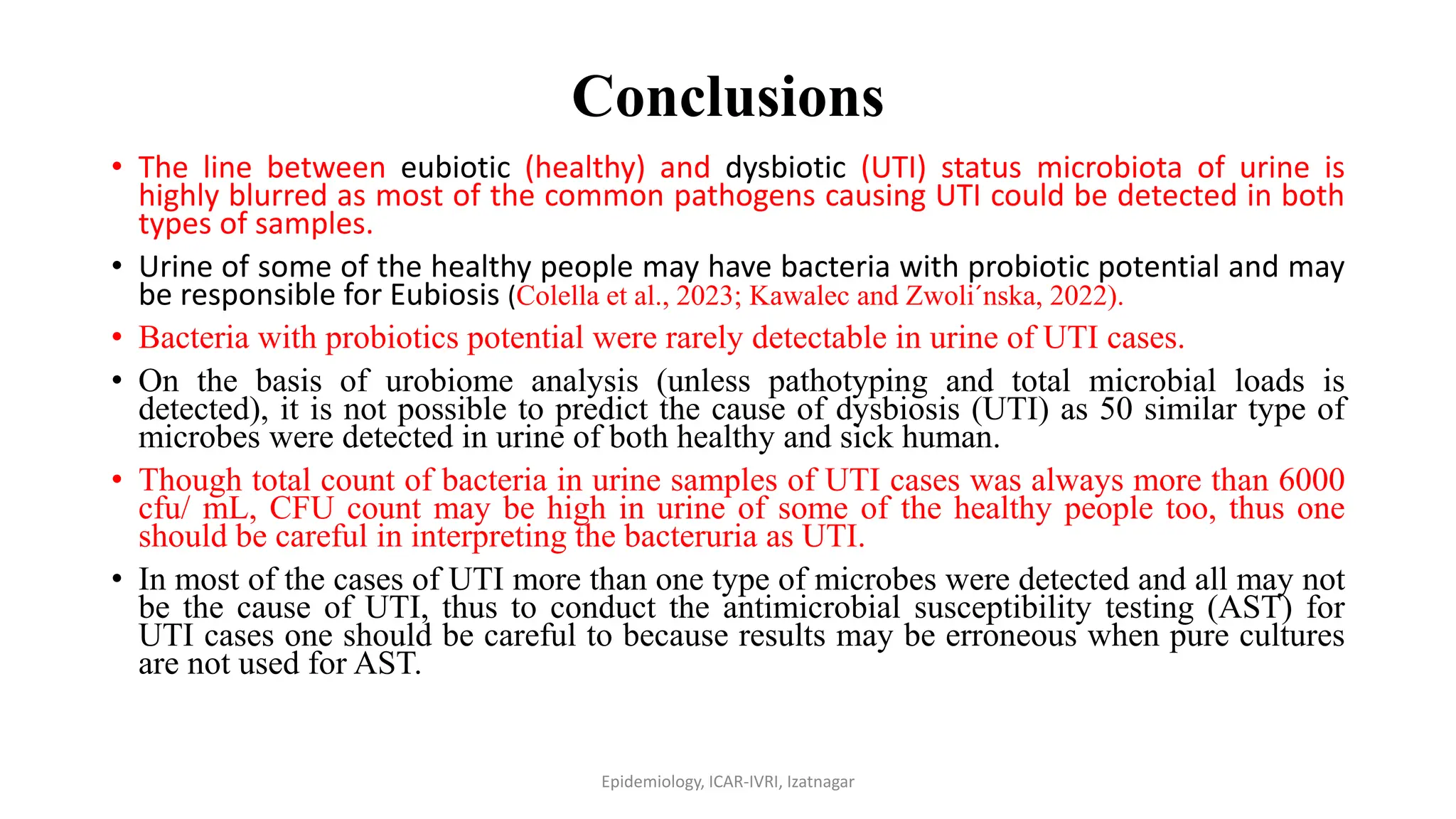
Conclusions
• The line between eubiotic (healthy) and dysbiotic (UTI) status microbiota of urine is
highly blurred as most of the common pathogens causing UTI could be detected in both
types of samples.
• Urine of some of the healthy people may have bacteria with probiotic potential and may
be responsible for Eubiosis (Colella et al., 2023; Kawalec and Zwoli´nska, 2022).
• Bacteria with probiotics potential were rarely detectable in urine of UTI cases.
• On the basis of urobiome analysis (unless pathotyping and total microbial loads is
detected), it is not possible to predict the cause of dysbiosis (UTI) as 50 similar type of
microbes were detected in urine of both healthy and sick human.
• Though total count of bacteria in urine samples of UTI cases was always more than 6000
cfu/ mL, CFU count may be high in urine of some of the healthy people too, thus one
should be careful in interpreting the bacteruria as UTI.
• In most of the cases of UTI more than one type of microbes were detected and all may not
be the cause of UTI, thus to conduct the antimicrobial susceptibility testing (AST) for
UTI cases one should be careful to because results may be erroneous when pure cultures
are not used for AST.
Epidemiology, ICAR-IVRI, Izatnagar
• The most effective antimicrobials on bacteria detected in urine of UTI cases were even
more detrimental on microbes present in healthy state, a wrong selection of antimicrobial
is destined to cause dysbiosis (Chesca et al., 2022; Mironov et al., 2021; Singh et al,
2024).
• The commonly used antimicrobials including the high end carbapenem antibiotics to treat
UTI cases were not effective on more than 78% cases, thus AST in UTI cases is the must
to be practiced.
• Of the most commonly recommended antimicrobials for UTI treatment (Nitrofurantoin,
Co-trimoxazole, Ciprofloxacin, Amoxicillin + clavulanate, Cephalexin, Ceftriaxone,
Meropenem), some (Co-trimoxazole, Ciprofloxacin, Amoxicillin + clavulanate,
Cephalexin) were not in the 15 most effective antimicrobials detected to inhibit bacteria
detected in 60% of the cases, thus it may be recommended that the priority list of
antimicrobials for UTI therapeutics needs revision, at least regionally.
• More systematic studies are needed to understand urobiome in health and disease
targeting detection of pathotypes/ virotypes / genotypes / biotypes/ clonotypes to make
any potential use of microbiome studies.
• Herbal antimicrobials being very effective (ajowan oil and thyme oil were more effective
than the most effective antibiotic tigecycline) against bacteria isolated from urine,
however had no significant difference in their efficacy on G +ve/ G-ve bacteria
irrespective of source of isolation, thus seems to be a double edged sword, further we
need to develop delivery system for those effective herbals to the site of the infection.
Epidemiology, ICAR-IVRI, Izatnagar
Acknowledgements and thanks
to:
1. The Director, ICAR-IVRI for providing
necessary funds to conduct the study.
2. All the clinicians those referred the UTI
urine samples for AST.
3. All the healthy people who consented to
provide their urine samples.
4. All the staff and students in Clinical
Epidemiology laboratory those helped at
many fronts during the study.
5. Organizers of the “Infection-24” for
waiving off the registration fee and last
minute changes requested.
6. All the audience specially those took
interest in the presentation.
Epidemiology, ICAR-IVRI, Izatnagar
Relevant References
• Ajose DJ, Oluwarinde BO, Abolarinwa TO et al. (2022). Combating bovine mastitis in the dairy sector in an era of antimicrobial resistance: ethno-veterinary
medicinal option as a viable alternative approach. Front Vet Sci. 9:800322.33.
• Ami EB, Yuval B, Jurkevitch E. Manipulation of the microbiota of mass-reared Mediterranean fruit flies Ceratitis capitata (Diptera: Tephritidae) improves sterile
male sexual performance. The ISME Journal. 2010;4(1):28-37. https://doi.org/10.1038/ismej.2009.82.
• Brenner DJ, Krieg NR, Staley JT, Garrity GM (2005). Bergey’s Manual of Systematic Bacteriology, Volume 2: The Proteobacteria, Part B: The
Gammaproteobacteria. New York: Bergey’s Manual Trust, Springer.
• Carter GR (1975). Diagnostic Procedures in Veterinary Microbiology, 2nd edn. Springfield: CharlesC Thomas Publishers.
• Chesca, A.E.; Abdulina, G.G.; Medetova, A.A.; Kabduova, A.K.; Beysembayeva, G.G.; Moraru, D.D.; Sandle, T.S. Opportunistic pathogens in patients with urinary
tract infection. Preprints 2022, 2022010473. https://doi.org/10.20944/preprints202201.0473.v1
• Clifford CB, Pritchett-Corning KR, Bacterial Infections of Laboratory Mice, Editor(s): Hans J Hedrich,The Laboratory Mouse (Second Edition), Academic Press,
2012, Pages 481-501,ISBN: 9780123820082, https://doi.org/10.1016/B978-0-12-382008-2.00020-9.
• CLSI (2015). Methods for antimicrobial dilution and disk susceptibility testing of infrequently isolated or fastidious bacteria, M45, 3rd edn. Wayne: Clinical and
Laboratory Standards Institute.
• CLSI (2017). Performance standards for antimicrobial susceptibility testing, 27th edn. CLSI supplement M100. Wayne: Clinical and Laboratory Standards Institute.
• Colella, M.; Topi, S.; Palmirotta, R.; D’Agostino, D.; Charitos, I.A.; Lovero, R.; Santacroce, L. An overview of the microbiota of the human urinary tract in health
and disease: Current issues and perspectives. Life 2023, 13, 1486. https://doi.org/10.3390/ life13071486.
• Collins M D, Facklam R R, Farrow J A E, Williamson R. Enterococcus raffinosus sp. nov., Enterococcus solitarius sp. nov. and Enterococcus pseudoavium sp.
nov. FEMS Microbiol Lett. 1989;57:283–288.
• DeLeon SD, Welliver Sr RC. Paenibacillus alvei sepsis in a neonate. The Pediatric infectious disease journal. 2016 Mar 1;35(3):358.
• Duarté X, Anderson CT, Grimson M, Barabote RD, Strauss RE, Gollahon LS, San Francisco MJ. Erwinia chrysanthemi strains cause death of human gastrointestinal
cells in culture and express an intimin-like protein. FEMS Microbiol Lett. 2000 Sep 1;190(1):81-6. doi: 10.1111/j.1574-6968.2000.tb09266.x.
• Elshaghabee FM, Rokana N, Gulhane RD, Sharma C, Panwar H. Bacillus as potential probiotics: status, concerns, and future perspectives. Frontiers in microbiology.
2017 Aug 10;8:271541.
• Ezechukwu I, Singal M, Igbinosa O. Aerococcus viridans: Case report, microbiology, and literature review. The American Journal of Case Reports. 2019;20:697.
• Fernández-No IC, Guarddon M, Böhme K, Cepeda A, Calo-Mata P, Barros-Velázquez J. Detection and quantification of spoilage and pathogenic Bacillus cereus,
Bacillus subtilis and Bacillus licheniformis by real-time PCR. Food microbiology. 2011 May 1;28(3):605-10.
• Goel V, Kumar D, Kumar R, Mathur P, Singh S. Community acquired enterococcal urinary tract infections and antibiotic resistance profile in North India. Journal of
laboratory physicians. 2016 Jan;8(01):050-4.
Epidemiology, ICAR-IVRI, Izatnagar
• Hovelius B, Mårdh PA. Staphylococcus saprophyticus as a common cause of urinary tract infections. Reviews of infectious diseases. 1984 May 1;6(3):328-37.
• Ioannou P, Mavrikaki V, Kofteridis DP. Roseomonas species infections in humans: a systematic review. Journal of Chemotherapy. 2020 Jul 3;32(5):226-36.
• Ionescu MI, Neagoe DȘ, Crăciun AM, Moldovan OT. The Gram-negative bacilli isolated from caves—Sphingomonas paucimobilis and Hafnia alvei and a review of
their involvement in human infections. International journal of environmental research and public health. 2022 Feb 17;19(4):2324.
• Jain S, Nagarjuna D, Gaind R, Chopra S, Debata PK, Dawar R, Sardana R, Yadav M. Escherichia vulneris: an unusual cause of complicated diarrhoea and sepsis in
an infant. A case report and review of literature. New microbes and new infections. 2016 Sep 1;13:83-6.
• Jamiu AT, Albertyn J, Sebolai OM, Pohl CH. Update on Candida krusei, a potential multidrug-resistant pathogen. Medical mycology. 2021 Jan;59(1):14-30.
• Jiang S, Li M, Fu T et al. (2020). Clinical characteristics of infections caused by Streptococcus sanginosus group. Au Sci Rep. 10(1):9032.39.
• Kawalec, A.; Zwoli´nska, D. Emerging role of microbiome in the prevention of urinary tract infections in children. Int. J. Mol. Sci. 2022, 23, 870. https://doi.org/
10.3390/ijms23020870
• Kirk F, Mashicharan M, Braddick M, Saxena P. Staphylococcus hyicus, a novel pathogen causing destructive infective endocarditis requiring mitral annular
reconstruction. JTCVS Tech. 2022 Apr 15;13:70-73. doi: 10.1016/j.xjtc.2022.03.008.
• Kotzekidou P. Geobacillus stearothermophilus (Formerly Bacillus stearothermophilus), Editor(s): Carl A. Batt, Mary Lou Tortorello,Encyclopedia of Food
Microbiology (Second Edition),Academic Press,2014,Pages 129-134, ISBN 9780123847331, https://doi.org/10.1016/B978-0-12-384730-0.00020-3.
• Liu J, Wang R, Fang M. Clinical and drug resistance characteristics of Providencia stuartii infections in 76 patients. Journal of International Medical Research. 2020
Oct;48(10):0300060520962296.
• Liu Y, Zai X, Weng G, Ma X, Deng D. Brevibacillus laterosporus: A probiotic with important applications in crop and animal production. Microorganisms. 2024 Mar
12;12(3):564.
• Lynch JP 3rd, Clark NM, Zhanel GG. Infections Due to Acinetobacter baumannii-calcoaceticus Complex: Escalation of antimicrobial resistance and evolving
treatment options. Semin Respir Crit Care Med. 2022 Feb;43(1):97-124. doi: 10.1055/s-0041-1741019.
• Mahdhi A, Kamoun F, Messina C, Santulli A, Bakhrouf A. Probiotic properties of Brevibacillus brevis and its influence on sea bass (Dicentrarchus labrax) larval
rearing. African Journal of Microbiology Research. 2012 Sep 13;6(35):6487-95.
• Mironov AIu, Savitskaia KI, Vorob'ev AA. Uslovno-patogennye mikroorganizmy pri zabolevaniiakh mochepolovykh puteĭ [Opportunistic microorganisms in urinary
tract diseases]. Vestn Ross Akad Med Nauk. 2001;(2):7-11.
• Morrison AJ Jr, Boyce K 4th. Peritonitis caused by Alcaligenes denitrificans subsp. xylosoxydans: case report and review of the literature. J Clin Microbiol. 1986
Nov;24(5):879-81. doi: 10.1128/jcm.24.5.879-881.1986.
• Mullineaux-Sanders C, Carson D, Hopkins EG, Glegola-Madejska I, Escobar-Zepeda A, Browne HP, Lawley TD, Frankel G. Citrobacter amalonaticus Inhibits the
Growth of Citrobacter rodentium in the Gut Lumen. Mbio. 2021 Oct 26;12(5):10-128.
• Naveed M, Sheraz M, Amin A, Waseem M, Aziz T, Khan AA, Ghani M, Shahzad M, Alruways MW, Dablool AS, Elazzazy AM. Designing a novel peptide-based
multi-epitope vaccine to evoke a robust immune response against pathogenic multidrug-resistant Providencia heimbachae. Vaccines. 2022 Aug 11;10(8):1300.
• Numberger D, Siebert U, Valentin Weigand P. Survival and adaptation of Streptococcus phocae in host environments. Plos one. 2024 Jan 30;19(1):e0296368.
• Pessoa RB, Oliveira WF, Correia MT, Fontes A, Coelho LC. Aeromonas and human health disorders: clinical approaches. Frontiers in microbiology. 2022 May
31;13:868890.
Epidemiology, ICAR-IVRI, Izatnagar
• Pfaller MA, Diekema DJ, Gibbs DL, Newell VA, Nagy E, Dobiasova S, et al. Candida krusei, a multidrug-resistant opportunistic fungal pathogen: geographic and
temporal trends from the ARTEMIS DISK Antifungal Surveillance Program, 2001 to 2005. J Clin Microbiol. 2008 Feb;46(2):515-21. doi: 10.1128/JCM.01915-07.
• Pien FD, Shrum S, Swenson JM, Hill BC, Thornsberry C, Farmer 3rd JJ. Colonization of human wounds by Escherichia vulneris and Escherichia hermannii. Journal
of clinical microbiology. 1985 Aug;22(2):283-5.
• Pieniz S, Andreazza R, Anghinoni T, Camargo F, Brandelli A. Probiotic potential, antimicrobial and antioxidant activities of Enterococcus durans strain LAB18s.
Food Control. 2014 Mar 1;37:251-6.
• Price TK, Lin H, Gao X, Thomas-White KJ, Hilt EE, Mueller ER, Wolfe AJ, Dong Q, Brubaker L. Bladder bacterial diversity differs in continent and incontinent
women: a cross-sectional study. Am J Obstet Gynecol. 2020 Nov;223(5): 729.e1-729.e10. doi: 10.1016/j.ajog.2020.04.033.
• Rosenstein R, Nerz C, Biswas L, Resch A, Raddatz G, Schuster SC, Götz F. Genome analysis of the meat starter culture bacterium Staphylococcus carnosus TM300.
Applied and Environmental Microbiology. 2009 Feb 1;75(3):811-22.
• Rueda FDP, and Stehling EG. 2023. Genomic insights into Pluralibacter gergoviae sheds light on emergence of a multidrug-resistant species circulating between
clinical and environmental settings. Pathogens 12, no. 11: 1335. https://doi.org/10.3390/pathogens12111335
• Sajnaga E, Kazimierczak W, Skowronek M, Lis M, Skrzypek T, Waśko A. Steinernema poinari (Nematoda: Steinernematidae): a new symbiotic host of
entomopathogenic bacteria Xenorhabdus bovienii. Archives of microbiology. 2018 Nov;200:1307-16.
• Sands K, Carvalho M.J, Spiller O.B, Portal E.A.R, Thomson K, Watkins W.J, et al. Characterisation of staphylococci species from neonatal blood cultures in low-and
middle-income countries. BMC Infect. Dis. 2022;22(1):593.
• Schluter J, Foster KR. The Evolution of mutualism in gut microbiota via host epithelial selection. PLoS Biol. 2012; 10(11): e1001424.
doi: 10.1371/journal.pbio.1001424
• Singh AS, Pathak D, Devi MS, Anifowoshe AT, Nongthomba U. Antibiotic alters host’s gut microbiota, fertility, and antimicrobial peptide gene expression vis-à-
vis ampicillin treatment on model organism Drosophila melanogaster. Int Microbiol (2024). https://doi.org/10.1007/s10123-024-00507-9.
• Singh BR (2009). Labtop for Microbiology Laboratory. Berlin: Lambert Academic Publishing, AG &Co.
• Singh BR, Agrawal RK, Singh KP, Pawde AM, Sinha DK, Dubey S. Antibacterial activity of Caraway essential oil against bacteria isolated from veterinary clinical
cases. Nat Prod: An Indian J. 2015;11:69-74.
• Singh BR, Agri H, Balusamy D, Jayakumar V. Bacterial profile and comparative antimicrobial efficacy of fresh urine of cows, buffaloes and humans. Infect Dis Res.
2022;3(4):23. doi: 10.53388/IDR20221125023.
• Singh BR, Sinha DK, Agrawal RK, Thomas P (2020). Comparative sensitivity of Salmonella isolates from clinical infections in animals and birds to herbal and
conventional antimicrobials. Pharmaceutica Analytica Acta. 3(1):1-9.32.
• Singh BR, Yadav A, Sinha DK, Karthikeyan R, Agri H, et al. (2024). A study on bacterial causes of mastitis and their antimicrobial drug resistance in Bareilly, North
India. International Clinical and Medical Case Reports, BioRes Scientia Publishers. 1(1):1-14. DOI: 10.59657/2837-5998.
• Singh BR, Yadav A, Sinha DK, Vinodh Kumar OR (2020). Potential of herbal antibacterials as an alternative to antibiotics for multiple drug resistant bacteria: An
analysis. Res J Vet Sci. 13(1):1-9.35.
Epidemiology, ICAR-IVRI, Izatnagar
• Singh BR. 2012. Emergence of antimicrobial drug resistance is mandatory for life on the earth. At: Conference: 2nd National Conference (NCAR'12) on antimicrobial resistance,
Department of microbiology and fermentation Technology, Sam Higginbottom Institute of Agric. Technology and Sci., Deemed University, Allahabad Uttar Pradesh.
DOI: 10.13140/RG.2.1.2618.9443/1. Available from
https://www.researchgate.net/publication/264165886_Emergence_of_antimicrobial_drug_resistance_is_mandatory_for_life_on_the_earth
• Singh BR. 2019. Urinary tract infections: The most common causes and effective antimicrobials. Report number: UTI-1, Indian Veterinary Research Institute.
DOI: 10.13140/RG.2.2.31538.56005/1. https://www.researchgate.net/publication/334544575_Urinary_tract_infections_The_most_common_causes_and_effective_antimicrobials
• Singh, BR. 2022. Common culturable microbes causing repeat breeding (genital tract infections) and mastitis in dairy animals. Technical Report Number: 1/2022/Epid/ICAR-
IVRI. https://www.researchgate.net/profile/Bhoj-
Singh/publication/358878122_Common_culturable_microbes_causing_repeat_breeding_genital_tract_infections_and_mastitis_in_dairy_animals/links/621a06f56051a16582fa41
92/Common-culturable-microbes-causing-repeat-breeding-genital-tract-infections-and-mastitis-in-dairy-animals.pdf.
• Sips GJ, van Dijk MAM, van Westreenen M, van der Graaf - van Blooi Ls, Duim B, Broens EM. Evidence of cat-to-human transmission of Staphylococcus felis. Journal of
Medical Microbiology, 72(2), (2023): 001661
• Suwansrinon K, Wilde H, Sitprija V, Hanvesakul R. Enteric fever-like illness caused by infection with Citrobacter amalonaticus. J med assoc Thai. 2005 Jun 1;88(6):837-40.
• Thakur V, Kumar V, Kumar V, Singh D. Xylooligosaccharides production using multi-substrate specific xylanases secreted by a psychrotolerant Paenibacillus sp. PCH8.
Carbohydrate Polymer Technologies and Applications. 2022 Jun 1;3:100215.
• Toc DA, Pandrea SL, Botan A, Mihaila RM, Costache CA, Colosi IA, Junie LM. Enterococcus raffinosus, Enterococcus durans and Enterococcus avium Isolated from a Tertiary
Care Hospital in Romania—Retrospective Study and Brief Review. Biology. 2022 Apr 14;11(4):598.
• Tsai CY, Su SH, Cheng YH, Chou YL, Tsai TH, Lieu AS. Kocuria varians infection associated with brain abscess: a case report. BMC infectious diseases. 2010 Dec;10:1-4.
• Tsui TL, Tsao SM, Liu KS, Chen TY, Wang YL, Teng YH, Lee YT. Comamonas testosteroni infection in Taiwan: reported two cases and literature review. Journal of
Microbiology, Immunology and Infection. 2011 Feb 1;44(1):67-71.
• Turnbull PC, Jørgensen K, Kramer JM, Gilbert RJ, Parry JM. Severe clinical conditions associated with Bacillus cereus and the apparent involvement of exotoxins. Journal of
Clinical Pathology. 1979 Mar 1;32(3):289-93.
• von Eiff C, Peters G, Heilmann C. Pathogenesis of infections due to coagulase negative staphylococci. The Lancet infectious diseases. 2002 Nov 1;2(11):677-85.
• Waldon, E., Sobis-Glinkowska, M., Szewczyk, E. M. (2002). Evaluation of selected features of Staphylococcus cohnii enabling colonization of humans. Folia Microbiol.
(Praha). 47 (5), 565–571. doi: 10.1007/BF02818799
• Wang P, Liu Y, Xu Y, Xu Z. Staphylococcus saccharolyticus infection: Case series with a PRISMA-compliant systemic review. Medicine. 2020 Jun 26;99(26):e20686.
• Wenzler E, Kamboj K, Balada-Llasat JM. Severe sepsis secondary to persistent Lysinibacillus sphaericus, Lysinibacillus fusiformis and Paenibacillus amylolyticus bacteremia.
International Journal of Infectious Diseases. 2015 Jun 1;35:93-5.
• Wong D, Nielsen TB, Bonomo RA, Pantapalangkoor P, Luna B, Spellberg B. Clinical and pathophysiological overview of Acinetobacter infections: a century of challenges. Clin
Microbiol Rev. 2017 Jan;30(1):409-447. doi: 10.1128/CMR.00058-16.
• Zayet S, Lang S, Garnier P, Pierron A, Plantin J, Toko L, Royer PY, Villemain M, Klopfenstein T, Gendrin V. Leclercia adecarboxylata as emerging pathogen in human
infections: Clinical features and antimicrobial susceptibility testing. Pathogens. 2021 Oct 28;10(11):1399.
• Zhao Y, Sang X, Hao H, Bi J, Zhang G, Hou H. Novel starter cultures Virgibacillus spp. selected from grasshopper sub shrimp paste to inhibit biogenic amines accumulation.
AMB Express. 2021 Dec;11:1-1.
Epidemiology, ICAR-IVRI, Izatnagar

A comparative study on uroculturome antimicrobial susceptibility in apparently healthy and urinary tract infected humans.pptx

  • 1.
    A comparative studyon uroculturome antimicrobial susceptibility in apparently healthy and urinary tract infected humans Bhoj R Singh1, Himani Agri2* Presented at 6th Edition of World Congress on Infectious Diseases (Infection 2024) Dates: June 24-26, 2024 at Paris, France 1Principal Scientist (Microbiology) & Head of the Division of Epidemiology 2*Ph.D. Scholar, Vet. Public Health and Epidemiology ICAR-Indian Veterinary Research Institute, Izatnagar-243 122, India Email: br.singh@icar.gov.in/ brs18762@gmail.com Epidemiology, ICAR-IVRI, Izatnagar
  • 2.
    Abstract The uroculturome indicatesthe profile of culturable microbes inhabiting the urinary tract, and it is often required to do a urine culture to find an effective antimicrobial to treat UTIs. This study targeted to understand the profile of culturable pathogens in the urine of apparently healthy (128) and humans with clinical UTIs (161). All the urine samples were analyzed to quantify microbial load and determine the diversity and antimicrobial susceptibility of microbes following standard microbiological methods. In urine samples from UTI cases, microbial counts were 1.2×10⁴ ± 6.02×10³ colony-forming units (cfu)/ mL, while in urine samples from apparently healthy humans, the average count was 3.33± 1.34×10³ cfu/ mL. In eight samples (six from UTI cases and two from apparently healthy people) of urine, Candida (C. albicans 3, C. catenulata 1, C. krusei 1, C. tropicalis 1, C. parapsiplosis 1, C. gulliermondii 1) and Rhizopus species (1) were detected. Candida krusei was detected only in a single urine sample from a healthy person and C. albicans was detected both in urine of healthy and clinical UTI cases. Fungal strains were always detected with one or more types of bacteria. Gram-positive bacteria were more commonly (OR, 1.98; CI99, 1.01-3.87) detected in urine samples of apparently healthy humans, and Gram -ve bacteria (OR, 2.74; CI99, 1.44- 5.23) in urines of UTI cases. From urine samples of 161 UTI cases, a total of 90 different types of microbes were detected and, 73 samples had only a single type of bacteria. In contrast, 49, 29, 3, 4, 1, and 2 samples had 2, 3, 4, 5, 6 and 7 types of bacteria, respectively. The most common bacteria detected in urine of UTI cases was Escherichia coli detected in 52 samples, in 20 cases as the single type of bacteria, other 34 types of bacteria were detected in pure form in 53 cases. From 128 urine samples of apparently healthy people, 88 types of microbes were detected either singly or in association with others, from 64 urine samples only a single type of bacteria was detected while 34, 13, 3, 11, 2 and 1 samples yielded 2, 3, 4, 5, 6 and seven types of microbes, respectively. In the urine of apparently healthy humans too, E. coli was the most common bacteria, detected in pure culture from 10 samples followed by Staphylococcus haemolyticus (9), S. intermedius (5), and S. aureus (5), and similar types of bacteria also dominated in cases of mixed occurrence, E. coli was detected in 26, S. aureus in 22 and S. haemolyticus in 19 urine samples, respectively. Gram +ve bacteria isolated from urine samples' irrespective of health status were more often (p, <0.01) resistant than Gram -ve bacteria to ajowan oil, holy basil oil, cinnamaldehyde, and cinnamon oil, but more susceptible to sandalwood oil (p, <0.01). However, for antibiotics, Gram +ve were more often susceptible than Gram -ve bacteria to cephalosporins, doxycycline, and nitrofurantoin. The study concludes that to understand the role of good and bad bacteria in the urinary tract microbiome more targeted studies are needed to discern the isolates at the pathotype level. Further, the study suggests the use of antibiotics by observing good antibiotic stewardship following antibiotic susceptibility testing (AST) only. Keywords: Uro-microbiome, UTI, Antimicrobial susceptibility testing (AST), Herbal antimicrobials, ESBL, Carbapenem resistance, MDR, Multiple herbal drug resistance Epidemiology, ICAR-IVRI, Izatnagar
  • 3.
    Uroculturome • Culturable microbiotaof urine. • Life within life. • Bacteria modulate our lives through changing physiological functions, changes may either be induced or affected by the use of antimicrobials (Singh et al., 2024, Singh, 2012; Schluter and Foster, 2012) • Urine incontinence and urinary tract microbiome (Price et al., 2020) • Urinary tract problems are associated with dysbiosis and can be corrected by inducing eubiosis (Colella et al., 2023; Kawalec and Zwoli´nska, 2022). • Bounderies in eubiotic and dysbiotic microflora are often blurred, most of the urinary tract infections (UTI) are associated with opportunistic pathogens also present as normal inhabitants there (Chesca et al., 2022; Mironov et al., 2021) Epidemiology, ICAR-IVRI, Izatnagar
  • 4.
    Common causes ofUTI reported (Singh, 2019) • In Humans: Ten most commonly bacteria from UTI cases: Escherichia, Staphylococcus, Streptococcus, Enterococcus, Enterobacter, Proteus, Aerococcus, Erwinia, Klebsiella and Pseudomonas genus Rare causes: Actinobacillus, Bacillus, Budvicia, Candida, Citrobacter, Edwardsiella, Moraxella, Morganella, Serratia and Vibrio spp. • In animals, the most common causes of UTIs: Escherichia, Staphylococcus, Streptococcus, Proteus, Bacillus, Enterobacter, Enterococcus, Micrococcus, Moraxella and Acinetobacter. • In carnivore animals: The major causes of UTIs: E. coli, Staphylococcus, Streptococcus, Proteus, Enterobacter, Micrococcus, Moraxella, Enterococcus, Acinetobacter and Aeromonas species. • In herbivore animals: E. coli, the leading cause of UTI, causing almost one-third of total infections followed by Streptococcus, Staphylococcus species and B. sphaericus. Epidemiology, ICAR-IVRI, Izatnagar
  • 5.
    Objectives • Understanding diversityof culturable urine microflora of healthy and sick (UTI) humans • To understand the difference in antimicrobial susceptibility of aerobically growing bacteria present in healthy and sick (UTI) humans. Epidemiology, ICAR-IVRI, Izatnagar
  • 6.
    Samples and theirprocessing • Study period: January 2020 to February 2024 in Bareilly, India. • Urine samples: Collected from128 apparently healthy adult humans and from 161 cases of UTI with written informed consent. • Samples were inoculated (2 µL) within 30 min of receipt of samples (brought to lab within 30 min of collection) on blood agar and MacConkey agar medium for bacteria and on Sabouraud’s dextrose medium for fungi, incubated aerobically for bacteria at 37oC for 24 h and 5-7 days at 30oC for fungi. • All colonies growing on inoculated plates were counted if countable (≤200). • Bacterial and fungal isolates were identified based on their growth, morphological, staining, and biochemical characteristics and further confirmed using their MALDITOF-MS profiles (Brenner et al., 2005; Carter, 1975; Singh 2009). • All isolates were tested for antimicrobial susceptibility to conventional antibiotics (CLSI, 2017) and herbal antimicrobials (Singh et al., 2020). Epidemiology, ICAR-IVRI, Izatnagar
  • 7.
    Results Epidemiology, ICAR-IVRI, Izatnagar CharacteristicsHealthy (n=128) UTI (n=161) Microbial load in urine <3.33×10³ cfu/ mL >6000 (1.2×10⁴ ± 6.02×10³) cfu/ mL Fungi in urine Candida krusei 1 and C. albicans 1 C. albicans 2, C. catenulata 1, C. tropicalis 1, C. parapsiplosis 1, C. gulliermondii 1 Bacteria in urine 88 types, in 64 urine samples only single type of bacteria, 34, 13, 3, 11, 2 and 1 sample had 2, 3, 4, 5, 6 and seven types of microbes, respectively. 90 types, 73 samples had only single type of bacteria, 49, 29, 3, 4, 1 sample had 2, 3, 4, 5, 6 and 7 types of bacteria, respectively. The most common types of Bacteria E. coli (26), S. aureus (22), S. haemolyticus (19), Enterococcus faecalis (11), S. epidermidis (11), E. faecium (7), S. delphinii (7) E. coli (52), E. faecalis (22), S. epidermidis (20), S. haemolyticus (17), K. pneumoniae (13), P. agglomerans (13), Raoultella terrigena (8) Exclusively detected bacteria 39 species, Mammaliicoccus sciuri (3) and Staphylococcus cohnii ssp. urealyticus (3), Aeromonas media, A. trota 41 species, most common types Alcaligenes faecalis (6), Acinetobacter indicus (4) and Streptococcus pyogenes (3).
  • 8.
    Epidemiology, ICAR-IVRI, Izatnagar CharacteristicsHealthy (n=128) UTI (n=161) Significantly more common M. sciuri, S. aureus, S. delphini, S. intermedius, S. cohnii A. faecalis, E. coli, K. pneumoniae Maximum 7 types of microbes detected in a single sample 1 (Staphylococcus auricularis, S. aureus, Lysinibacillus sphaericus, Paenibacillus amylolyticus, Streptococcus milleri, S. cohnii ssp. cohnii, Geobacillus stearothermophilus) 2 (E. coli, Staphylococcus xylosus, A. faecalis, S. capitis ssp. capitis, Citrobacter freundii, E. faecalis, E. faecium; S. epidermidis, Rhizopus spp., Micrococcus luteus, S. haemolyticus, Pluralibacter gergoviae, A. faecalis, S. aureus 49 types of Bacteria were detected in both types of samples, The most common ones detected in more than 10 samples E. faecalis, E. coli, S. aureus, S. epidermidis, S. haemolyticus E. faecalis, E. coli, K. pneumoniae ssp. pneumoniae, P. agglomerans, S. epidermidis, S. haemolyticus
  • 9.
    39 Microbes exclusivelydetected in urine of apparently healthy people (Pathogens, Opportunists pathogens, probiotic or not harmful bacteria) • Two from 3 samples each: Mammaliicoccus sciuri, Staphylococcus cohnii ssp. urealyticus (Both are opportunistic pathogens of humans, Sands et al., 2022; Wanden et al., 2002) • Seven from two samples each: Brevibacillus brevis (Mahdi et al, 2012), Paenibacillus amylolyticus (Thakur et al., 2022; Wnzler et al., 2015), , Staphylococcus felis (Sips et al., 2023), S. kloosii, S. schleiferi ssp. coagulans, S. simulans (von Eiff et al, 2002), Streptococcus defactivus (Singh, 2022). • Thirty from one sample each: Aeromonas bestiarum, A. media, A. trota (Pessoa et al., 2022), Bacillus anthracoides (Turnbull et al., 1979), B. circulans, B. coaglulans (Elshaghabee et al., 2017), B. subtilis (Fernández-No et al., 2011), Brevibacillus laterosporus (Liu et al., 2024), Candida krusei (Jamiu et al., 2021), Citrobacter amalonaticus (Mullineaux- Sanders et al., 2021; Suwansrinon et al., 2005), Comamonas testosterone (Tsui et al., 2011), Enterococcus dispar (Goel et al., 2016), Enterococcus durans (Pieniz et al., 2014; Toc et al., 2022), E. raffinosus (Toc et al., 2022), Escherichia vulneris (Jain et al., 2016), Hafnia alvei (Ionescu et al., 2022), Kocuria varians (Tsai et al., 2010), Leclercia adecarboxylata (Zavet et al., 2021), Lysinibacillus sphaericus (Wnzler et al., 2015), Paenibacillus alvei (DeLeon and Welliver et al., 2016), Providencia haembachae (Naveed et al., 2022), P. stuartii (Liu et al., 2020), Roseomonas rosae (Ioannou et al., 2020), Staphylococcus carnosus (Rosenstein et al., 2009), S. sacchrolyticus (Wang et al., 2020), S. saprophyticus (Hovelius and Mårdh, 1984), Streptococcus phocae (Numberger et al., 2024), Virgibacillus pantothenticus (Zhao et al., 2021), Xenorhabdus poinarii (Sajnaga et al., 2018; Singh et al., 2015). • Many of the bacteria detected in healthy people’s urine have also been reported in urine of apparently healthy animals (Singh et al., 2022) Epidemiology, ICAR-IVRI, Izatnagar
  • 10.
    41 Microbes exclusivelydetected in urine of UTI cases • From 6 samples: Alcaligenes faecalis • From four samples: Acinetobacter indicus • From three samples: Streptococcus pyogenes • From two samples each: Acinetobacter variabilis, Bacillus mycoides, Moraxella osloensis, Streptococcus agalactiae • From one sample each: Acinetobacter baumannii, A. schindleri, Actinobacillus equeli, A. seminist, Aerococcus viridans, Aeromonas eucranophila, A. hydrophila, A. schubertii, Budvicia aquatica, Candida catenulate, Candida gulliermondii, Candida parapsiplosis, C. tropicalis Biovar urealyticus, Edwardsiella hoshiniae, E. ictalurid, Enterococcus durans, Enterobacter taylorae, Flavobacterium aquatile, F. branchiophilum, Gardnerella spp., Gemella haemolysans, Kluyvera intermedia, Morganella morganii, Proteus penneri, Pseudomonas fluorescens, P. stutzeri, Rhizopus spp., Serratia odorifera, Staphylococcus capitis ssp. urealyticus, S. caseolyticus, S. equorum, Streptococcus adjacens, S. equi ssp. zooepidemicus, S. mitis, Vibrio alginolyticus • They are potentially pathogenic and similar causes of Urogenital tract infections have been reported in animals also, Singh, 2015; 2019. Epidemiology, ICAR-IVRI, Izatnagar
  • 11.
    49 Microbes detectedin urine of both UTI cases and apparently healthy people • From ≥10 samples each: Escherichia coli (78), Staphylococcus haemolyticus (36), Enterococcus faecalis (33), Staphylococcus epidermidis (31), Staphylococcus aureus (27), Pantoea agglomerans (17), Enterococcus faecium (14), Klebsiella pneumoniae ssp. pneumoniae (14), Staphylococcus capitis ssp. capitis (13), Streptococcus milleri (13), Raoultella terrigena (12), Aerococcus sanguinicola (10) (Singh, 2019; 2022, Singh et al., 2024). • From eight samples each: Micrococcus luteus (Tsai et al., 2010), Proteus mirabilis, Pseudomonas aeruginosa, Staphylococcus delphini (Singh et al., 2024) • From seven samples each: Proteus vulgaris, Staphylococcus lugdunensis (Singh, 2022, Singh et al., 2024) • From six samples each: Acinetobacter calcoaceticus (Lynch et al., 2022), Staphylococcus arlettae, S. cohnii ssp. cohnii, S. intermedius (Singh, 2022, Singh et al., 2024) • From five samples each: Alcaligenes denitrificans (Morrison and Boyce, 1986), Enterococcus solitarius (a feacal bacteria, Collins et al., 1989), Geobacillus stearothermophilus (a soil bacteria, Kotzekidou, 2014), Staphylococcus chromogenes (Singh, 2022, Singh et al., 2024), S. xylosus (a commensal on skin, Clifford and Pritchett-Corning, 2012) • From four samples each: Acinetobacter lwoffii (Wong et al., 2017), Aerococcus suis, Citrobacter freundii, Erwinia mallotivora, Escherichia fergusonii, Pseudomonas pseudoalcaligenes, Staphylococcus caprae, Staphylococcus hominis, Streptococcus porcinus (Singh, 2019; 2022; Singh et al., 2024) • From three samples each: Candida albicans, Cronobacter universalis, Enterococcus pseudoavium, Serratia plymuthica, Staphylococcus warneri, (All potentially pathogenic, Singh et al., 2015; 2024); Xenorhabdus bovienii (Sajnaga et al., 2018; Singh et al., 2015). • From two samples each: Aerococcus viridans (Ezechukwu et al., 2019), Aeromonas caviae, Bacillus cereus, Enterococcus gallinarum, Mammaliicoccus lentus (Sands et al., 2022). • Pectobacterium chrysanthemi (Durate et al., 2000), Pluralibacter gergoviae (Rueda and Steling, 2023), Staphylococcus hyicus (Kirk et al., 2022) Epidemiology, ICAR-IVRI, Izatnagar
  • 12.
    Epidemiology, ICAR-IVRI, Izatnagar CharacteristicsHealthy (n=128) UTI (n=161) G +ve bacteria were more resistant to Nitrofurantoin, Piperacillin, Piperacillin + Tazobactam Lemongrass oil, Amikacin, Cefepime, Cefoperazone, Cefotaxime, Cefotaxime+ clavulanic acid, Ceftazidime, Ceftazidime + clavulanic acid, Ceftriaxone, Ceftriaxone + tazobactam, Cefoperazone + sulbactam, Chloramphenicol, Ciprofloxacin, Cotrimoxazole, Gentamicin, Imipenem, Meropenem, Tetracycline, Vancomycin G -ve bacteria were more resistant to Lemongrass oil Carvacrol, Cinnamldehyde, Cinnamon oil, thyme oil, Lemongrass oil, Amikacin, Amoxicillin, Amoxicillin + clavulanic acid, Ampicillin, Azithromycin, Cefepime, Cefoperazone, Cefotaxime, Cefotaxime+ clavulanic acid, Ceftazidime, Ceftazidime + clavulanic acid, Ceftriaxone, Ceftriaxone + tazobactam, Cefoperazone + sulbactam, Chloramphenicol, Ciprofloxacin, Colistin, Cotrimoxazole, Gentamicin, Imipenem, Meropenem, Tetracycline
  • 13.
    Epidemiology, ICAR-IVRI, Izatnagar CharacteristicsHealthy (n=128) UTI (n=161) Gram +ve bacteria were more often (p, <0.01) resistant than Gram -ve bacteria. Ajowan oil, Carvacrol, Cinnamledehyde, Cinnamon oil, Holy basil oil, Thyme oil, Amikacin, Gentamicin Ajowan oil, Cinnamledehyde, Cinnamon oil , Holy basil oil, Cefotaxime+ clavulanic acid Gram +ve bacteria were more often (p, <0.01) susceptible than Gram -ve bacteria. Lemongrass oil, Doxycycline, Erythromycin, Nitrofurantoin Sandalwood oil, Amoxicillin + clavulanic acid, Amoxicillin, Ampicillin + sulbactam, Ampicillin, Azithromycin, Ceftriaxone, Doxycycline, Erythromycin, Nitrofurantoin, Piperacillin, Piperacillin + Tazobactam, Tetracycline
  • 14.
    Epidemiology, ICAR-IVRI, Izatnagar MDRand Cephalosporin resistance was more common in G -ve bacteria than in G +ve bacteria G –ve bacteria than G +ve bacteria from UTI cases G +ve and G -ve bacteria from UTI cases than from healthy people Multiple herbal antimicrobial drug resistance was more common among No difference among G +ve/ G-ve bacteria irrespective of source of isolation Carbapenem resistance was more common in G -ve bacteria than in G +ve bacteria G +ve and G -ve bacteria from UTI cases than from healthy people ESBL Producers were more common among G -ve bacteria than in G +ve bacteria G –ve bacteria than G +ve bacteria from UTI cases G -ve bacteria from UTI cases than from healthy people
  • 15.
    Most commonly usedantimicrobials for UTI treatment and their comparative efficacy Antimicrobial More resistant than Nitrofurantoin G –ve bacteria than G +ve bacteria both from UTI cases and healthy people G +ve bacteria from UTI cases than from healthy people Amoxicillin + clavulanic acid G –ve bacteria from UTI cases than from healthy people Doxycycline G –ve bacteria than G +ve bacteria both from UTI cases and healthy people Ceftriaxone, Ciprofloxacin Cotrimoxazole, Gentamicin Meropenem G –ve and G +ve bacteria from UTI cases than from healthy people Epidemiology, ICAR-IVRI, Izatnagar
  • 16.
    Best antimicrobials forselected bacteria from UTI cases Epidemiology, ICAR-IVRI, Izatnagar Bacteria 10 best antimicrobials Escherichia coli (20) Tigecycline, Cefotaxime + clavulanic acid, Meropenem, Imipenem, Nitrofurantoin, Chloramphenicol, Colistin, Ceftazidime + Clavulanic acid, Gentamicin, Amikacin Staphylococcus epidermidis (4) Cefotaxime + clavulanic acid, Tigecycline, Imipenem, Nitrofurantoin, Ceftazidime + Clavulanic acid, Ceftazidime, Cefotaxime, Ceftriaxone + Tazobactam, Ceftriaxone, Doxycycline Staphylococcus haemolyticus (4) Tigecycline, Nitrofurantoin, Imipenem, Chloramphenicol, Meropenem, Cefotaxime + clavulanic acid, Cefoperazone + sulbactam, Cefoperazone, Cefepime, Ceftriaxone + Tazobactam, Nitrofurantoin not effective Acinetobacter indicus (3) Cotrimoxazole, Gentamicin, Amikacin, Aztreonam, Meropenem, Imipenem, Cefoperazone, Cephoperazone + sulbactam, Nitrofurantoin not effective Enterococcus faecalis (3) Tigecycline, Ampicillin + sulbactam, Ampicillin, Imipenem, Cefotaxime+ clavulanic acid, Meropenem, Nitrofurantoin, Piperacillin, Piperacillin Tazobactam, Doxycycline Escherichia. fergusonii (3) Ceftazidime + Clavulanic acid, Imipenem, Tigecycline, Cefotaxime + clavulanic acid, Ceftriaxone, Ceftriaxone + Tazobactam, Cefepime, Cefoperazone, Cefoperazone + sulbactam, Nitrofurantoin Klebsiella pneumoniae (3) Tigecycline, Cefotaxime + clavulanic acid, Meropenem, Chloramphenicol, Cefepime, Gentamicin, Amikacin, Imipenem, Ceftriaxone + Tazobactam, Ceftriaxone, Nitrofurantoin not effective
  • 17.
    The most effectiveantibiotics in UTI and Health Epidemiology, ICAR-IVRI, Izatnagar On bacteria from UTI case, % isolates inhibited % of bacterial isolates inhibited from healthy people Tigecycline, 86.54 Cefotaxime + clavulanic acid, 81.89 Imipenem, 78.42 Meropenem, 77.05 Cefepime, 64.60 Chloramphenicol, 64.52 Piperacillin Tazobactam, 63.85 Ceftriaxone + Tazobactam, 63.31 Nitrofurantoin, 62.88 Vancomycin, 60.87 Colistin, 59.89 Gentamicin, 59.36 Ceftriaxone, 58.77 Amikacin, 58.56 Doxycycline, 57.56 Cefotaxime+ clavulanic acid, 97.77 Imipenem, 97.26 Meropenem, 96.95 Tigecycline, 96.72 Chloramphenicol, 88.99 Ceftazidime + Clavulanic acid, 88.00 Gentamicin, 83.33 Amikacin, 83.33 Cotrimoxazole, 81.31 Ceftriaxone + Tazobactam, 80.06 Ceftriaxone, 80.06 Cefepime, 79.62 Vancomycin, 79.61 Cefotaxime, 79.27 Cephoperazone + sulbactam, 76.14 Commonly used antimicrobials for treatment of UTI: Nitrofurantoin, Co- trimoxazole, Ciprofloxacin, Amoxicillin + clavulanate, Cephalexin, Ceftriaxone, Meropenem (Sinha A, Aster Medical Centre, Doha) are no more the best antimicrobials for treatment of UTI.
  • 18.
    Antimicrobial efficacy (%of isolates inhibited) of Herbal antimicrobials on microbes isolated from human urine Epidemiology, ICAR-IVRI, Izatnagar Herbal Antimicrobials Microbes from urine of UTI cases Healthy humans Ajowan oil 90.43 91.34 Thyme oil 86.65 86.87 Holy basil oil 82.37 84.18 Carvacrol 80.35 78.81 Lemongrass oil 77.08 80.30 Cinnamledehyde 64.23 59.10 Citral 50.88 54.33 Cinnamon oil 42.57 43.88 Sandalwood oil 33.50 34.63
  • 19.
    Conclusions • The linebetween eubiotic (healthy) and dysbiotic (UTI) status microbiota of urine is highly blurred as most of the common pathogens causing UTI could be detected in both types of samples. • Urine of some of the healthy people may have bacteria with probiotic potential and may be responsible for Eubiosis (Colella et al., 2023; Kawalec and Zwoli´nska, 2022). • Bacteria with probiotics potential were rarely detectable in urine of UTI cases. • On the basis of urobiome analysis (unless pathotyping and total microbial loads is detected), it is not possible to predict the cause of dysbiosis (UTI) as 50 similar type of microbes were detected in urine of both healthy and sick human. • Though total count of bacteria in urine samples of UTI cases was always more than 6000 cfu/ mL, CFU count may be high in urine of some of the healthy people too, thus one should be careful in interpreting the bacteruria as UTI. • In most of the cases of UTI more than one type of microbes were detected and all may not be the cause of UTI, thus to conduct the antimicrobial susceptibility testing (AST) for UTI cases one should be careful to because results may be erroneous when pure cultures are not used for AST. Epidemiology, ICAR-IVRI, Izatnagar
  • 20.
    • The mosteffective antimicrobials on bacteria detected in urine of UTI cases were even more detrimental on microbes present in healthy state, a wrong selection of antimicrobial is destined to cause dysbiosis (Chesca et al., 2022; Mironov et al., 2021; Singh et al, 2024). • The commonly used antimicrobials including the high end carbapenem antibiotics to treat UTI cases were not effective on more than 78% cases, thus AST in UTI cases is the must to be practiced. • Of the most commonly recommended antimicrobials for UTI treatment (Nitrofurantoin, Co-trimoxazole, Ciprofloxacin, Amoxicillin + clavulanate, Cephalexin, Ceftriaxone, Meropenem), some (Co-trimoxazole, Ciprofloxacin, Amoxicillin + clavulanate, Cephalexin) were not in the 15 most effective antimicrobials detected to inhibit bacteria detected in 60% of the cases, thus it may be recommended that the priority list of antimicrobials for UTI therapeutics needs revision, at least regionally. • More systematic studies are needed to understand urobiome in health and disease targeting detection of pathotypes/ virotypes / genotypes / biotypes/ clonotypes to make any potential use of microbiome studies. • Herbal antimicrobials being very effective (ajowan oil and thyme oil were more effective than the most effective antibiotic tigecycline) against bacteria isolated from urine, however had no significant difference in their efficacy on G +ve/ G-ve bacteria irrespective of source of isolation, thus seems to be a double edged sword, further we need to develop delivery system for those effective herbals to the site of the infection. Epidemiology, ICAR-IVRI, Izatnagar
  • 21.
    Acknowledgements and thanks to: 1.The Director, ICAR-IVRI for providing necessary funds to conduct the study. 2. All the clinicians those referred the UTI urine samples for AST. 3. All the healthy people who consented to provide their urine samples. 4. All the staff and students in Clinical Epidemiology laboratory those helped at many fronts during the study. 5. Organizers of the “Infection-24” for waiving off the registration fee and last minute changes requested. 6. All the audience specially those took interest in the presentation. Epidemiology, ICAR-IVRI, Izatnagar
  • 22.
    Relevant References • AjoseDJ, Oluwarinde BO, Abolarinwa TO et al. (2022). Combating bovine mastitis in the dairy sector in an era of antimicrobial resistance: ethno-veterinary medicinal option as a viable alternative approach. Front Vet Sci. 9:800322.33. • Ami EB, Yuval B, Jurkevitch E. Manipulation of the microbiota of mass-reared Mediterranean fruit flies Ceratitis capitata (Diptera: Tephritidae) improves sterile male sexual performance. The ISME Journal. 2010;4(1):28-37. https://doi.org/10.1038/ismej.2009.82. • Brenner DJ, Krieg NR, Staley JT, Garrity GM (2005). Bergey’s Manual of Systematic Bacteriology, Volume 2: The Proteobacteria, Part B: The Gammaproteobacteria. New York: Bergey’s Manual Trust, Springer. • Carter GR (1975). Diagnostic Procedures in Veterinary Microbiology, 2nd edn. Springfield: CharlesC Thomas Publishers. • Chesca, A.E.; Abdulina, G.G.; Medetova, A.A.; Kabduova, A.K.; Beysembayeva, G.G.; Moraru, D.D.; Sandle, T.S. Opportunistic pathogens in patients with urinary tract infection. Preprints 2022, 2022010473. https://doi.org/10.20944/preprints202201.0473.v1 • Clifford CB, Pritchett-Corning KR, Bacterial Infections of Laboratory Mice, Editor(s): Hans J Hedrich,The Laboratory Mouse (Second Edition), Academic Press, 2012, Pages 481-501,ISBN: 9780123820082, https://doi.org/10.1016/B978-0-12-382008-2.00020-9. • CLSI (2015). Methods for antimicrobial dilution and disk susceptibility testing of infrequently isolated or fastidious bacteria, M45, 3rd edn. Wayne: Clinical and Laboratory Standards Institute. • CLSI (2017). Performance standards for antimicrobial susceptibility testing, 27th edn. CLSI supplement M100. Wayne: Clinical and Laboratory Standards Institute. • Colella, M.; Topi, S.; Palmirotta, R.; D’Agostino, D.; Charitos, I.A.; Lovero, R.; Santacroce, L. An overview of the microbiota of the human urinary tract in health and disease: Current issues and perspectives. Life 2023, 13, 1486. https://doi.org/10.3390/ life13071486. • Collins M D, Facklam R R, Farrow J A E, Williamson R. Enterococcus raffinosus sp. nov., Enterococcus solitarius sp. nov. and Enterococcus pseudoavium sp. nov. FEMS Microbiol Lett. 1989;57:283–288. • DeLeon SD, Welliver Sr RC. Paenibacillus alvei sepsis in a neonate. The Pediatric infectious disease journal. 2016 Mar 1;35(3):358. • Duarté X, Anderson CT, Grimson M, Barabote RD, Strauss RE, Gollahon LS, San Francisco MJ. Erwinia chrysanthemi strains cause death of human gastrointestinal cells in culture and express an intimin-like protein. FEMS Microbiol Lett. 2000 Sep 1;190(1):81-6. doi: 10.1111/j.1574-6968.2000.tb09266.x. • Elshaghabee FM, Rokana N, Gulhane RD, Sharma C, Panwar H. Bacillus as potential probiotics: status, concerns, and future perspectives. Frontiers in microbiology. 2017 Aug 10;8:271541. • Ezechukwu I, Singal M, Igbinosa O. Aerococcus viridans: Case report, microbiology, and literature review. The American Journal of Case Reports. 2019;20:697. • Fernández-No IC, Guarddon M, Böhme K, Cepeda A, Calo-Mata P, Barros-Velázquez J. Detection and quantification of spoilage and pathogenic Bacillus cereus, Bacillus subtilis and Bacillus licheniformis by real-time PCR. Food microbiology. 2011 May 1;28(3):605-10. • Goel V, Kumar D, Kumar R, Mathur P, Singh S. Community acquired enterococcal urinary tract infections and antibiotic resistance profile in North India. Journal of laboratory physicians. 2016 Jan;8(01):050-4. Epidemiology, ICAR-IVRI, Izatnagar
  • 23.
    • Hovelius B,Mårdh PA. Staphylococcus saprophyticus as a common cause of urinary tract infections. Reviews of infectious diseases. 1984 May 1;6(3):328-37. • Ioannou P, Mavrikaki V, Kofteridis DP. Roseomonas species infections in humans: a systematic review. Journal of Chemotherapy. 2020 Jul 3;32(5):226-36. • Ionescu MI, Neagoe DȘ, Crăciun AM, Moldovan OT. The Gram-negative bacilli isolated from caves—Sphingomonas paucimobilis and Hafnia alvei and a review of their involvement in human infections. International journal of environmental research and public health. 2022 Feb 17;19(4):2324. • Jain S, Nagarjuna D, Gaind R, Chopra S, Debata PK, Dawar R, Sardana R, Yadav M. Escherichia vulneris: an unusual cause of complicated diarrhoea and sepsis in an infant. A case report and review of literature. New microbes and new infections. 2016 Sep 1;13:83-6. • Jamiu AT, Albertyn J, Sebolai OM, Pohl CH. Update on Candida krusei, a potential multidrug-resistant pathogen. Medical mycology. 2021 Jan;59(1):14-30. • Jiang S, Li M, Fu T et al. (2020). Clinical characteristics of infections caused by Streptococcus sanginosus group. Au Sci Rep. 10(1):9032.39. • Kawalec, A.; Zwoli´nska, D. Emerging role of microbiome in the prevention of urinary tract infections in children. Int. J. Mol. Sci. 2022, 23, 870. https://doi.org/ 10.3390/ijms23020870 • Kirk F, Mashicharan M, Braddick M, Saxena P. Staphylococcus hyicus, a novel pathogen causing destructive infective endocarditis requiring mitral annular reconstruction. JTCVS Tech. 2022 Apr 15;13:70-73. doi: 10.1016/j.xjtc.2022.03.008. • Kotzekidou P. Geobacillus stearothermophilus (Formerly Bacillus stearothermophilus), Editor(s): Carl A. Batt, Mary Lou Tortorello,Encyclopedia of Food Microbiology (Second Edition),Academic Press,2014,Pages 129-134, ISBN 9780123847331, https://doi.org/10.1016/B978-0-12-384730-0.00020-3. • Liu J, Wang R, Fang M. Clinical and drug resistance characteristics of Providencia stuartii infections in 76 patients. Journal of International Medical Research. 2020 Oct;48(10):0300060520962296. • Liu Y, Zai X, Weng G, Ma X, Deng D. Brevibacillus laterosporus: A probiotic with important applications in crop and animal production. Microorganisms. 2024 Mar 12;12(3):564. • Lynch JP 3rd, Clark NM, Zhanel GG. Infections Due to Acinetobacter baumannii-calcoaceticus Complex: Escalation of antimicrobial resistance and evolving treatment options. Semin Respir Crit Care Med. 2022 Feb;43(1):97-124. doi: 10.1055/s-0041-1741019. • Mahdhi A, Kamoun F, Messina C, Santulli A, Bakhrouf A. Probiotic properties of Brevibacillus brevis and its influence on sea bass (Dicentrarchus labrax) larval rearing. African Journal of Microbiology Research. 2012 Sep 13;6(35):6487-95. • Mironov AIu, Savitskaia KI, Vorob'ev AA. Uslovno-patogennye mikroorganizmy pri zabolevaniiakh mochepolovykh puteĭ [Opportunistic microorganisms in urinary tract diseases]. Vestn Ross Akad Med Nauk. 2001;(2):7-11. • Morrison AJ Jr, Boyce K 4th. Peritonitis caused by Alcaligenes denitrificans subsp. xylosoxydans: case report and review of the literature. J Clin Microbiol. 1986 Nov;24(5):879-81. doi: 10.1128/jcm.24.5.879-881.1986. • Mullineaux-Sanders C, Carson D, Hopkins EG, Glegola-Madejska I, Escobar-Zepeda A, Browne HP, Lawley TD, Frankel G. Citrobacter amalonaticus Inhibits the Growth of Citrobacter rodentium in the Gut Lumen. Mbio. 2021 Oct 26;12(5):10-128. • Naveed M, Sheraz M, Amin A, Waseem M, Aziz T, Khan AA, Ghani M, Shahzad M, Alruways MW, Dablool AS, Elazzazy AM. Designing a novel peptide-based multi-epitope vaccine to evoke a robust immune response against pathogenic multidrug-resistant Providencia heimbachae. Vaccines. 2022 Aug 11;10(8):1300. • Numberger D, Siebert U, Valentin Weigand P. Survival and adaptation of Streptococcus phocae in host environments. Plos one. 2024 Jan 30;19(1):e0296368. • Pessoa RB, Oliveira WF, Correia MT, Fontes A, Coelho LC. Aeromonas and human health disorders: clinical approaches. Frontiers in microbiology. 2022 May 31;13:868890. Epidemiology, ICAR-IVRI, Izatnagar
  • 24.
    • Pfaller MA,Diekema DJ, Gibbs DL, Newell VA, Nagy E, Dobiasova S, et al. Candida krusei, a multidrug-resistant opportunistic fungal pathogen: geographic and temporal trends from the ARTEMIS DISK Antifungal Surveillance Program, 2001 to 2005. J Clin Microbiol. 2008 Feb;46(2):515-21. doi: 10.1128/JCM.01915-07. • Pien FD, Shrum S, Swenson JM, Hill BC, Thornsberry C, Farmer 3rd JJ. Colonization of human wounds by Escherichia vulneris and Escherichia hermannii. Journal of clinical microbiology. 1985 Aug;22(2):283-5. • Pieniz S, Andreazza R, Anghinoni T, Camargo F, Brandelli A. Probiotic potential, antimicrobial and antioxidant activities of Enterococcus durans strain LAB18s. Food Control. 2014 Mar 1;37:251-6. • Price TK, Lin H, Gao X, Thomas-White KJ, Hilt EE, Mueller ER, Wolfe AJ, Dong Q, Brubaker L. Bladder bacterial diversity differs in continent and incontinent women: a cross-sectional study. Am J Obstet Gynecol. 2020 Nov;223(5): 729.e1-729.e10. doi: 10.1016/j.ajog.2020.04.033. • Rosenstein R, Nerz C, Biswas L, Resch A, Raddatz G, Schuster SC, Götz F. Genome analysis of the meat starter culture bacterium Staphylococcus carnosus TM300. Applied and Environmental Microbiology. 2009 Feb 1;75(3):811-22. • Rueda FDP, and Stehling EG. 2023. Genomic insights into Pluralibacter gergoviae sheds light on emergence of a multidrug-resistant species circulating between clinical and environmental settings. Pathogens 12, no. 11: 1335. https://doi.org/10.3390/pathogens12111335 • Sajnaga E, Kazimierczak W, Skowronek M, Lis M, Skrzypek T, Waśko A. Steinernema poinari (Nematoda: Steinernematidae): a new symbiotic host of entomopathogenic bacteria Xenorhabdus bovienii. Archives of microbiology. 2018 Nov;200:1307-16. • Sands K, Carvalho M.J, Spiller O.B, Portal E.A.R, Thomson K, Watkins W.J, et al. Characterisation of staphylococci species from neonatal blood cultures in low-and middle-income countries. BMC Infect. Dis. 2022;22(1):593. • Schluter J, Foster KR. The Evolution of mutualism in gut microbiota via host epithelial selection. PLoS Biol. 2012; 10(11): e1001424. doi: 10.1371/journal.pbio.1001424 • Singh AS, Pathak D, Devi MS, Anifowoshe AT, Nongthomba U. Antibiotic alters host’s gut microbiota, fertility, and antimicrobial peptide gene expression vis-à- vis ampicillin treatment on model organism Drosophila melanogaster. Int Microbiol (2024). https://doi.org/10.1007/s10123-024-00507-9. • Singh BR (2009). Labtop for Microbiology Laboratory. Berlin: Lambert Academic Publishing, AG &Co. • Singh BR, Agrawal RK, Singh KP, Pawde AM, Sinha DK, Dubey S. Antibacterial activity of Caraway essential oil against bacteria isolated from veterinary clinical cases. Nat Prod: An Indian J. 2015;11:69-74. • Singh BR, Agri H, Balusamy D, Jayakumar V. Bacterial profile and comparative antimicrobial efficacy of fresh urine of cows, buffaloes and humans. Infect Dis Res. 2022;3(4):23. doi: 10.53388/IDR20221125023. • Singh BR, Sinha DK, Agrawal RK, Thomas P (2020). Comparative sensitivity of Salmonella isolates from clinical infections in animals and birds to herbal and conventional antimicrobials. Pharmaceutica Analytica Acta. 3(1):1-9.32. • Singh BR, Yadav A, Sinha DK, Karthikeyan R, Agri H, et al. (2024). A study on bacterial causes of mastitis and their antimicrobial drug resistance in Bareilly, North India. International Clinical and Medical Case Reports, BioRes Scientia Publishers. 1(1):1-14. DOI: 10.59657/2837-5998. • Singh BR, Yadav A, Sinha DK, Vinodh Kumar OR (2020). Potential of herbal antibacterials as an alternative to antibiotics for multiple drug resistant bacteria: An analysis. Res J Vet Sci. 13(1):1-9.35. Epidemiology, ICAR-IVRI, Izatnagar
  • 25.
    • Singh BR.2012. Emergence of antimicrobial drug resistance is mandatory for life on the earth. At: Conference: 2nd National Conference (NCAR'12) on antimicrobial resistance, Department of microbiology and fermentation Technology, Sam Higginbottom Institute of Agric. Technology and Sci., Deemed University, Allahabad Uttar Pradesh. DOI: 10.13140/RG.2.1.2618.9443/1. Available from https://www.researchgate.net/publication/264165886_Emergence_of_antimicrobial_drug_resistance_is_mandatory_for_life_on_the_earth • Singh BR. 2019. Urinary tract infections: The most common causes and effective antimicrobials. Report number: UTI-1, Indian Veterinary Research Institute. DOI: 10.13140/RG.2.2.31538.56005/1. https://www.researchgate.net/publication/334544575_Urinary_tract_infections_The_most_common_causes_and_effective_antimicrobials • Singh, BR. 2022. Common culturable microbes causing repeat breeding (genital tract infections) and mastitis in dairy animals. Technical Report Number: 1/2022/Epid/ICAR- IVRI. https://www.researchgate.net/profile/Bhoj- Singh/publication/358878122_Common_culturable_microbes_causing_repeat_breeding_genital_tract_infections_and_mastitis_in_dairy_animals/links/621a06f56051a16582fa41 92/Common-culturable-microbes-causing-repeat-breeding-genital-tract-infections-and-mastitis-in-dairy-animals.pdf. • Sips GJ, van Dijk MAM, van Westreenen M, van der Graaf - van Blooi Ls, Duim B, Broens EM. Evidence of cat-to-human transmission of Staphylococcus felis. Journal of Medical Microbiology, 72(2), (2023): 001661 • Suwansrinon K, Wilde H, Sitprija V, Hanvesakul R. Enteric fever-like illness caused by infection with Citrobacter amalonaticus. J med assoc Thai. 2005 Jun 1;88(6):837-40. • Thakur V, Kumar V, Kumar V, Singh D. Xylooligosaccharides production using multi-substrate specific xylanases secreted by a psychrotolerant Paenibacillus sp. PCH8. Carbohydrate Polymer Technologies and Applications. 2022 Jun 1;3:100215. • Toc DA, Pandrea SL, Botan A, Mihaila RM, Costache CA, Colosi IA, Junie LM. Enterococcus raffinosus, Enterococcus durans and Enterococcus avium Isolated from a Tertiary Care Hospital in Romania—Retrospective Study and Brief Review. Biology. 2022 Apr 14;11(4):598. • Tsai CY, Su SH, Cheng YH, Chou YL, Tsai TH, Lieu AS. Kocuria varians infection associated with brain abscess: a case report. BMC infectious diseases. 2010 Dec;10:1-4. • Tsui TL, Tsao SM, Liu KS, Chen TY, Wang YL, Teng YH, Lee YT. Comamonas testosteroni infection in Taiwan: reported two cases and literature review. Journal of Microbiology, Immunology and Infection. 2011 Feb 1;44(1):67-71. • Turnbull PC, Jørgensen K, Kramer JM, Gilbert RJ, Parry JM. Severe clinical conditions associated with Bacillus cereus and the apparent involvement of exotoxins. Journal of Clinical Pathology. 1979 Mar 1;32(3):289-93. • von Eiff C, Peters G, Heilmann C. Pathogenesis of infections due to coagulase negative staphylococci. The Lancet infectious diseases. 2002 Nov 1;2(11):677-85. • Waldon, E., Sobis-Glinkowska, M., Szewczyk, E. M. (2002). Evaluation of selected features of Staphylococcus cohnii enabling colonization of humans. Folia Microbiol. (Praha). 47 (5), 565–571. doi: 10.1007/BF02818799 • Wang P, Liu Y, Xu Y, Xu Z. Staphylococcus saccharolyticus infection: Case series with a PRISMA-compliant systemic review. Medicine. 2020 Jun 26;99(26):e20686. • Wenzler E, Kamboj K, Balada-Llasat JM. Severe sepsis secondary to persistent Lysinibacillus sphaericus, Lysinibacillus fusiformis and Paenibacillus amylolyticus bacteremia. International Journal of Infectious Diseases. 2015 Jun 1;35:93-5. • Wong D, Nielsen TB, Bonomo RA, Pantapalangkoor P, Luna B, Spellberg B. Clinical and pathophysiological overview of Acinetobacter infections: a century of challenges. Clin Microbiol Rev. 2017 Jan;30(1):409-447. doi: 10.1128/CMR.00058-16. • Zayet S, Lang S, Garnier P, Pierron A, Plantin J, Toko L, Royer PY, Villemain M, Klopfenstein T, Gendrin V. Leclercia adecarboxylata as emerging pathogen in human infections: Clinical features and antimicrobial susceptibility testing. Pathogens. 2021 Oct 28;10(11):1399. • Zhao Y, Sang X, Hao H, Bi J, Zhang G, Hou H. Novel starter cultures Virgibacillus spp. selected from grasshopper sub shrimp paste to inhibit biogenic amines accumulation. AMB Express. 2021 Dec;11:1-1. Epidemiology, ICAR-IVRI, Izatnagar