HUMAN RESOURCE MANAGEMENT
MMS (SEM II)


  HRD
  Challenges & Future
  Trends
                       Prof. Sonali Murzello
HRD AND HRM

   HRM stands for human resources management, which
    refers to the art of managing all aspects of the human
    work force at a company or organization.

   HRM aims at providing an optimal working environment
    for employees to fully and freely utilize their skills to their
    best to achieve the company’s intended output.

   HRD (Human Resource Development) is the process to
    help people to acquire competencies and to increase
    their knowledge, skills and capabilities for higher
    performance and productivity.
HRD AND HRM….

   Human resources management usually applies to
    big companies and organizations, it has sub
    categories, among which is HRD.

   HRD does not only focus on development of skills
    but also focuses on the personal development of
    employees.

   The HRD section is concerned with identifying
    strengths and weaknesses among different
    employees and devising training means.
SUMMARY

1.   HRD is a sub section of HRM, i.e. HRD is a
     section with the department of HRM.

2.   HRM deals with all aspects of the human
     resources function while HRD only deals with the
     development part.

3.   HRM is concerned with recruitment, rewards
     among others while HRD is concerned with
     employee skills development.

4.   HRM functions are mostly formal while HRD
     functions can be informal like mentorships.
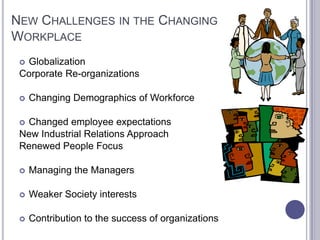
NEW CHALLENGES IN THE CHANGING
WORKPLACE
 Globalization
 Corporate Re-organizations

    Changing Demographics of Workforce

 Changed employee expectations
 New Industrial Relations Approach
 Renewed People Focus

    Managing the Managers

    Weaker Society interests

    Contribution to the success of organizations
PROACTIVE HRD STRATEGIES FOR LONG
TERM PLANNING AND GROWTH

   Change Management: Manage change properly and become
    an effective change agent rather than being a victim of
    change itself.

   Values: Adopt proactive HRD measures, which encourage
    values of openness, trust and honesty.

   Maximize productivity and efficiency: Through qualitative
    growth of people with capabilities and potentialities to grow
    and develop thrive to maximize productivity and efficiency of
    the organization.

   Activities directed to competence building: HRD activities
    need to be geared up and directed at improving personal
    competence.
FUTURE TRENDS & IMPLICATIONS FOR HRD
 Creation of a bimodal workforce
 Dual Career Couples

 Working at home

 Decline of Unions

 Matching the environment to the employees
HOORRAY!!!!!


WITH THAT WE END THE SYLLABUS FOR HRM


            THANK YOU…..

8 hrd challenges

  • 1.
    HUMAN RESOURCE MANAGEMENT MMS(SEM II) HRD Challenges & Future Trends Prof. Sonali Murzello
  • 2.
    HRD AND HRM  HRM stands for human resources management, which refers to the art of managing all aspects of the human work force at a company or organization.  HRM aims at providing an optimal working environment for employees to fully and freely utilize their skills to their best to achieve the company’s intended output.  HRD (Human Resource Development) is the process to help people to acquire competencies and to increase their knowledge, skills and capabilities for higher performance and productivity.
  • 3.
    HRD AND HRM….  Human resources management usually applies to big companies and organizations, it has sub categories, among which is HRD.  HRD does not only focus on development of skills but also focuses on the personal development of employees.  The HRD section is concerned with identifying strengths and weaknesses among different employees and devising training means.
  • 4.
    SUMMARY 1. HRD is a sub section of HRM, i.e. HRD is a section with the department of HRM. 2. HRM deals with all aspects of the human resources function while HRD only deals with the development part. 3. HRM is concerned with recruitment, rewards among others while HRD is concerned with employee skills development. 4. HRM functions are mostly formal while HRD functions can be informal like mentorships.
  • 5.
    NEW CHALLENGES INTHE CHANGING WORKPLACE Globalization Corporate Re-organizations  Changing Demographics of Workforce Changed employee expectations New Industrial Relations Approach Renewed People Focus  Managing the Managers  Weaker Society interests  Contribution to the success of organizations
  • 6.
    PROACTIVE HRD STRATEGIESFOR LONG TERM PLANNING AND GROWTH  Change Management: Manage change properly and become an effective change agent rather than being a victim of change itself.  Values: Adopt proactive HRD measures, which encourage values of openness, trust and honesty.  Maximize productivity and efficiency: Through qualitative growth of people with capabilities and potentialities to grow and develop thrive to maximize productivity and efficiency of the organization.  Activities directed to competence building: HRD activities need to be geared up and directed at improving personal competence.
  • 7.
    FUTURE TRENDS &IMPLICATIONS FOR HRD  Creation of a bimodal workforce  Dual Career Couples  Working at home  Decline of Unions  Matching the environment to the employees
  • 8.
    HOORRAY!!!!! WITH THAT WEEND THE SYLLABUS FOR HRM THANK YOU…..