FLEXIBILITY
Source: Salesforce (2015)
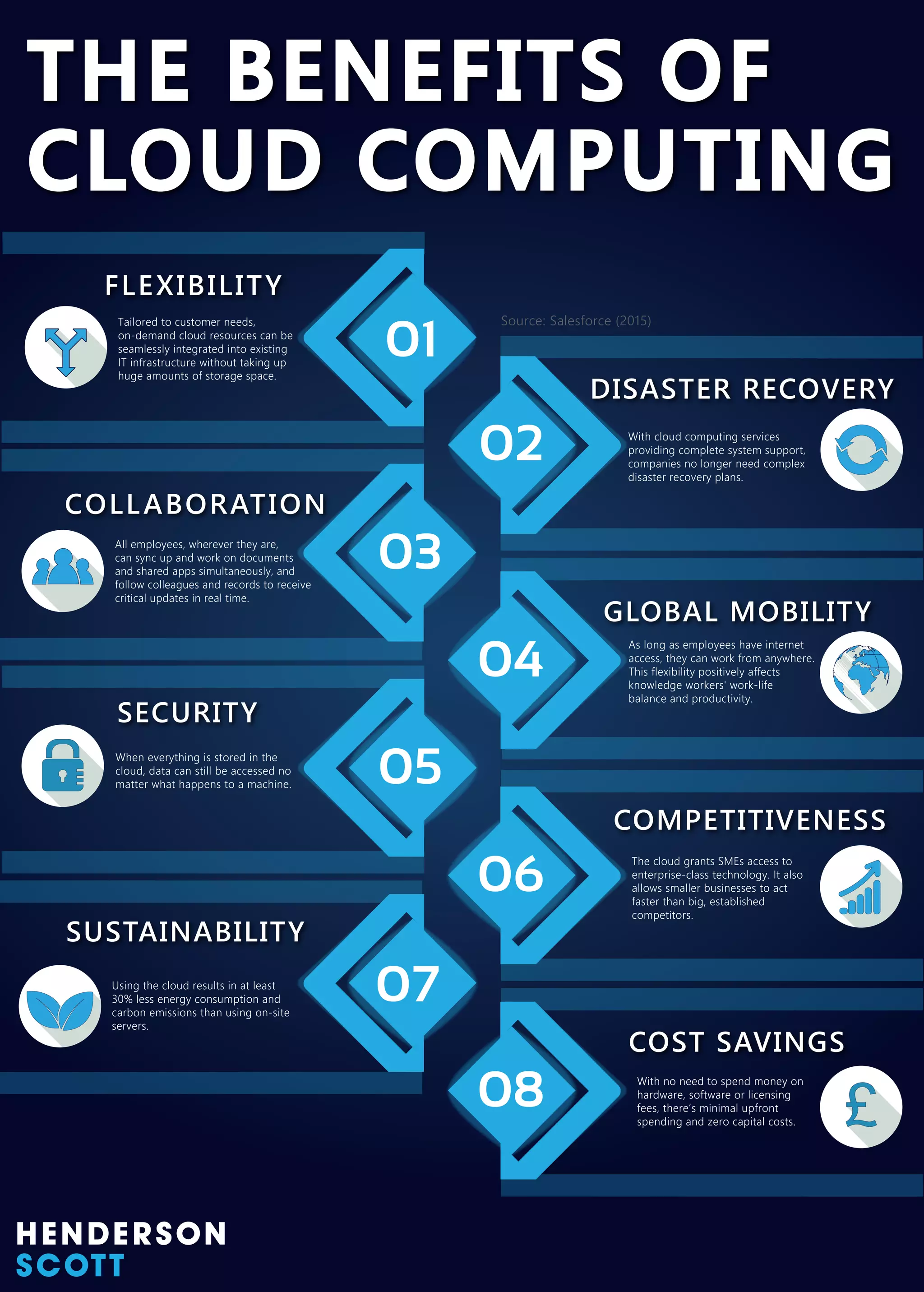
Tailored to customer needs, on-demand cloud resources
can be seamlessly integrated into existing IT infrastructure
without taking up huge amounts of storage space.
THE BENEFITS OF
CLOUD COMPUTING
DISASTER RECOVERY
With cloud computing services providing complete
system support, companies no longer need complex
disaster recovery plans.
GLOBAL MOBILITY
COLLABORATION
SECURITY
COMPETITIVENESS
SUSTAINABILITY
COST SAVINGS
All employees, wherever they are, can sync up and work
on documents and shared apps simultaneously, and
follow colleagues and records to receivecritical updates
in real time.
As long as employees have internet access, they can
work from anywhere. This flexibility positively affects
knowledge workers' work-life balance and productivity.
When everything is stored in the cloud, data can still be
accessed nomatter what happens to a machine.
The cloud grants SMEs access to enterprise-class
technology. It also allows smaller businesses to act
faster than big, established competitors.
Using the cloud results in at least 30% less energy
consumption and carbon emissions than using
on-site servers.
With no need to spend money on hardware, software
or licensing fees, there’s minimal upfront
spending and zero capital costs.

The benefits of cloud computing

  • 1.
    FLEXIBILITY Source: Salesforce (2015) Tailoredto customer needs, on-demand cloud resources can be seamlessly integrated into existing IT infrastructure without taking up huge amounts of storage space. THE BENEFITS OF CLOUD COMPUTING DISASTER RECOVERY With cloud computing services providing complete system support, companies no longer need complex disaster recovery plans. GLOBAL MOBILITY COLLABORATION SECURITY COMPETITIVENESS SUSTAINABILITY COST SAVINGS All employees, wherever they are, can sync up and work on documents and shared apps simultaneously, and follow colleagues and records to receivecritical updates in real time. As long as employees have internet access, they can work from anywhere. This flexibility positively affects knowledge workers' work-life balance and productivity. When everything is stored in the cloud, data can still be accessed nomatter what happens to a machine. The cloud grants SMEs access to enterprise-class technology. It also allows smaller businesses to act faster than big, established competitors. Using the cloud results in at least 30% less energy consumption and carbon emissions than using on-site servers. With no need to spend money on hardware, software or licensing fees, there’s minimal upfront spending and zero capital costs.