Prepared by: BySusheel
INTRODUCTION
Leading Convenience Store in Japan.
No of Stores - 12000
Annual Profit - $30 Billion
Chairman & CEO - Toshifumi Suzuki
Positioning : “That Responds to Change”
US & Japanese Convenience Stores
Cultural Views
Japan Stores – Konbini
Integral part of their daily life
US – Simple Mini Marts
Late Night Visits & Saves time while filling gas.
SEJ Success Mantra
• Integration among Partners
• Share Information through highly evolved Data rich
SCM
Important Aspect of Japanese Business Model is ability to gather
data about their Consumers & transform it into Information.
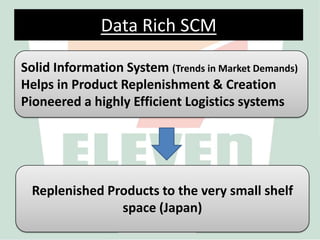
Data Rich SCM
Solid Information System (Trends in Market Demands)
Helps in Product Replenishment & Creation
Pioneered a highly Efficient Logistics systems
Replenished Products to the very small shelf
space (Japan)
Major Innovator in convenience store Operations.
Implemented TQM – (Kaizen-Japan)
Achieved Success in Suffering Economy
( Due to Consumer focused orientation based upon Analysis of
Information Technology)
In 1991 SEJ Invested $200 Million 4th Gen IT
System.
ISDN Links their Retail Store with their Headquarters.
Data is gathered during every single transaction.
Store Manager & HQ Manager Analyze the Data.
HQ Manager Aggregates the Data & send it to the Store Manager &
Suppliers.
Store managers Review Information Hourly.
Weekly Cycle Information Gathering
Quality control data is analyzed by computerized decision support(“what
if” & “goal seeking”)
Started using ISDN (Integrated Service Digital Network)
Daily and weekly cycles
Macro & micro decision making which leads to reduce
risk(SCM)
Adopted 5th generation IT system in 1998
SEJ introduced new system to combine store level
product tracking by using satellite and internet
communication
Adopted JIT approach to reduce cost of keeping
inventory and spoilage
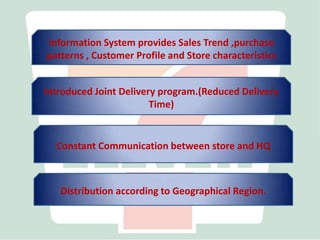
Introduced Joint Delivery program.(Reduced Delivery
Time)
Information System provides Sales Trend ,purchase
patterns , Customer Profile and Store characteristics
Distribution according to Geographical Region.
Constant Communication between store and HQ
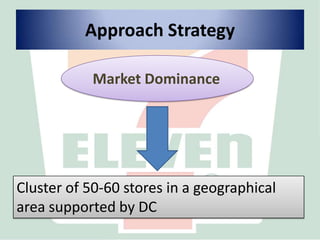
Approach Strategy
Cluster of 50-60 stores in a geographical
area supported by DC
Market Dominance
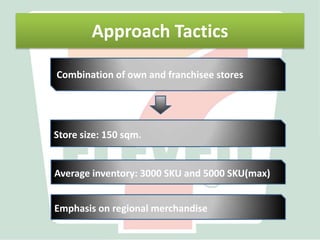
Approach Tactics
Combination of own and franchisee stores
Store size: 150 sqm.
Average inventory: 3000 SKU and 5000 SKU(max)
Emphasis on regional merchandise
Supplier
(Frozen)
Supplier
(Warm)
Supplier
(Room
Temp)
Supplier
(Cold)
Stores Stores Stores Stores
Competitive
Strategy
Supply Chain
Strategy
Facilities Inventory Transportation
Information Sourcing Pricing
Efficiency Responsiveness
Logistical Drivers
Financials
36.5
20.3
17.1
10.9
4
11.1
7 Eleven Japan
Lawson
Family Mart
Sunkus
Ministock
Others
Conclusion
Average Inventory Turnover Time Reduced 25.5 to 8.4 days.
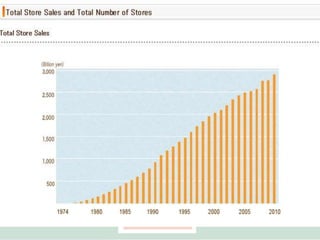
1977-2000 Sales improved $3660 to $6810.
Effective Supply Chain management and inventory
management.
Data Rich SCM is the most suitable approach for efficiency
and customer Value.
Gross Margin increased from 24% to 30%.
7eleven.pdf

7eleven.pdf

  • 1.
  • 2.
    INTRODUCTION Leading Convenience Storein Japan. No of Stores - 12000 Annual Profit - $30 Billion Chairman & CEO - Toshifumi Suzuki Positioning : “That Responds to Change”
  • 3.
    US & JapaneseConvenience Stores Cultural Views Japan Stores – Konbini Integral part of their daily life US – Simple Mini Marts Late Night Visits & Saves time while filling gas.
  • 4.
    SEJ Success Mantra •Integration among Partners • Share Information through highly evolved Data rich SCM Important Aspect of Japanese Business Model is ability to gather data about their Consumers & transform it into Information.
  • 5.
    Data Rich SCM SolidInformation System (Trends in Market Demands) Helps in Product Replenishment & Creation Pioneered a highly Efficient Logistics systems Replenished Products to the very small shelf space (Japan)
  • 6.
    Major Innovator inconvenience store Operations. Implemented TQM – (Kaizen-Japan) Achieved Success in Suffering Economy ( Due to Consumer focused orientation based upon Analysis of Information Technology) In 1991 SEJ Invested $200 Million 4th Gen IT System.
  • 7.
    ISDN Links theirRetail Store with their Headquarters. Data is gathered during every single transaction. Store Manager & HQ Manager Analyze the Data. HQ Manager Aggregates the Data & send it to the Store Manager & Suppliers. Store managers Review Information Hourly. Weekly Cycle Information Gathering Quality control data is analyzed by computerized decision support(“what if” & “goal seeking”) Started using ISDN (Integrated Service Digital Network)
  • 8.
    Daily and weeklycycles Macro & micro decision making which leads to reduce risk(SCM) Adopted 5th generation IT system in 1998 SEJ introduced new system to combine store level product tracking by using satellite and internet communication Adopted JIT approach to reduce cost of keeping inventory and spoilage
  • 9.
    Introduced Joint Deliveryprogram.(Reduced Delivery Time) Information System provides Sales Trend ,purchase patterns , Customer Profile and Store characteristics Distribution according to Geographical Region. Constant Communication between store and HQ
  • 12.
    Approach Strategy Cluster of50-60 stores in a geographical area supported by DC Market Dominance
  • 13.
    Approach Tactics Combination ofown and franchisee stores Store size: 150 sqm. Average inventory: 3000 SKU and 5000 SKU(max) Emphasis on regional merchandise
  • 14.
  • 15.
    Competitive Strategy Supply Chain Strategy Facilities InventoryTransportation Information Sourcing Pricing Efficiency Responsiveness Logistical Drivers
  • 17.
  • 25.
  • 26.
    Conclusion Average Inventory TurnoverTime Reduced 25.5 to 8.4 days. 1977-2000 Sales improved $3660 to $6810. Effective Supply Chain management and inventory management. Data Rich SCM is the most suitable approach for efficiency and customer Value. Gross Margin increased from 24% to 30%.