7 Tips to keep Your Maintenance Socket
In Good Condition
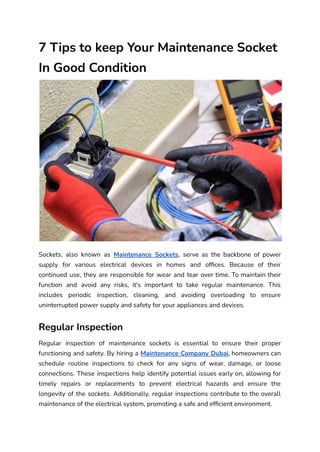
Sockets, also known as Maintenance Sockets, serve as the backbone of power
supply for various electrical devices in homes and offices. Because of their
continued use, they are responsible for wear and tear over time. To maintain their
function and avoid any risks, it's important to take regular maintenance. This
includes periodic inspection, cleaning, and avoiding overloading to ensure
uninterrupted power supply and safety for your appliances and devices.
Regular Inspection
Regular inspection of maintenance sockets is essential to ensure their proper
functioning and safety. By hiring a Maintenance Company Dubai, homeowners can
schedule routine inspections to check for any signs of wear, damage, or loose
connections. These inspections help identify potential issues early on, allowing for
timely repairs or replacements to prevent electrical hazards and ensure the
longevity of the sockets. Additionally, regular inspections contribute to the overall
maintenance of the electrical system, promoting a safe and efficient environment.
Cleaning
Cleaning sockets is important to ensure they are free of pollution and trash that
may affect their functionality. Dirty sockets can affect the flow of electricity and lead
to electrical hazards. Over time, they can also attract moisture, which can further
affect their performance and lead to rusting. Frequent cleaning aids in preventing
debris accumulation and enhances the longevity of sockets.
When cleaning sockets, always ensure that you have switched off the power supply
to the socket. You can then use a dry piece of cloth to wipe the socket clean, paying
attention to the crevices and edges where dirt may accumulate. Avoid using wet
cloths or cleaners such as detergent or bleach as this may damage the socket.
Avoid Overloading
Overloading sockets is a common cause of fires and electrical hazards in homes and
offices. It occurs when too many appliances or devices are connected to a single
socket, leading to a strain on the electrical circuit. This, in turn, can cause the socket
to overheat, leading to fires or damage to electrical equipment.
To avoid overloading, it's essential to only connect devices that are within the
socket's recommended power rating. Avoid connecting multiple appliances that
draw a high amount of power simultaneously. It's also advisable to use extension
cords and power strips that have built-in surge protectors as these can help
regulate the flow of power to the socket.
Proper Usage
Using sockets properly is Important for the safety of individuals and the longevity of
electrical appliances. It's essential to follow a few key guidelines to ensure that
sockets are utilised correctly:
Prevent overloading: Connecting excessive appliances to one socket may
result in overheating and electrical fires. Make sure to distribute the load across
different sockets or use power strips with surge protectors.
Secure connections: Make sure that the plugs fit snugly into the sockets. Loose
connections can cause electricity to arc, leading to a dangerous situation.
Use appropriate outlets: Different countries and regions have varying socket and
plug designs. Matching the appropriate plug with the outlet can help prevent
electrical accidents.
Keep flammable materials away: Avoid placing flammable materials near
sockets. In cases of socket malfunctions, the risk of fire increases significantly if
flammable objects are nearby.
By following these guidelines, individuals can prevent accidents and ensure the safe
and efficient use of sockets.
Common Mistakes to Avoid
There are several common mistakes that individuals often make when using
sockets. Recognizing and avoiding these errors can help maintain socket condition
and prevent hazards:
Using damaged sockets: It's crucial to always use sockets that are in good
condition. Damaged sockets can cause electrical shocks, fires, or damage to
appliances. If a socket shows signs of wear and tear, it's essential to have it
replaced or repaired by a professional electrician.
Using unauthorised adapters: Using adapters that are not approved or designed
for specific sockets can lead to electrical damage or fires. Always use adapters that
are compatible with the respective sockets and electrical systems.
Mishandling cords: Pulling cords out of sockets by their cords can loosen the
connections over time and lead to electrical hazards. It's important to always
remove plugs by gripping them firmly and pulling directly out of the socket.
Professional Inspection
While regular inspections by individuals are important, periodic professional
inspections are equally important. Professionals have the expertise and tools to
identify hidden issues that may not be evident during routine checks. These
inspections can help detect potential hazards and ensure the overall safety of the
electrical system.
Professional inspections should be conducted at least once every few years or more
frequently for older buildings or areas that have experienced electrical issues in the
past. It's also advisable to seek professional help if there are noticeable signs of a
problem, such as outlets that feel warm to the touch, frequent tripping of circuit
breakers, or flickering lights.
Emergency Being Ready
Despite taking precautionary measures, socket emergencies can still occur. It's
essential to be prepared and know what to do in such situations to minimise risks:
Turn off the power: In case of a socket emergency, the first step is to turn off the
power supply to the affected socket. This can be achieved by turning off the circuit
breaker or extracting the corresponding fuse, ensuring safety during maintenance.
Seek professional help: For major socket emergencies or situations where there
is a perceived risk, it's important to contact a professional electrician. They have the
knowledge and experience to handle emergencies safely.
Have emergency contact information: Keep a list of emergency electricians or
electrical services handy for quick access when needed.
Educate household members: Ensure that all family members are aware of basic
socket safety procedures and emergency protocols to follow in case of an electrical
issue.
By being prepared and taking prompt action during socket emergencies, individuals
can protect themselves and their homes from further damage or potential harm.
Conclusion
In conclusion, using sockets properly, conducting regular inspections, and being
prepared for emergencies are all essential components of maintaining socket
condition and ensuring electrical safety. By implementing these practices,
individuals can minimise hazards, prevent accidents, and enjoy the benefits of a
reliable and safe electrical system.
Frequently Asked Questions
Q1: How often should you clean your maintenance socket?
It's recommended to clean maintenance sockets every few months to remove dust
and debris that can accumulate and affect their performance.
Q2: What are the signs that your maintenance socket needs repair?
Signs that your maintenance socket needs repair include sparking, loose
connections, burn marks, or if devices plugged into it frequently lose power.
Q3: What are the common causes of damage to maintenance
sockets?
Common causes of damage to maintenance sockets include overloading, exposure
to moisture, physical damage, and ageing components. Regular inspection can help
identify issues early.

7 Tips to keep Your Maintenance Socket In Good Condition

  • 1.
    7 Tips tokeep Your Maintenance Socket In Good Condition Sockets, also known as Maintenance Sockets, serve as the backbone of power supply for various electrical devices in homes and offices. Because of their continued use, they are responsible for wear and tear over time. To maintain their function and avoid any risks, it's important to take regular maintenance. This includes periodic inspection, cleaning, and avoiding overloading to ensure uninterrupted power supply and safety for your appliances and devices. Regular Inspection Regular inspection of maintenance sockets is essential to ensure their proper functioning and safety. By hiring a Maintenance Company Dubai, homeowners can schedule routine inspections to check for any signs of wear, damage, or loose connections. These inspections help identify potential issues early on, allowing for timely repairs or replacements to prevent electrical hazards and ensure the longevity of the sockets. Additionally, regular inspections contribute to the overall maintenance of the electrical system, promoting a safe and efficient environment.
  • 2.
    Cleaning Cleaning sockets isimportant to ensure they are free of pollution and trash that may affect their functionality. Dirty sockets can affect the flow of electricity and lead to electrical hazards. Over time, they can also attract moisture, which can further affect their performance and lead to rusting. Frequent cleaning aids in preventing debris accumulation and enhances the longevity of sockets. When cleaning sockets, always ensure that you have switched off the power supply to the socket. You can then use a dry piece of cloth to wipe the socket clean, paying attention to the crevices and edges where dirt may accumulate. Avoid using wet cloths or cleaners such as detergent or bleach as this may damage the socket. Avoid Overloading Overloading sockets is a common cause of fires and electrical hazards in homes and offices. It occurs when too many appliances or devices are connected to a single socket, leading to a strain on the electrical circuit. This, in turn, can cause the socket to overheat, leading to fires or damage to electrical equipment. To avoid overloading, it's essential to only connect devices that are within the socket's recommended power rating. Avoid connecting multiple appliances that draw a high amount of power simultaneously. It's also advisable to use extension cords and power strips that have built-in surge protectors as these can help regulate the flow of power to the socket. Proper Usage Using sockets properly is Important for the safety of individuals and the longevity of electrical appliances. It's essential to follow a few key guidelines to ensure that sockets are utilised correctly: Prevent overloading: Connecting excessive appliances to one socket may result in overheating and electrical fires. Make sure to distribute the load across different sockets or use power strips with surge protectors.
  • 3.
    Secure connections: Makesure that the plugs fit snugly into the sockets. Loose connections can cause electricity to arc, leading to a dangerous situation. Use appropriate outlets: Different countries and regions have varying socket and plug designs. Matching the appropriate plug with the outlet can help prevent electrical accidents. Keep flammable materials away: Avoid placing flammable materials near sockets. In cases of socket malfunctions, the risk of fire increases significantly if flammable objects are nearby. By following these guidelines, individuals can prevent accidents and ensure the safe and efficient use of sockets. Common Mistakes to Avoid There are several common mistakes that individuals often make when using sockets. Recognizing and avoiding these errors can help maintain socket condition and prevent hazards: Using damaged sockets: It's crucial to always use sockets that are in good condition. Damaged sockets can cause electrical shocks, fires, or damage to appliances. If a socket shows signs of wear and tear, it's essential to have it replaced or repaired by a professional electrician. Using unauthorised adapters: Using adapters that are not approved or designed for specific sockets can lead to electrical damage or fires. Always use adapters that are compatible with the respective sockets and electrical systems. Mishandling cords: Pulling cords out of sockets by their cords can loosen the connections over time and lead to electrical hazards. It's important to always remove plugs by gripping them firmly and pulling directly out of the socket. Professional Inspection While regular inspections by individuals are important, periodic professional inspections are equally important. Professionals have the expertise and tools to
  • 4.
    identify hidden issuesthat may not be evident during routine checks. These inspections can help detect potential hazards and ensure the overall safety of the electrical system. Professional inspections should be conducted at least once every few years or more frequently for older buildings or areas that have experienced electrical issues in the past. It's also advisable to seek professional help if there are noticeable signs of a problem, such as outlets that feel warm to the touch, frequent tripping of circuit breakers, or flickering lights. Emergency Being Ready Despite taking precautionary measures, socket emergencies can still occur. It's essential to be prepared and know what to do in such situations to minimise risks: Turn off the power: In case of a socket emergency, the first step is to turn off the power supply to the affected socket. This can be achieved by turning off the circuit breaker or extracting the corresponding fuse, ensuring safety during maintenance. Seek professional help: For major socket emergencies or situations where there is a perceived risk, it's important to contact a professional electrician. They have the knowledge and experience to handle emergencies safely. Have emergency contact information: Keep a list of emergency electricians or electrical services handy for quick access when needed. Educate household members: Ensure that all family members are aware of basic socket safety procedures and emergency protocols to follow in case of an electrical issue. By being prepared and taking prompt action during socket emergencies, individuals can protect themselves and their homes from further damage or potential harm. Conclusion In conclusion, using sockets properly, conducting regular inspections, and being prepared for emergencies are all essential components of maintaining socket condition and ensuring electrical safety. By implementing these practices,
  • 5.
    individuals can minimisehazards, prevent accidents, and enjoy the benefits of a reliable and safe electrical system. Frequently Asked Questions Q1: How often should you clean your maintenance socket? It's recommended to clean maintenance sockets every few months to remove dust and debris that can accumulate and affect their performance. Q2: What are the signs that your maintenance socket needs repair? Signs that your maintenance socket needs repair include sparking, loose connections, burn marks, or if devices plugged into it frequently lose power. Q3: What are the common causes of damage to maintenance sockets? Common causes of damage to maintenance sockets include overloading, exposure to moisture, physical damage, and ageing components. Regular inspection can help identify issues early.