Risk Management
Job Safety Analysis
Risk Management
Barriers to Incidents
Incident
Occurs
Personal Planning
(Stepback 5X5)
Task
Analysis
Procedures
& Planning
Work
Management
Systems
Formal Risk
Assessments
Incident Path
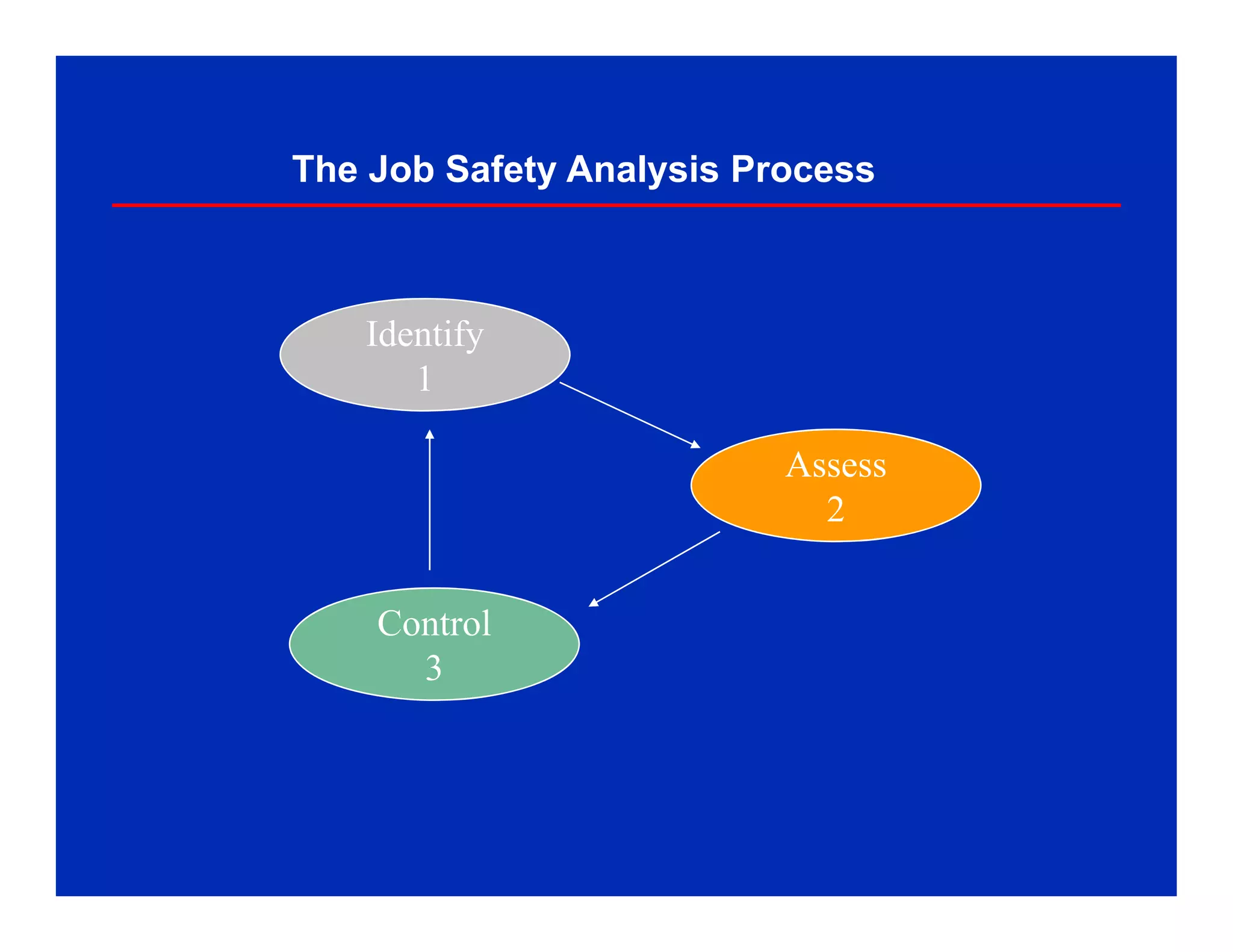
The Job Safety Analysis Process
Identify
1
Assess
2
Control
3
What is a Job Safety Analysis (JSA)?
It is a process by which we identify Hazards
and Potential Incidents for each job step
and devise safe controls to eliminate or
reduce the potential of occurrence.
Why use JSAs?
• To identify hazards and their means of control.
• To gain commitment of personnel to use safe
practices
• To identify safer and more efficient methods of
working.
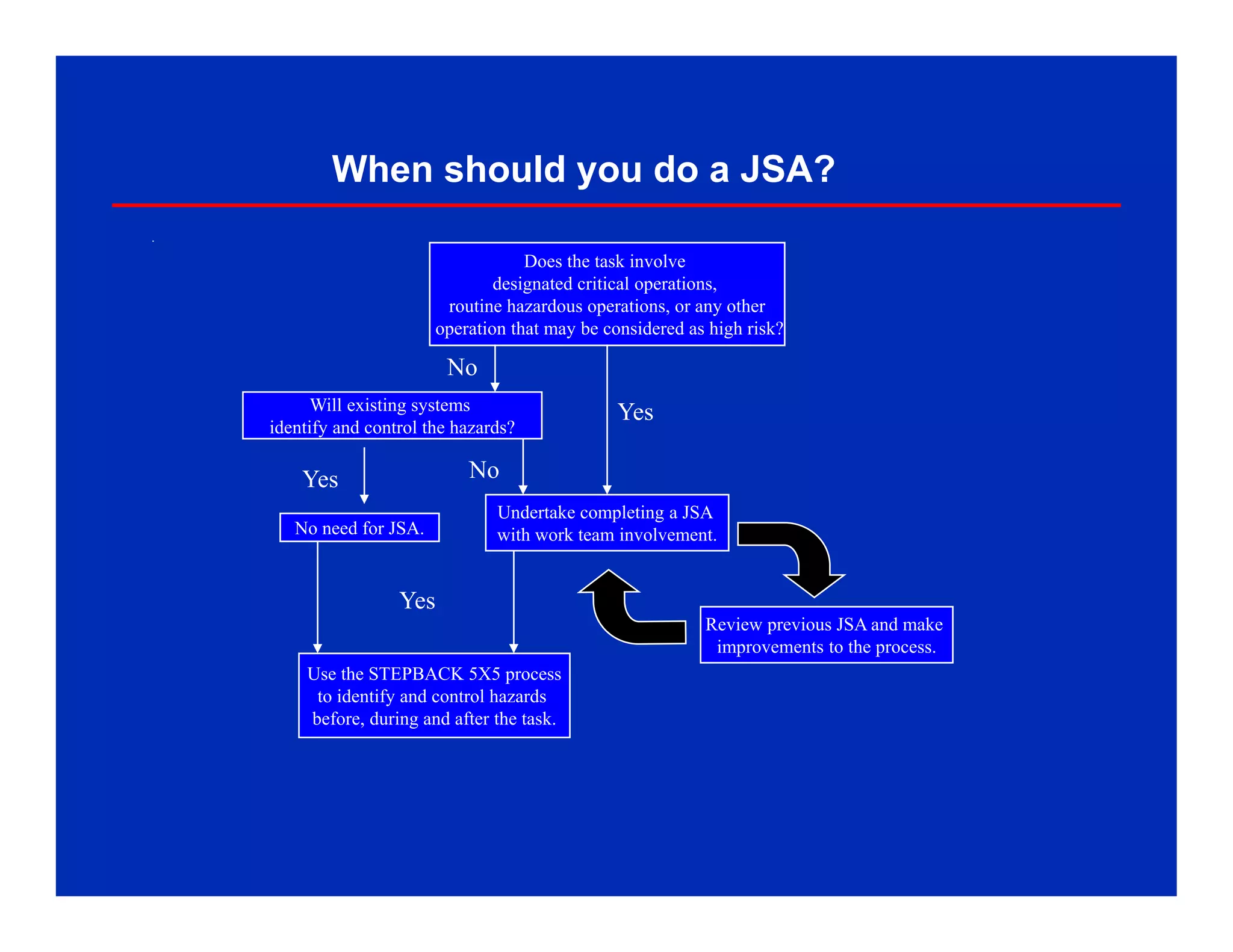
When should you do a JSA?
.
Does the task involve
designated critical operations,
routine hazardous operations, or any other
operation that may be considered as high risk?
Will existing systems
identify and control the hazards?
No need for JSA.
Use the STEPBACK 5X5 process
to identify and control hazards
before, during and after the task.
Undertake completing a JSA
with work team involvement.
Review previous JSA and make
improvements to the process.
Yes
No
Yes No
Yes
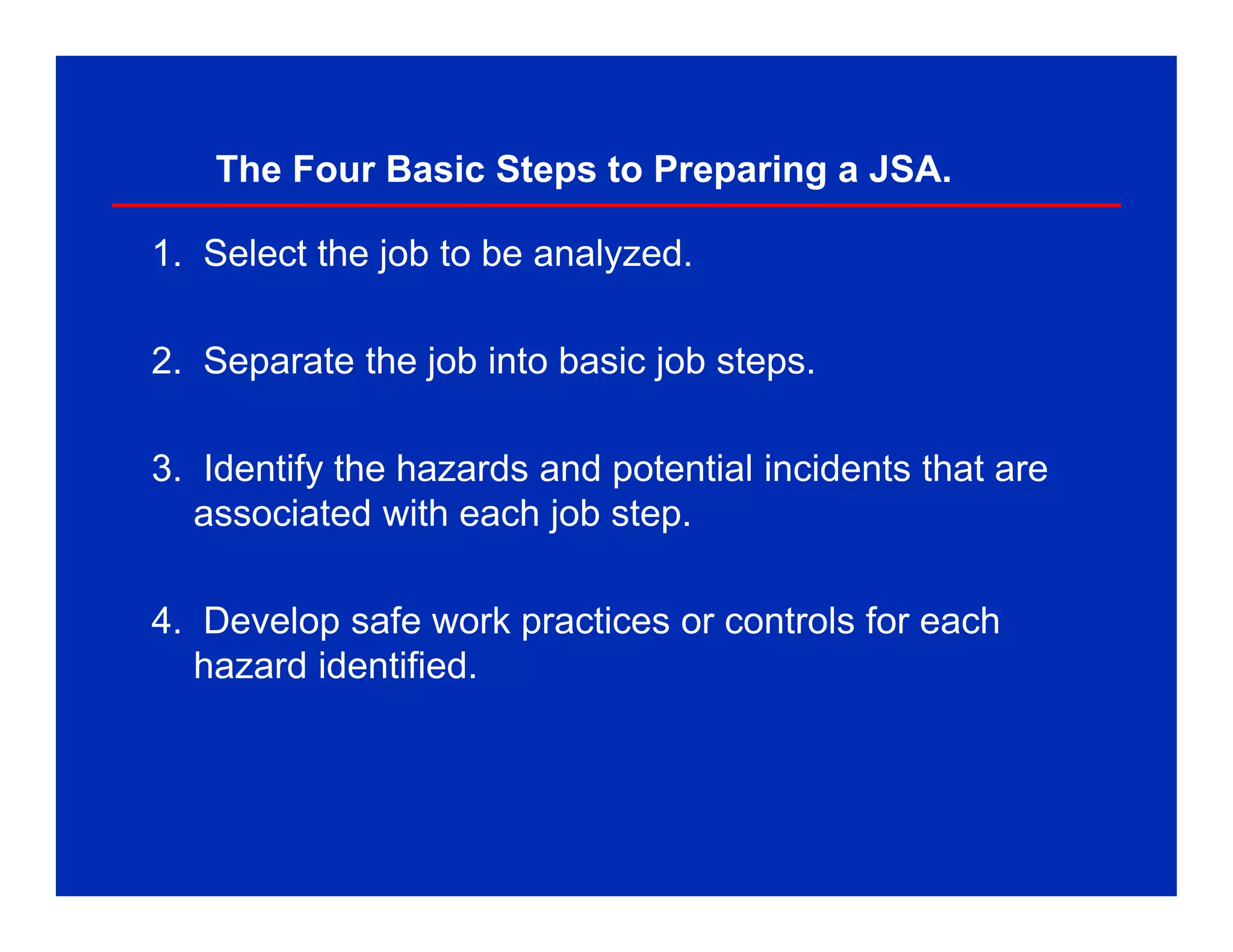
The Four Basic Steps to Preparing a JSA.
1. Select the job to be analyzed.
2. Separate the job into basic job steps.
3. Identify the hazards and potential incidents that are
associated with each job step.
4. Develop safe work practices or controls for each
hazard identified.
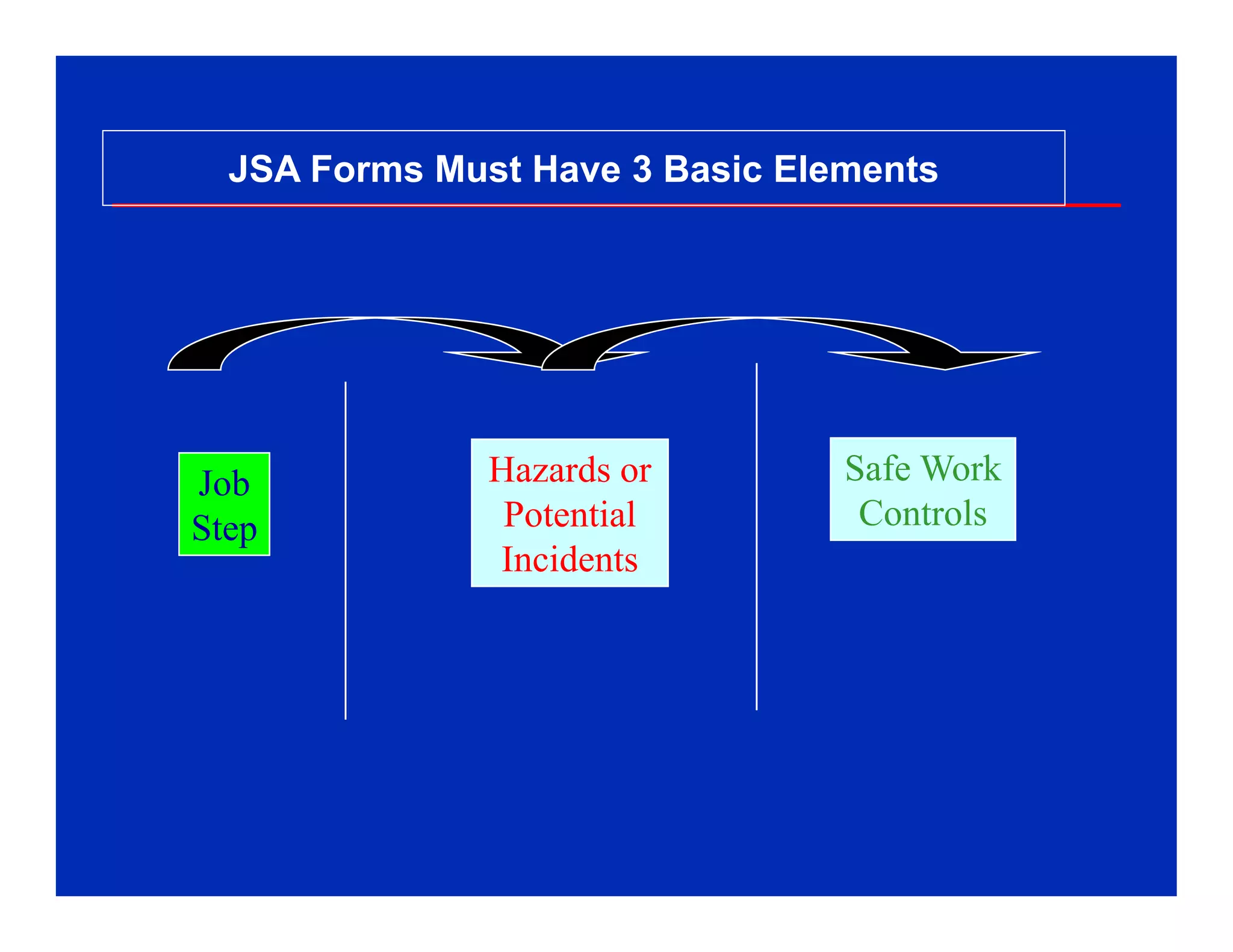
JSA Forms Must Have 3 Basic Elements
Job
Step
Hazards or
Potential
Incidents
Safe Work
Controls
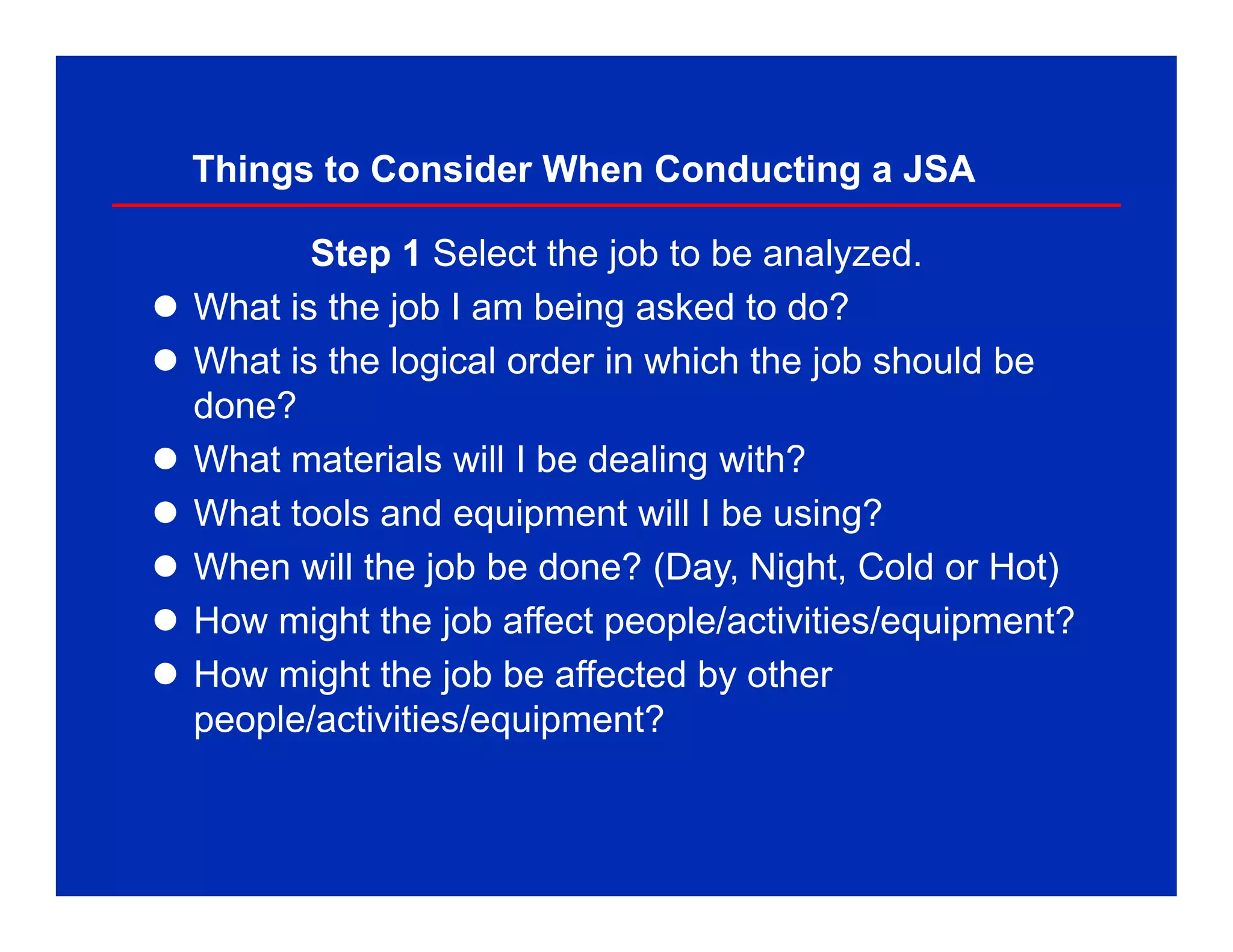
Things to Consider When Conducting a JSA
Step 1 Select the job to be analyzed.
 What is the job I am being asked to do?
 What is the logical order in which the job should be
done?
 What materials will I be dealing with?
 What tools and equipment will I be using?
 When will the job be done? (Day, Night, Cold or Hot)
 How might the job affect people/activities/equipment?
 How might the job be affected by other
people/activities/equipment?
Things to Consider When Conducting a JSA
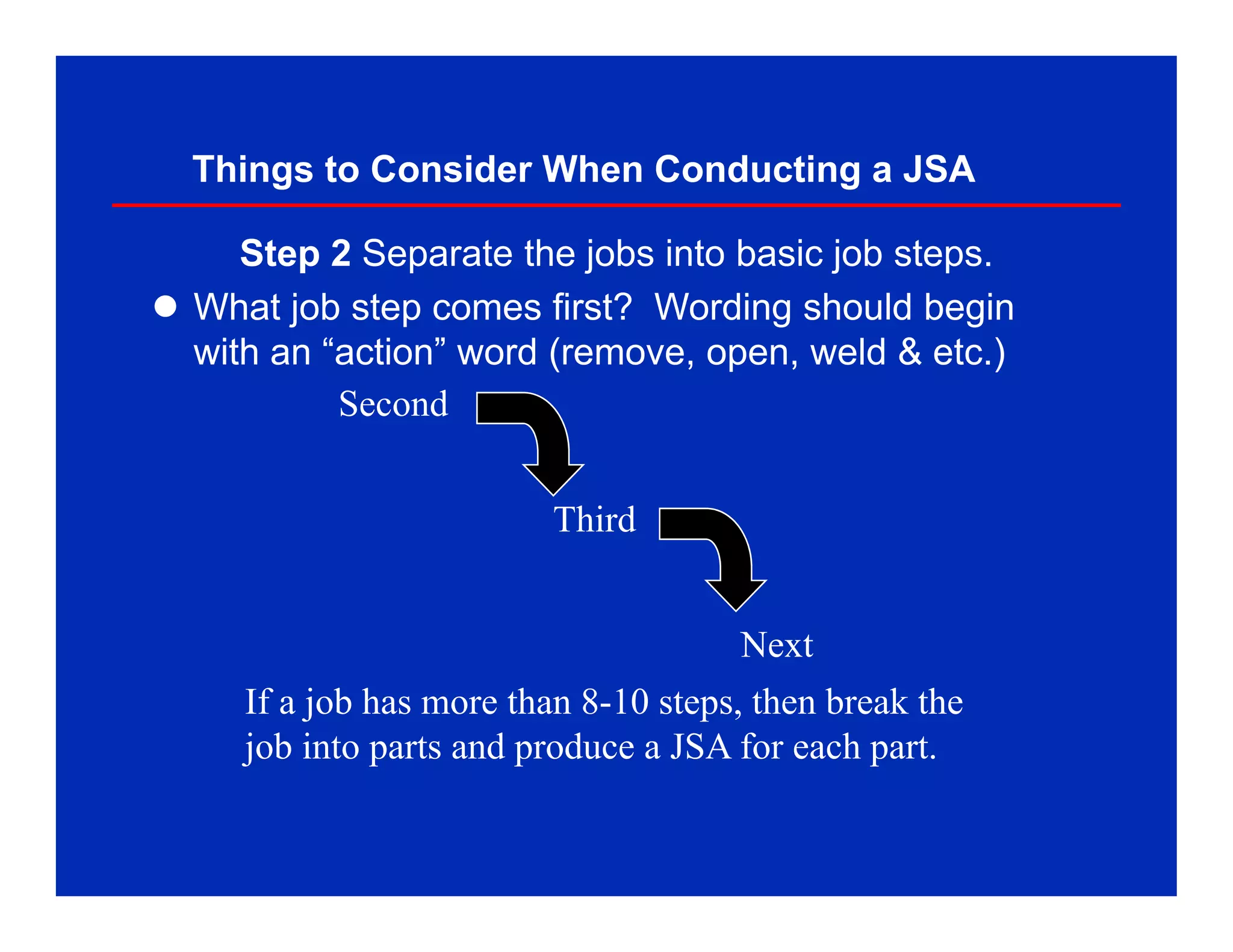
Step 2 Separate the jobs into basic job steps.
 What job step comes first? Wording should begin
with an “action” word (remove, open, weld & etc.)
Second
Third
Next
If a job has more than 8-10 steps, then break the
job into parts and produce a JSA for each part.
Things to Consider When Conducting a JSA
Step 3 Identify the hazards and potential incidents that
are associated with each job step.
Hazard definition is “Something which by itself or by
interacting with other variables can result in
• Physical injury or death
• Damage to assets or the environment
• Production loss or increased liability”
Examples: Heights, confined spaces, slippery surfaces,
weather, control of hazardous energy, chemicals,
hydrocarbon release, equipment, lack of training, loss
of concentration and etc.
Things to Consider When Conducting a JSA
Step 3 Identify the hazards and potential incidents that
are associated with each job step. Use Phrases like;
– Struck by or against
– Contact with or contacted by
– Caught in/on/under/between/against
– Exposure to temperature/chemical/noise
– Fall from a height.
It’s very important to be specific, avoid generalizations
like pinch points, slip/strips/falls, and etc. Identify
specifically what the potential incidents are.
Things to Consider When Conducting a JSA
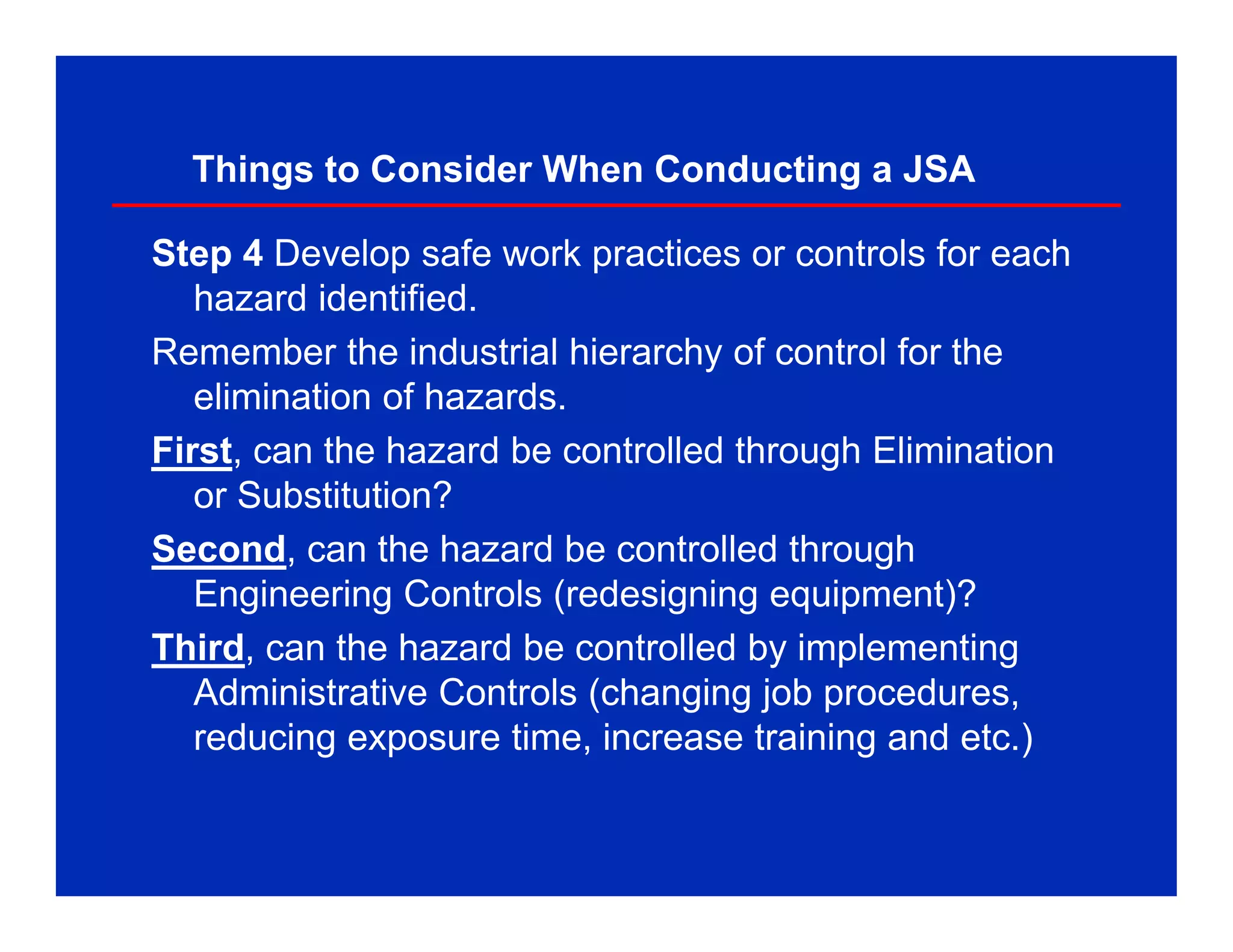
Step 4 Develop safe work practices or controls for each
hazard identified.
Remember the industrial hierarchy of control for the
elimination of hazards.
First, can the hazard be controlled through Elimination
or Substitution?
Second, can the hazard be controlled through
Engineering Controls (redesigning equipment)?
Third, can the hazard be controlled by implementing
Administrative Controls (changing job procedures,
reducing exposure time, increase training and etc.)
Things to Consider When Conducting a JSA
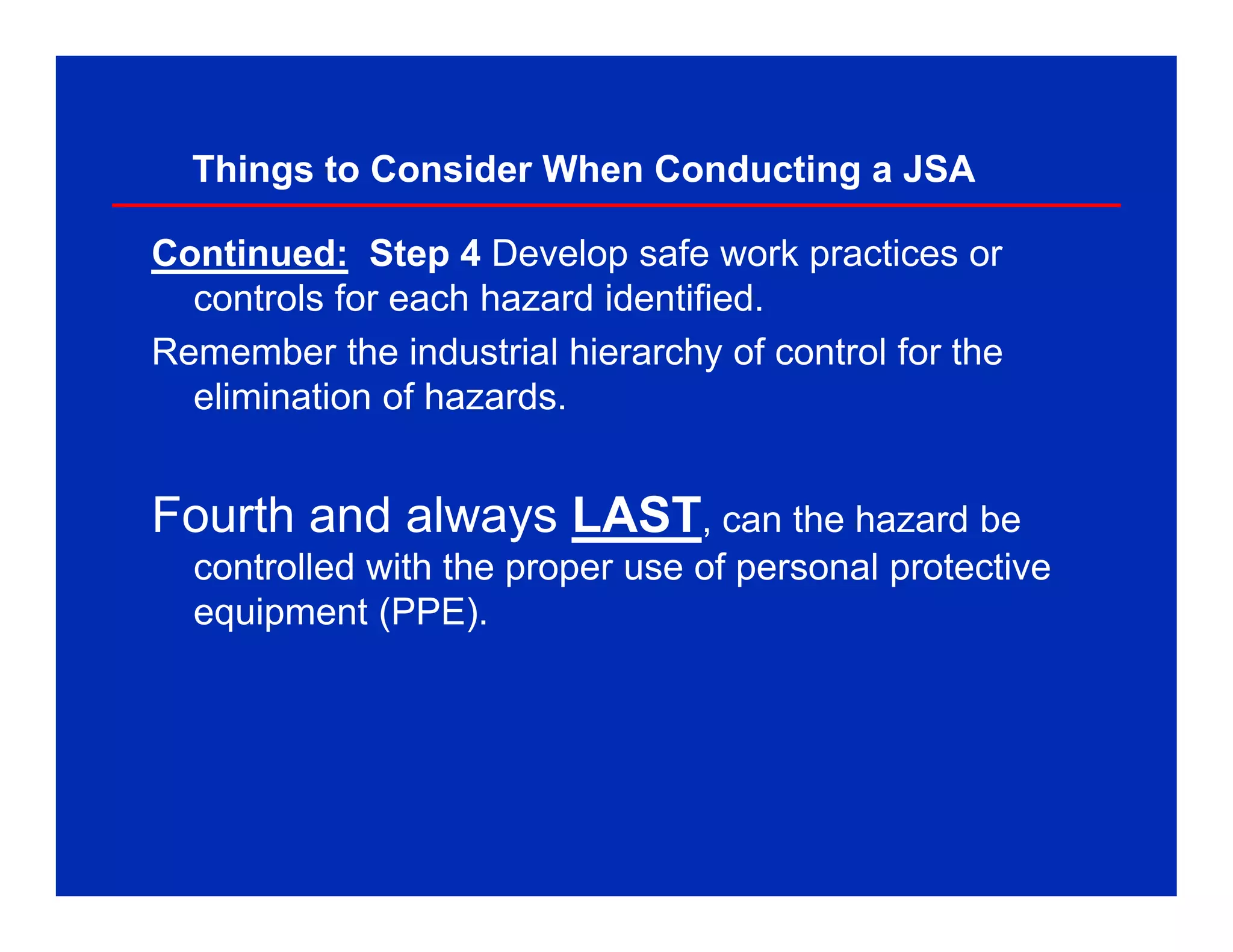
Continued: Step 4 Develop safe work practices or
controls for each hazard identified.
Remember the industrial hierarchy of control for the
elimination of hazards.
Fourth and always LAST, can the hazard be
controlled with the proper use of personal protective
equipment (PPE).
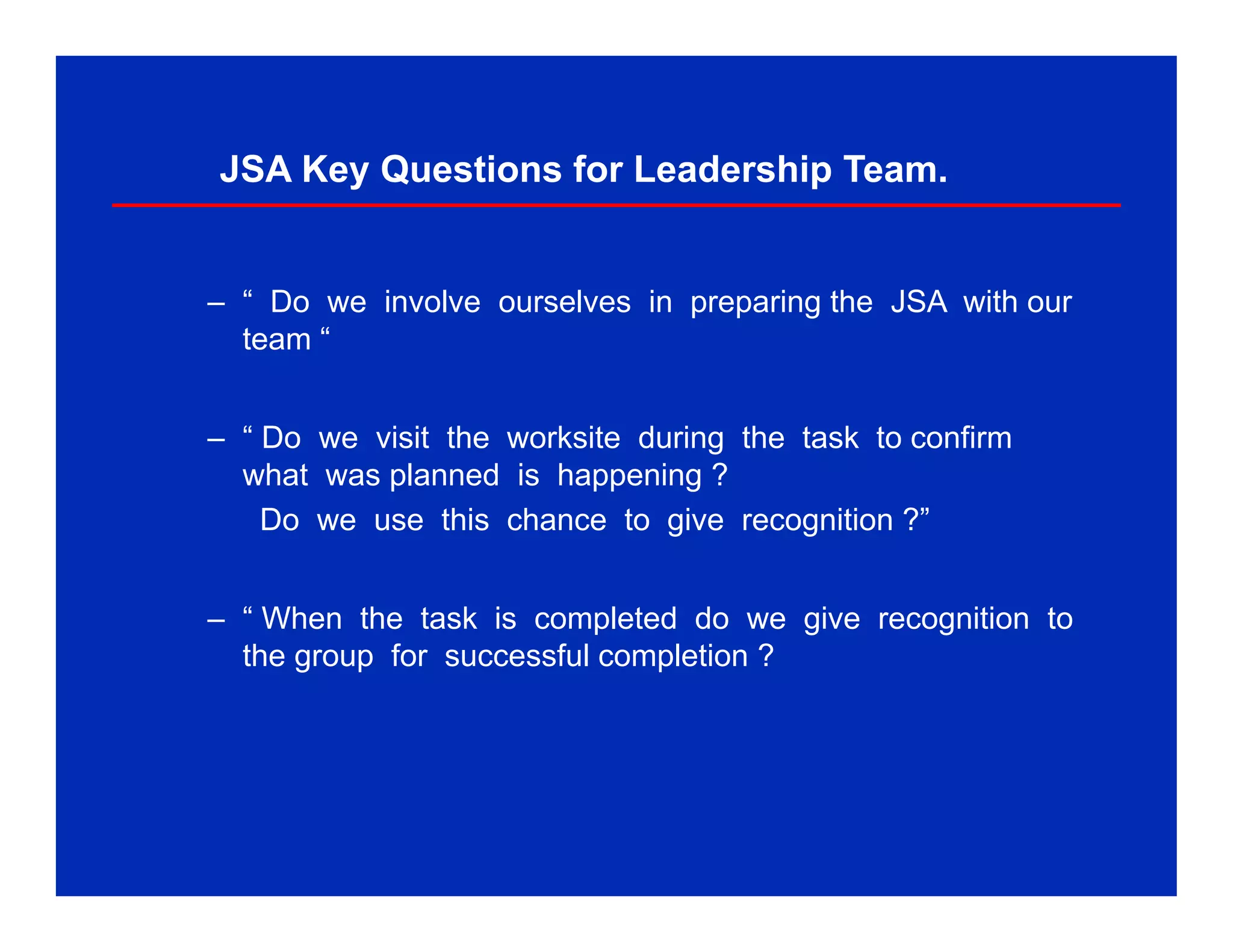
JSA Key Questions for Leadership Team.
– “ Do we involve ourselves in preparing the JSA with our
team “
– “ Do we visit the worksite during the task to confirm
what was planned is happening ?
Do we use this chance to give recognition ?”
– “ When the task is completed do we give recognition to
the group for successful completion ?
JSA Safety Scorecard
Is a rig based tool for measuring the
effectiveness of the JSA process
so continuous improvement
can be achieved.
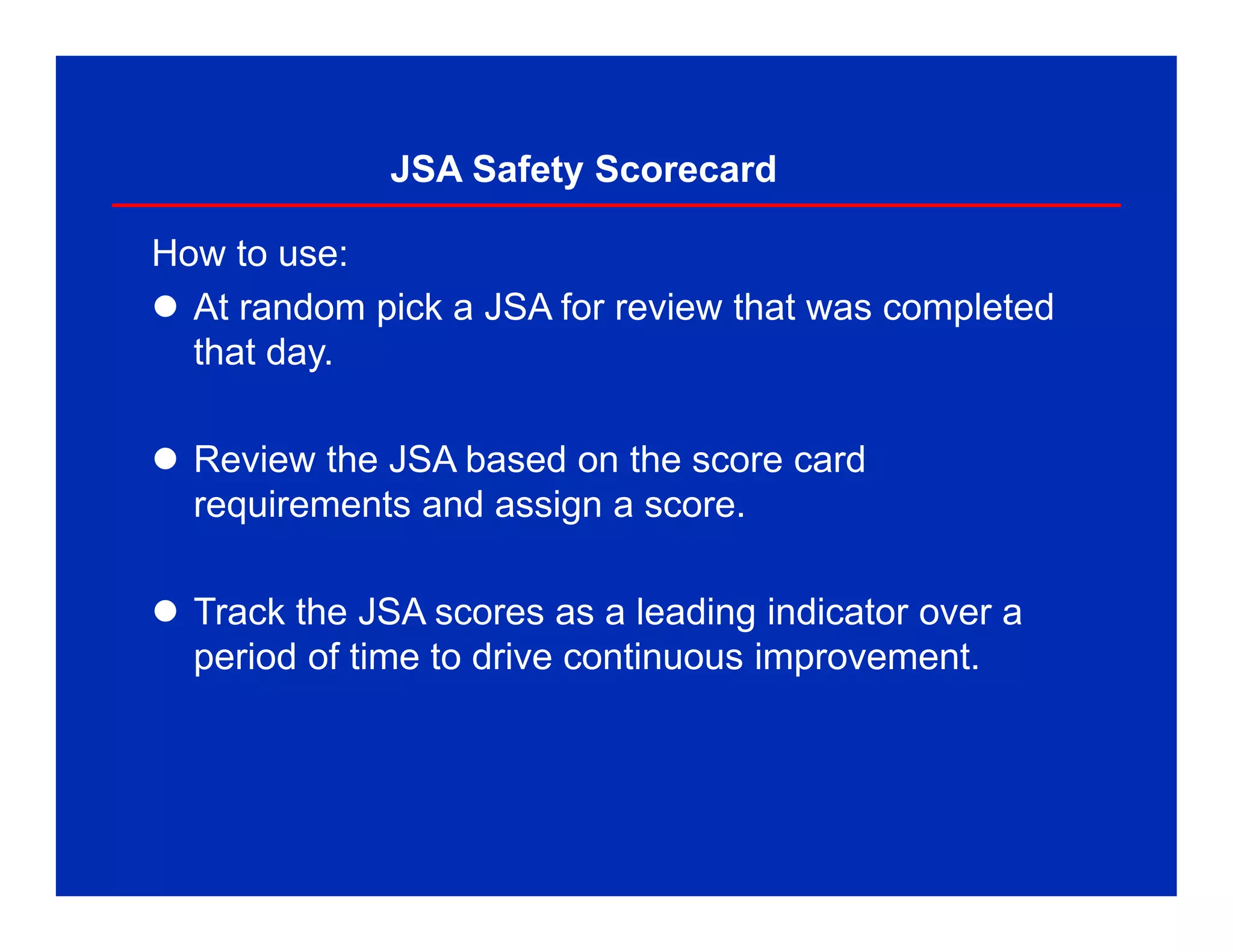
JSA Safety Scorecard
How to use:
 At random pick a JSA for review that was completed
that day.
 Review the JSA based on the score card
requirements and assign a score.
 Track the JSA scores as a leading indicator over a
period of time to drive continuous improvement.

7 job safety analysis - jsa

  • 1.
  • 2.
    Risk Management Barriers toIncidents Incident Occurs Personal Planning (Stepback 5X5) Task Analysis Procedures & Planning Work Management Systems Formal Risk Assessments Incident Path
  • 3.
    The Job SafetyAnalysis Process Identify 1 Assess 2 Control 3
  • 4.
    What is aJob Safety Analysis (JSA)? It is a process by which we identify Hazards and Potential Incidents for each job step and devise safe controls to eliminate or reduce the potential of occurrence.
  • 5.
    Why use JSAs? •To identify hazards and their means of control. • To gain commitment of personnel to use safe practices • To identify safer and more efficient methods of working.
  • 6.
    When should youdo a JSA? . Does the task involve designated critical operations, routine hazardous operations, or any other operation that may be considered as high risk? Will existing systems identify and control the hazards? No need for JSA. Use the STEPBACK 5X5 process to identify and control hazards before, during and after the task. Undertake completing a JSA with work team involvement. Review previous JSA and make improvements to the process. Yes No Yes No Yes
  • 7.
    The Four BasicSteps to Preparing a JSA. 1. Select the job to be analyzed. 2. Separate the job into basic job steps. 3. Identify the hazards and potential incidents that are associated with each job step. 4. Develop safe work practices or controls for each hazard identified.
  • 8.
    JSA Forms MustHave 3 Basic Elements Job Step Hazards or Potential Incidents Safe Work Controls
  • 9.
    Things to ConsiderWhen Conducting a JSA Step 1 Select the job to be analyzed.  What is the job I am being asked to do?  What is the logical order in which the job should be done?  What materials will I be dealing with?  What tools and equipment will I be using?  When will the job be done? (Day, Night, Cold or Hot)  How might the job affect people/activities/equipment?  How might the job be affected by other people/activities/equipment?
  • 10.
    Things to ConsiderWhen Conducting a JSA Step 2 Separate the jobs into basic job steps.  What job step comes first? Wording should begin with an “action” word (remove, open, weld & etc.) Second Third Next If a job has more than 8-10 steps, then break the job into parts and produce a JSA for each part.
  • 11.
    Things to ConsiderWhen Conducting a JSA Step 3 Identify the hazards and potential incidents that are associated with each job step. Hazard definition is “Something which by itself or by interacting with other variables can result in • Physical injury or death • Damage to assets or the environment • Production loss or increased liability” Examples: Heights, confined spaces, slippery surfaces, weather, control of hazardous energy, chemicals, hydrocarbon release, equipment, lack of training, loss of concentration and etc.
  • 12.
    Things to ConsiderWhen Conducting a JSA Step 3 Identify the hazards and potential incidents that are associated with each job step. Use Phrases like; – Struck by or against – Contact with or contacted by – Caught in/on/under/between/against – Exposure to temperature/chemical/noise – Fall from a height. It’s very important to be specific, avoid generalizations like pinch points, slip/strips/falls, and etc. Identify specifically what the potential incidents are.
  • 13.
    Things to ConsiderWhen Conducting a JSA Step 4 Develop safe work practices or controls for each hazard identified. Remember the industrial hierarchy of control for the elimination of hazards. First, can the hazard be controlled through Elimination or Substitution? Second, can the hazard be controlled through Engineering Controls (redesigning equipment)? Third, can the hazard be controlled by implementing Administrative Controls (changing job procedures, reducing exposure time, increase training and etc.)
  • 14.
    Things to ConsiderWhen Conducting a JSA Continued: Step 4 Develop safe work practices or controls for each hazard identified. Remember the industrial hierarchy of control for the elimination of hazards. Fourth and always LAST, can the hazard be controlled with the proper use of personal protective equipment (PPE).
  • 15.
    JSA Key Questionsfor Leadership Team. – “ Do we involve ourselves in preparing the JSA with our team “ – “ Do we visit the worksite during the task to confirm what was planned is happening ? Do we use this chance to give recognition ?” – “ When the task is completed do we give recognition to the group for successful completion ?
  • 16.
    JSA Safety Scorecard Isa rig based tool for measuring the effectiveness of the JSA process so continuous improvement can be achieved.
  • 17.
    JSA Safety Scorecard Howto use:  At random pick a JSA for review that was completed that day.  Review the JSA based on the score card requirements and assign a score.  Track the JSA scores as a leading indicator over a period of time to drive continuous improvement.