


WEB TECHNOLOGY
WEB PUBLISHING AND HOSTING
DR. JYOTI YADAV
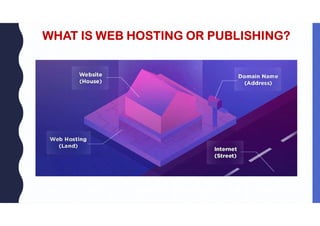
WHAT IS WEB HOSTING OR PUBLISHING?
1. Web hosting or Web publishing, or "online publishing," is the process of publishing content on the
Internet.
2. It includes creating and uploading websites, updating webpages, and posting blogs online.
The published content may include text, images, videos, and other types of media.
3. In order to publish content on the web, you need three things:
a) web development software, b) an Internet connection, and c) a web server.
4. The Internet connection serves as the medium for uploading the content to the web server.
Large sites may use a dedicated web host, but many smaller sites often reside on shared
servers, which host multiple websites.
5. Most blogs are published on public web servers through a free service like Blogger.
6. Posting updates on social networking websites like Facebook and Twitter is generally not
considered web publishing. Instead, web publishing generally refers to uploading content to
unique websites.
WHAT IS WEB HOSTING OR PUBLISHING?
Besides providing server space for your website, the service
provider also provides other services related to website
management, such as:
•SSL certificates
•Email hosting and page builders
•Developer tools
•24/7 customer support service
•Automated website backups
•One-click software installs for WordPress or Drupal etc.
TYPES OF WEB HOSTING
• Shared hosting
• VPS hosting
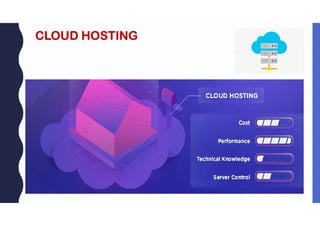
• Cloud hosting
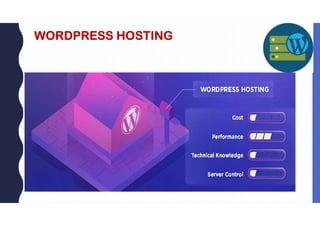
• WordPress hosting
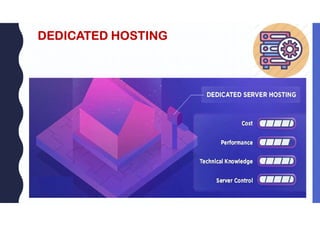
• Dedicated hosting
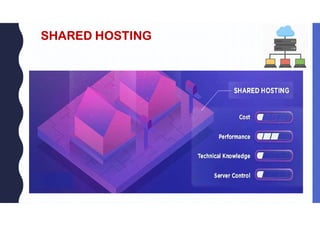
SHARED HOSTING
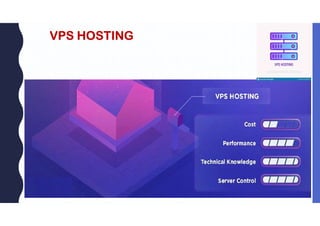
VPS HOSTING
CLOUD HOSTING
WORDPRESS HOSTING
DEDICATED HOSTING
WEB HOSTING AND DOMAIN NAME
1. Besides signing up for a web hosting service, you also need to purchase
a domain name. While web hosting allows you to rent server space for
your site, the domain name acts as an address of your site.
2. When your users want to check out your site, they type the domain
name into their browser’s address bar and your server transfers the
content they requested for.
3. With most web hosts, you need to purchase your domain
name separately. Or, if you already own a domain, you can also transfer
it to your current hosting provider.
4. Similarly to web hosting plans, you need to pay for your domain name
annually in order to keep the ownership of the domain.
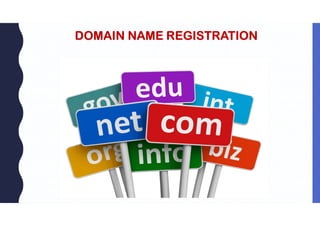
DOMAIN NAME REGISTRATION
TYPES OF DOMAIN NAME
1. Top Level Domains (TLD)
2. Second Level Domains (SLD)
DEFINING NAME SERVERS
• Nameservers help connect URLs with the IP address of web
servers.
• Nameservers are an important part of the Domain Name
System (DNS), which many people call the “phone book of the
Internet”.
NAMESERVERS VS DNS RECORDS
• DNS records are what contain the actual information
that other browsers or services need to interact with,
like your server’s IP address.
• Nameservers, on the other hand, help store and organize
those individual DNS records.
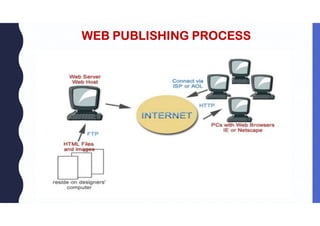
WEB PUBLISHING PROCESS
6. Web Publishing
6. Web Publishing

6. Web Publishing

  • 1.
    WEB TECHNOLOGY WEB PUBLISHINGAND HOSTING DR. JYOTI YADAV
  • 2.
    WHAT IS WEBHOSTING OR PUBLISHING? 1. Web hosting or Web publishing, or "online publishing," is the process of publishing content on the Internet. 2. It includes creating and uploading websites, updating webpages, and posting blogs online. The published content may include text, images, videos, and other types of media. 3. In order to publish content on the web, you need three things: a) web development software, b) an Internet connection, and c) a web server. 4. The Internet connection serves as the medium for uploading the content to the web server. Large sites may use a dedicated web host, but many smaller sites often reside on shared servers, which host multiple websites. 5. Most blogs are published on public web servers through a free service like Blogger. 6. Posting updates on social networking websites like Facebook and Twitter is generally not considered web publishing. Instead, web publishing generally refers to uploading content to unique websites.
  • 3.
    WHAT IS WEBHOSTING OR PUBLISHING?
  • 4.
    WHAT IS WEBHOSTING OR PUBLISHING? Besides providing server space for your website, the service provider also provides other services related to website management, such as: •SSL certificates •Email hosting and page builders •Developer tools •24/7 customer support service •Automated website backups •One-click software installs for WordPress or Drupal etc.
  • 5.
    TYPES OF WEBHOSTING • Shared hosting • VPS hosting • Cloud hosting • WordPress hosting • Dedicated hosting
  • 6.
  • 7.
  • 8.
  • 9.
  • 10.
  • 11.
    WEB HOSTING ANDDOMAIN NAME 1. Besides signing up for a web hosting service, you also need to purchase a domain name. While web hosting allows you to rent server space for your site, the domain name acts as an address of your site. 2. When your users want to check out your site, they type the domain name into their browser’s address bar and your server transfers the content they requested for. 3. With most web hosts, you need to purchase your domain name separately. Or, if you already own a domain, you can also transfer it to your current hosting provider. 4. Similarly to web hosting plans, you need to pay for your domain name annually in order to keep the ownership of the domain.
  • 12.
  • 13.
    TYPES OF DOMAINNAME 1. Top Level Domains (TLD) 2. Second Level Domains (SLD)
  • 14.
    DEFINING NAME SERVERS •Nameservers help connect URLs with the IP address of web servers. • Nameservers are an important part of the Domain Name System (DNS), which many people call the “phone book of the Internet”.
  • 15.
    NAMESERVERS VS DNSRECORDS • DNS records are what contain the actual information that other browsers or services need to interact with, like your server’s IP address. • Nameservers, on the other hand, help store and organize those individual DNS records.
  • 16.