Anger, Hostility, and Aggression
Anger is a normal human emotion.
Hostility and aggression are
inappropriate expressions of anger.
Anger
Anger is a strong, uncomfortable,
emotional response to a provocation,
either real or perceived.
Hostility and Aggression (cont’d)
Hostility is an emotion expressed by:
•Verbal abuse
•Lack of cooperation
•Violation of rules or
norms
•Threatening behavior
(verbal aggression)
Etiology of Hostility and Aggression
•Neurobiologic theories: decreased
serotonin, increased dopamine and
norepinephrine; structural damage to
limbic system, damage to frontal or
temporal lobes
•Psychosocial theories: failure to
develop impulse control and ability to
delay gratification
Data Analysis
Common nursing diagnoses:
•Risk for Other-Directed Violence
•Ineffective Coping
Application of the Nursing Process
(cont’d)
Application of the Nursing Process
(cont’d)
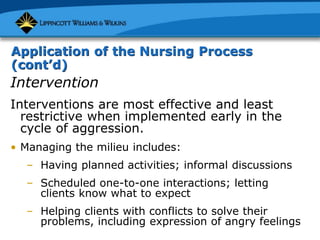
Intervention
Interventions are most effective and least
restrictive when implemented early in the
cycle of aggression.
• Managing the milieu includes:
– Having planned activities; informal discussions
– Scheduled one-to-one interactions; letting
clients know what to expect
– Helping clients with conflicts to solve their
problems, including expression of angry feelings
Application of the Nursing Process
(cont’d)
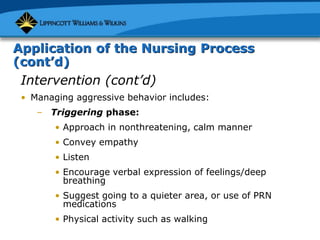
Intervention (cont’d)
• Managing aggressive behavior includes:
– Triggering phase:
• Approach in nonthreatening, calm manner
• Convey empathy
• Listen
• Encourage verbal expression of feelings/deep
breathing
• Suggest going to a quieter area, or use of PRN
medications
• Physical activity such as walking
Application of the Nursing Process
(cont’d)
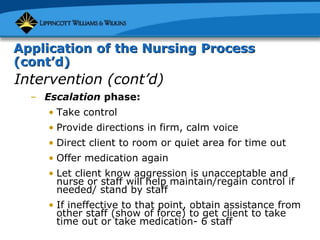
Intervention (cont’d)
– Escalation phase:
• Take control
• Provide directions in firm, calm voice
• Direct client to room or quiet area for time out
• Offer medication again
• Let client know aggression is unacceptable and
nurse or staff will help maintain/regain control if
needed/ stand by staff
• If ineffective to that point, obtain assistance from
other staff (show of force) to get client to take
time out or take medication- 6 staff
Application of the Nursing Process
(cont’d)
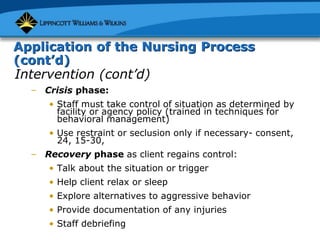
Intervention (cont’d)
– Crisis phase:
• Staff must take control of situation as determined by
facility or agency policy (trained in techniques for
behavioral management)
• Use restraint or seclusion only if necessary- consent,
24, 15-30,
– Recovery phase as client regains control:
• Talk about the situation or trigger
• Help client relax or sleep
• Explore alternatives to aggressive behavior
• Provide documentation of any injuries
• Staff debriefing
Application of the Nursing Process (cont’d)
Intervention (cont’d)
– Postcrisis phase:
• Client is removed from any restraint or
seclusion and rejoins the milieu
• Calm discussion of behavior; no lecturing or
chastising; return to activities, groups, and so
forth
• Focus is on appropriate expression of feelings,
resolution of problems or conflicts in
nonaggressive manner

5AngerHostility-and-Aggression.pdf

  • 1.
  • 2.
    Anger, Hostility, andAggression Anger is a normal human emotion. Hostility and aggression are inappropriate expressions of anger.
  • 3.
    Anger Anger is astrong, uncomfortable, emotional response to a provocation, either real or perceived.
  • 4.
    Hostility and Aggression(cont’d) Hostility is an emotion expressed by: •Verbal abuse •Lack of cooperation •Violation of rules or norms •Threatening behavior (verbal aggression)
  • 5.
    Etiology of Hostilityand Aggression •Neurobiologic theories: decreased serotonin, increased dopamine and norepinephrine; structural damage to limbic system, damage to frontal or temporal lobes •Psychosocial theories: failure to develop impulse control and ability to delay gratification
  • 6.
    Data Analysis Common nursingdiagnoses: •Risk for Other-Directed Violence •Ineffective Coping Application of the Nursing Process (cont’d)
  • 7.
    Application of theNursing Process (cont’d) Intervention Interventions are most effective and least restrictive when implemented early in the cycle of aggression. • Managing the milieu includes: – Having planned activities; informal discussions – Scheduled one-to-one interactions; letting clients know what to expect – Helping clients with conflicts to solve their problems, including expression of angry feelings
  • 8.
    Application of theNursing Process (cont’d) Intervention (cont’d) • Managing aggressive behavior includes: – Triggering phase: • Approach in nonthreatening, calm manner • Convey empathy • Listen • Encourage verbal expression of feelings/deep breathing • Suggest going to a quieter area, or use of PRN medications • Physical activity such as walking
  • 9.
    Application of theNursing Process (cont’d) Intervention (cont’d) – Escalation phase: • Take control • Provide directions in firm, calm voice • Direct client to room or quiet area for time out • Offer medication again • Let client know aggression is unacceptable and nurse or staff will help maintain/regain control if needed/ stand by staff • If ineffective to that point, obtain assistance from other staff (show of force) to get client to take time out or take medication- 6 staff
  • 10.
    Application of theNursing Process (cont’d) Intervention (cont’d) – Crisis phase: • Staff must take control of situation as determined by facility or agency policy (trained in techniques for behavioral management) • Use restraint or seclusion only if necessary- consent, 24, 15-30, – Recovery phase as client regains control: • Talk about the situation or trigger • Help client relax or sleep • Explore alternatives to aggressive behavior • Provide documentation of any injuries • Staff debriefing
  • 11.
    Application of theNursing Process (cont’d) Intervention (cont’d) – Postcrisis phase: • Client is removed from any restraint or seclusion and rejoins the milieu • Calm discussion of behavior; no lecturing or chastising; return to activities, groups, and so forth • Focus is on appropriate expression of feelings, resolution of problems or conflicts in nonaggressive manner