5 PRINCIPLES FOR A
SUCCESSFUL CONTRACT
LIFECYCLE MANAGEMENT
(CLM) IMPLEMENTATION
Contract Lifecycle Management (CLM) is
a critical component of any successful
business strategy. CLM provides
businesses with visibility into the
contractual processes, enables them to
efficiently manage and track their
contracts, and ensures that they comply
with all applicable laws and regulations.
The implementation of a CLM system
can provide immense benefits to an
organisation in terms of cost savings,
improved efficiency, and better
compliance management.
ABOUT
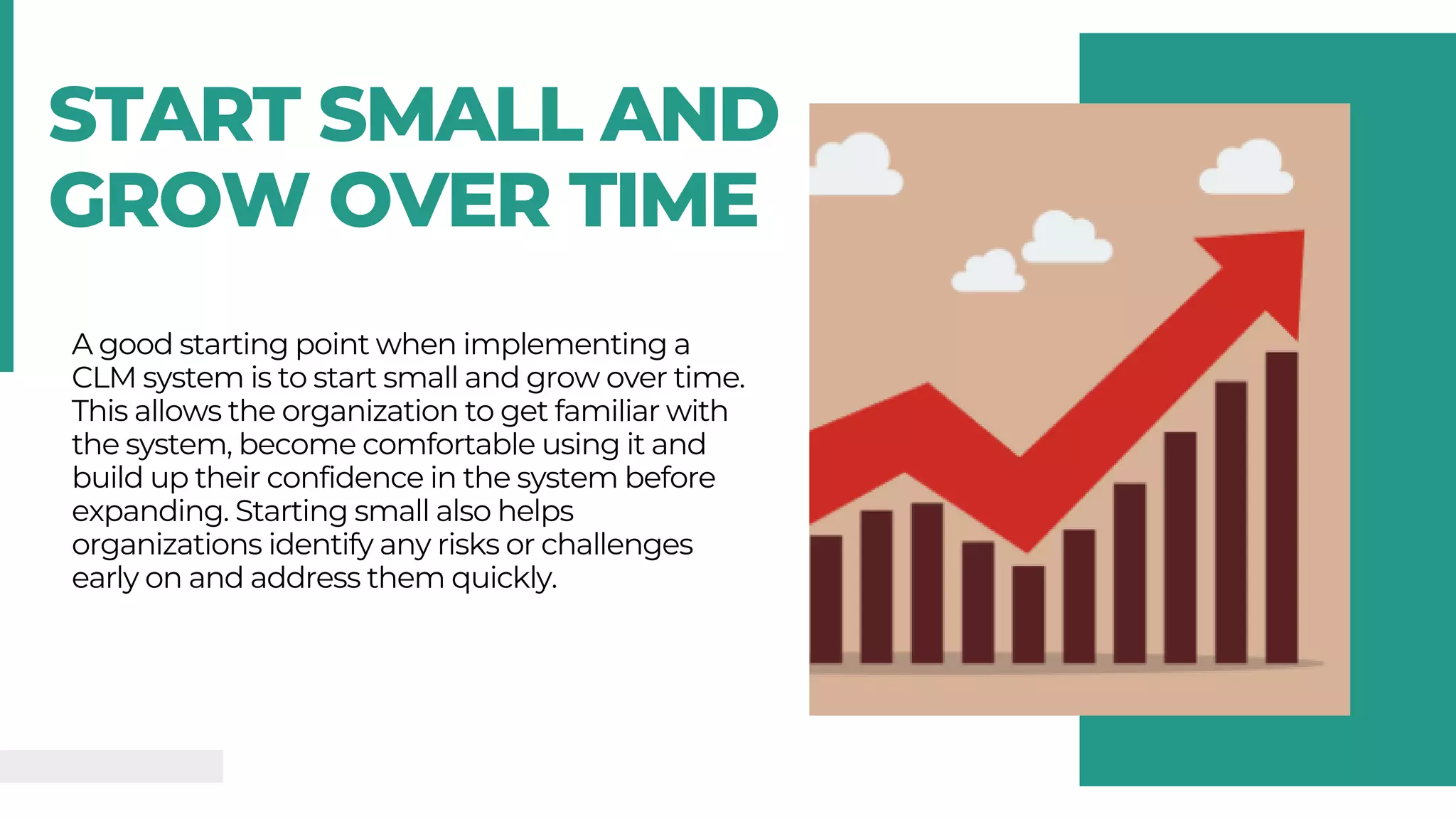
A good starting point when implementing a
CLM system is to start small and grow over time.
This allows the organization to get familiar with
the system, become comfortable using it and
build up their confidence in the system before
expanding. Starting small also helps
organizations identify any risks or challenges
early on and address them quickly.
START SMALL AND
GROW OVER TIME
DEVELOP A STRONG
PROCESS FRAMEWORK
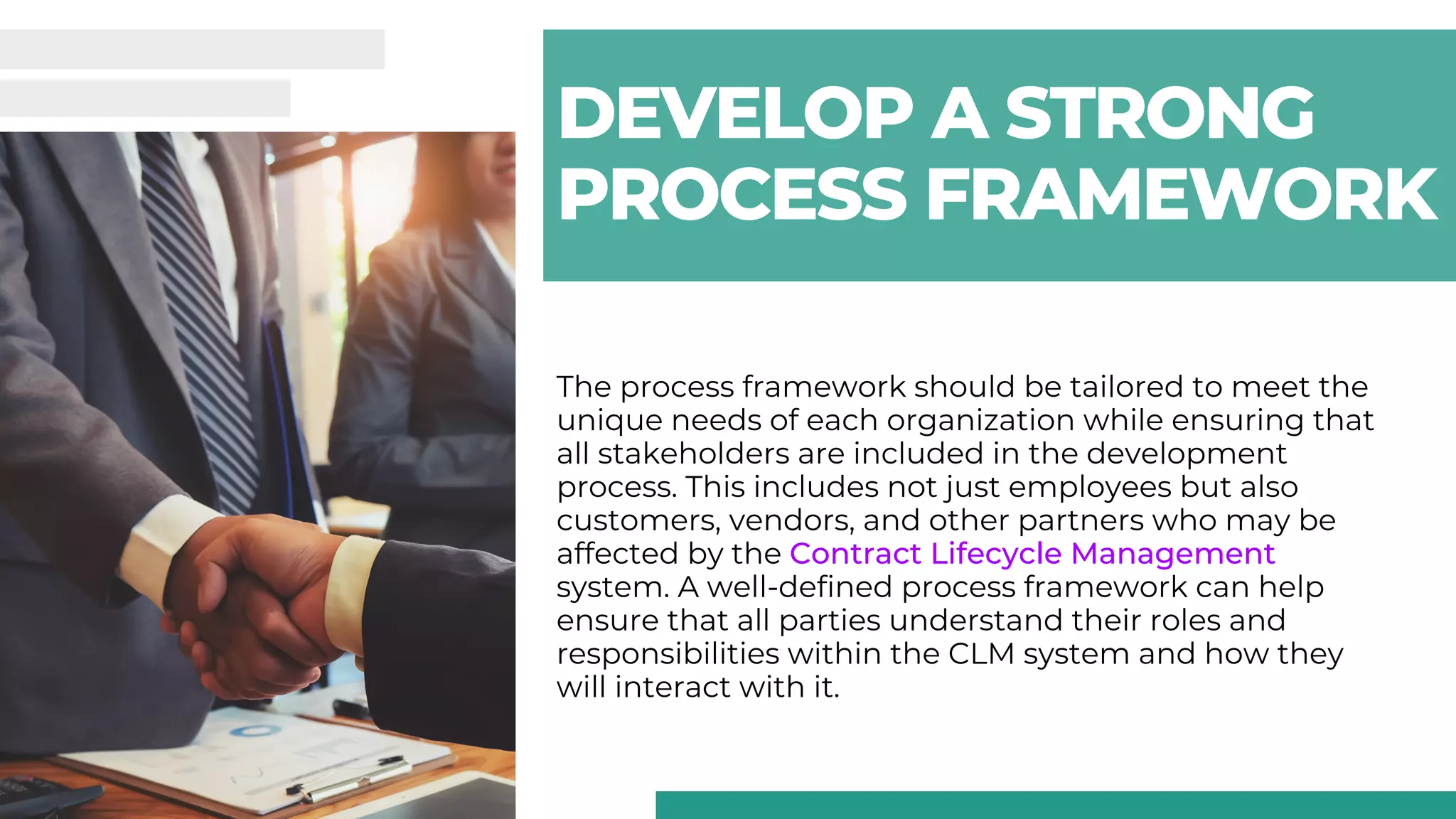
The process framework should be tailored to meet the
unique needs of each organization while ensuring that
all stakeholders are included in the development
process. This includes not just employees but also
customers, vendors, and other partners who may be
affected by the Contract Lifecycle Management
system. A well-defined process framework can help
ensure that all parties understand their roles and
responsibilities within the CLM system and how they
will interact with it.
LEVERAGE
AUTOMATION
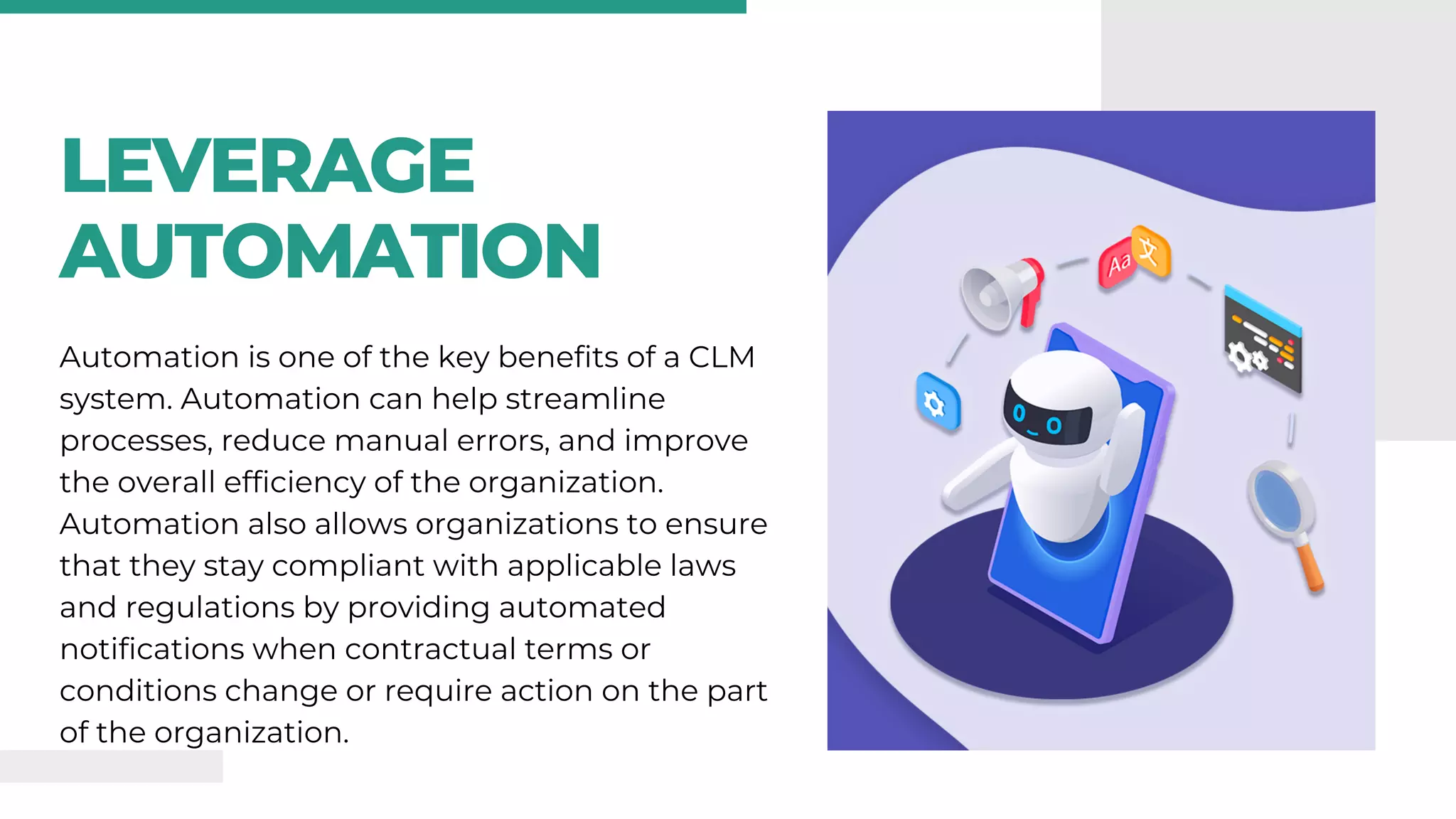
Automation is one of the key benefits of a CLM
system. Automation can help streamline
processes, reduce manual errors, and improve
the overall efficiency of the organization.
Automation also allows organizations to ensure
that they stay compliant with applicable laws
and regulations by providing automated
notifications when contractual terms or
conditions change or require action on the part
of the organization.
INVEST IN TRAINING
AND SUPPORT
Organizations should invest in training for their
employees so that everyone is aware of how to use
and interact with the CLM system. This will reduce
implementation time and ensure that all users
have an understanding of how to best use the
system for their needs. It is also important to
provide support for users as needed during
implementation, which helps prevent any
interruptions or delays in using the system.
MONITOR AND MEASURE
PERFORMANCE
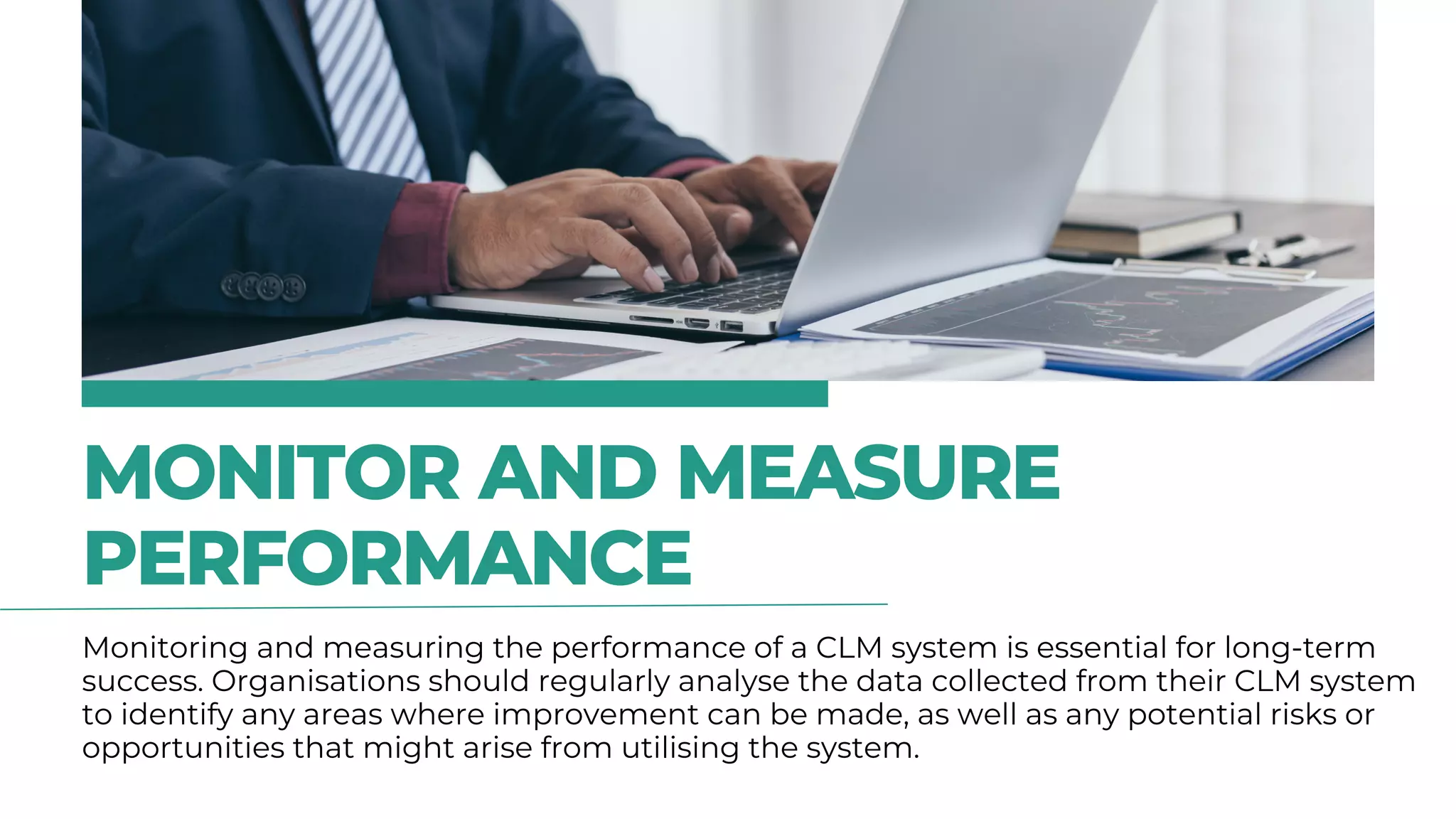
Monitoring and measuring the performance of a CLM system is essential for long-term
success. Organisations should regularly analyse the data collected from their CLM system
to identify any areas where improvement can be made, as well as any potential risks or
opportunities that might arise from utilising the system.
CONCLUSION
The implementation of a Contract Lifecycle
Management (CLM) system is an important part
of any successful business strategy, and following
these 5 principles can help ensure a successful
implementation process. By starting small,
developing a strong process framework,
leveraging automation, investing in training and
support, and monitoring and measuring
performance, organizations can ensure that their
CLM system is effective and efficient. Doing so will
enable them to take advantage of the many
benefits a CLM system has to offer. At SirionLabs,
we specialize in providing organizations with the
solutions and expertise to implement a successful
CLM system. Contact us today for more
information!
THANK YOU
If you are interested in Contract Lifecycle Management
, don’t hesitate to contact us.
Further Info:
www.sirionlabs.com

5 Principles for a Successful Contract Lifecycle Management (CLM) Implementation.pdf

  • 1.
    5 PRINCIPLES FORA SUCCESSFUL CONTRACT LIFECYCLE MANAGEMENT (CLM) IMPLEMENTATION
  • 2.
    Contract Lifecycle Management(CLM) is a critical component of any successful business strategy. CLM provides businesses with visibility into the contractual processes, enables them to efficiently manage and track their contracts, and ensures that they comply with all applicable laws and regulations. The implementation of a CLM system can provide immense benefits to an organisation in terms of cost savings, improved efficiency, and better compliance management. ABOUT
  • 3.
    A good startingpoint when implementing a CLM system is to start small and grow over time. This allows the organization to get familiar with the system, become comfortable using it and build up their confidence in the system before expanding. Starting small also helps organizations identify any risks or challenges early on and address them quickly. START SMALL AND GROW OVER TIME
  • 4.
    DEVELOP A STRONG PROCESSFRAMEWORK The process framework should be tailored to meet the unique needs of each organization while ensuring that all stakeholders are included in the development process. This includes not just employees but also customers, vendors, and other partners who may be affected by the Contract Lifecycle Management system. A well-defined process framework can help ensure that all parties understand their roles and responsibilities within the CLM system and how they will interact with it.
  • 5.
    LEVERAGE AUTOMATION Automation is oneof the key benefits of a CLM system. Automation can help streamline processes, reduce manual errors, and improve the overall efficiency of the organization. Automation also allows organizations to ensure that they stay compliant with applicable laws and regulations by providing automated notifications when contractual terms or conditions change or require action on the part of the organization.
  • 6.
    INVEST IN TRAINING ANDSUPPORT Organizations should invest in training for their employees so that everyone is aware of how to use and interact with the CLM system. This will reduce implementation time and ensure that all users have an understanding of how to best use the system for their needs. It is also important to provide support for users as needed during implementation, which helps prevent any interruptions or delays in using the system.
  • 7.
    MONITOR AND MEASURE PERFORMANCE Monitoringand measuring the performance of a CLM system is essential for long-term success. Organisations should regularly analyse the data collected from their CLM system to identify any areas where improvement can be made, as well as any potential risks or opportunities that might arise from utilising the system.
  • 8.
    CONCLUSION The implementation ofa Contract Lifecycle Management (CLM) system is an important part of any successful business strategy, and following these 5 principles can help ensure a successful implementation process. By starting small, developing a strong process framework, leveraging automation, investing in training and support, and monitoring and measuring performance, organizations can ensure that their CLM system is effective and efficient. Doing so will enable them to take advantage of the many benefits a CLM system has to offer. At SirionLabs, we specialize in providing organizations with the solutions and expertise to implement a successful CLM system. Contact us today for more information!
  • 9.
    THANK YOU If youare interested in Contract Lifecycle Management , don’t hesitate to contact us. Further Info: www.sirionlabs.com