ENVIRONMENTAL DEGRADATION
Environmental degradation is the deterioration of
the environment through depletion of resources
such as air, water and soil;
the destruction of ecosystems;
habitat destruction; the extinction of wildlife;
and pollution.
When natural habitats are destroyed or
natural resources are depleted, the environment
is degraded.
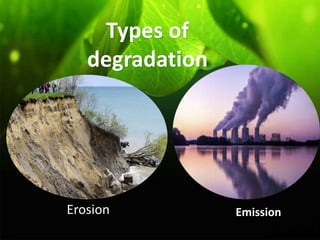
Types of
degradation
Erosion Emission
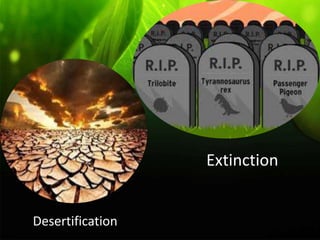
Extinction
Desertification
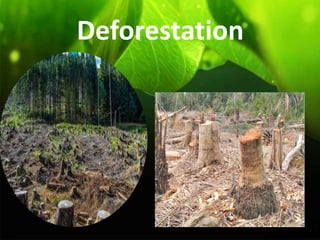
Deforestation
Causes of
Environmental
Degradation
Land Disturbance: A more basic cause of
environmental degradation is land damage. A
rupture in the environmental surroundings
provides for the weedy plant species a chance to
start growing and spreading. These plants can
assume control over nature, eliminating the local
greenery. The result is territory with a solitary
predominant plant which doesn’t give
satisfactory food assets to all the environmental
life. Whole environments can be destroyed
because of these invasive species.
• Rapid population growth puts strain on natural
resources which results in degradation of our
environment. Mortality rate has gone down due to
better medical facilities which has resulted in
increased lifespan. More population simple means
more demand for food, clothes and shelter. You need
more space to grow food and provide homes to
millions of people. This results in deforestation which
is another factor of environmental degradation.
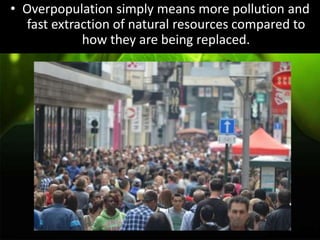
• Overpopulation simply means more pollution and
fast extraction of natural resources compared to
how they are being replaced.
Ruinous Agricultural Practices
• Intensive agricultural practices have led
to the decline in quality of most of our
natural environments. Majority of farmers
resort to converting forests and
grasslands to croplands which reduces
the quality of natural forests and
vegetation cover.
• The pressure to convert lands into resource
areas for producing priced foods, crops, and
livestock rearing has increasingly led to the
depreciation of natural environments such as
forests, wildlife and fertile lands.
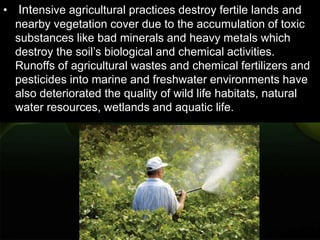
• Intensive agricultural practices destroy fertile lands and
nearby vegetation cover due to the accumulation of toxic
substances like bad minerals and heavy metals which
destroy the soil’s biological and chemical activities.
Runoffs of agricultural wastes and chemical fertilizers and
pesticides into marine and freshwater environments have
also deteriorated the quality of wild life habitats, natural
water resources, wetlands and aquatic life.
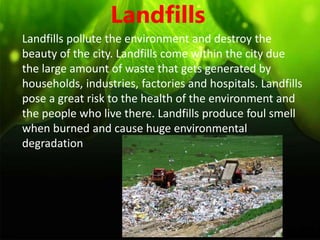
Landfills
Landfills pollute the environment and destroy the
beauty of the city. Landfills come within the city due
the large amount of waste that gets generated by
households, industries, factories and hospitals. Landfills
pose a great risk to the health of the environment and
the people who live there. Landfills produce foul smell
when burned and cause huge environmental
degradation
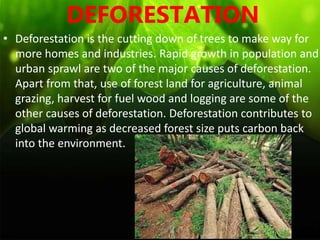
DEFORESTATION
• Deforestation is the cutting down of trees to make way for
more homes and industries. Rapid growth in population and
urban sprawl are two of the major causes of deforestation.
Apart from that, use of forest land for agriculture, animal
grazing, harvest for fuel wood and logging are some of the
other causes of deforestation. Deforestation contributes to
global warming as decreased forest size puts carbon back
into the environment.
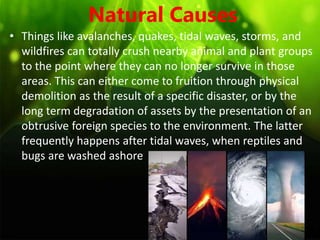
Natural Causes
• Things like avalanches, quakes, tidal waves, storms, and
wildfires can totally crush nearby animal and plant groups
to the point where they can no longer survive in those
areas. This can either come to fruition through physical
demolition as the result of a specific disaster, or by the
long term degradation of assets by the presentation of an
obtrusive foreign species to the environment. The latter
frequently happens after tidal waves, when reptiles and
bugs are washed ashore
Pollution
• Pollution, in whatever form, whether it is air,
water, land or noise is harmful for the
environment. Air pollution pollutes the air that we
breathe which causes health issues. Water
pollution degrades the quality of water that we
use for drinking purposes. Land pollution results in
degradation of earth’s surface as a result of
human activities. Noise pollution can cause
irreparable damage to our ears when exposed to
continuous large sounds like honking of vehicles
on a busy road or machines producing large noise
in a factory or a mill
Unfortunate Impacts of
Environmental Degradation
When factories produce harmful chemicals and toxic
waste into bodies of water, humans suffer. Pesticides and
fertilizers can also get into a region's water system and
pollute it. Drinking water is contaminated. Some residing
in third-world countries are highly effected by the
degradation of our planet and these unhealthy practices
cause the following:
• Illnesses
• Death in children
• Death in adults
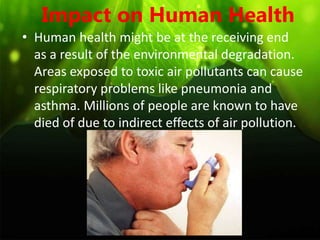
Impact on Human Health
• Human health might be at the receiving end
as a result of the environmental degradation.
Areas exposed to toxic air pollutants can cause
respiratory problems like pneumonia and
asthma. Millions of people are known to have
died of due to indirect effects of air pollution.
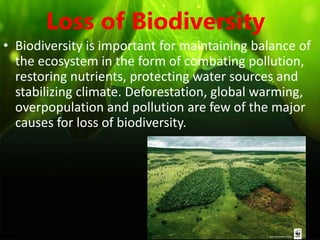
Loss of Biodiversity
• Biodiversity is important for maintaining balance of
the ecosystem in the form of combating pollution,
restoring nutrients, protecting water sources and
stabilizing climate. Deforestation, global warming,
overpopulation and pollution are few of the major
causes for loss of biodiversity.
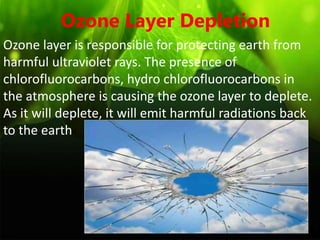
Ozone Layer Depletion
Ozone layer is responsible for protecting earth from
harmful ultraviolet rays. The presence of
chlorofluorocarbons, hydro chlorofluorocarbons in
the atmosphere is causing the ozone layer to deplete.
As it will deplete, it will emit harmful radiations back
to the earth
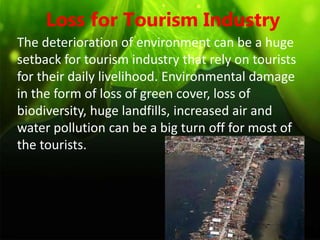
Loss for Tourism Industry
The deterioration of environment can be a huge
setback for tourism industry that rely on tourists
for their daily livelihood. Environmental damage
in the form of loss of green cover, loss of
biodiversity, huge landfills, increased air and
water pollution can be a big turn off for most of
the tourists.
Economic Impact
The huge cost that a country may have to borne
due to environmental degradation can have big
economic impact in terms of restoration of
green cover, cleaning up of landfills and
protection of endangered species. The economic
impact can also be in terms of loss of tourism
industry.
Assignment
1. Explain what is Environmental Degradation in
your own words.(5 pts)
2. Enumerate the six (6) different causes of
environmental degradation and differentiate
each.(5 pts each)
3. Identify the different impacts of
Environmental Degradation & how to lessen its
effect. (5 pts each)

4-DEGRADATION-Consumer_Chemistry_Grade 9-pptx

  • 2.
    ENVIRONMENTAL DEGRADATION Environmental degradationis the deterioration of the environment through depletion of resources such as air, water and soil; the destruction of ecosystems; habitat destruction; the extinction of wildlife; and pollution. When natural habitats are destroyed or natural resources are depleted, the environment is degraded.
  • 3.
  • 4.
  • 5.
  • 6.
  • 7.
    Land Disturbance: Amore basic cause of environmental degradation is land damage. A rupture in the environmental surroundings provides for the weedy plant species a chance to start growing and spreading. These plants can assume control over nature, eliminating the local greenery. The result is territory with a solitary predominant plant which doesn’t give satisfactory food assets to all the environmental life. Whole environments can be destroyed because of these invasive species.
  • 8.
    • Rapid populationgrowth puts strain on natural resources which results in degradation of our environment. Mortality rate has gone down due to better medical facilities which has resulted in increased lifespan. More population simple means more demand for food, clothes and shelter. You need more space to grow food and provide homes to millions of people. This results in deforestation which is another factor of environmental degradation.
  • 9.
    • Overpopulation simplymeans more pollution and fast extraction of natural resources compared to how they are being replaced.
  • 10.
    Ruinous Agricultural Practices •Intensive agricultural practices have led to the decline in quality of most of our natural environments. Majority of farmers resort to converting forests and grasslands to croplands which reduces the quality of natural forests and vegetation cover. • The pressure to convert lands into resource areas for producing priced foods, crops, and livestock rearing has increasingly led to the depreciation of natural environments such as forests, wildlife and fertile lands.
  • 11.
    • Intensive agriculturalpractices destroy fertile lands and nearby vegetation cover due to the accumulation of toxic substances like bad minerals and heavy metals which destroy the soil’s biological and chemical activities. Runoffs of agricultural wastes and chemical fertilizers and pesticides into marine and freshwater environments have also deteriorated the quality of wild life habitats, natural water resources, wetlands and aquatic life.
  • 12.
    Landfills Landfills pollute theenvironment and destroy the beauty of the city. Landfills come within the city due the large amount of waste that gets generated by households, industries, factories and hospitals. Landfills pose a great risk to the health of the environment and the people who live there. Landfills produce foul smell when burned and cause huge environmental degradation
  • 13.
    DEFORESTATION • Deforestation isthe cutting down of trees to make way for more homes and industries. Rapid growth in population and urban sprawl are two of the major causes of deforestation. Apart from that, use of forest land for agriculture, animal grazing, harvest for fuel wood and logging are some of the other causes of deforestation. Deforestation contributes to global warming as decreased forest size puts carbon back into the environment.
  • 14.
    Natural Causes • Thingslike avalanches, quakes, tidal waves, storms, and wildfires can totally crush nearby animal and plant groups to the point where they can no longer survive in those areas. This can either come to fruition through physical demolition as the result of a specific disaster, or by the long term degradation of assets by the presentation of an obtrusive foreign species to the environment. The latter frequently happens after tidal waves, when reptiles and bugs are washed ashore
  • 15.
    Pollution • Pollution, inwhatever form, whether it is air, water, land or noise is harmful for the environment. Air pollution pollutes the air that we breathe which causes health issues. Water pollution degrades the quality of water that we use for drinking purposes. Land pollution results in degradation of earth’s surface as a result of human activities. Noise pollution can cause irreparable damage to our ears when exposed to continuous large sounds like honking of vehicles on a busy road or machines producing large noise in a factory or a mill
  • 16.
  • 17.
    When factories produceharmful chemicals and toxic waste into bodies of water, humans suffer. Pesticides and fertilizers can also get into a region's water system and pollute it. Drinking water is contaminated. Some residing in third-world countries are highly effected by the degradation of our planet and these unhealthy practices cause the following: • Illnesses • Death in children • Death in adults
  • 18.
    Impact on HumanHealth • Human health might be at the receiving end as a result of the environmental degradation. Areas exposed to toxic air pollutants can cause respiratory problems like pneumonia and asthma. Millions of people are known to have died of due to indirect effects of air pollution.
  • 19.
    Loss of Biodiversity •Biodiversity is important for maintaining balance of the ecosystem in the form of combating pollution, restoring nutrients, protecting water sources and stabilizing climate. Deforestation, global warming, overpopulation and pollution are few of the major causes for loss of biodiversity.
  • 20.
    Ozone Layer Depletion Ozonelayer is responsible for protecting earth from harmful ultraviolet rays. The presence of chlorofluorocarbons, hydro chlorofluorocarbons in the atmosphere is causing the ozone layer to deplete. As it will deplete, it will emit harmful radiations back to the earth
  • 21.
    Loss for TourismIndustry The deterioration of environment can be a huge setback for tourism industry that rely on tourists for their daily livelihood. Environmental damage in the form of loss of green cover, loss of biodiversity, huge landfills, increased air and water pollution can be a big turn off for most of the tourists.
  • 22.
    Economic Impact The hugecost that a country may have to borne due to environmental degradation can have big economic impact in terms of restoration of green cover, cleaning up of landfills and protection of endangered species. The economic impact can also be in terms of loss of tourism industry.
  • 24.
    Assignment 1. Explain whatis Environmental Degradation in your own words.(5 pts) 2. Enumerate the six (6) different causes of environmental degradation and differentiate each.(5 pts each) 3. Identify the different impacts of Environmental Degradation & how to lessen its effect. (5 pts each)