Chapter Nine: Basic Personnel
Security—Procedures and Policy
The protection of basic facilities, personnel,
and resources is critical to the security of the
whole system. Every security manager and all
of the employees of any facility must
constantly be aware of the situation playing
out around them on a daily basis. Anything
unusual or suspicious must be reported and
employees must be encouraged to do so.
Sophisticated and technologically advanced
programs, as unique and useful as they are, still
need to be based on basic security physical and
procedural efforts.
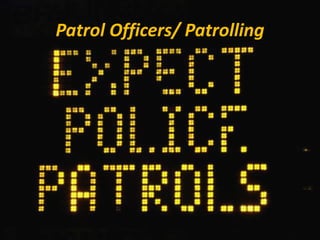
Patrol Officers/ Patrolling
The three basic lines of physical defense for transportation
facilities are the perimeter of the facility, the terminal and
collateral buildings, both interior and exterior, as well as
supporting complexes such as wharfs, loading docks, railway
switching yards, runways, taxiways, and the surrounding areas.
The degree of security required will determine exactly just how
sophisticated these three options and areas need to be. The
security patrol officer is the backbone of any transportation
security scheme. Unless he or she is adequately trained in
duties, as well as the sophisticated equipment associated with
those duties, substantial loss prevention will not occur.
Criminals and terrorists are affected, not just by the actual
security policies, procedures and equipment in place, but by
the appearance of their effectiveness.
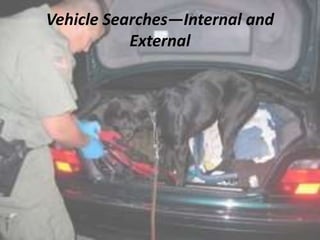
Vehicle Searches—Internal and
External
Security personnel specifically must be aware of proper
procedures for searching vehicles and exercise
alertness at all times when conducting a search.
However, all employees should be constantly observant
and can benefit from an orientation to sound search
techniques. Place vehicles in a garage whenever
possible, securely. Basically: Check every vehicle every
time it is approached. Do not touch it. Check the
interior, as well as the exterior, for anything that has
changed. Keep something available to kneel or lie on as
you make your checks. Keep a good flashlight (torch)
and a supply of batteries to help check at night. If
anything suspicious is observed—do not touch it—alert
the appropriate authorities immediately. Always be
cautious.
Hiring
Hiring is actually the most critical element in
establishing a good security program. All
references should be checked and all
educational qualifications should be confirmed.
Candidates should also sign a document
swearing to the fact that they have never been
convicted of a felony. As confirmation of the
truth of that statement, criminal background
and history checks should be conducted
through local, state, federal, and international
authorities where suitable. It is also
recommended that psychological examinations
be utilized.
Additionally, it is very important that human
resources administer tests certifying each candidate
possesses adequate communication skills to include
the basic ability to communicate verbally and in
writing in an appropriate language prior to hiring.
Previous employment history should be verified as
well as actual contact made with all listed references.
Lastly, pre-employment and regular drug screening
procedures need to be a mainstay of the program.
These basic hiring criteria are even more critical if the
security officers are to be armed during the course of
employment. All initial hires should be advised of a
discretionary probationary period during which they
can be dismissed for any reason.
Indoctrination
Standards of minimum acceptable conduct
must be supplied to the employee and they
should sign a document indicating they
understand those standards. The employees
should also be made aware of the uniqueness
of working within the transportation system
environment and the potential consequences
of a lapse in security. Other standard
orientation subjects should include thorough
instruction in procedures and policies,
emergency response techniques, report
writing, legal authority, and familiarity with
equipment usage.
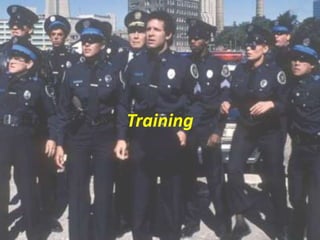
Training
Employee training should always
contain immediate advisement of the
objectives of the training. Employees
should know what body of knowledge
they are expected to retain upon
completion of the training. Training
which does not conclude with a test
often leads to a lax attitude toward the
training. The ultimate goal of training
is higher job performance on the job.
Quality Assurance
After a training program is in
place, it is necessary to add a
quality control element to the
process. The training program’s
effectiveness needs to be
monitored and if gaps are
discovered they need to be filled.
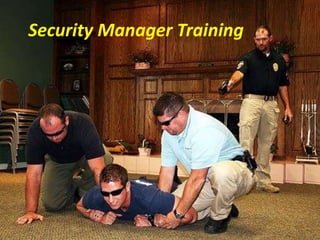
Security Manager Training
Comprehensive security manager
training results in improved staff
relationships and provides a venue
where staff with promotion potential
can be evaluated. General knowledge
of the following is also a basic
minimum requirement: Perimeter
control methods and systems,
appropriate lighting, locks, seals, logs,
investigations, and law enforcement
liaison.
Executive Protection
http://industry-icon.com/blog/2012/10/04/icon-executive-
protection-january-2013-training/
The security staff should evaluate who needs to
be protected, from whom or what, when and
where do they need to be protected, and also
reevaluate regularly why they need protection.
Potential threats include kidnapping from
terrorists or organized crime to acquire
sensitive information or force them to assist in
gaining access to a facility, and outright
assassination by terrorists simply because of
their position. Executive protection is the
application of protective measures to reduce
risk and avoid threats not only to the
executives but to their families.
Conclusion
The basics of any security program
must begin with the attitude of
management. If management is
concerned, so will the rest of the
employees and associated personnel.
Case Study: Draft appropriate questions to ask a prospective
security officer during the hiring process.
Discussion Questions and Exercises
1. Create a checklist establishing good hiring procedures.
2. What are the attributes of good patrol plan?
3. What techniques should be applied in conducting a
proper internal and external vehicle search?
4. How can a company best create a quality assurance plan
for maintaining a professional security work force?
5. Discuss the most important aspects of a personnel
security plan.
6. Draft a memo instructing senior executives on the
necessity for an effective executive protection plan.

403 9

  • 1.
    Chapter Nine: BasicPersonnel Security—Procedures and Policy
  • 2.
    The protection ofbasic facilities, personnel, and resources is critical to the security of the whole system. Every security manager and all of the employees of any facility must constantly be aware of the situation playing out around them on a daily basis. Anything unusual or suspicious must be reported and employees must be encouraged to do so. Sophisticated and technologically advanced programs, as unique and useful as they are, still need to be based on basic security physical and procedural efforts.
  • 3.
  • 4.
    The three basiclines of physical defense for transportation facilities are the perimeter of the facility, the terminal and collateral buildings, both interior and exterior, as well as supporting complexes such as wharfs, loading docks, railway switching yards, runways, taxiways, and the surrounding areas. The degree of security required will determine exactly just how sophisticated these three options and areas need to be. The security patrol officer is the backbone of any transportation security scheme. Unless he or she is adequately trained in duties, as well as the sophisticated equipment associated with those duties, substantial loss prevention will not occur. Criminals and terrorists are affected, not just by the actual security policies, procedures and equipment in place, but by the appearance of their effectiveness.
  • 5.
  • 6.
    Security personnel specificallymust be aware of proper procedures for searching vehicles and exercise alertness at all times when conducting a search. However, all employees should be constantly observant and can benefit from an orientation to sound search techniques. Place vehicles in a garage whenever possible, securely. Basically: Check every vehicle every time it is approached. Do not touch it. Check the interior, as well as the exterior, for anything that has changed. Keep something available to kneel or lie on as you make your checks. Keep a good flashlight (torch) and a supply of batteries to help check at night. If anything suspicious is observed—do not touch it—alert the appropriate authorities immediately. Always be cautious.
  • 7.
  • 8.
    Hiring is actuallythe most critical element in establishing a good security program. All references should be checked and all educational qualifications should be confirmed. Candidates should also sign a document swearing to the fact that they have never been convicted of a felony. As confirmation of the truth of that statement, criminal background and history checks should be conducted through local, state, federal, and international authorities where suitable. It is also recommended that psychological examinations be utilized.
  • 9.
    Additionally, it isvery important that human resources administer tests certifying each candidate possesses adequate communication skills to include the basic ability to communicate verbally and in writing in an appropriate language prior to hiring. Previous employment history should be verified as well as actual contact made with all listed references. Lastly, pre-employment and regular drug screening procedures need to be a mainstay of the program. These basic hiring criteria are even more critical if the security officers are to be armed during the course of employment. All initial hires should be advised of a discretionary probationary period during which they can be dismissed for any reason.
  • 10.
  • 11.
    Standards of minimumacceptable conduct must be supplied to the employee and they should sign a document indicating they understand those standards. The employees should also be made aware of the uniqueness of working within the transportation system environment and the potential consequences of a lapse in security. Other standard orientation subjects should include thorough instruction in procedures and policies, emergency response techniques, report writing, legal authority, and familiarity with equipment usage.
  • 12.
  • 13.
    Employee training shouldalways contain immediate advisement of the objectives of the training. Employees should know what body of knowledge they are expected to retain upon completion of the training. Training which does not conclude with a test often leads to a lax attitude toward the training. The ultimate goal of training is higher job performance on the job.
  • 14.
  • 15.
    After a trainingprogram is in place, it is necessary to add a quality control element to the process. The training program’s effectiveness needs to be monitored and if gaps are discovered they need to be filled.
  • 16.
  • 17.
    Comprehensive security manager trainingresults in improved staff relationships and provides a venue where staff with promotion potential can be evaluated. General knowledge of the following is also a basic minimum requirement: Perimeter control methods and systems, appropriate lighting, locks, seals, logs, investigations, and law enforcement liaison.
  • 18.
  • 19.
    The security staffshould evaluate who needs to be protected, from whom or what, when and where do they need to be protected, and also reevaluate regularly why they need protection. Potential threats include kidnapping from terrorists or organized crime to acquire sensitive information or force them to assist in gaining access to a facility, and outright assassination by terrorists simply because of their position. Executive protection is the application of protective measures to reduce risk and avoid threats not only to the executives but to their families.
  • 20.
  • 21.
    The basics ofany security program must begin with the attitude of management. If management is concerned, so will the rest of the employees and associated personnel.
  • 23.
    Case Study: Draftappropriate questions to ask a prospective security officer during the hiring process. Discussion Questions and Exercises 1. Create a checklist establishing good hiring procedures. 2. What are the attributes of good patrol plan? 3. What techniques should be applied in conducting a proper internal and external vehicle search? 4. How can a company best create a quality assurance plan for maintaining a professional security work force? 5. Discuss the most important aspects of a personnel security plan. 6. Draft a memo instructing senior executives on the necessity for an effective executive protection plan.