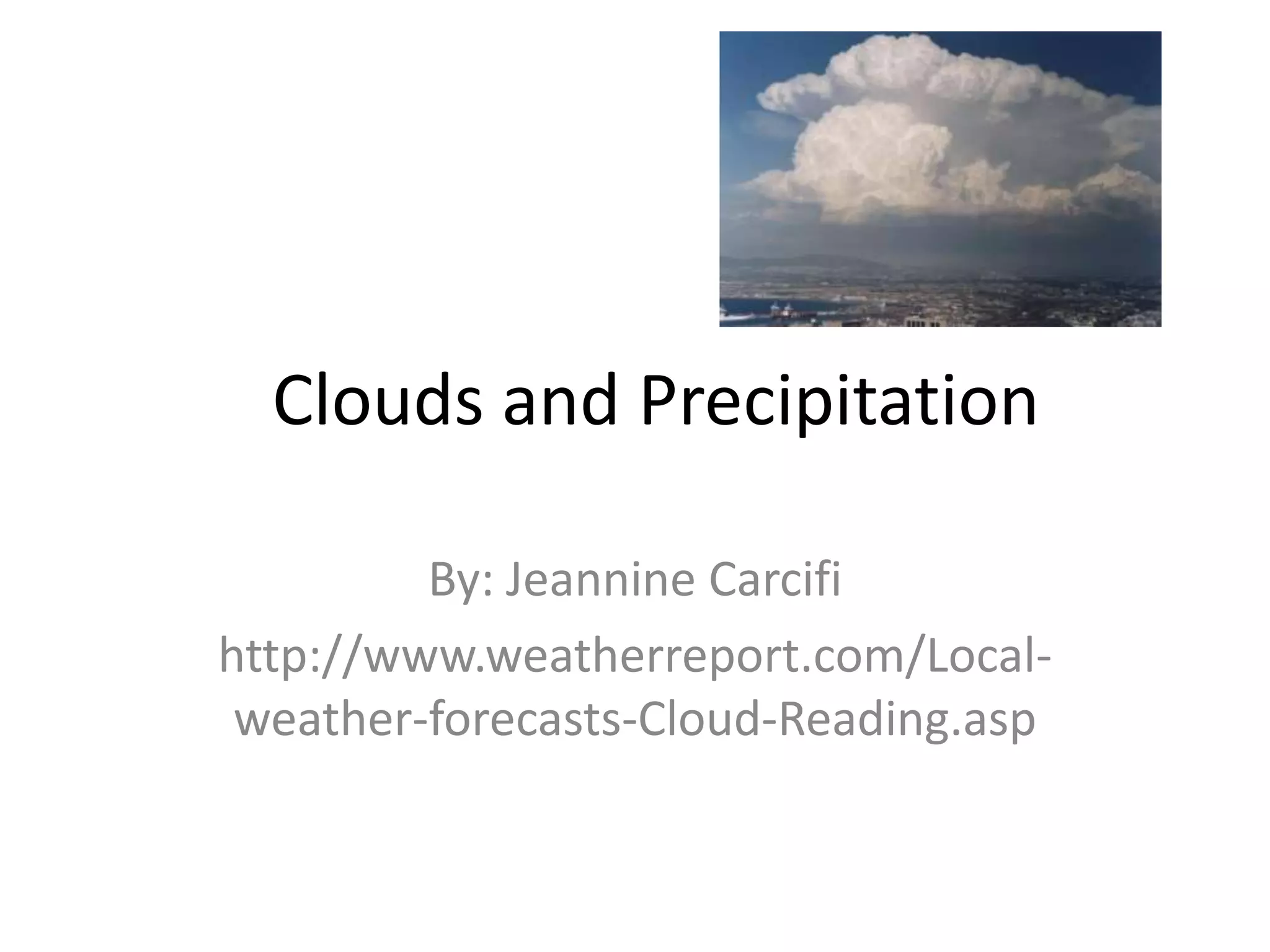
Clouds and Precipitation

         By: Jeannine Carcifi
http://www.weatherreport.com/Local-
 weather-forecasts-Cloud-Reading.asp
Adiabatic Temperature changes and
        Expansion and Cooling
• Temperature Changes its not always the same,
  even if temperature rises or drops this is
  called adiabatic temperature changes
• When adiabatic is cool or heated In
  unsaturated air it is called (dry) adiabatic rate
• Adiabatic cooling or heating in unsaturated air
  is, wet adiabatic rate
                      hwww.akts.com/time-to-maximum-rate-
                      adiabatic/runaway-reactions-akts-thermal-
                      safety-software.htmlttp://
Orographic Lifting
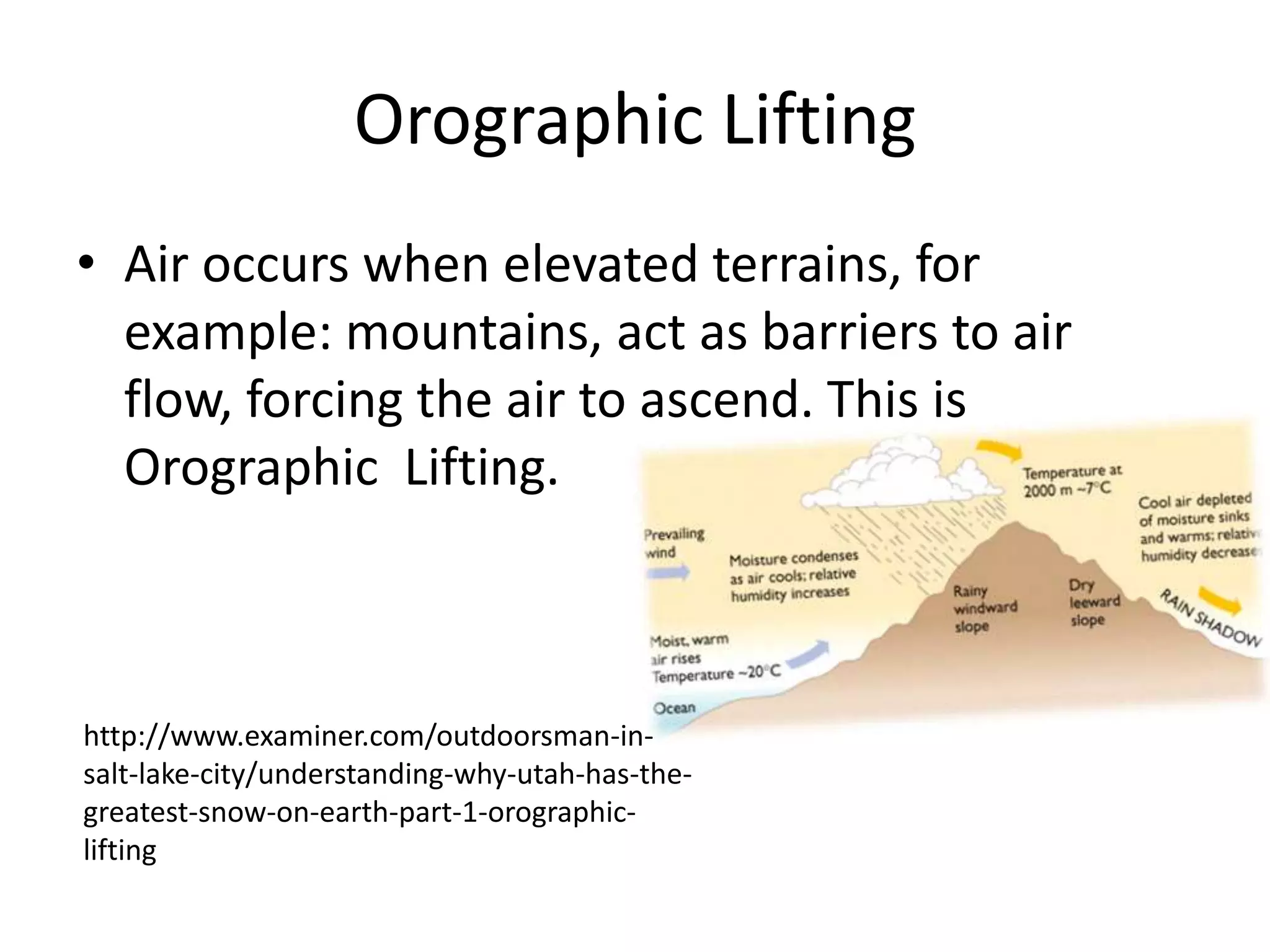
• Air occurs when elevated terrains, for
  example: mountains, act as barriers to air
  flow, forcing the air to ascend. This is
  Orographic Lifting.


http://www.examiner.com/outdoorsman-in-
salt-lake-city/understanding-why-utah-has-the-
greatest-snow-on-earth-part-1-orographic-
lifting
Frontal Wedging
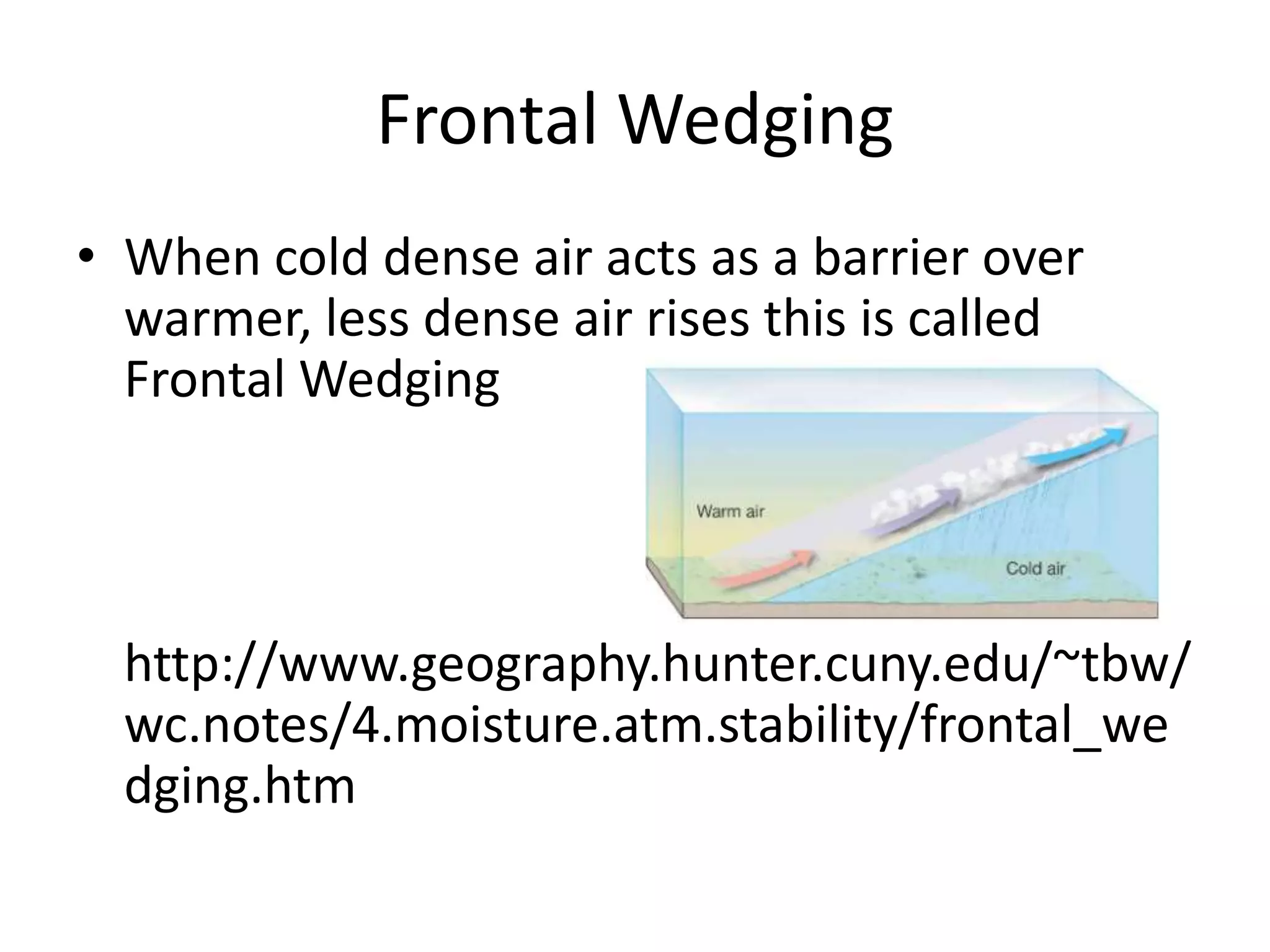
• When cold dense air acts as a barrier over
  warmer, less dense air rises this is called
  Frontal Wedging


  http://www.geography.hunter.cuny.edu/~tbw/
  wc.notes/4.moisture.atm.stability/frontal_we
  dging.htm
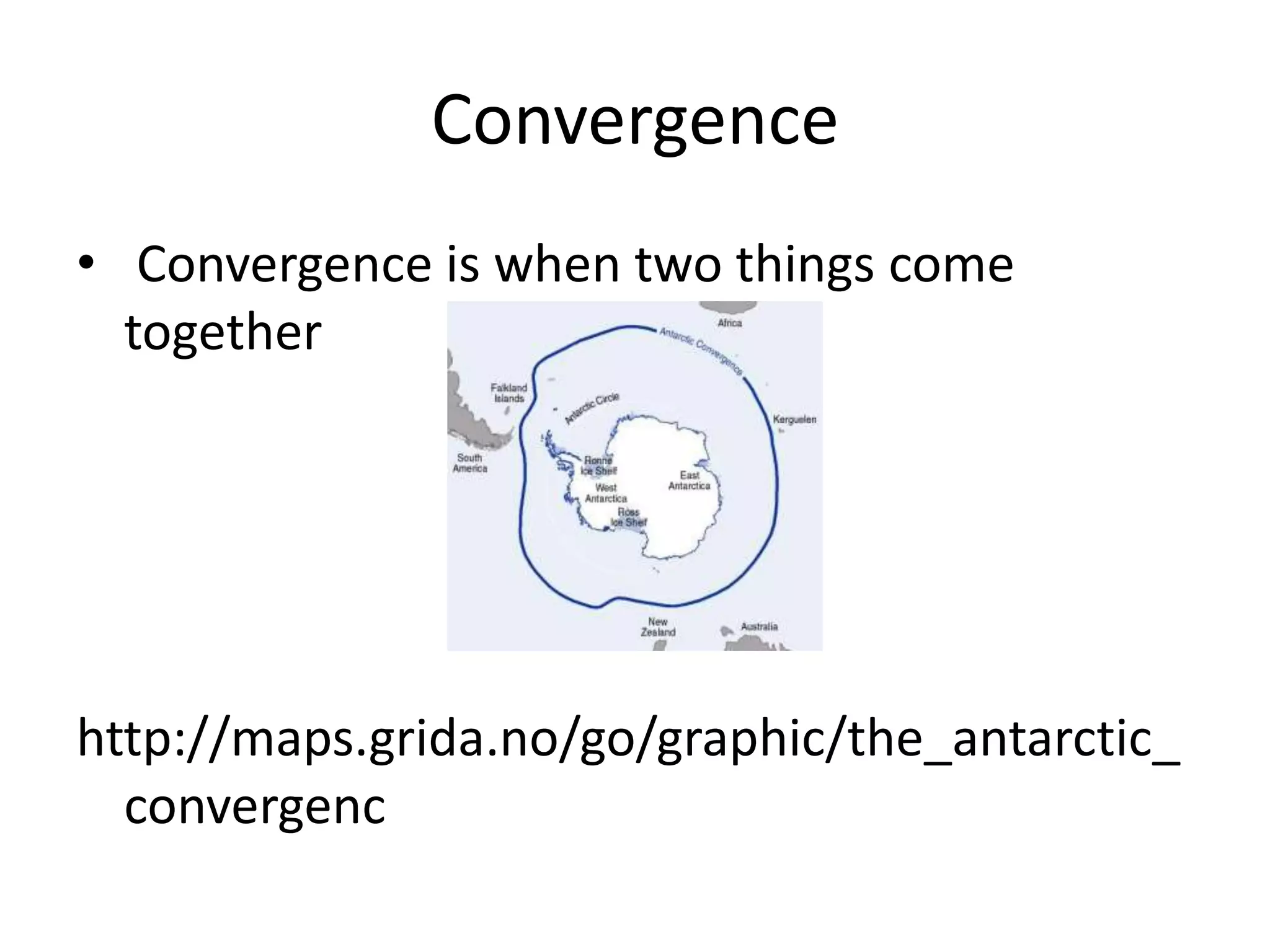
Convergence
• Convergence is when two things come
  together


http://maps.grida.no/go/graphic/the_antarctic_
  convergenc
Localized Convergence
• Localized Convergence Is unequal heating of
  earths surface warms one part of the air more
  then the other air around it. Lowering the
  density.


http://www.cmth.ph.ic.ac.uk/people/p.haynes/pap
  ers/paper14/node7.html
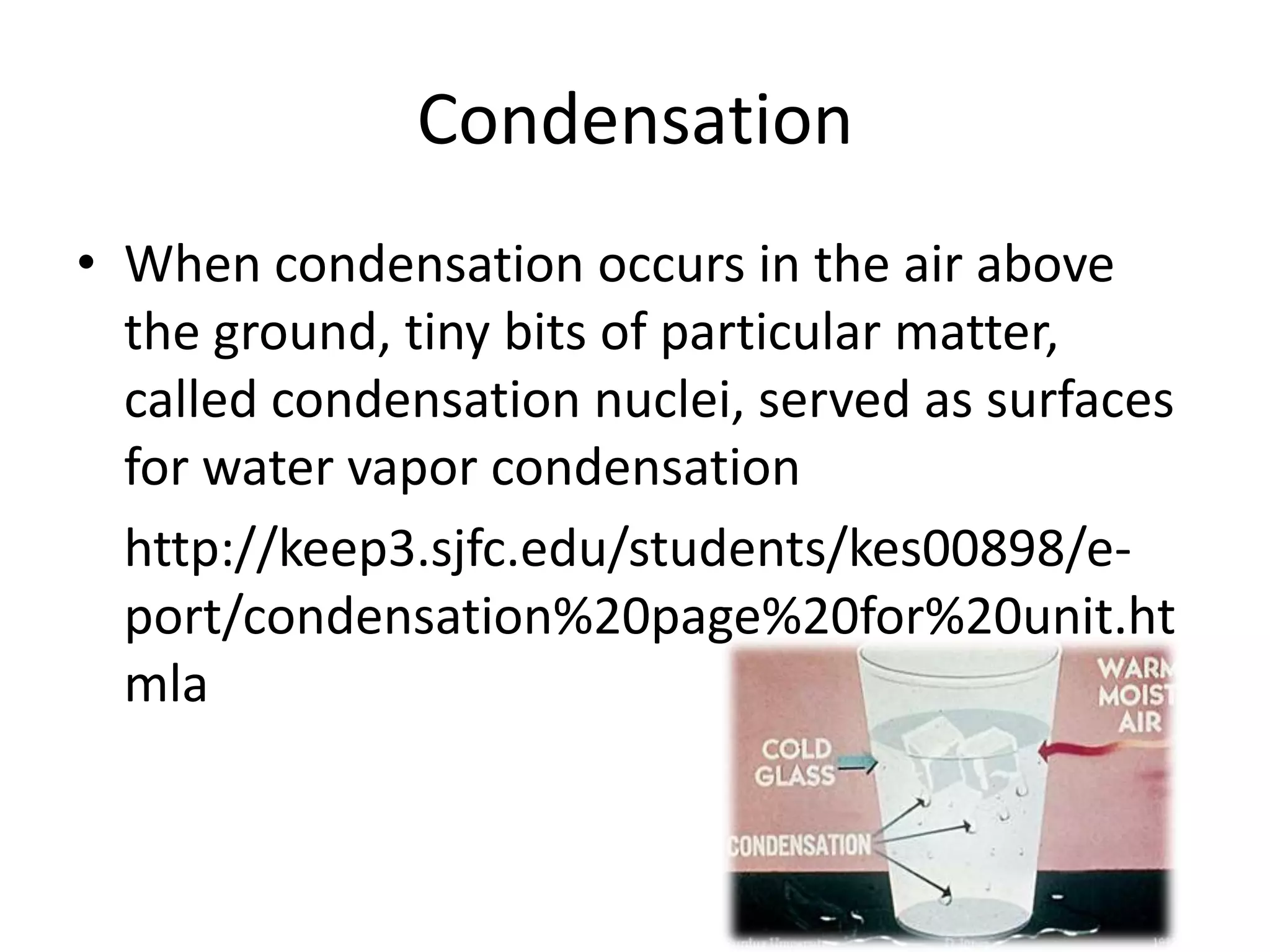
Condensation
• When condensation occurs in the air above
  the ground, tiny bits of particular matter,
  called condensation nuclei, served as surfaces
  for water vapor condensation
  http://keep3.sjfc.edu/students/kes00898/e-
  port/condensation%20page%20for%20unit.ht
  mla
Types of clouds
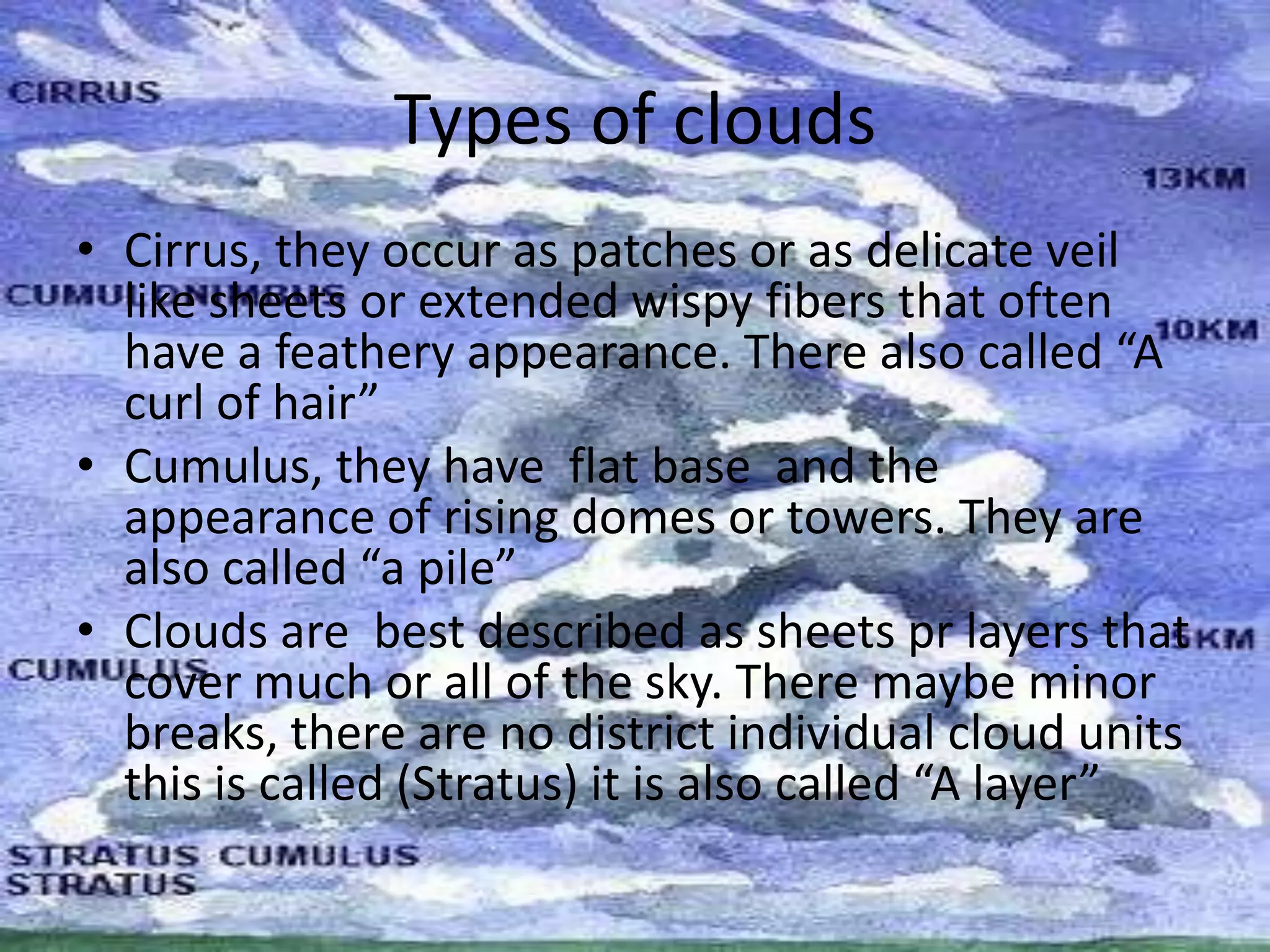
• Cirrus, they occur as patches or as delicate veil
  like sheets or extended wispy fibers that often
  have a feathery appearance. There also called “A
  curl of hair”
• Cumulus, they have flat base and the
  appearance of rising domes or towers. They are
  also called “a pile”
• Clouds are best described as sheets pr layers that
  cover much or all of the sky. There maybe minor
  breaks, there are no district individual cloud units
  this is called (Stratus) it is also called “A layer”
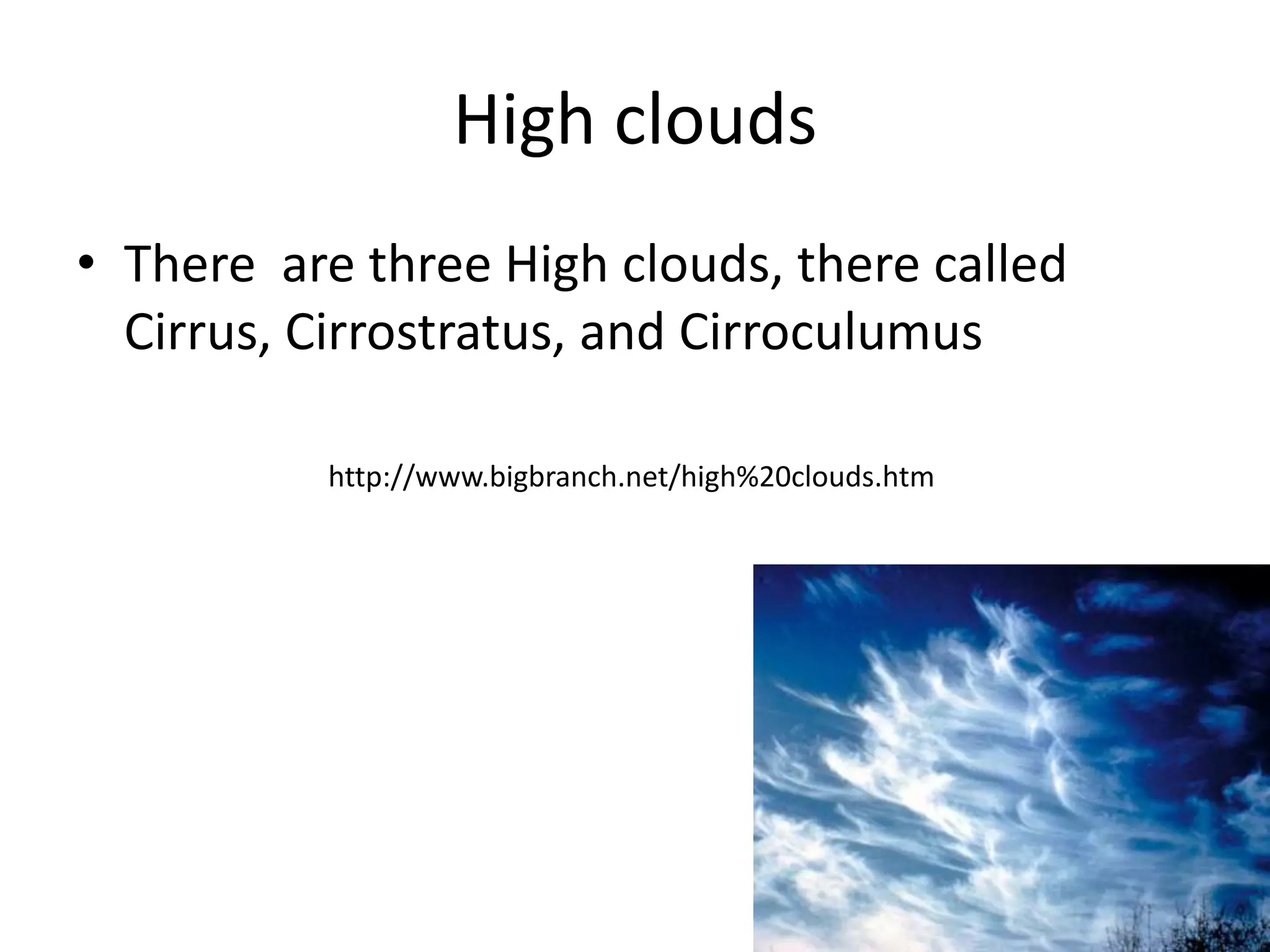
High clouds
• There are three High clouds, there called
  Cirrus, Cirrostratus, and Cirroculumus

          http://www.bigbranch.net/high%20clouds.htm
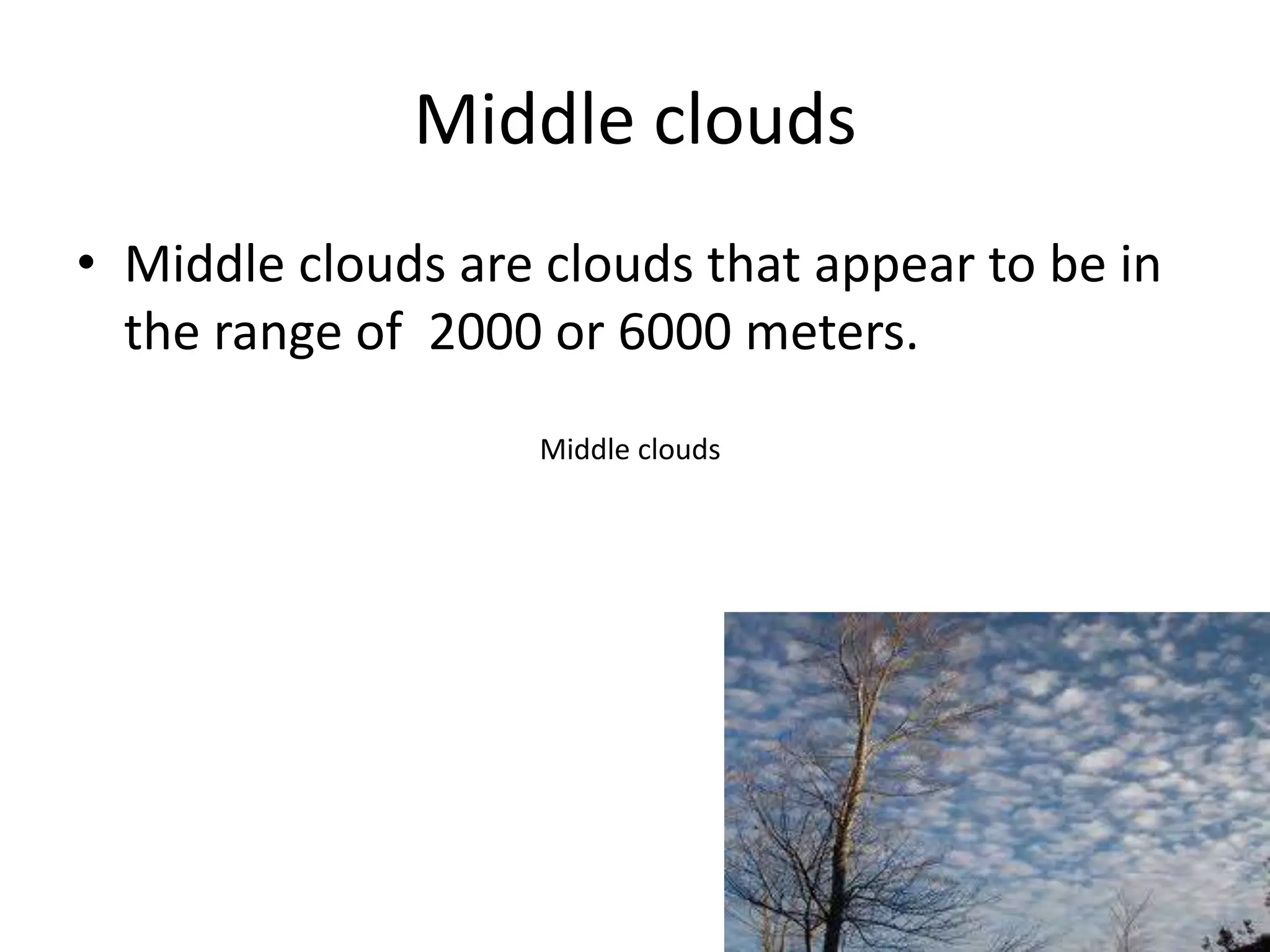
Middle clouds
• Middle clouds are clouds that appear to be in
  the range of 2000 or 6000 meters.
                    Middle clouds
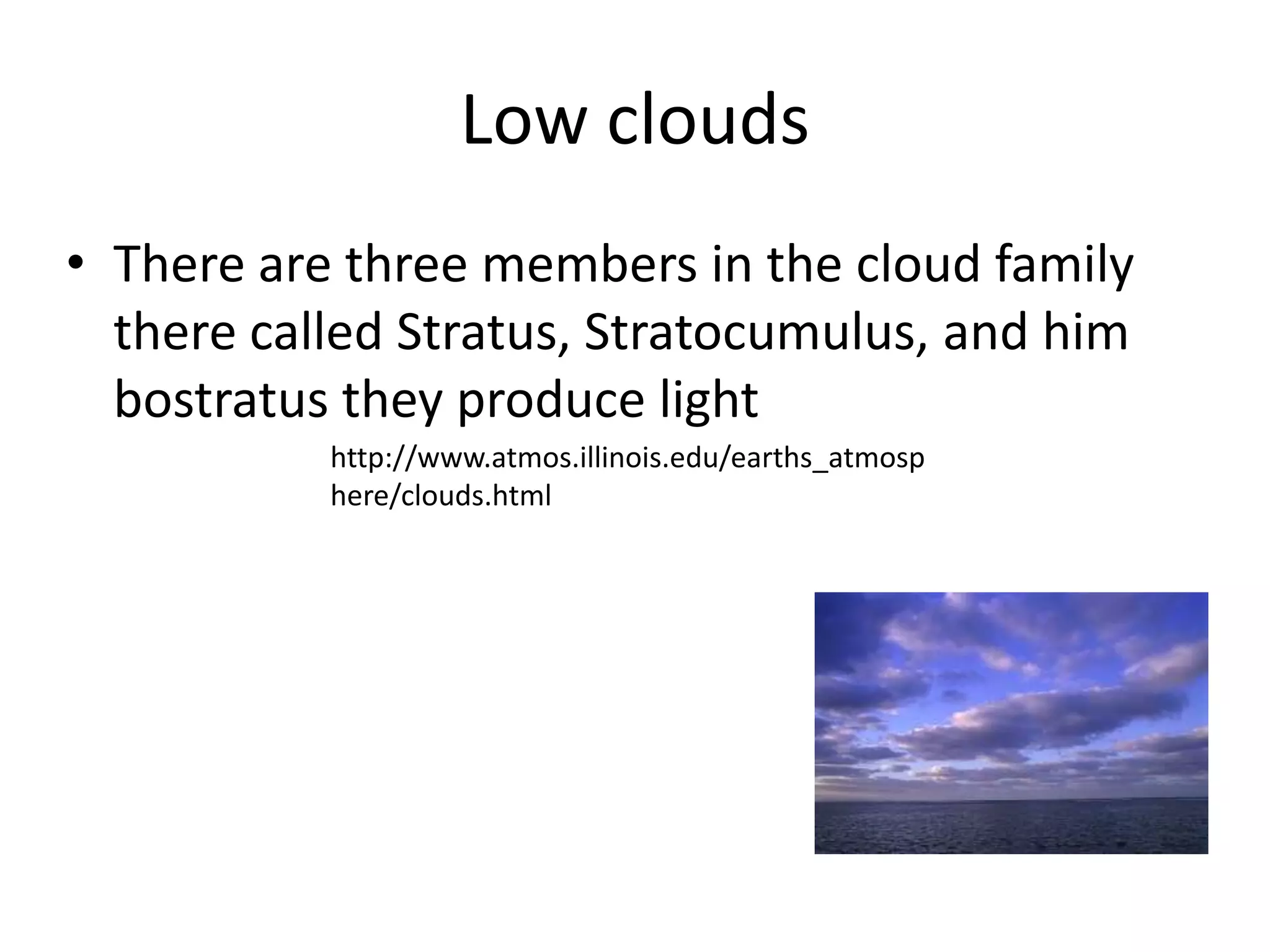
Low clouds
• There are three members in the cloud family
  there called Stratus, Stratocumulus, and him
  bostratus they produce light
           http://www.atmos.illinois.edu/earths_atmosp
           here/clouds.html
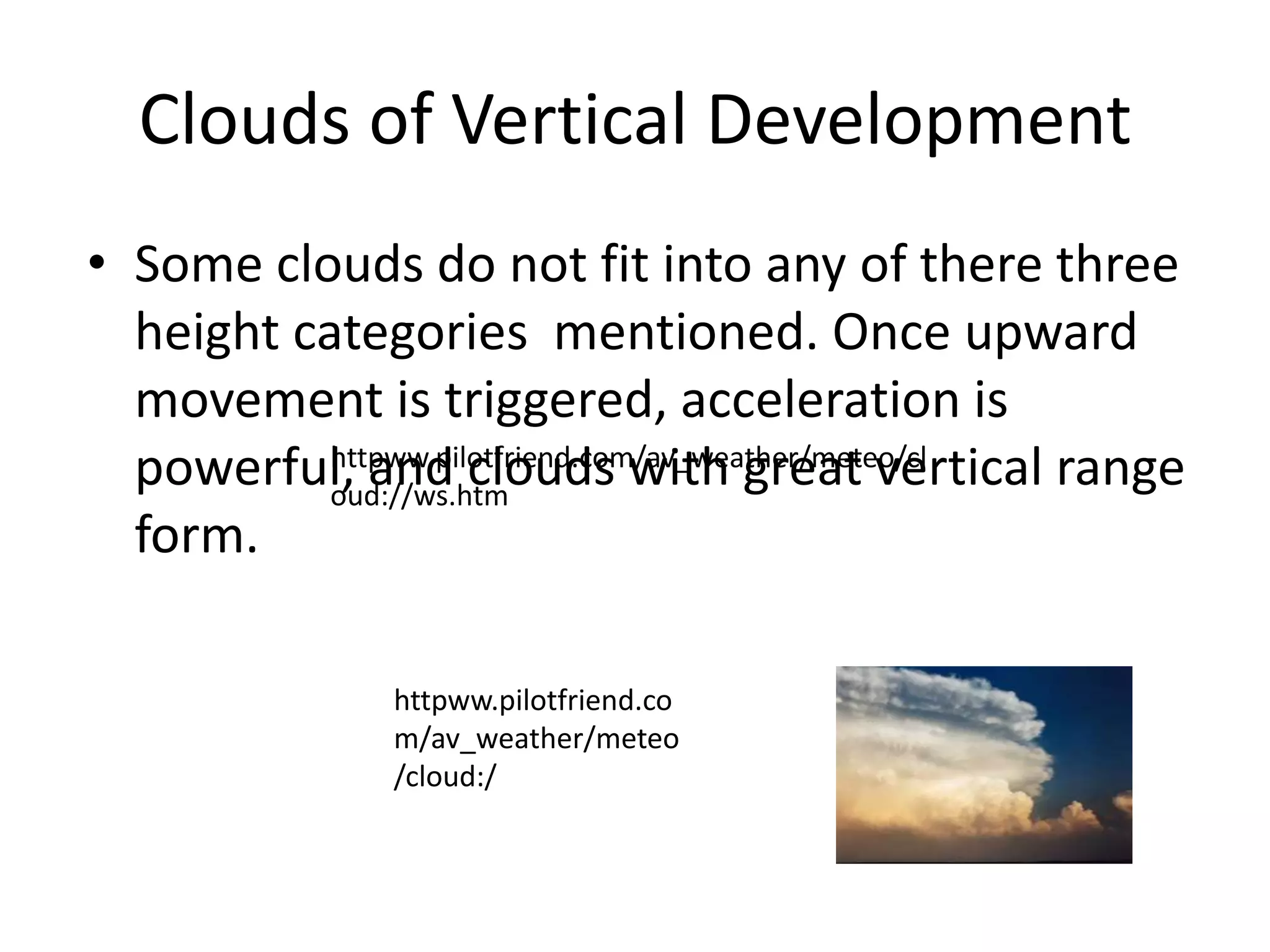
Clouds of Vertical Development
• Some clouds do not fit into any of there three
  height categories mentioned. Once upward
  movement is triggered, acceleration is
  powerful, and clouds with great vertical range
           httpww.pilotfriend.com/av_weather/meteo/cl
           oud://ws.htm
  form.

              httpww.pilotfriend.co
              m/av_weather/meteo
              /cloud:/
Fog
• Fog and clouds are the same but the place of
  formation is different cloud results when rises
  and cools adiabatically. Most fogs are the
  result of radiation cooling or the movement of
  air to bring about saturation.
• Fogs caused by cooling when warm, moist air
  from the pacific ocean moves over the cold
  California current and then is carried on shore
  by prevailing winds,
Cold Cloud Precipitation
• Theory that relates the formation of
  precipitation to super cooled clouds, freezing
  nuclei, and the different saturation levels of
  ice and liquid water
• Water that’s a liquid that is below 0 is said to
  be supercooler, Supercooler water will readily
  freeze if it touches a solid object this is called
  The Bergeron process.
Warm Cloud Precipitation
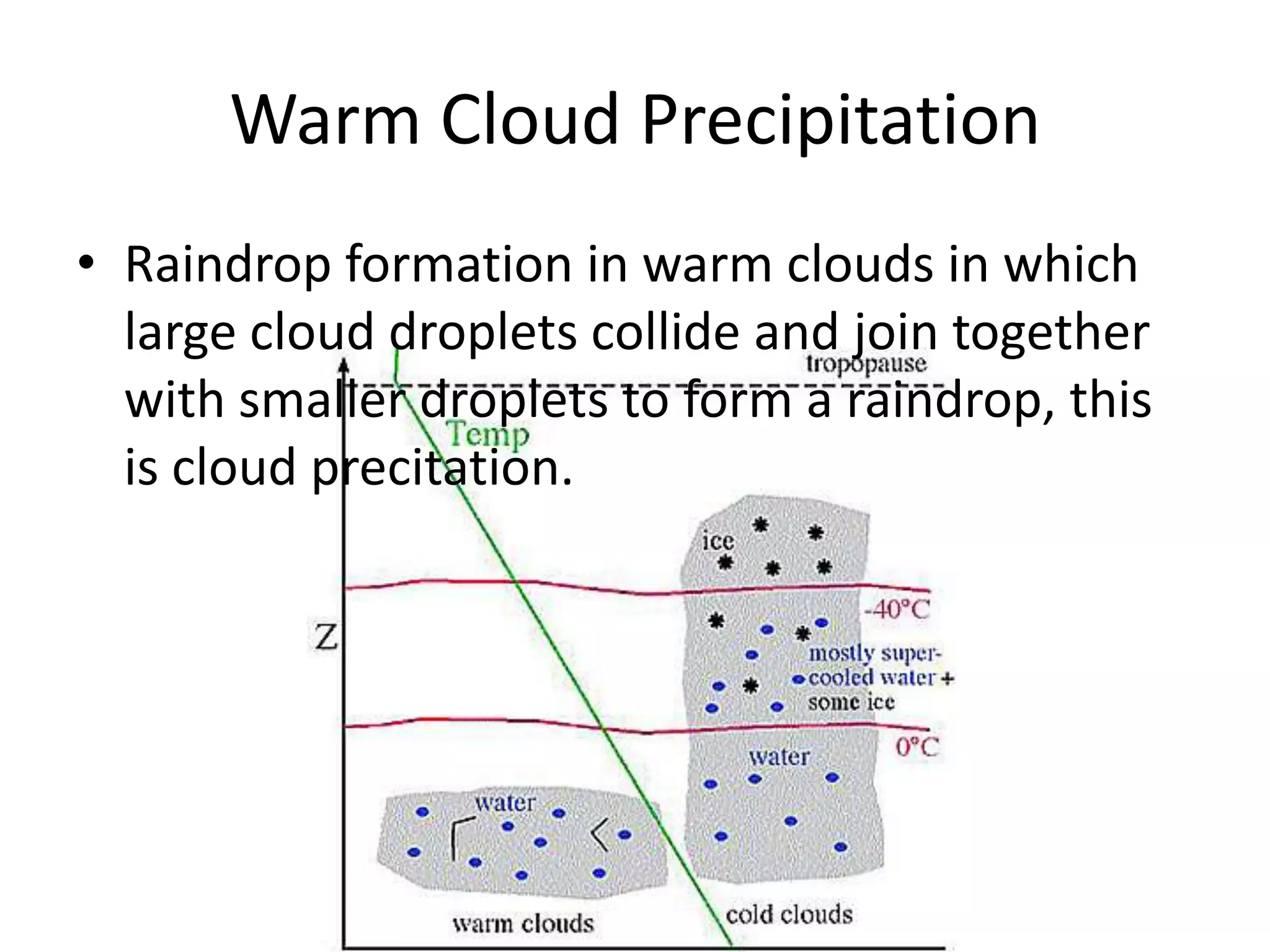
• Raindrop formation in warm clouds in which
  large cloud droplets collide and join together
  with smaller droplets to form a raindrop, this
  is cloud precitation.
Rain and Snow
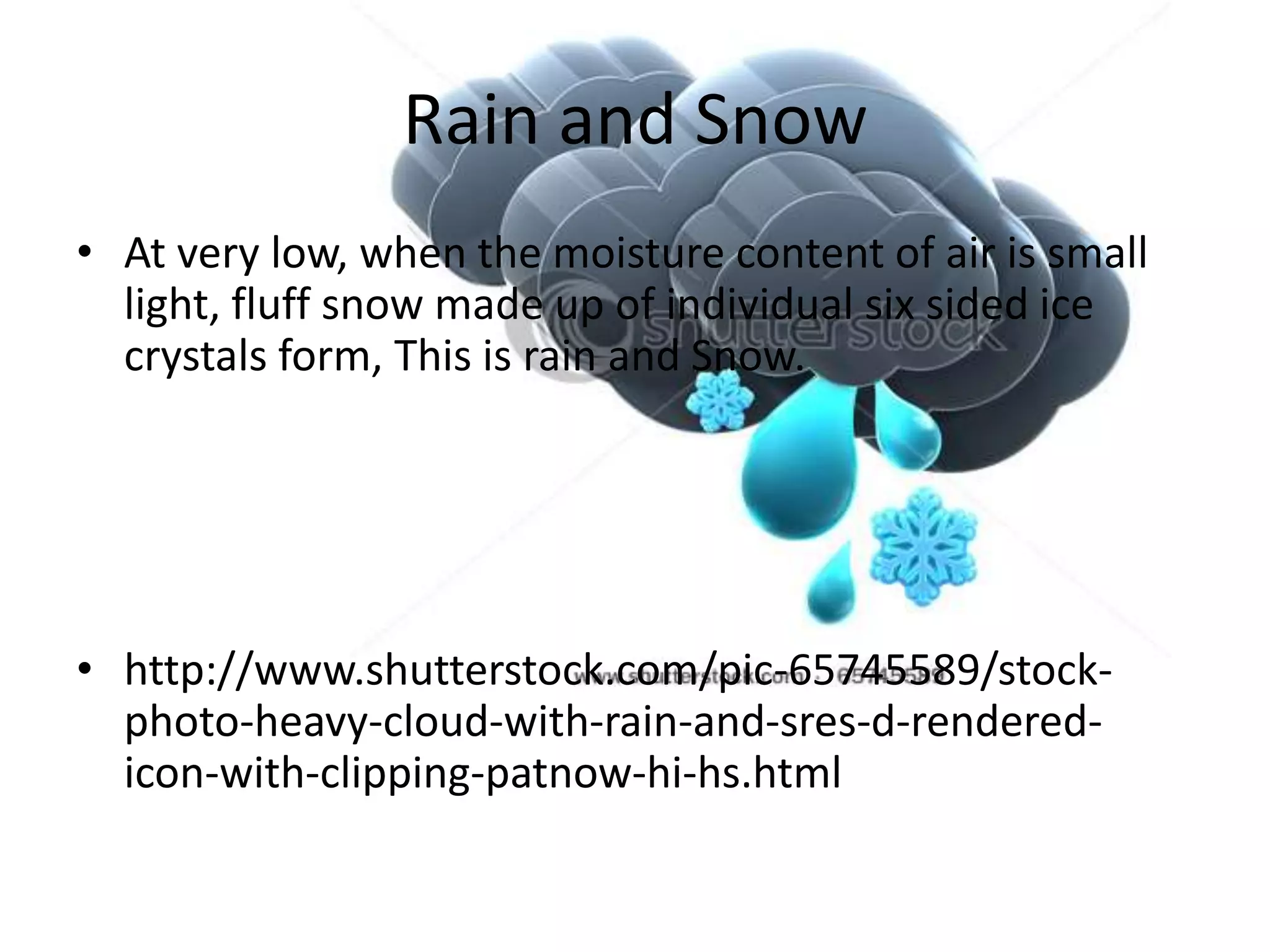
• At very low, when the moisture content of air is small
  light, fluff snow made up of individual six sided ice
  crystals form, This is rain and Snow.


• http://www.shutterstock.com/pic-65745589/stock-
  photo-heavy-cloud-with-rain-and-sres-d-rendered-
  icon-with-clipping-patnow-hi-hs.html
Sleet, Glaze, and Hail
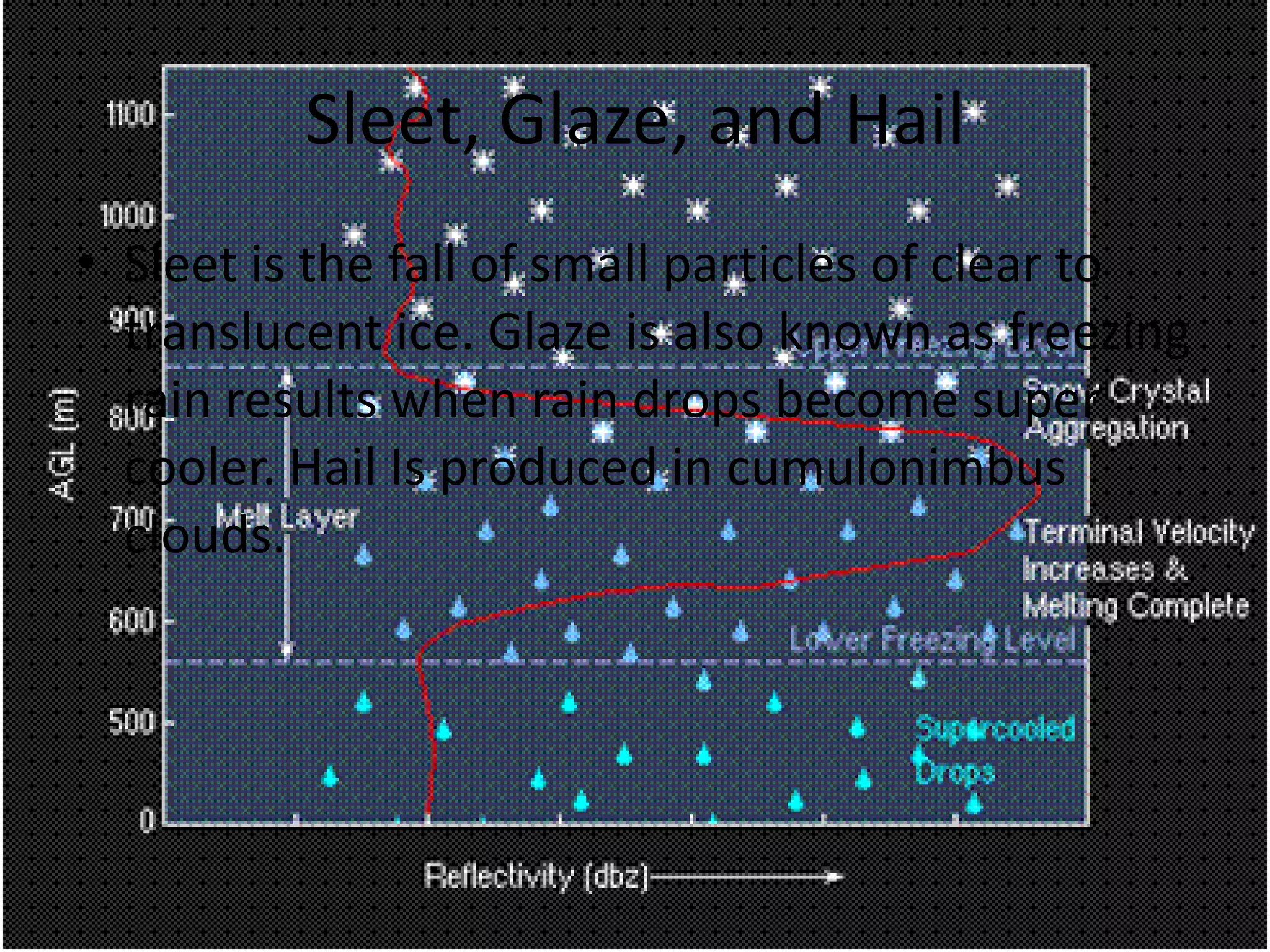
• Sleet is the fall of small particles of clear to
  translucent ice. Glaze is also known as freezing
  rain results when rain drops become super
  cooler. Hail Is produced in cumulonimbus
  clouds.
This is the ending, hope you enjoyed all 17
 of my slides 

3jeannine

  • 1.
    Clouds and Precipitation By: Jeannine Carcifi http://www.weatherreport.com/Local- weather-forecasts-Cloud-Reading.asp
  • 2.
    Adiabatic Temperature changesand Expansion and Cooling • Temperature Changes its not always the same, even if temperature rises or drops this is called adiabatic temperature changes • When adiabatic is cool or heated In unsaturated air it is called (dry) adiabatic rate • Adiabatic cooling or heating in unsaturated air is, wet adiabatic rate hwww.akts.com/time-to-maximum-rate- adiabatic/runaway-reactions-akts-thermal- safety-software.htmlttp://
  • 3.
    Orographic Lifting • Airoccurs when elevated terrains, for example: mountains, act as barriers to air flow, forcing the air to ascend. This is Orographic Lifting. http://www.examiner.com/outdoorsman-in- salt-lake-city/understanding-why-utah-has-the- greatest-snow-on-earth-part-1-orographic- lifting
  • 4.
    Frontal Wedging • Whencold dense air acts as a barrier over warmer, less dense air rises this is called Frontal Wedging http://www.geography.hunter.cuny.edu/~tbw/ wc.notes/4.moisture.atm.stability/frontal_we dging.htm
  • 5.
    Convergence • Convergence iswhen two things come together http://maps.grida.no/go/graphic/the_antarctic_ convergenc
  • 6.
    Localized Convergence • LocalizedConvergence Is unequal heating of earths surface warms one part of the air more then the other air around it. Lowering the density. http://www.cmth.ph.ic.ac.uk/people/p.haynes/pap ers/paper14/node7.html
  • 7.
    Condensation • When condensationoccurs in the air above the ground, tiny bits of particular matter, called condensation nuclei, served as surfaces for water vapor condensation http://keep3.sjfc.edu/students/kes00898/e- port/condensation%20page%20for%20unit.ht mla
  • 8.
    Types of clouds •Cirrus, they occur as patches or as delicate veil like sheets or extended wispy fibers that often have a feathery appearance. There also called “A curl of hair” • Cumulus, they have flat base and the appearance of rising domes or towers. They are also called “a pile” • Clouds are best described as sheets pr layers that cover much or all of the sky. There maybe minor breaks, there are no district individual cloud units this is called (Stratus) it is also called “A layer”
  • 9.
    High clouds • Thereare three High clouds, there called Cirrus, Cirrostratus, and Cirroculumus http://www.bigbranch.net/high%20clouds.htm
  • 10.
    Middle clouds • Middleclouds are clouds that appear to be in the range of 2000 or 6000 meters. Middle clouds
  • 11.
    Low clouds • Thereare three members in the cloud family there called Stratus, Stratocumulus, and him bostratus they produce light http://www.atmos.illinois.edu/earths_atmosp here/clouds.html
  • 12.
    Clouds of VerticalDevelopment • Some clouds do not fit into any of there three height categories mentioned. Once upward movement is triggered, acceleration is powerful, and clouds with great vertical range httpww.pilotfriend.com/av_weather/meteo/cl oud://ws.htm form. httpww.pilotfriend.co m/av_weather/meteo /cloud:/
  • 13.
    Fog • Fog andclouds are the same but the place of formation is different cloud results when rises and cools adiabatically. Most fogs are the result of radiation cooling or the movement of air to bring about saturation. • Fogs caused by cooling when warm, moist air from the pacific ocean moves over the cold California current and then is carried on shore by prevailing winds,
  • 14.
    Cold Cloud Precipitation •Theory that relates the formation of precipitation to super cooled clouds, freezing nuclei, and the different saturation levels of ice and liquid water • Water that’s a liquid that is below 0 is said to be supercooler, Supercooler water will readily freeze if it touches a solid object this is called The Bergeron process.
  • 15.
    Warm Cloud Precipitation •Raindrop formation in warm clouds in which large cloud droplets collide and join together with smaller droplets to form a raindrop, this is cloud precitation.
  • 16.
    Rain and Snow •At very low, when the moisture content of air is small light, fluff snow made up of individual six sided ice crystals form, This is rain and Snow. • http://www.shutterstock.com/pic-65745589/stock- photo-heavy-cloud-with-rain-and-sres-d-rendered- icon-with-clipping-patnow-hi-hs.html
  • 17.
    Sleet, Glaze, andHail • Sleet is the fall of small particles of clear to translucent ice. Glaze is also known as freezing rain results when rain drops become super cooler. Hail Is produced in cumulonimbus clouds.
  • 18.
    This is theending, hope you enjoyed all 17 of my slides 