Understandings:
-A gene is a heritable factor that
consists of a length of DNA and
influences a specific characteristic.
-A gene occupies a specific
position on a chromosome.
-The various specific forms of a
gene are alleles.
-Alleles differ from each other by
only a few bases.
-New alleles are formed by
mutation.
-The genome is the whole of the
genetic information of an
organism.
-The entire base sequence of
human genes was sequenced in
the Human Genome Project.
Applications and Skills:
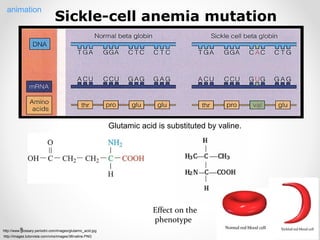
-A: The causes of sickle cell anemia,
including a base substitution
mutation, a change to the base
sequence of mRNA transcribed from
it, and the change to the sequence of
a polypeptide in hemoglobin.
-A: Comparison of the number of
genes in humans with other species.
-S: Use a database to determine
differences in the base sequence of
two species.
Guidance:
-Students should be able to recall one specific base substitution that
causes glutamic acid to be substituted by valine as the 6th
amino acid in
the haemoglobin polypeptide.
-The number of genes in a species should not be referred to as a genome
size as this term is used for the total amount of DNA. At least one plant
and one bacterium should be included in the comparison, and at least
once species with more genes and one with fewer genes than a human.
-The GenBank data base can be used to search for DNA base sequences.
The cytochrome c gene sequence is available for many different
organisms and is of particular interest because of its use in reclassifying
organisms into three domains.
-Deletions, insertions, and frame shift mutations do not need to be
included.
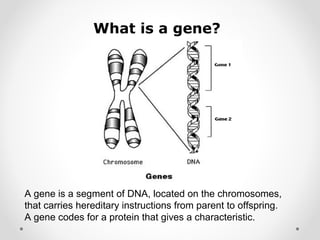
What is a gene?
A gene is a segment of DNA, located on the chromosomes,
that carries hereditary instructions from parent to offspring.
A gene codes for a protein that gives a characteristic.
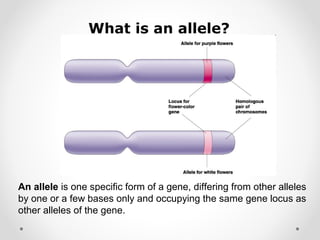
What is an allele?
An allele is one specific form of a gene, differing from other alleles
by one or a few bases only and occupying the same gene locus as
other alleles of the gene.
What is a mutation?
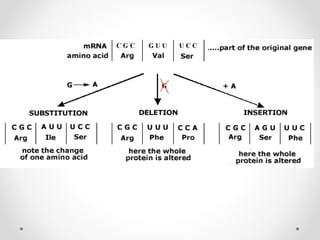
A gene mutation is a permanent change in the DNA sequence that
makes up a gene .
may produce a different amino acid sequence in the protein
translated.
may not change the protein because of the degenerate
nature of the genetic code.
expression of the mutated gene may or may not be
beneficial to the organism.
Substances that cause mutation are called mutagens and include
chemicals and radiation.
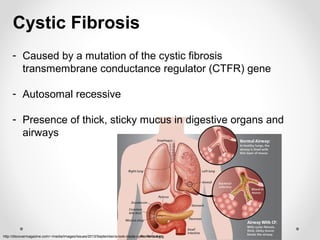
Cystic Fibrosis
- Caused by a mutation of the cystic fibrosis
transmembrane conductance regulator (CTFR) gene
- Autosomal recessive
- Presence of thick, sticky mucus in digestive organs and
airways
http://discovermagazine.com/~/media/Images/Issues/2013/September/a-look-inside-cystic-fibrosis.jpg
Sickle-cell anemia mutation
Effect on the
phenotype
animation
Glutamic acid is substituted by valine.
http://www.glossary.periodni.com/images/glutamic_acid.jpg
http://images.tutorvista.com/cms/images/38/valine.PNG
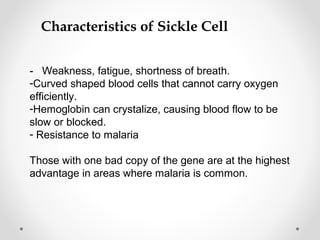
Characteristics of Sickle Cell
- Weakness, fatigue, shortness of breath.
-Curved shaped blood cells that cannot carry oxygen
efficiently.
-Hemoglobin can crystalize, causing blood flow to be
slow or blocked.
- Resistance to malaria
Those with one bad copy of the gene are at the highest
advantage in areas where malaria is common.
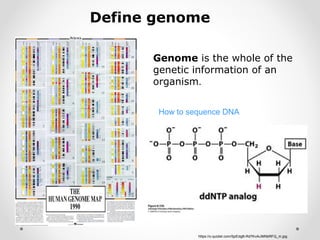
Define genome
Genome is the whole of the
genetic information of an
organism.
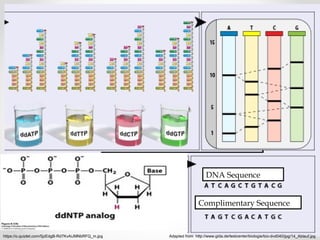
How to sequence DNA
https://o.quizlet.com/5jzEdgB-Rd7KvAiJMNbRFQ_m.jpg
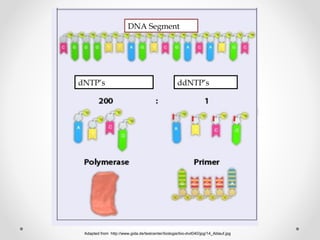
DNA Segment
dNTP’s ddNTP’s
Adapted from http://www.gida.de/testcenter/biologie/bio-dvd040/jpg/14_Ablauf.jpg
DNA Sequence
Complimentary Sequence
https://o.quizlet.com/5jzEdgB-Rd7KvAiJMNbRFQ_m.jpg
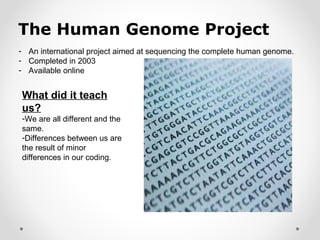
The Human Genome Project
- An international project aimed at sequencing the complete human genome.
- Completed in 2003
- Available online
What did it teach
us?
-We are all different and the
same.
-Differences between us are
the result of minor
differences in our coding.
HomeworkHomework
Vocab Other
• Gene
• Heritable
• Characteristic
• Locus/loci
• Alleles
• Mutation
• Gene therapy
• Sickle cell anemia
• Sickle cell trait
• The Human Genome
Project
• Cytochrome C
• Challenge yourself 2
• Exercises 1-3
• TOK pg 121 HL/ 128 SL
• TOK 124 HL/ 131 SL

3.1 genes (2)

  • 2.
    Understandings: -A gene isa heritable factor that consists of a length of DNA and influences a specific characteristic. -A gene occupies a specific position on a chromosome. -The various specific forms of a gene are alleles. -Alleles differ from each other by only a few bases. -New alleles are formed by mutation. -The genome is the whole of the genetic information of an organism. -The entire base sequence of human genes was sequenced in the Human Genome Project. Applications and Skills: -A: The causes of sickle cell anemia, including a base substitution mutation, a change to the base sequence of mRNA transcribed from it, and the change to the sequence of a polypeptide in hemoglobin. -A: Comparison of the number of genes in humans with other species. -S: Use a database to determine differences in the base sequence of two species.
  • 3.
    Guidance: -Students should beable to recall one specific base substitution that causes glutamic acid to be substituted by valine as the 6th amino acid in the haemoglobin polypeptide. -The number of genes in a species should not be referred to as a genome size as this term is used for the total amount of DNA. At least one plant and one bacterium should be included in the comparison, and at least once species with more genes and one with fewer genes than a human. -The GenBank data base can be used to search for DNA base sequences. The cytochrome c gene sequence is available for many different organisms and is of particular interest because of its use in reclassifying organisms into three domains. -Deletions, insertions, and frame shift mutations do not need to be included.
  • 4.
    What is agene? A gene is a segment of DNA, located on the chromosomes, that carries hereditary instructions from parent to offspring. A gene codes for a protein that gives a characteristic.
  • 5.
    What is anallele? An allele is one specific form of a gene, differing from other alleles by one or a few bases only and occupying the same gene locus as other alleles of the gene.
  • 6.
    What is amutation? A gene mutation is a permanent change in the DNA sequence that makes up a gene . may produce a different amino acid sequence in the protein translated. may not change the protein because of the degenerate nature of the genetic code. expression of the mutated gene may or may not be beneficial to the organism. Substances that cause mutation are called mutagens and include chemicals and radiation.
  • 8.
    Cystic Fibrosis - Causedby a mutation of the cystic fibrosis transmembrane conductance regulator (CTFR) gene - Autosomal recessive - Presence of thick, sticky mucus in digestive organs and airways http://discovermagazine.com/~/media/Images/Issues/2013/September/a-look-inside-cystic-fibrosis.jpg
  • 9.
    Sickle-cell anemia mutation Effecton the phenotype animation Glutamic acid is substituted by valine. http://www.glossary.periodni.com/images/glutamic_acid.jpg http://images.tutorvista.com/cms/images/38/valine.PNG
  • 10.
    Characteristics of SickleCell - Weakness, fatigue, shortness of breath. -Curved shaped blood cells that cannot carry oxygen efficiently. -Hemoglobin can crystalize, causing blood flow to be slow or blocked. - Resistance to malaria Those with one bad copy of the gene are at the highest advantage in areas where malaria is common.
  • 11.
    Define genome Genome isthe whole of the genetic information of an organism. How to sequence DNA https://o.quizlet.com/5jzEdgB-Rd7KvAiJMNbRFQ_m.jpg
  • 12.
    DNA Segment dNTP’s ddNTP’s Adaptedfrom http://www.gida.de/testcenter/biologie/bio-dvd040/jpg/14_Ablauf.jpg
  • 13.
    Adapted from http://www.gida.de/testcenter/biologie/bio-dvd040/jpg/14_Ablauf.jpg DNASequence Complimentary Sequence https://o.quizlet.com/5jzEdgB-Rd7KvAiJMNbRFQ_m.jpg
  • 14.
    The Human GenomeProject - An international project aimed at sequencing the complete human genome. - Completed in 2003 - Available online What did it teach us? -We are all different and the same. -Differences between us are the result of minor differences in our coding.
  • 15.
    HomeworkHomework Vocab Other • Gene •Heritable • Characteristic • Locus/loci • Alleles • Mutation • Gene therapy • Sickle cell anemia • Sickle cell trait • The Human Genome Project • Cytochrome C • Challenge yourself 2 • Exercises 1-3 • TOK pg 121 HL/ 128 SL • TOK 124 HL/ 131 SL

Editor's Notes

  • #6 For each gene, an organism typically receives one allele from each parent.