3R
3R
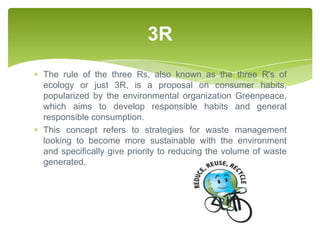
The rule of the three Rs, also known as the three R's of
ecology or just 3R, is a proposal on consumer habits,
popularized by the environmental organization Greenpeace,
which aims to develop responsible habits and general
responsible consumption.
This concept refers to strategies for waste management
looking to become more sustainable with the environment
and specifically give priority to reducing the volume of waste
generated.
Reduce
It means, first, that all human beings should not
produce much trash, it's best to try to reduce or
minimize waste generation, both at home and at
work.

Reduction is a key to start the solution to the
problem of waste.

The reduction can be performed at 2 levels:
reducing the consumption of goods or energy
reduction.
Reduce
Example: Reduce emissions of greenhouse gases, to
prevent the poisoning of plants or animals with toxic
contaminants or harmful to the environment. European
countries are working with a greater reduction policy, and the
theme is food waste "(land)" produce polluting products
(100% biodegradable), so that when life ends has no impact
on the environment atmosphere or is as small as possible.
Re-use
Means reuse some things we consider useless.

The reuse is based on giving a second life to an
object. All products or materials may have more
than one life, repairing them for the same purpose
or for a different use.
Re-use
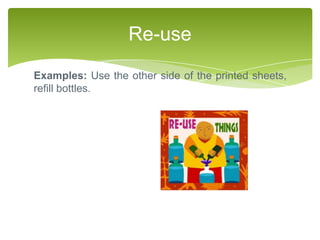
Examples: Use the other side of the printed sheets,
refill bottles.
Recycle
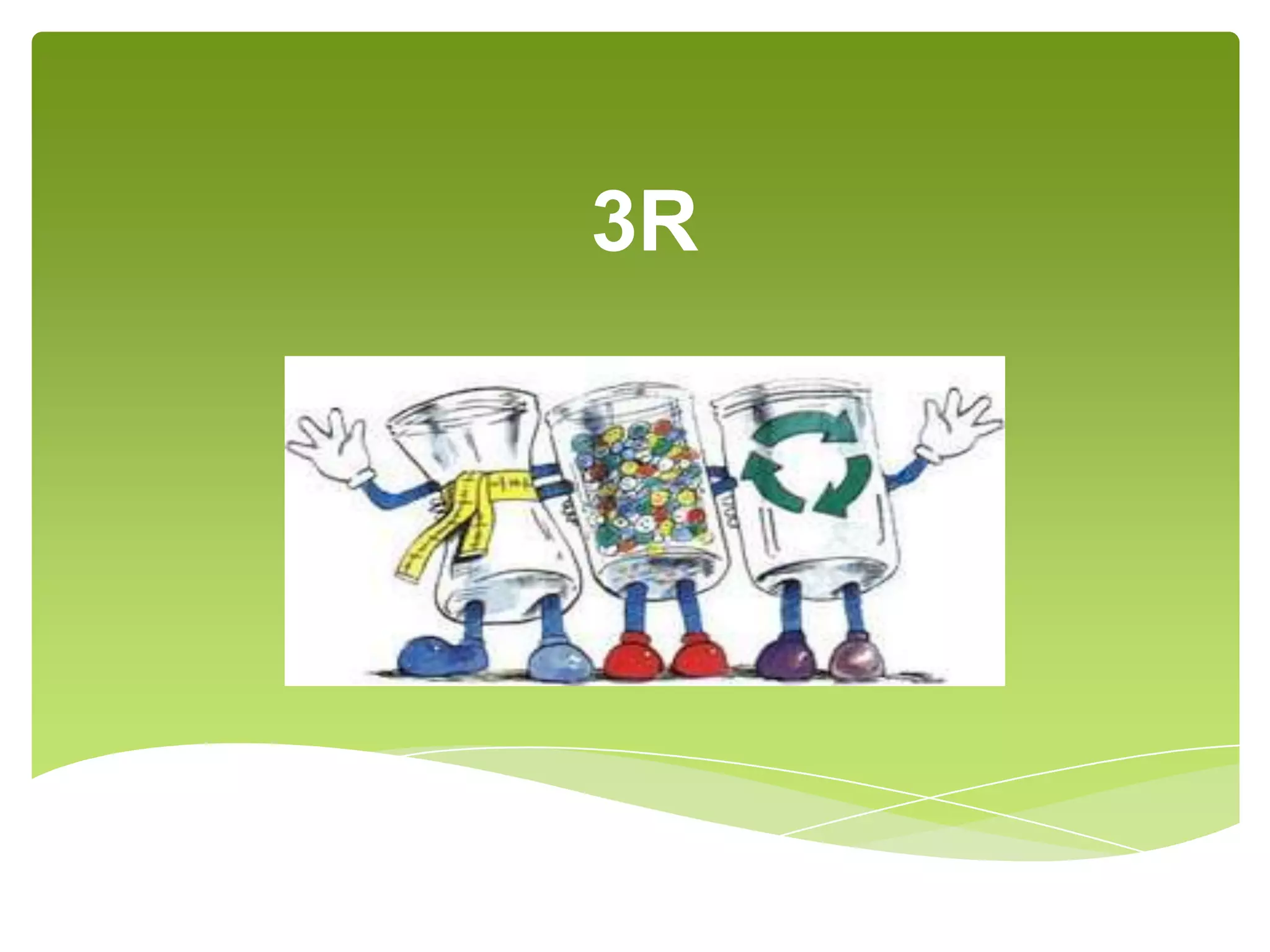
Possibly the best known internationally is
represented by the arrow symbol in many
packages, products and educational programs.
This word is used to indicate the action of
separating materials according to their physical
characteristics.
Somehow, means to separate their recyclables
from the garbage that does not work.
Recycle
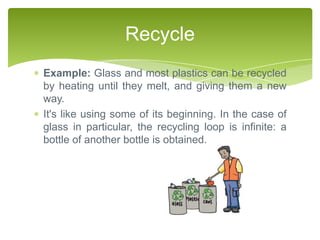
Example: Glass and most plastics can be recycled
by heating until they melt, and giving them a new
way.
It's like using some of its beginning. In the case of
glass in particular, the recycling loop is infinite: a
bottle of another bottle is obtained.
Thanks

3 r

  • 1.
  • 2.
    3R The rule ofthe three Rs, also known as the three R's of ecology or just 3R, is a proposal on consumer habits, popularized by the environmental organization Greenpeace, which aims to develop responsible habits and general responsible consumption. This concept refers to strategies for waste management looking to become more sustainable with the environment and specifically give priority to reducing the volume of waste generated.
  • 3.
    Reduce It means, first,that all human beings should not produce much trash, it's best to try to reduce or minimize waste generation, both at home and at work. Reduction is a key to start the solution to the problem of waste. The reduction can be performed at 2 levels: reducing the consumption of goods or energy reduction.
  • 4.
    Reduce Example: Reduce emissionsof greenhouse gases, to prevent the poisoning of plants or animals with toxic contaminants or harmful to the environment. European countries are working with a greater reduction policy, and the theme is food waste "(land)" produce polluting products (100% biodegradable), so that when life ends has no impact on the environment atmosphere or is as small as possible.
  • 5.
    Re-use Means reuse somethings we consider useless. The reuse is based on giving a second life to an object. All products or materials may have more than one life, repairing them for the same purpose or for a different use.
  • 6.
    Re-use Examples: Use theother side of the printed sheets, refill bottles.
  • 7.
    Recycle Possibly the bestknown internationally is represented by the arrow symbol in many packages, products and educational programs. This word is used to indicate the action of separating materials according to their physical characteristics. Somehow, means to separate their recyclables from the garbage that does not work.
  • 8.
    Recycle Example: Glass andmost plastics can be recycled by heating until they melt, and giving them a new way. It's like using some of its beginning. In the case of glass in particular, the recycling loop is infinite: a bottle of another bottle is obtained.
  • 9.