2. Introduction to AI in Education & Overview of Generative AI Tools.pptx
1.
Introduction to AIin
Education
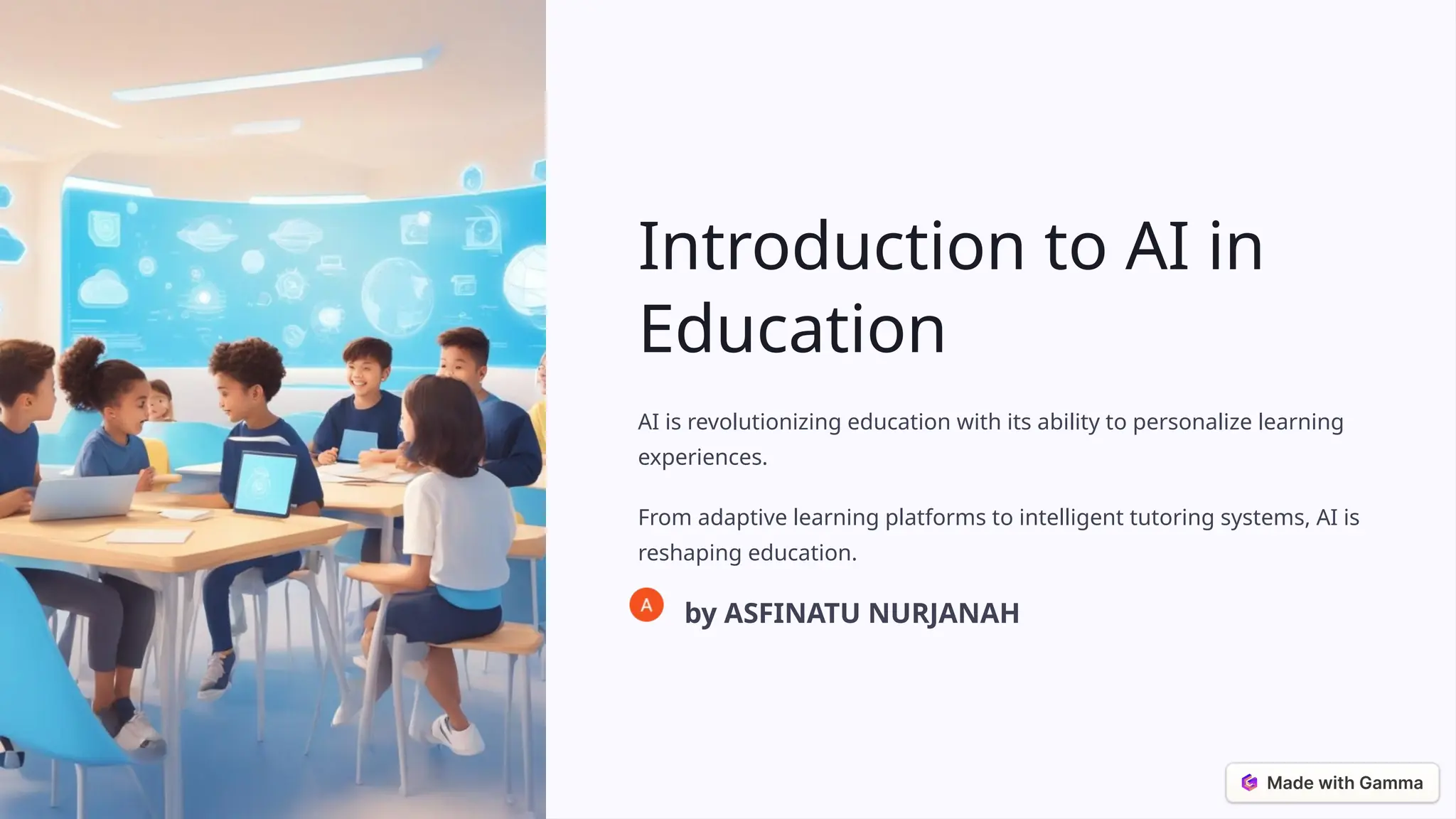
AI is revolutionizing education with its ability to personalize learning
experiences.
From adaptive learning platforms to intelligent tutoring systems, AI is
reshaping education.
by ASFINATU NURJANAH
2.
Benefits of usingAI in teaching
Personalized Learning
AI can adapt to each student's learning
pace and style.
Efficient Feedback
AI systems can provide instant feedback
on student work.
Enhanced Resource Planning
AI can analyze data to optimize resource
allocation.
Improved Accessibility
AI tools can make education more
accessible to diverse learners.
3.
Overview of GenerativeAI Tools
Chatbots for
Personalized Learning
Chatbots are AI-powered
virtual assistants that
engage with students in
real-time, providing
personalized support and
answering queries.
Virtual Tutors for
Individualized
Instruction
Virtual tutors utilize
generative AI to tailor
educational content based
on the individual learning
needs of each student.
Automated Grading
Systems for Efficient
Assessment
AI-driven automated
grading systems streamline
the assessment process,
providing quick and
accurate feedback to
students and instructors.
4.
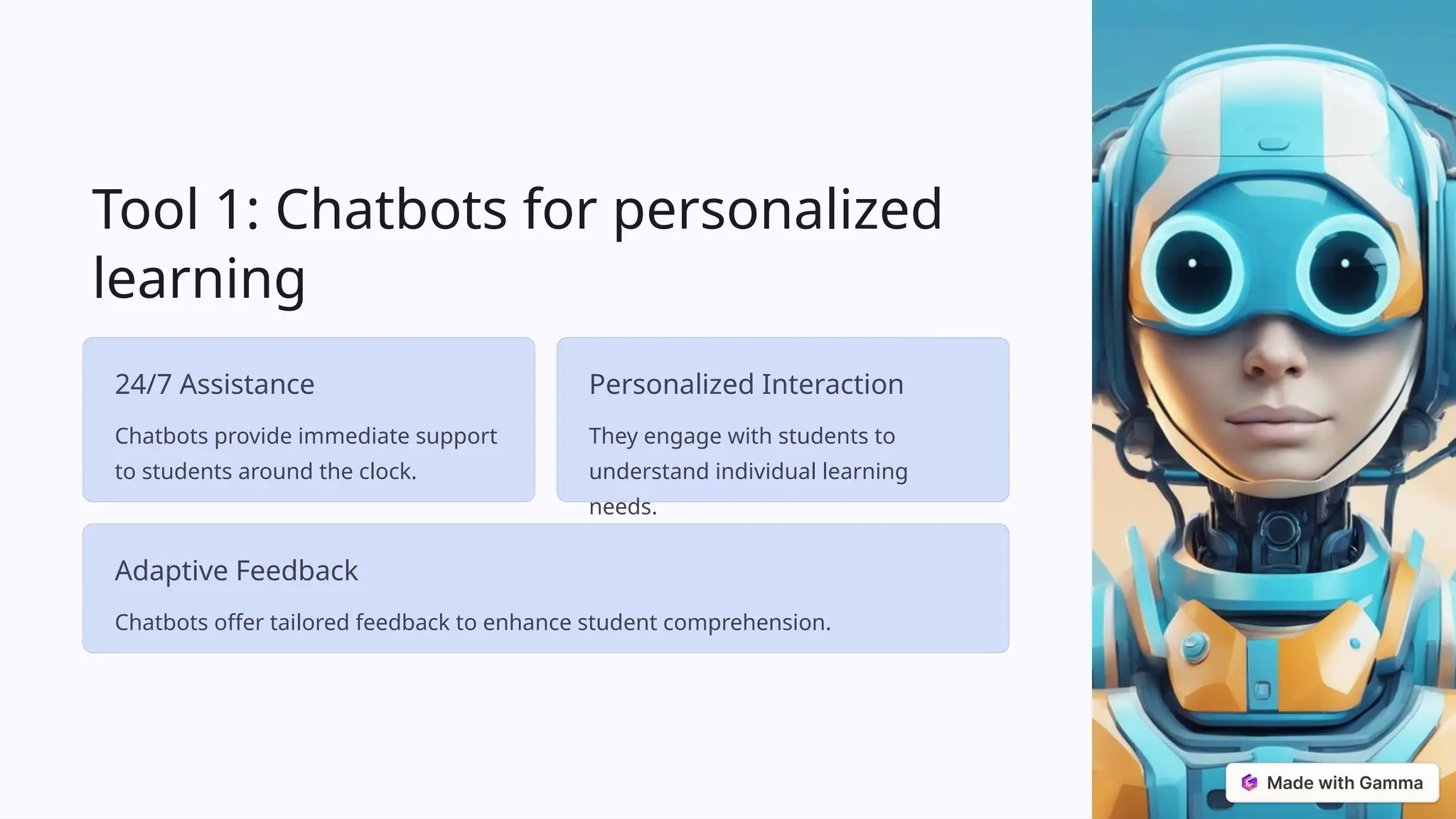
Tool 1: Chatbotsfor personalized
learning
24/7 Assistance
Chatbots provide immediate support
to students around the clock.
Personalized Interaction
They engage with students to
understand individual learning
needs.
Adaptive Feedback
Chatbots offer tailored feedback to enhance student comprehension.
5.
Tool 2: Virtualtutors for individualized
instruction
Personalized Guidance
Virtual tutors provide
individualized guidance and
support to students.
Cognitive
Understanding
Deep learning algorithms
help virtual tutors
understand students'
cognitive processes.
Interactive
Communication
Real-time interactive
communication enhances the
learning experience for
students.
6.
Tool 3: Automatedgrading
systems for efficient
assessment
• Instant Feedback: AI-powered systems provide immediate
feedback to students.
• Consistency: Ensures consistent and unbiased grading across
all students.
• Time-saving: Reduces the workload on educators, allowing
them to focus on teaching.
7.
Tool 4: Contentgenerators for creating
educational materials
Content generators powered by AI use
advanced algorithms to produce diverse
educational materials such as lectures,
presentations, and study resources. These
tools enable personalized and engaging
content creation, catering to different
learning styles and preferences.
8.
Tool 5: Adaptivelearning platforms
for personalized curriculum
1 Adaptive Assessment
AI analyzes student performance and tailors curriculum accordingly.
2 Customized Learning Paths
Students receive personalized content and pace based on their skills.
3 Real-time Feedback
AI provides instant feedback and adjusts instruction in real-time.
9.
Challenges and Limitationsof AI in
Education
The integration of AI in education presents challenges such as ethical concerns about data privacy,
bias in algorithms, and the need for human supervision. Limitations include the potential for over-
reliance, lack of emotional intelligence, and the high cost of implementation and maintenance.
10.
Conclusion and Future
Prospects
AsAI continues to evolve, the future of AI in education looks
promising. With advancements in generative AI tools, personalized
learning experiences and efficient assessment methods are on the
horizon. Collaborative efforts between educators and AI experts will
shape the next phase of educational technology.