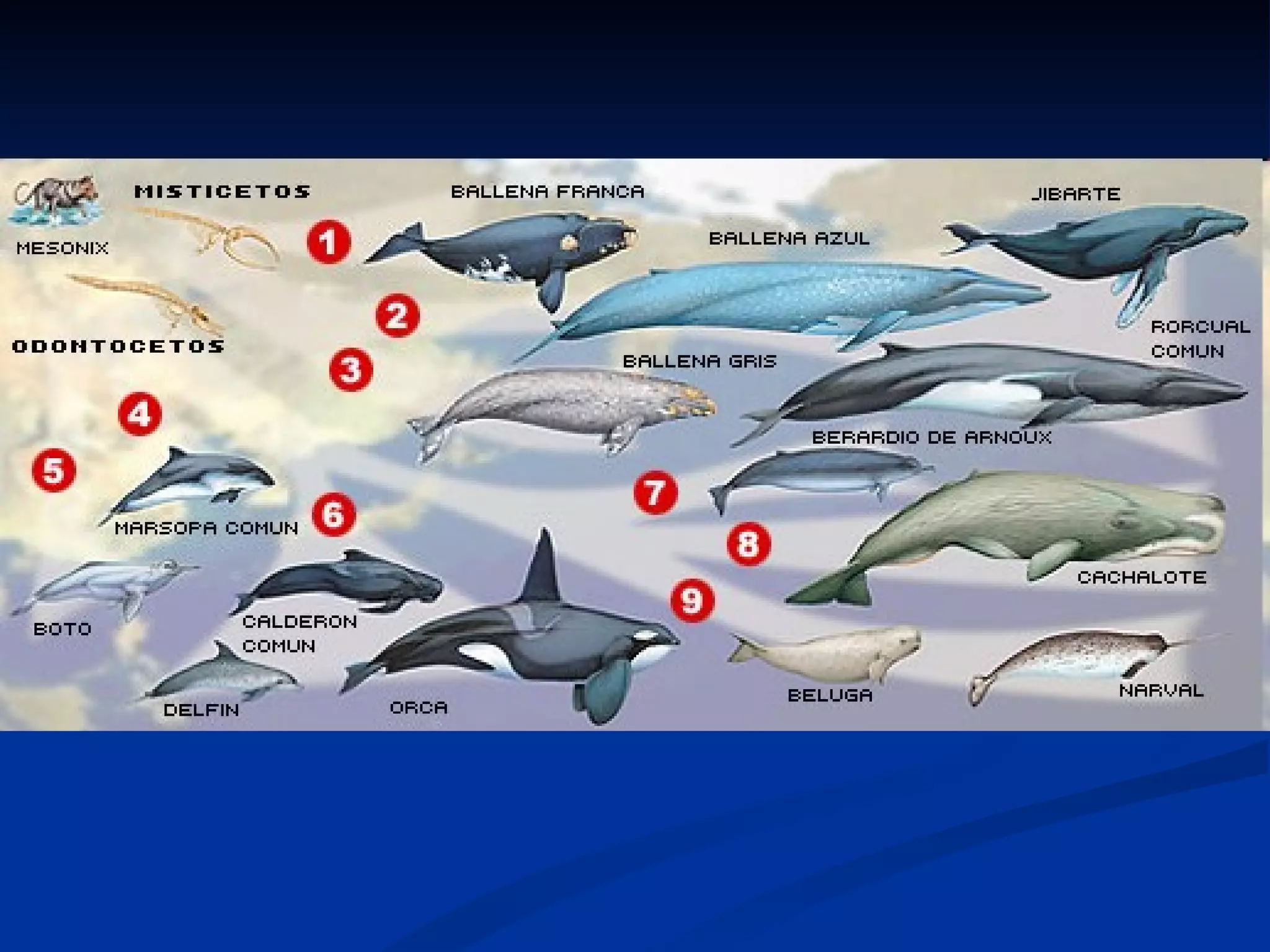
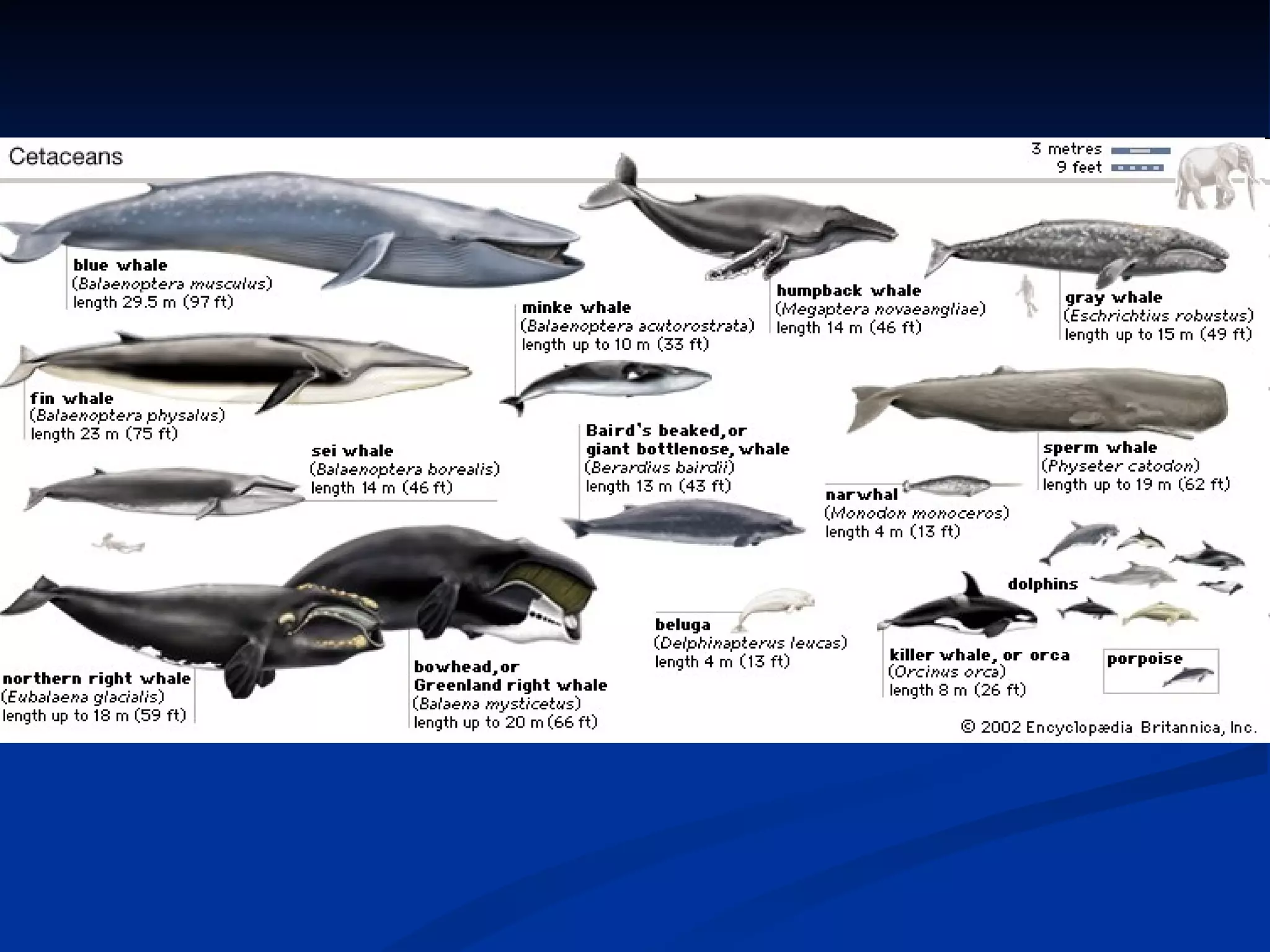
Cetaceans Kingdom: Animalia Phylum: Chordata Class: Mammalia Order: Cetacea Suborder: Mysticeti Suborder: Odontoceti Family: Delphinidae Family: Phocoenidae
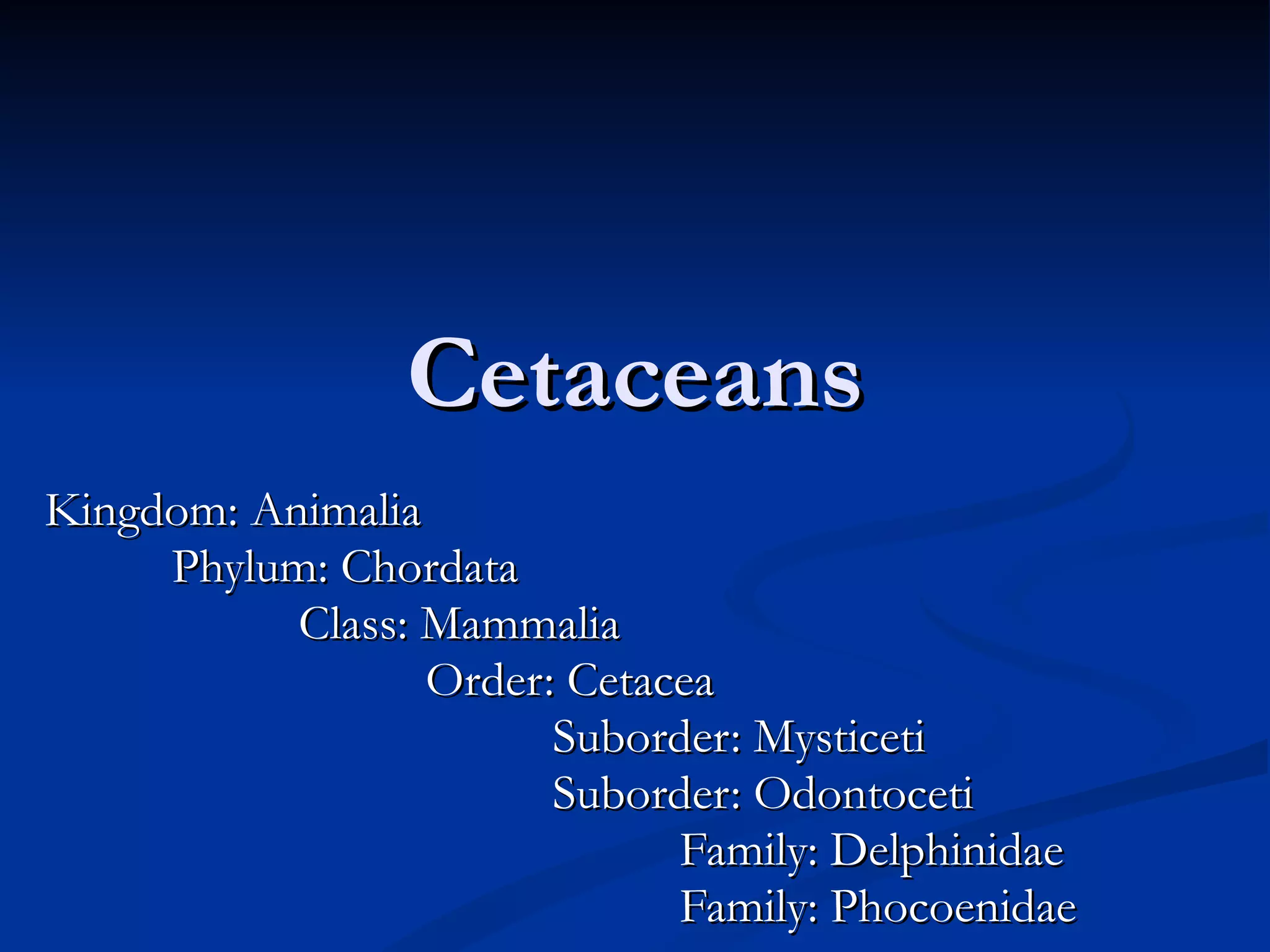
Mammals Evolved from reptiles 200 million years ago 4,500 species Endothermic – warm-blooded Brain size far larger in proportions than other organisms Have hair, mammary glands
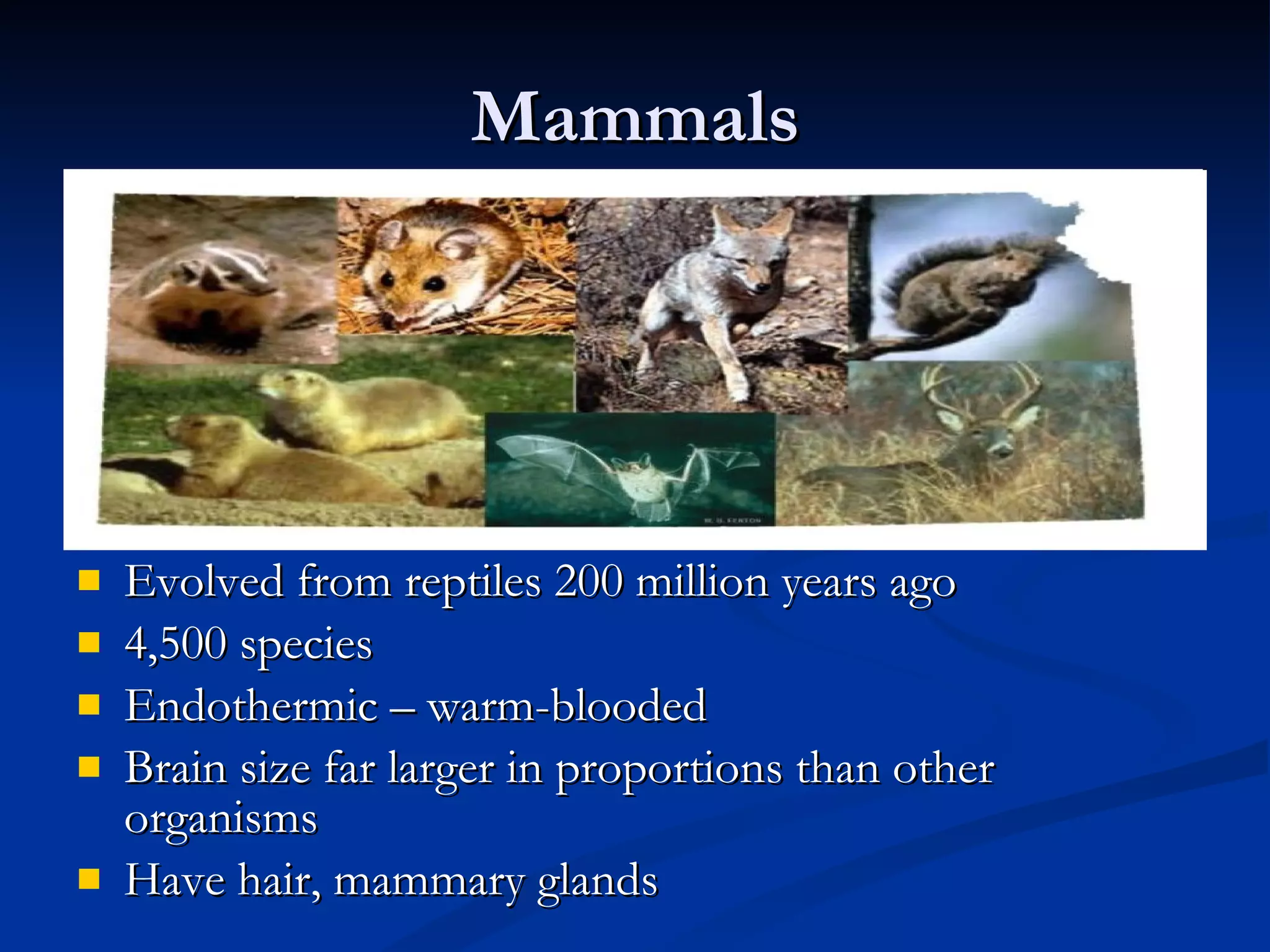
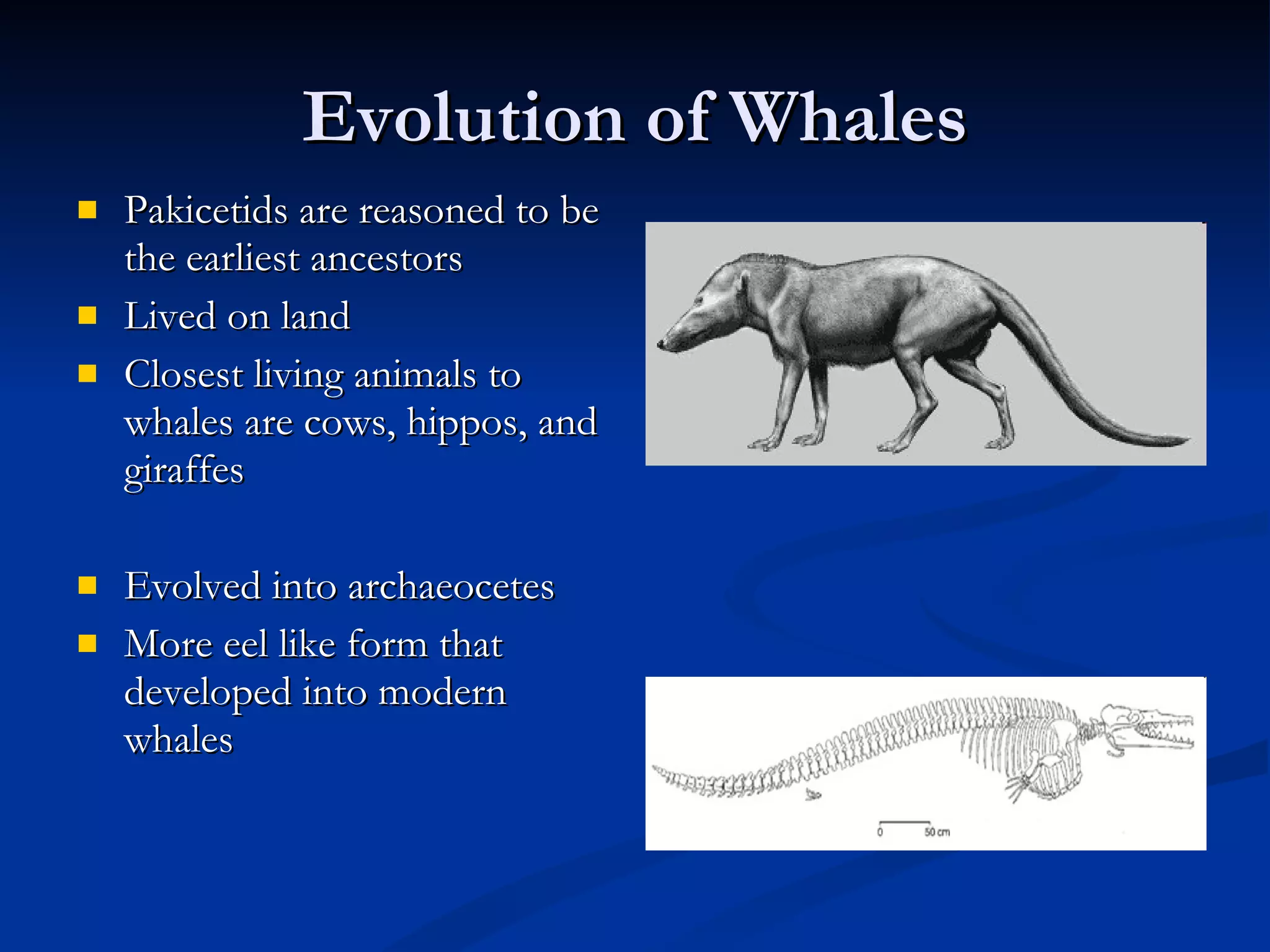
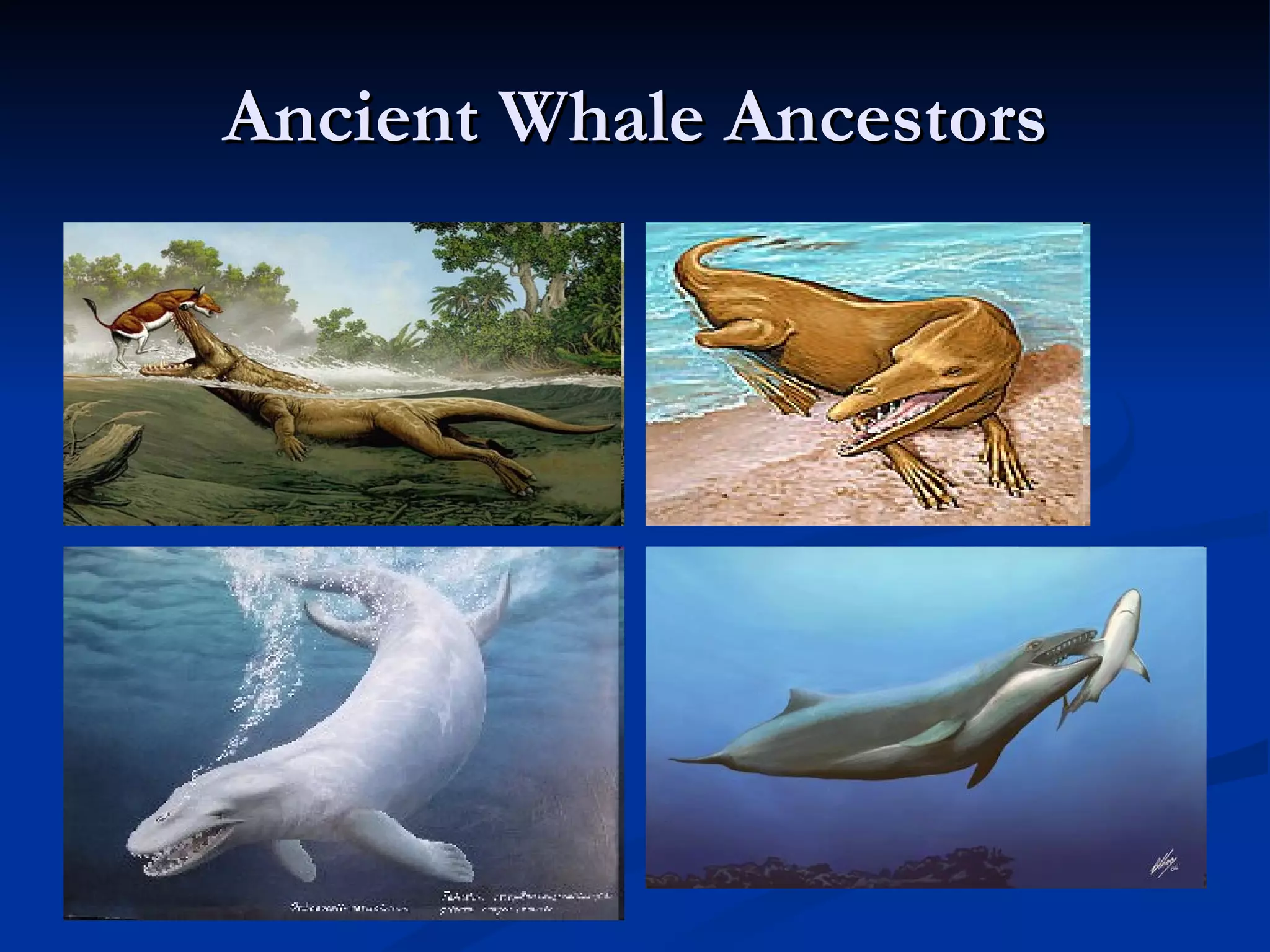
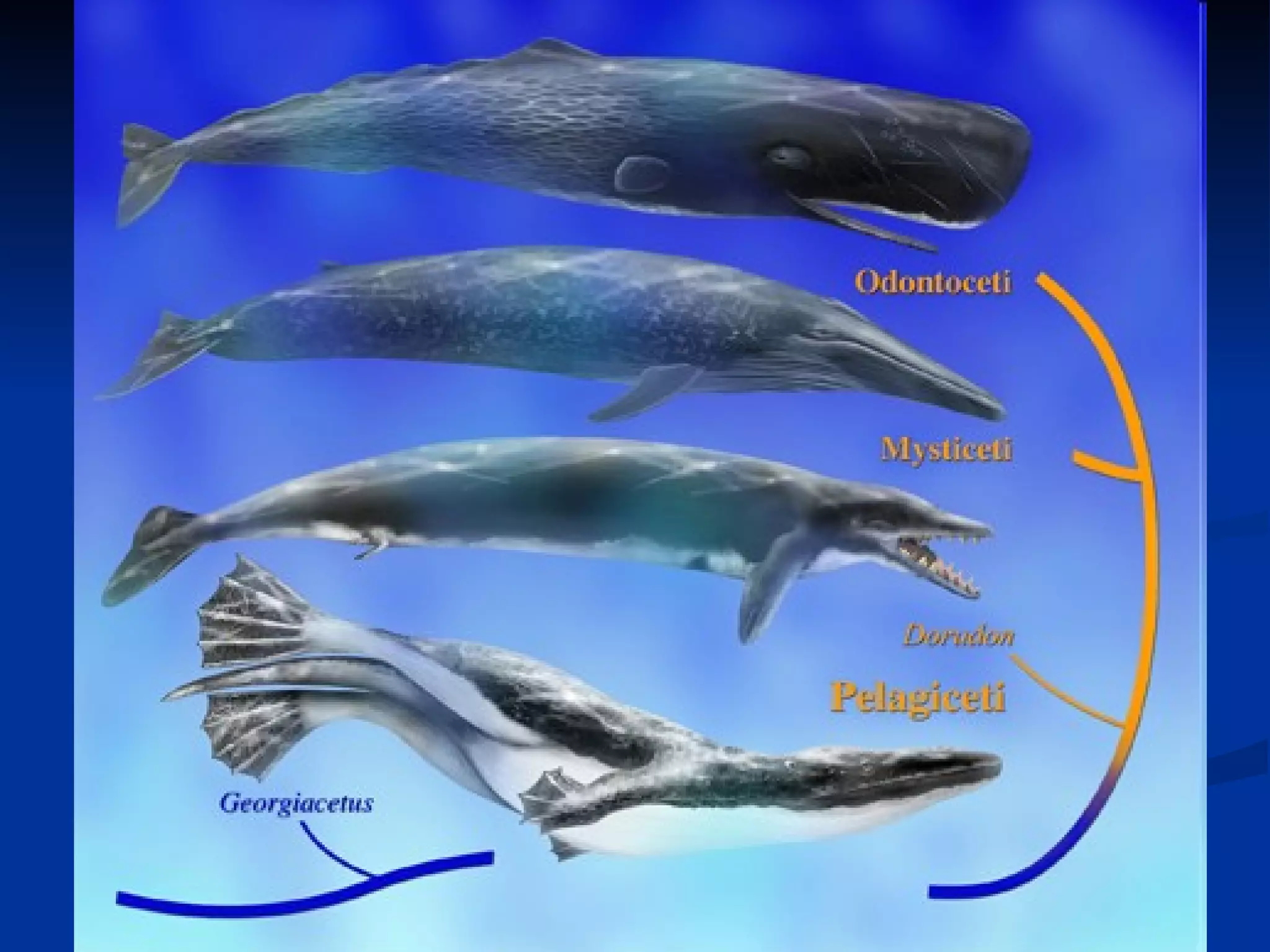
Evolution of Whales Pakicetids are reasoned to be the earliest ancestors Lived on land Closest living animals to whales are cows, hippos, and giraffes Evolved into archaeocetes More eel like form that developed into modern whales
Ancient Whale Ancestors
 
 
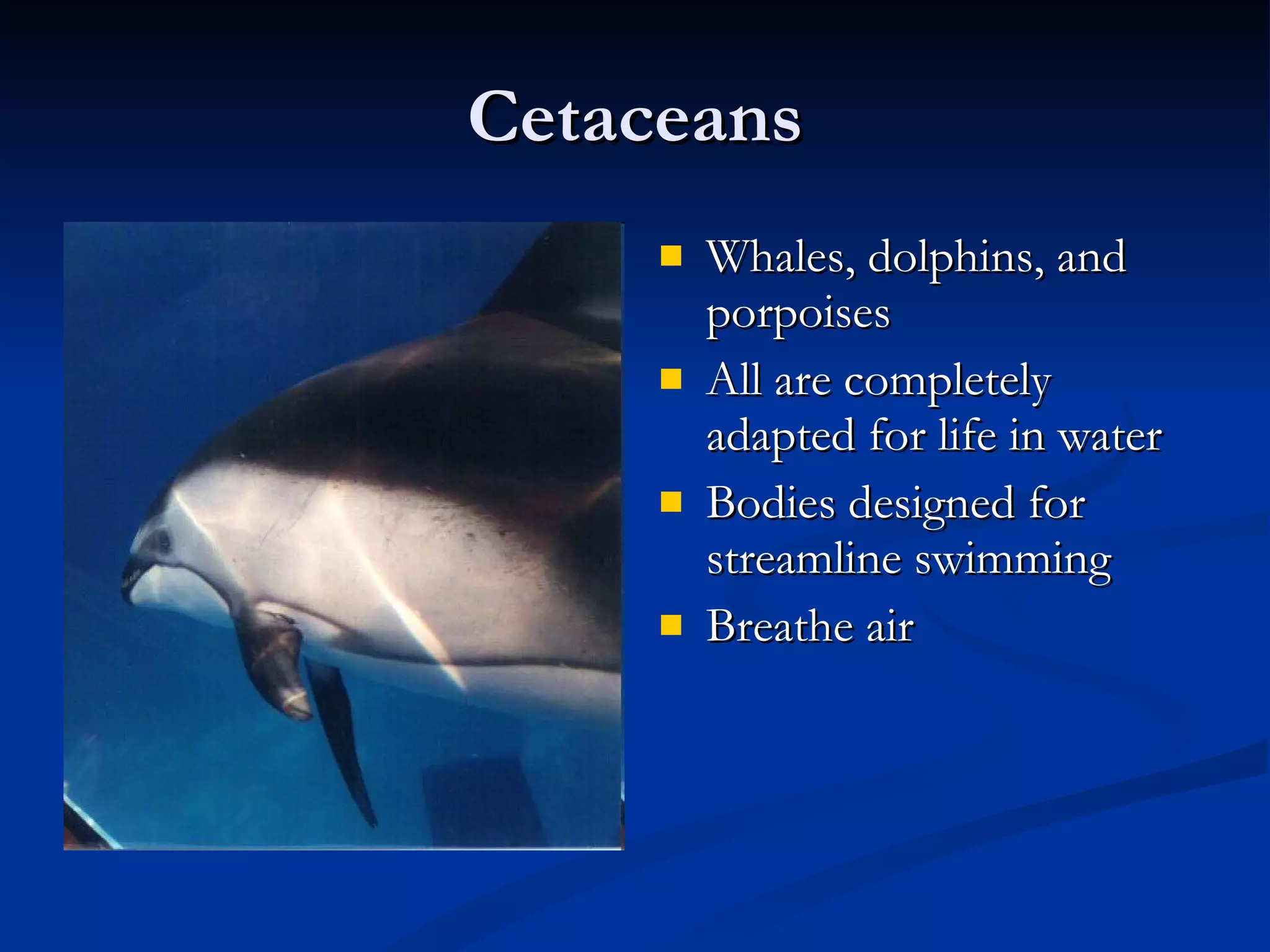
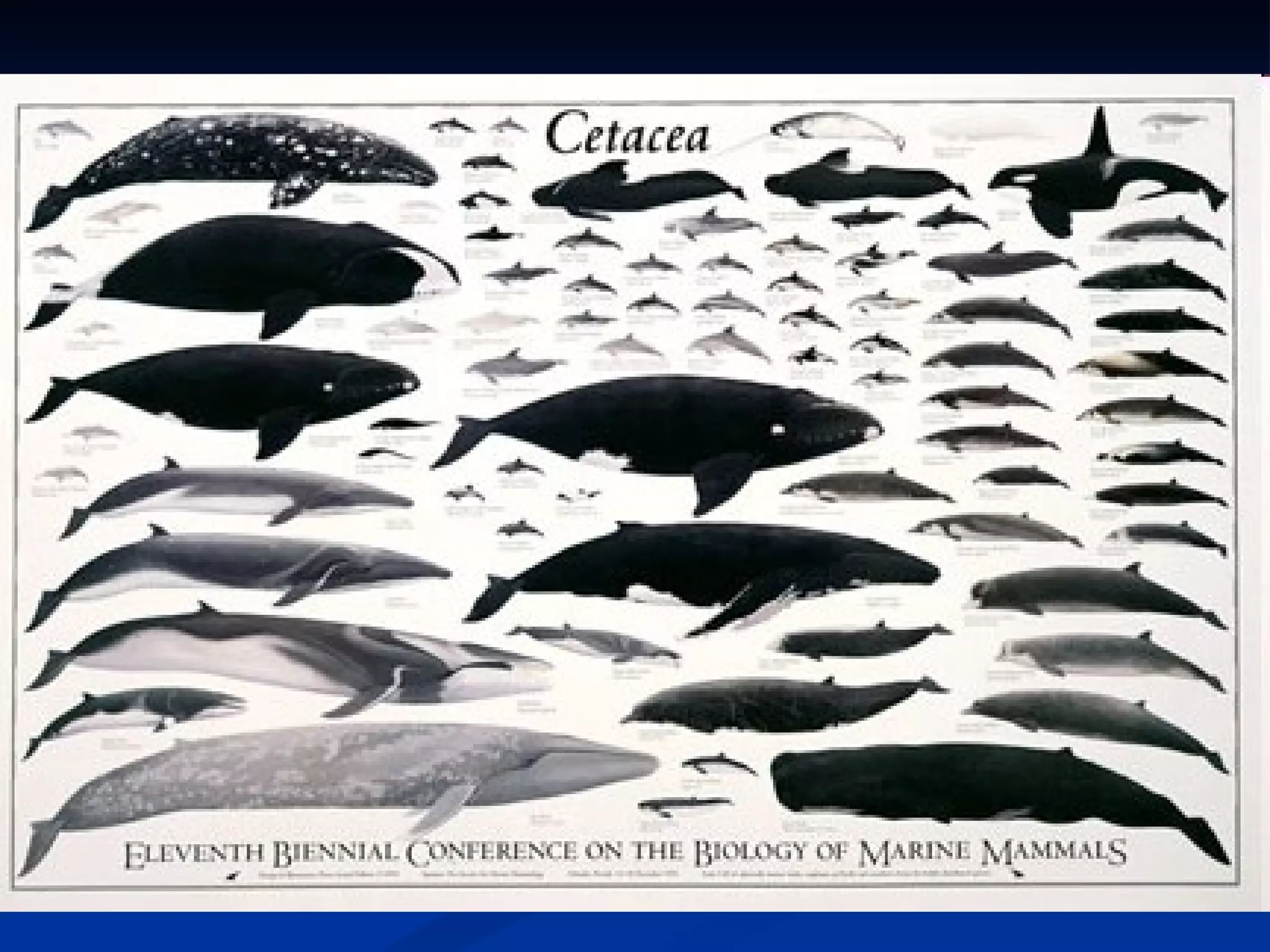
Cetaceans Whales, dolphins, and porpoises All are completely adapted for life in water Bodies designed for streamline swimming Breathe air


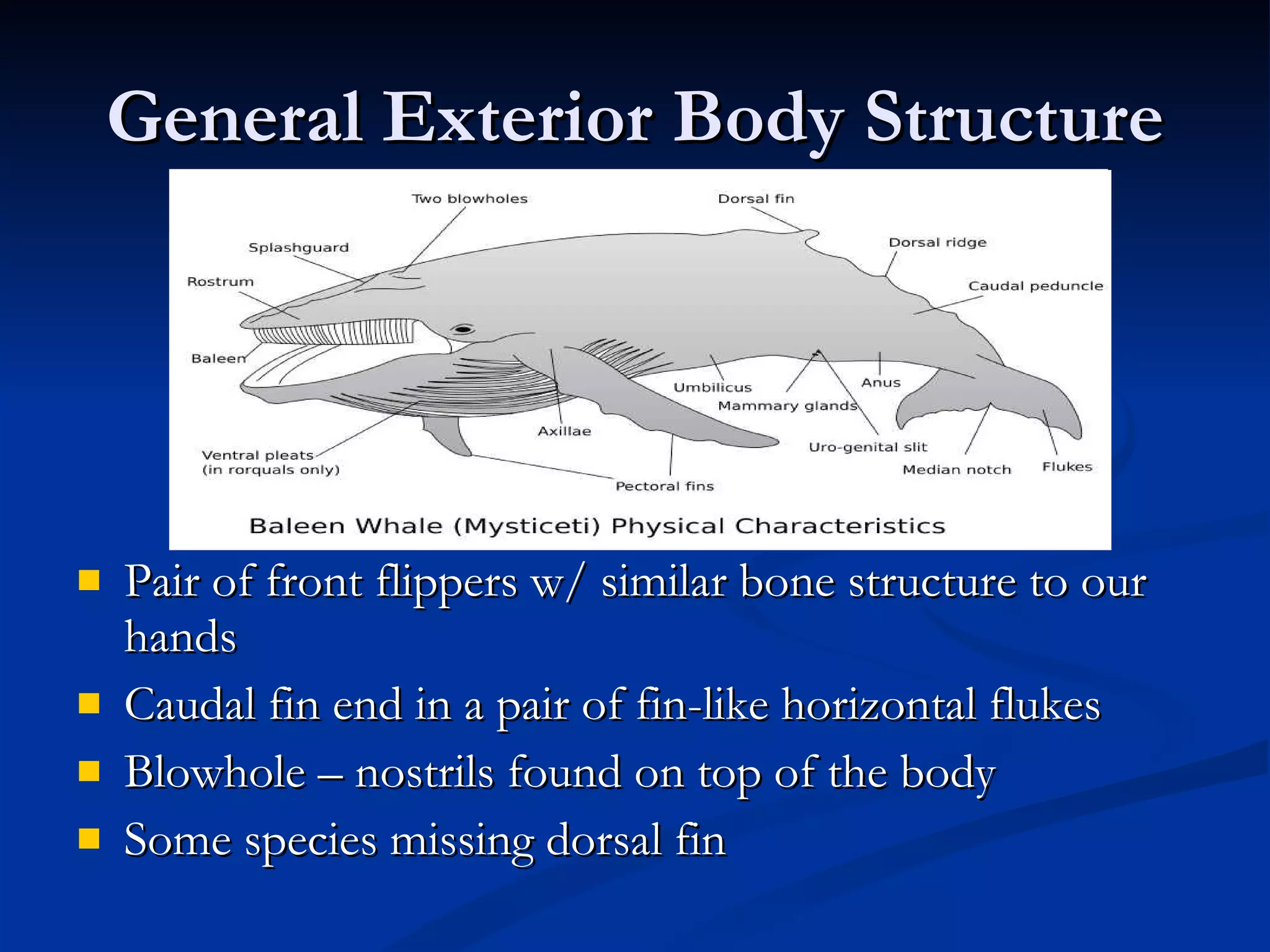
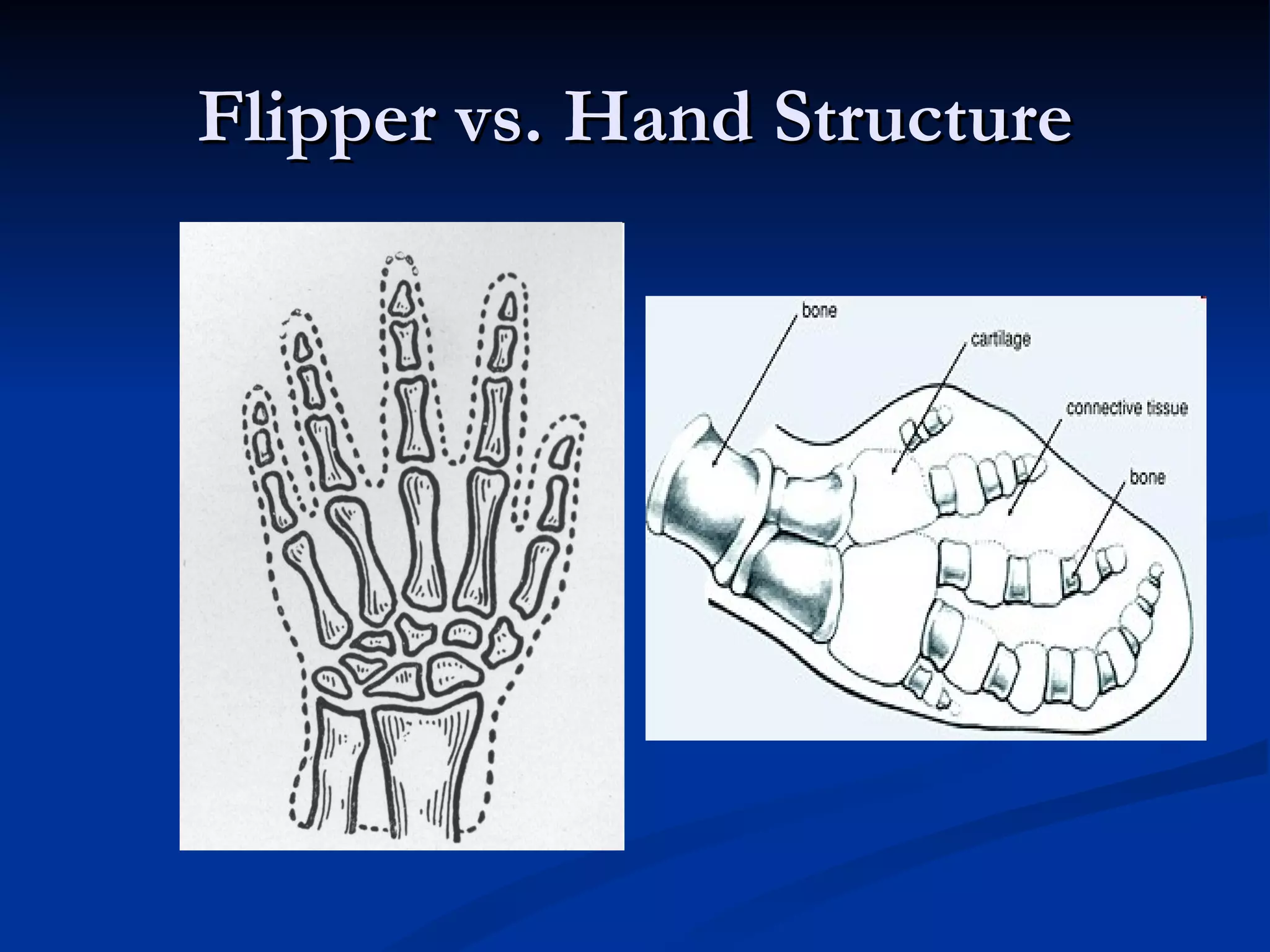
General Exterior Body Structure Pair of front flippers w/ similar bone structure to our hands Caudal fin end in a pair of fin-like horizontal flukes Blowhole – nostrils found on top of the body Some species missing dorsal fin
Flipper vs. Hand Structure
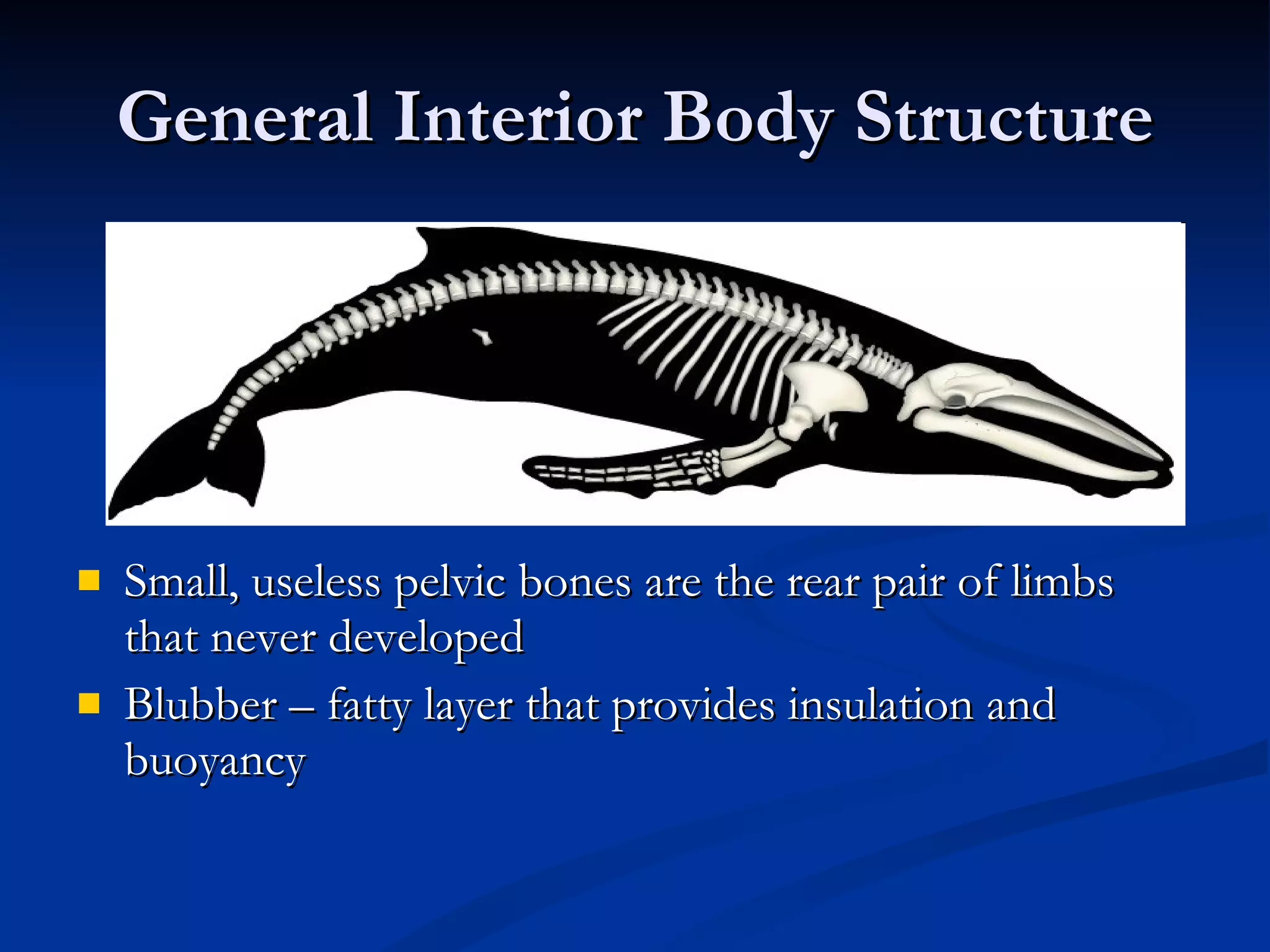
General Interior Body Structure Small, useless pelvic bones are the rear pair of limbs that never developed Blubber – fatty layer that provides insulation and buoyancy
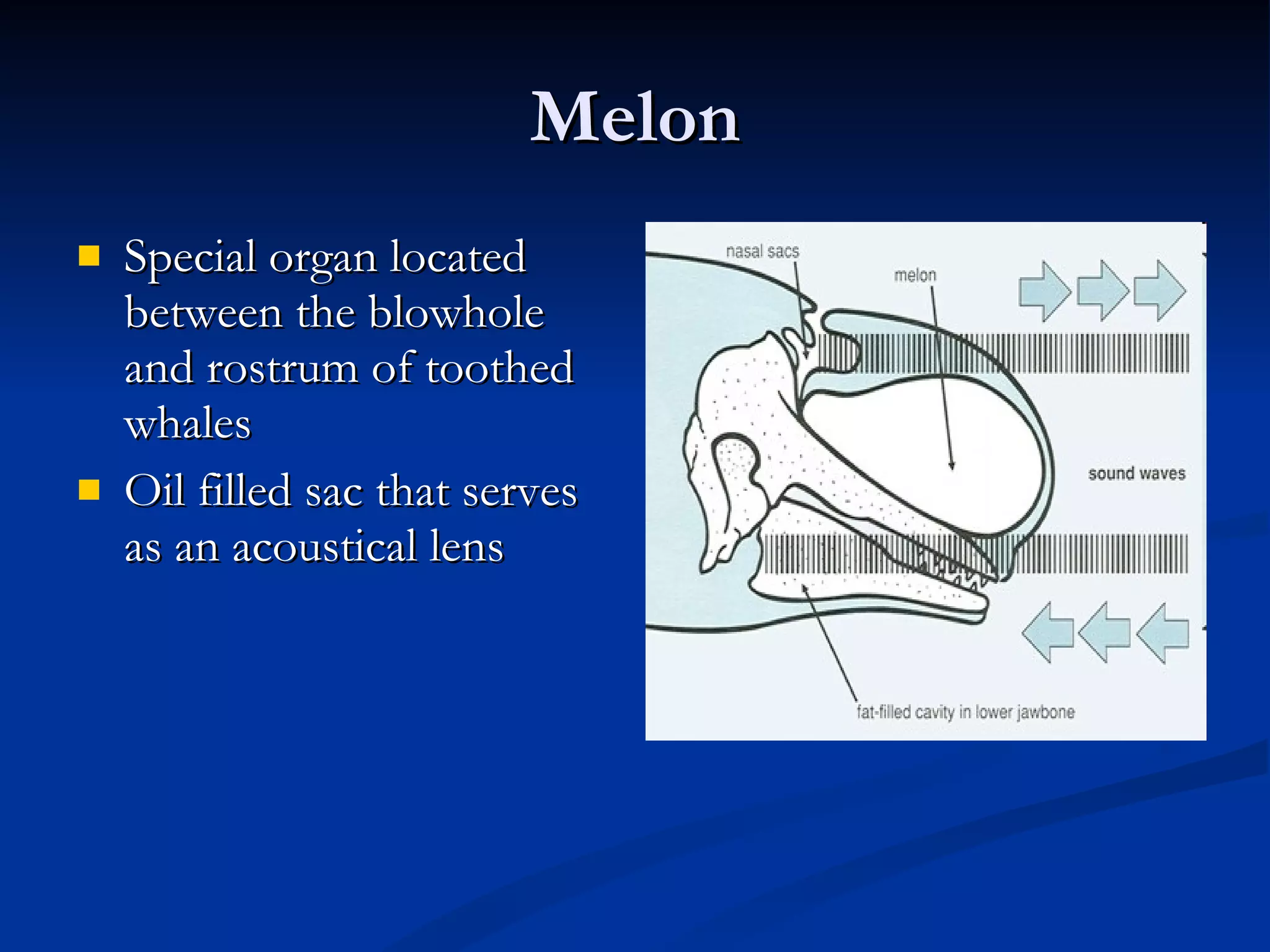
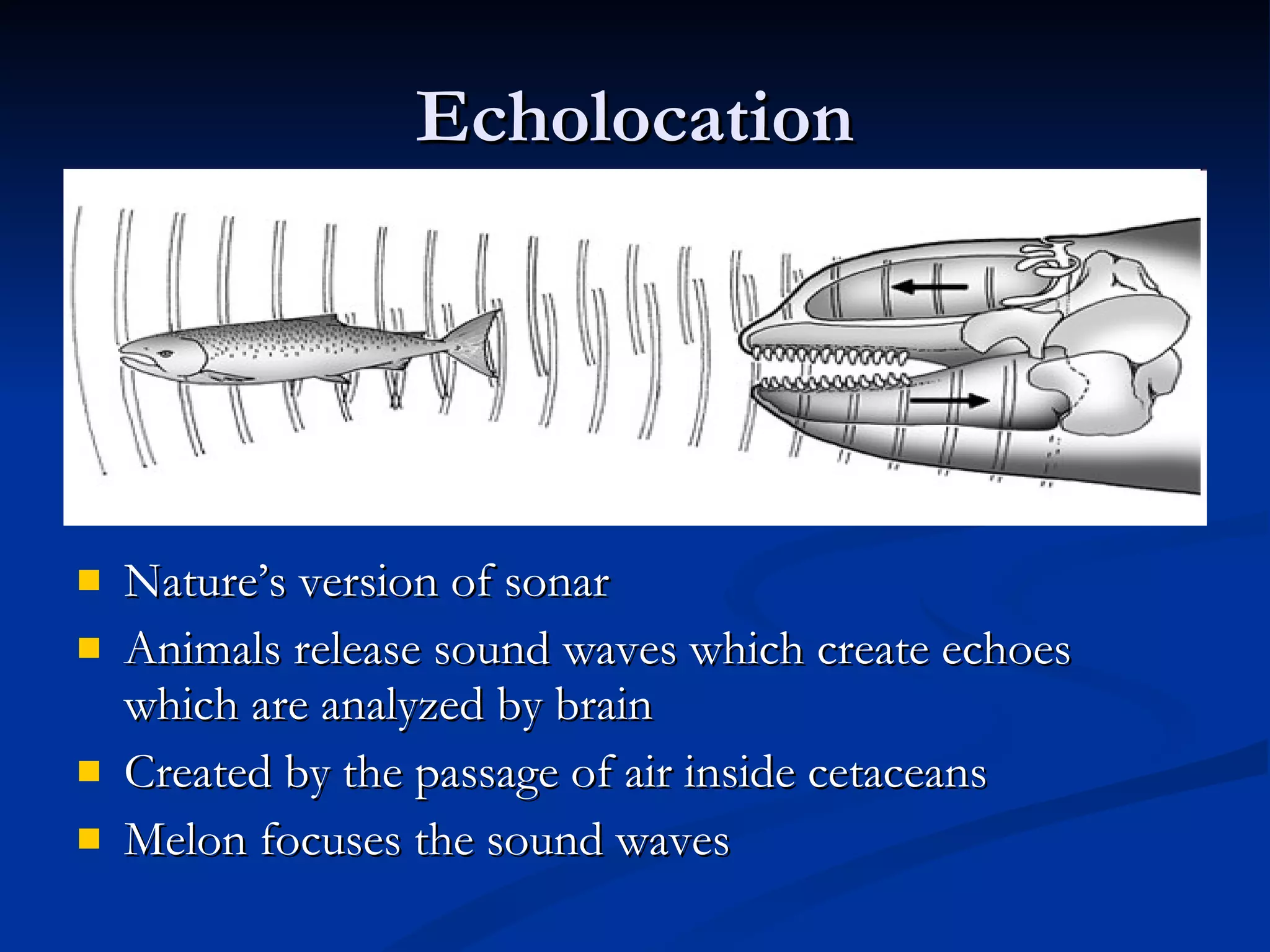
Melon Special organ located between the blowhole and rostrum of toothed whales Oil filled sac that serves as an acoustical lens
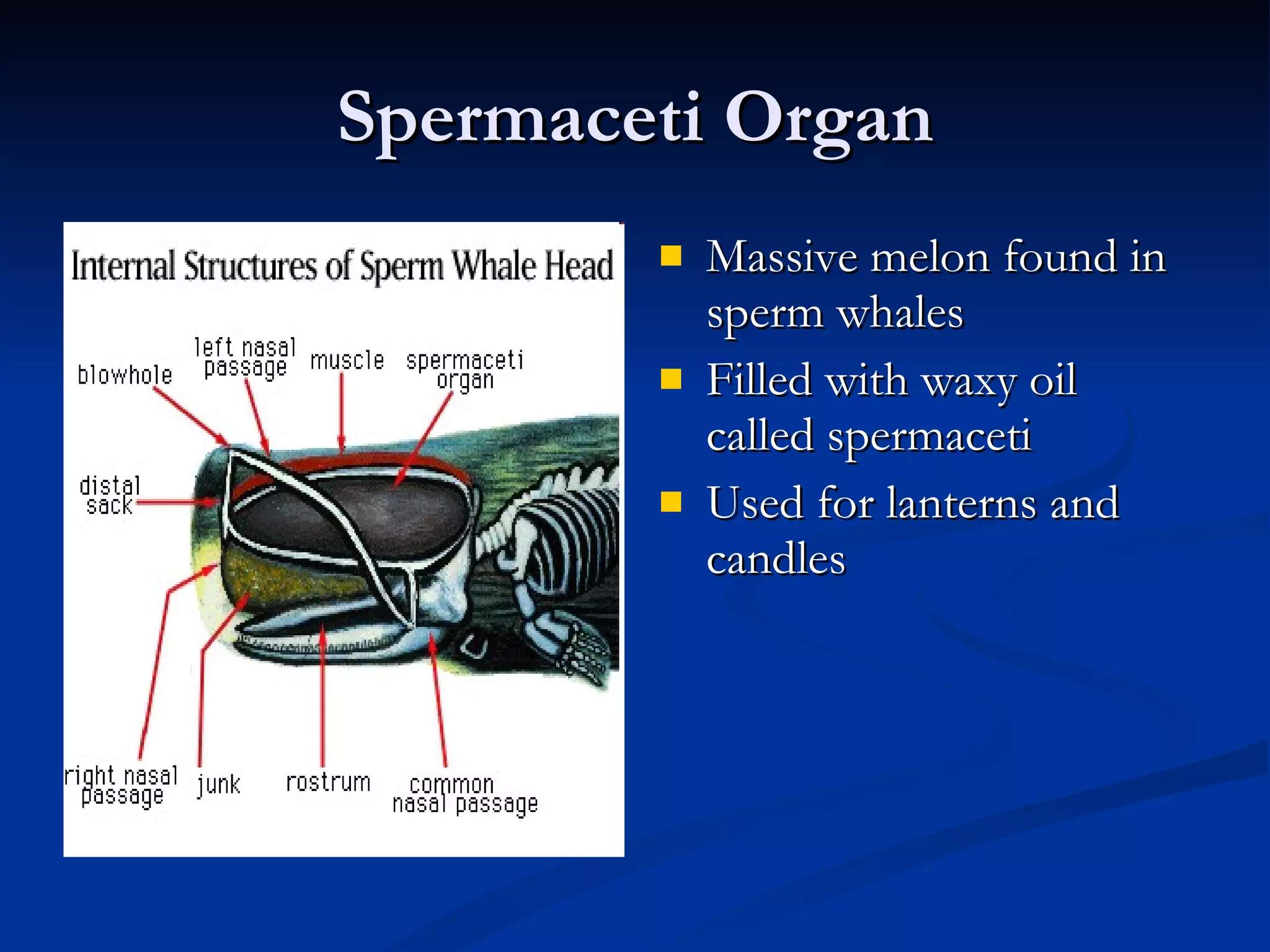
Spermaceti Organ Massive melon found in sperm whales Filled with waxy oil called spermaceti Used for lanterns and candles
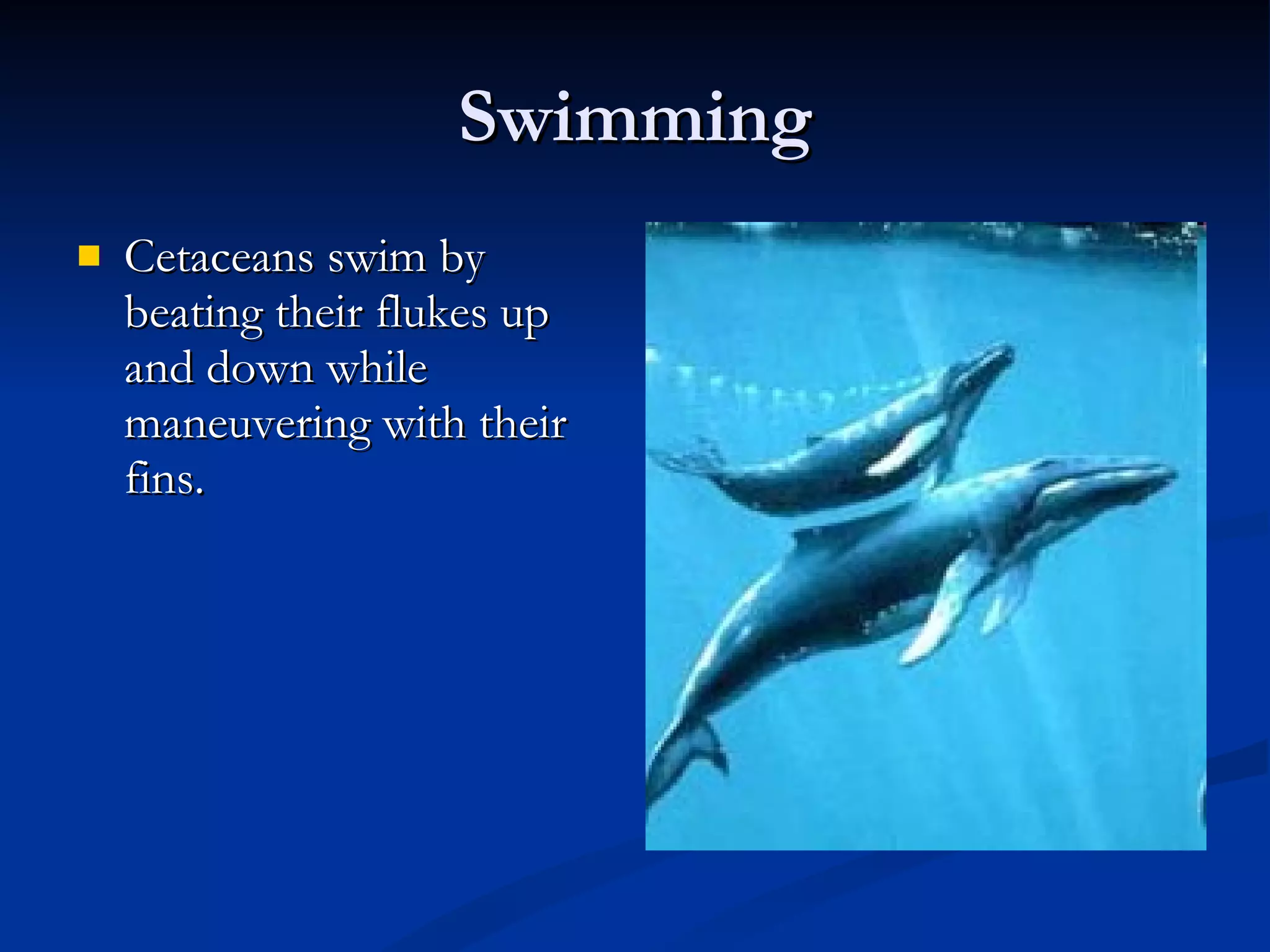
Swimming Cetaceans swim by beating their flukes up and down while maneuvering with their fins.
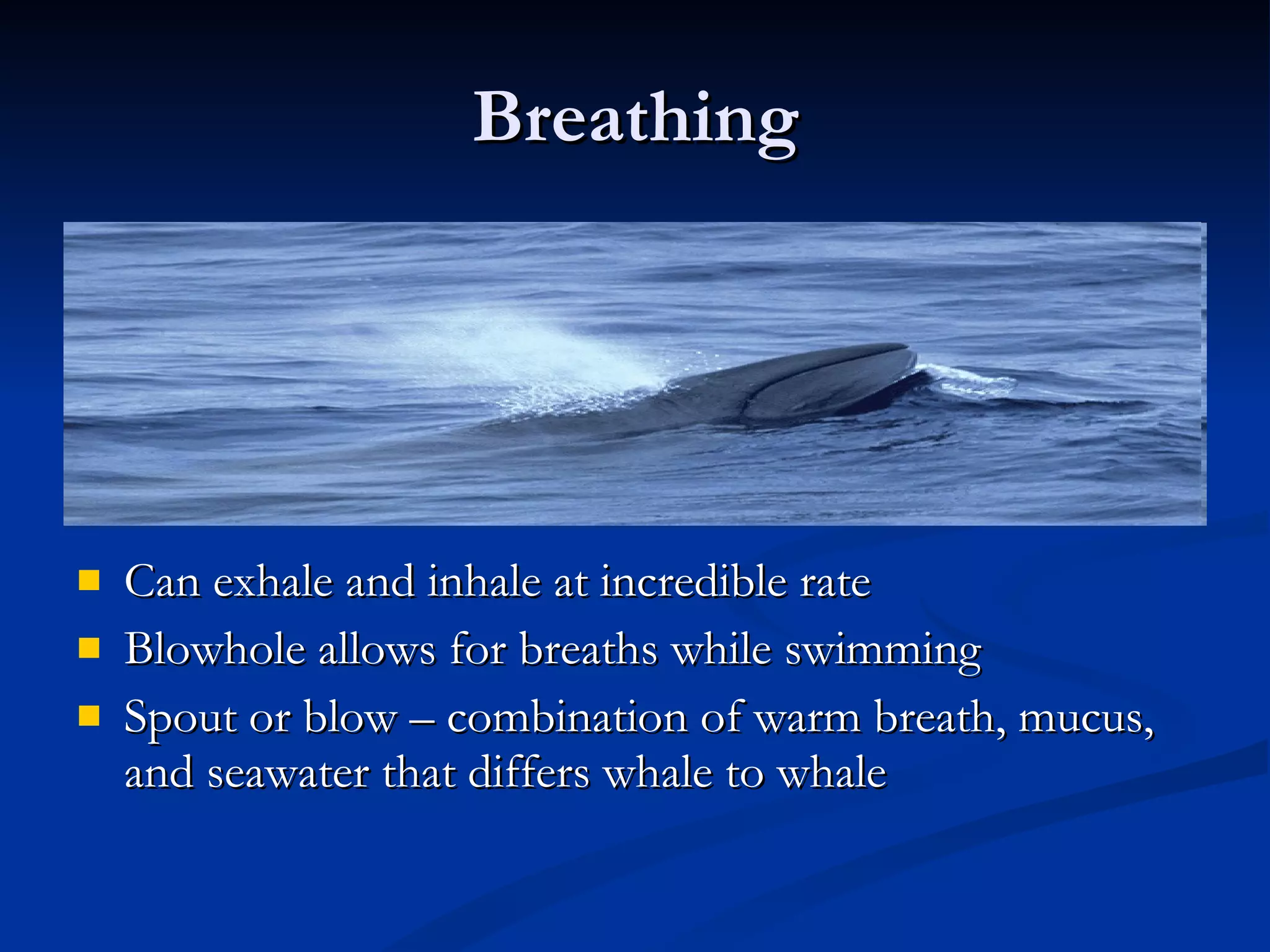
Breathing Can exhale and inhale at incredible rate Blowhole allows for breaths while swimming Spout or blow – combination of warm breath, mucus, and seawater that differs whale to whale
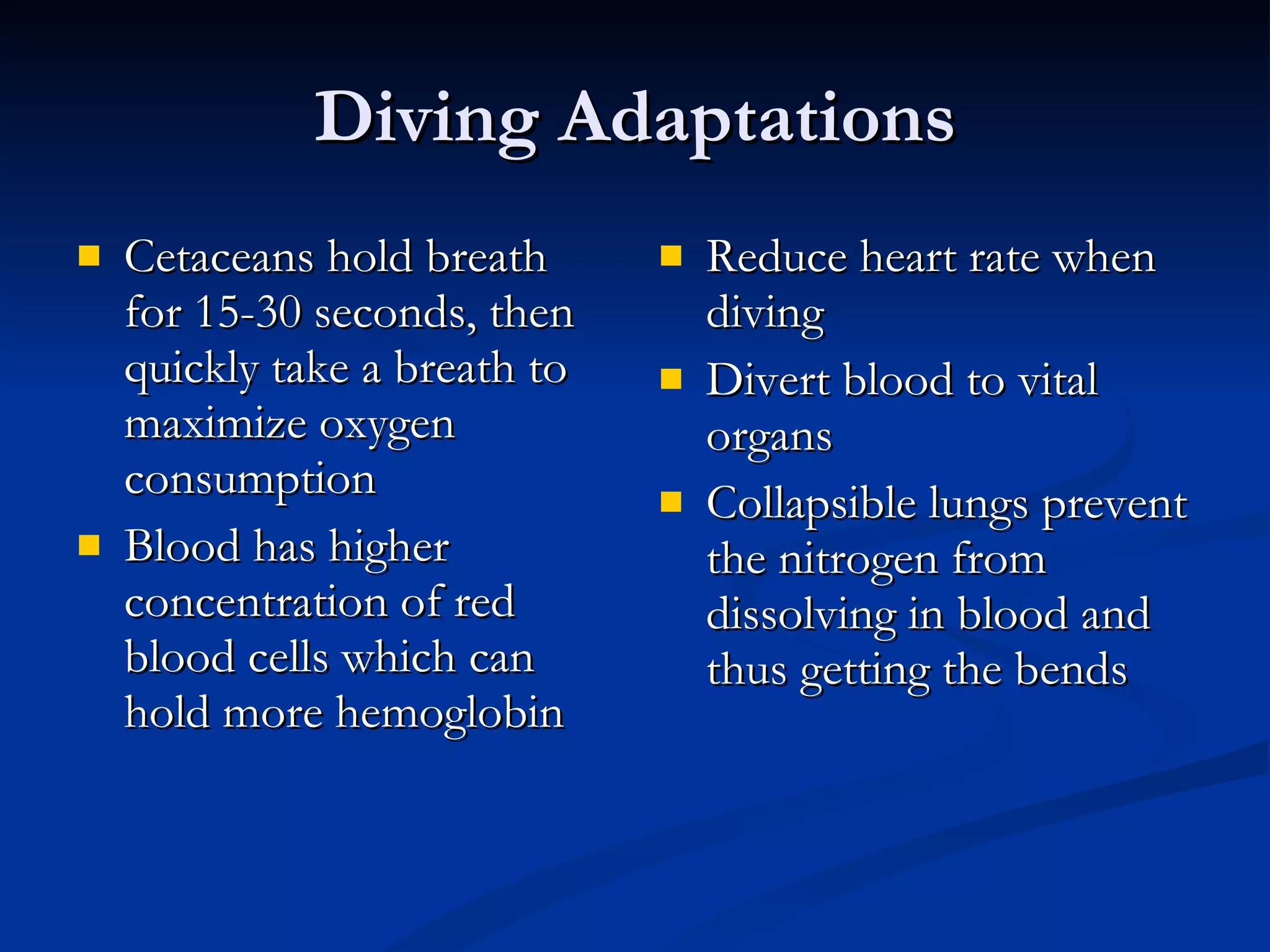
Diving Adaptations Cetaceans hold breath for 15-30 seconds, then quickly take a breath to maximize oxygen consumption Blood has higher concentration of red blood cells which can hold more hemoglobin Reduce heart rate when diving Divert blood to vital organs Collapsible lungs prevent the nitrogen from dissolving in blood and thus getting the bends
Echolocation Nature’s version of sonar Animals release sound waves which create echoes which are analyzed by brain Created by the passage of air inside cetaceans Melon focuses the sound waves
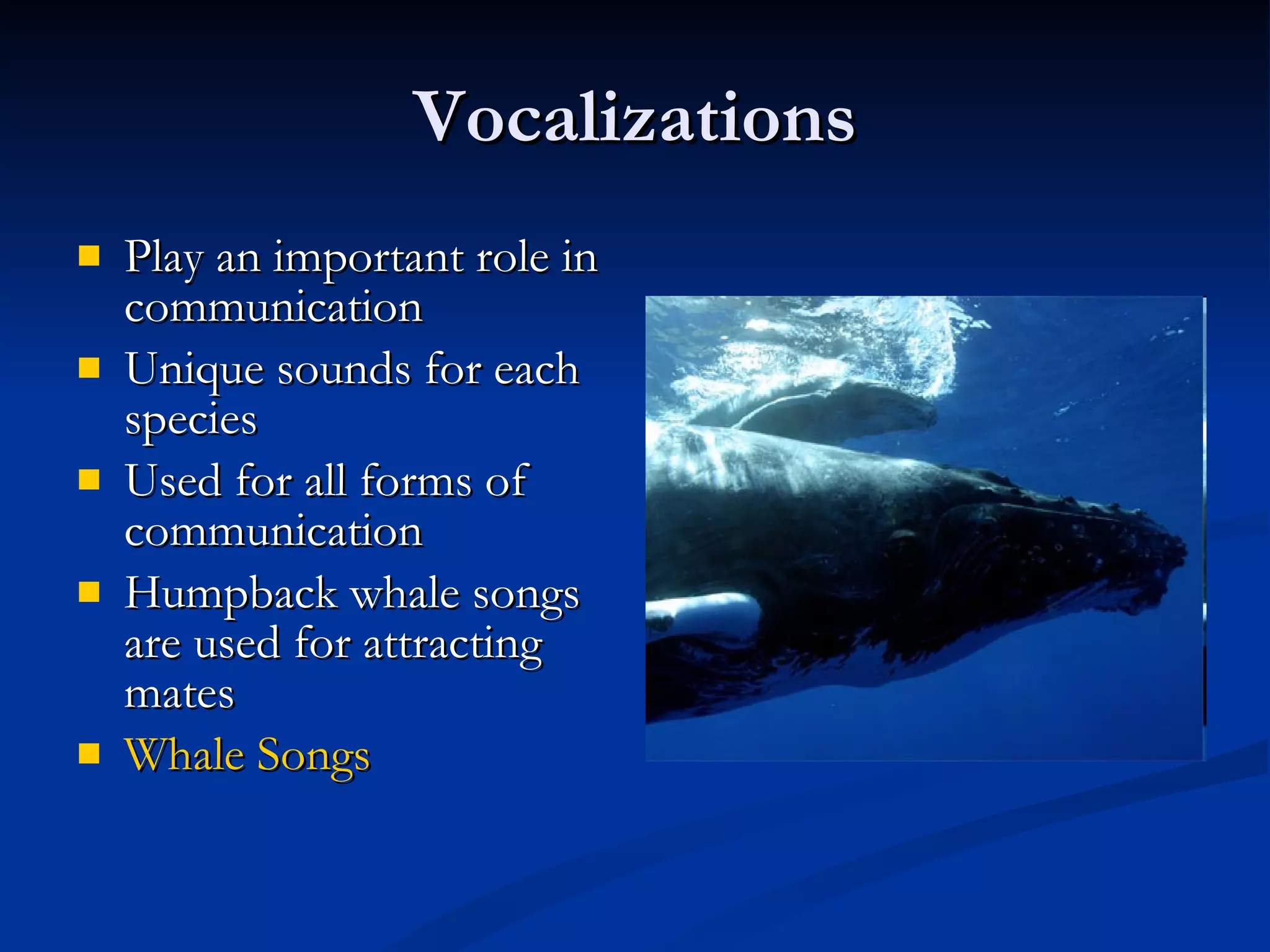
Vocalizations Play an important role in communication Unique sounds for each species Used for all forms of communication Humpback whale songs are used for attracting mates Whale Songs
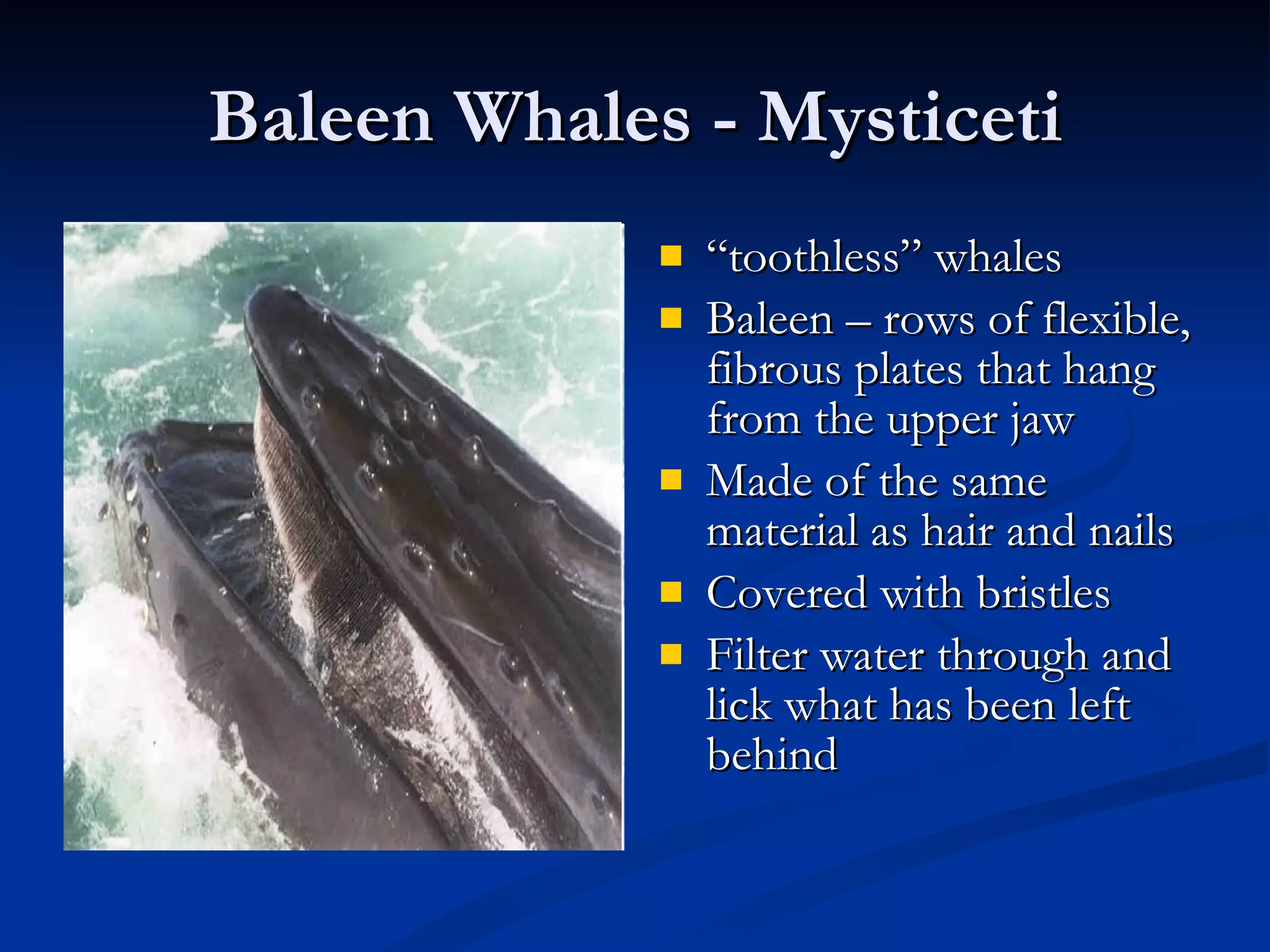
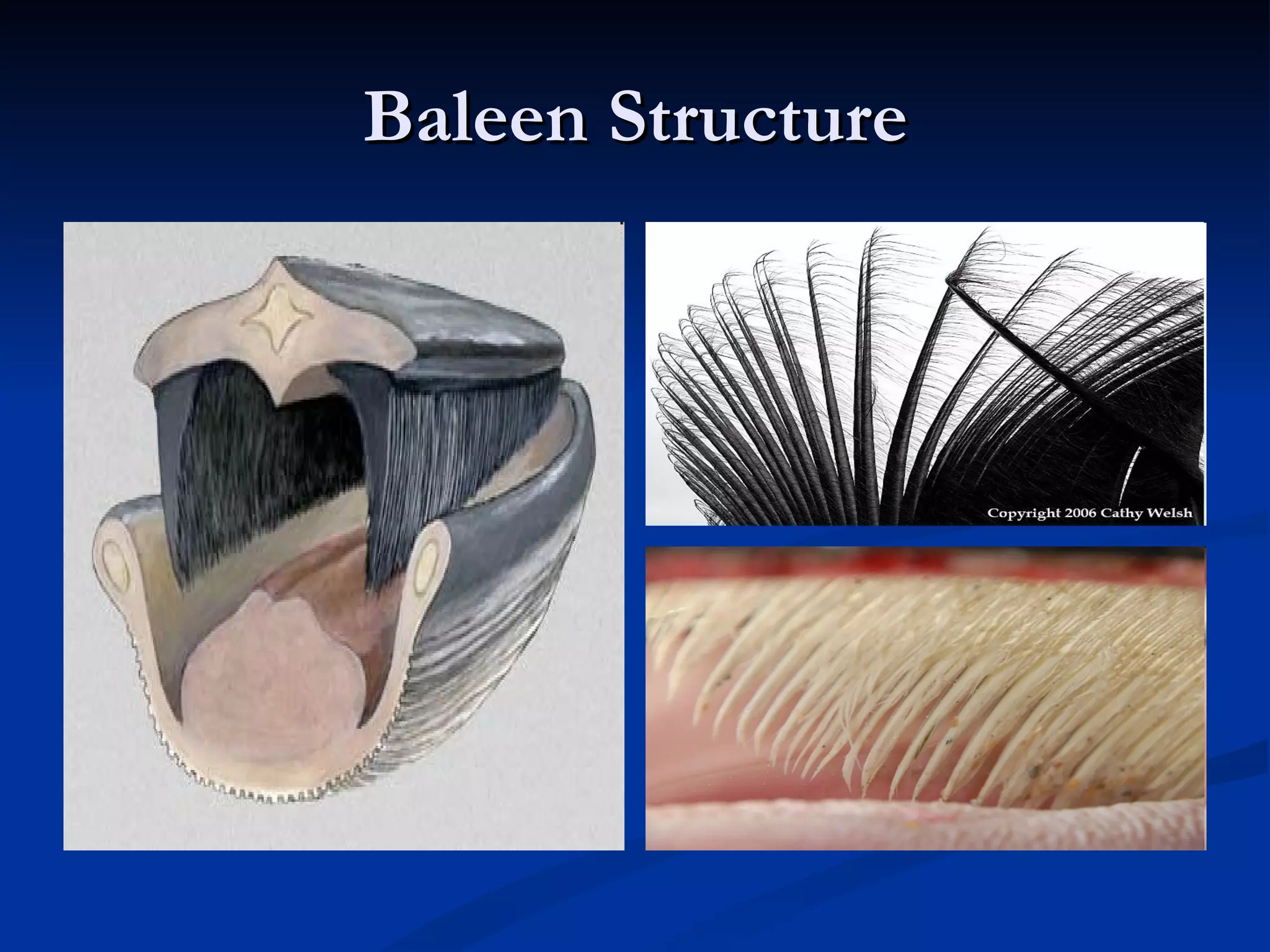
Baleen Whales - Mysticeti “ toothless” whales Baleen – rows of flexible, fibrous plates that hang from the upper jaw Made of the same material as hair and nails Covered with bristles Filter water through and lick what has been left behind
Baleen Structure
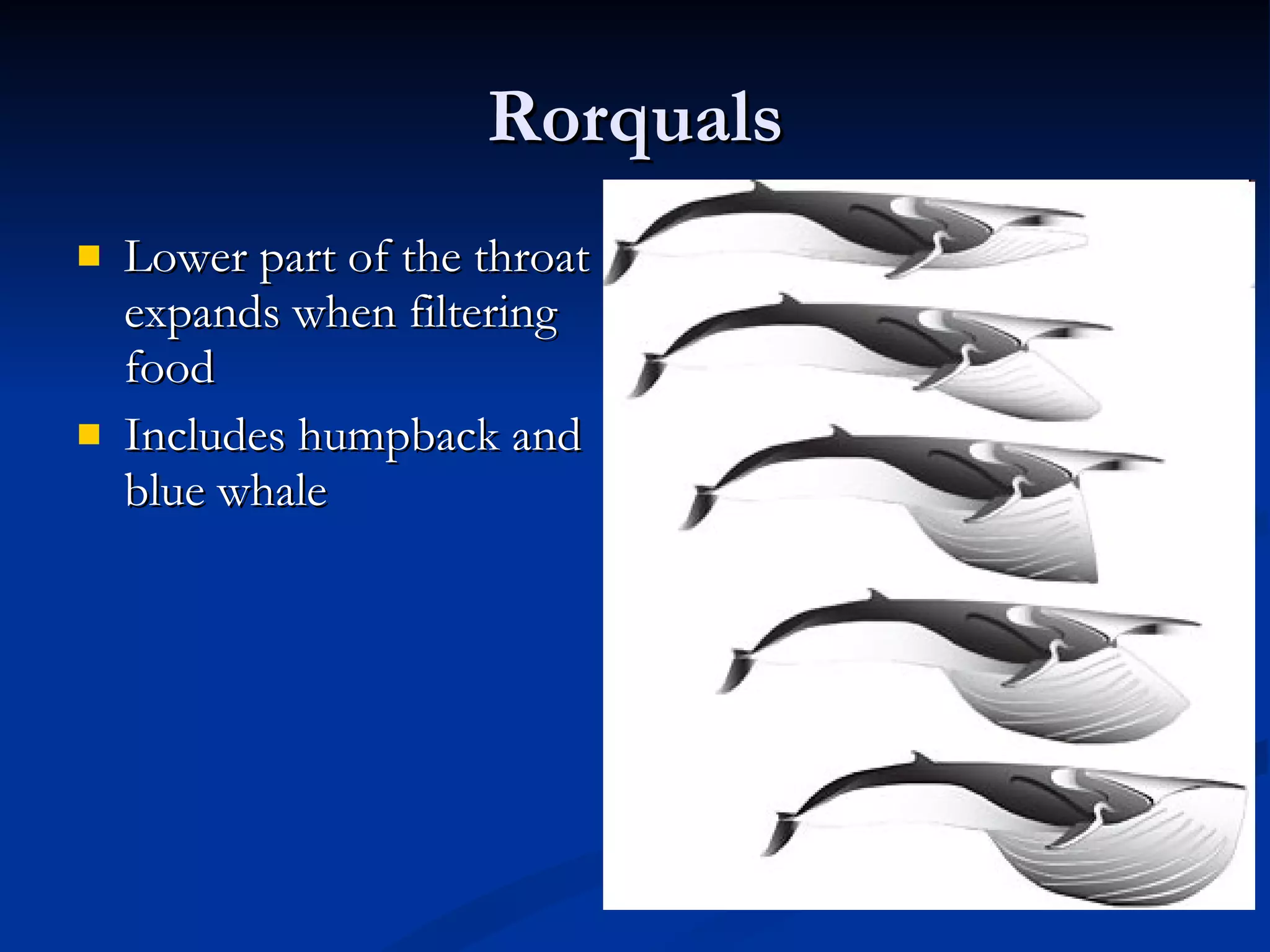
Rorquals Lower part of the throat expands when filtering food Includes humpback and blue whale
 
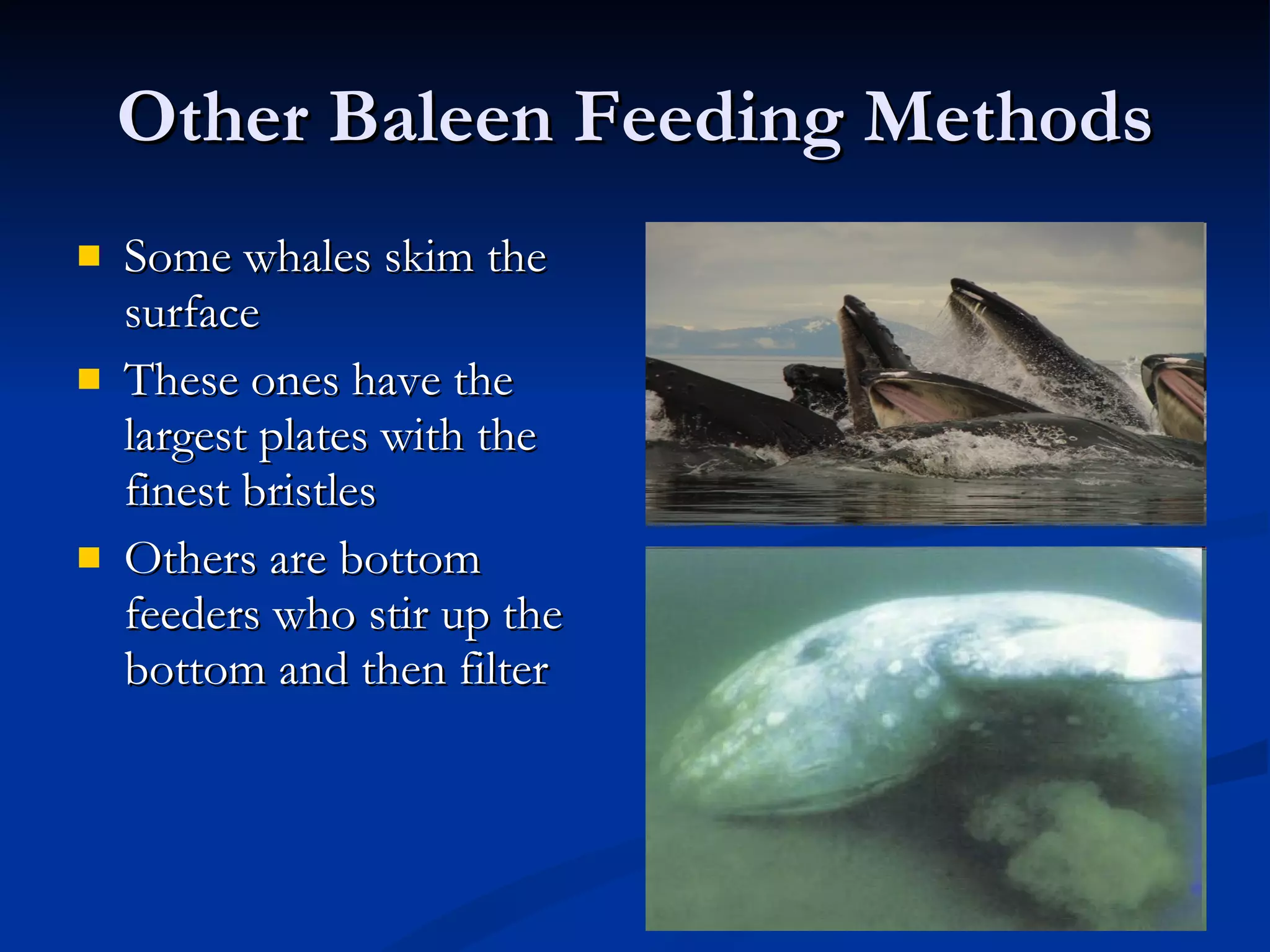
Other Baleen Feeding Methods Some whales skim the surface These ones have the largest plates with the finest bristles Others are bottom feeders who stir up the bottom and then filter
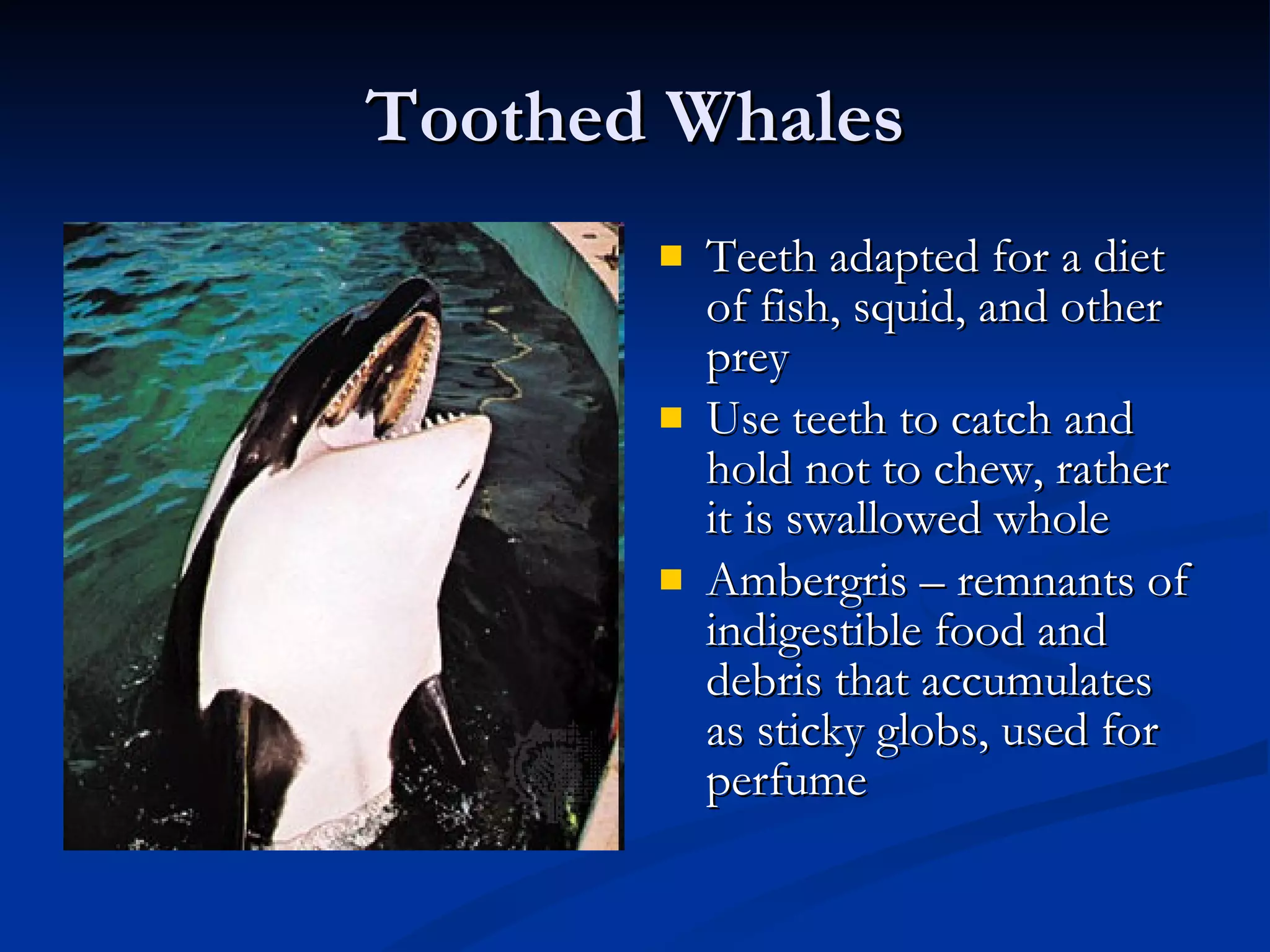
Toothed Whales Teeth adapted for a diet of fish, squid, and other prey Use teeth to catch and hold not to chew, rather it is swallowed whole Ambergris – remnants of indigestible food and debris that accumulates as sticky globs, used for perfume
 
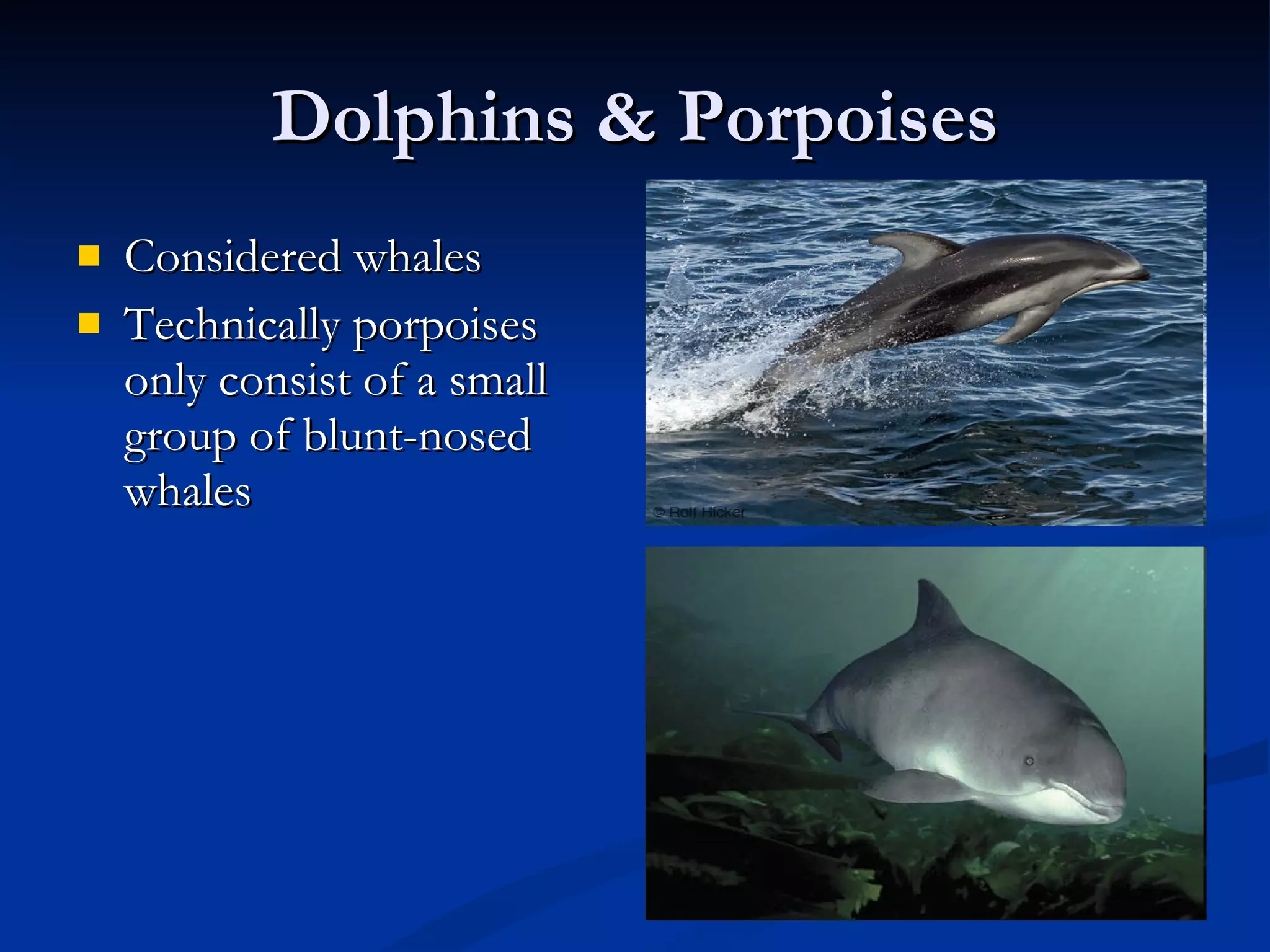
Dolphins & Porpoises Considered whales Technically porpoises only consist of a small group of blunt-nosed whales
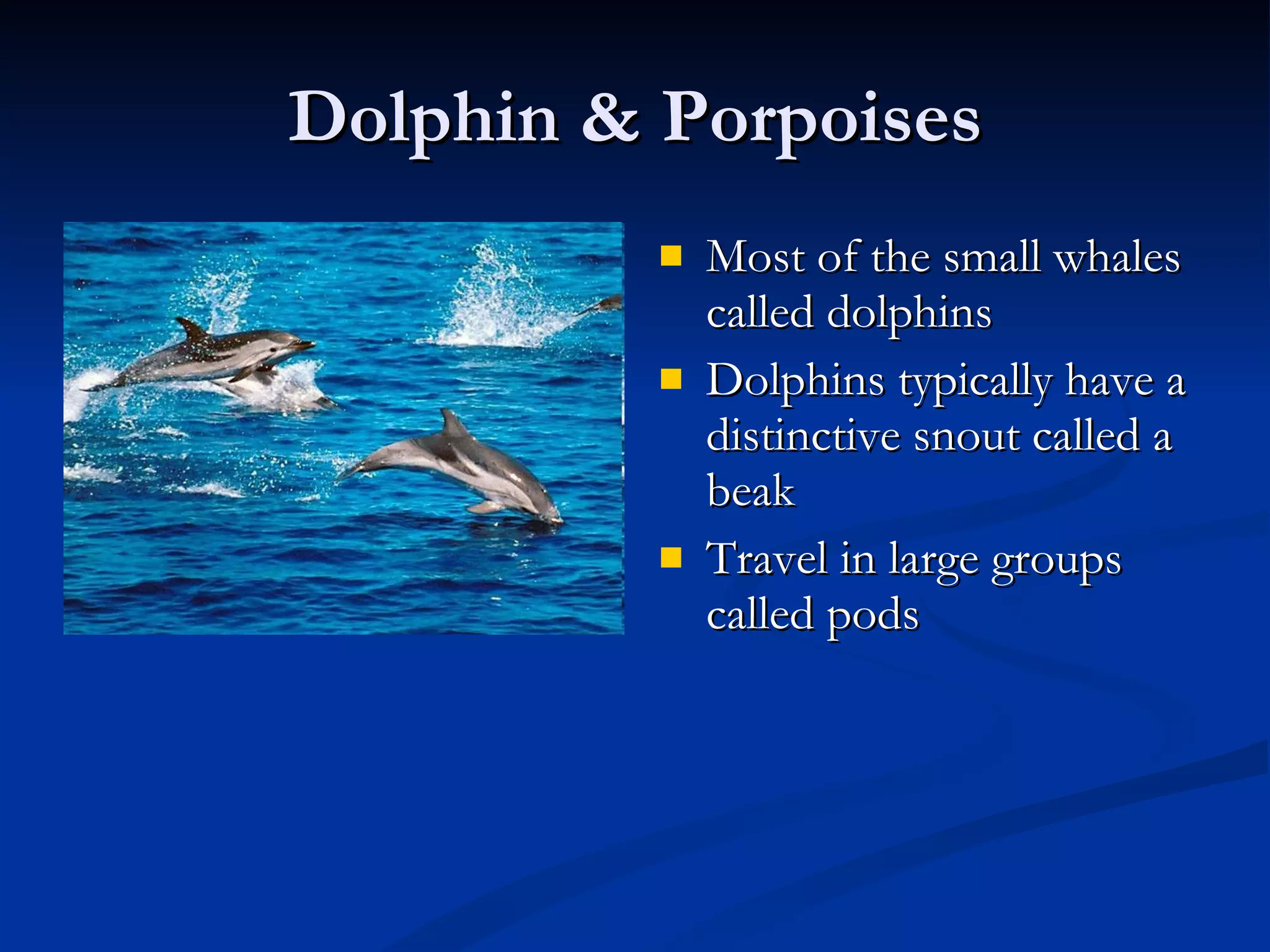
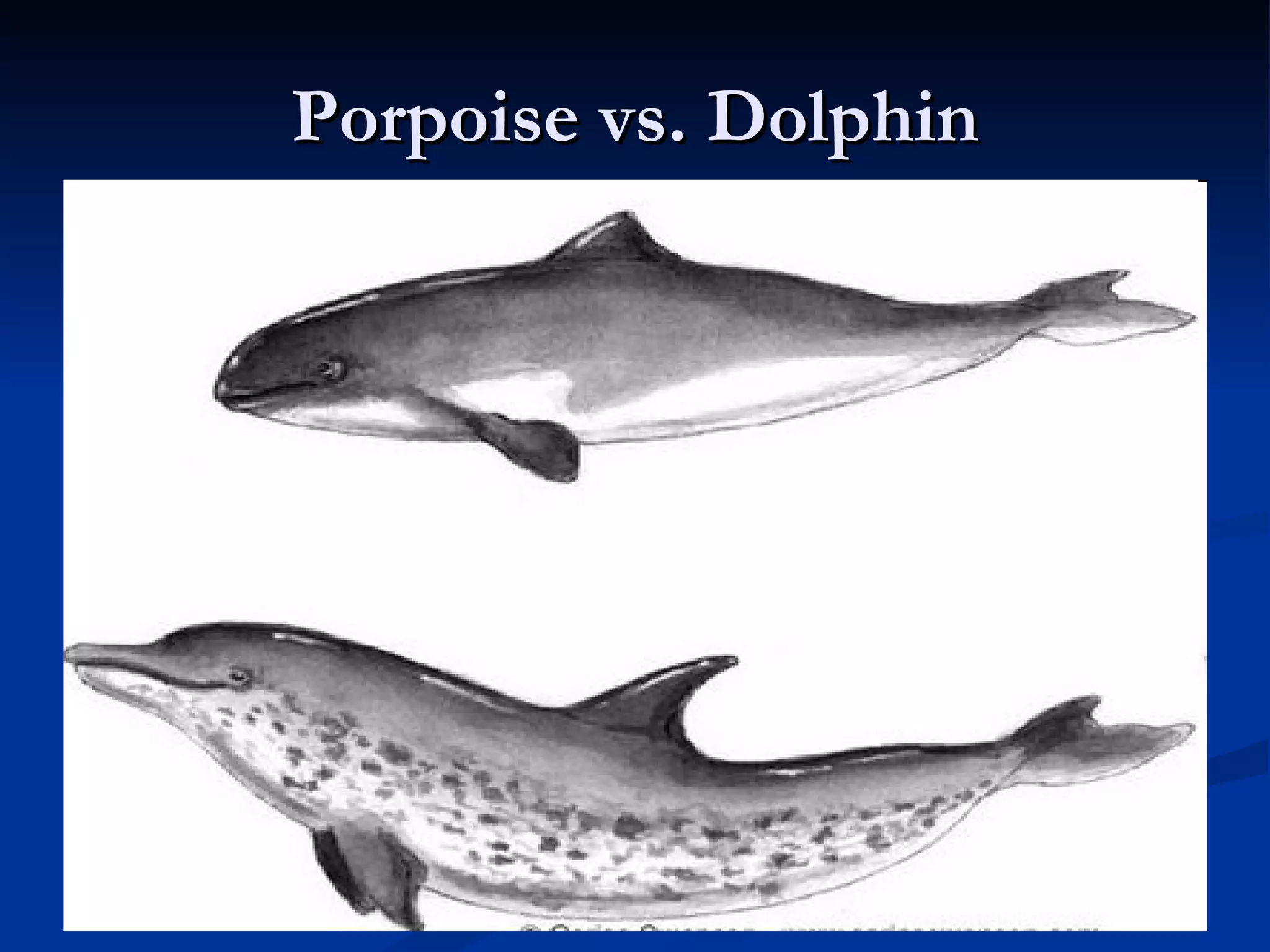
Dolphin & Porpoises Most of the small whales called dolphins Dolphins typically have a distinctive snout called a beak Travel in large groups called pods
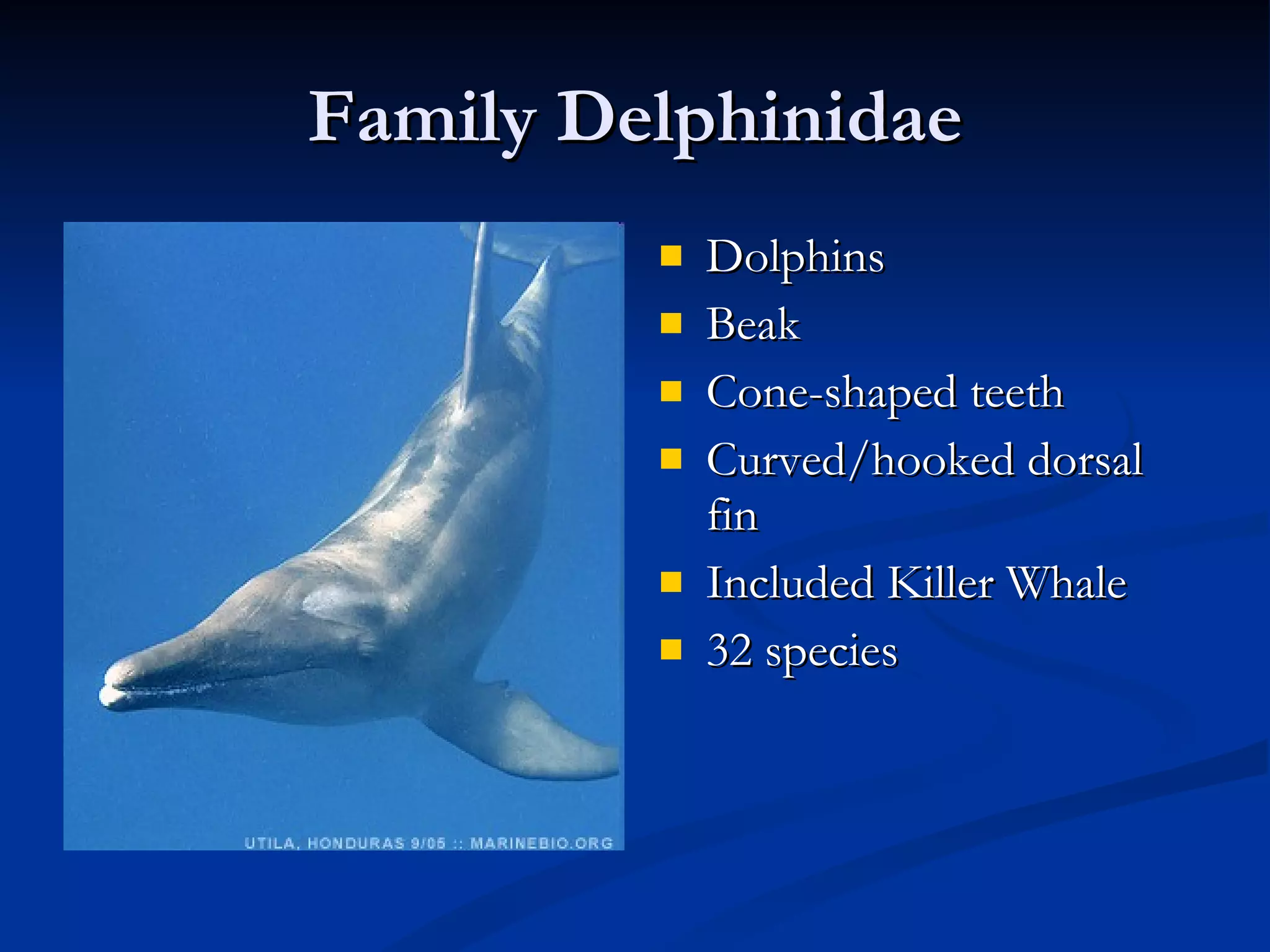
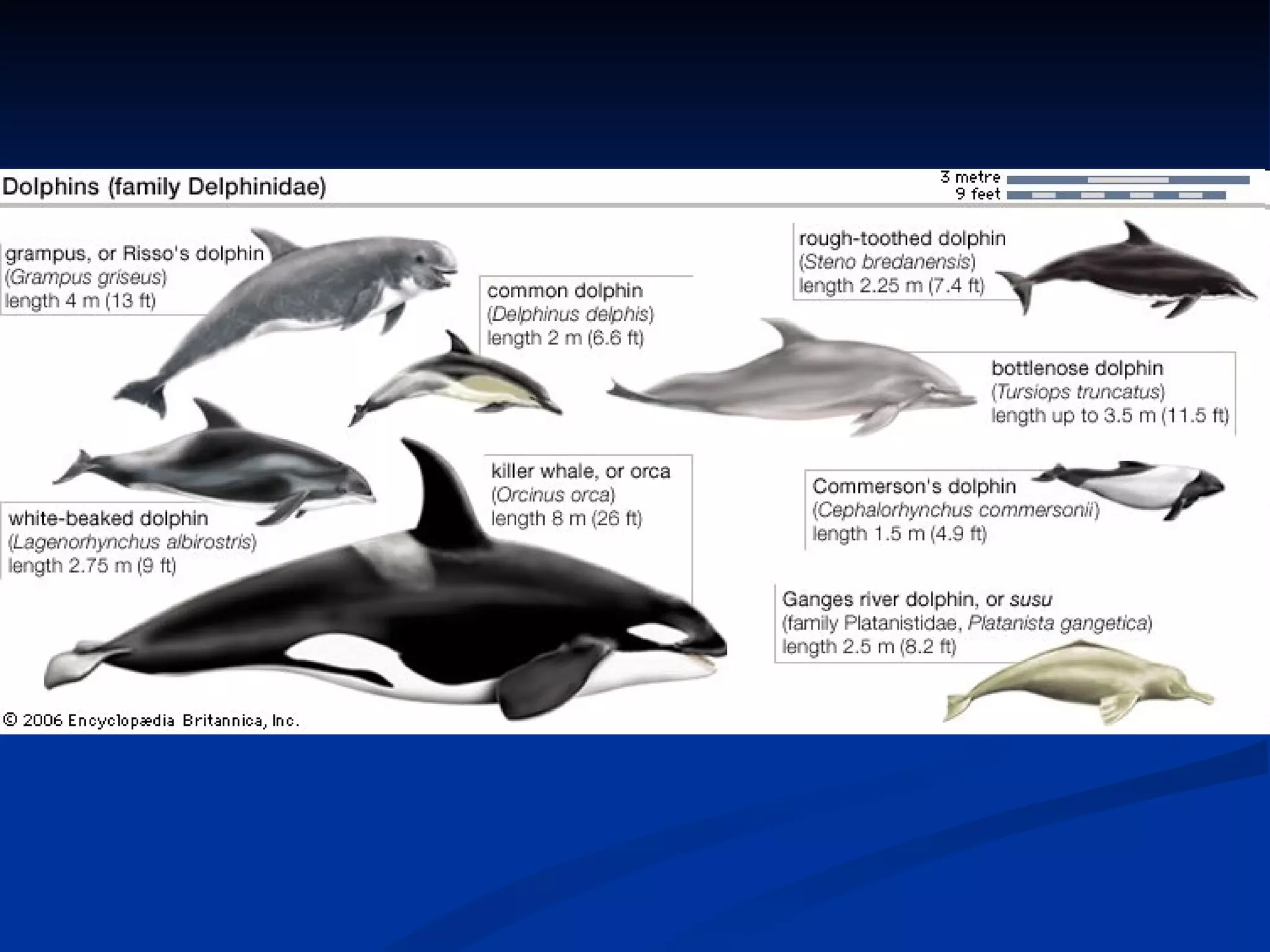
Family Delphinidae Dolphins Beak Cone-shaped teeth Curved/hooked dorsal fin Included Killer Whale 32 species
 
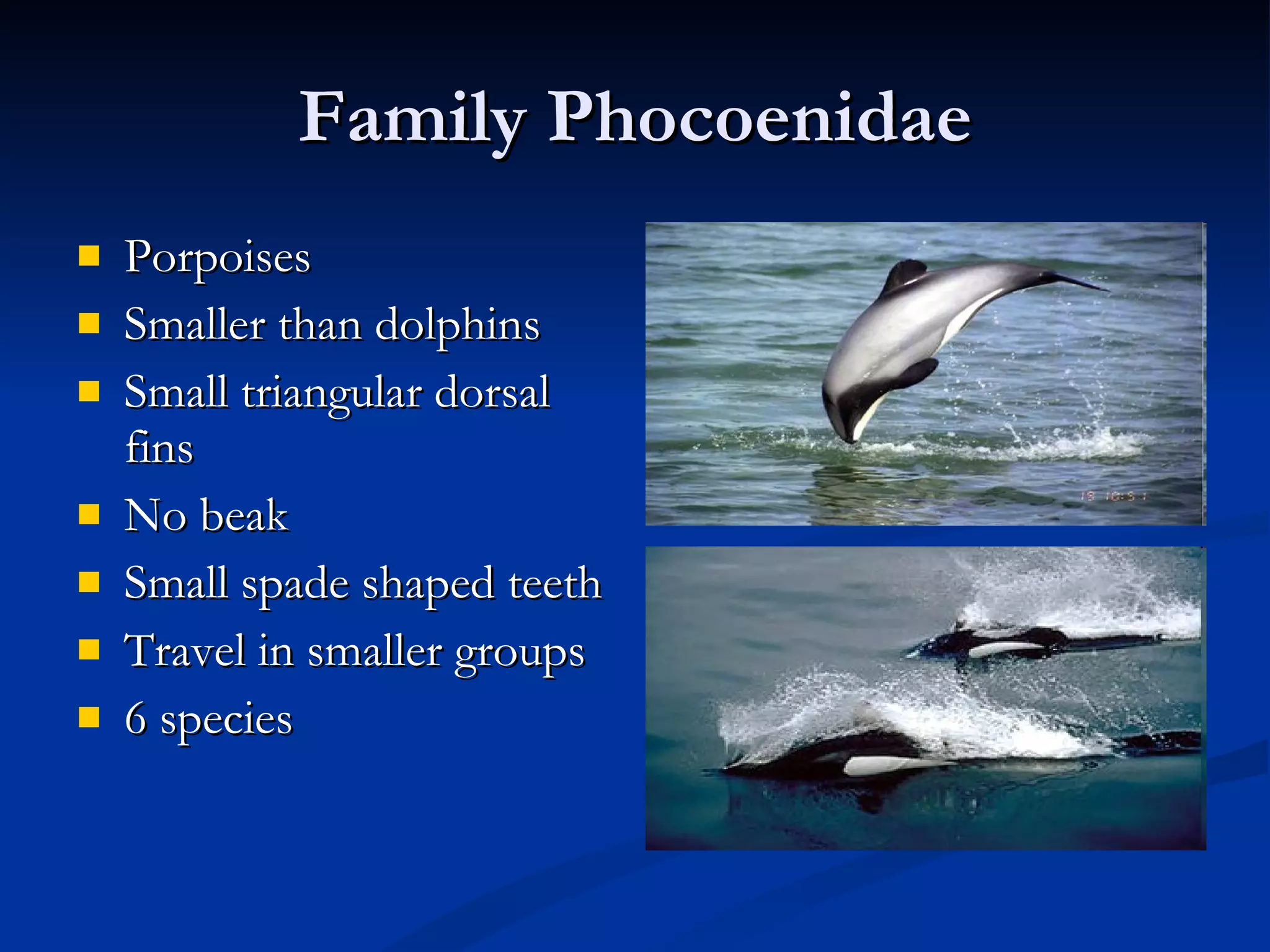
Family Phocoenidae Porpoises Smaller than dolphins Small triangular dorsal fins No beak Small spade shaped teeth Travel in smaller groups 6 species
Porpoise vs. Dolphin

18. Order Cetacea Notes

  • 1.
    Cetaceans Kingdom: AnimaliaPhylum: Chordata Class: Mammalia Order: Cetacea Suborder: Mysticeti Suborder: Odontoceti Family: Delphinidae Family: Phocoenidae
  • 2.
    Mammals Evolved fromreptiles 200 million years ago 4,500 species Endothermic – warm-blooded Brain size far larger in proportions than other organisms Have hair, mammary glands
  • 3.
    Evolution of WhalesPakicetids are reasoned to be the earliest ancestors Lived on land Closest living animals to whales are cows, hippos, and giraffes Evolved into archaeocetes More eel like form that developed into modern whales
  • 4.
  • 5.
  • 6.
  • 7.
    Cetaceans Whales, dolphins,and porpoises All are completely adapted for life in water Bodies designed for streamline swimming Breathe air
  • 8.
  • 9.
  • 10.
  • 11.
    General Exterior BodyStructure Pair of front flippers w/ similar bone structure to our hands Caudal fin end in a pair of fin-like horizontal flukes Blowhole – nostrils found on top of the body Some species missing dorsal fin
  • 12.
  • 13.
    General Interior BodyStructure Small, useless pelvic bones are the rear pair of limbs that never developed Blubber – fatty layer that provides insulation and buoyancy
  • 14.
    Melon Special organlocated between the blowhole and rostrum of toothed whales Oil filled sac that serves as an acoustical lens
  • 15.
    Spermaceti Organ Massivemelon found in sperm whales Filled with waxy oil called spermaceti Used for lanterns and candles
  • 16.
    Swimming Cetaceans swimby beating their flukes up and down while maneuvering with their fins.
  • 17.
    Breathing Can exhaleand inhale at incredible rate Blowhole allows for breaths while swimming Spout or blow – combination of warm breath, mucus, and seawater that differs whale to whale
  • 18.
    Diving Adaptations Cetaceanshold breath for 15-30 seconds, then quickly take a breath to maximize oxygen consumption Blood has higher concentration of red blood cells which can hold more hemoglobin Reduce heart rate when diving Divert blood to vital organs Collapsible lungs prevent the nitrogen from dissolving in blood and thus getting the bends
  • 19.
    Echolocation Nature’s versionof sonar Animals release sound waves which create echoes which are analyzed by brain Created by the passage of air inside cetaceans Melon focuses the sound waves
  • 20.
    Vocalizations Play animportant role in communication Unique sounds for each species Used for all forms of communication Humpback whale songs are used for attracting mates Whale Songs
  • 21.
    Baleen Whales -Mysticeti “ toothless” whales Baleen – rows of flexible, fibrous plates that hang from the upper jaw Made of the same material as hair and nails Covered with bristles Filter water through and lick what has been left behind
  • 22.
  • 23.
    Rorquals Lower partof the throat expands when filtering food Includes humpback and blue whale
  • 24.
  • 25.
    Other Baleen FeedingMethods Some whales skim the surface These ones have the largest plates with the finest bristles Others are bottom feeders who stir up the bottom and then filter
  • 26.
    Toothed Whales Teethadapted for a diet of fish, squid, and other prey Use teeth to catch and hold not to chew, rather it is swallowed whole Ambergris – remnants of indigestible food and debris that accumulates as sticky globs, used for perfume
  • 27.
  • 28.
    Dolphins & PorpoisesConsidered whales Technically porpoises only consist of a small group of blunt-nosed whales
  • 29.
    Dolphin & PorpoisesMost of the small whales called dolphins Dolphins typically have a distinctive snout called a beak Travel in large groups called pods
  • 30.
    Family Delphinidae DolphinsBeak Cone-shaped teeth Curved/hooked dorsal fin Included Killer Whale 32 species
  • 31.
  • 32.
    Family Phocoenidae PorpoisesSmaller than dolphins Small triangular dorsal fins No beak Small spade shaped teeth Travel in smaller groups 6 species
  • 33.