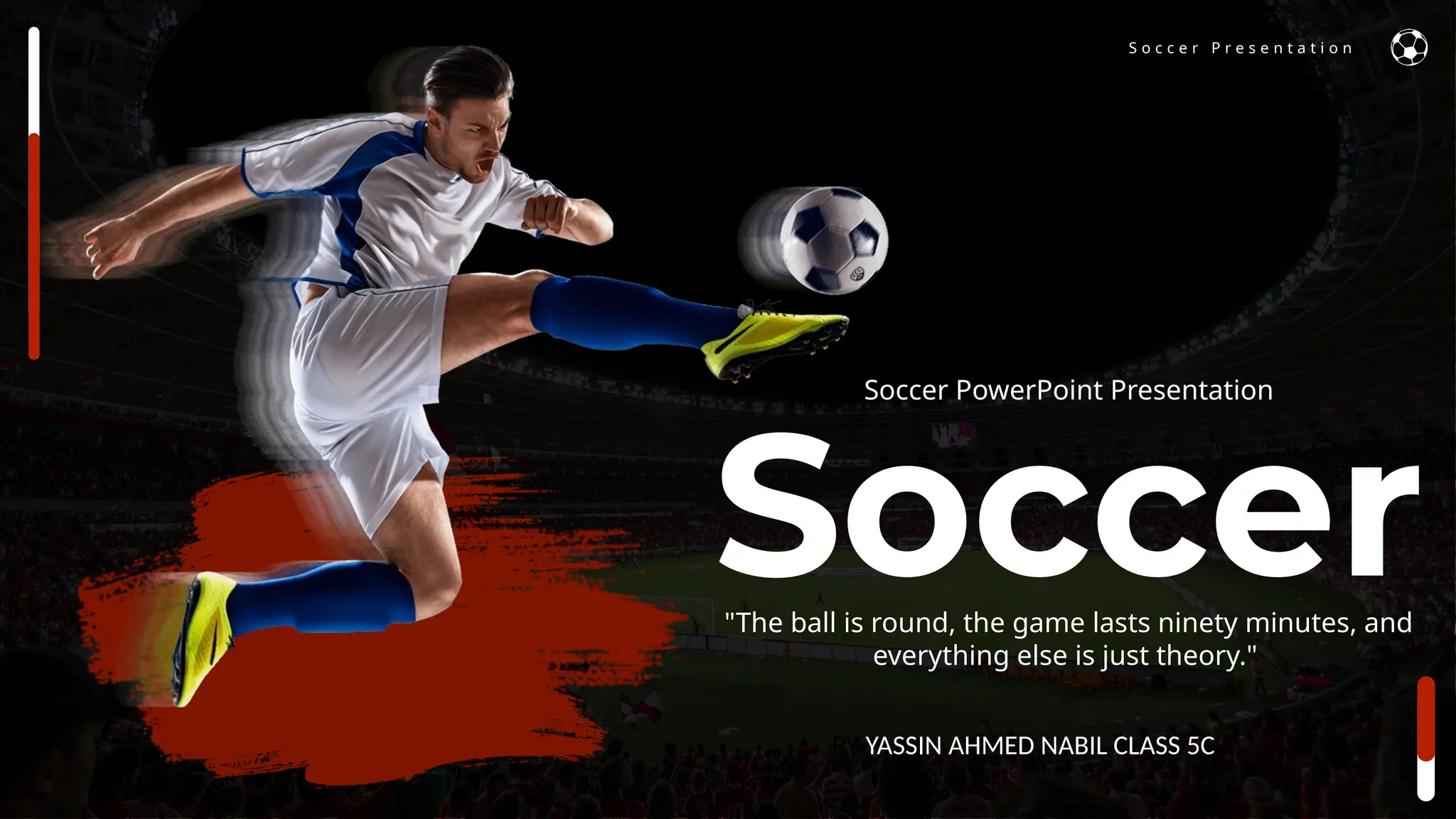
Soccer PowerPoint Presentation
S o c c e r P r e s e n t a t i o n
"The ball is round, the game lasts ninety minutes, and
everything else is just theory."
BY YASSIN AHMED NABIL CLASS 5C
Soccer, also known as football, is a globally beloved sport that
brings people together. With its simple yet captivating gameplay,
it transcends borders, cultures, and languages, uniting fans in
their passion for the beautiful game.
Introduction
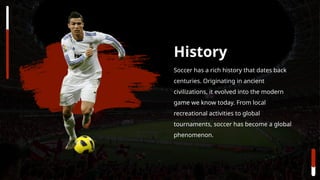
Soccer has a rich history that dates back
centuries. Originating in ancient
civilizations, it evolved into the modern
game we know today. From local
recreational activities to global
tournaments, soccer has become a global
phenomenon.
History
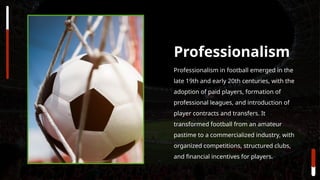
Professionalism in football emerged in the
late 19th and early 20th centuries, with the
adoption of paid players, formation of
professional leagues, and introduction of
player contracts and transfers. It
transformed football from an amateur
pastime to a commercialized industry, with
organized competitions, structured clubs,
and financial incentives for players.
Professionalism
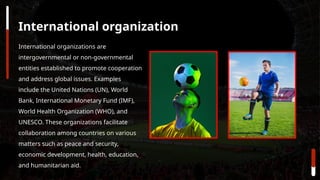
International organizations are
intergovernmental or non-governmental
entities established to promote cooperation
and address global issues. Examples
include the United Nations (UN), World
Bank, International Monetary Fund (IMF),
World Health Organization (WHO), and
UNESCO. These organizations facilitate
collaboration among countries on various
matters such as peace and security,
economic development, health, education,
and humanitarian aid.
International organization
Equipment and field
of play
The football field is typically
rectangular in shape and made of
grass or artificial turf. The
dimensions of the field are
regulated by the sport's governing
bodies and can vary, but a
standard field is usually around
100-110 yards in length and 50-60
yards in width.
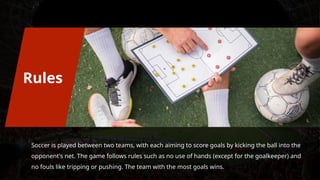
Soccer is played between two teams, with each aiming to score goals by kicking the ball into the
opponent's net. The game follows rules such as no use of hands (except for the goalkeeper) and
no fouls like tripping or pushing. The team with the most goals wins.
Rules
Rectangular field with goal lines and touchlines, spherical
ball, 11 players per team, score by kicking ball into
opponent's goal, offside when closer to goal than
second-to-last defender, fouls result in free kicks/penalty
kicks, yellow/red cards for misconduct, throw-ins for ball
out of bounds, penalty kicks from penalty spot, fair and
safe play.
Rules
me?
e presentation.
Team
A soccer team is a collective of talented individuals who come together to showcase their skills,
teamwork, and dedication on the field. Each player's unique strengths contribute to the success and
dynamics of the team, making it a force to be reckoned with.
Future
The future of soccer looks promising
with advancements in technology, such
as VAR and goal-line technology,
enhancing fairness and accuracy.
Increased global participation, evolving
playing styles, and growing fan
engagement indicate a bright future for
the sport.
Conclusion
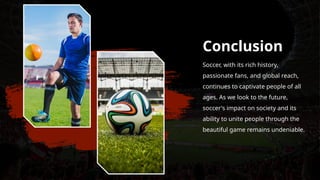
Soccer, with its rich history,
passionate fans, and global reach,
continues to captivate people of all
ages. As we look to the future,
soccer's impact on society and its
ability to unite people through the
beautiful game remains undeniable.
That is a good
presentation
Cheer him up

12345Soccer PowerPoint Presentation.pptx

  • 1.
    Soccer PowerPoint Presentation So c c e r P r e s e n t a t i o n "The ball is round, the game lasts ninety minutes, and everything else is just theory." BY YASSIN AHMED NABIL CLASS 5C
  • 2.
    Soccer, also knownas football, is a globally beloved sport that brings people together. With its simple yet captivating gameplay, it transcends borders, cultures, and languages, uniting fans in their passion for the beautiful game. Introduction
  • 3.
    Soccer has arich history that dates back centuries. Originating in ancient civilizations, it evolved into the modern game we know today. From local recreational activities to global tournaments, soccer has become a global phenomenon. History
  • 4.
    Professionalism in footballemerged in the late 19th and early 20th centuries, with the adoption of paid players, formation of professional leagues, and introduction of player contracts and transfers. It transformed football from an amateur pastime to a commercialized industry, with organized competitions, structured clubs, and financial incentives for players. Professionalism
  • 5.
    International organizations are intergovernmentalor non-governmental entities established to promote cooperation and address global issues. Examples include the United Nations (UN), World Bank, International Monetary Fund (IMF), World Health Organization (WHO), and UNESCO. These organizations facilitate collaboration among countries on various matters such as peace and security, economic development, health, education, and humanitarian aid. International organization
  • 6.
    Equipment and field ofplay The football field is typically rectangular in shape and made of grass or artificial turf. The dimensions of the field are regulated by the sport's governing bodies and can vary, but a standard field is usually around 100-110 yards in length and 50-60 yards in width.
  • 7.
    Soccer is playedbetween two teams, with each aiming to score goals by kicking the ball into the opponent's net. The game follows rules such as no use of hands (except for the goalkeeper) and no fouls like tripping or pushing. The team with the most goals wins. Rules
  • 8.
    Rectangular field withgoal lines and touchlines, spherical ball, 11 players per team, score by kicking ball into opponent's goal, offside when closer to goal than second-to-last defender, fouls result in free kicks/penalty kicks, yellow/red cards for misconduct, throw-ins for ball out of bounds, penalty kicks from penalty spot, fair and safe play. Rules
  • 9.
  • 10.
    Team A soccer teamis a collective of talented individuals who come together to showcase their skills, teamwork, and dedication on the field. Each player's unique strengths contribute to the success and dynamics of the team, making it a force to be reckoned with.
  • 11.
    Future The future ofsoccer looks promising with advancements in technology, such as VAR and goal-line technology, enhancing fairness and accuracy. Increased global participation, evolving playing styles, and growing fan engagement indicate a bright future for the sport.
  • 12.
    Conclusion Soccer, with itsrich history, passionate fans, and global reach, continues to captivate people of all ages. As we look to the future, soccer's impact on society and its ability to unite people through the beautiful game remains undeniable.
  • 13.
    That is agood presentation Cheer him up