DISCOVER . LEARN . EMPOWER
INSTITUTE: Chandigarh University
DEPARTMENT: University School of Business
Subject Name and Code: 22BAB-757 Retail Management
Topic- Omni-Channel Retailing
Dr. Azmee Zaheer
What Is Omnichannel Retail?
Omnichannel retail is a strategy in which retailers engage customers
through multiple digital and physical touchpoints. As customers move
across these channels, applications and data move with them. This
creates a consistent, on-brand experience from start to finish. With this
understanding, large brands are now using an omnichannel store as
media strategy, along with other experiences, within a brick-and-
mortar location to further their reach, visibility, and impact with their
consumer audiences.
We are entering the world of “phygital”—physical and digital at the
same time, where there is not a physical world or digital world in retail,
but rather a completely connected one.
2
3
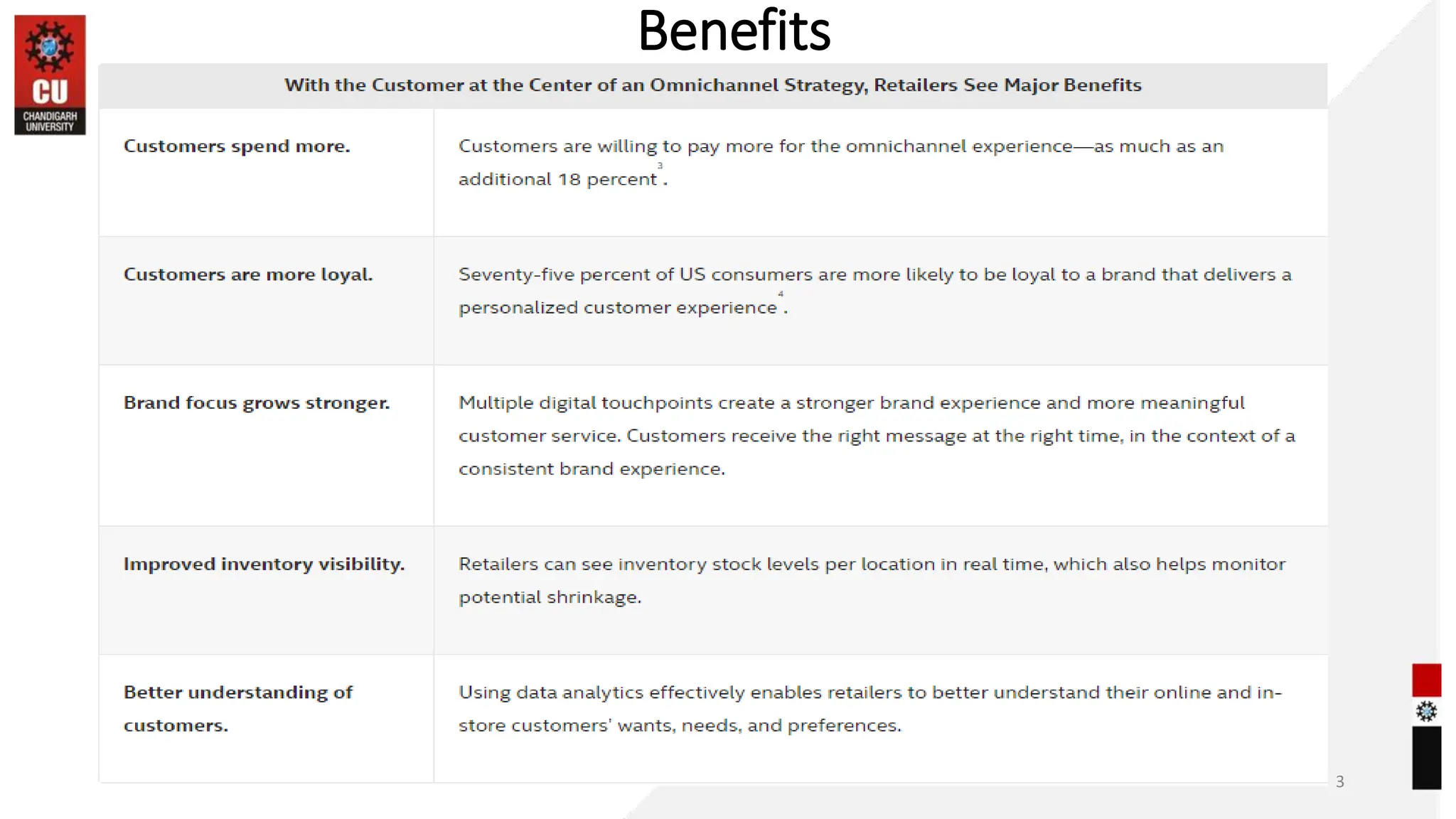
Benefits
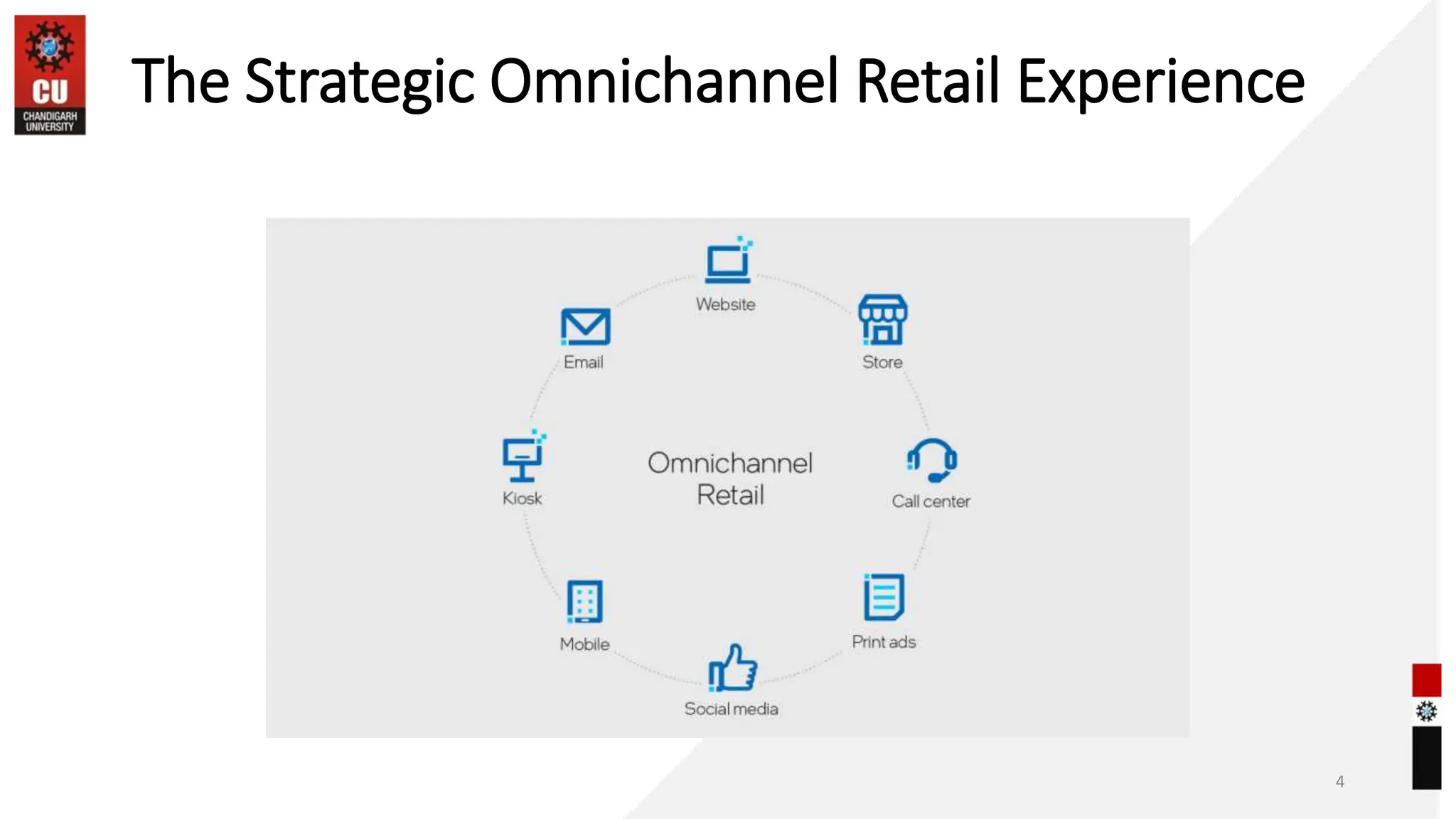
The Strategic Omnichannel Retail Experience
4
A unified omnichannel retail strategy provides a consistent brand
experience and accurate information at every touchpoint. Where
possible, experiences are integrated with the customer’s activities via
other channels.
For example, a customer might see an online promotion, log in to a
brand’s app to view their loyalty rewards status, place an order, then go
to retrieve their purchase from a secure locker. The customer’s
information would be retained throughout the process for a seamless
shopping experience across all channels.
Omnichannel shopping is ascendant, with about 60 to 70 percent of
consumers across categories shopping/researching both in store and
online and social media influencing up to 40 percent of consumers in
categories like jewelry, accessories, and fitness5.
5
Designing the Omnichannel Experience
Businesses can offer personalized sales recommendations, confirm customer account
information from any source where the customer has previously shared it, and further enhance
the customer experience at the moment of the transaction, whether it takes place online, at a
kiosk, or on a personal device.
With the introduction of in-store edge-enabled devices and technology, such as edge
computing and artificial intelligence (AI), which collect, process and analyze data closer to
where it is generated, retailers can access near-real-time information about their customers.
They also benefit from an additional layer of data security—by not sending data to a centralized
data center and processing it locally at the edge, there is less data at risk in a single moment of
transaction.
And with intelligence from edge to cloud, retailers can parlay insights from deeper customer
and merchandising data analytics to understand long-term trends, inform targeted campaigns,
and make predictions about the future.
6
URL Link
https://www.intel.com/content/www/us/en/retail/omnichannel.html#:
~:text=Omnichannel%20retail%20is%20a%20strategy,experience%20fr
om%20start%20to%20finish.
https://www.magestore.com/retail-resources/omnichannel-retail-
guide/omnichannel-retail-definition/
7
Thank You
For queries
Email: azmee.e13214@cumail.in

1.2.2- Omnichannels Retailing.pptx mgmts

  • 1.
    DISCOVER . LEARN. EMPOWER INSTITUTE: Chandigarh University DEPARTMENT: University School of Business Subject Name and Code: 22BAB-757 Retail Management Topic- Omni-Channel Retailing Dr. Azmee Zaheer
  • 2.
    What Is OmnichannelRetail? Omnichannel retail is a strategy in which retailers engage customers through multiple digital and physical touchpoints. As customers move across these channels, applications and data move with them. This creates a consistent, on-brand experience from start to finish. With this understanding, large brands are now using an omnichannel store as media strategy, along with other experiences, within a brick-and- mortar location to further their reach, visibility, and impact with their consumer audiences. We are entering the world of “phygital”—physical and digital at the same time, where there is not a physical world or digital world in retail, but rather a completely connected one. 2
  • 3.
  • 4.
    The Strategic OmnichannelRetail Experience 4
  • 5.
    A unified omnichannelretail strategy provides a consistent brand experience and accurate information at every touchpoint. Where possible, experiences are integrated with the customer’s activities via other channels. For example, a customer might see an online promotion, log in to a brand’s app to view their loyalty rewards status, place an order, then go to retrieve their purchase from a secure locker. The customer’s information would be retained throughout the process for a seamless shopping experience across all channels. Omnichannel shopping is ascendant, with about 60 to 70 percent of consumers across categories shopping/researching both in store and online and social media influencing up to 40 percent of consumers in categories like jewelry, accessories, and fitness5. 5
  • 6.
    Designing the OmnichannelExperience Businesses can offer personalized sales recommendations, confirm customer account information from any source where the customer has previously shared it, and further enhance the customer experience at the moment of the transaction, whether it takes place online, at a kiosk, or on a personal device. With the introduction of in-store edge-enabled devices and technology, such as edge computing and artificial intelligence (AI), which collect, process and analyze data closer to where it is generated, retailers can access near-real-time information about their customers. They also benefit from an additional layer of data security—by not sending data to a centralized data center and processing it locally at the edge, there is less data at risk in a single moment of transaction. And with intelligence from edge to cloud, retailers can parlay insights from deeper customer and merchandising data analytics to understand long-term trends, inform targeted campaigns, and make predictions about the future. 6
  • 7.
  • 8.
    Thank You For queries Email:azmee.e13214@cumail.in